Dialogue and Discussion:
Tools for Creating and
Sustaining a PLC
Professional Learning Community What Really Is It?
NCSD Pre-Conference Session
December 1-2,2007
Kristine Kiefer Hipp, PH.D.
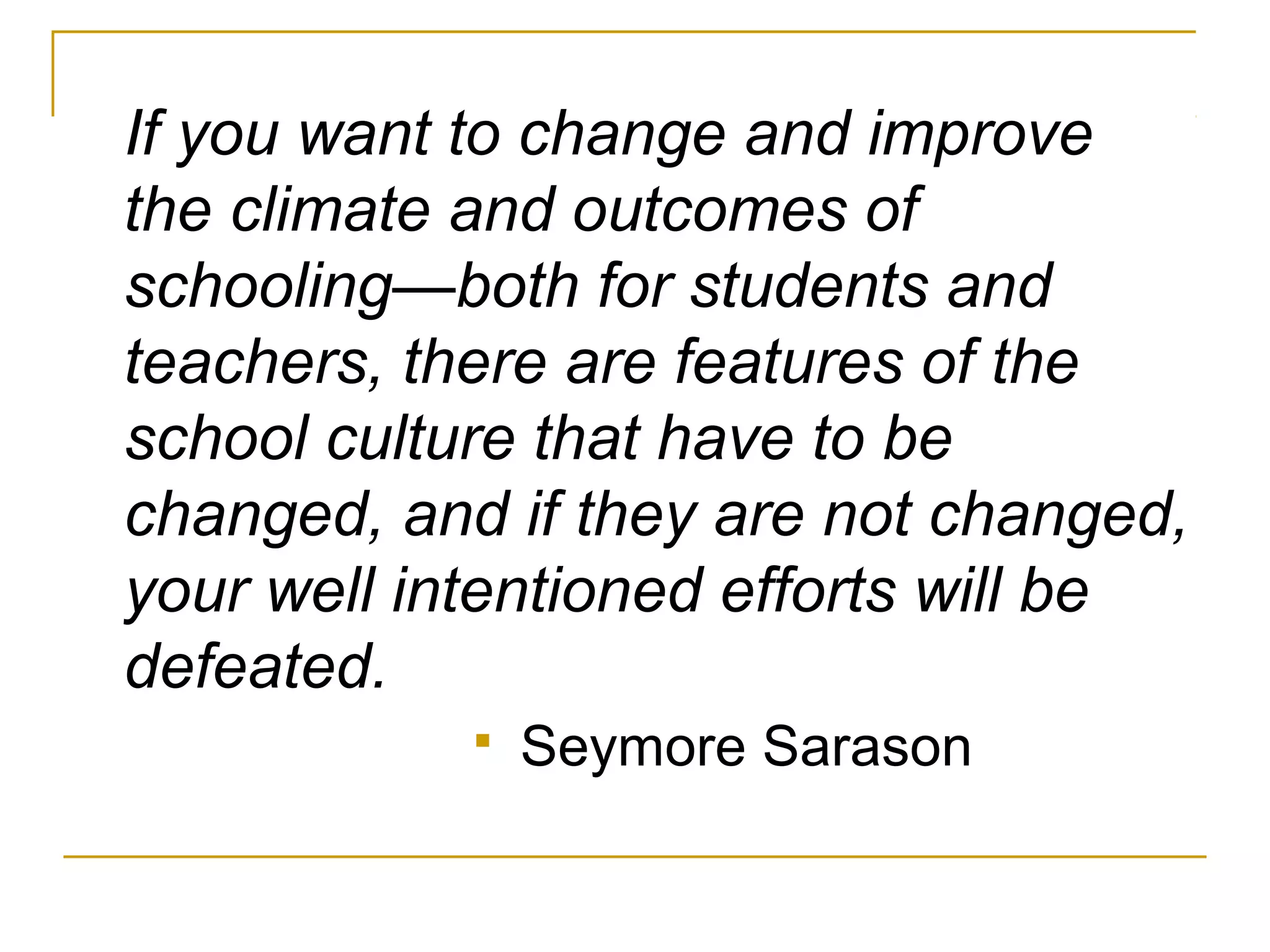
If you want to change and improve
the climate and outcomes of
schooling—both for students and
teachers, there are features of the
school culture that have to be
changed, and if they are not changed,
your well intentioned efforts will be
defeated.
 Seymore Sarason
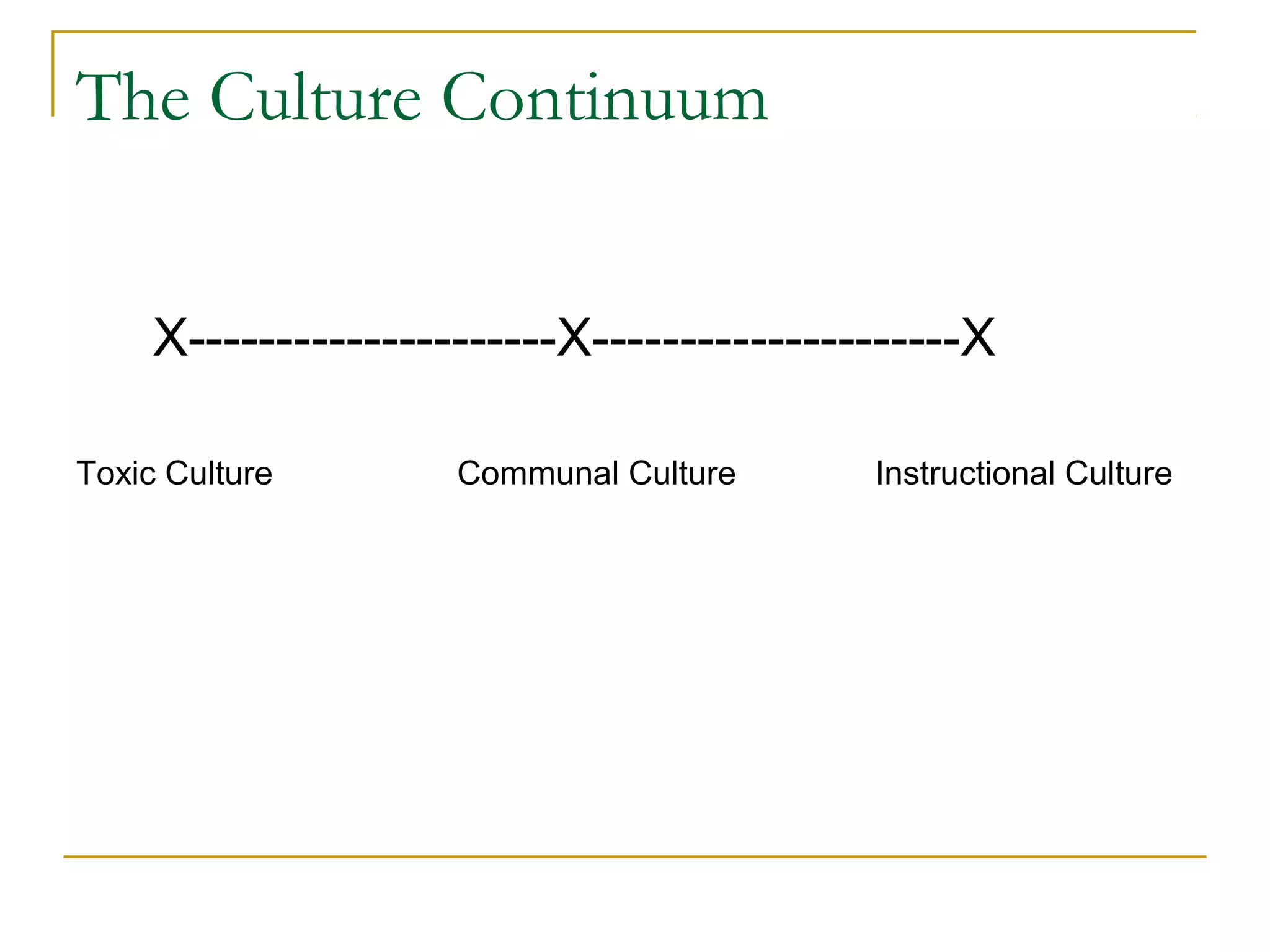
The Culture Continuum
X---------------------X---------------------X
Toxic Culture Communal Culture Instructional Culture
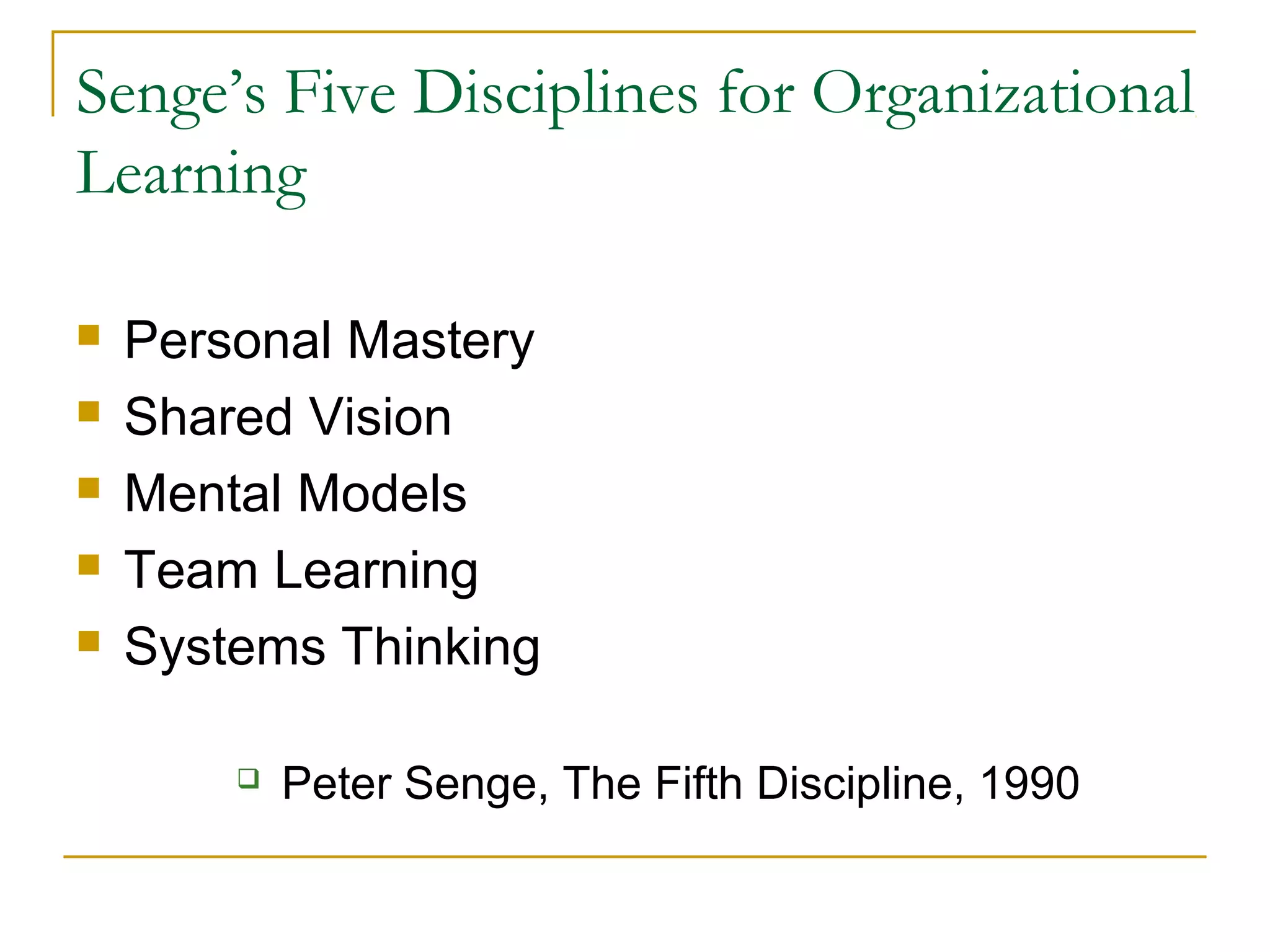
Senge’s Five Disciplines for Organizational
Learning
 Personal Mastery
 Shared Vision
 Mental Models
 Team Learning
 Systems Thinking
 Peter Senge, The Fifth Discipline, 1990
Mental Models
 Deeply ingrained assumptions…maps, pictures,
images that influence how we understand the world
and how we act.
 We are seldom “consciously” aware of our mental
models or the effects they have on our behaviors,
attitudes and practices.
 Reveal the reasoning and attitudes that underlie
individual and collective practices that can either
hinder or produce effective learning organizations.
 Examining our mental models offers educators the
highest leverage for transforming the educational
system.
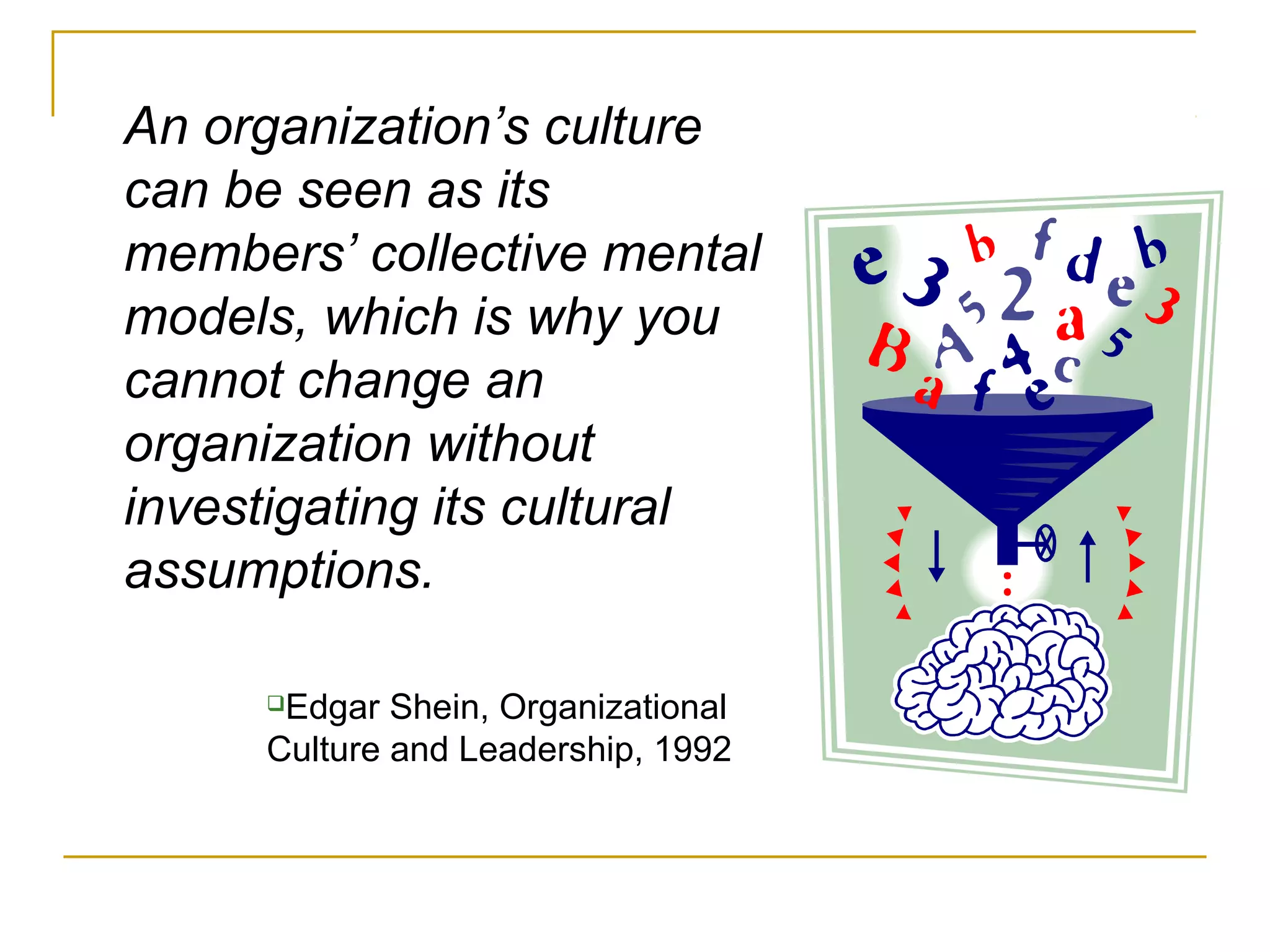
An organization’s culture
can be seen as its
members’ collective mental
models, which is why you
cannot change an
organization without
investigating its cultural
assumptions.
Edgar Shein, Organizational
Culture and Leadership, 1992
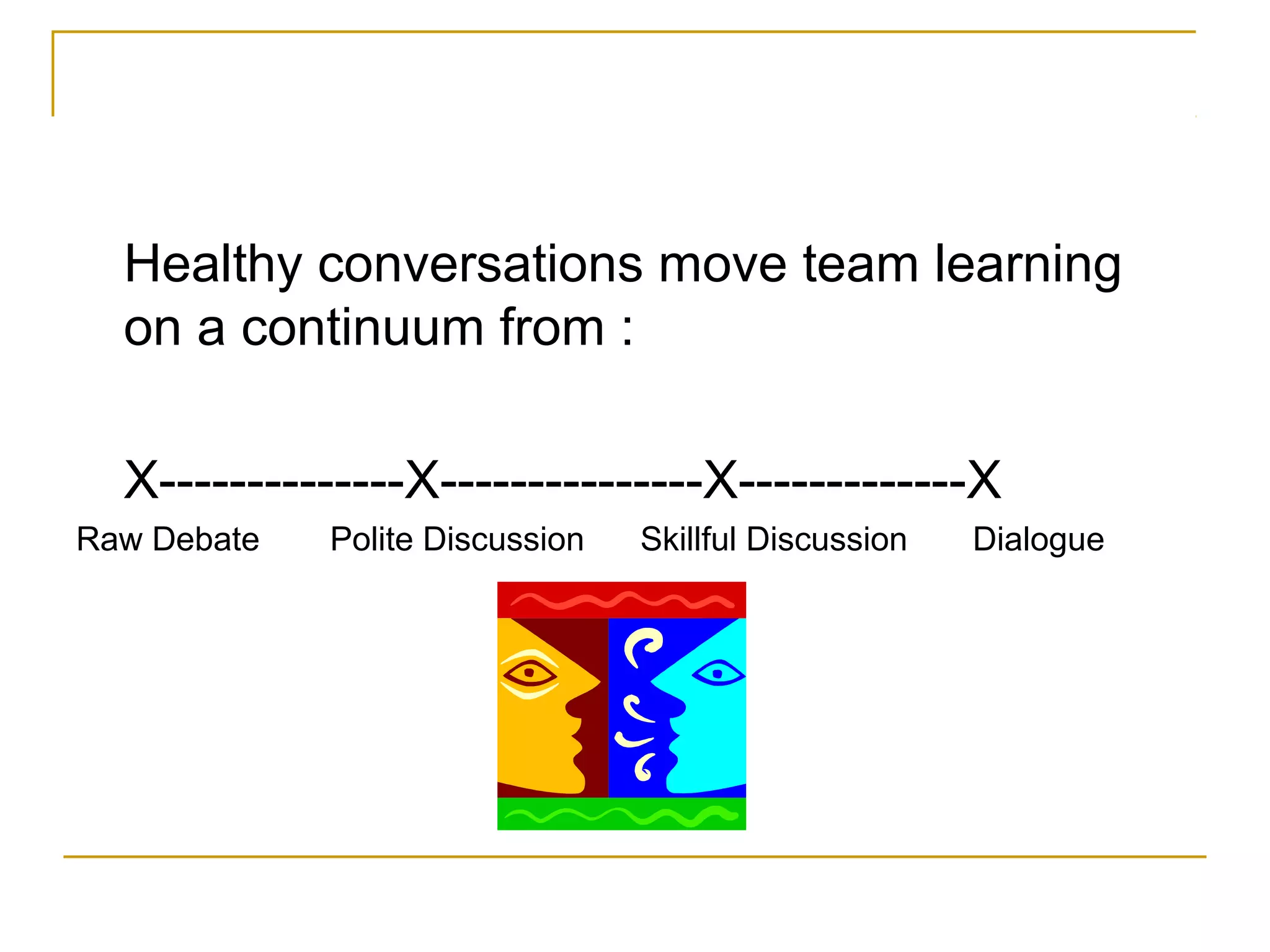
Healthy conversations move team learning
on a continuum from :
X--------------X---------------X-------------X
Raw Debate Polite Discussion Skillful Discussion Dialogue
Skillful Discussion
 A process in which people come to some
type of closure on an issue:
 Making a decision
 Reaching an agreement
 Identifying priorities
 Develops deeper meaning among members,
but the primary focus is on task and
convergent thinking.
Dialogue
 Dialogue is a process in which people
engage in conversations where they openly
share their views and develop knowledge
about each other’s assumptions.
 Peter Senge, 1990, The Fifth Discipline
Dialogue
 Balances advocacy with inquiry
 Invites learning at a deeper level
 Encourages us to listen on multiple levels –
self, one another, and collectively…to honor
differences
 Challenges us to suspend our judgment
 Is different then discussion or debate
 Promotes creativity and shared meaning
In Dialogue…
 We rid ourselves of thinking…
 Our beliefs are the truth
 The truth is obvious
 Our beliefs are based on real data
 The data we select are real data
 Chris Argyris, 1990, Overcoming Organizational Defenses
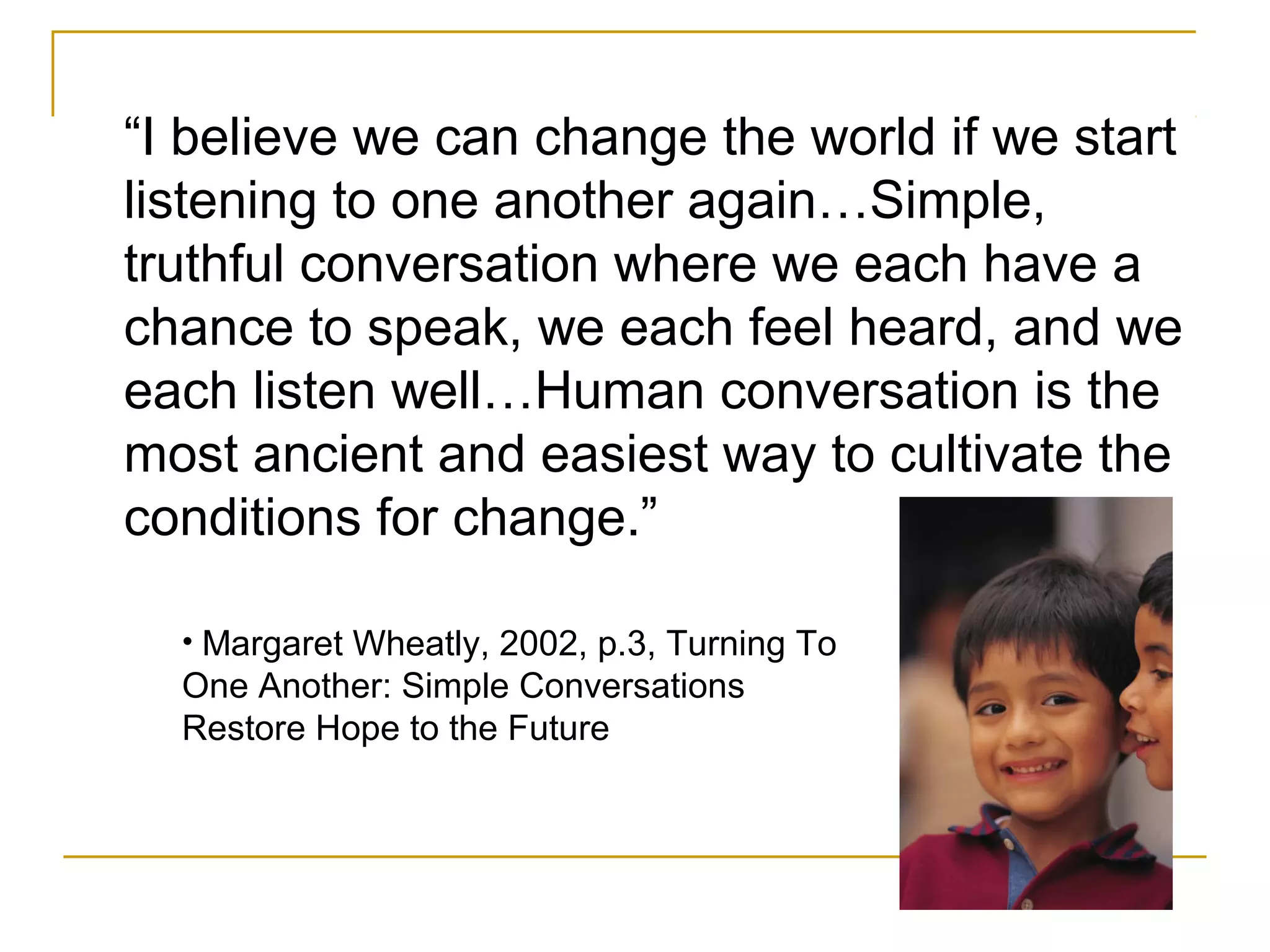
“I believe we can change the world if we start
listening to one another again…Simple,
truthful conversation where we each have a
chance to speak, we each feel heard, and we
each listen well…Human conversation is the
most ancient and easiest way to cultivate the
conditions for change.”
• Margaret Wheatly, 2002, p.3, Turning To
One Another: Simple Conversations
Restore Hope to the Future

Dialogue and discussion

  • 1.
    Dialogue and Discussion: Toolsfor Creating and Sustaining a PLC Professional Learning Community What Really Is It? NCSD Pre-Conference Session December 1-2,2007 Kristine Kiefer Hipp, PH.D.
  • 2.
    If you wantto change and improve the climate and outcomes of schooling—both for students and teachers, there are features of the school culture that have to be changed, and if they are not changed, your well intentioned efforts will be defeated.  Seymore Sarason
  • 3.
  • 4.
    Senge’s Five Disciplinesfor Organizational Learning  Personal Mastery  Shared Vision  Mental Models  Team Learning  Systems Thinking  Peter Senge, The Fifth Discipline, 1990
  • 5.
    Mental Models  Deeplyingrained assumptions…maps, pictures, images that influence how we understand the world and how we act.  We are seldom “consciously” aware of our mental models or the effects they have on our behaviors, attitudes and practices.  Reveal the reasoning and attitudes that underlie individual and collective practices that can either hinder or produce effective learning organizations.  Examining our mental models offers educators the highest leverage for transforming the educational system.
  • 6.
    An organization’s culture canbe seen as its members’ collective mental models, which is why you cannot change an organization without investigating its cultural assumptions. Edgar Shein, Organizational Culture and Leadership, 1992
  • 7.
    Healthy conversations moveteam learning on a continuum from : X--------------X---------------X-------------X Raw Debate Polite Discussion Skillful Discussion Dialogue
  • 8.
    Skillful Discussion  Aprocess in which people come to some type of closure on an issue:  Making a decision  Reaching an agreement  Identifying priorities  Develops deeper meaning among members, but the primary focus is on task and convergent thinking.
  • 9.
    Dialogue  Dialogue isa process in which people engage in conversations where they openly share their views and develop knowledge about each other’s assumptions.  Peter Senge, 1990, The Fifth Discipline
  • 10.
    Dialogue  Balances advocacywith inquiry  Invites learning at a deeper level  Encourages us to listen on multiple levels – self, one another, and collectively…to honor differences  Challenges us to suspend our judgment  Is different then discussion or debate  Promotes creativity and shared meaning
  • 11.
    In Dialogue…  Werid ourselves of thinking…  Our beliefs are the truth  The truth is obvious  Our beliefs are based on real data  The data we select are real data  Chris Argyris, 1990, Overcoming Organizational Defenses
  • 12.
    “I believe wecan change the world if we start listening to one another again…Simple, truthful conversation where we each have a chance to speak, we each feel heard, and we each listen well…Human conversation is the most ancient and easiest way to cultivate the conditions for change.” • Margaret Wheatly, 2002, p.3, Turning To One Another: Simple Conversations Restore Hope to the Future