Neurology Neuron: nerve, logos: knowledge Neurology: deals with the prevention, therapy and rehabilitation of organic disease of NS and musculature Characteristisc: 1. Psychiatric alterations are not typical  2. Morphological or functional abnormalities 3. Psychogenic mechanisms only modify  Internal Medicine : functional diagnosis neurology:  localisation, importance of neuroanatomy
The most frequent neurological disorders  Headache  (tension type: pop. 40-60%,  migraine: femails:9-12%, males:4-6%) Low back pain Stroke: prev.:2000/ 100 000 Epilepsy: 60-80 0 / 100 000 Parkinsonism: 20 –40 0 / 100 000 Polyneuropathy:30 0 / 100 000 Multiplex Sclerose 6-80 / 100 000
P- What  P rovokes discomfort?  Q- What is the  Q uality of the discomfort?  R- Where is the  R egion of the discomfort?  S- What is the  S everity of the discomfort?  T- What is the  T ime sequence?
Neurol. examination   Signs of meningeal irritation Cranial nerves Reflexes Sensory  Motor  Vegetative function Orientation, cognition, perception
II. optic nerve Papilla-edema:  increased intracran. pressure Optic  atrophy:   chronic disease;  Vascular  diseases:  HT,  diabetes
Corneal  reflex (V and  VII) Afferent  (V)  efferent (VII),
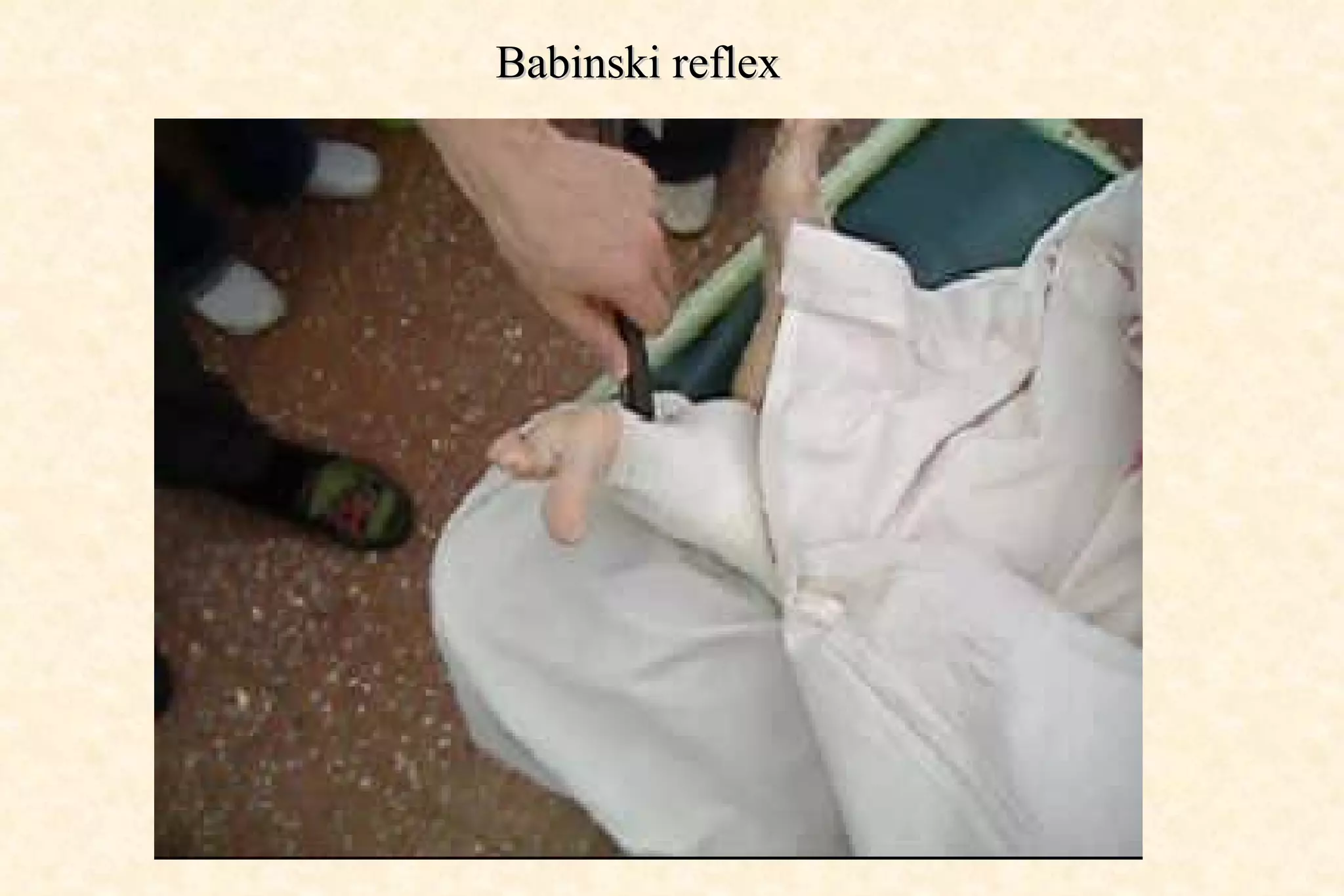
Babinski reflex
Brisky :physiological pathological :brisky +pyramidal sign
CT Ischemia, bleeding, tumor  abscess, degeneration, trauma.
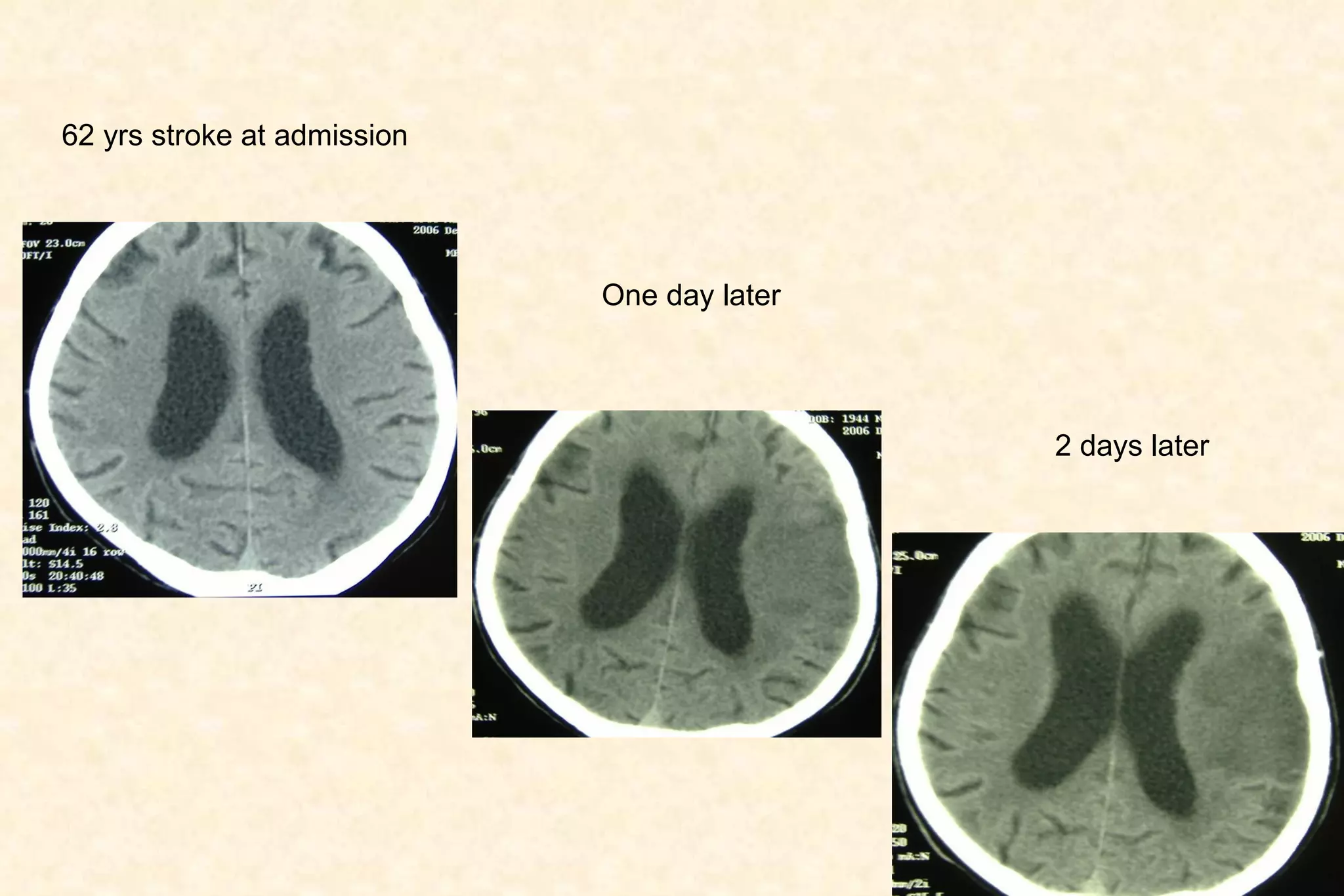
62 yrs stroke at admission One day later 2 days later
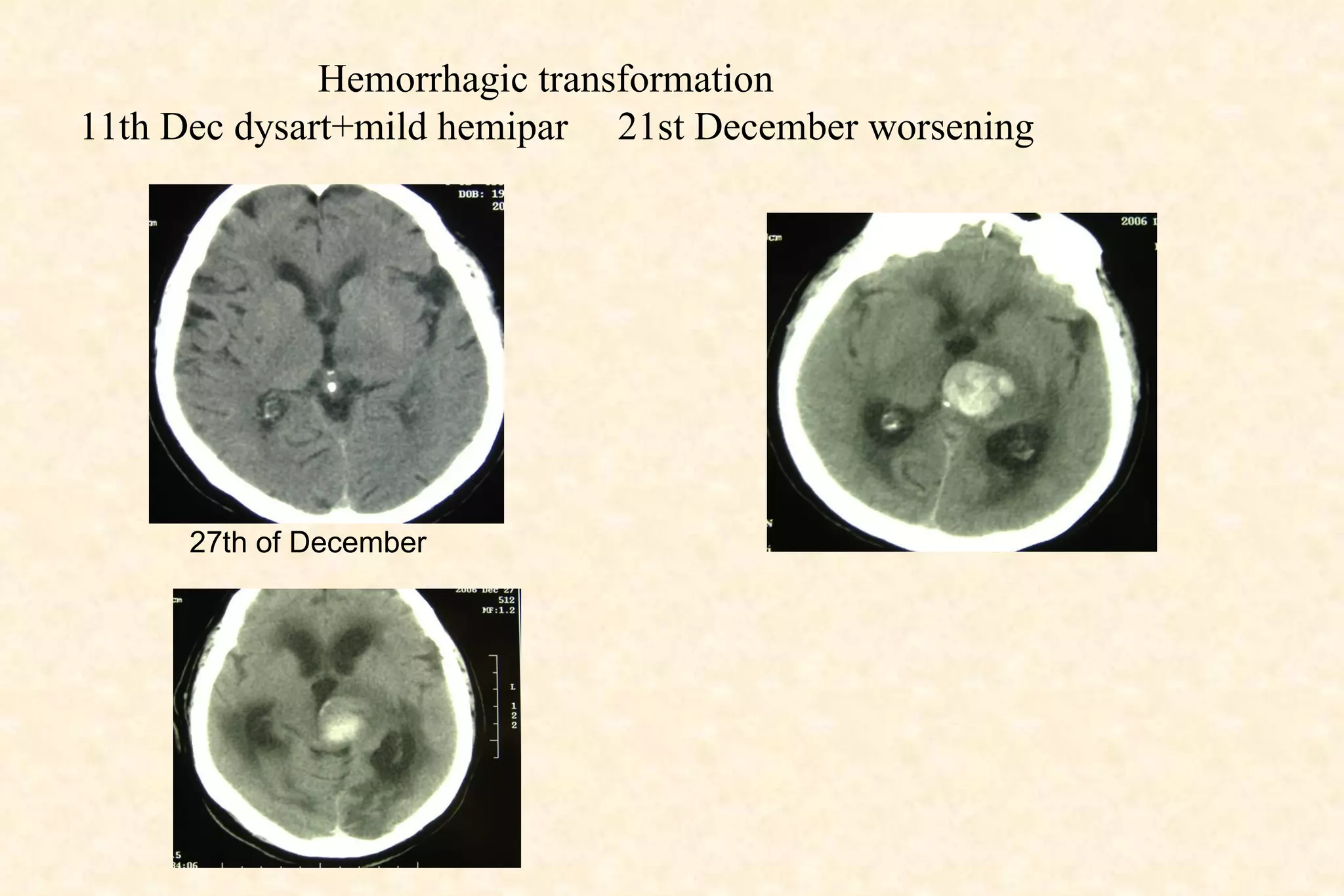
Hemorrhagic transformation 11th Dec dysart+mild hemipar  21st December worsening 27th of December
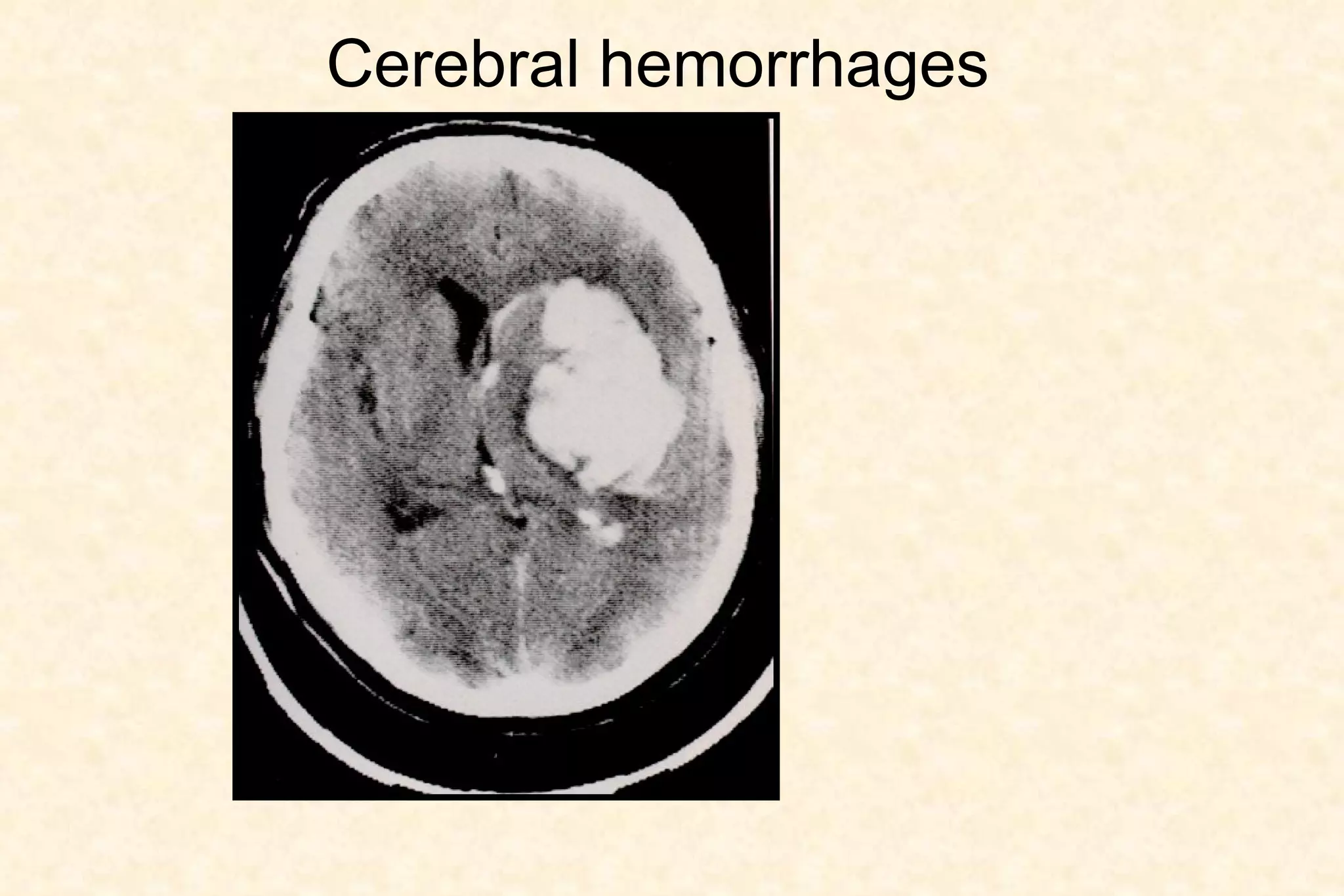
Cerebral hemorrhages
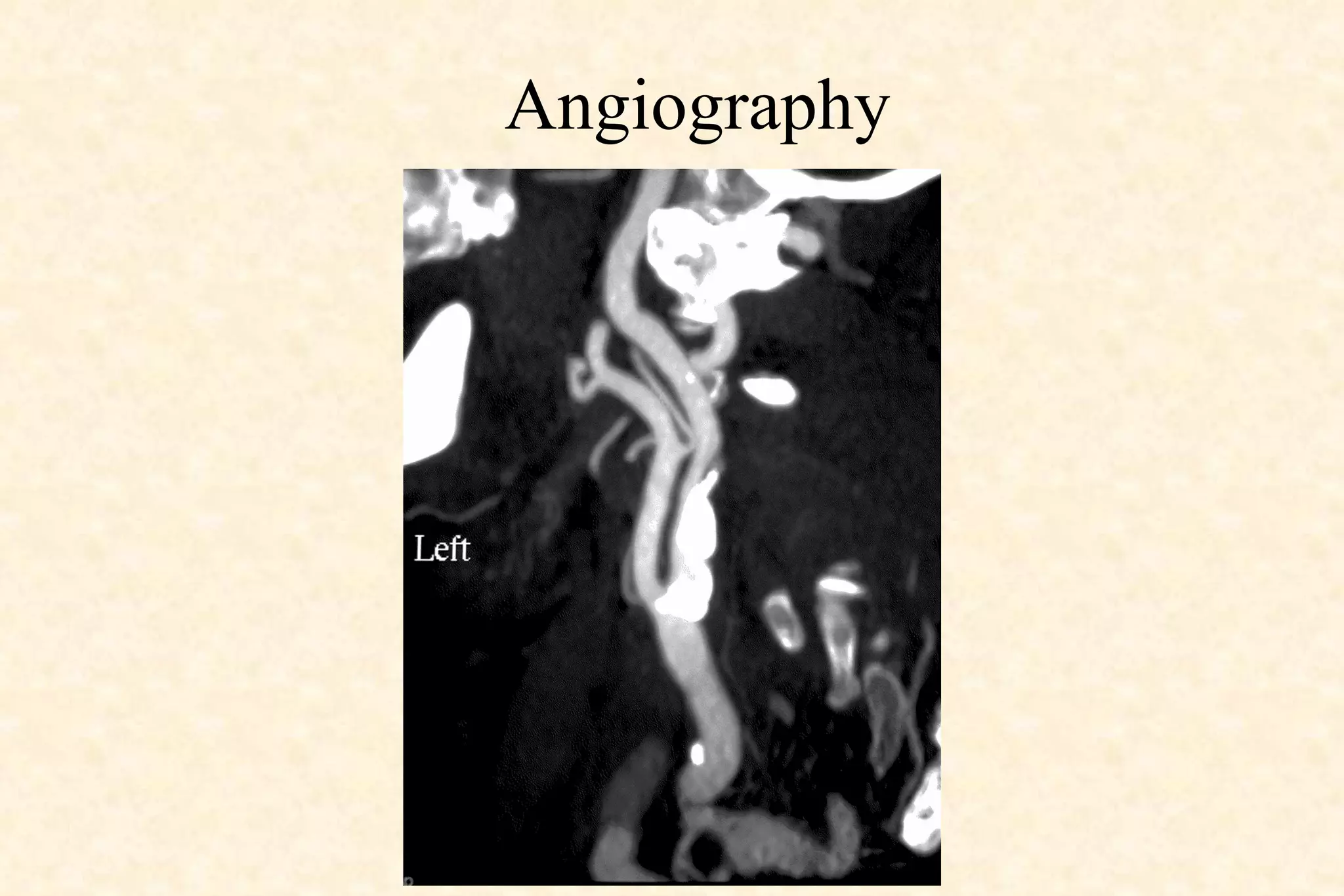
Angiography
DSA angiography DSA (digital  subtraction angiography, mask-image) excellent resolution  DSA, MR, CT and PET integration intervention neuroradiology:embolisation of malformations, fistels, aneurysm Problems:(bleeding, dissection, embolisation, vasospasm, contrast-allergy)
Angiography 2. Diagnosis Stenosis, vascular malformation, aneurysm, vasculitis, sinus  thrombosis Therapy local lysis, preop. embolisation, tumor chemotherapy
MR-angiography "angiogramm" dark (flow void)  or slow flow :bright (flow related enhancement).  Stenosis could be misdiagnosed:occlusion  aneurysm  Non-invasive
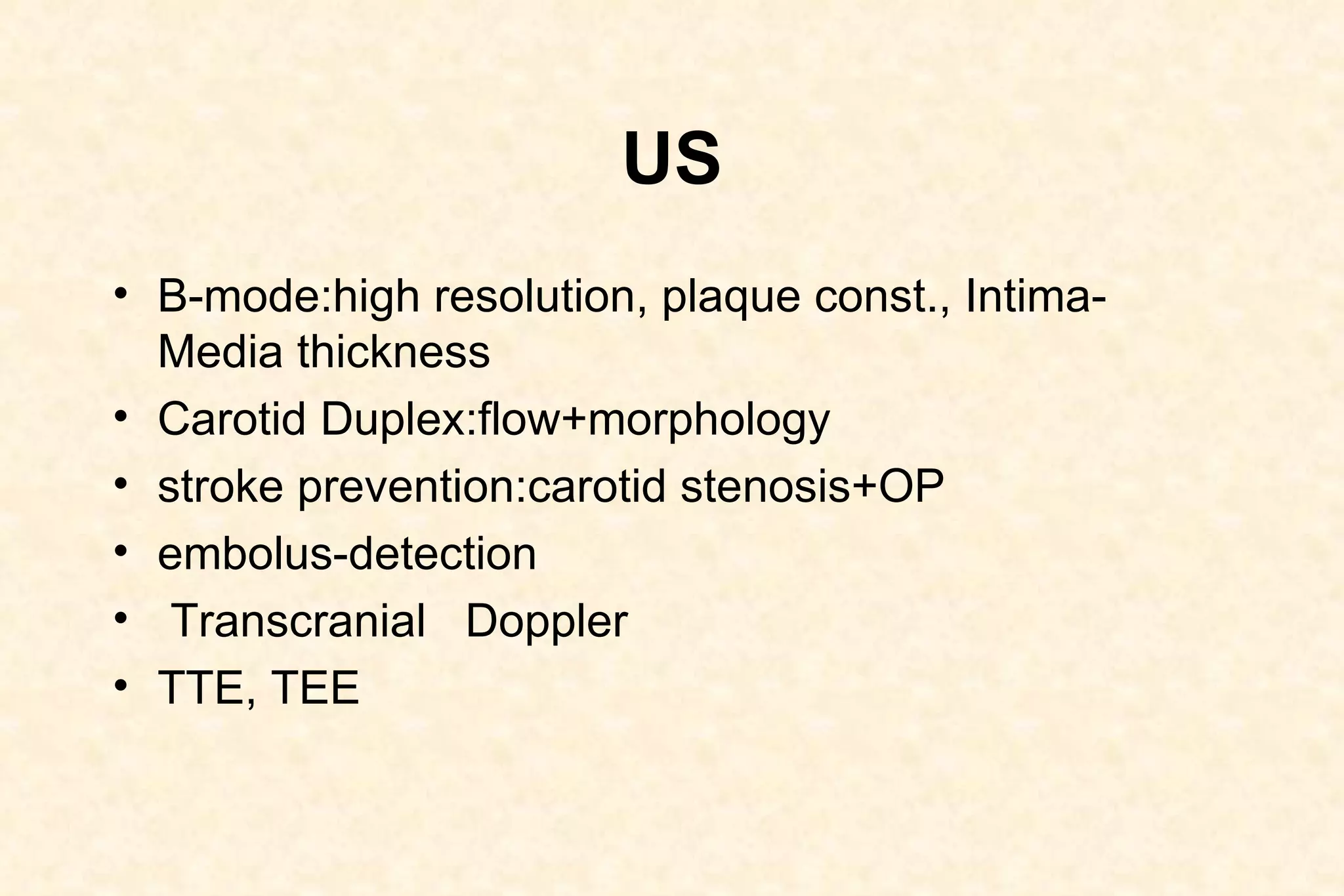
US B-mode:high resolution, plaque const., Intima-Media thickness Carotid Duplex:flow+morphology stroke prevention:carotid stenosis+OP embolus-detection Transcranial  Doppler TTE, TEE
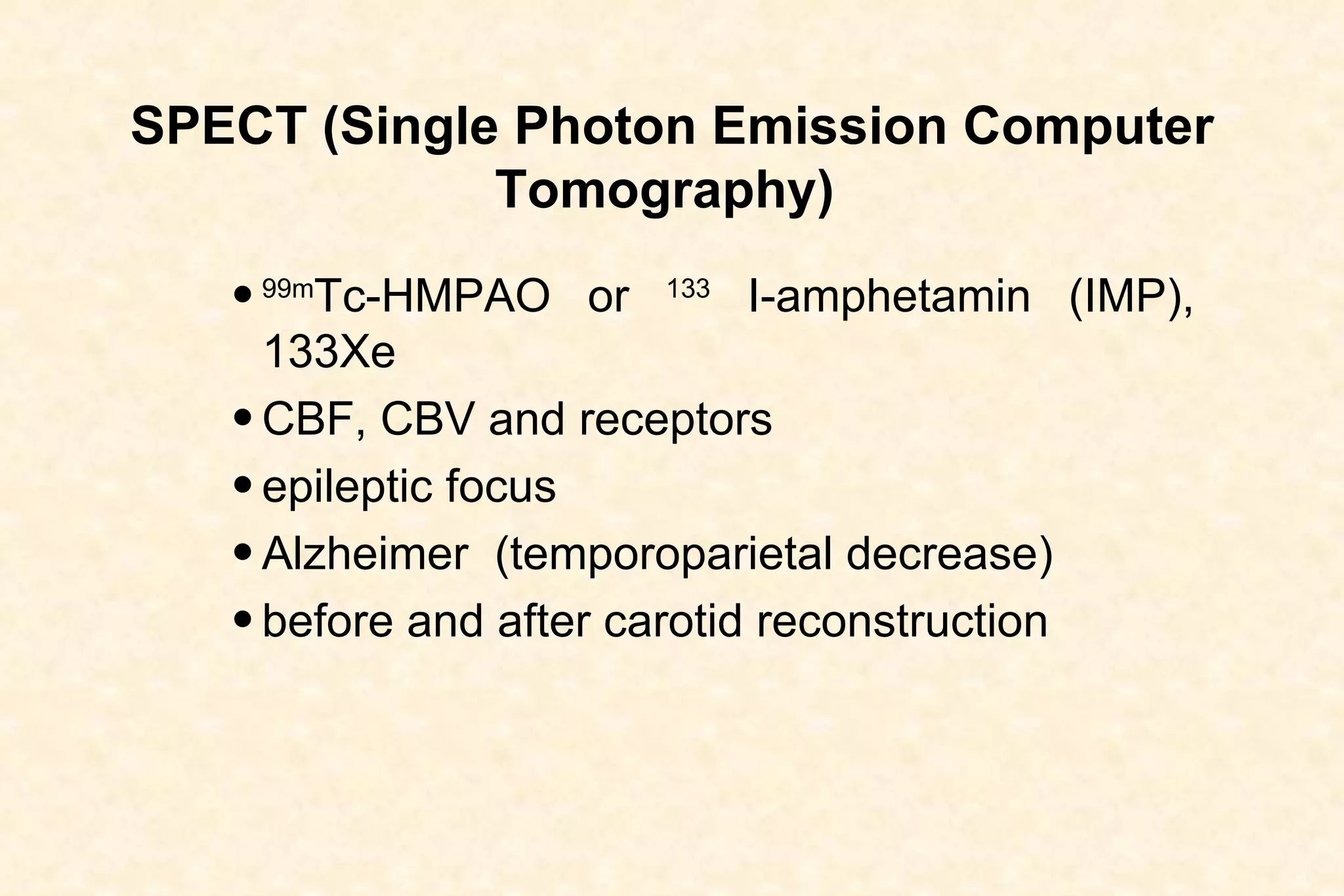
SPECT (Single Photon Emission Computer Tomography)  99m Tc-HMPAO or  133  I-amphetamin (IMP),  133Xe  CBF, CBV and receptors epileptic focus Alzheimer  (temporoparietal decrease)  before and after carotid reconstruction
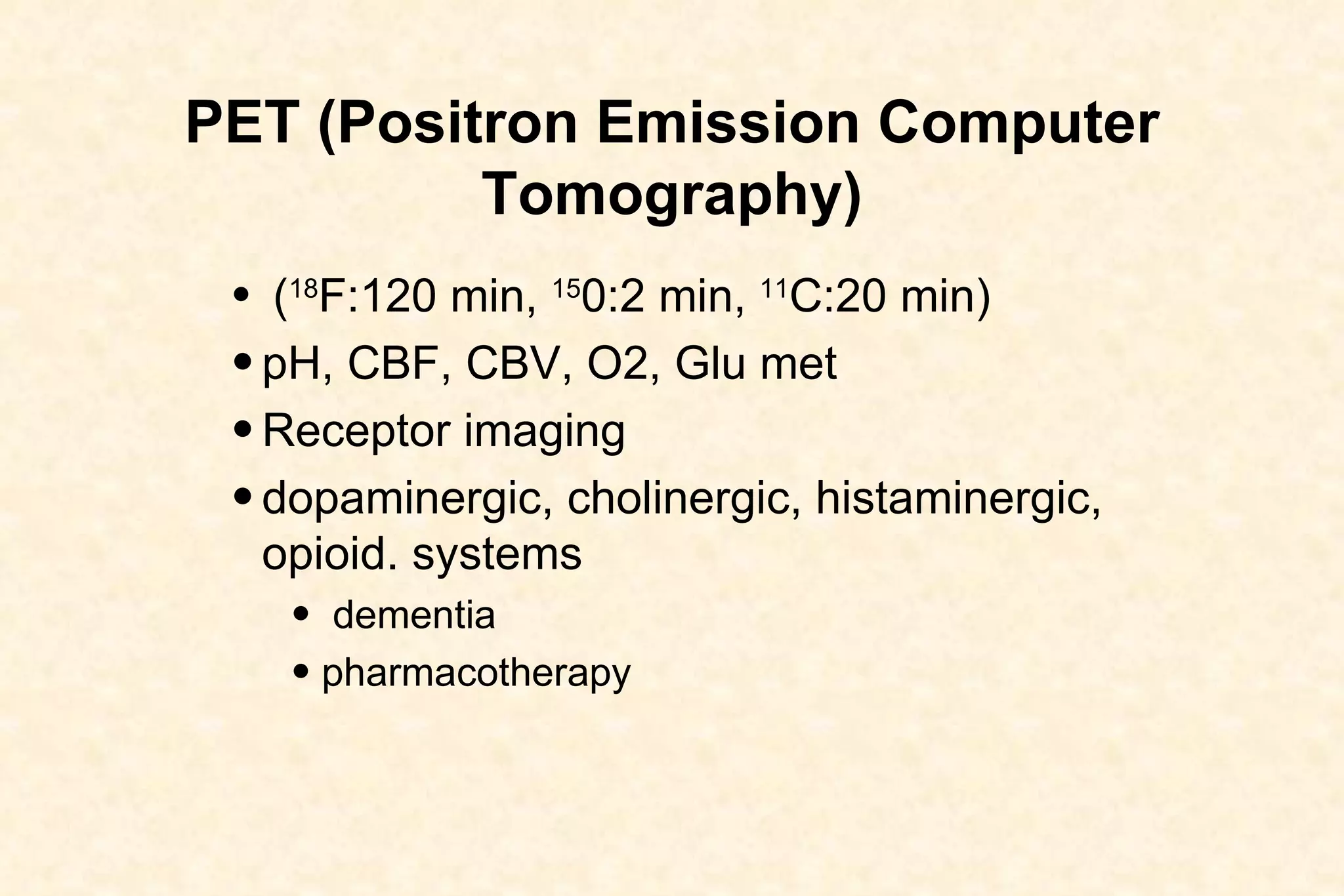
PET (Positron Emission Computer Tomography) ( 18 F:120 min,  15 0:2 min,  11 C:20 min)  pH, CBF, CBV, O2, Glu met Receptor imaging  dopaminergic, cholinergic, histaminergic, opioid. systems dementia  pharmacotherapy
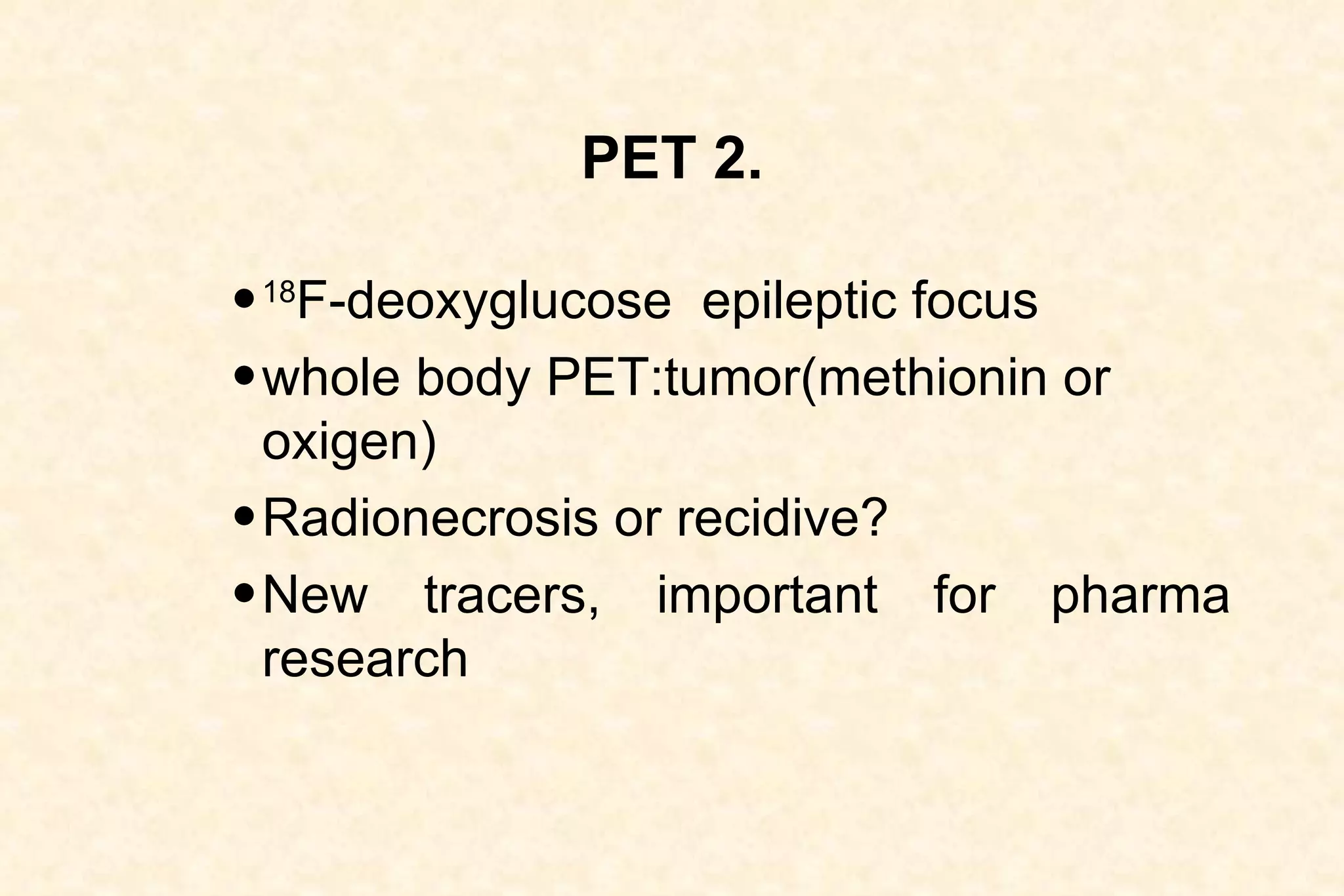
PET 2. 18 F-deoxyglucose  epileptic focus whole body PET:tumor(methionin or oxigen)  Radionecrosis or recidive? New tracers, important for pharma research
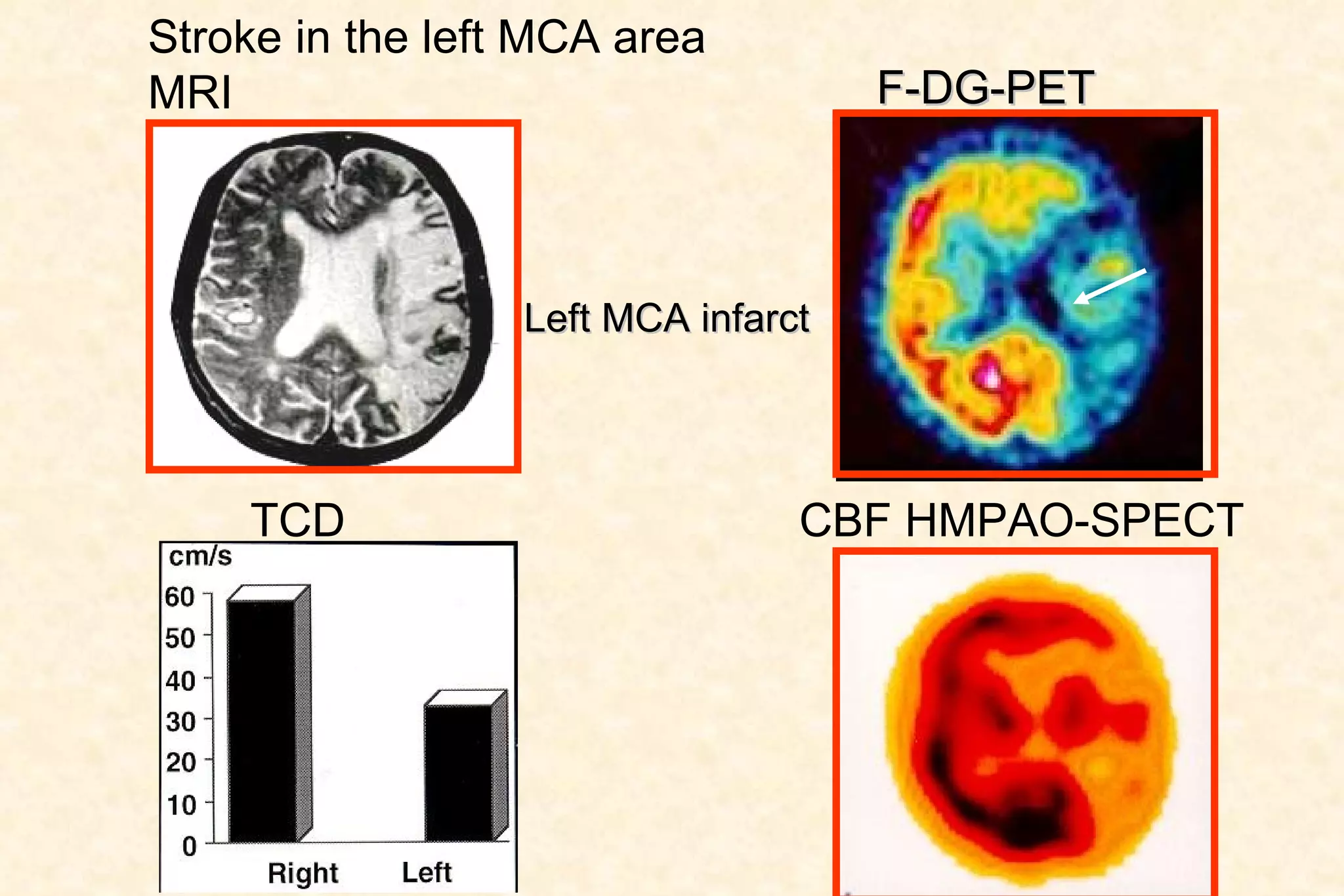
Stroke in the left MCA area MRI TCD  CBF HMPAO-SPECT F-DG-PET Left MCA infarct
Lumbal punction Infection? SAH, infiltration of meninx by tumor? Before Lp funduscopy!  Between  L-III-IV. vertebra  Sample for culture  but immediate  AB therapy Normal CSF:clear, water-like  cell:2-3
CSF protein (0.2-0.4 g/l) glucose 2/3 of the blood,  staining  Ziehl-Nielsen, Gram   serology viral titers  oligoclonal band   ELISA (Enzyme-linked-immunadsorbent assay) Tumormarkers (carcinoembryonal  antigen, Beta2-mikroglobulin Neuronspecific enolase PCR:   TBC, Herpes, Borrelia , CMV Pot. complications:  headache, hematoma, CSF fistel, infection, herniation
EEG 0,6-0,8 % of population: epilepsy Brain death, prion-diseases  New techniques:frequency analysis, EEG-mapping.  video,long-term EEG,holter EEG.  cortical electrodes  before epilepsy-surgery!!
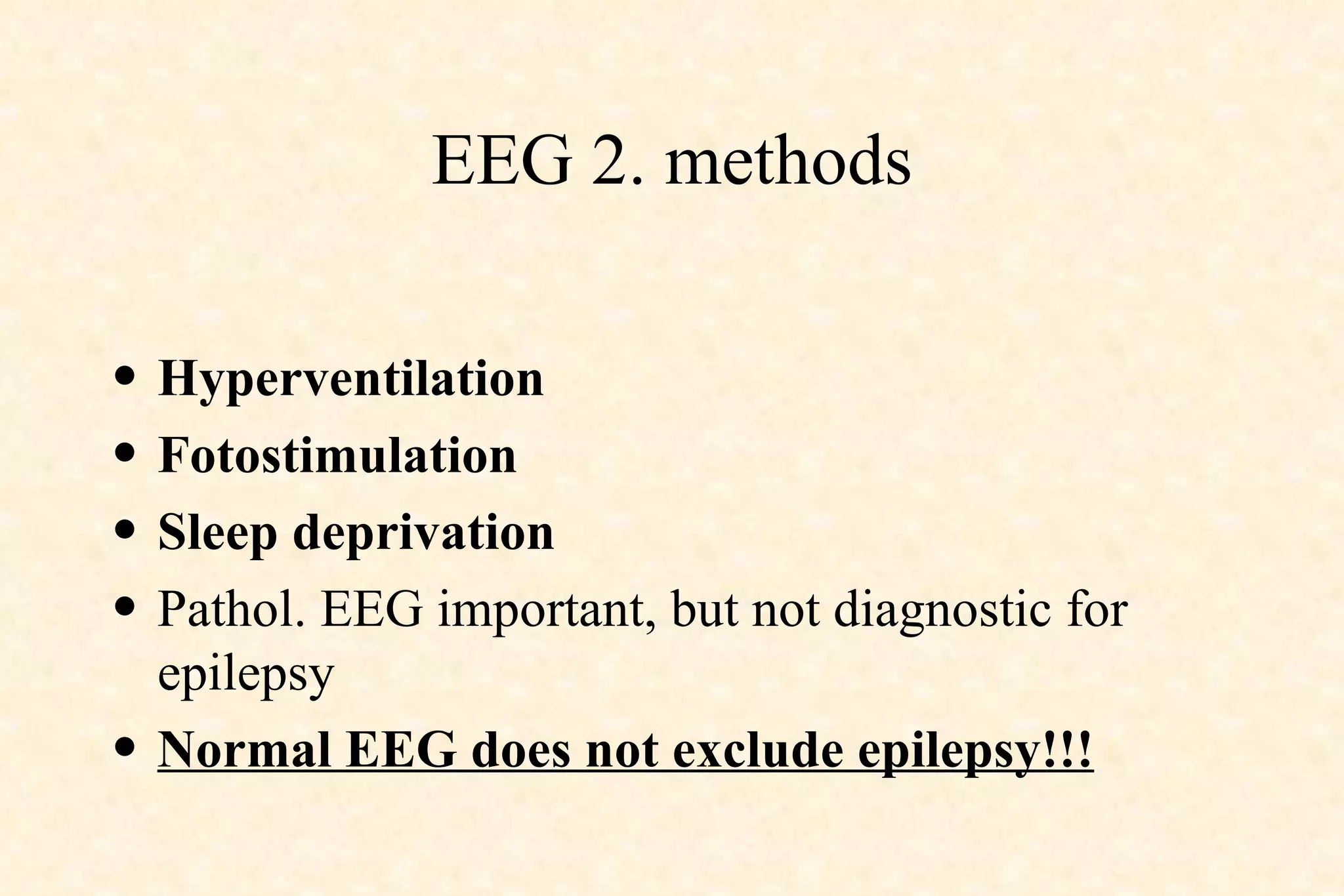
EEG 2. methods Hyperventilation Fotostimulation Sleep deprivation Pathol. EEG important, but not diagnostic for epilepsy Normal EEG does not exclude epilepsy!!!
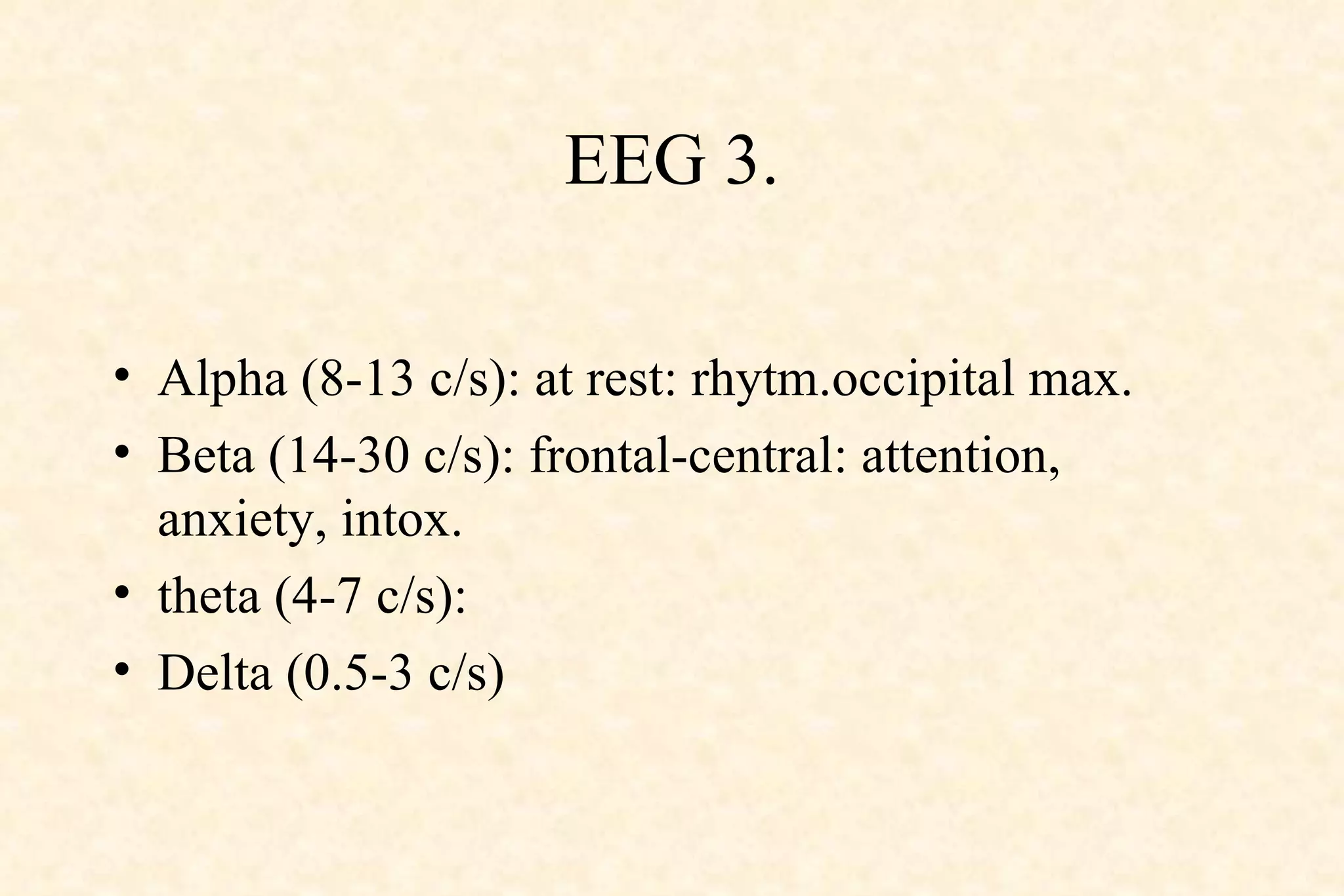
EEG 3. Alpha (8-13 c/s): at rest: rhytm.occipital max. Beta (14-30 c/s): frontal-central: attention, anxiety, intox. theta (4-7 c/s): Delta (0.5-3 c/s)
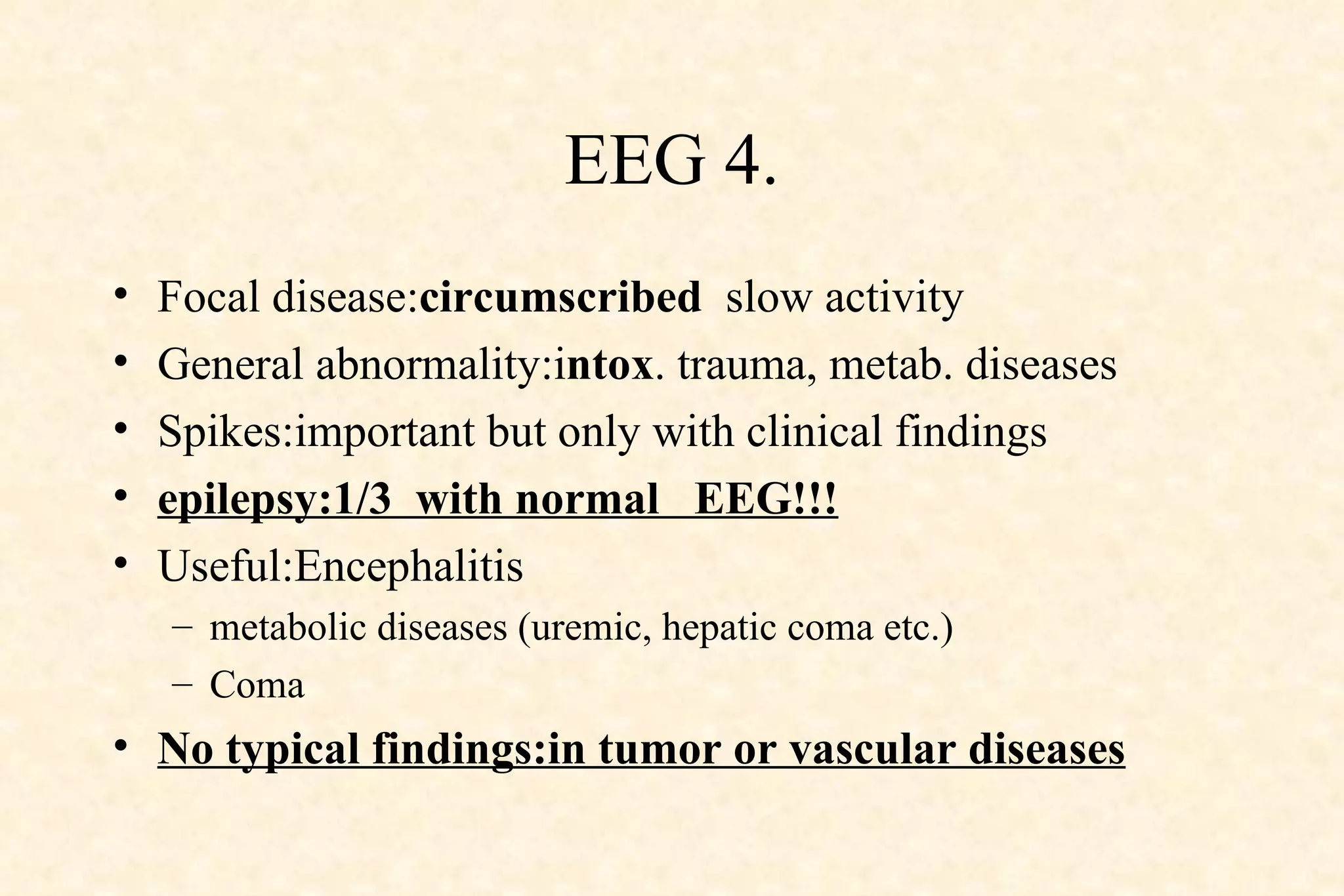
EEG 4. Focal disease: circumscribed   slow activity General abnormality:i ntox . trauma, metab. diseases Spikes:important but only with clinical findings epilepsy:1/3  with normal  EEG!!! Useful:Encephalitis metabolic diseases (uremic, hepatic coma etc.) Coma No typical findings:in tumor or vascular diseases
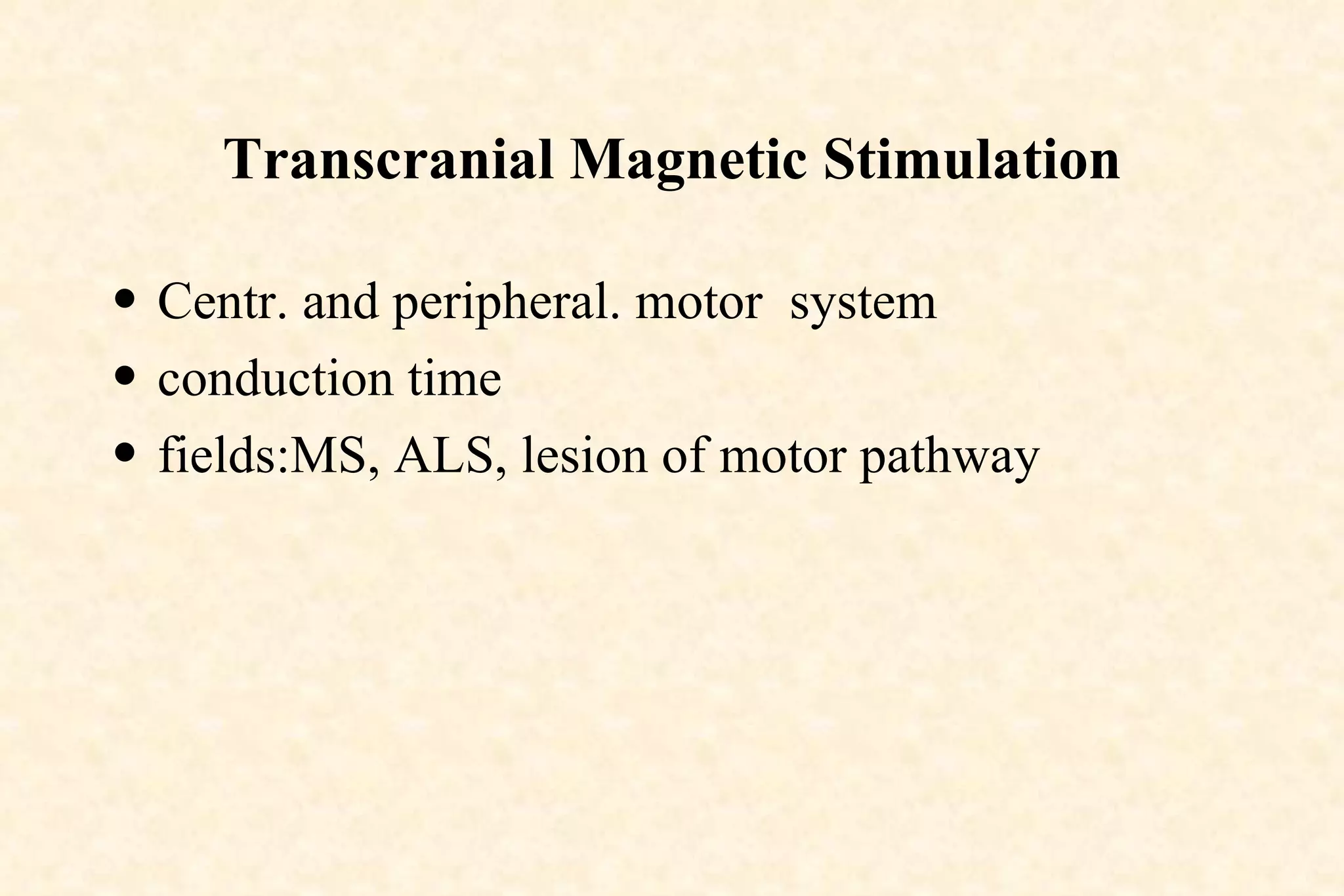
Transcranial Magnetic Stimulation Centr. and peripheral. motor  system  conduction time  fields:MS, ALS, lesion of motor pathway
VEP light or checkerboard, occipital registration 100 ms latency is an important parameter averaging (64-128) important:Multiple sclerosis
SEP excitation, vertebras,  parietal cortex  Comparison:with controls and contralateral values MS, spinal cord diseases,  intraop. monitoring
BAEP Sound, vertex, mastoid, averaging of 1-2000 impulse, I-V. waves,  latency, distance between III.-V. waves brain stem tumor, vascular, brain death
EMG neurogenic and myogenic atrophy could be differentiated psychogenic and organic paresis clinically silent  paresis reinnervation tremor types
ENG ENG: motor and sensory conduction velocity   motor: orthodrom,  sensory fibers:orthodrom and  antidrom  sensory action pot. less than motor ones:averaging is important Myelin lesion:slow vel. Axon lesion:no or small changes, but amplitude decrease
MEG  Spontanous or after stim.  Magnetic dipol changes with magnetic field Isolation is important good spatial resolution (   3mm) 1 ms epilepsy, stroke metabolic disorders
Other methods 1. Muscle biopsy Light- and -electronmicr, immunohistology Neurogenic atrophy:atrophy in groups Myositis:inflamm.cells,  immuncomplex, IgG deposition Non inflamm::necrosis, fibers, connect. tissue Nerve biopsy lateral  sural n. (sensory) sometimes n. musculocut. Gammopathy, inflammation, PAN, leukodystr., amyloidosis
Others 2. Brain biopsy CT, MR-orient., tumor, lymphoma  Rectal, skin Amyloidosis  Lactate-test metab. myopathia,  anaerob glycogenolysis, glycolysis before and after effort  (3-4 x),  aldolase, kreatinkinase, myoglobin
Others 3. Hormones GH, FSH, LH  Neuronspecific enolase If 30 ng/ml poor prognosis Antineural AB Paraneoplasia Tumormarkers Ach-Receptor  AB Myasthenia
Hypnoid type of disturbance of consciousness Either brain stem or Diffuse  cortical damage or both
Somnolent Stupor  coma
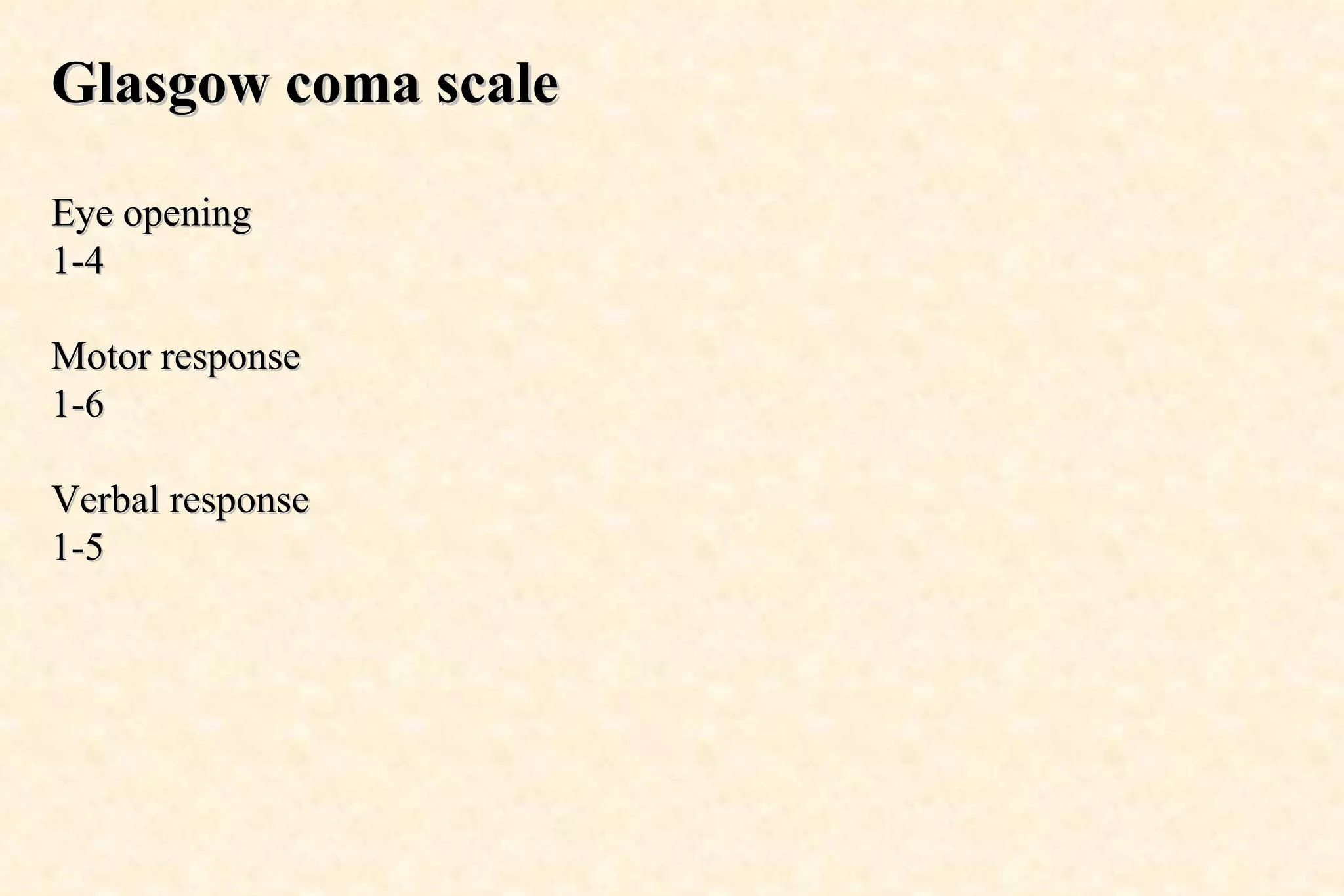
Glasgow coma scale Eye opening 1-4 Motor response 1-6 Verbal response 1-5
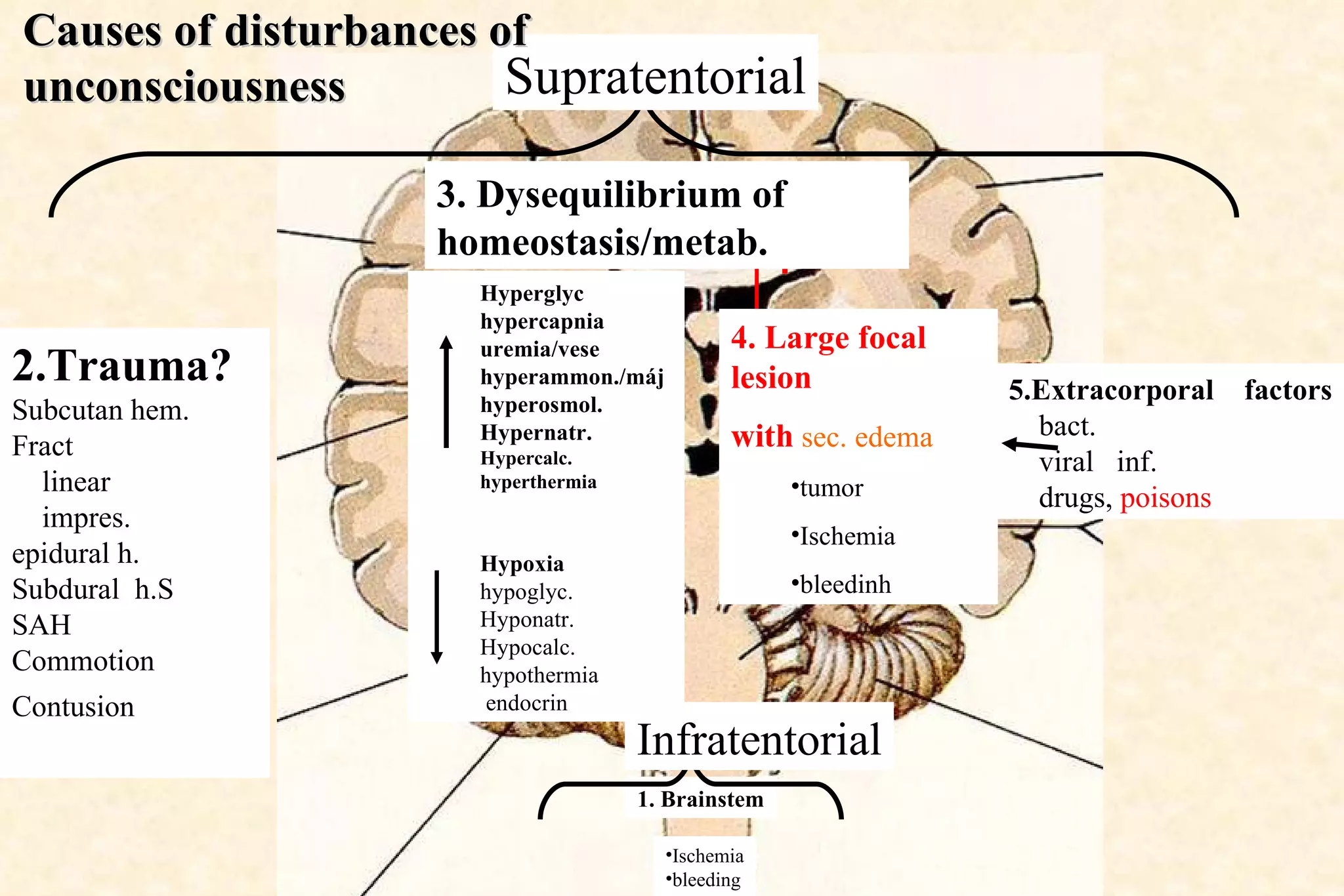
1. Brainstem Hyperglyc hypercapnia uremia/vese hyperammon./máj hyperosmol. Hypernatr. Hypercalc. hyperthermia Hypoxia hypoglyc. Hyponatr. Hypocalc. hypothermia endocrin 5.Extracorporal  factors bact.  viral  inf. drugs,  poisons Ischemia bleeding 2.Trauma? Subcutan hem. Fract linear impres. epidural h.  Subdural  h.S SAH  Commotion  Contusion  (SAH)   4. Large focal lesion with   sec. edema tumor Ischemia bleedinh 3. Dysequilibrium of homeostasis/metab. Supratentorial Infratentorial Causes of disturbances of unconsciousness
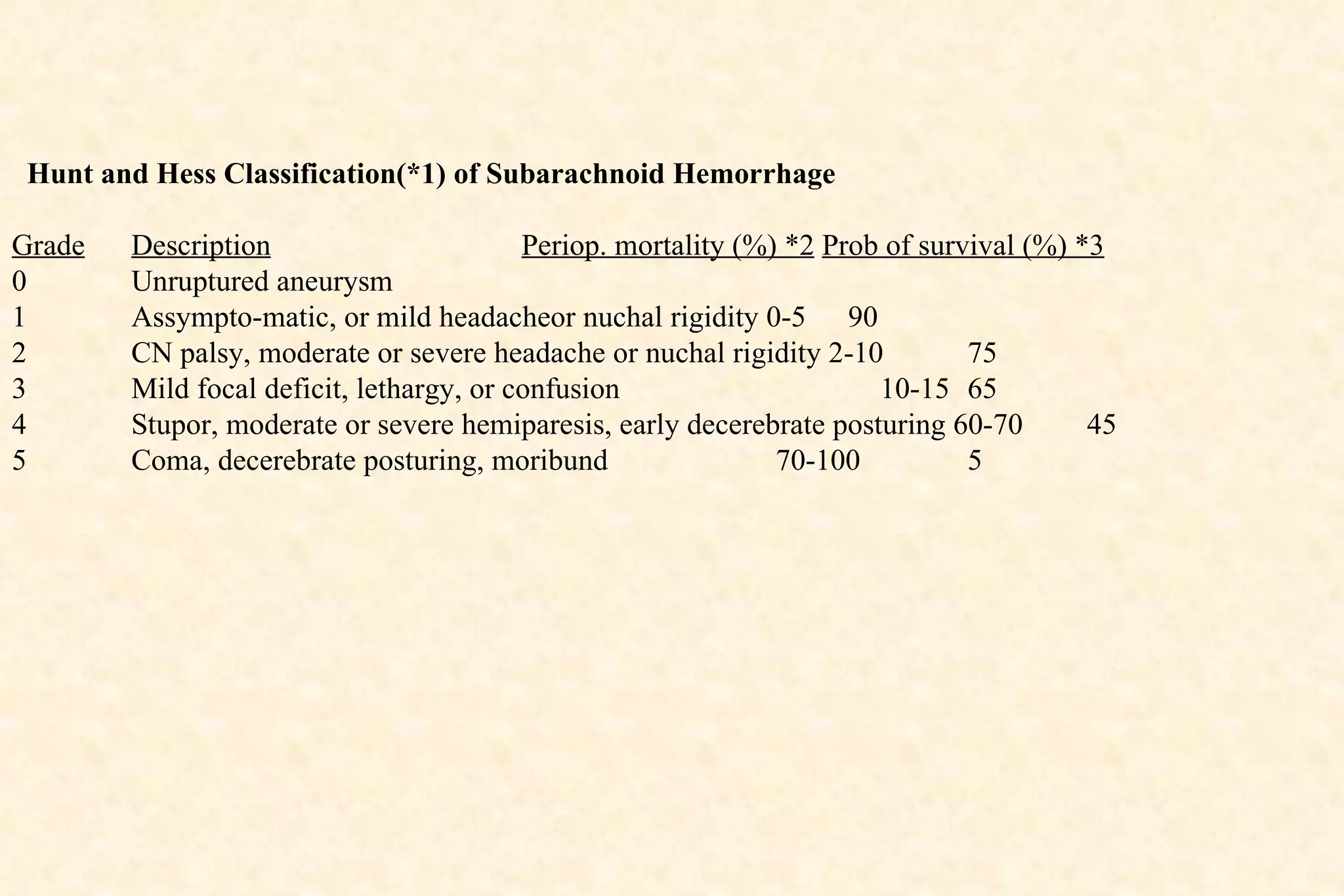
Hunt and Hess Classification(*1) of Subarachnoid Hemorrhage Grade Description   Periop. mortality (%) *2   Prob of survival (%) *3 0 Unruptured aneurysm  1 Assympto-matic, or mild headacheor nuchal rigidity 0-5 90 2 CN palsy, moderate or severe headache or nuchal rigidity 2-10  75 3 Mild focal deficit, lethargy, or confusion    10-15 65 4 Stupor, moderate or severe hemiparesis, early decerebrate posturing 60-70 45 5 Coma, decerebrate posturing, moribund   70-100 5
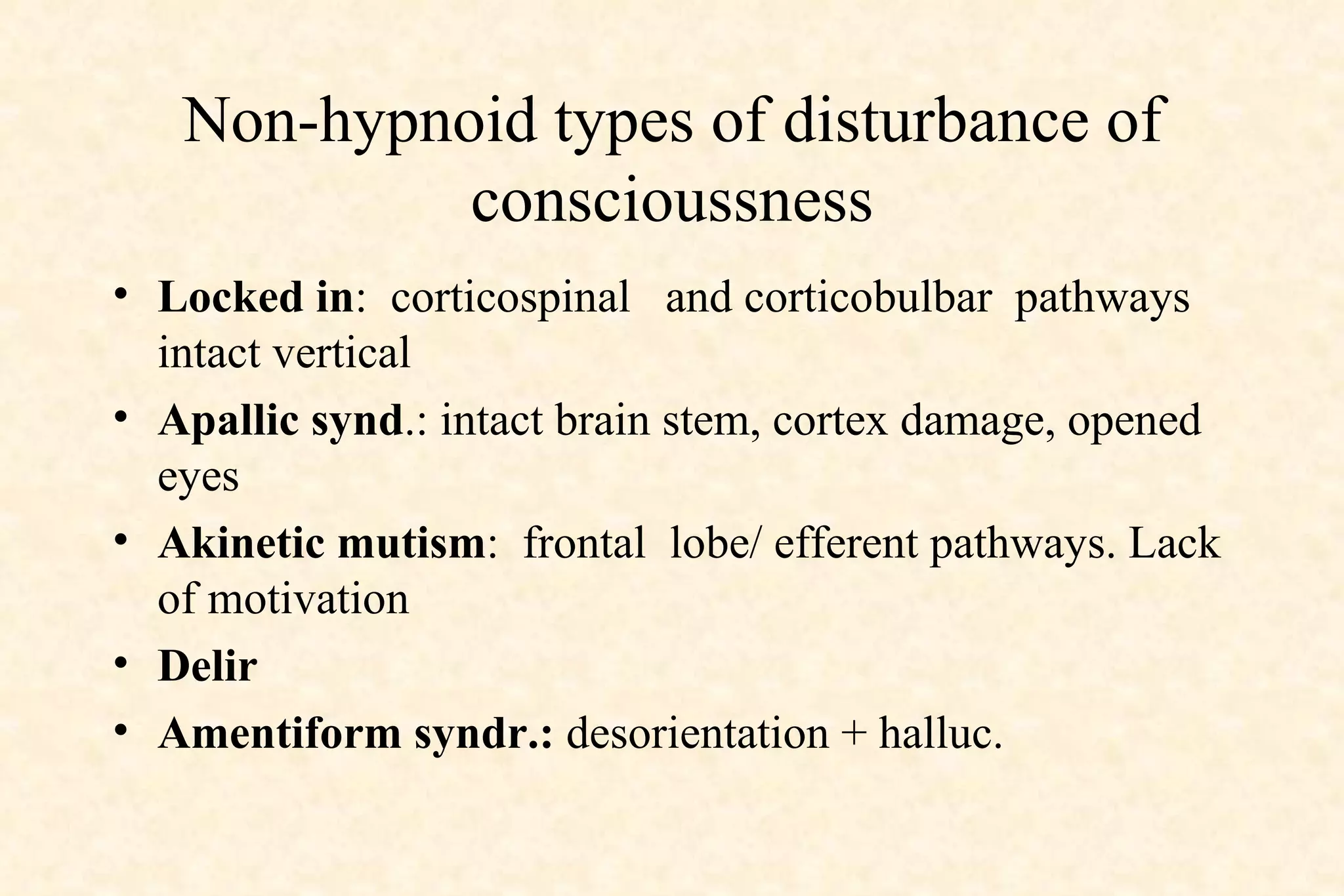
Non-hypnoid types of disturbance of conscioussness Locked in :  corticospinal  and corticobulbar  pathways intact vertical  Apallic synd .: intact brain stem, cortex damage, opened eyes Akinetic mutism :  frontal  lobe/ efferent pathways. Lack of motivation Delir  Amentiform syndr.:  desorientation + halluc.
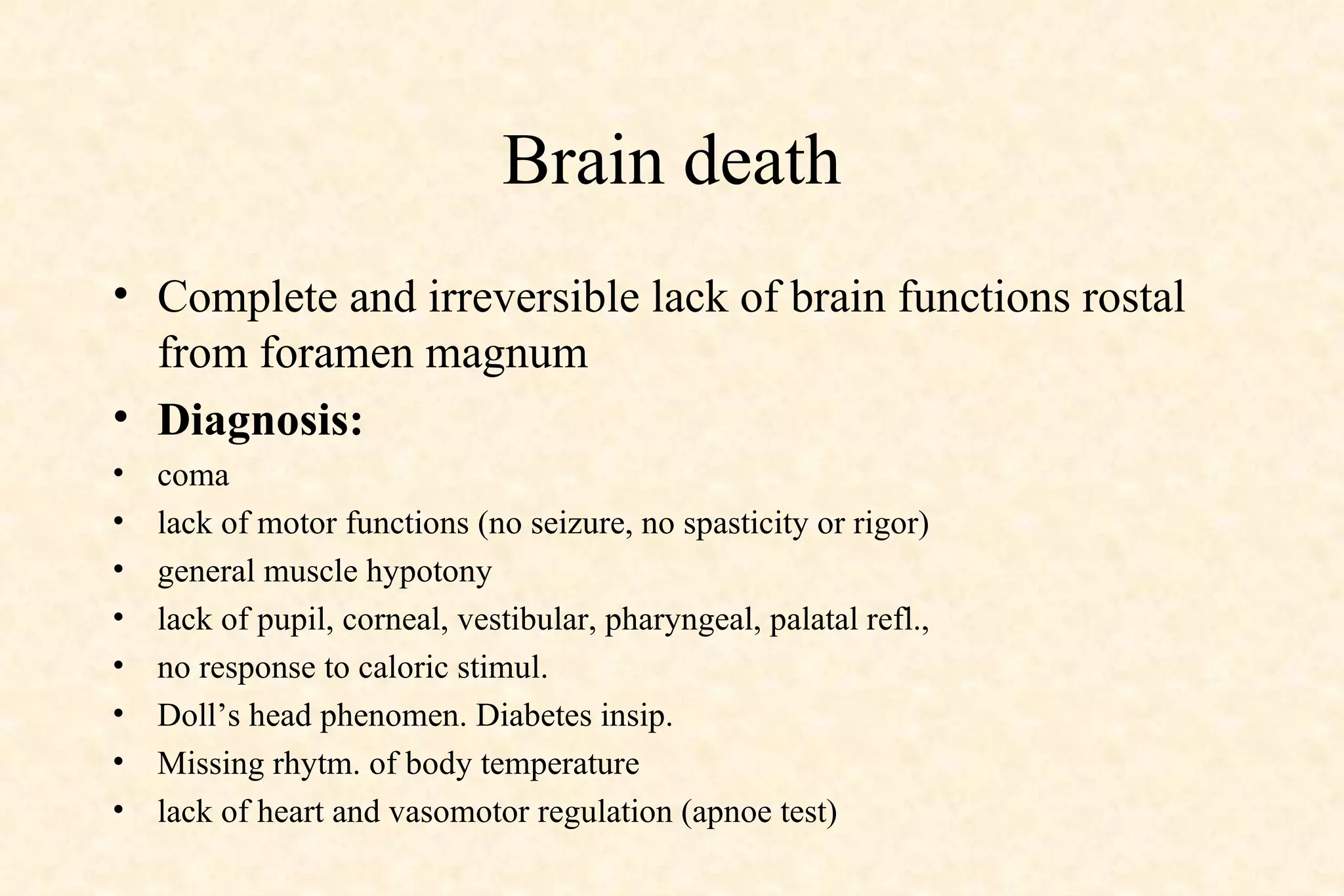
Brain death Complete and irreversible lack of brain functions rostal from foramen magnum Diagnosis:   coma lack of motor functions (no seizure, no spasticity or rigor) general muscle hypotony lack of pupil, corneal, vestibular, pharyngeal, palatal refl., no response to caloric stimul.  Doll’s head phenomen. Diabetes insip. Missing rhytm. of body temperature lack of heart and vasomotor regulation (apnoe test)
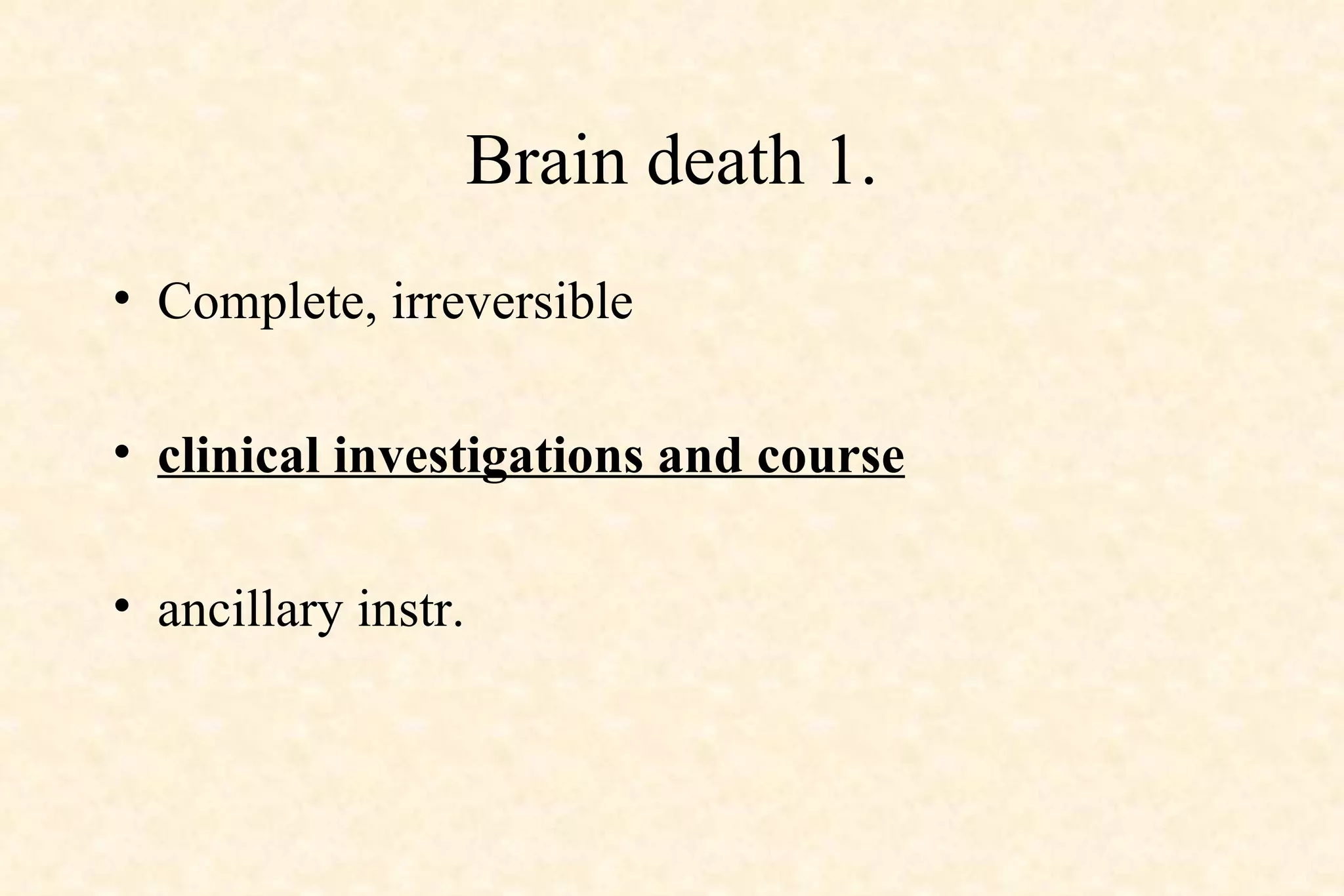
Brain death 1. Complete, irreversible clinical investigations and course ancillary instr.
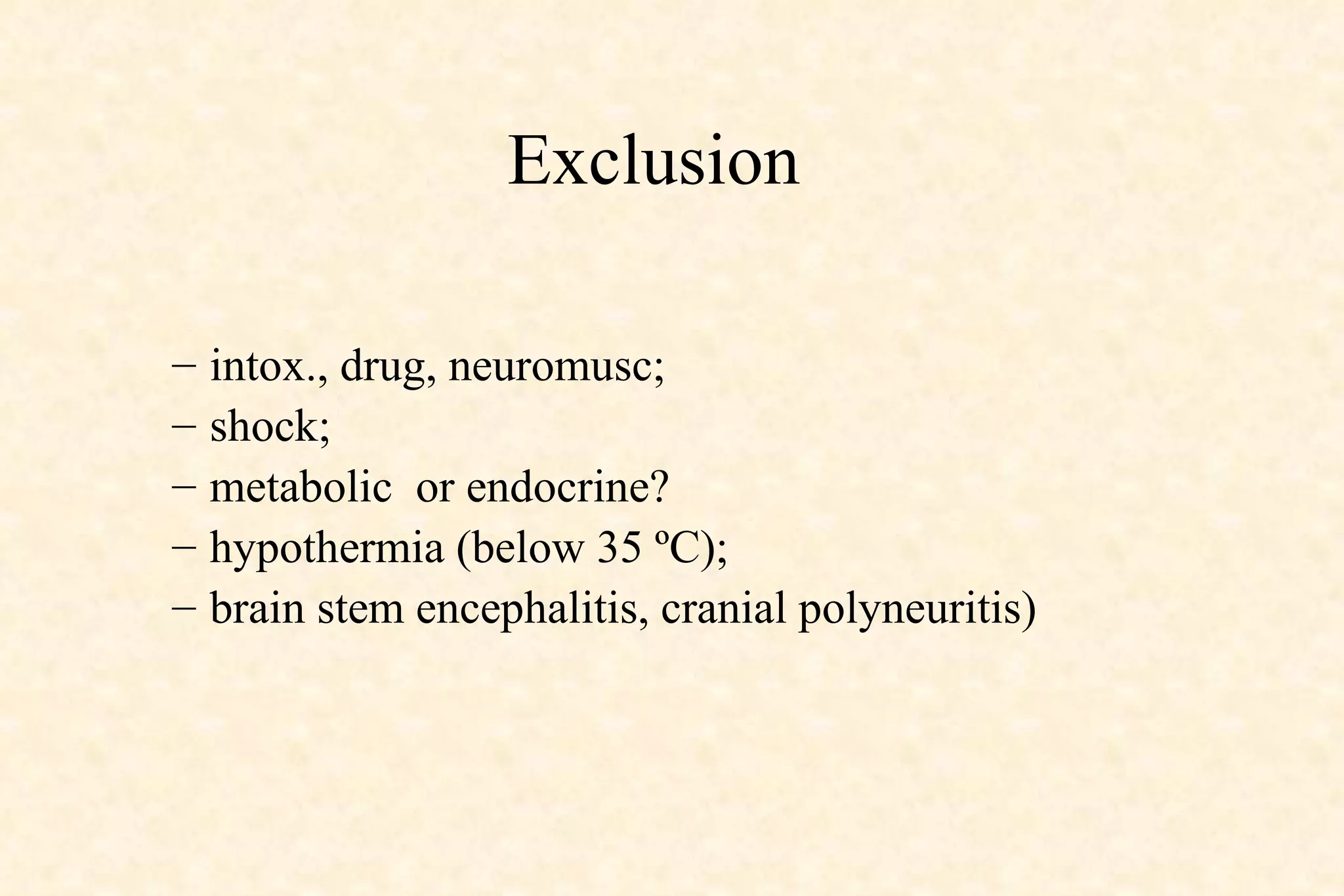
Exclusion  intox., drug, neuromusc; shock; metabolic  or endocrine?  hypothermia (below 35 ºC); brain stem encephalitis, cranial polyneuritis)
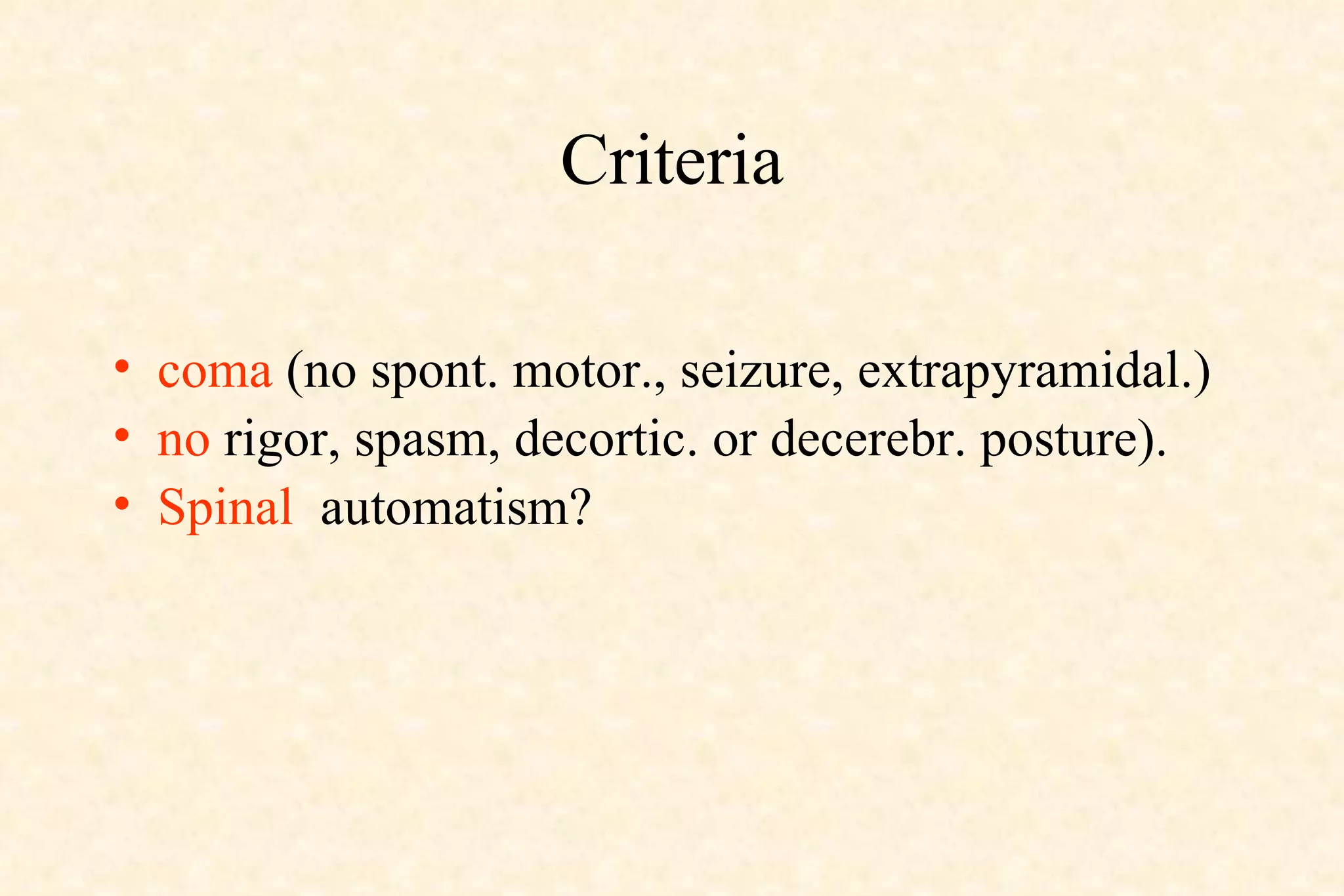
Criteria coma  (no spont. motor., seizure, extrapyramidal.)  no  rigor, spasm, decortic. or decerebr. posture).  Spinal   automatism?
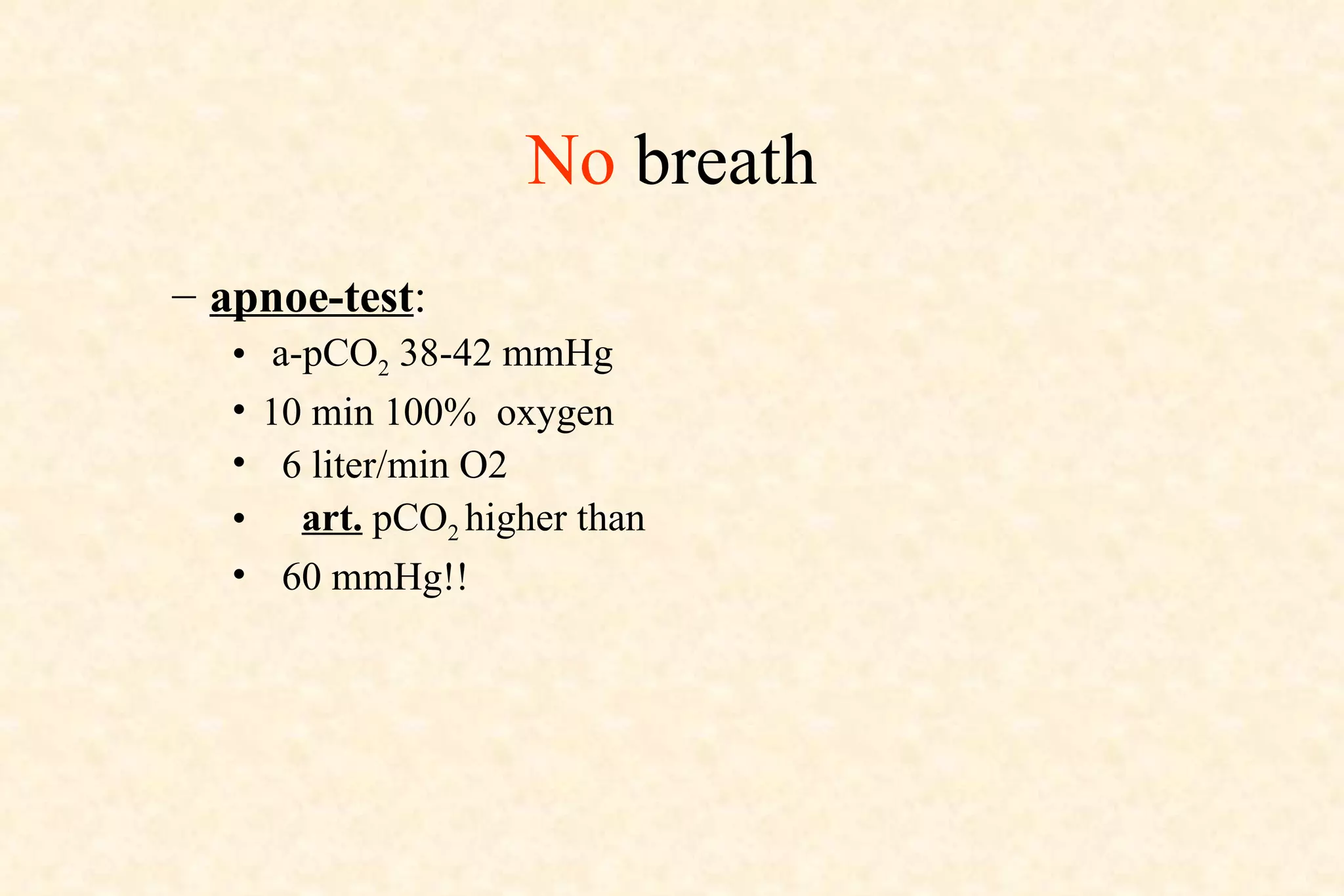
No  breath apnoe-test :  a-pCO 2  38-42 mmHg  10 min 100%  oxygen  6 liter/min O2 art.  pCO 2  higher than  60 mmHg!!
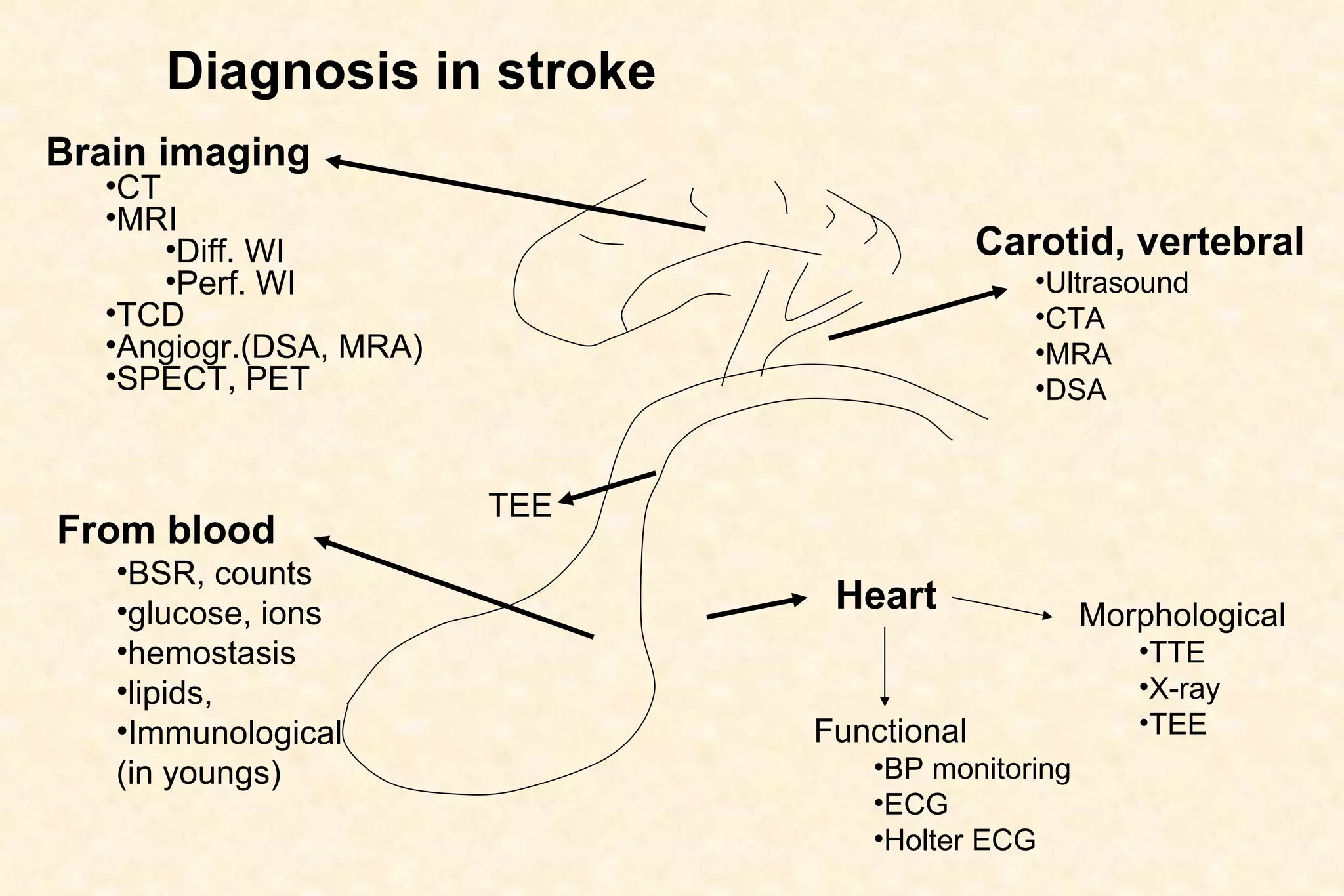
Diagnosis in stroke From blood BSR, counts glucose, ions hemostasis lipids,  Immunological (in youngs) Heart Functional BP monitoring ECG Holter ECG Morphological TTE X-ray TEE TEE Carotid, vertebral Ultrasound CTA MRA DSA Brain imaging CT MRI Diff. WI Perf. WI TCD Angiogr.(DSA, MRA) SPECT, PET

Diagnostic methods

  • 1.
    Neurology Neuron: nerve,logos: knowledge Neurology: deals with the prevention, therapy and rehabilitation of organic disease of NS and musculature Characteristisc: 1. Psychiatric alterations are not typical 2. Morphological or functional abnormalities 3. Psychogenic mechanisms only modify Internal Medicine : functional diagnosis neurology: localisation, importance of neuroanatomy
  • 2.
    The most frequentneurological disorders Headache (tension type: pop. 40-60%, migraine: femails:9-12%, males:4-6%) Low back pain Stroke: prev.:2000/ 100 000 Epilepsy: 60-80 0 / 100 000 Parkinsonism: 20 –40 0 / 100 000 Polyneuropathy:30 0 / 100 000 Multiplex Sclerose 6-80 / 100 000
  • 3.
    P- What P rovokes discomfort? Q- What is the Q uality of the discomfort? R- Where is the R egion of the discomfort? S- What is the S everity of the discomfort? T- What is the T ime sequence?
  • 4.
    Neurol. examination Signs of meningeal irritation Cranial nerves Reflexes Sensory Motor Vegetative function Orientation, cognition, perception
  • 5.
    II. optic nervePapilla-edema: increased intracran. pressure Optic atrophy: chronic disease; Vascular diseases: HT, diabetes
  • 6.
    Corneal reflex(V and VII) Afferent (V) efferent (VII),
  • 7.
  • 8.
    Brisky :physiological pathological:brisky +pyramidal sign
  • 9.
    CT Ischemia, bleeding,tumor abscess, degeneration, trauma.
  • 10.
    62 yrs strokeat admission One day later 2 days later
  • 11.
    Hemorrhagic transformation 11thDec dysart+mild hemipar 21st December worsening 27th of December
  • 12.
  • 13.
  • 14.
    DSA angiography DSA(digital subtraction angiography, mask-image) excellent resolution DSA, MR, CT and PET integration intervention neuroradiology:embolisation of malformations, fistels, aneurysm Problems:(bleeding, dissection, embolisation, vasospasm, contrast-allergy)
  • 15.
    Angiography 2. DiagnosisStenosis, vascular malformation, aneurysm, vasculitis, sinus thrombosis Therapy local lysis, preop. embolisation, tumor chemotherapy
  • 16.
    MR-angiography "angiogramm" dark(flow void) or slow flow :bright (flow related enhancement). Stenosis could be misdiagnosed:occlusion aneurysm Non-invasive
  • 17.
    US B-mode:high resolution,plaque const., Intima-Media thickness Carotid Duplex:flow+morphology stroke prevention:carotid stenosis+OP embolus-detection Transcranial Doppler TTE, TEE
  • 18.
    SPECT (Single PhotonEmission Computer Tomography) 99m Tc-HMPAO or 133 I-amphetamin (IMP), 133Xe CBF, CBV and receptors epileptic focus Alzheimer (temporoparietal decrease) before and after carotid reconstruction
  • 19.
    PET (Positron EmissionComputer Tomography) ( 18 F:120 min, 15 0:2 min, 11 C:20 min) pH, CBF, CBV, O2, Glu met Receptor imaging dopaminergic, cholinergic, histaminergic, opioid. systems dementia pharmacotherapy
  • 20.
    PET 2. 18F-deoxyglucose epileptic focus whole body PET:tumor(methionin or oxigen) Radionecrosis or recidive? New tracers, important for pharma research
  • 21.
    Stroke in theleft MCA area MRI TCD CBF HMPAO-SPECT F-DG-PET Left MCA infarct
  • 22.
    Lumbal punction Infection?SAH, infiltration of meninx by tumor? Before Lp funduscopy! Between L-III-IV. vertebra Sample for culture but immediate AB therapy Normal CSF:clear, water-like cell:2-3
  • 23.
    CSF protein (0.2-0.4g/l) glucose 2/3 of the blood, staining Ziehl-Nielsen, Gram serology viral titers oligoclonal band ELISA (Enzyme-linked-immunadsorbent assay) Tumormarkers (carcinoembryonal antigen, Beta2-mikroglobulin Neuronspecific enolase PCR: TBC, Herpes, Borrelia , CMV Pot. complications: headache, hematoma, CSF fistel, infection, herniation
  • 24.
    EEG 0,6-0,8 %of population: epilepsy Brain death, prion-diseases New techniques:frequency analysis, EEG-mapping. video,long-term EEG,holter EEG. cortical electrodes before epilepsy-surgery!!
  • 25.
    EEG 2. methodsHyperventilation Fotostimulation Sleep deprivation Pathol. EEG important, but not diagnostic for epilepsy Normal EEG does not exclude epilepsy!!!
  • 26.
    EEG 3. Alpha(8-13 c/s): at rest: rhytm.occipital max. Beta (14-30 c/s): frontal-central: attention, anxiety, intox. theta (4-7 c/s): Delta (0.5-3 c/s)
  • 27.
    EEG 4. Focaldisease: circumscribed slow activity General abnormality:i ntox . trauma, metab. diseases Spikes:important but only with clinical findings epilepsy:1/3 with normal EEG!!! Useful:Encephalitis metabolic diseases (uremic, hepatic coma etc.) Coma No typical findings:in tumor or vascular diseases
  • 28.
    Transcranial Magnetic StimulationCentr. and peripheral. motor system conduction time fields:MS, ALS, lesion of motor pathway
  • 29.
    VEP light orcheckerboard, occipital registration 100 ms latency is an important parameter averaging (64-128) important:Multiple sclerosis
  • 30.
    SEP excitation, vertebras, parietal cortex Comparison:with controls and contralateral values MS, spinal cord diseases, intraop. monitoring
  • 31.
    BAEP Sound, vertex,mastoid, averaging of 1-2000 impulse, I-V. waves, latency, distance between III.-V. waves brain stem tumor, vascular, brain death
  • 32.
    EMG neurogenic andmyogenic atrophy could be differentiated psychogenic and organic paresis clinically silent paresis reinnervation tremor types
  • 33.
    ENG ENG: motorand sensory conduction velocity motor: orthodrom, sensory fibers:orthodrom and antidrom sensory action pot. less than motor ones:averaging is important Myelin lesion:slow vel. Axon lesion:no or small changes, but amplitude decrease
  • 34.
    MEG Spontanousor after stim. Magnetic dipol changes with magnetic field Isolation is important good spatial resolution (  3mm) 1 ms epilepsy, stroke metabolic disorders
  • 35.
    Other methods 1.Muscle biopsy Light- and -electronmicr, immunohistology Neurogenic atrophy:atrophy in groups Myositis:inflamm.cells, immuncomplex, IgG deposition Non inflamm::necrosis, fibers, connect. tissue Nerve biopsy lateral sural n. (sensory) sometimes n. musculocut. Gammopathy, inflammation, PAN, leukodystr., amyloidosis
  • 36.
    Others 2. Brainbiopsy CT, MR-orient., tumor, lymphoma Rectal, skin Amyloidosis Lactate-test metab. myopathia, anaerob glycogenolysis, glycolysis before and after effort (3-4 x), aldolase, kreatinkinase, myoglobin
  • 37.
    Others 3. HormonesGH, FSH, LH Neuronspecific enolase If 30 ng/ml poor prognosis Antineural AB Paraneoplasia Tumormarkers Ach-Receptor AB Myasthenia
  • 38.
    Hypnoid type ofdisturbance of consciousness Either brain stem or Diffuse cortical damage or both
  • 39.
  • 40.
    Glasgow coma scaleEye opening 1-4 Motor response 1-6 Verbal response 1-5
  • 41.
    1. Brainstem Hyperglychypercapnia uremia/vese hyperammon./máj hyperosmol. Hypernatr. Hypercalc. hyperthermia Hypoxia hypoglyc. Hyponatr. Hypocalc. hypothermia endocrin 5.Extracorporal factors bact. viral inf. drugs, poisons Ischemia bleeding 2.Trauma? Subcutan hem. Fract linear impres. epidural h. Subdural h.S SAH Commotion Contusion (SAH) 4. Large focal lesion with sec. edema tumor Ischemia bleedinh 3. Dysequilibrium of homeostasis/metab. Supratentorial Infratentorial Causes of disturbances of unconsciousness
  • 42.
    Hunt and HessClassification(*1) of Subarachnoid Hemorrhage Grade Description Periop. mortality (%) *2 Prob of survival (%) *3 0 Unruptured aneurysm 1 Assympto-matic, or mild headacheor nuchal rigidity 0-5 90 2 CN palsy, moderate or severe headache or nuchal rigidity 2-10 75 3 Mild focal deficit, lethargy, or confusion 10-15 65 4 Stupor, moderate or severe hemiparesis, early decerebrate posturing 60-70 45 5 Coma, decerebrate posturing, moribund 70-100 5
  • 43.
    Non-hypnoid types ofdisturbance of conscioussness Locked in : corticospinal and corticobulbar pathways intact vertical Apallic synd .: intact brain stem, cortex damage, opened eyes Akinetic mutism : frontal lobe/ efferent pathways. Lack of motivation Delir Amentiform syndr.: desorientation + halluc.
  • 44.
    Brain death Completeand irreversible lack of brain functions rostal from foramen magnum Diagnosis: coma lack of motor functions (no seizure, no spasticity or rigor) general muscle hypotony lack of pupil, corneal, vestibular, pharyngeal, palatal refl., no response to caloric stimul. Doll’s head phenomen. Diabetes insip. Missing rhytm. of body temperature lack of heart and vasomotor regulation (apnoe test)
  • 45.
    Brain death 1.Complete, irreversible clinical investigations and course ancillary instr.
  • 46.
    Exclusion intox.,drug, neuromusc; shock; metabolic or endocrine? hypothermia (below 35 ºC); brain stem encephalitis, cranial polyneuritis)
  • 47.
    Criteria coma (no spont. motor., seizure, extrapyramidal.) no rigor, spasm, decortic. or decerebr. posture). Spinal automatism?
  • 48.
    No breathapnoe-test : a-pCO 2 38-42 mmHg 10 min 100% oxygen 6 liter/min O2 art. pCO 2 higher than 60 mmHg!!
  • 49.
    Diagnosis in strokeFrom blood BSR, counts glucose, ions hemostasis lipids, Immunological (in youngs) Heart Functional BP monitoring ECG Holter ECG Morphological TTE X-ray TEE TEE Carotid, vertebral Ultrasound CTA MRA DSA Brain imaging CT MRI Diff. WI Perf. WI TCD Angiogr.(DSA, MRA) SPECT, PET