Diabetic Foot Ulcer
Introduction
 Diabetes mellitus (DM) is one of the main problems in health systems and a global public
health threat that has increased dramatically over the past 2 decades.
 Foot ulcers are the most common medical complications of patients with diabetes,
estimated prevalence of 12-15% among all individuals with diabetes.[1]
 It is estimated that approximately 20% of hospital admissions among patients with DM are
the result of DFU.
 Ulcerations can have potential devastating complications as they cause lower extremity
amputations in patients with diabetes for about 50%-70%.
 Furthermore, DFU is responsible for substantial emotional and physical distress as well as
productivity and financial losses that lower the quality of life.
(1) American Diabetes Association: Diabetes statistics. Available at: www.diabetes.org/diabetes-
statistics.jsp
 Several factors are involved in the decreased healing potential of a diabetic
foot, all of which stem from the metabolic disorders associated with
diabetes.
 The most important of these factors are:
 Level of uncontrolled hyperglycemia
 Reduced circulation and arterial blood flow
 Nutrition status
 Inability to offload the affected region of the foot
 Presence of infection
 Failure of the wound healing process, in particular repair of lost
extracellular matrix that forms the largest component of the dermal skin
layer, is one of the primary culprits in diabetic foot ulcers
Introduction
Definition
Diabetic
Foot Ulcer
Etiology
 Caused by ischemic (± 10%), neuropathic or combined neuroischemic abnormalities
((± 90%).
 Patients with diabetes have a higher incidence of atherosclerosis, the thickening of
capillary basement membranes, arteriolar hyalinosis, and endothelial proliferation.
 They may develop artherosclerosis of large and medium-sized arteries, such as
aortoiliac and femoropopliteal vessels, but atherosclerosis of the infrapopliteal
segments is particularly common.
Etiology
 Combined with digital artery disease, ulcers can develop and quickly progress to
gangrene in the absence of adequate blood flow.
 Peripheral neuropathy is present in 60% of patients with diabetes and 80% of patients
with diabetes who have foot ulcers
 The most common pathway to develop foot problems in patients is peripheral
sensorimotor and autonomic neuropathy that leads to high foot pressure, foot
deformities, and gait instability, which increases the risks of developing ulcers
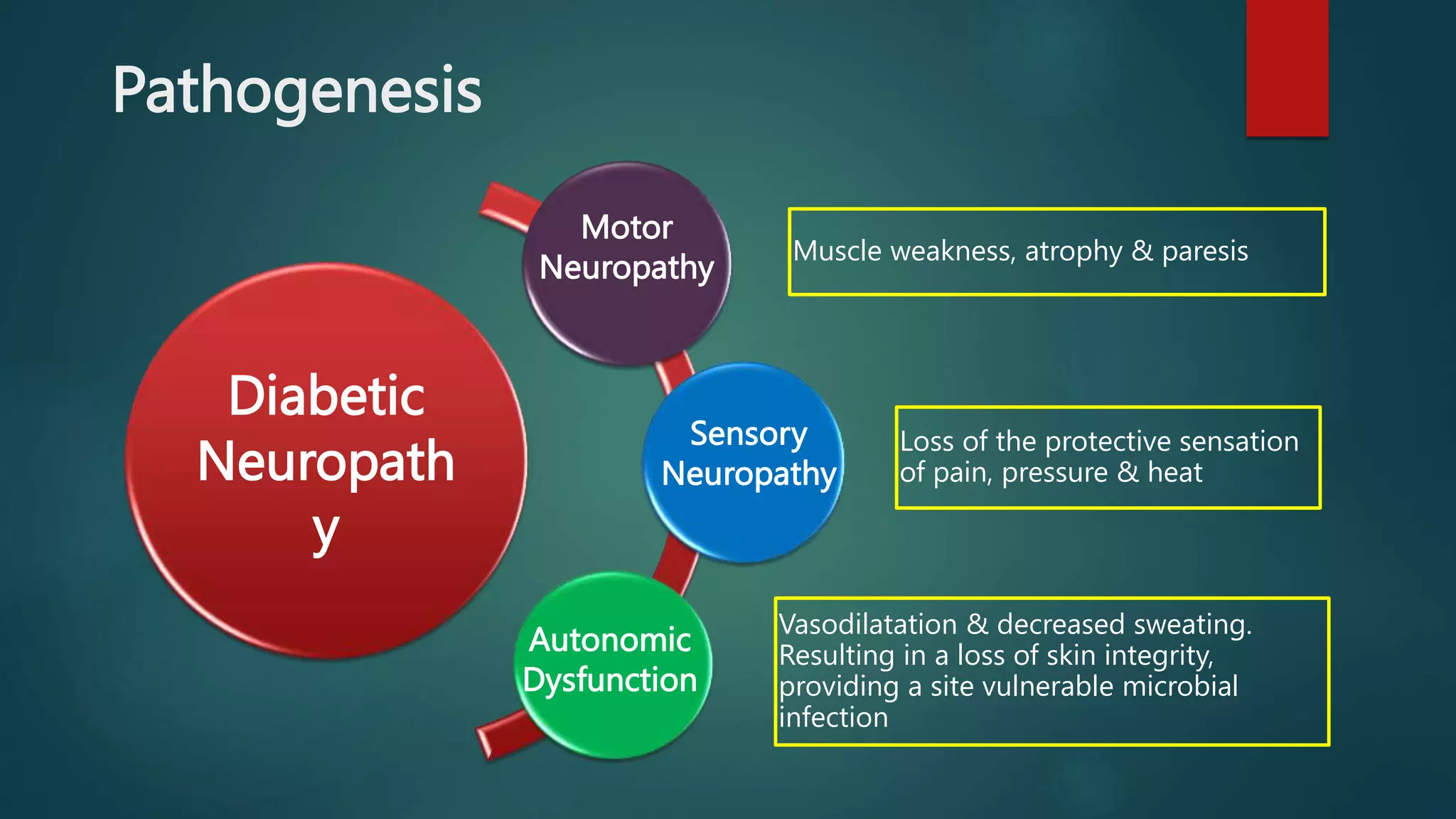
Pathogenesis
Pathogenesis
Diabetic
Neuropath
y
Muscle weakness, atrophy & paresis
Loss of the protective sensation
of pain, pressure & heat
Vasodilatation & decreased sweating.
Resulting in a loss of skin integrity,
providing a site vulnerable microbial
infection
Motor
Neuropathy
Sensory
Neuropathy
Autonomic
Dysfunction
Peripheral Vascular
(Arterial) Disease
2-8 times more common in patients with
Diabetes. Starting at an earlier age, progressing
more rapidly & usually being more severe than in
the general population
Commonly affects the segments
between the knee & the ankle.
Event minor injuries, especially when
complicated by infection, increase the
demand for blood in the foot & inadequate
blood supply may result ulceration,
potentially leading to limb amputation
Pathogenesis
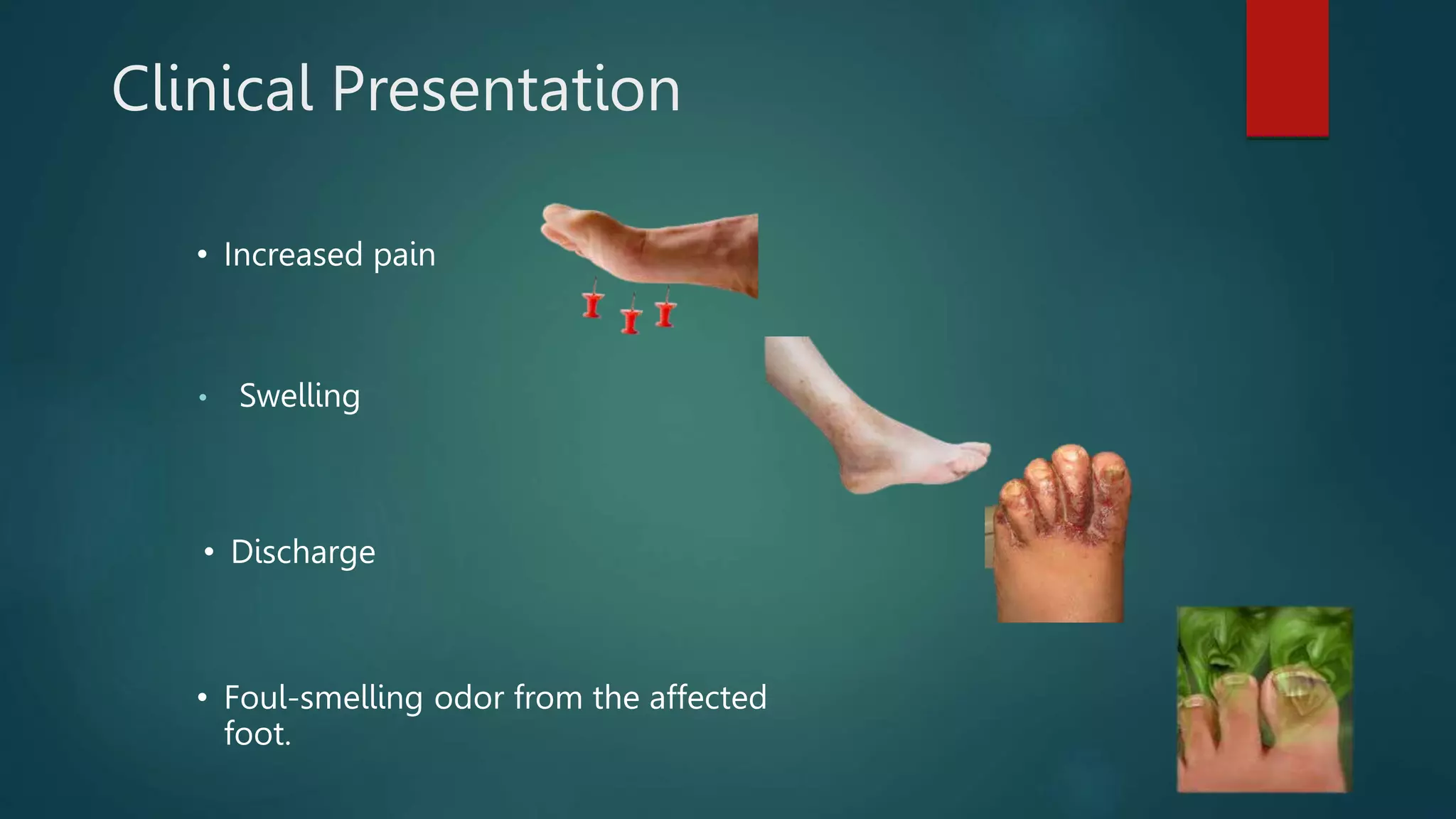
Clinical Presentation
• Swelling
• Increased pain
• Discharge
• Foul-smelling odor from the affected
foot.
Microbiology
 Most diabetic foot ulcers present as polymicrobial
infections.
 The most common pathogens seen are aerobic
Gram-positive cocci, in particular Staphylococcus
aureus, and Gram-negative rods such as
Pseudomonas aeruginosa.[3]
 Infection with anaerobic organisms such as
Clostridium perfringes may lead to foot ischemia or
gangrene.
 Deep wound cultures and blood cultures are useful
to help direct antibiotic therapy and monitor the
presence of early sepsis.
Assessment
 Physical Examination
 Assessment of the skin, vascular, neurological and
musculoskeletal system.
 The foot examination should begin with noting the
condition of the skin involved in and surrounding the
ulcer.. The key features of the ulcer to note during
exam are:
Depth
Location
Drainage
Signs of infection
Presence of viable and nonviable
gangrenous tissue (Figure 1)
Assessment
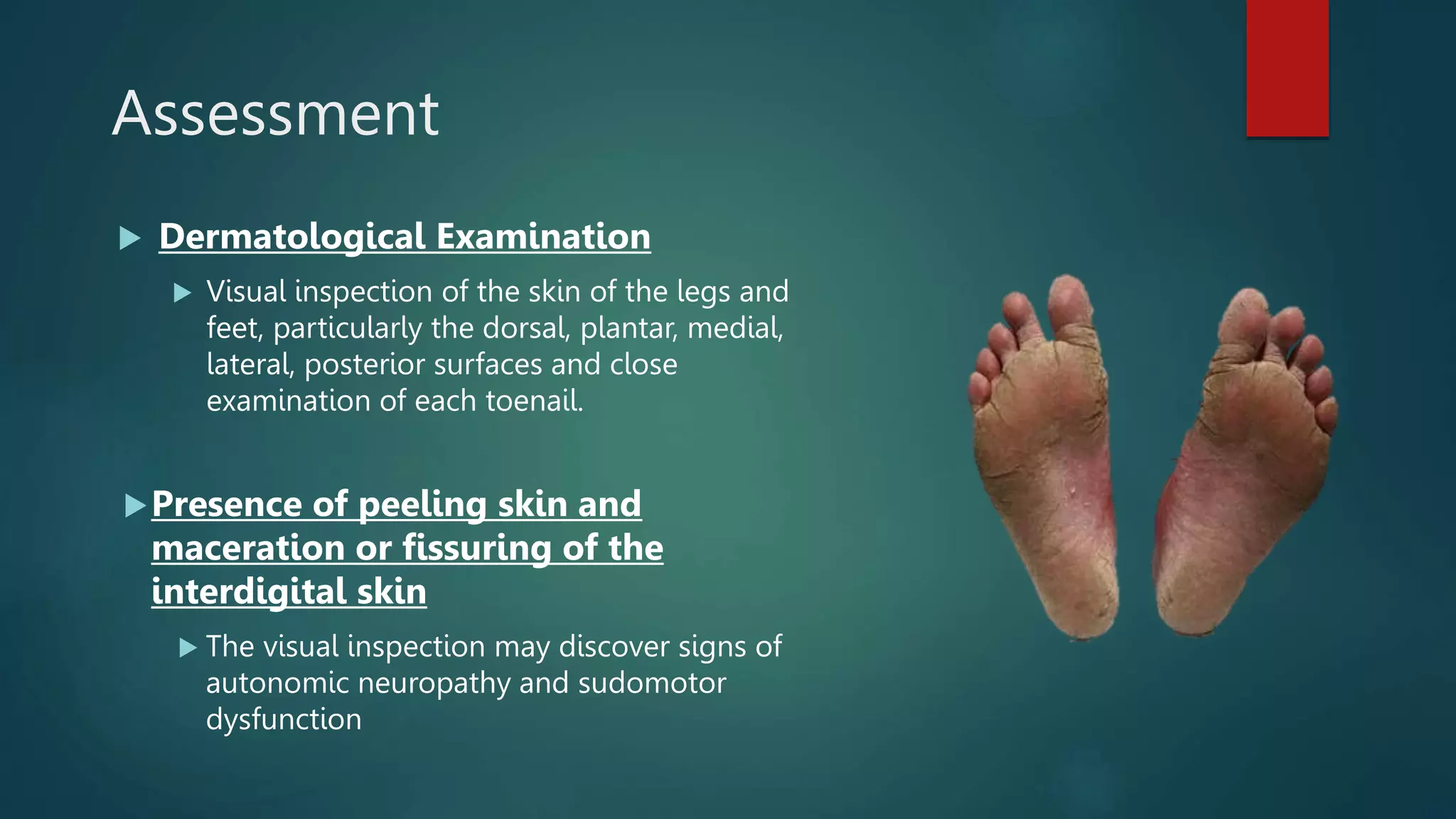
 Dermatological Examination
 Visual inspection of the skin of the legs and
feet, particularly the dorsal, plantar, medial,
lateral, posterior surfaces and close
examination of each toenail.
Presence of peeling skin and
maceration or fissuring of the
interdigital skin
 The visual inspection may discover signs of
autonomic neuropathy and sudomotor
dysfunction
Palpation of pulses (ABI)
 Bilaterally in the dorsalis pedis, posterior tibial, popliteal, and superficial femoral arteries
is necessary for assessment of the blood circulation in the lower limbs
 This is performed by measuring the systolic blood pressure (using a Doppler probe) in
the brachial, posterior tibial, and dorsalis pedis arteries.
Assessment
 Imaging
 Standard anteroposterior, lateral, and oblique
radiographs of the affected foot should be obtained
 Evaluate for cortical bone abnormalities such as
demineralization, erosion, periosteal reaction,
lucencies, and osteolysis that would be indicated of
osteomyelitis (Figure 2).
 Cortical disruption may not be apparent until 1-2
weeks after the onset of acute clinical osteomyelitis,
however, and early radiographic changes can be
confused with those seen in Charcot arthropathy.
Assessment
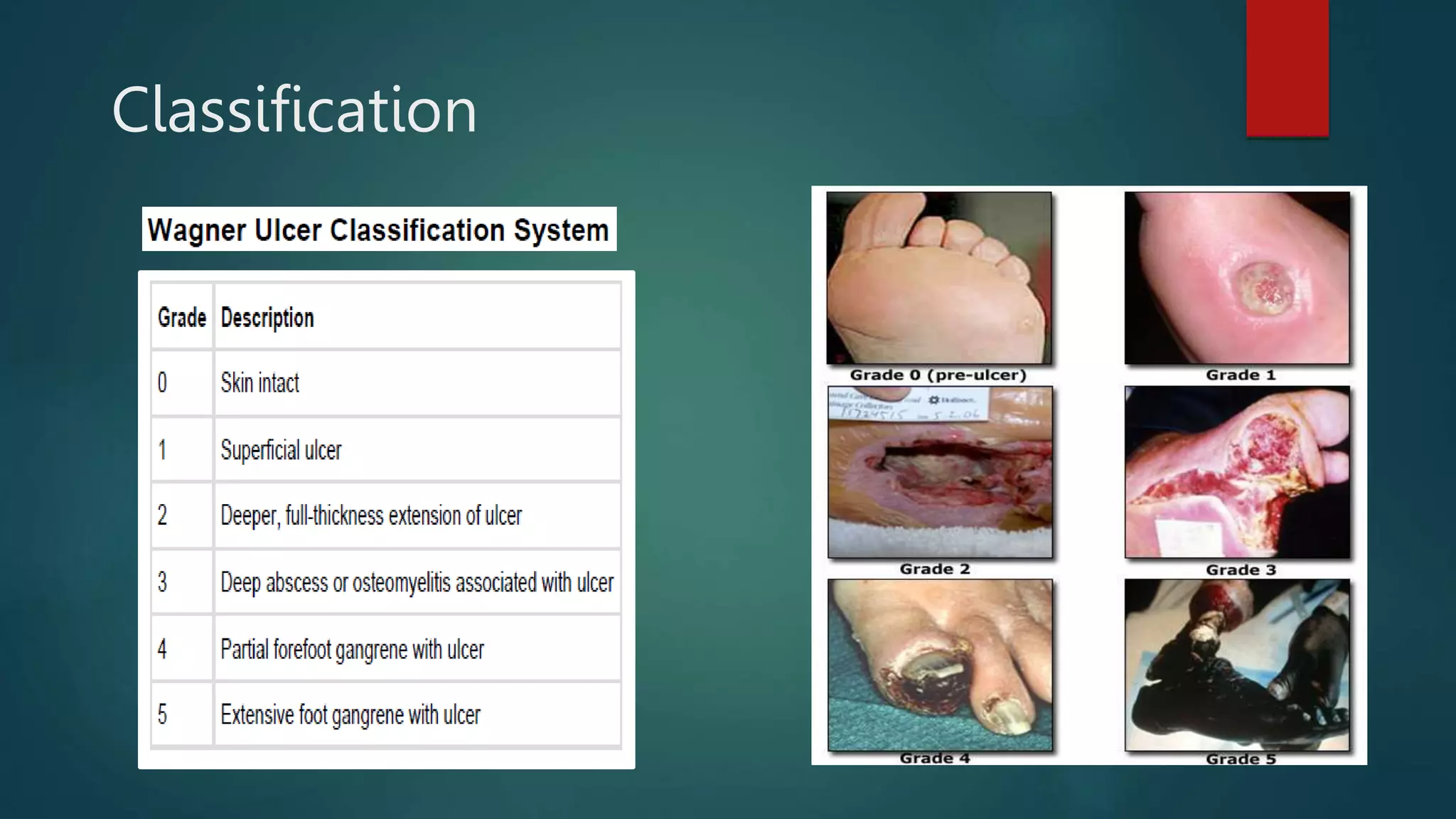
Classification
Classification
Classification
Charcot neuro-arthropathy.
 Two principal pathways:
1. The neurotraumatic theory suggests that the loss of neuroprotection
causes repetitive microtrauma.
2. The opposing hypothesis, the neurovascular, is that sympathetic
neuropathy results in hyperaemia. This leads to increased osteoclastic
activity resulting in bone resorption and fragmentation.
3. In all probability both processes are involved
 Saltzman’s group has shown that patterns of fracture in Charcot neuro-
arthropathy are more common in the ankle and forefoot, whereas
dislocation predominates in the midfoot.
 The patterns of fracture in neuro-arthropathy is associated with a low
peripheral bone mineral density, whereas in dislocation the peripheral
bone mineral density in normal.
Treatment
The gold standard for diabetic foot ulcer
treatment includes debridement of the
wound, management of any infection,
revascularization procedures when indicated,
and off-loading of the ulcer
Treatment
Conservative Treatment
 Non-operative management of diabetic foot ulcers focuses on prevention of future ulcers, wound
care, assessment of equinus contracture, total contact casting (TCC), walking braces, and
debridement.
 Foot care education combined with special footwear, increased surveillance, and a focus on strict
glucose control can significantly reduce the incidence of ulcer progression by 50% to 60%.
 Wound care is an essential first step in the management of foot ulcers and should achieve the
following goals:
 Off-load pressure
 Provide a protective barrier
 Absorb exudate
 Provide a moist environment
 Provide antibiosis
 Debridement
Treatment
Treatment
 Offloading
 The use of offloading techniques,
commonly known as pressure
modulation, is considered the most
important component for the
management of neuropathic ulcers in
patients with diabetes
 Recent studies have provided evidence
indicating that proper offloading
promotes DFU healing
Treatment
 Operative Treatment
 Surgical intervention for diabetic foot ulcers begins with appropriate soft-tissue management
consisting of:
 Drainage of deep infections
 Removal of necrotic tissue
 Decreasing wound tension
 Reduction of internal foot pressures often requires bony correction or realignment arthrodesis.
 Gastrocnemius recession or Achilles tendon lengthening can assist in further reducing forefoot
pressure from fixed plantar contractures.
 Partial or complete amputation often results from severe progression of ulceration into the
surrounding soft-tissue and bone.
Treatment
Summary
 Prevention of diabetic foot ulceration is critical in order to reduce the associated high
morbidity and mortality rates, and the danger of amputation. It is essential to identify the
‘‘foot at risk,’’ through careful inspection and physical examination of the foot followed by
neuropathy and vascular tests.
 Foot care education combined with special footwear, increased surveillance, and a focus on
strict glucose control can significantly reduce the incidence of ulcer progression by 50% to
60%.
 The management of diabetic foot ulcers remains a major therapeutic challenge which
implies an urgent need to review strategies and treatments in order to achieve the goals
and reduce the burden of care in an efficient and cost-effective way
 Diabetic foot ulcers should be carefully evaluated and the gold-standard treatments
should be strictly applied in order to prevent amputation.
References
 https://www.aofas.org/PRC/conditions/Documents/Diabetic-foot-ulcer.pdf
 http://www.ncbi.nlm.nih.gov/pmc/articles/PMC3508111/pdf/13300_2012_A
rticle_4.pdf
 ABI Test http://www.ev3.net/assets/009/6020.pdf
 The Bone & Joint Journal. Surgical Aspects of The Diabetic Foot

Diabetic Foot Ulcer.pptx

  • 1.
  • 2.
    Introduction  Diabetes mellitus(DM) is one of the main problems in health systems and a global public health threat that has increased dramatically over the past 2 decades.  Foot ulcers are the most common medical complications of patients with diabetes, estimated prevalence of 12-15% among all individuals with diabetes.[1]  It is estimated that approximately 20% of hospital admissions among patients with DM are the result of DFU.  Ulcerations can have potential devastating complications as they cause lower extremity amputations in patients with diabetes for about 50%-70%.  Furthermore, DFU is responsible for substantial emotional and physical distress as well as productivity and financial losses that lower the quality of life. (1) American Diabetes Association: Diabetes statistics. Available at: www.diabetes.org/diabetes- statistics.jsp
  • 3.
     Several factorsare involved in the decreased healing potential of a diabetic foot, all of which stem from the metabolic disorders associated with diabetes.  The most important of these factors are:  Level of uncontrolled hyperglycemia  Reduced circulation and arterial blood flow  Nutrition status  Inability to offload the affected region of the foot  Presence of infection  Failure of the wound healing process, in particular repair of lost extracellular matrix that forms the largest component of the dermal skin layer, is one of the primary culprits in diabetic foot ulcers Introduction
  • 4.
  • 5.
    Etiology  Caused byischemic (± 10%), neuropathic or combined neuroischemic abnormalities ((± 90%).  Patients with diabetes have a higher incidence of atherosclerosis, the thickening of capillary basement membranes, arteriolar hyalinosis, and endothelial proliferation.  They may develop artherosclerosis of large and medium-sized arteries, such as aortoiliac and femoropopliteal vessels, but atherosclerosis of the infrapopliteal segments is particularly common.
  • 6.
    Etiology  Combined withdigital artery disease, ulcers can develop and quickly progress to gangrene in the absence of adequate blood flow.  Peripheral neuropathy is present in 60% of patients with diabetes and 80% of patients with diabetes who have foot ulcers  The most common pathway to develop foot problems in patients is peripheral sensorimotor and autonomic neuropathy that leads to high foot pressure, foot deformities, and gait instability, which increases the risks of developing ulcers
  • 7.
  • 8.
    Pathogenesis Diabetic Neuropath y Muscle weakness, atrophy& paresis Loss of the protective sensation of pain, pressure & heat Vasodilatation & decreased sweating. Resulting in a loss of skin integrity, providing a site vulnerable microbial infection Motor Neuropathy Sensory Neuropathy Autonomic Dysfunction
  • 9.
    Peripheral Vascular (Arterial) Disease 2-8times more common in patients with Diabetes. Starting at an earlier age, progressing more rapidly & usually being more severe than in the general population Commonly affects the segments between the knee & the ankle. Event minor injuries, especially when complicated by infection, increase the demand for blood in the foot & inadequate blood supply may result ulceration, potentially leading to limb amputation Pathogenesis
  • 10.
    Clinical Presentation • Swelling •Increased pain • Discharge • Foul-smelling odor from the affected foot.
  • 11.
    Microbiology  Most diabeticfoot ulcers present as polymicrobial infections.  The most common pathogens seen are aerobic Gram-positive cocci, in particular Staphylococcus aureus, and Gram-negative rods such as Pseudomonas aeruginosa.[3]  Infection with anaerobic organisms such as Clostridium perfringes may lead to foot ischemia or gangrene.  Deep wound cultures and blood cultures are useful to help direct antibiotic therapy and monitor the presence of early sepsis.
  • 12.
    Assessment  Physical Examination Assessment of the skin, vascular, neurological and musculoskeletal system.  The foot examination should begin with noting the condition of the skin involved in and surrounding the ulcer.. The key features of the ulcer to note during exam are: Depth Location Drainage Signs of infection Presence of viable and nonviable gangrenous tissue (Figure 1)
  • 13.
    Assessment  Dermatological Examination Visual inspection of the skin of the legs and feet, particularly the dorsal, plantar, medial, lateral, posterior surfaces and close examination of each toenail. Presence of peeling skin and maceration or fissuring of the interdigital skin  The visual inspection may discover signs of autonomic neuropathy and sudomotor dysfunction
  • 14.
    Palpation of pulses(ABI)  Bilaterally in the dorsalis pedis, posterior tibial, popliteal, and superficial femoral arteries is necessary for assessment of the blood circulation in the lower limbs  This is performed by measuring the systolic blood pressure (using a Doppler probe) in the brachial, posterior tibial, and dorsalis pedis arteries. Assessment
  • 15.
     Imaging  Standardanteroposterior, lateral, and oblique radiographs of the affected foot should be obtained  Evaluate for cortical bone abnormalities such as demineralization, erosion, periosteal reaction, lucencies, and osteolysis that would be indicated of osteomyelitis (Figure 2).  Cortical disruption may not be apparent until 1-2 weeks after the onset of acute clinical osteomyelitis, however, and early radiographic changes can be confused with those seen in Charcot arthropathy. Assessment
  • 16.
  • 17.
  • 18.
  • 19.
    Charcot neuro-arthropathy.  Twoprincipal pathways: 1. The neurotraumatic theory suggests that the loss of neuroprotection causes repetitive microtrauma. 2. The opposing hypothesis, the neurovascular, is that sympathetic neuropathy results in hyperaemia. This leads to increased osteoclastic activity resulting in bone resorption and fragmentation. 3. In all probability both processes are involved  Saltzman’s group has shown that patterns of fracture in Charcot neuro- arthropathy are more common in the ankle and forefoot, whereas dislocation predominates in the midfoot.  The patterns of fracture in neuro-arthropathy is associated with a low peripheral bone mineral density, whereas in dislocation the peripheral bone mineral density in normal.
  • 20.
    Treatment The gold standardfor diabetic foot ulcer treatment includes debridement of the wound, management of any infection, revascularization procedures when indicated, and off-loading of the ulcer
  • 21.
    Treatment Conservative Treatment  Non-operativemanagement of diabetic foot ulcers focuses on prevention of future ulcers, wound care, assessment of equinus contracture, total contact casting (TCC), walking braces, and debridement.  Foot care education combined with special footwear, increased surveillance, and a focus on strict glucose control can significantly reduce the incidence of ulcer progression by 50% to 60%.  Wound care is an essential first step in the management of foot ulcers and should achieve the following goals:  Off-load pressure  Provide a protective barrier  Absorb exudate  Provide a moist environment  Provide antibiosis
  • 22.
  • 23.
  • 24.
     Offloading  Theuse of offloading techniques, commonly known as pressure modulation, is considered the most important component for the management of neuropathic ulcers in patients with diabetes  Recent studies have provided evidence indicating that proper offloading promotes DFU healing Treatment
  • 25.
     Operative Treatment Surgical intervention for diabetic foot ulcers begins with appropriate soft-tissue management consisting of:  Drainage of deep infections  Removal of necrotic tissue  Decreasing wound tension  Reduction of internal foot pressures often requires bony correction or realignment arthrodesis.  Gastrocnemius recession or Achilles tendon lengthening can assist in further reducing forefoot pressure from fixed plantar contractures.  Partial or complete amputation often results from severe progression of ulceration into the surrounding soft-tissue and bone. Treatment
  • 26.
    Summary  Prevention ofdiabetic foot ulceration is critical in order to reduce the associated high morbidity and mortality rates, and the danger of amputation. It is essential to identify the ‘‘foot at risk,’’ through careful inspection and physical examination of the foot followed by neuropathy and vascular tests.  Foot care education combined with special footwear, increased surveillance, and a focus on strict glucose control can significantly reduce the incidence of ulcer progression by 50% to 60%.  The management of diabetic foot ulcers remains a major therapeutic challenge which implies an urgent need to review strategies and treatments in order to achieve the goals and reduce the burden of care in an efficient and cost-effective way  Diabetic foot ulcers should be carefully evaluated and the gold-standard treatments should be strictly applied in order to prevent amputation.
  • 28.