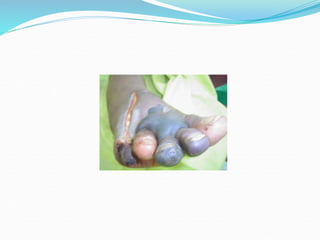
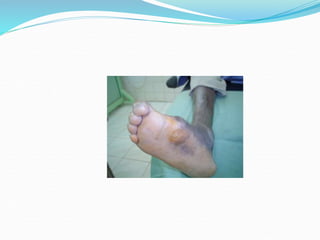
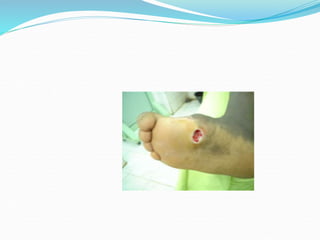
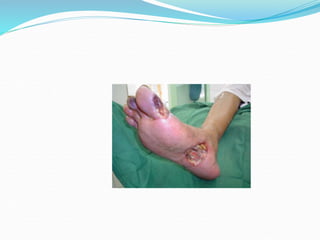
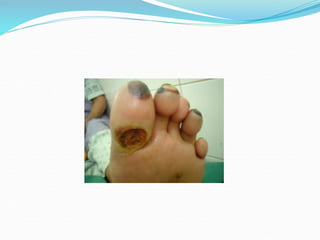
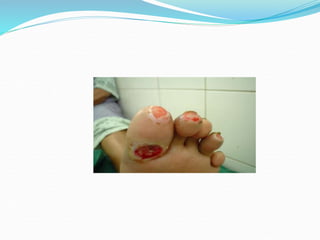
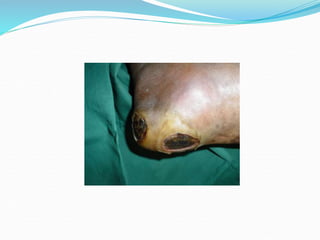
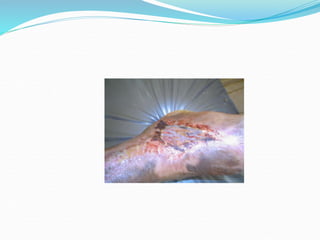
IN THE NAME OF GOD
• Ali akbar Beigi M.D
General and Vascular
Surgeon Taleghani Hospital
Shahid Beheshti U.M.S
Diabetic Foot
Definition:
Infection, ulceration or destruction of deep tissues
associated with neurological abnormalities & various
degrees of peripheral vascular diseases in the lower
limb
(based on WHO definition)
Epidemiology
15% is the prevalence of foot ulcer in diabetics
Patients intheir lifetime
40% - 60% of all non traumatic amputation in lower
limb
85% of diabetic related foot amputation are
preceded by foot ulcer
4 out of 5 ulcer in diabetics are precipitated by
trauma
Epidemiology & Preventive
care
Shoe related Trama 36%
Accidental cut or Puncture 8%
Thermal injury8%
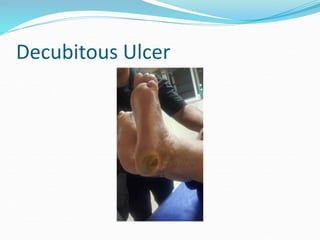
Decubitus ulcer8%
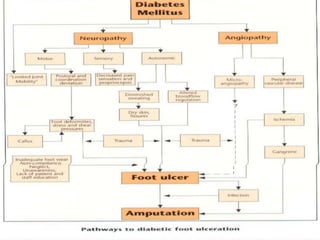
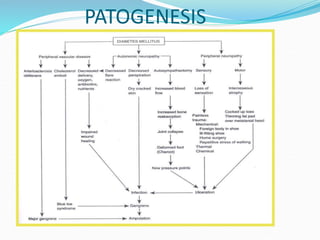
Pathophsiology of Foot Ulceration
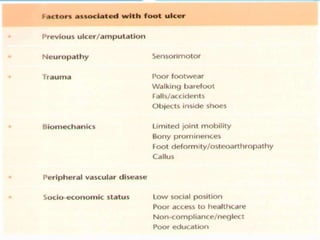
 Neuropathic
Ischemic
Neuro –ischemic
Immunologic Defects
patogenesis
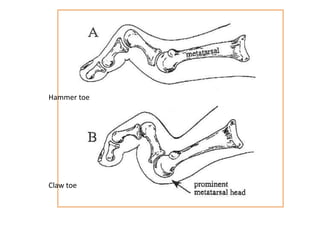
Hammer toe
Claw toe
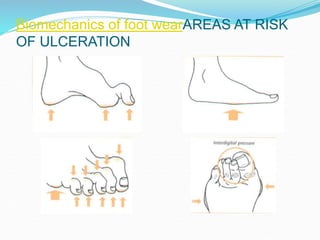
Biomechanics of foot wearAREAS AT RISK
OF ULCERATION
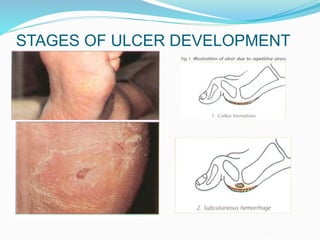
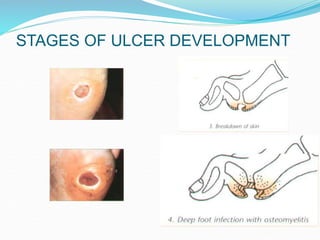
STAGES OF ULCER DEVELOPMENT
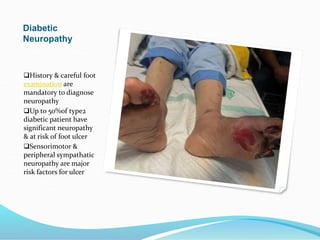
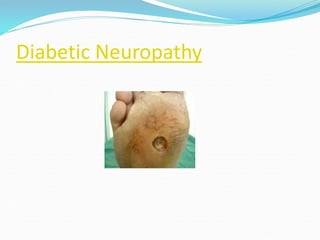
Diabetic
Neuropathy
History & careful foot
examination are
mandatory to diagnose
neuropathy
Up to 50%of type2
diabetic patient have
significant neuropathy
& at risk of foot ulcer
Sensorimotor &
peripheral sympathatic
neuropathy are major
risk factors for ulcer
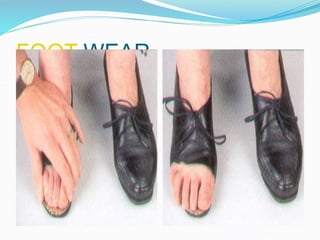
FOOT WEAR
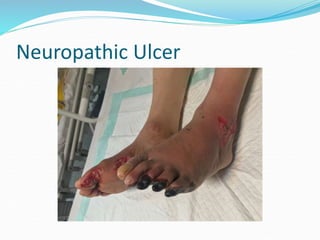
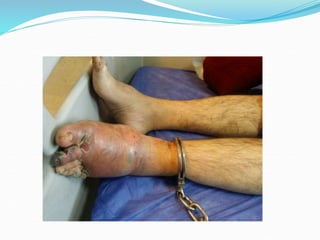
Neuropathic Ulcer
Decubitous Ulcer
Periphral vascular disease& diabetic
PVD
PVD is the most important factors related to outcome of
diabetic foot ulcer
PVD is diagnosed by simple clinical examination
Symptoms of ischemia may be masked by neuropathy
Microangiopathy shouldn't be accepted as primary cause
of ulcer
non invasive vascular test determines probability of
healing Ankle Brachial index&Trans cutaneous
oxigenometry
Outcome of revascularization is similar to that in non-
diabetic
Examination
 Neurological examination
◦ Vibration perception –
tuning fork at 128 Hz
◦ Light pressure - Simmes –
Weinstein 10 gram
monofilament
◦ Light touch
◦ Two point discrimination
◦ Pain
◦ Temperature perception
◦ Deep tendon reflexes
◦ Clonus
◦ Babinski test
◦ Romberg test
 Vascular Examination
◦ Palpation of pulses
◦ Skin/limb colour changes
◦ Presence of edema
◦ Temperature gradient
◦ Skin changes
 Abnormal wrinkling
 Absence of hair
 Onychodystrophy
◦ Venous filling time
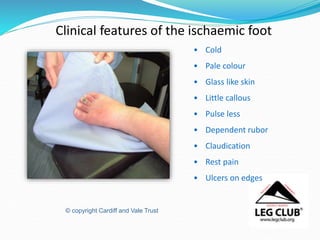
Clinical features of the ischaemic foot
• Cold
• Pale colour
• Glass like skin
• Little callous
• Pulse less
• Dependent rubor
• Claudication
• Rest pain
• Ulcers on edges
© copyright Cardiff and Vale Trust
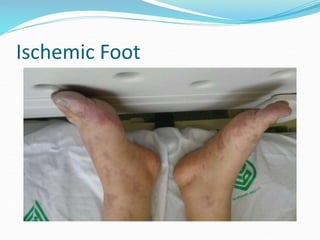
Ischemic Foot
Preventive care
Biomechanics of foot wear
Biomechanical abnormalities are consequence
of neuropathy, they lead to abnormal foot
pressure
Foot deformity & neuropathy increase the risk of
ulcer
Pressure relief is essential for ulcer healing
and/or prevention
Frequent inspection of shoes & insoles is
mandatory
Appropriate foot wear significantly reduce ulcer
recurrence
Preventive care
Patient educating self
examination
Family Involvement in serial
Exam.
High risk group Detection
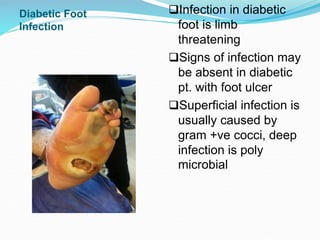
Infection in diabetic
foot is limb
threatening
Signs of infection may
be absent in diabetic
pt. with foot ulcer
Superficial infection is
usually caused by
gram +ve cocci, deep
infection is poly
microbial
Diabetic Foot
Infection
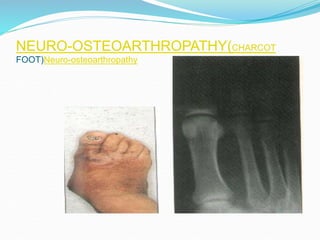
Neuro-osteoarthropathy
Non- infective pathology
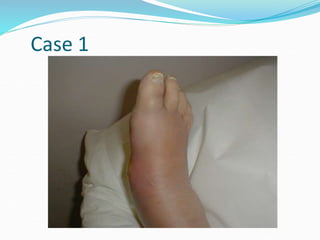
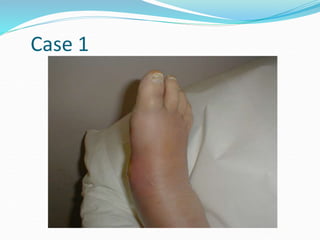
Should be suspected in any swollen hot
erythematous foot
Differentiation from infection is important to prevent
misdiagnosis & possible amputation
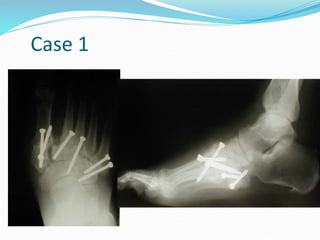
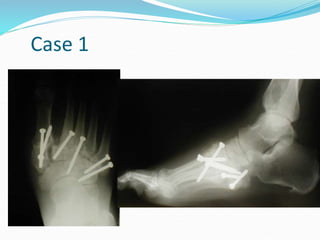
Treatment should aim at preventing severe deformity
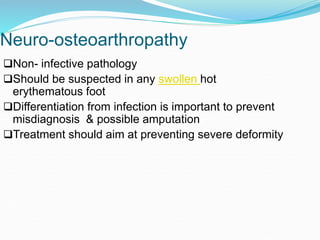
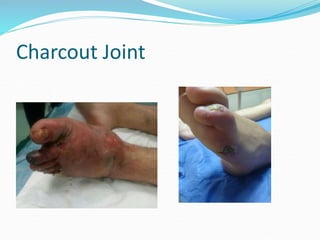
Charcout Joint
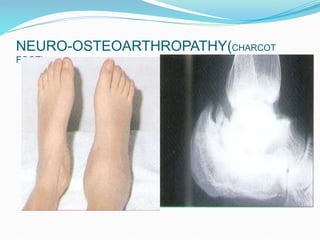
NEURO-OSTEOARTHROPATHY(CHARCOT
FOOT)
NEURO-OSTEOARTHROPATHY(CHARCOT
FOOT)Neuro-osteoarthropathy
Clinical assessment
Initial Traumatic Event
Duration of ulcer
Method of treatment
Clinical progressing of
wound&symptom&sign of toxicity
Vascular insufficiency history
Clinical assessment
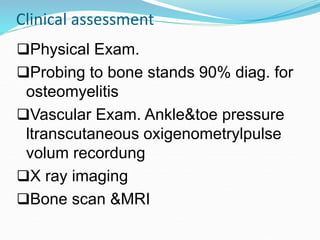
Physical Exam.
Probing to bone stands 90% diag. for
osteomyelitis
Vascular Exam. Ankle&toe pressure
ltranscutaneous oxigenometrylpulse
volum recordung
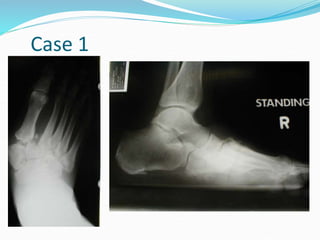
X ray imaging
Bone scan &MRI
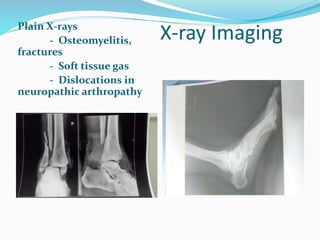
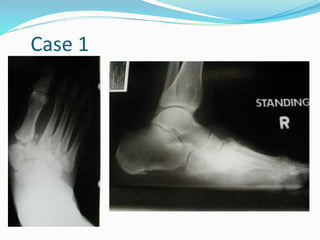
X-ray Imaging
Plain X-rays
- Osteomyelitis,
fractures
- Soft tissue gas
- Dislocations in
neuropathic arthropathy
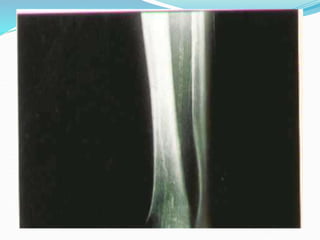
Imaging
Technetium &Tlium bone scans –(osteomyelitis0
MRI - 9osteomyelitis)
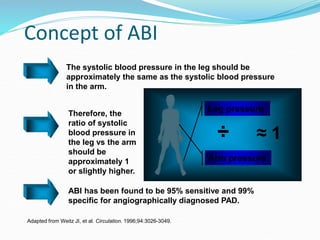
Concept of ABI
ABI has been found to be 95% sensitive and 99%
specific for angiographically diagnosed PAD.
The systolic blood pressure in the leg should be
approximately the same as the systolic blood pressure
in the arm.
Therefore, the
ratio of systolic
blood pressure in
the leg vs the arm
should be
approximately 1
or slightly higher.
Adapted from Weitz JI, et al. Circulation. 1996;94:3026-3049.
Arm pressure
Leg pressure
÷ ≈ 1
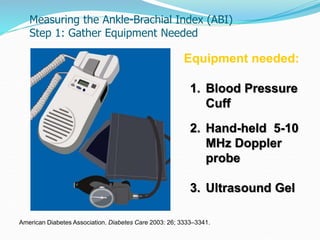
Equipment needed:
1. Blood Pressure
Cuff
2. Hand-held 5-10
MHz Doppler
probe
3. Ultrasound Gel
American Diabetes Association. Diabetes Care 2003: 26; 3333–3341.
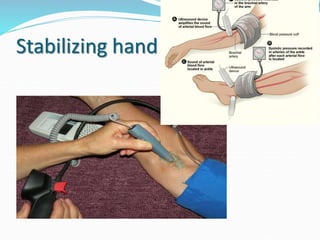
Measuring the Ankle-Brachial Index (ABI)
Step 1: Gather Equipment Needed
Stabilizing hand
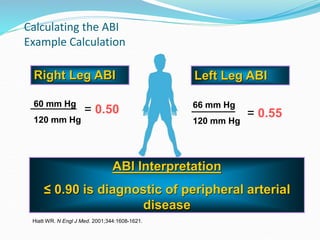
Calculating the ABI
Example Calculation
66 mm Hg
120 mm Hg
Hiatt WR. N Engl J Med. 2001;344:1608-1621.
= 0.50 = 0.55
Right Leg ABI Left Leg ABI
60 mm Hg
120 mm Hg
Right Leg ABI
ABI Interpretation
≤ 0.90 is diagnostic of peripheral arterial
disease
An Auto ABI Device
Systolic Pressures and ABI PVR Waveforms
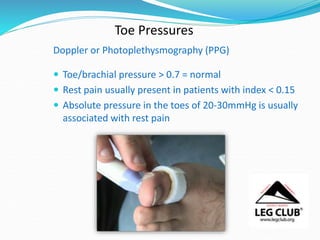
Toe Pressures
Doppler or Photoplethysmography (PPG)
 Toe/brachial pressure > 0.7 = normal
 Rest pain usually present in patients with index < 0.15
 Absolute pressure in the toes of 20-30mmHg is usually
associated with rest pain
Assessment of Diabetic Foot
Neuropathy
Ischemia
Deformity
Callus
Swelling
Skin breakdown
Infection
Necrosis
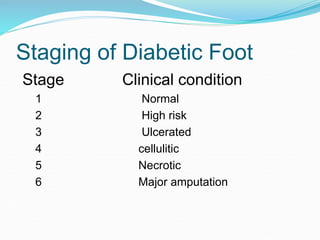
Staging of Diabetic Foot
Stage Clinical condition
1 Normal
2 High risk
3 Ulcerated
4 cellulitic
5 Necrotic
6 Major amputation
Diabetic Foot Ulcer Treatment
Modalities
Microbiological control
Wound control
Vascular control
Mechanical control
Metabolic control
Educational control
Diabetic Foot Ulcer Treatment
Multidisciplenary approach
Staging dictate the treatment option
Continuity of care & life long
observation
Diabetic Foot Ulcer Treatment
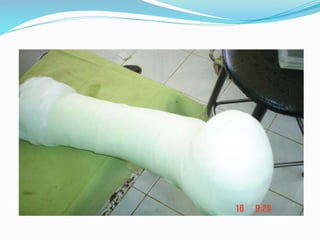
Rigid shoeing System for repeated local trauma
ulcer l total contact Cast 90% healing in non
vascular ulcer
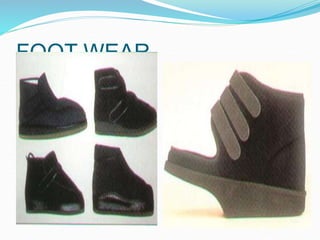
Off loading of ulcer/Half shoes/felted foam
plantar dressing
Non weight bearing ambulation/bed rest
FOOT WEAR
Diabetic Foot Ulcer Treatment
Debridement(chemical/enzymatic/sur
gical)
Dressing(Novin /vacuum therapy
Herbal and oriental medcine
Minor Amputation and Wound closure
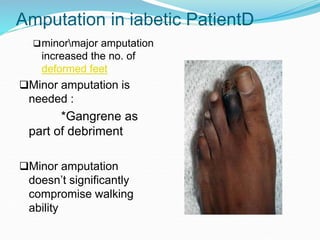
Amputation in iabetic PatientD
minormajor amputation
increased the no. of
deformed feet
Minor amputation is
needed :
*Gangrene as
part of debriment
Minor amputation
doesn’t significantly
compromise walking
ability
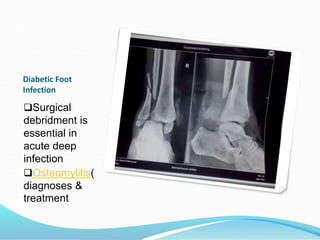
Diabetic Foot
Infection
Surgical
debridment is
essential in
acute deep
infection
Osteomylitis(
diagnoses &
treatment
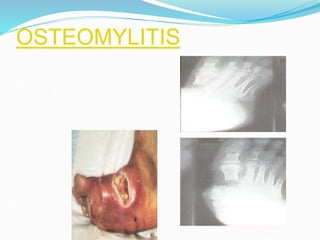
OSTEOMYLITIS
Major Amputation
 Risk of loss walking ability
 Mortality
 Risk of contra-lateral amputation
 Strict indication
 Careful choice of the level
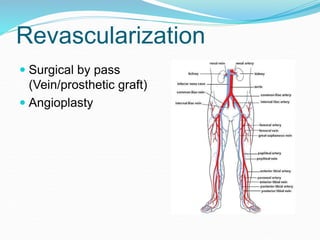
Revascularization
 Surgical by pass
(Vein/prosthetic graft)
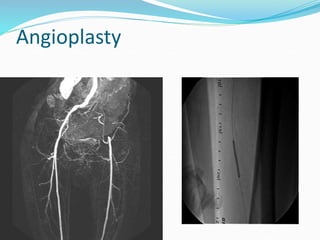
 Angioplasty
Angioplasty
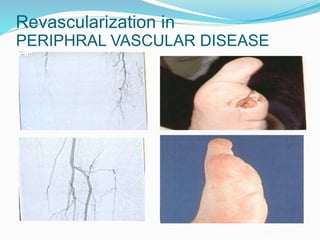
PERIPHRAL VASCULAR DISEASE
Revascularization in
Adjuvant therapy
 Bioengineered skin substitutes/
 Biologic graft (Amnion membrane)
 Platelet derivated growth factor
 Hyper baric oxygen therapy
 Vacuum therapy
 Ozone therapy
How To Prevent Foot Problems
5 corner stones
Regular inspection & examination of foot & foot wear
Identification of high risk patient
Education of patient, family & health care providers
Appropriate foot wear
Treatment of non ulcerative pathology
Diabetic Neuropathy
Diabetic foot
Introduction
 Diabetes mellitus is a group of metabolic diseases
characterized by hyperglycemia resulting from defects
in insulin secretion, insulin action, or both.
 The chronic hyperglycemia of diabetes is associated
with long-term damage, dysfunction, and failure of
various organs, especially the eyes, kidneys, nerves,
heart, and blood vessels.
 Diabetic foot is defined as any foot pathology that
results directly from diabetes or its long term
complications
 Two types of diabetes: type I and type II diabetes
Epidemiology
 Lesions of the feet affect approx 15% of diabetics in
their life with an amputation rate 15 fold higher than
non diabetics
 Foot ulcerations are the commonest cause of hospital
admission in diabetics
 Atherosclerosis rarely seen in type I diabetics < 40 yrs
while it may be present even before diagnosis in type II
 A study conducted showed that diabetes related
gangrene was the indication in 17.5% of lower limb
amputations while PVD accounted for 55.3%
Epidemiology – risk factors
 Male sex
 DM > 10 years duration
 Peripheral neuropathy
 Abnormal foot structure

 Peripheral arterial disease
 Smoking
 H/O previous ulceration / amputation
 Poor glycemic control (HbA1c > 7%)
Pathophysiology
 Factors leading to development of diabetic foot:
 Diabetic macroangiopathy – peripheral arterial occlusive
disease
 Diabetic microangiopathy – thickening of basement
membranes
 Diabetic polyneuropathy
 Diabetic osteoathropathy – abnormal foot biomechanics
 Reduced resistance to infection
 Delayed wound healing
 Reduced rate of collateral vessel formation
Diabetic angiopathy
 Diabetic macroangiopathy is histologically similar to
non diabetic atherosclerosis but distributed in the
distal segments of the lower extremities (calf and foot
arteries)
 Arterial calcification readily detectable on plain x ray
with constriction noted on angiography. This
compromises oxygen supply to the periphery
 Gas exchange is compromised by marked thickening
of the capillary basement membrane – a feature of
diabetic microangiopathy
Diabetic neuropathy
 This affects the sensory, motor, and autonomic fibers
 Sensory neuropathy - deep sensory perception is
reduced resulting in loss of protective reflexes against
physical injury. Typically, manifests in a sock - like
distribution.
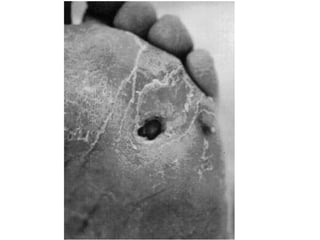
 Motor neuropathy – denervation and atrophy of small
foot muscles leading to malum perforans, transverse
foot arch instability with clawing and splay foot
 Autonomic neuropathy – vasodilation and absent
sweating thus foot is warm, dry, scaly which
predisposes to fissure formation
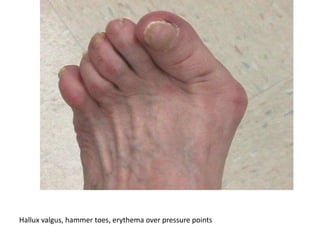
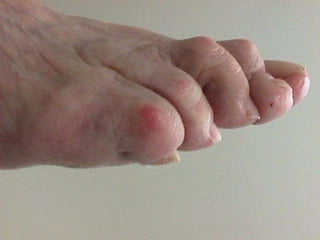
Hallux valgus, hammer toes, erythema over pressure points
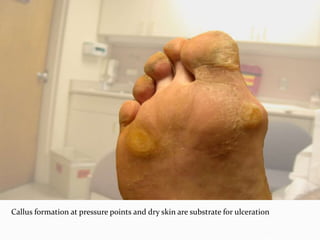
Callus formation at pressure points and dry skin are substrate for ulceration
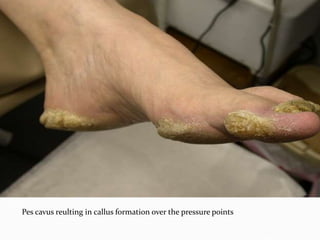
Pes cavus reulting in callus formation over the pressure points
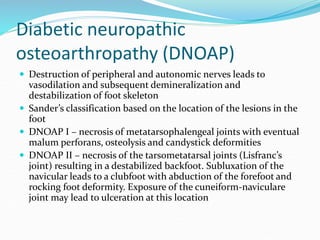
Diabetic neuropathic
osteoarthropathy (DNOAP)
 Destruction of peripheral and autonomic nerves leads to
vasodilation and subsequent demineralization and
destabilization of foot skeleton
 Sander’s classification based on the location of the lesions in the
foot
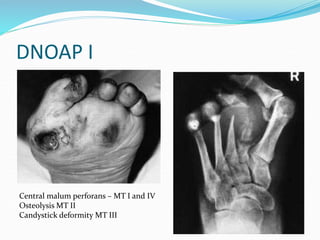
 DNOAP I – necrosis of metatarsophalengeal joints with eventual
malum perforans, osteolysis and candystick deformities
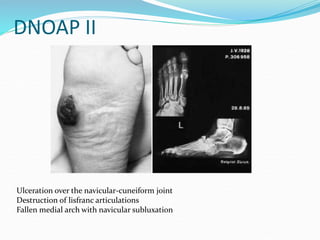
 DNOAP II – necrosis of the tarsometatarsal joints (Lisfranc’s
joint) resulting in a destabilized backfoot. Subluxation of the
navicular leads to a clubfoot with abduction of the forefoot and
rocking foot deformity. Exposure of the cuneiform-naviculare
joint may lead to ulceration at this location
DNOAP I
Central malum perforans – MT I and IV
Osteolysis MT II
Candystick deformity MT III
DNOAP II
Ulceration over the navicular-cuneiform joint
Destruction of lisfranc articulations
Fallen medial arch with navicular subluxation
DNOAP
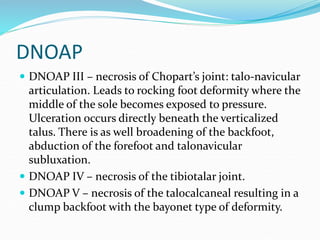
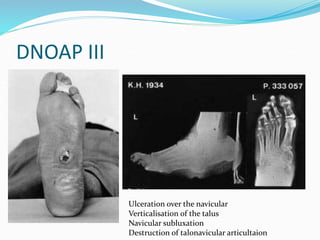
 DNOAP III – necrosis of Chopart’s joint: talo-navicular
articulation. Leads to rocking foot deformity where the
middle of the sole becomes exposed to pressure.
Ulceration occurs directly beneath the verticalized
talus. There is as well broadening of the backfoot,
abduction of the forefoot and talonavicular
subluxation.
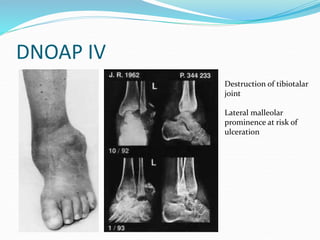
 DNOAP IV – necrosis of the tibiotalar joint.
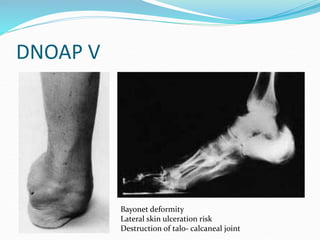
 DNOAP V – necrosis of the talocalcaneal resulting in a
clump backfoot with the bayonet type of deformity.
DNOAP III
Ulceration over the navicular
Verticalisation of the talus
Navicular subluxation
Destruction of talonavicular articultaion
DNOAP IV
Destruction of tibiotalar
joint
Lateral malleolar
prominence at risk of
ulceration
DNOAP V
Bayonet deformity
Lateral skin ulceration risk
Destruction of talo- calcaneal joint
Increased infection rate
 Skin fissurations predisposes to penetration of
infectious microbes
 Polymorphonuclear granulocyte chemotaxis and
phagocytosis is impaired
 Polyneuropathy predisposes to deep seated infections
due to impaired pain sensation
 Both anaerobe and aerobe infections are implicated in
diabetic foot infections
Patient evaluation
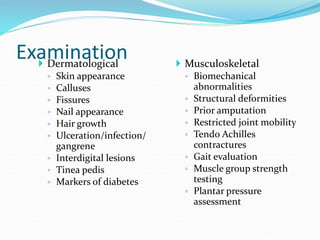
Examination
 Dermatological
◦ Skin appearance
◦ Calluses
◦ Fissures
◦ Nail appearance
◦ Hair growth
◦ Ulceration/infection/
gangrene
◦ Interdigital lesions
◦ Tinea pedis
◦ Markers of diabetes
 Musculoskeletal
◦ Biomechanical
abnormalities
◦ Structural deformities
◦ Prior amputation
◦ Restricted joint mobility
◦ Tendo Achilles
contractures
◦ Gait evaluation
◦ Muscle group strength
testing
◦ Plantar pressure
assessment
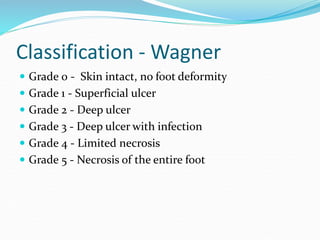
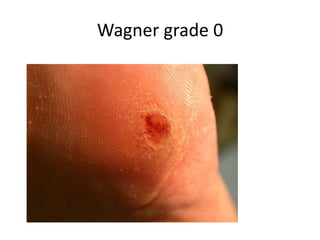
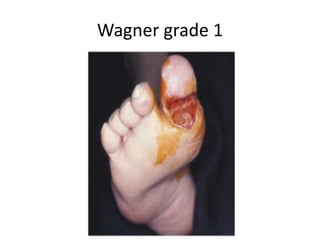
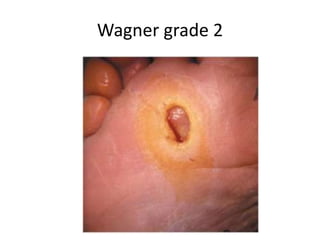
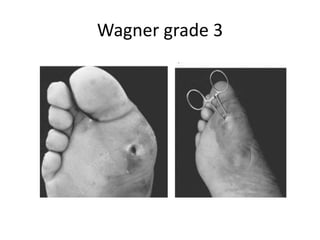
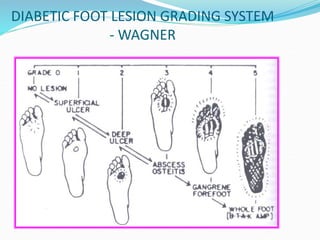
Classification - Wagner
 Grade 0 - Skin intact, no foot deformity
 Grade 1 - Superficial ulcer
 Grade 2 - Deep ulcer
 Grade 3 - Deep ulcer with infection
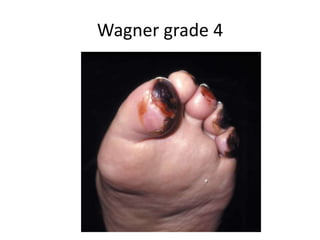
 Grade 4 - Limited necrosis
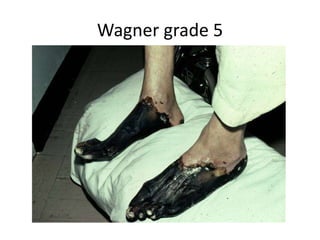
 Grade 5 - Necrosis of the entire foot
Wagner grade 0
Wagner grade 1
Wagner grade 2
Wagner grade 3
Wagner grade 4
Wagner grade 5
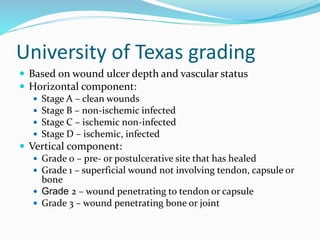
University of Texas grading
 Based on wound ulcer depth and vascular status
 Horizontal component:
 Stage A – clean wounds
 Stage B – non-ischemic infected
 Stage C – ischemic non-infected
 Stage D – ischemic, infected
 Vertical component:
 Grade 0 – pre- or postulcerative site that has healed
 Grade 1 – superficial wound not involving tendon, capsule or
bone
 Grade 2 – wound penetrating to tendon or capsule
 Grade 3 – wound penetrating bone or joint
Laboratory evaluation
FBS/RBS
Glycosylated hemoglobin (HbA1C)
FHG + ESR
Wound and Blood cultures
Serum Chemistry: CRP
Urinalysis
Diabetic foot infection
 Divided into uncomplicated non limb threatening
infection - superficial cellulitis of limited extension
that can be treated on an outpatient basis
 Complicated limb threatening infections are more
extended and penetrate to deeper tissues, such as
tendons, joint capsules, bone or articulations. They
require inpatient treatment with surgical debridement
and intravenous antibiotics
 Osteomyelitis has therapeutic implications such as
prolonged antibiotic courses and need for resections
Diabetic foot infection
 Superficial swabs overestimate the number of likely
microorganisms therefore a deep tissue specimen is
preferred as it is more representative
 Aerobic gram +ve cocci most common infecting
organisms: S. aureus and β-hemolytic streptococci
(especially group B)
 Chronic wounds have more complex flora: enterococci,
enterobactereciae, obligate anaerobes, P. aeuroginosa
and other non-fermentative gram negative rods
Management
 Preventative foot care
 Diabetic foot ulcer (DFU) care
 Ischemia management
 Neuropathy management
 Surgery
Preventative foot care
 Podiatry - Regular inspection of the foot, appropriate nail
care, warm (32oC) soaks, moisturizing creams, early
detection of new lesions
 Optimally fitted footwear – well cushioned sneakers,
custom molded shoes
 Pressure reduction – cushioned insoles, custom orthoses
 Patient education — need for daily inspection and
necessity for early intervention, avoidance of barefoot
walking
 Physician education — significance of foot lesions,
importance of regular foot examination, and current
concepts of diabetic foot management
DFU care
 Debridement – of callus and necrotic tissue using sharp
debridement till bleeding tissue, lavage and dressings
 Offloading of the ulcer site to reduce ischaemia via total
contact cast, non weight bearing (crutches, bedrest, wheel
chair)
 Wound management – maintenance of a moist wound
with regular cleaning and dressing
 Infections treated with broad spectrum antibiotics based
on culture results.
Clindamycin/flouroquinolone/metronidazole suitable
empiric therapy
Ischemia/neuropathy
 Angiography evaluates for chance of catheter
intervention or vascular surgery
 Vascular bypass surgery successful if occlusion is
supramalleolar but less so in inframalleolar PAOD
 Aspirin is useful for primary and secondary prevention
 Neuropathy treated pharmacologically with agents
such as carbamazepine, gabapentin and pregabalin
and prevention of minor trauma that will go
undetected due to insensate foot
Surgery
 Sharp debridement
 Local procedures to remove areas of chronically
elevated pressure (deformities) causing non healing
ulcers
 Sequestrectomies
 Amputation
 Correct structural deformities — hammer toes,
bunions, Charcot
Indications for amputation
 Uncontrollable infection or sepsis
 Inability to obtain a plantar grade, dry foot that can
tolerate weight bearing
 Non ambulatory patient
Other peripheral vascular diseases
 Peripheral arterial occlusive disease (PAOD)
 Post thrombotic syndrome
 Chronic venous insufficiency
PAOD
 Most common cause is atheroclerosis which narrows the lumen
of peripheral arteries
 Buerger’s disease is a potentially preventable cause due to its
association with smoking
 Symptoms include:
 Intermittent claudication
 Ischaemic rest pain
 Signs include:
 Calf muscles atrophy
 Loss of hair growth over the dorsum of the toes
 Thickening of the toenails
 Atrophy of the skin
 Delayed capillary refill
 Ischaemic ulcers
PAOD
 Ischemic ulcers are painful with a ‘punched out’
appearance.
 They are commonly located distally over the dorsum of
the foot or toes.
 The ulcer base usually consists of poorly developed,
grayish granulation tissue.
 Critical limb ischaemia is defined as persistent
ischemic rest pain lasting for more than 2 weeks
and/or ulceration of the leg, associated with an ankle
systolic pressure < 50 mm Hg and/or a toe systolic
pressure of <30 mm Hg and or an ABPI < 0.9.
PAOD - Investigations
 Ankle systolic pressure measurement – 12cm cuff used and
doppler probe over the dorsalis pedis or posterior tibial artery.
<50mmHg implies critical limb ischemia and aggressive
revascularisation needed
 Toe systolic pressure – 25mm cuff over proximal phalanx of
hallux. Critical limb ischemia at < 30mmHg
 Transcutaneous oxygen pressure – electronic probe used. Normal
range 30 – 50 mmHg. < 30 mmHg implies critical ischaemia
 Doppler ultrasound – operator dependent. More accurate for
assessment of femoropopliteal vessels than tibioperoneal arteries
 Arteriography – gold standard, invasive, contrast used. Useful
where vascular procedures are being planned
Management of PAOD
 Secondary prevention – statins, aspirin, DM and HTN
control, smoking cessation
 Walking excersises 1h/day– reduced intermittent
claudication by encouraging collateral vessel formation
 Footwear fitted to reduce pressure and increased warmth.
May need to be customised. Minimise exposure to cold and
mositure
 Surgical debridement of ulcers with appropriate dressing
thereafter, infection control
 Interventional vascular procedures such as percutaneous
transluminal angioplasty, bypass procedures indicated in
critical limb ischaemia
 Amputation may eventually be necessary
Post thrombotic syndrome
 Symptoms and signs that typically follow DVT
 Caused by post thrombotic recanalisation and valve
destruction that leads to chronic ambulatory venous
hypertension
 Not limb threatening but adversely affects quality of life
 Symptoms include chronic leg discomfort
 Signs include:
 Edema
 skin changes – pigmentation, dermatitis, liposclerosis
 Ulcers – typically supramalleolar medial, painless, irregular
edges
Management
 Primary prevention by preventing DVT in at risk patients
 Early management of DVT and continued antithrombotic
therapy to prevent recurrence of DVT
 Fibrinolysis and thrombectomy – controversial due to
minimal benefit and increased risk
 Compression therapy – effective primary prevention of
DVT and secondary prevention of PTS after DVT. Layered
compression stockings now the mainstay of treatment
 Vascular surgery – not as useful as in varicose veins because
PTS is a disease of the deep system
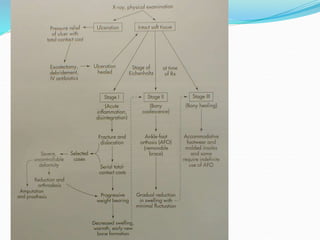
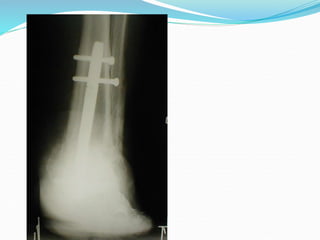
Charcot Foot
 Neurotraumatic
 Decreased sensation + repetitive trauma = joint and
bone collapse
 Neurovascular
 Increased blood flow → increased osteoclast activity →
osteopenia → Bony collapse
 Glycolization of ligaments → brittle and fail →
Joint collapse
Classification
 Eichenholtz
 1 – acute inflammatory process
 Often mistaken for infection
 2 – coalescing phase
 3 - consolidation
Classification
 Location
 Forefoot, midfoot (most common) , hindfoot
 Atrophic or hypertrophic
 Radiographic finding
 Little treatment implication
Case 1
Case 1
Case 1
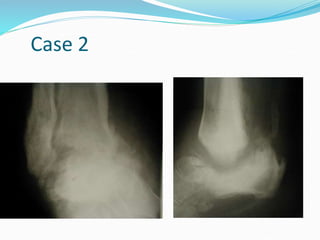
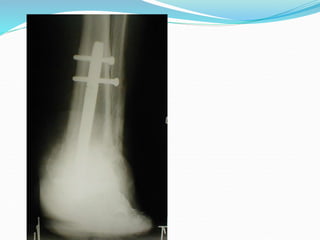
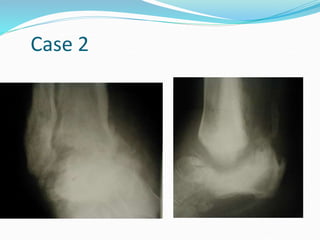
Case 2
Case 2
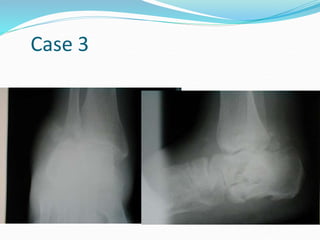
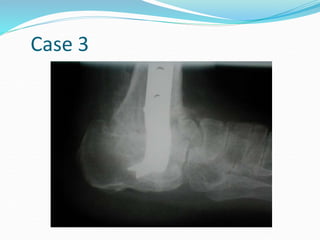
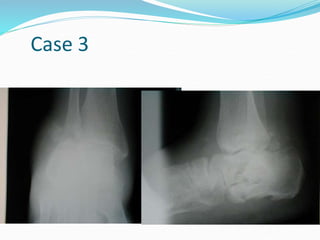
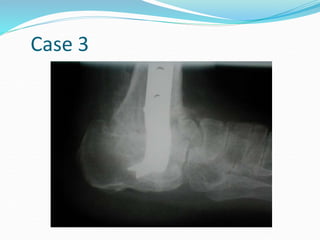
Case 3
Case 3
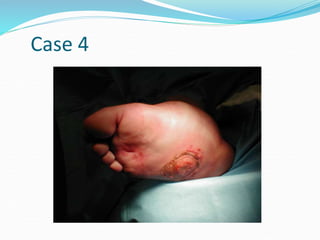
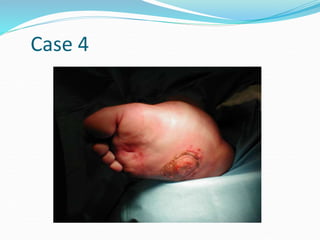
Case 4
Charcot Foot
 Neurotraumatic
 Decreased sensation + repetitive trauma = joint and
bone collapse
 Neurovascular
 Increased blood flow → increased osteoclast activity →
osteopenia → Bony collapse
 Glycolization of ligaments → brittle and fail →
Joint collapse
Classification
 Eichenholtz
 1 – acute inflammatory process
 Often mistaken for infection
 2 – coalescing phase
 3 - consolidation
Classification
 Location
 Forefoot, midfoot (most common) , hindfoot
 Atrophic or hypertrophic
 Radiographic finding
 Little treatment implication
Case 1
Case 1
Case 1
Case 2
Case 2
Case 3
Case 3
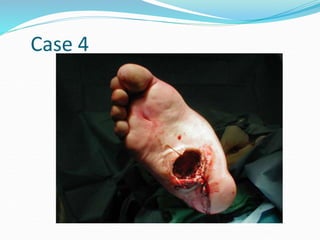
Case 4
Case 4
Indications for Amputation
 Uncontrollable infection or sepsis
 Inability to obtain a plantar grade, dry foot that can
tolerate weight bearing
 Non-ambulatory patient
 Decision not always straightforward
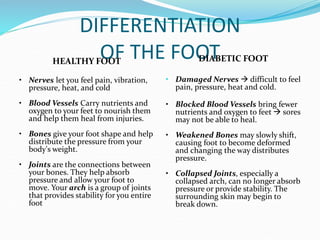
DIFFERENTIATION
OF THE FOOT
HEALTHY FOOT
• Nerves let you feel pain, vibration,
pressure, heat, and cold
• Blood Vessels Carry nutrients and
oxygen to your feet to nourish them
and help them heal from injuries.
• Bones give your foot shape and help
distribute the pressure from your
body's weight.
• Joints are the connections between
your bones. They help absorb
pressure and allow your foot to
move. Your arch is a group of joints
that provides stability for you entire
foot
DIABETIC FOOT
• Damaged Nerves  difficult to feel
pain, pressure, heat and cold.
• Blocked Blood Vessels bring fewer
nutrients and oxygen to feet  sores
may not be able to heal.
• Weakened Bones may slowly shift,
causing foot to become deformed
and changing the way distributes
pressure.
• Collapsed Joints, especially a
collapsed arch, can no longer absorb
pressure or provide stability. The
surrounding skin may begin to
break down.
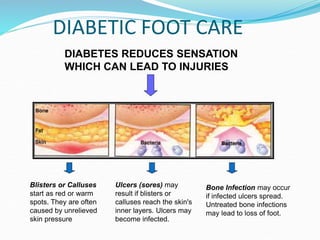
DIABETIC FOOT CARE
DIABETES REDUCES SENSATION
WHICH CAN LEAD TO INJURIES
Blisters or Calluses
start as red or warm
spots. They are often
caused by unrelieved
skin pressure
Ulcers (sores) may
result if blisters or
calluses reach the skin's
inner layers. Ulcers may
become infected.
Bone Infection may occur
if infected ulcers spread.
Untreated bone infections
may lead to loss of foot.
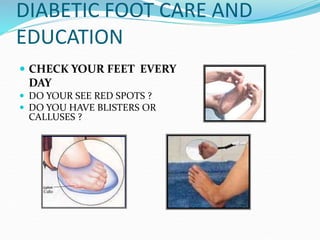
DIABETIC FOOT CARE AND
EDUCATION
 CHECK YOUR FEET EVERY
DAY
 DO YOUR SEE RED SPOTS ?
 DO YOU HAVE BLISTERS OR
CALLUSES ?
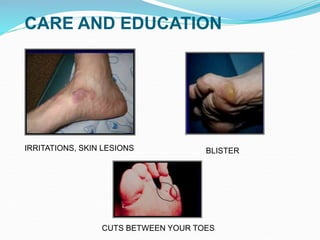
CARE AND EDUCATION
IRRITATIONS, SKIN LESIONS BLISTER
CUTS BETWEEN YOUR TOES
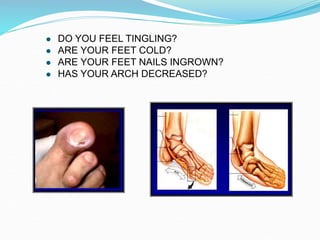
 DO YOU FEEL TINGLING?
 ARE YOUR FEET COLD?
 ARE YOUR FEET NAILS INGROWN?
 HAS YOUR ARCH DECREASED?
 TEST THE TEMPERATURE OF THE WATER BEFORE
PUTTING YOUR FEET
 WASH YOUR FEET WITH LUKEWARM WATER AND
MILD SOAP
CARE AND EDUCATION
CARE AND EDUCATION
 KEEP SKIN SUPPLE & MOISTURISED
 CUT YOUR NAIL CORRECTLY
Do not cut the corner of your toe nails
CARE AND EDUCATION
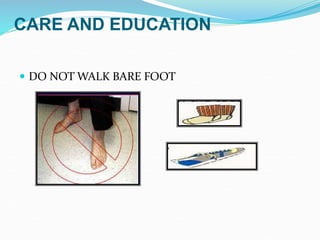
 DO NOT WALK BARE FOOT
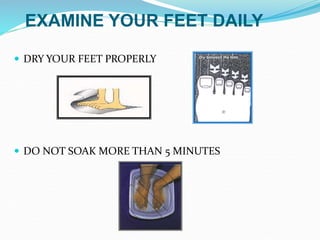
EXAMINE YOUR FEET DAILY
 DRY YOUR FEET PROPERLY
 DO NOT SOAK MORE THAN 5 MINUTES
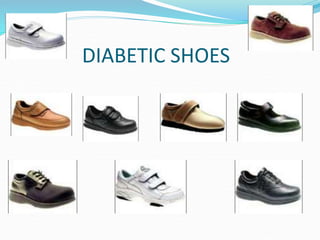
DIABETIC SHOES
How To Select
The Right Shoes?
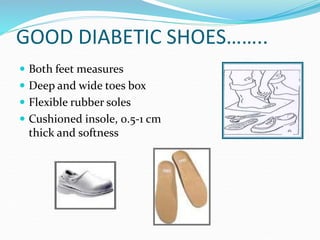
GOOD DIABETIC SHOES……..
 Both feet measures
 Deep and wide toes box
 Flexible rubber soles
 Cushioned insole, 0.5-1 cm
thick and softness
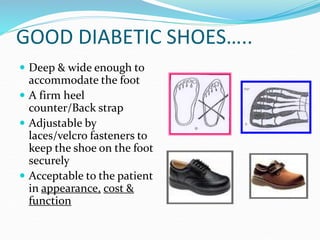
GOOD DIABETIC SHOES…..
 Deep & wide enough to
accommodate the foot
 A firm heel
counter/Back strap
 Adjustable by
laces/velcro fasteners to
keep the shoe on the foot
securely
 Acceptable to the patient
in appearance, cost &
function
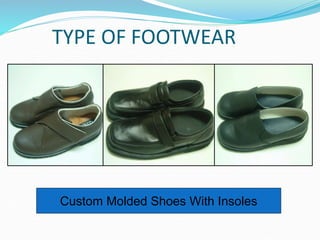
TYPE OF FOOTWEAR
Custom Molded Shoes With Insoles
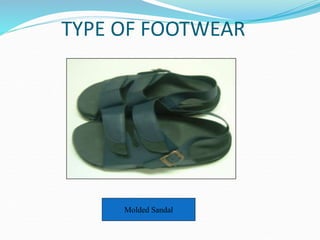
TYPE OF FOOTWEAR
Molded Sandal
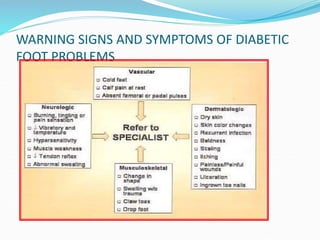
WARNING SIGNS AND SYMPTOMS OF DIABETIC
FOOT PROBLEMS
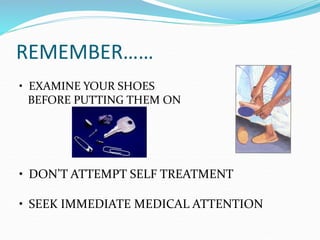
REMEMBER……
• EXAMINE YOUR SHOES
BEFORE PUTTING THEM ON
• DON’T ATTEMPT SELF TREATMENT
• SEEK IMMEDIATE MEDICAL ATTENTION
HATUR NUHUN
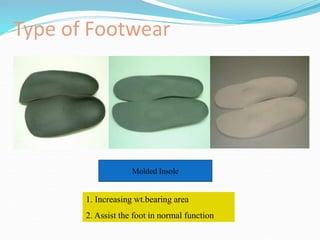
Type of Footwear
Molded Insole
1. Increasing wt.bearing area
2. Assist the foot in normal function
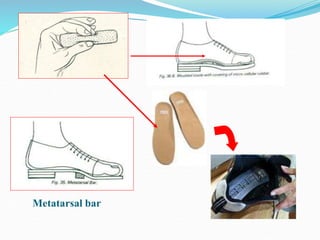
Metatarsal bar
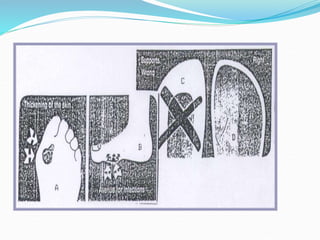
PATOGENESIS
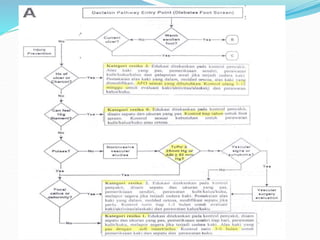
DIABETIC FOOT LESION GRADING SYSTEM
- WAGNER
MANAGEMENT
Conclusion
 Multi-disciplinary approach needed
 Going to be an increasing problem
 High morbidity and cost
 Solution is probably in prevention
 Most feet can be spared…at least for a while
6571552380502.ppt

6571552380502.ppt

  • 1.
  • 2.
    • Ali akbarBeigi M.D General and Vascular Surgeon Taleghani Hospital Shahid Beheshti U.M.S
  • 3.
    Diabetic Foot Definition: Infection, ulcerationor destruction of deep tissues associated with neurological abnormalities & various degrees of peripheral vascular diseases in the lower limb (based on WHO definition)
  • 4.
    Epidemiology 15% is theprevalence of foot ulcer in diabetics Patients intheir lifetime 40% - 60% of all non traumatic amputation in lower limb 85% of diabetic related foot amputation are preceded by foot ulcer 4 out of 5 ulcer in diabetics are precipitated by trauma
  • 5.
    Epidemiology & Preventive care Shoerelated Trama 36% Accidental cut or Puncture 8% Thermal injury8% Decubitus ulcer8%
  • 6.
    Pathophsiology of FootUlceration  Neuropathic Ischemic Neuro –ischemic Immunologic Defects
  • 7.
  • 8.
  • 9.
    Biomechanics of footwearAREAS AT RISK OF ULCERATION
  • 10.
    STAGES OF ULCERDEVELOPMENT
  • 11.
    STAGES OF ULCERDEVELOPMENT
  • 12.
    Diabetic Neuropathy History & carefulfoot examination are mandatory to diagnose neuropathy Up to 50%of type2 diabetic patient have significant neuropathy & at risk of foot ulcer Sensorimotor & peripheral sympathatic neuropathy are major risk factors for ulcer
  • 13.
  • 14.
  • 15.
  • 17.
    Periphral vascular disease&diabetic PVD PVD is the most important factors related to outcome of diabetic foot ulcer PVD is diagnosed by simple clinical examination Symptoms of ischemia may be masked by neuropathy Microangiopathy shouldn't be accepted as primary cause of ulcer non invasive vascular test determines probability of healing Ankle Brachial index&Trans cutaneous oxigenometry Outcome of revascularization is similar to that in non- diabetic
  • 19.
    Examination  Neurological examination ◦Vibration perception – tuning fork at 128 Hz ◦ Light pressure - Simmes – Weinstein 10 gram monofilament ◦ Light touch ◦ Two point discrimination ◦ Pain ◦ Temperature perception ◦ Deep tendon reflexes ◦ Clonus ◦ Babinski test ◦ Romberg test  Vascular Examination ◦ Palpation of pulses ◦ Skin/limb colour changes ◦ Presence of edema ◦ Temperature gradient ◦ Skin changes  Abnormal wrinkling  Absence of hair  Onychodystrophy ◦ Venous filling time
  • 20.
    Clinical features ofthe ischaemic foot • Cold • Pale colour • Glass like skin • Little callous • Pulse less • Dependent rubor • Claudication • Rest pain • Ulcers on edges © copyright Cardiff and Vale Trust
  • 21.
  • 22.
    Preventive care Biomechanics offoot wear Biomechanical abnormalities are consequence of neuropathy, they lead to abnormal foot pressure Foot deformity & neuropathy increase the risk of ulcer Pressure relief is essential for ulcer healing and/or prevention Frequent inspection of shoes & insoles is mandatory Appropriate foot wear significantly reduce ulcer recurrence
  • 23.
    Preventive care Patient educatingself examination Family Involvement in serial Exam. High risk group Detection
  • 24.
    Infection in diabetic footis limb threatening Signs of infection may be absent in diabetic pt. with foot ulcer Superficial infection is usually caused by gram +ve cocci, deep infection is poly microbial Diabetic Foot Infection
  • 25.
    Neuro-osteoarthropathy Non- infective pathology Shouldbe suspected in any swollen hot erythematous foot Differentiation from infection is important to prevent misdiagnosis & possible amputation Treatment should aim at preventing severe deformity
  • 26.
  • 27.
  • 28.
  • 29.
    Clinical assessment Initial TraumaticEvent Duration of ulcer Method of treatment Clinical progressing of wound&symptom&sign of toxicity Vascular insufficiency history
  • 30.
    Clinical assessment Physical Exam. Probingto bone stands 90% diag. for osteomyelitis Vascular Exam. Ankle&toe pressure ltranscutaneous oxigenometrylpulse volum recordung X ray imaging Bone scan &MRI
  • 31.
    X-ray Imaging Plain X-rays -Osteomyelitis, fractures - Soft tissue gas - Dislocations in neuropathic arthropathy
  • 33.
    Imaging Technetium &Tlium bonescans –(osteomyelitis0 MRI - 9osteomyelitis)
  • 34.
    Concept of ABI ABIhas been found to be 95% sensitive and 99% specific for angiographically diagnosed PAD. The systolic blood pressure in the leg should be approximately the same as the systolic blood pressure in the arm. Therefore, the ratio of systolic blood pressure in the leg vs the arm should be approximately 1 or slightly higher. Adapted from Weitz JI, et al. Circulation. 1996;94:3026-3049. Arm pressure Leg pressure ÷ ≈ 1
  • 35.
    Equipment needed: 1. BloodPressure Cuff 2. Hand-held 5-10 MHz Doppler probe 3. Ultrasound Gel American Diabetes Association. Diabetes Care 2003: 26; 3333–3341. Measuring the Ankle-Brachial Index (ABI) Step 1: Gather Equipment Needed
  • 36.
  • 37.
    Calculating the ABI ExampleCalculation 66 mm Hg 120 mm Hg Hiatt WR. N Engl J Med. 2001;344:1608-1621. = 0.50 = 0.55 Right Leg ABI Left Leg ABI 60 mm Hg 120 mm Hg Right Leg ABI ABI Interpretation ≤ 0.90 is diagnostic of peripheral arterial disease
  • 38.
    An Auto ABIDevice Systolic Pressures and ABI PVR Waveforms
  • 39.
    Toe Pressures Doppler orPhotoplethysmography (PPG)  Toe/brachial pressure > 0.7 = normal  Rest pain usually present in patients with index < 0.15  Absolute pressure in the toes of 20-30mmHg is usually associated with rest pain
  • 40.
    Assessment of DiabeticFoot Neuropathy Ischemia Deformity Callus Swelling Skin breakdown Infection Necrosis
  • 41.
    Staging of DiabeticFoot Stage Clinical condition 1 Normal 2 High risk 3 Ulcerated 4 cellulitic 5 Necrotic 6 Major amputation
  • 42.
    Diabetic Foot UlcerTreatment Modalities Microbiological control Wound control Vascular control Mechanical control Metabolic control Educational control
  • 43.
    Diabetic Foot UlcerTreatment Multidisciplenary approach Staging dictate the treatment option Continuity of care & life long observation
  • 44.
    Diabetic Foot UlcerTreatment Rigid shoeing System for repeated local trauma ulcer l total contact Cast 90% healing in non vascular ulcer Off loading of ulcer/Half shoes/felted foam plantar dressing Non weight bearing ambulation/bed rest
  • 45.
  • 47.
    Diabetic Foot UlcerTreatment Debridement(chemical/enzymatic/sur gical) Dressing(Novin /vacuum therapy Herbal and oriental medcine Minor Amputation and Wound closure
  • 48.
    Amputation in iabeticPatientD minormajor amputation increased the no. of deformed feet Minor amputation is needed : *Gangrene as part of debriment Minor amputation doesn’t significantly compromise walking ability
  • 49.
    Diabetic Foot Infection Surgical debridment is essentialin acute deep infection Osteomylitis( diagnoses & treatment
  • 50.
  • 51.
    Major Amputation  Riskof loss walking ability  Mortality  Risk of contra-lateral amputation  Strict indication  Careful choice of the level
  • 52.
    Revascularization  Surgical bypass (Vein/prosthetic graft)  Angioplasty
  • 53.
  • 54.
  • 55.
    Adjuvant therapy  Bioengineeredskin substitutes/  Biologic graft (Amnion membrane)  Platelet derivated growth factor  Hyper baric oxygen therapy  Vacuum therapy  Ozone therapy
  • 56.
    How To PreventFoot Problems 5 corner stones Regular inspection & examination of foot & foot wear Identification of high risk patient Education of patient, family & health care providers Appropriate foot wear Treatment of non ulcerative pathology
  • 57.
  • 68.
    Diabetic foot Introduction  Diabetesmellitus is a group of metabolic diseases characterized by hyperglycemia resulting from defects in insulin secretion, insulin action, or both.  The chronic hyperglycemia of diabetes is associated with long-term damage, dysfunction, and failure of various organs, especially the eyes, kidneys, nerves, heart, and blood vessels.  Diabetic foot is defined as any foot pathology that results directly from diabetes or its long term complications  Two types of diabetes: type I and type II diabetes
  • 69.
    Epidemiology  Lesions ofthe feet affect approx 15% of diabetics in their life with an amputation rate 15 fold higher than non diabetics  Foot ulcerations are the commonest cause of hospital admission in diabetics  Atherosclerosis rarely seen in type I diabetics < 40 yrs while it may be present even before diagnosis in type II  A study conducted showed that diabetes related gangrene was the indication in 17.5% of lower limb amputations while PVD accounted for 55.3%
  • 70.
    Epidemiology – riskfactors  Male sex  DM > 10 years duration  Peripheral neuropathy  Abnormal foot structure  Peripheral arterial disease  Smoking  H/O previous ulceration / amputation  Poor glycemic control (HbA1c > 7%)
  • 71.
    Pathophysiology  Factors leadingto development of diabetic foot:  Diabetic macroangiopathy – peripheral arterial occlusive disease  Diabetic microangiopathy – thickening of basement membranes  Diabetic polyneuropathy  Diabetic osteoathropathy – abnormal foot biomechanics  Reduced resistance to infection  Delayed wound healing  Reduced rate of collateral vessel formation
  • 72.
    Diabetic angiopathy  Diabeticmacroangiopathy is histologically similar to non diabetic atherosclerosis but distributed in the distal segments of the lower extremities (calf and foot arteries)  Arterial calcification readily detectable on plain x ray with constriction noted on angiography. This compromises oxygen supply to the periphery  Gas exchange is compromised by marked thickening of the capillary basement membrane – a feature of diabetic microangiopathy
  • 73.
    Diabetic neuropathy  Thisaffects the sensory, motor, and autonomic fibers  Sensory neuropathy - deep sensory perception is reduced resulting in loss of protective reflexes against physical injury. Typically, manifests in a sock - like distribution.  Motor neuropathy – denervation and atrophy of small foot muscles leading to malum perforans, transverse foot arch instability with clawing and splay foot  Autonomic neuropathy – vasodilation and absent sweating thus foot is warm, dry, scaly which predisposes to fissure formation
  • 75.
    Hallux valgus, hammertoes, erythema over pressure points
  • 77.
    Callus formation atpressure points and dry skin are substrate for ulceration

  • 78.
    Pes cavus reultingin callus formation over the pressure points
  • 79.
    Diabetic neuropathic osteoarthropathy (DNOAP) Destruction of peripheral and autonomic nerves leads to vasodilation and subsequent demineralization and destabilization of foot skeleton  Sander’s classification based on the location of the lesions in the foot  DNOAP I – necrosis of metatarsophalengeal joints with eventual malum perforans, osteolysis and candystick deformities  DNOAP II – necrosis of the tarsometatarsal joints (Lisfranc’s joint) resulting in a destabilized backfoot. Subluxation of the navicular leads to a clubfoot with abduction of the forefoot and rocking foot deformity. Exposure of the cuneiform-naviculare joint may lead to ulceration at this location
  • 80.
    DNOAP I Central malumperforans – MT I and IV Osteolysis MT II Candystick deformity MT III
  • 81.
    DNOAP II Ulceration overthe navicular-cuneiform joint Destruction of lisfranc articulations Fallen medial arch with navicular subluxation
  • 82.
    DNOAP  DNOAP III– necrosis of Chopart’s joint: talo-navicular articulation. Leads to rocking foot deformity where the middle of the sole becomes exposed to pressure. Ulceration occurs directly beneath the verticalized talus. There is as well broadening of the backfoot, abduction of the forefoot and talonavicular subluxation.  DNOAP IV – necrosis of the tibiotalar joint.  DNOAP V – necrosis of the talocalcaneal resulting in a clump backfoot with the bayonet type of deformity.
  • 83.
    DNOAP III Ulceration overthe navicular Verticalisation of the talus Navicular subluxation Destruction of talonavicular articultaion
  • 84.
    DNOAP IV Destruction oftibiotalar joint Lateral malleolar prominence at risk of ulceration
  • 85.
    DNOAP V Bayonet deformity Lateralskin ulceration risk Destruction of talo- calcaneal joint
  • 86.
    Increased infection rate Skin fissurations predisposes to penetration of infectious microbes  Polymorphonuclear granulocyte chemotaxis and phagocytosis is impaired  Polyneuropathy predisposes to deep seated infections due to impaired pain sensation  Both anaerobe and aerobe infections are implicated in diabetic foot infections
  • 87.
  • 88.
    Examination  Dermatological ◦ Skinappearance ◦ Calluses ◦ Fissures ◦ Nail appearance ◦ Hair growth ◦ Ulceration/infection/ gangrene ◦ Interdigital lesions ◦ Tinea pedis ◦ Markers of diabetes  Musculoskeletal ◦ Biomechanical abnormalities ◦ Structural deformities ◦ Prior amputation ◦ Restricted joint mobility ◦ Tendo Achilles contractures ◦ Gait evaluation ◦ Muscle group strength testing ◦ Plantar pressure assessment
  • 89.
    Classification - Wagner Grade 0 - Skin intact, no foot deformity  Grade 1 - Superficial ulcer  Grade 2 - Deep ulcer  Grade 3 - Deep ulcer with infection  Grade 4 - Limited necrosis  Grade 5 - Necrosis of the entire foot
  • 90.
  • 91.
  • 92.
  • 93.
  • 94.
  • 95.
  • 96.
    University of Texasgrading  Based on wound ulcer depth and vascular status  Horizontal component:  Stage A – clean wounds  Stage B – non-ischemic infected  Stage C – ischemic non-infected  Stage D – ischemic, infected  Vertical component:  Grade 0 – pre- or postulcerative site that has healed  Grade 1 – superficial wound not involving tendon, capsule or bone  Grade 2 – wound penetrating to tendon or capsule  Grade 3 – wound penetrating bone or joint
  • 97.
    Laboratory evaluation FBS/RBS Glycosylated hemoglobin(HbA1C) FHG + ESR Wound and Blood cultures Serum Chemistry: CRP Urinalysis
  • 98.
    Diabetic foot infection Divided into uncomplicated non limb threatening infection - superficial cellulitis of limited extension that can be treated on an outpatient basis  Complicated limb threatening infections are more extended and penetrate to deeper tissues, such as tendons, joint capsules, bone or articulations. They require inpatient treatment with surgical debridement and intravenous antibiotics  Osteomyelitis has therapeutic implications such as prolonged antibiotic courses and need for resections
  • 99.
    Diabetic foot infection Superficial swabs overestimate the number of likely microorganisms therefore a deep tissue specimen is preferred as it is more representative  Aerobic gram +ve cocci most common infecting organisms: S. aureus and β-hemolytic streptococci (especially group B)  Chronic wounds have more complex flora: enterococci, enterobactereciae, obligate anaerobes, P. aeuroginosa and other non-fermentative gram negative rods
  • 100.
    Management  Preventative footcare  Diabetic foot ulcer (DFU) care  Ischemia management  Neuropathy management  Surgery
  • 101.
    Preventative foot care Podiatry - Regular inspection of the foot, appropriate nail care, warm (32oC) soaks, moisturizing creams, early detection of new lesions  Optimally fitted footwear – well cushioned sneakers, custom molded shoes  Pressure reduction – cushioned insoles, custom orthoses  Patient education — need for daily inspection and necessity for early intervention, avoidance of barefoot walking  Physician education — significance of foot lesions, importance of regular foot examination, and current concepts of diabetic foot management
  • 102.
    DFU care  Debridement– of callus and necrotic tissue using sharp debridement till bleeding tissue, lavage and dressings  Offloading of the ulcer site to reduce ischaemia via total contact cast, non weight bearing (crutches, bedrest, wheel chair)  Wound management – maintenance of a moist wound with regular cleaning and dressing  Infections treated with broad spectrum antibiotics based on culture results. Clindamycin/flouroquinolone/metronidazole suitable empiric therapy
  • 103.
    Ischemia/neuropathy  Angiography evaluatesfor chance of catheter intervention or vascular surgery  Vascular bypass surgery successful if occlusion is supramalleolar but less so in inframalleolar PAOD  Aspirin is useful for primary and secondary prevention  Neuropathy treated pharmacologically with agents such as carbamazepine, gabapentin and pregabalin and prevention of minor trauma that will go undetected due to insensate foot
  • 104.
    Surgery  Sharp debridement Local procedures to remove areas of chronically elevated pressure (deformities) causing non healing ulcers  Sequestrectomies  Amputation  Correct structural deformities — hammer toes, bunions, Charcot
  • 105.
    Indications for amputation Uncontrollable infection or sepsis  Inability to obtain a plantar grade, dry foot that can tolerate weight bearing  Non ambulatory patient
  • 106.
    Other peripheral vasculardiseases  Peripheral arterial occlusive disease (PAOD)  Post thrombotic syndrome  Chronic venous insufficiency
  • 107.
    PAOD  Most commoncause is atheroclerosis which narrows the lumen of peripheral arteries  Buerger’s disease is a potentially preventable cause due to its association with smoking  Symptoms include:  Intermittent claudication  Ischaemic rest pain  Signs include:  Calf muscles atrophy  Loss of hair growth over the dorsum of the toes  Thickening of the toenails  Atrophy of the skin  Delayed capillary refill  Ischaemic ulcers
  • 108.
    PAOD  Ischemic ulcersare painful with a ‘punched out’ appearance.  They are commonly located distally over the dorsum of the foot or toes.  The ulcer base usually consists of poorly developed, grayish granulation tissue.  Critical limb ischaemia is defined as persistent ischemic rest pain lasting for more than 2 weeks and/or ulceration of the leg, associated with an ankle systolic pressure < 50 mm Hg and/or a toe systolic pressure of <30 mm Hg and or an ABPI < 0.9.

  • 109.
    PAOD - Investigations Ankle systolic pressure measurement – 12cm cuff used and doppler probe over the dorsalis pedis or posterior tibial artery. <50mmHg implies critical limb ischemia and aggressive revascularisation needed  Toe systolic pressure – 25mm cuff over proximal phalanx of hallux. Critical limb ischemia at < 30mmHg  Transcutaneous oxygen pressure – electronic probe used. Normal range 30 – 50 mmHg. < 30 mmHg implies critical ischaemia  Doppler ultrasound – operator dependent. More accurate for assessment of femoropopliteal vessels than tibioperoneal arteries  Arteriography – gold standard, invasive, contrast used. Useful where vascular procedures are being planned
  • 110.
    Management of PAOD Secondary prevention – statins, aspirin, DM and HTN control, smoking cessation  Walking excersises 1h/day– reduced intermittent claudication by encouraging collateral vessel formation  Footwear fitted to reduce pressure and increased warmth. May need to be customised. Minimise exposure to cold and mositure  Surgical debridement of ulcers with appropriate dressing thereafter, infection control  Interventional vascular procedures such as percutaneous transluminal angioplasty, bypass procedures indicated in critical limb ischaemia  Amputation may eventually be necessary
  • 111.
    Post thrombotic syndrome Symptoms and signs that typically follow DVT  Caused by post thrombotic recanalisation and valve destruction that leads to chronic ambulatory venous hypertension  Not limb threatening but adversely affects quality of life  Symptoms include chronic leg discomfort  Signs include:  Edema  skin changes – pigmentation, dermatitis, liposclerosis  Ulcers – typically supramalleolar medial, painless, irregular edges
  • 112.
    Management  Primary preventionby preventing DVT in at risk patients  Early management of DVT and continued antithrombotic therapy to prevent recurrence of DVT  Fibrinolysis and thrombectomy – controversial due to minimal benefit and increased risk  Compression therapy – effective primary prevention of DVT and secondary prevention of PTS after DVT. Layered compression stockings now the mainstay of treatment  Vascular surgery – not as useful as in varicose veins because PTS is a disease of the deep system
  • 113.
    Charcot Foot  Neurotraumatic Decreased sensation + repetitive trauma = joint and bone collapse  Neurovascular  Increased blood flow → increased osteoclast activity → osteopenia → Bony collapse  Glycolization of ligaments → brittle and fail → Joint collapse
  • 114.
    Classification  Eichenholtz  1– acute inflammatory process  Often mistaken for infection  2 – coalescing phase  3 - consolidation
  • 115.
    Classification  Location  Forefoot,midfoot (most common) , hindfoot  Atrophic or hypertrophic  Radiographic finding  Little treatment implication
  • 117.
  • 118.
  • 119.
  • 120.
  • 121.
  • 122.
  • 123.
  • 124.
  • 125.
    Charcot Foot  Neurotraumatic Decreased sensation + repetitive trauma = joint and bone collapse  Neurovascular  Increased blood flow → increased osteoclast activity → osteopenia → Bony collapse  Glycolization of ligaments → brittle and fail → Joint collapse
  • 126.
    Classification  Eichenholtz  1– acute inflammatory process  Often mistaken for infection  2 – coalescing phase  3 - consolidation
  • 127.
    Classification  Location  Forefoot,midfoot (most common) , hindfoot  Atrophic or hypertrophic  Radiographic finding  Little treatment implication
  • 129.
  • 130.
  • 131.
  • 132.
  • 133.
  • 134.
  • 135.
  • 136.
  • 137.
  • 138.
    Indications for Amputation Uncontrollable infection or sepsis  Inability to obtain a plantar grade, dry foot that can tolerate weight bearing  Non-ambulatory patient  Decision not always straightforward
  • 139.
    DIFFERENTIATION OF THE FOOT HEALTHYFOOT • Nerves let you feel pain, vibration, pressure, heat, and cold • Blood Vessels Carry nutrients and oxygen to your feet to nourish them and help them heal from injuries. • Bones give your foot shape and help distribute the pressure from your body's weight. • Joints are the connections between your bones. They help absorb pressure and allow your foot to move. Your arch is a group of joints that provides stability for you entire foot DIABETIC FOOT • Damaged Nerves  difficult to feel pain, pressure, heat and cold. • Blocked Blood Vessels bring fewer nutrients and oxygen to feet  sores may not be able to heal. • Weakened Bones may slowly shift, causing foot to become deformed and changing the way distributes pressure. • Collapsed Joints, especially a collapsed arch, can no longer absorb pressure or provide stability. The surrounding skin may begin to break down.
  • 140.
    DIABETIC FOOT CARE DIABETESREDUCES SENSATION WHICH CAN LEAD TO INJURIES Blisters or Calluses start as red or warm spots. They are often caused by unrelieved skin pressure Ulcers (sores) may result if blisters or calluses reach the skin's inner layers. Ulcers may become infected. Bone Infection may occur if infected ulcers spread. Untreated bone infections may lead to loss of foot.
  • 141.
    DIABETIC FOOT CAREAND EDUCATION  CHECK YOUR FEET EVERY DAY  DO YOUR SEE RED SPOTS ?  DO YOU HAVE BLISTERS OR CALLUSES ?
  • 142.
    CARE AND EDUCATION IRRITATIONS,SKIN LESIONS BLISTER CUTS BETWEEN YOUR TOES
  • 143.
     DO YOUFEEL TINGLING?  ARE YOUR FEET COLD?  ARE YOUR FEET NAILS INGROWN?  HAS YOUR ARCH DECREASED?
  • 144.
     TEST THETEMPERATURE OF THE WATER BEFORE PUTTING YOUR FEET  WASH YOUR FEET WITH LUKEWARM WATER AND MILD SOAP CARE AND EDUCATION
  • 145.
    CARE AND EDUCATION KEEP SKIN SUPPLE & MOISTURISED  CUT YOUR NAIL CORRECTLY Do not cut the corner of your toe nails
  • 146.
    CARE AND EDUCATION DO NOT WALK BARE FOOT
  • 147.
    EXAMINE YOUR FEETDAILY  DRY YOUR FEET PROPERLY  DO NOT SOAK MORE THAN 5 MINUTES
  • 148.
  • 149.
    How To Select TheRight Shoes?
  • 150.
    GOOD DIABETIC SHOES…….. Both feet measures  Deep and wide toes box  Flexible rubber soles  Cushioned insole, 0.5-1 cm thick and softness
  • 151.
    GOOD DIABETIC SHOES….. Deep & wide enough to accommodate the foot  A firm heel counter/Back strap  Adjustable by laces/velcro fasteners to keep the shoe on the foot securely  Acceptable to the patient in appearance, cost & function
  • 152.
    TYPE OF FOOTWEAR CustomMolded Shoes With Insoles
  • 153.
  • 154.
    WARNING SIGNS ANDSYMPTOMS OF DIABETIC FOOT PROBLEMS
  • 155.
    REMEMBER…… • EXAMINE YOURSHOES BEFORE PUTTING THEM ON • DON’T ATTEMPT SELF TREATMENT • SEEK IMMEDIATE MEDICAL ATTENTION
  • 156.
  • 157.
    Type of Footwear MoldedInsole 1. Increasing wt.bearing area 2. Assist the foot in normal function
  • 158.
  • 161.
  • 162.
    DIABETIC FOOT LESIONGRADING SYSTEM - WAGNER
  • 163.
  • 164.
    Conclusion  Multi-disciplinary approachneeded  Going to be an increasing problem  High morbidity and cost  Solution is probably in prevention  Most feet can be spared…at least for a while