



Presenter: Arshdeep Singh (M.Sc. 1st Year)
PGIMER Chandigarh
Date of upload: 10/03/2022
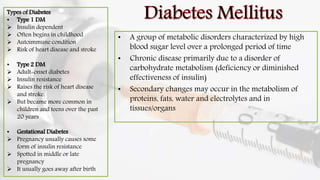
• A group of metabolic disorders characterized by high
blood sugar level over a prolonged period of time
• Chronic disease primarily due to a disorder of
carbohydrate metabolism (deficiency or diminished
effectiveness of insulin)
• Secondary changes may occur in the metabolism of
proteins, fats, water and electrolytes and in
tissues/organs
Types of Diabetes
• Type 1 DM
 Insulin dependent
 Often begins in childhood
 Autoimmune condition
 Risk of heart disease and stroke
• Type 2 DM
 Adult-onset diabetes
 Insulin resistance
 Raises the risk of heart disease
and stroke.
 But became more common in
children and teens over the past
20 years
• Gestational Diabetes
 Pregnancy usually causes some
form of insulin resistance
 Spotted in middle or late
pregnancy
 It usually goes away after birth
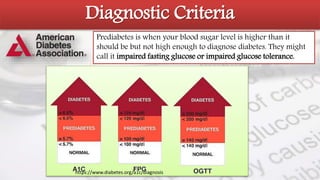
Diagnostic Criteria
https://www.diabetes.org/a1c/diagnosis
Prediabetes is when your blood sugar level is higher than it
should be but not high enough to diagnose diabetes. They might
call it impaired fasting glucose or impaired glucose tolerance.
• Polyuria
• Polydypsia
• Polyphagia
• Blurry vision
• Extreme fatigue
• Weight loss
• Sensations of pins and
needles in the feet
• Diabetic Ketoacidosis
• Hyperosmolar
Hyperglycemic state
• Death
Acute
Complications
• Cardiovascular Disease
• Chronic Kidney Disease
• Foot ulcers
• Diabetic neuropathy
• Diabetic retinopathy
• Cognitive impairment
Long term
Complications
Symptoms Complications
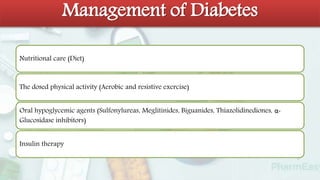
Management of Diabetes
Nutritional care (Diet)
The dosed physical activity (Aerobic and resistive exercise)
Oral hypoglycemic agents (Sulfonylureas, Meglitinides, Biguanides, Thiazolidinediones, α-
Glucosidase inhibitors)
Insulin therapy
Why Diet?
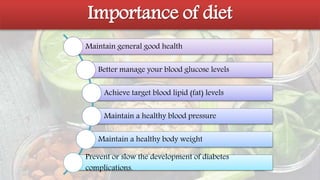
Importance of diet
Maintain general good health
Better manage your blood glucose levels
Achieve target blood lipid (fat) levels
Maintain a healthy blood pressure
Maintain a healthy body weight
Prevent or slow the development of diabetes
complications.
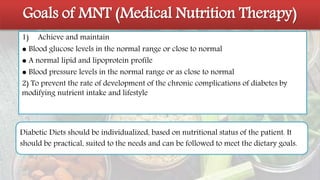
Goals of MNT (Medical Nutrition Therapy)
1) Achieve and maintain
● Blood glucose levels in the normal range or close to normal
● A normal lipid and lipoprotein profile
● Blood pressure levels in the normal range or as close to normal
2) To prevent the rate of development of the chronic complications of diabetes by
modifying nutrient intake and lifestyle
Diabetic Diets should be individualized, based on nutritional status of the patient. It
should be practical, suited to the needs and can be followed to meet the dietary goals.
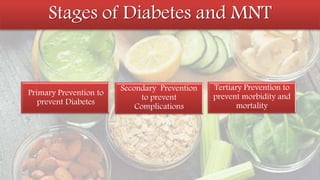
Primary Prevention to
prevent Diabetes
Secondary Prevention
to prevent
Complications
Tertiary Prevention to
prevent morbidity and
mortality
Stages of Diabetes and MNT
Role of the macronutrients and
micronutrients
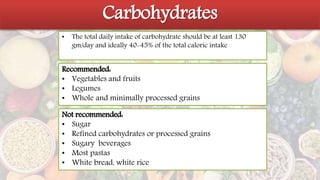
Carbohydrates
Carbohydrates
• The total daily intake of carbohydrate should be at least 130
gm/day and ideally 40-45% of the total caloric intake
Recommended:
• Vegetables and fruits
• Legumes
• Whole and minimally processed grains
Not recommended:
• Sugar
• Refined carbohydrates or processed grains
• Sugary beverages
• Most pastas
• White bread, white rice
Carbohydrates
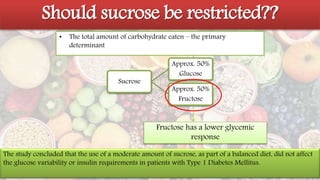
Should sucrose be restricted??
• The total amount of carbohydrate eaten – the primary
determinant
Sucrose
Approx. 50%
Glucose
Approx. 50%
Fructose
Fructose has a lower glycemic
response
The study concluded that the use of a moderate amount of sucrose, as part of a balanced diet, did not affect
the glucose variability or insulin requirements in patients with Type 1 Diabetes Mellitus.
Carbohydrates
Carbohydrates
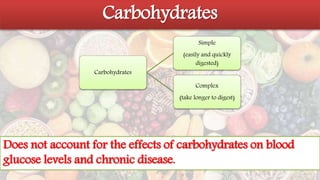
Does not account for the effects of carbohydrates on blood
glucose levels and chronic disease.
Carbohydrates
Simple
(easily and quickly
digested)
Complex
(take longer to digest)
Glycemic Index
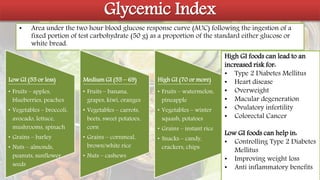
• Area under the two hour blood glucose response curve (AUC) following the ingestion of a
fixed portion of test carbohydrate (50 g) as a proportion of the standard either glucose or
white bread.
Low GI (55 or less)
• Fruits – apples,
blueberries, peaches
• Vegetables – broccoli,
avocado, lettuce,
mushrooms, spinach
• Grains – barley
• Nuts – almonds,
peanuts, sunflower
seeds
Medium GI (55 – 69)
• Fruits – banana,
grapes, kiwi, oranges
• Vegetables – carrots,
beets, sweet potatoes,
corn
• Grains – cornmeal,
brown/white rice
• Nuts – cashews
High GI (70 or more)
• Fruits – watermelon,
pineapple
• Vegetables – winter
squash, potatoes
• Grains – instant rice
• Snacks – candy,
crackers, chips
High GI foods can lead to an
increased risk for:
• Type 2 Diabetes Mellitus
• Heart disease
• Overweight
• Macular degeneration
• Ovulatory infertility
• Colorectal Cancer
Low GI foods can help in:
• Controlling Type 2 Diabetes
Mellitus
• Improving weight loss
• Anti inflammatory benefits
Glycemic Load
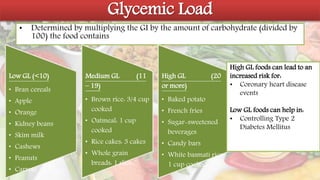
• Determined by multiplying the GI by the amount of carbohydrate (divided by
100) the food contains
Low GL (<10)
• Bran cereals
• Apple
• Orange
• Kidney beans
• Skim milk
• Cashews
• Peanuts
• Carrots
Medium GL (11
– 19)
• Brown rice: 3/4 cup
cooked
• Oatmeal: 1 cup
cooked
• Rice cakes: 3 cakes
• Whole grain
breads: 1 slice
High GL (20
or more)
• Baked potato
• French fries
• Sugar-sweetened
beverages
• Candy bars
• White basmati rice:
1 cup cooked
High GL foods can lead to an
increased risk for:
• Coronary heart disease
events
Low GL foods can help in:
• Controlling Type 2
Diabetes Mellitus
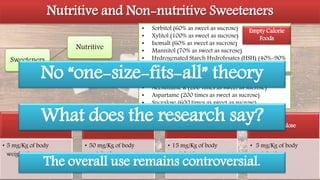
Nutritive and Non-nutritive Sweeteners
Sweeteners
Nutritive
Non nutritive
• Sorbitol (60% as sweet as sucrose)
• Xylitol (100% as sweet as sucrose)
• Isomalt (60% as sweet as sucrose)
• Mannitol (70% as sweet as sucrose)
• Hydrogenated Starch Hydrolysates (HSH) (40%-90%
as sweet as sucrose)
• Saccharin (300 times as sweet as sucrose)
• Acesulfame K (200 times as sweet as sucrose)
• Aspartame (200 times as sweet as sucrose)
• Sucralose (600 times as sweet as sucrose)
Aspartame
• 50 mg/Kg of body
weight/day
Saccharin
• 5 mg/Kg of body
weight/day
Sucralose
• 5 mg/Kg of body
weight/day
Acesulfame K (potassium)
• 15 mg/Kg of body
weight/day
What does the research say?
Empty Calorie
Foods
No “one-size-fits-all” theory
The overall use remains controversial.
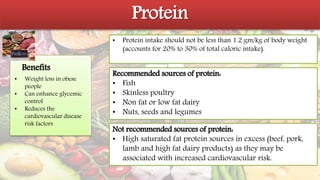
Protein
• Protein intake should not be less than 1.2 gm/kg of body weight
(accounts for 20% to 30% of total caloric intake).
Recommended sources of protein:
• Fish
• Skinless poultry
• Non fat or low fat dairy
• Nuts, seeds and legumes
•
Benefits
Not recommended sources of protein:
• High saturated fat protein sources in excess (beef, pork,
lamb and high fat dairy products) as they may be
associated with increased cardiovascular risk.
• Weight loss in obese
people
• Can enhance glycemic
control
• Reduces the
cardiovascular disease
risk factors
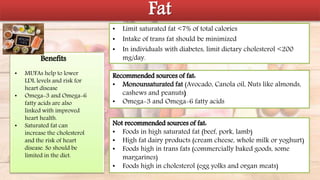
Fat
• Limit saturated fat <7% of total calories
• Intake of trans fat should be minimized
• In individuals with diabetes, limit dietary cholesterol <200
mg/day.
Recommended sources of fat:
• Monounsaturated fat (Avocado, Canola oil, Nuts like almonds,
cashews and peanuts)
• Omega-3 and Omega-6 fatty acids
Not recommended sources of fat:
• Foods in high saturated fat (beef, pork, lamb)
• High fat dairy products (cream cheese, whole milk or yoghurt)
• Foods high in trans fats (commercially baked goods, some
margarines)
• Foods high in cholesterol (egg yolks and organ meats)
• MUFAs help to lower
LDL levels and risk for
heart disease
• Omega-3 and Omega-6
fatty acids are also
linked with improved
heart health.
• Saturated fat can
increase the cholesterol
and the risk of heart
disease. So should be
limited in the diet.
Benefits
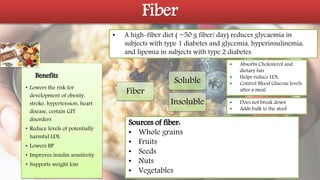
Fiber
• A high-fiber diet ( ~50 g fiber/ day) reduces glycaemia in
subjects with type 1 diabetes and glycemia, hyperinsulinemia,
and lipemia in subjects with type 2 diabetes.
• Lowers the risk for
development of obesity,
stroke, hypertension, heart
disease, certain GIT
disorders
• Reduce levels of potentially
harmful LDL
• Lowers BP
• Improves insulin sensitivity
• Supports weight loss
Fiber
Soluble
Insoluble
• Absorbs Cholesterol and
dietary fats
• Helps reduce LDL
• Control Blood Glucose levels
after a meal.
• Does not break down
• Adds bulk to the stool
Benefits
Sources of fiber:
• Whole grains
• Fruits
• Seeds
• Nuts
• Vegetables
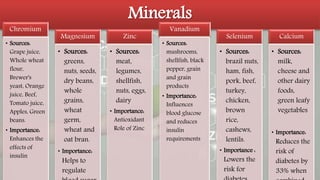
Minerals
Chromium
• Sources:
Grape juice,
Whole wheat
flour,
Brewer's
yeast, Orange
juice, Beef,
Tomato juice,
Apples, Green
beans.
• Importance:
Enhances the
effects of
insulin
Magnesium
• Sources:
greens,
nuts, seeds,
dry beans,
whole
grains,
wheat
germ,
wheat and
oat bran.
• Importance:
Helps to
regulate
Zinc
• Sources:
meat,
legumes,
shellfish,
nuts, eggs,
dairy
• Importance:
Antioxidant
Role of Zinc
Vanadium
• Sources:
mushrooms,
shellfish, black
pepper, grain
and grain
products
• Importance:
Influences
blood glucose
and reduces
insulin
requirements
Selenium
• Sources:
brazil nuts,
ham, fish,
pork, beef,
turkey,
chicken,
brown
rice,
cashews,
lentils.
• Importance :
Lowers the
risk for
Calcium
• Sources:
milk,
cheese and
other dairy
foods,
green leafy
vegetables
• Importance:
Reduces the
risk of
diabetes by
33% when
Future directions
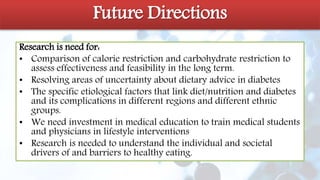
Research is need for:
• Comparison of calorie restriction and carbohydrate restriction to
assess effectiveness and feasibility in the long term.
• Resolving areas of uncertainty about dietary advice in diabetes
• The specific etiological factors that link diet/nutrition and diabetes
and its complications in different regions and different ethnic
groups.
• We need investment in medical education to train medical students
and physicians in lifestyle interventions
• Research is needed to understand the individual and societal
drivers of and barriers to healthy eating.
Future Directions
In a nutshell
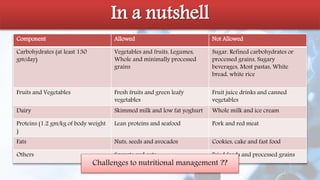
Component Allowed Not Allowed
Carbohydrates (at least 130
gm/day)
Vegetables and fruits, Legumes,
Whole and minimally processed
grains
Sugar, Refined carbohydrates or
processed grains, Sugary
beverages, Most pastas, White
bread, white rice
Fruits and Vegetables Fresh fruits and green leafy
vegetables
Fruit juice drinks and canned
vegetables
Dairy Skimmed milk and low fat yoghurt Whole milk and ice cream
Proteins (1.2 gm/kg of body weight
)
Lean proteins and seafood Pork and red meat
Fats Nuts, seeds and avocados Cookies, cake and fast food
Others Sprouts and oats Fried foods and processed grains
Challenges to nutritional management ??

Diet in diabetes

  • 1.
    Presenter: Arshdeep Singh(M.Sc. 1st Year) PGIMER Chandigarh Date of upload: 10/03/2022
  • 2.
    • A groupof metabolic disorders characterized by high blood sugar level over a prolonged period of time • Chronic disease primarily due to a disorder of carbohydrate metabolism (deficiency or diminished effectiveness of insulin) • Secondary changes may occur in the metabolism of proteins, fats, water and electrolytes and in tissues/organs Types of Diabetes • Type 1 DM  Insulin dependent  Often begins in childhood  Autoimmune condition  Risk of heart disease and stroke • Type 2 DM  Adult-onset diabetes  Insulin resistance  Raises the risk of heart disease and stroke.  But became more common in children and teens over the past 20 years • Gestational Diabetes  Pregnancy usually causes some form of insulin resistance  Spotted in middle or late pregnancy  It usually goes away after birth
  • 3.
    Diagnostic Criteria https://www.diabetes.org/a1c/diagnosis Prediabetes iswhen your blood sugar level is higher than it should be but not high enough to diagnose diabetes. They might call it impaired fasting glucose or impaired glucose tolerance.
  • 4.
    • Polyuria • Polydypsia •Polyphagia • Blurry vision • Extreme fatigue • Weight loss • Sensations of pins and needles in the feet • Diabetic Ketoacidosis • Hyperosmolar Hyperglycemic state • Death Acute Complications • Cardiovascular Disease • Chronic Kidney Disease • Foot ulcers • Diabetic neuropathy • Diabetic retinopathy • Cognitive impairment Long term Complications Symptoms Complications
  • 5.
    Management of Diabetes Nutritionalcare (Diet) The dosed physical activity (Aerobic and resistive exercise) Oral hypoglycemic agents (Sulfonylureas, Meglitinides, Biguanides, Thiazolidinediones, α- Glucosidase inhibitors) Insulin therapy
  • 6.
  • 7.
    Importance of diet Maintaingeneral good health Better manage your blood glucose levels Achieve target blood lipid (fat) levels Maintain a healthy blood pressure Maintain a healthy body weight Prevent or slow the development of diabetes complications.
  • 8.
    Goals of MNT(Medical Nutrition Therapy) 1) Achieve and maintain ● Blood glucose levels in the normal range or close to normal ● A normal lipid and lipoprotein profile ● Blood pressure levels in the normal range or as close to normal 2) To prevent the rate of development of the chronic complications of diabetes by modifying nutrient intake and lifestyle Diabetic Diets should be individualized, based on nutritional status of the patient. It should be practical, suited to the needs and can be followed to meet the dietary goals.
  • 9.
    Primary Prevention to preventDiabetes Secondary Prevention to prevent Complications Tertiary Prevention to prevent morbidity and mortality Stages of Diabetes and MNT
  • 10.
    Role of themacronutrients and micronutrients
  • 11.
    Carbohydrates Carbohydrates • The totaldaily intake of carbohydrate should be at least 130 gm/day and ideally 40-45% of the total caloric intake Recommended: • Vegetables and fruits • Legumes • Whole and minimally processed grains Not recommended: • Sugar • Refined carbohydrates or processed grains • Sugary beverages • Most pastas • White bread, white rice
  • 12.
    Carbohydrates Should sucrose berestricted?? • The total amount of carbohydrate eaten – the primary determinant Sucrose Approx. 50% Glucose Approx. 50% Fructose Fructose has a lower glycemic response The study concluded that the use of a moderate amount of sucrose, as part of a balanced diet, did not affect the glucose variability or insulin requirements in patients with Type 1 Diabetes Mellitus.
  • 13.
    Carbohydrates Carbohydrates Does not accountfor the effects of carbohydrates on blood glucose levels and chronic disease. Carbohydrates Simple (easily and quickly digested) Complex (take longer to digest)
  • 14.
    Glycemic Index • Areaunder the two hour blood glucose response curve (AUC) following the ingestion of a fixed portion of test carbohydrate (50 g) as a proportion of the standard either glucose or white bread. Low GI (55 or less) • Fruits – apples, blueberries, peaches • Vegetables – broccoli, avocado, lettuce, mushrooms, spinach • Grains – barley • Nuts – almonds, peanuts, sunflower seeds Medium GI (55 – 69) • Fruits – banana, grapes, kiwi, oranges • Vegetables – carrots, beets, sweet potatoes, corn • Grains – cornmeal, brown/white rice • Nuts – cashews High GI (70 or more) • Fruits – watermelon, pineapple • Vegetables – winter squash, potatoes • Grains – instant rice • Snacks – candy, crackers, chips High GI foods can lead to an increased risk for: • Type 2 Diabetes Mellitus • Heart disease • Overweight • Macular degeneration • Ovulatory infertility • Colorectal Cancer Low GI foods can help in: • Controlling Type 2 Diabetes Mellitus • Improving weight loss • Anti inflammatory benefits
  • 15.
    Glycemic Load • Determinedby multiplying the GI by the amount of carbohydrate (divided by 100) the food contains Low GL (<10) • Bran cereals • Apple • Orange • Kidney beans • Skim milk • Cashews • Peanuts • Carrots Medium GL (11 – 19) • Brown rice: 3/4 cup cooked • Oatmeal: 1 cup cooked • Rice cakes: 3 cakes • Whole grain breads: 1 slice High GL (20 or more) • Baked potato • French fries • Sugar-sweetened beverages • Candy bars • White basmati rice: 1 cup cooked High GL foods can lead to an increased risk for: • Coronary heart disease events Low GL foods can help in: • Controlling Type 2 Diabetes Mellitus
  • 16.
    Nutritive and Non-nutritiveSweeteners Sweeteners Nutritive Non nutritive • Sorbitol (60% as sweet as sucrose) • Xylitol (100% as sweet as sucrose) • Isomalt (60% as sweet as sucrose) • Mannitol (70% as sweet as sucrose) • Hydrogenated Starch Hydrolysates (HSH) (40%-90% as sweet as sucrose) • Saccharin (300 times as sweet as sucrose) • Acesulfame K (200 times as sweet as sucrose) • Aspartame (200 times as sweet as sucrose) • Sucralose (600 times as sweet as sucrose) Aspartame • 50 mg/Kg of body weight/day Saccharin • 5 mg/Kg of body weight/day Sucralose • 5 mg/Kg of body weight/day Acesulfame K (potassium) • 15 mg/Kg of body weight/day What does the research say? Empty Calorie Foods No “one-size-fits-all” theory The overall use remains controversial.
  • 17.
    Protein • Protein intakeshould not be less than 1.2 gm/kg of body weight (accounts for 20% to 30% of total caloric intake). Recommended sources of protein: • Fish • Skinless poultry • Non fat or low fat dairy • Nuts, seeds and legumes • Benefits Not recommended sources of protein: • High saturated fat protein sources in excess (beef, pork, lamb and high fat dairy products) as they may be associated with increased cardiovascular risk. • Weight loss in obese people • Can enhance glycemic control • Reduces the cardiovascular disease risk factors
  • 18.
    Fat • Limit saturatedfat <7% of total calories • Intake of trans fat should be minimized • In individuals with diabetes, limit dietary cholesterol <200 mg/day. Recommended sources of fat: • Monounsaturated fat (Avocado, Canola oil, Nuts like almonds, cashews and peanuts) • Omega-3 and Omega-6 fatty acids Not recommended sources of fat: • Foods in high saturated fat (beef, pork, lamb) • High fat dairy products (cream cheese, whole milk or yoghurt) • Foods high in trans fats (commercially baked goods, some margarines) • Foods high in cholesterol (egg yolks and organ meats) • MUFAs help to lower LDL levels and risk for heart disease • Omega-3 and Omega-6 fatty acids are also linked with improved heart health. • Saturated fat can increase the cholesterol and the risk of heart disease. So should be limited in the diet. Benefits
  • 19.
    Fiber • A high-fiberdiet ( ~50 g fiber/ day) reduces glycaemia in subjects with type 1 diabetes and glycemia, hyperinsulinemia, and lipemia in subjects with type 2 diabetes. • Lowers the risk for development of obesity, stroke, hypertension, heart disease, certain GIT disorders • Reduce levels of potentially harmful LDL • Lowers BP • Improves insulin sensitivity • Supports weight loss Fiber Soluble Insoluble • Absorbs Cholesterol and dietary fats • Helps reduce LDL • Control Blood Glucose levels after a meal. • Does not break down • Adds bulk to the stool Benefits Sources of fiber: • Whole grains • Fruits • Seeds • Nuts • Vegetables
  • 20.
    Minerals Chromium • Sources: Grape juice, Wholewheat flour, Brewer's yeast, Orange juice, Beef, Tomato juice, Apples, Green beans. • Importance: Enhances the effects of insulin Magnesium • Sources: greens, nuts, seeds, dry beans, whole grains, wheat germ, wheat and oat bran. • Importance: Helps to regulate Zinc • Sources: meat, legumes, shellfish, nuts, eggs, dairy • Importance: Antioxidant Role of Zinc Vanadium • Sources: mushrooms, shellfish, black pepper, grain and grain products • Importance: Influences blood glucose and reduces insulin requirements Selenium • Sources: brazil nuts, ham, fish, pork, beef, turkey, chicken, brown rice, cashews, lentils. • Importance : Lowers the risk for Calcium • Sources: milk, cheese and other dairy foods, green leafy vegetables • Importance: Reduces the risk of diabetes by 33% when
  • 21.
    Future directions Research isneed for: • Comparison of calorie restriction and carbohydrate restriction to assess effectiveness and feasibility in the long term. • Resolving areas of uncertainty about dietary advice in diabetes • The specific etiological factors that link diet/nutrition and diabetes and its complications in different regions and different ethnic groups. • We need investment in medical education to train medical students and physicians in lifestyle interventions • Research is needed to understand the individual and societal drivers of and barriers to healthy eating. Future Directions
  • 22.
    In a nutshell ComponentAllowed Not Allowed Carbohydrates (at least 130 gm/day) Vegetables and fruits, Legumes, Whole and minimally processed grains Sugar, Refined carbohydrates or processed grains, Sugary beverages, Most pastas, White bread, white rice Fruits and Vegetables Fresh fruits and green leafy vegetables Fruit juice drinks and canned vegetables Dairy Skimmed milk and low fat yoghurt Whole milk and ice cream Proteins (1.2 gm/kg of body weight ) Lean proteins and seafood Pork and red meat Fats Nuts, seeds and avocados Cookies, cake and fast food Others Sprouts and oats Fried foods and processed grains Challenges to nutritional management ??