What is the difference between
 Diabetes Type 1 and Type 2?
         Melissa Fumano
           Period 8/9
• Generally speaking, diabetes is a disorder
  involving the metabolism of a person
• On a daily basis, humans consume many
  different kinds of food which is then digested
  and broken down into glucose
• Glucose is a simple sugar that is contained in
  our blood.
• The glucose in the blood comes from
  the food that you eat.
• Our bodies view it as the main source of food
  for our bodies to obtain energy and carry out
  necessary life processes.
• Insulin is a type of hormone
  produced in the pancreas.
• Insulin contains 51 amino acids
  and is required by almost all of
  the body's cells (mainly targets
  the liver cells, fat
  cells and muscle cells).
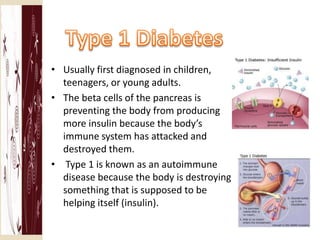
• Usually first diagnosed in children,
  teenagers, or young adults.
• The beta cells of the pancreas is
  preventing the body from producing
  more insulin because the body’s
  immune system has attacked and
  destroyed them.
• Type 1 is known as an autoimmune
  disease because the body is destroying
  something that is supposed to be
  helping itself (insulin).
Type 1 Diabetes (continued)
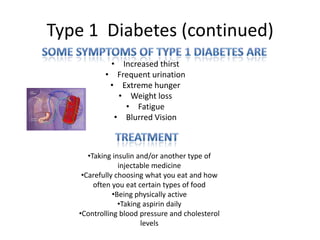
            • Increased thirst
           • Frequent urination
            • Extreme hunger
              • Weight loss
               • Fatigue
             • Blurred Vision


      •Taking insulin and/or another type of
                injectable medicine
    •Carefully choosing what you eat and how
        often you eat certain types of food
              •Being physically active
                •Taking aspirin daily
   •Controlling blood pressure and cholesterol
                       levels
• People can develop Type 2 Diabetes at any age
• Approximately 85% of all diabetes patients have
  Type 2.
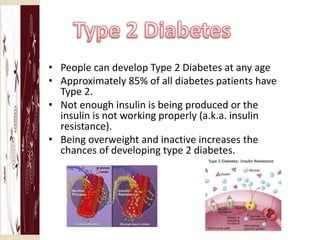
• Not enough insulin is being produced or the
  insulin is not working properly (a.k.a. insulin
  resistance).
• Being overweight and inactive increases the
  chances of developing type 2 diabetes.
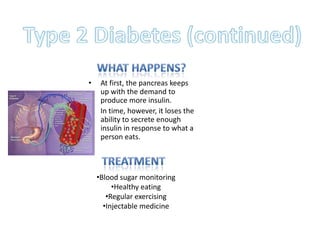
•    At first, the pancreas keeps
     up with the demand to
     produce more insulin.
•    In time, however, it loses the
     ability to secrete enough
     insulin in response to what a
     person eats.


    •Blood sugar monitoring
         •Healthy eating
       •Regular exercising
      •Injectable medicine
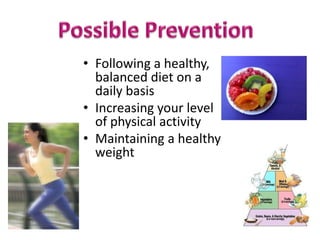
• Following a healthy,
  balanced diet on a
  daily basis
• Increasing your level
  of physical activity
• Maintaining a healthy
  weight

Diabetes

  • 1.
    What is thedifference between Diabetes Type 1 and Type 2? Melissa Fumano Period 8/9
  • 2.
    • Generally speaking,diabetes is a disorder involving the metabolism of a person • On a daily basis, humans consume many different kinds of food which is then digested and broken down into glucose
  • 3.
    • Glucose isa simple sugar that is contained in our blood. • The glucose in the blood comes from the food that you eat. • Our bodies view it as the main source of food for our bodies to obtain energy and carry out necessary life processes.
  • 4.
    • Insulin isa type of hormone produced in the pancreas. • Insulin contains 51 amino acids and is required by almost all of the body's cells (mainly targets the liver cells, fat cells and muscle cells).
  • 5.
    • Usually firstdiagnosed in children, teenagers, or young adults. • The beta cells of the pancreas is preventing the body from producing more insulin because the body’s immune system has attacked and destroyed them. • Type 1 is known as an autoimmune disease because the body is destroying something that is supposed to be helping itself (insulin).
  • 6.
    Type 1 Diabetes(continued) • Increased thirst • Frequent urination • Extreme hunger • Weight loss • Fatigue • Blurred Vision •Taking insulin and/or another type of injectable medicine •Carefully choosing what you eat and how often you eat certain types of food •Being physically active •Taking aspirin daily •Controlling blood pressure and cholesterol levels
  • 7.
    • People candevelop Type 2 Diabetes at any age • Approximately 85% of all diabetes patients have Type 2. • Not enough insulin is being produced or the insulin is not working properly (a.k.a. insulin resistance). • Being overweight and inactive increases the chances of developing type 2 diabetes.
  • 8.
    At first, the pancreas keeps up with the demand to produce more insulin. • In time, however, it loses the ability to secrete enough insulin in response to what a person eats. •Blood sugar monitoring •Healthy eating •Regular exercising •Injectable medicine
  • 9.
    • Following ahealthy, balanced diet on a daily basis • Increasing your level of physical activity • Maintaining a healthy weight