NATIONAL PROGRAMME FOR CONTROL
AND PREVENTION CANCER, DIABETES,
CARDIOVASCULAR DISEASES AND STROKE
INTRODUCTION
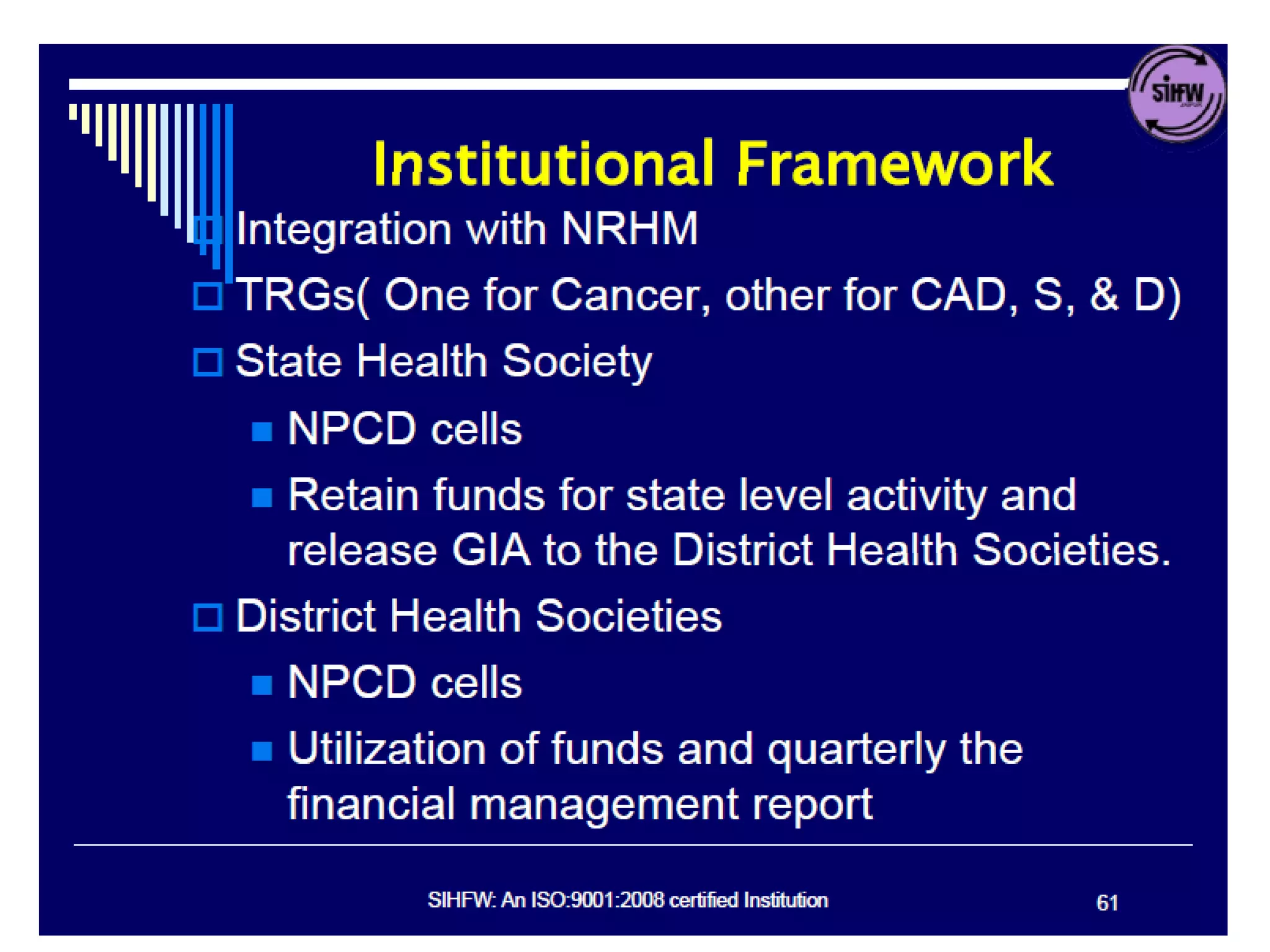
NPCDCS aims at integration of non communicable
diseases with NRHM.
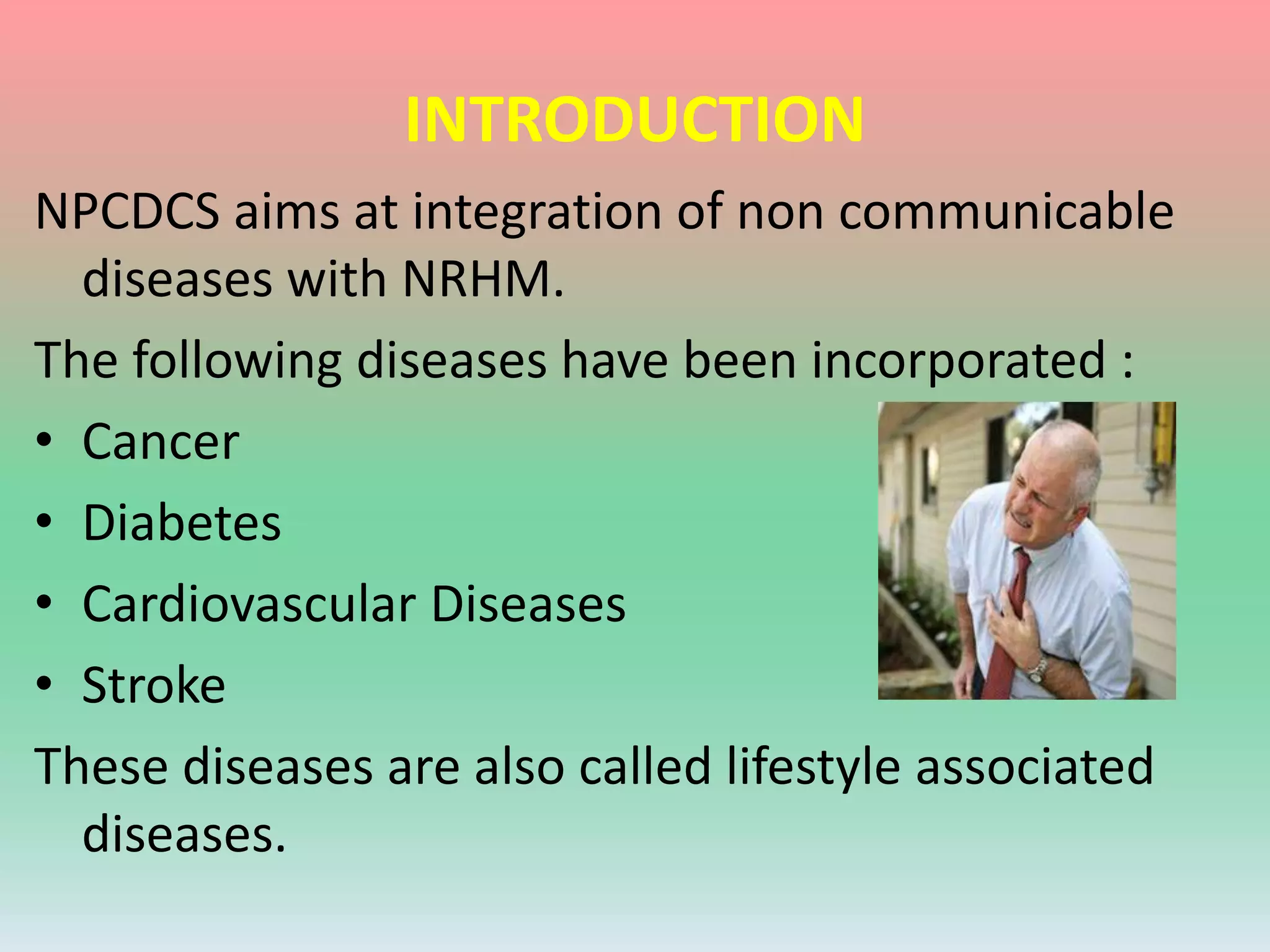
The following diseases have been incorporated :
• Cancer
• Diabetes
• Cardiovascular Diseases
• Stroke
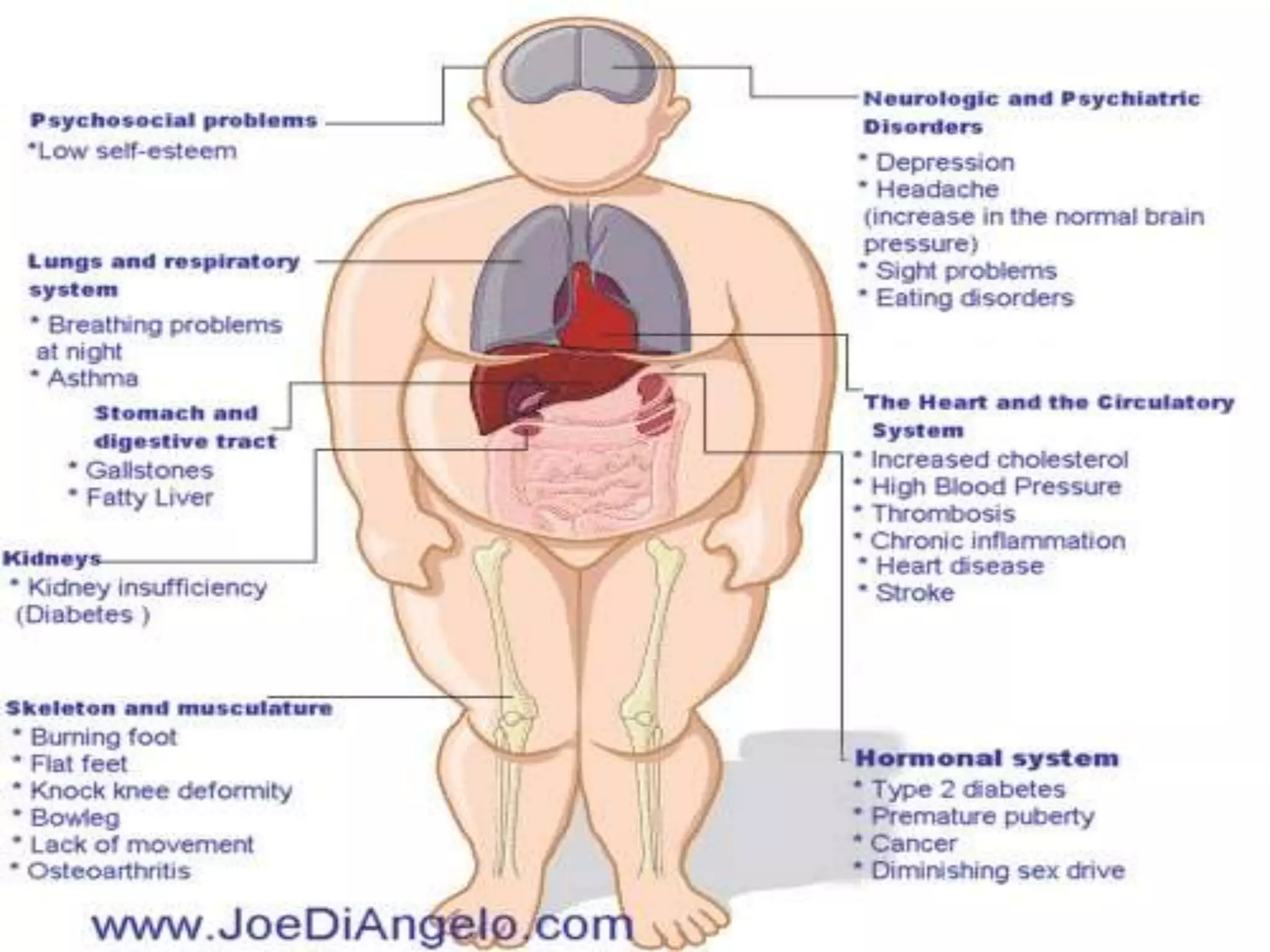
These diseases are also called lifestyle associated
diseases.
GLOBAL BURDEN
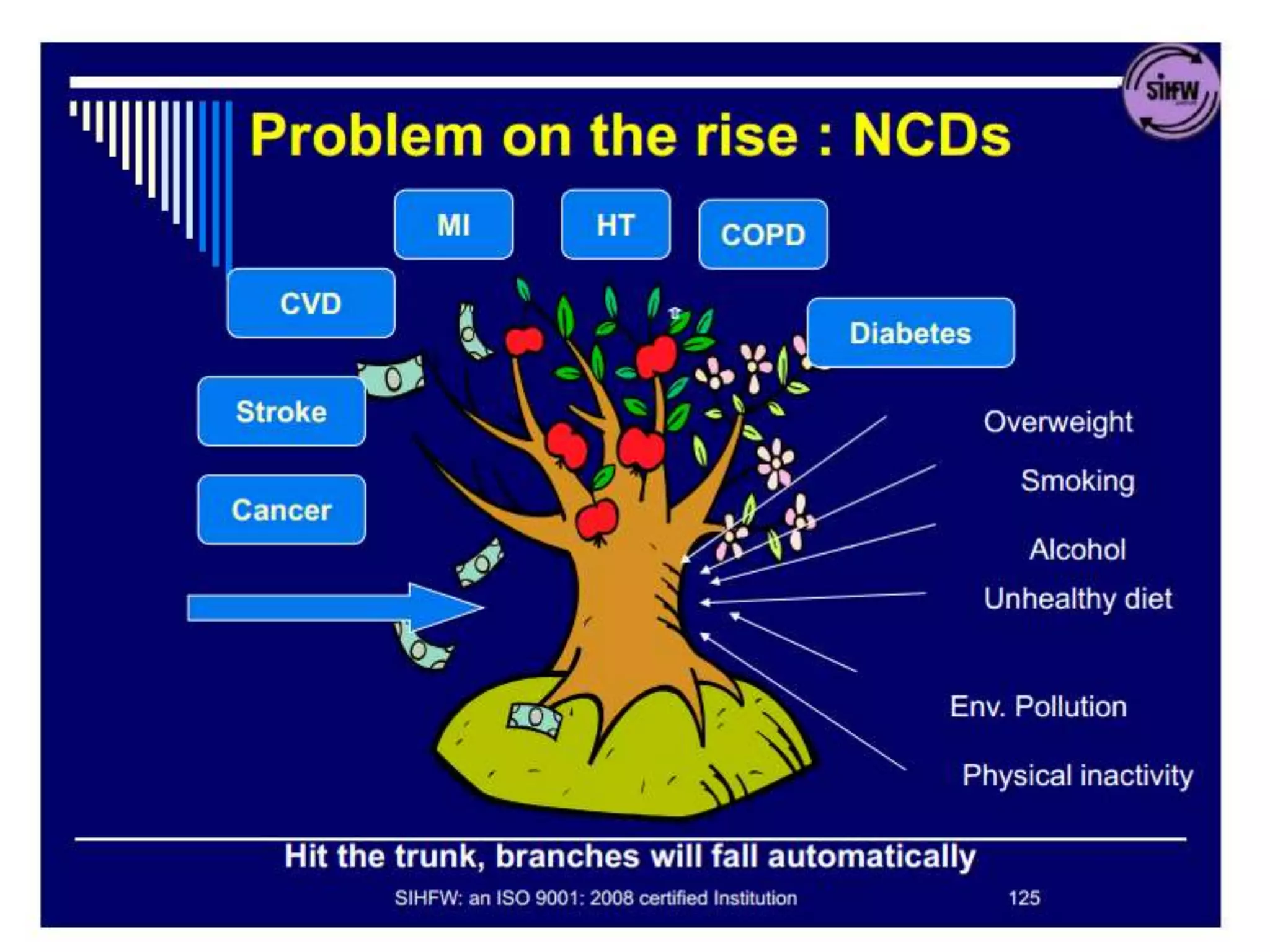
• In 2008, out of the 57 million global deaths, 36
million deaths, or 63%, were due to NCDs,
principally cardiovascular diseases, diabetes,
cancers and chronic respiratory diseases.
• Nearly 80% of NCD deaths occur in low and
middle income countries.
• It is projected that globally NCDs will account for
nearly 44 million deaths in 2020.
INDIAN SCENARIO
• In India deaths due to NCDs in 2008 were
5.3million.
• The prevalence of DM, HT,IHD and stroke is
62.3,159.5,37,1.5 per 1000 population.
Pilot Phase
• Pilot phase of the National Programme for
Prevention and Control of Diabetes, Cardiovascular
Diseases and Stroke (NPDCS) launched on 4th Jan
2008 by Deputy Chairman, Planning Commission.
OBJECTIVES OF NPCDCS
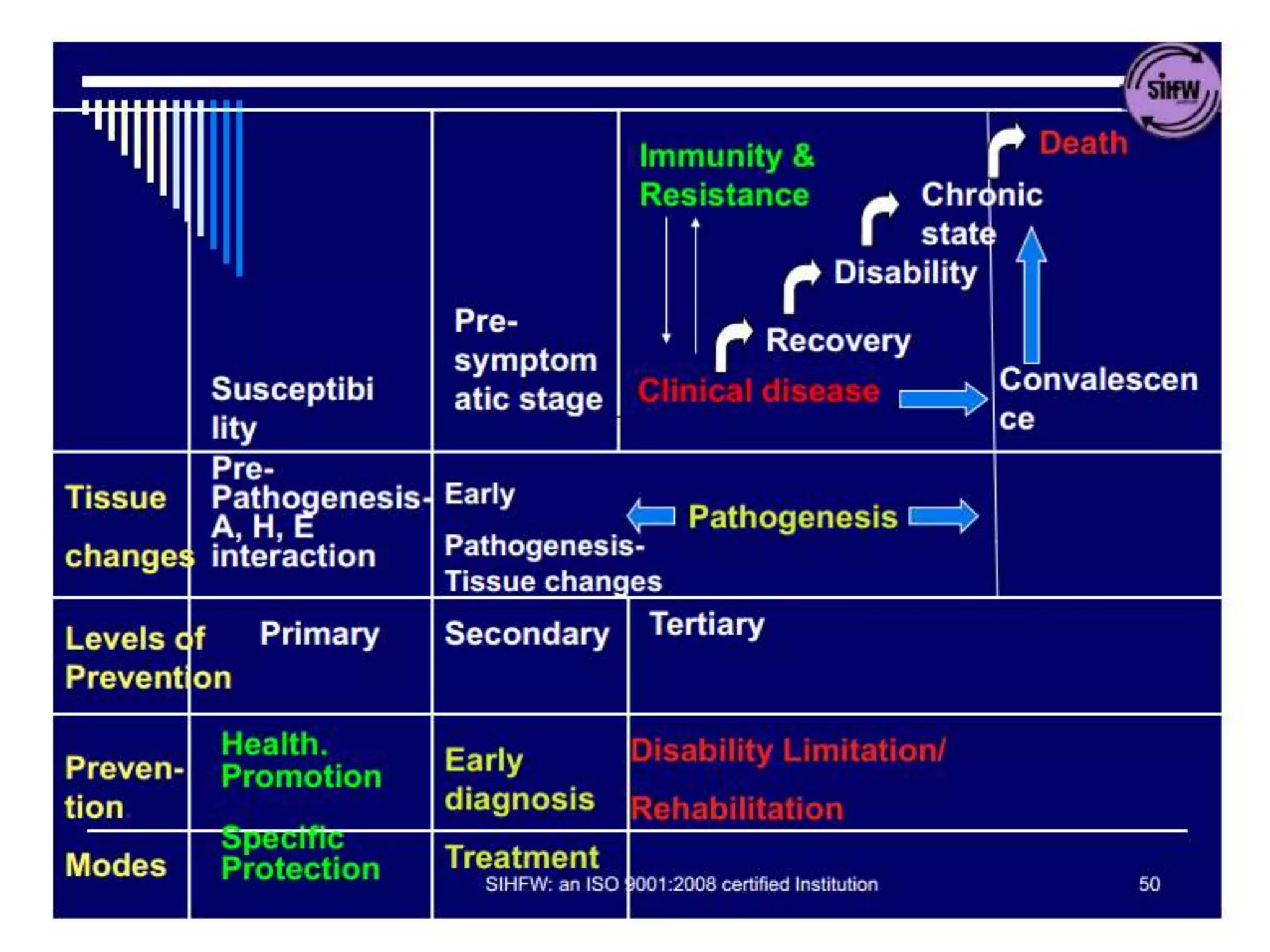
• 1) Prevent and control common NCDs through
behaviour and life style changes,
• 2) Provide early diagnosis and management of
common NCDs through opportunistic screening
• 3) Build capacity at various levels of health care for
prevention, diagnosis and treatment of common
NCDs
• 4) Train human resource within the public health
setup viz doctors, paramedics and nursing staff to
cope with the increasing burden of NCDs
• 5) Establish and develop capacity for palliative &
rehabilitative care
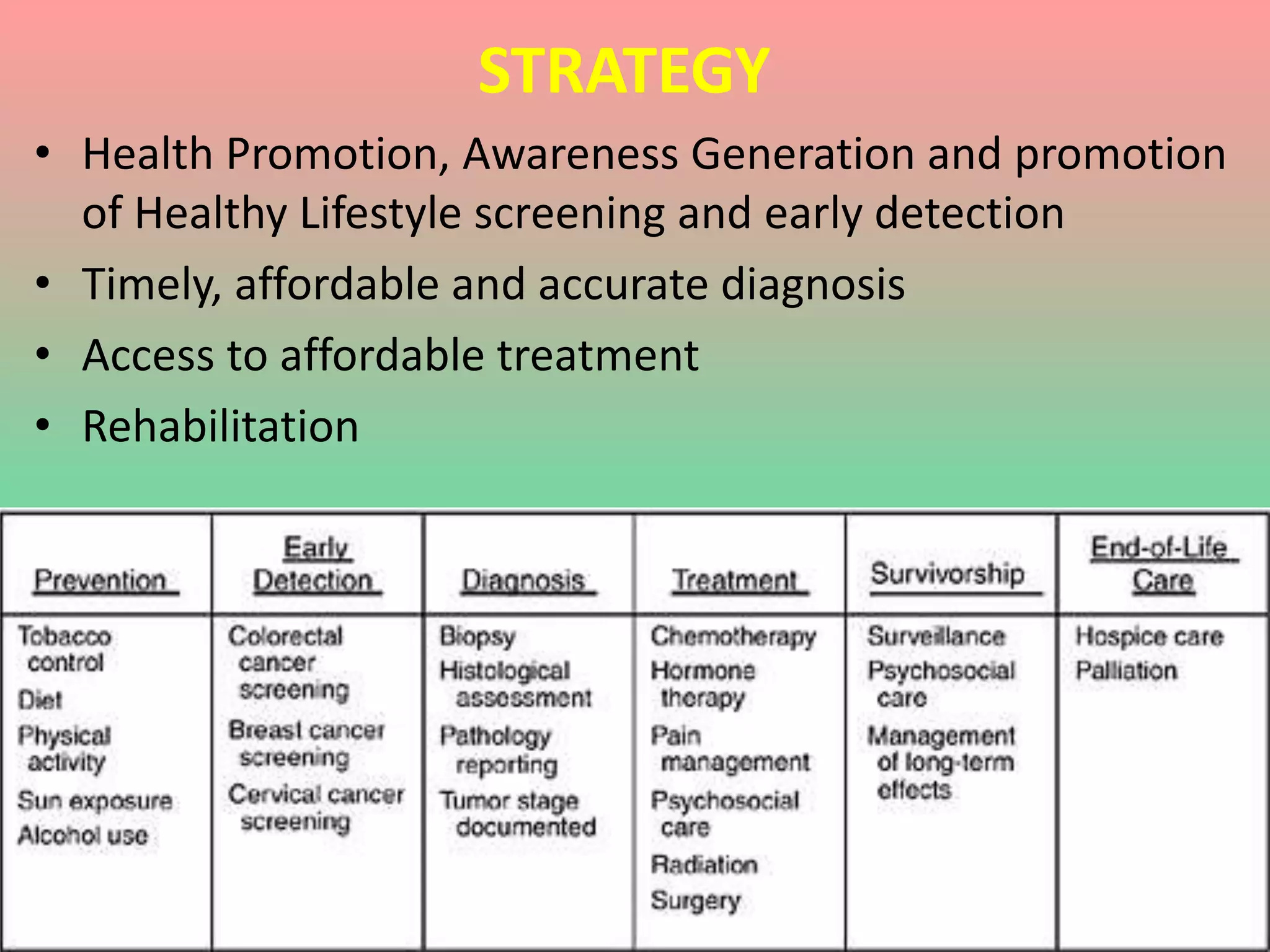
STRATEGY
• Health Promotion, Awareness Generation and promotion
of Healthy Lifestyle screening and early detection
• Timely, affordable and accurate diagnosis
• Access to affordable treatment
• Rehabilitation
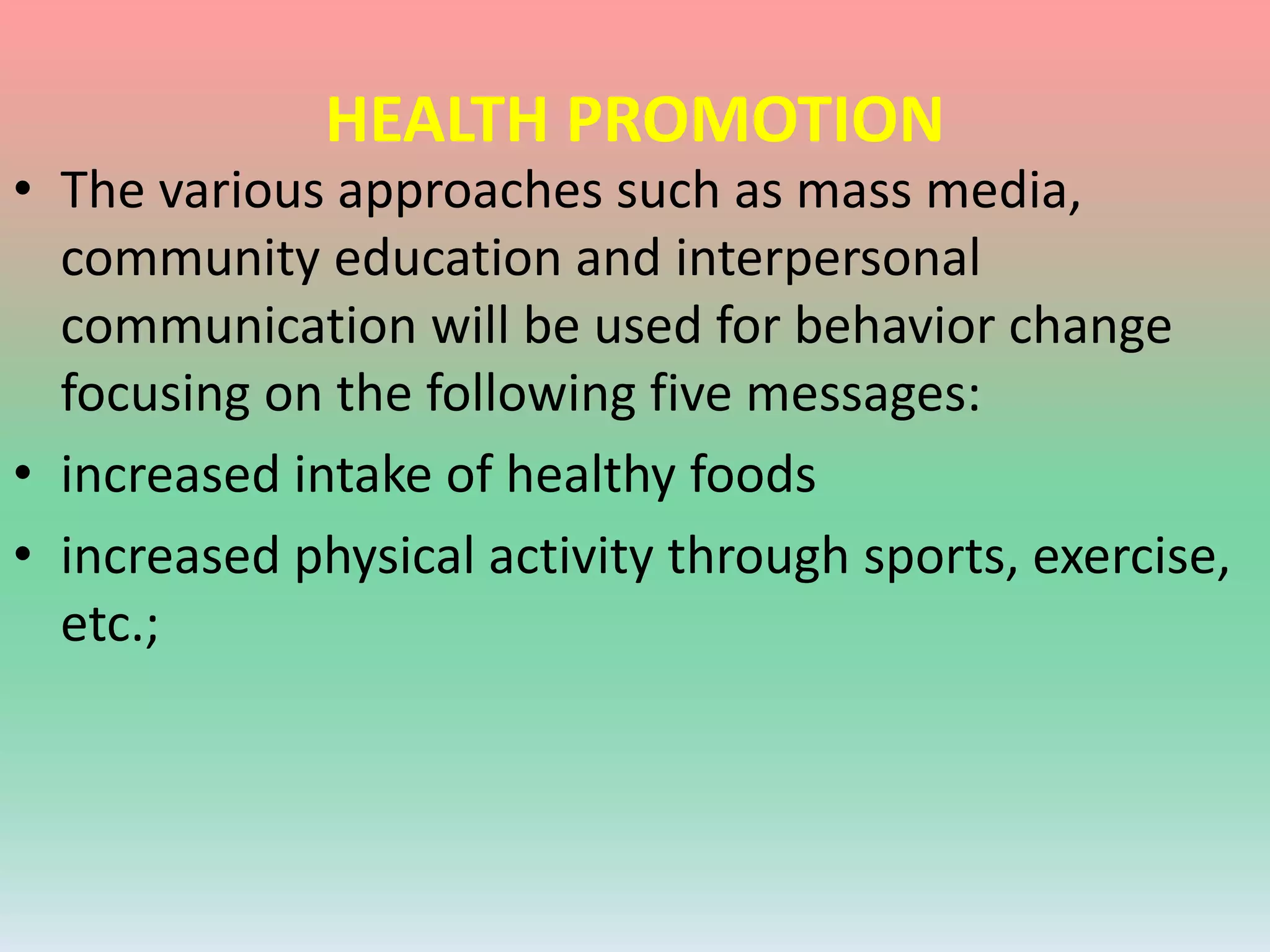
HEALTH PROMOTION
• The various approaches such as mass media,
community education and interpersonal
communication will be used for behavior change
focusing on the following five messages:
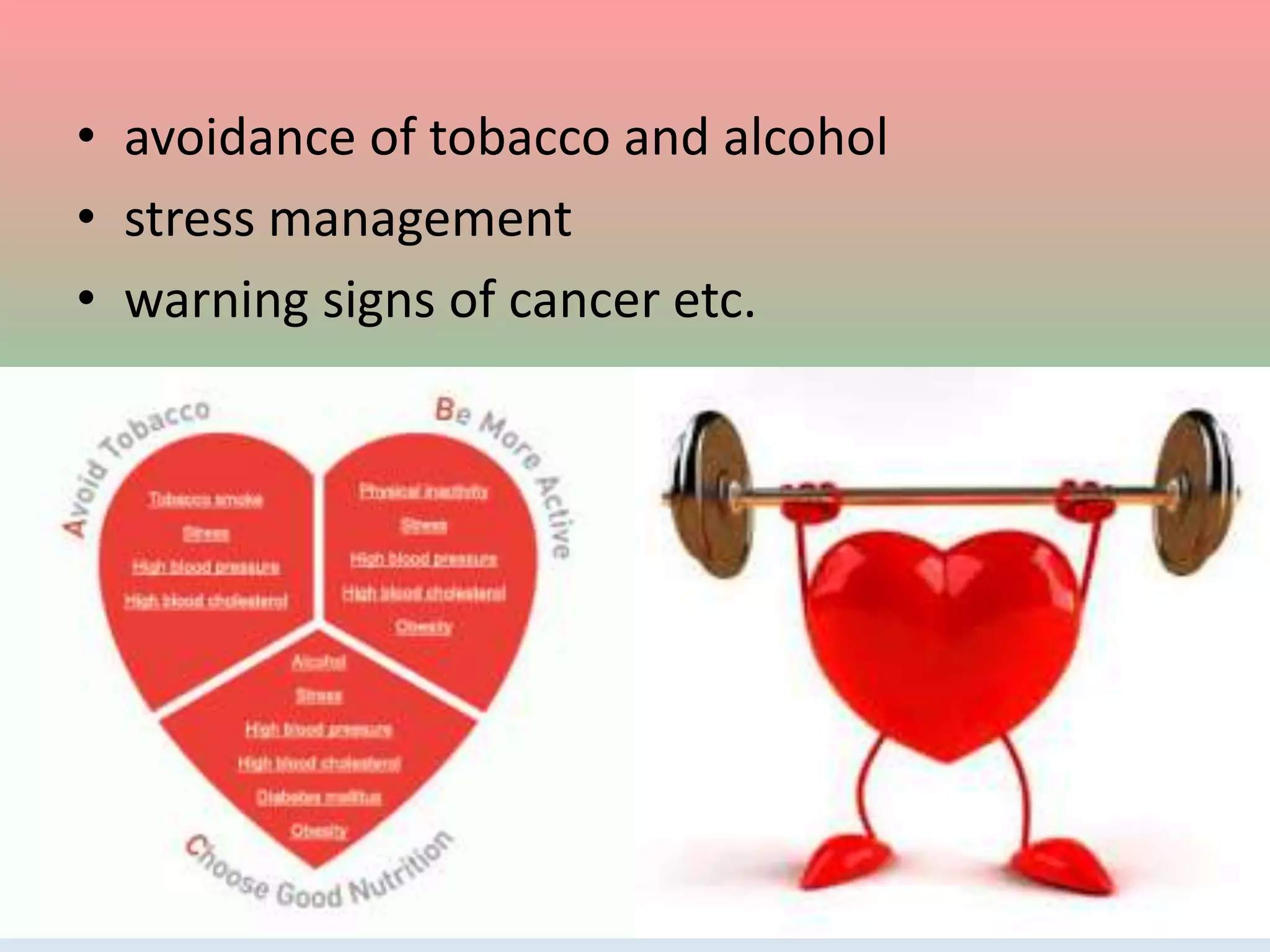
• increased intake of healthy foods
• increased physical activity through sports, exercise,
etc.;
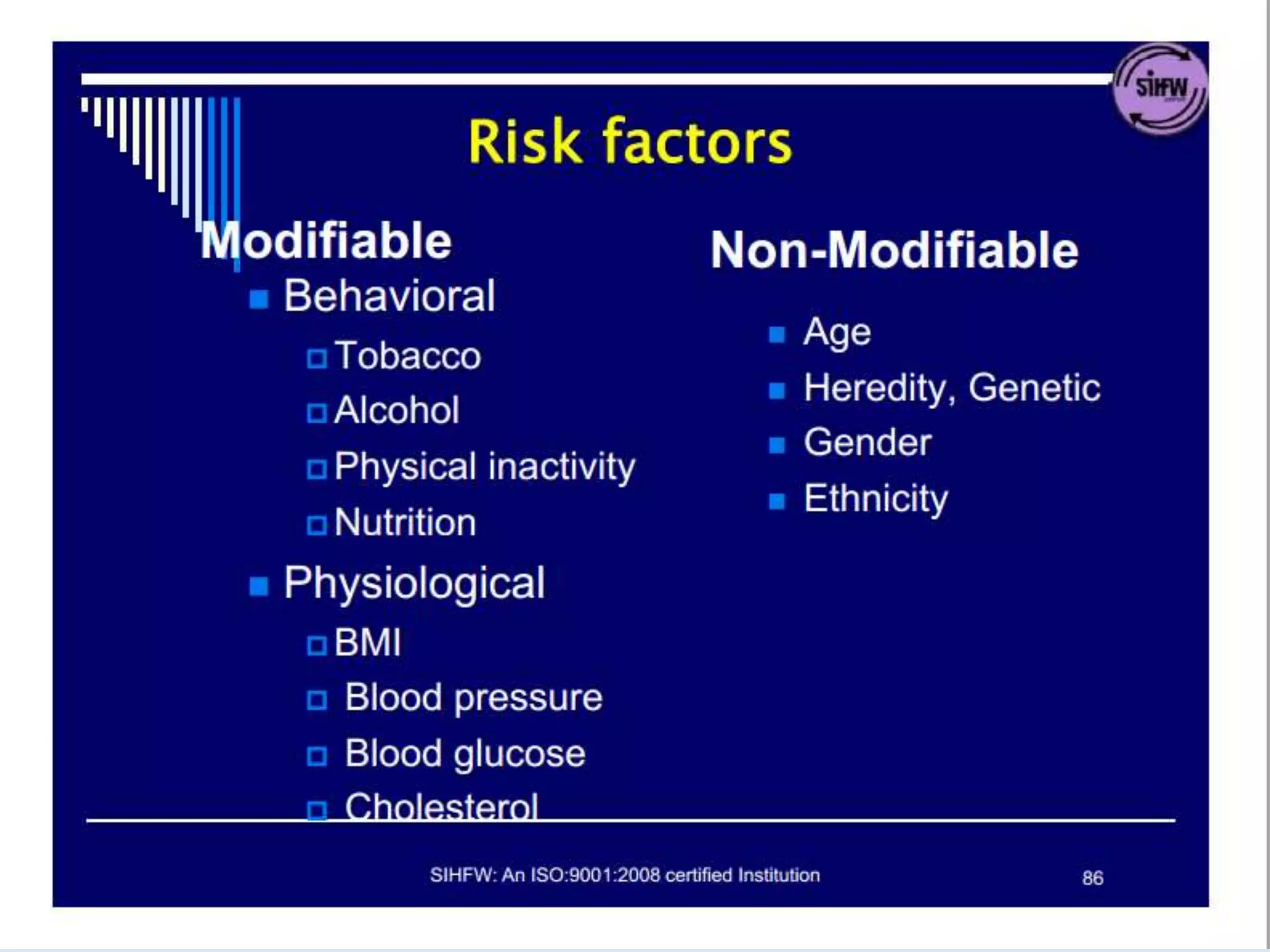
• avoidance of tobacco and alcohol
• stress management
• warning signs of cancer etc.
SCREENING AND EARLY DIAGNOSIS
• Strategy for early diagnosis of chronic non-
communicable diseases will consist of
Opportunistic screening of persons above the age of
30 years at the point of primary contact with any
health care facility, be it the village, CHC, District
hospital, tertiary care hospital etc.
• Such screening involves simple clinical examination
comprising of relevant questions and easily
conducted physical measurements (such as history
of tobacco consumption and measurement of
blood pressure etc.)
OPPORTUNISTIC screening
• During the camps/ designated day ANM and
(or) Male Health Worker shall also examine
persons at and above the age of 30 years for
alcohol and tobacco intake, physical activity,
blood sugar and blood pressure.
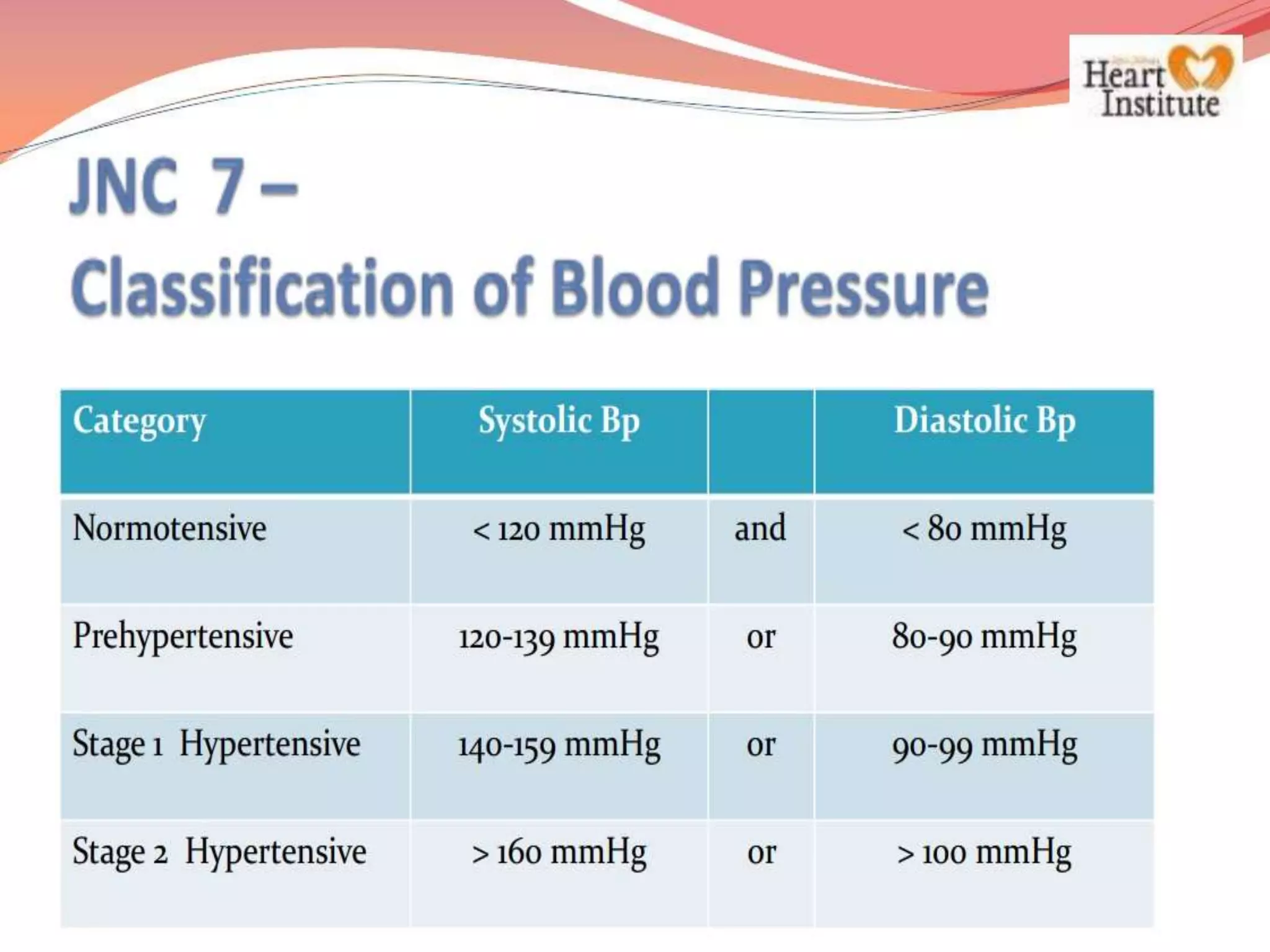
• During the examination, health worker shall
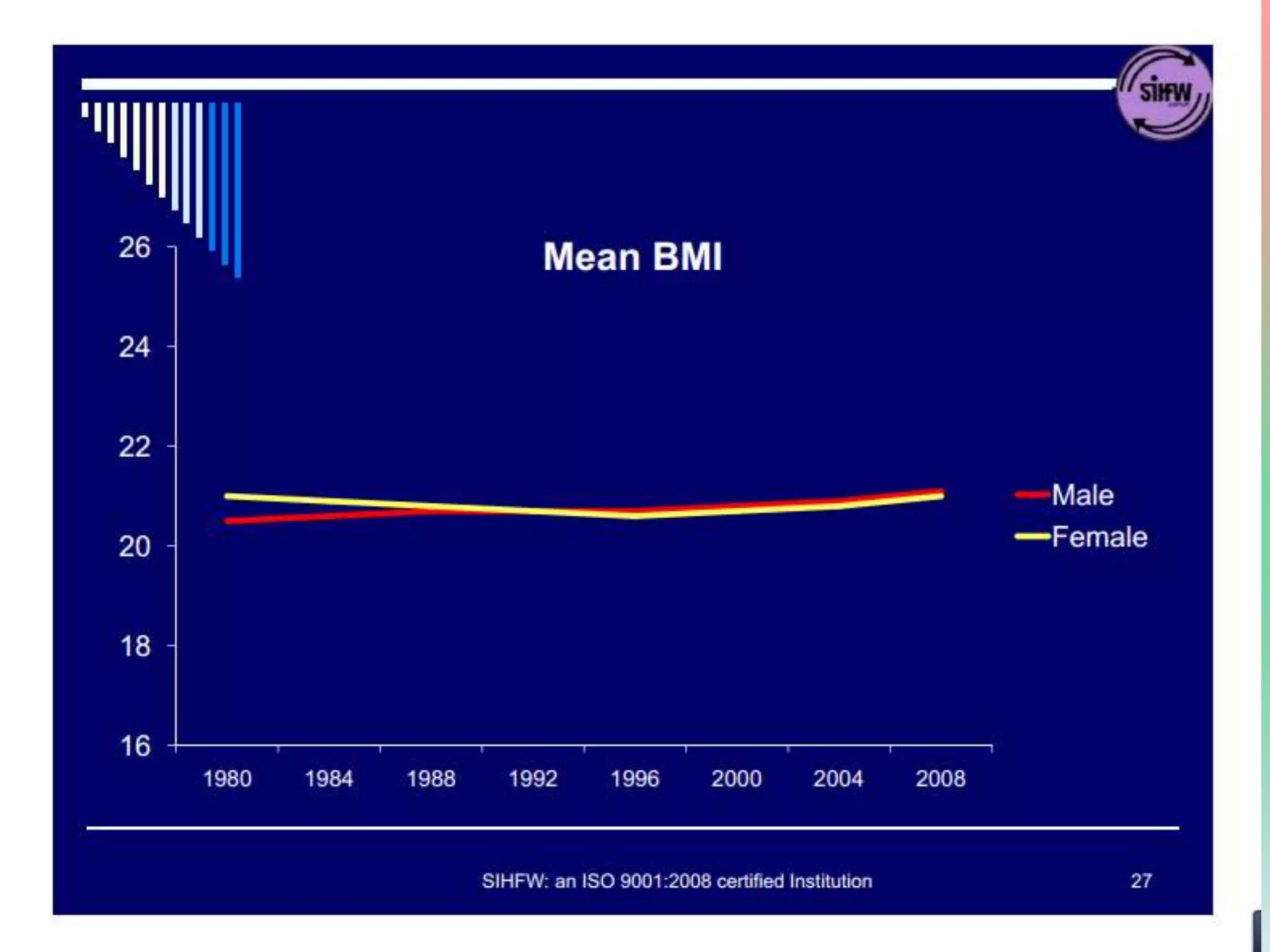
also carry out the measurement of weight,
height, and Body Mass Index (BMI) etc.
• Method of Screening of Diabetes by Strip
method
Things Needed:
• A glucometer
• Test strips
• A lancet
• A notebook & pen
ESTABLISHING/STRENGTHENING OF
HEALTH INFRASTRUCTURE
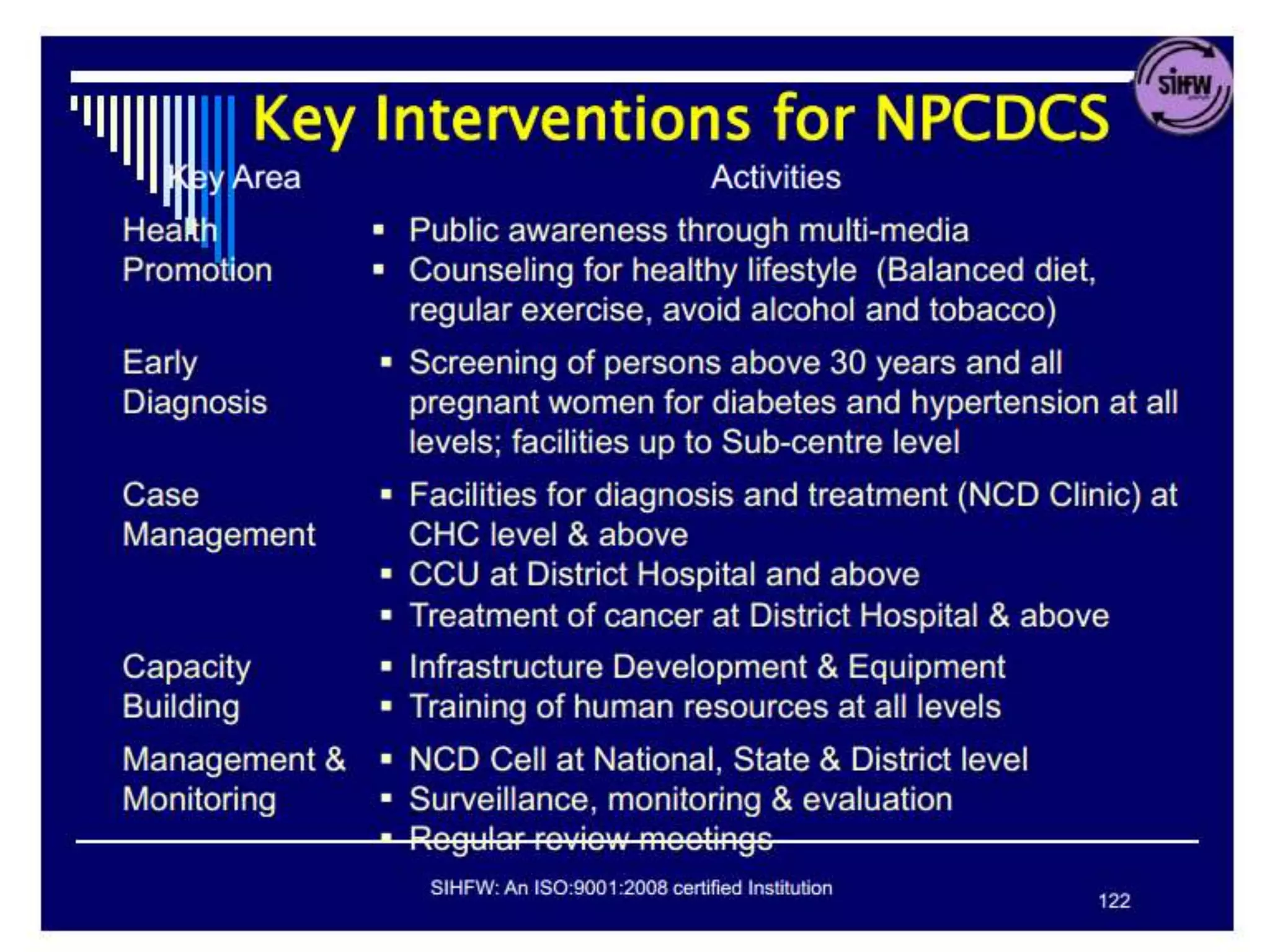
• CHCs and district hospitals would be
supported for prevention, early detection and
management of cancer, diabetes, CVD and
stroke.
• Support would be given for establishing NCD
clinics and strengthening laboratory at CHCs
and district hospitals
NCD Clinics
• “NCD clinic’’ will be established at CHC and District
Hospital (NCD here refers to
• Cancer Diabetes, Hypertension, Cardiovascular
diseases and Stroke) where comprehensive
examination of patients referred by lower health
facility /Health Worker will be conducted for ruling
out complications or advanced stages of common
NCDs.
• Screening, diagnosis and management (including
diet counseling, Lifestyle management) and home
based care will be the key functions.
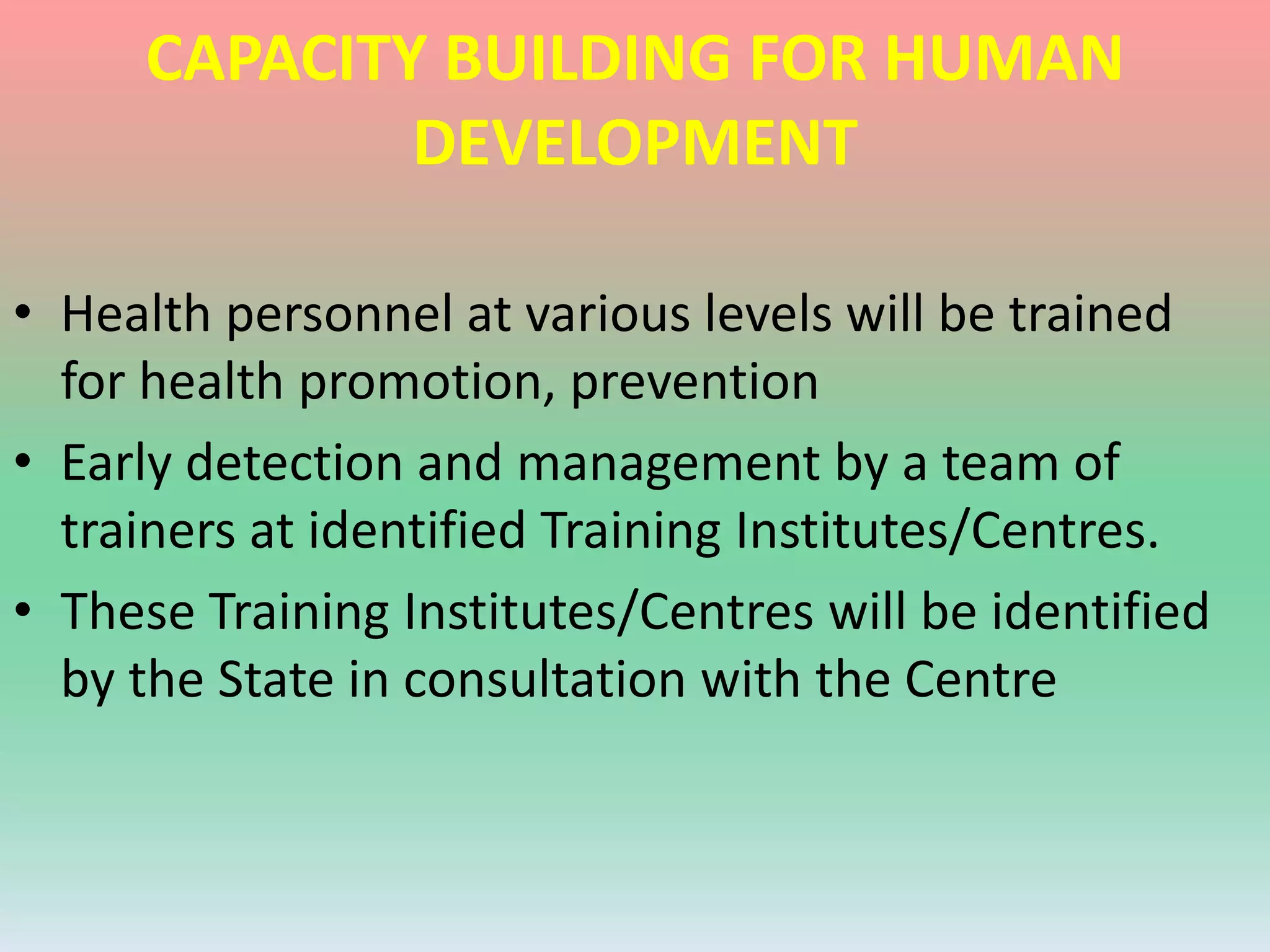
CAPACITY BUILDING FOR HUMAN
DEVELOPMENT
• Health personnel at various levels will be trained
for health promotion, prevention
• Early detection and management by a team of
trainers at identified Training Institutes/Centres.
• These Training Institutes/Centres will be identified
by the State in consultation with the Centre
RESEARCH AND SURVEILLANCE
• Support would be given to states and institutes for
surveillance and research on NCDs.
• Emphasis would be given on creating database,
applied and operational research related to the
programme.
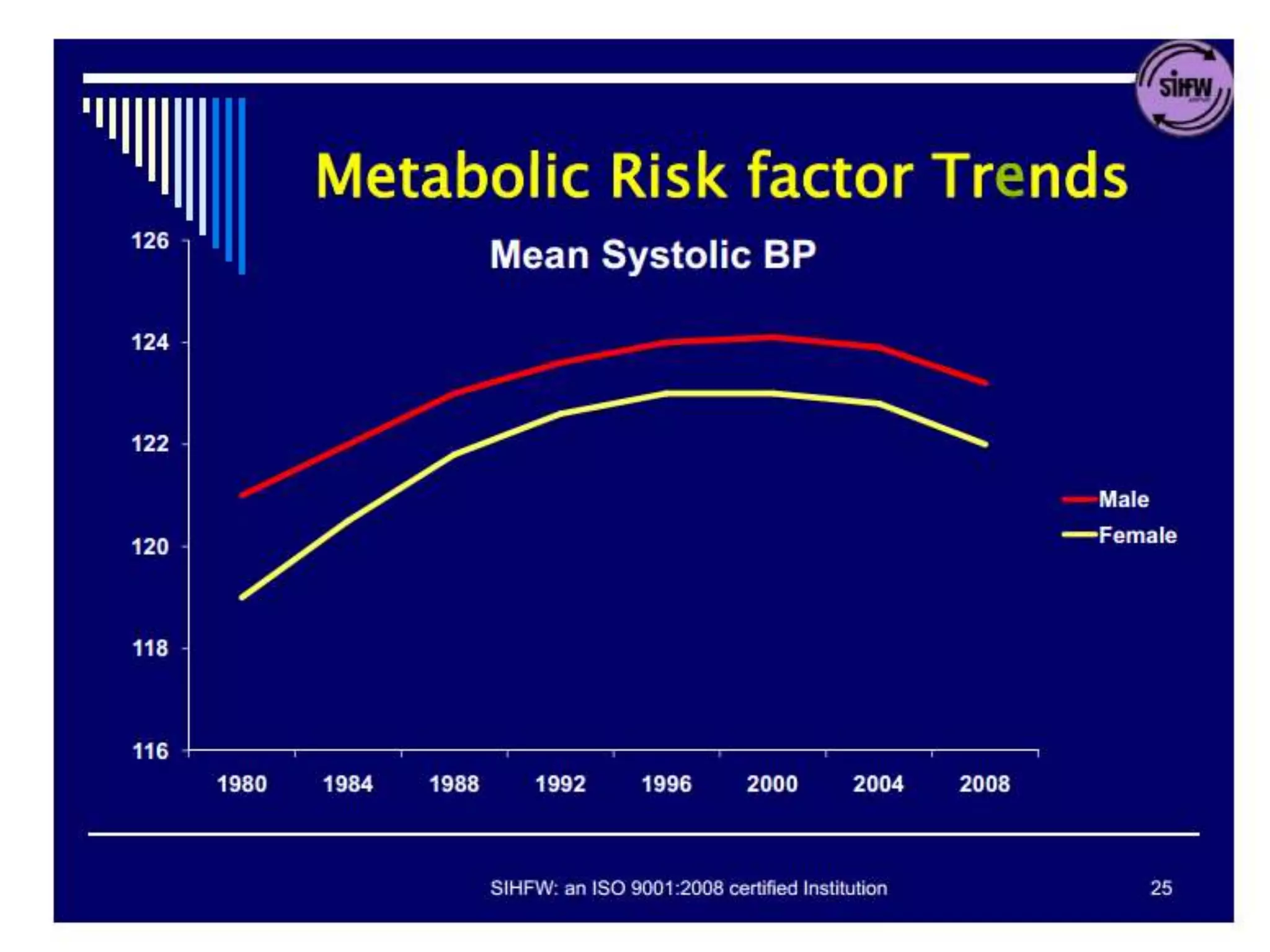
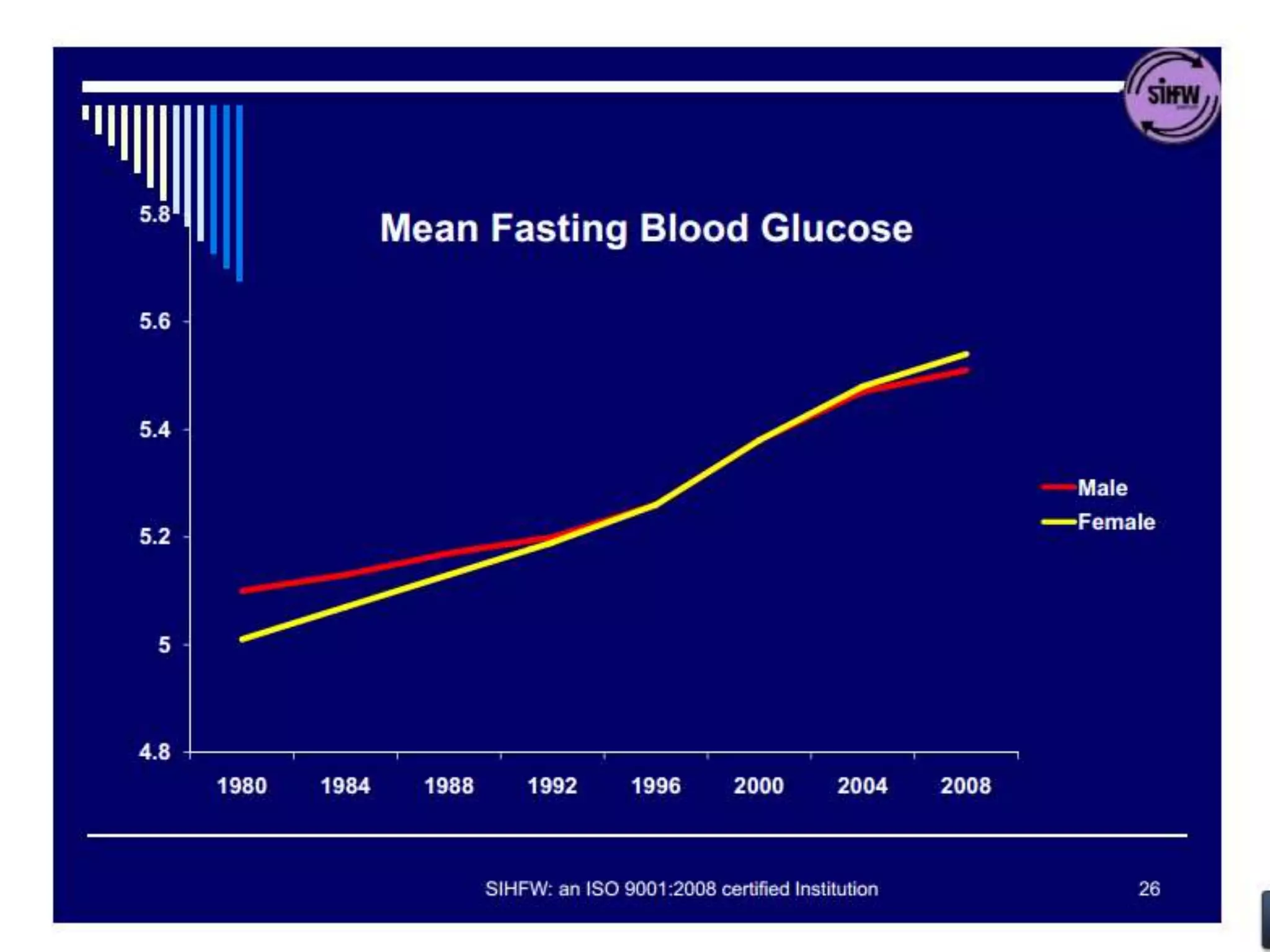
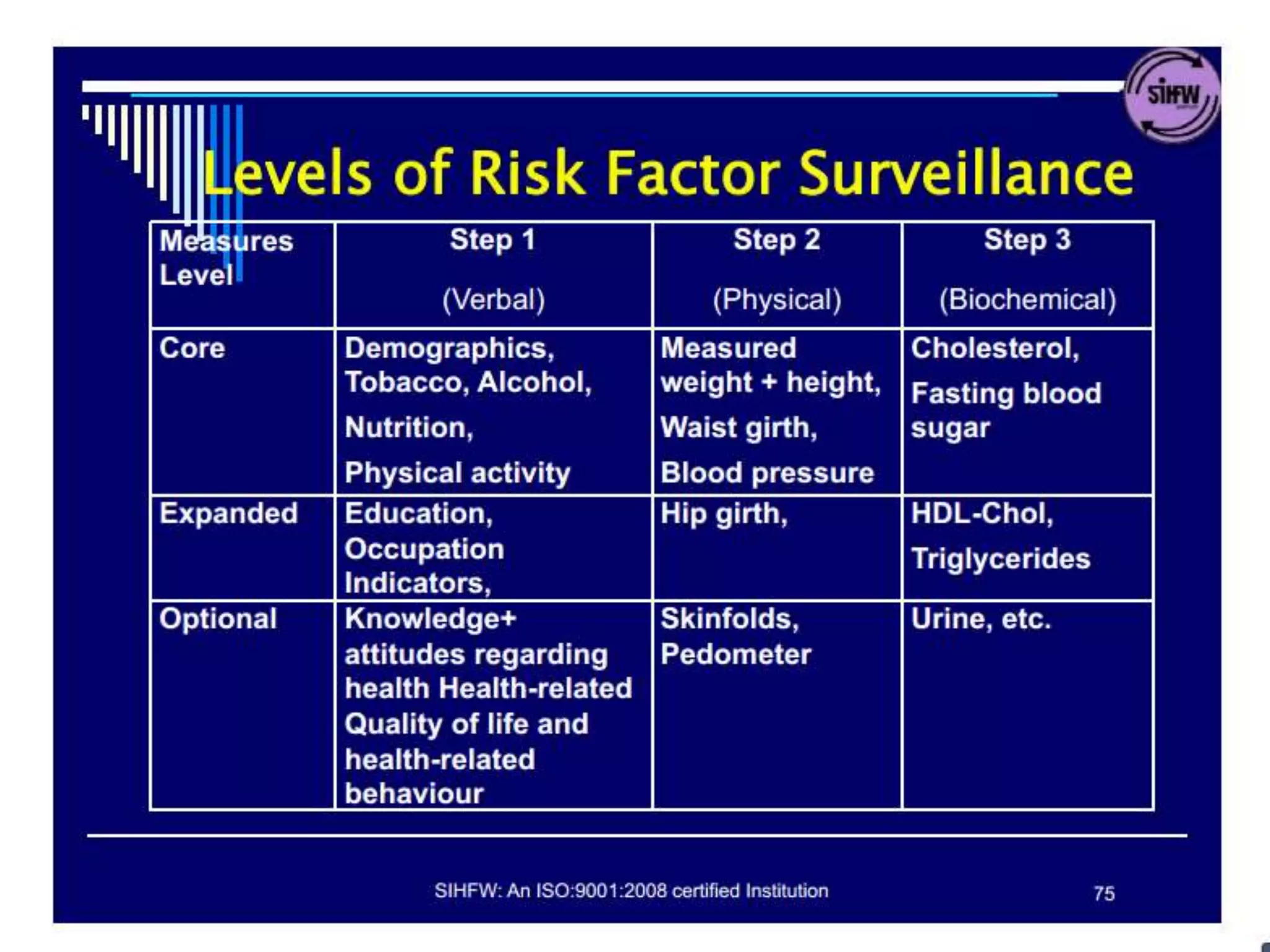
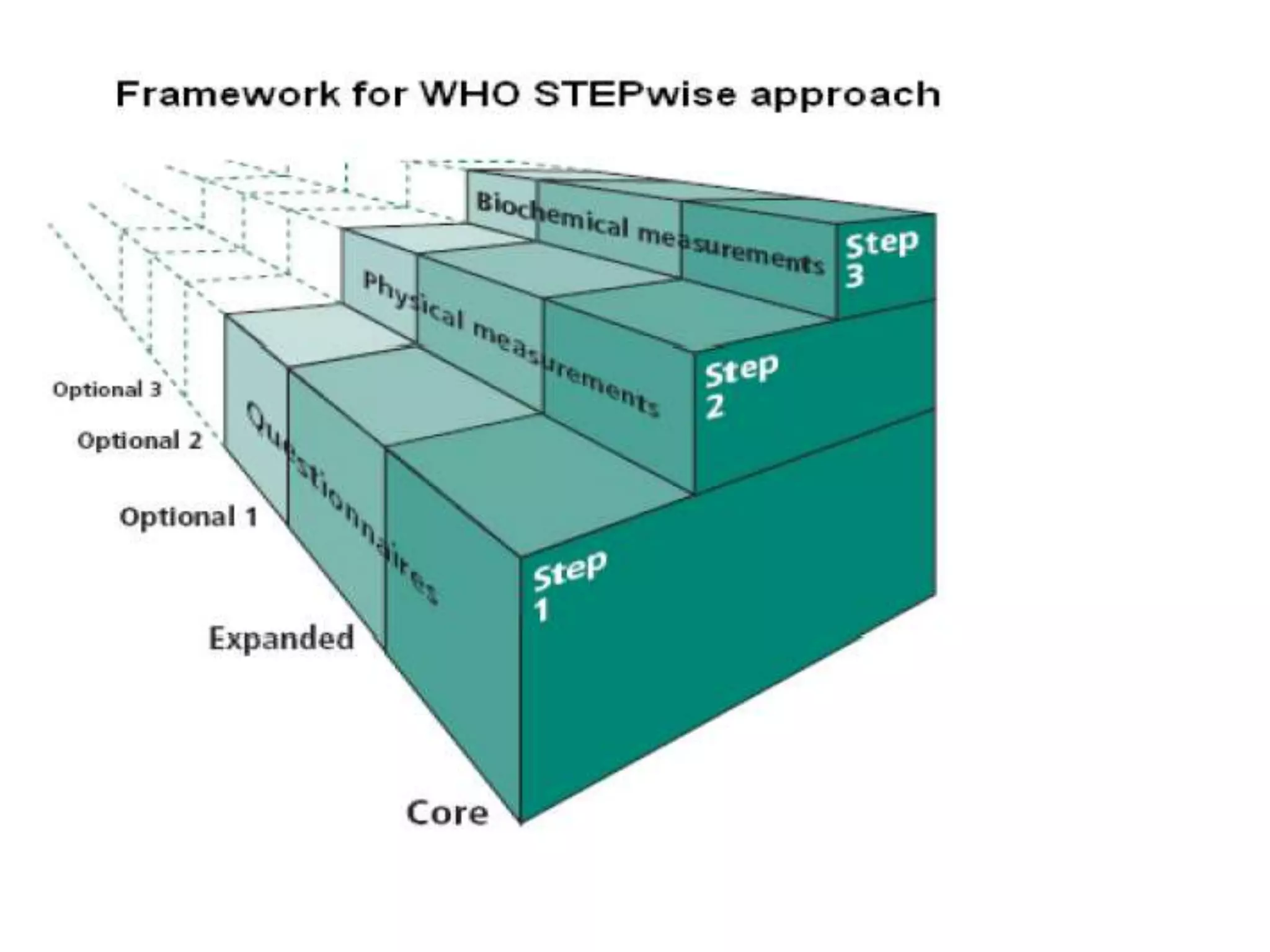
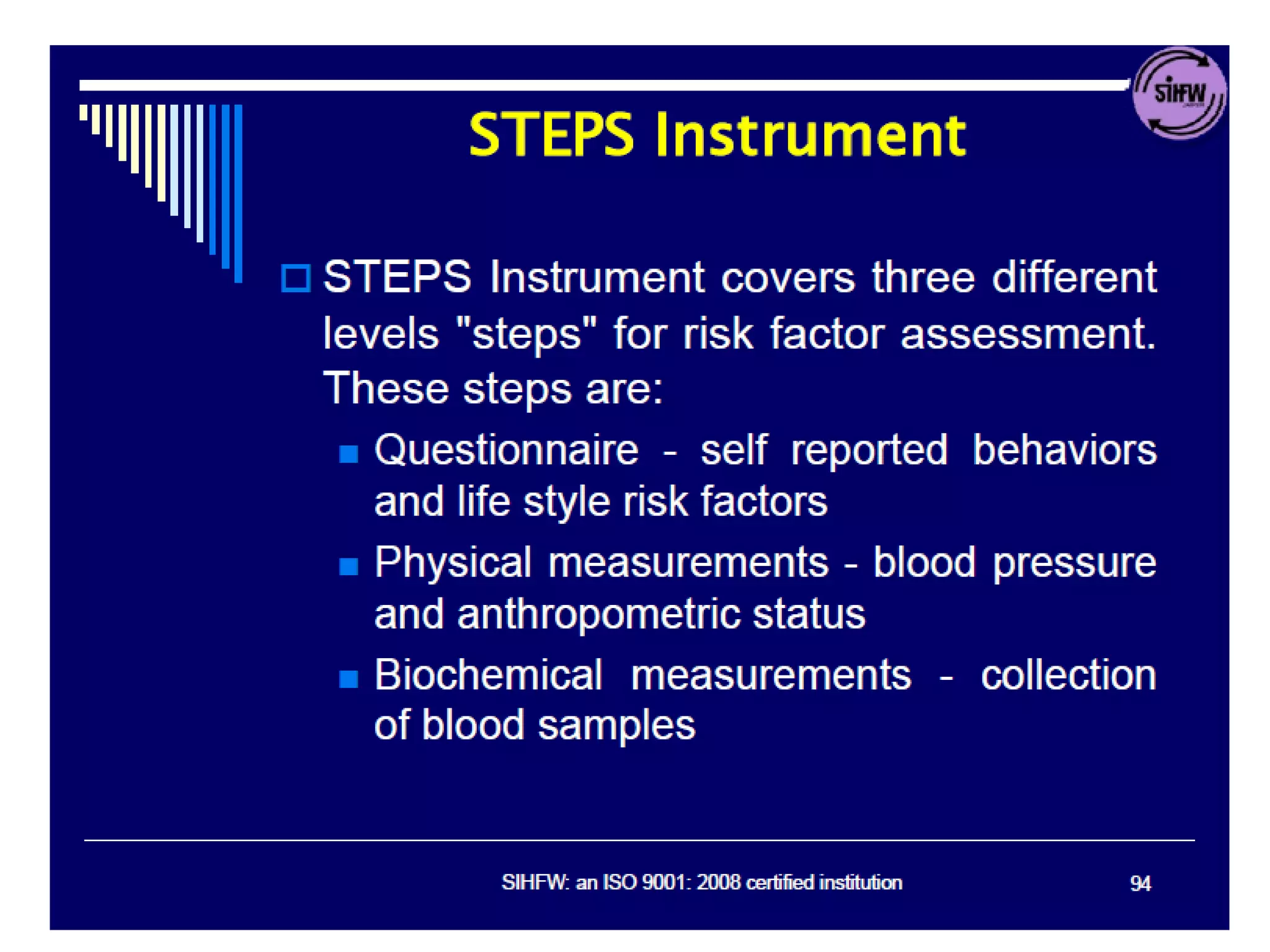
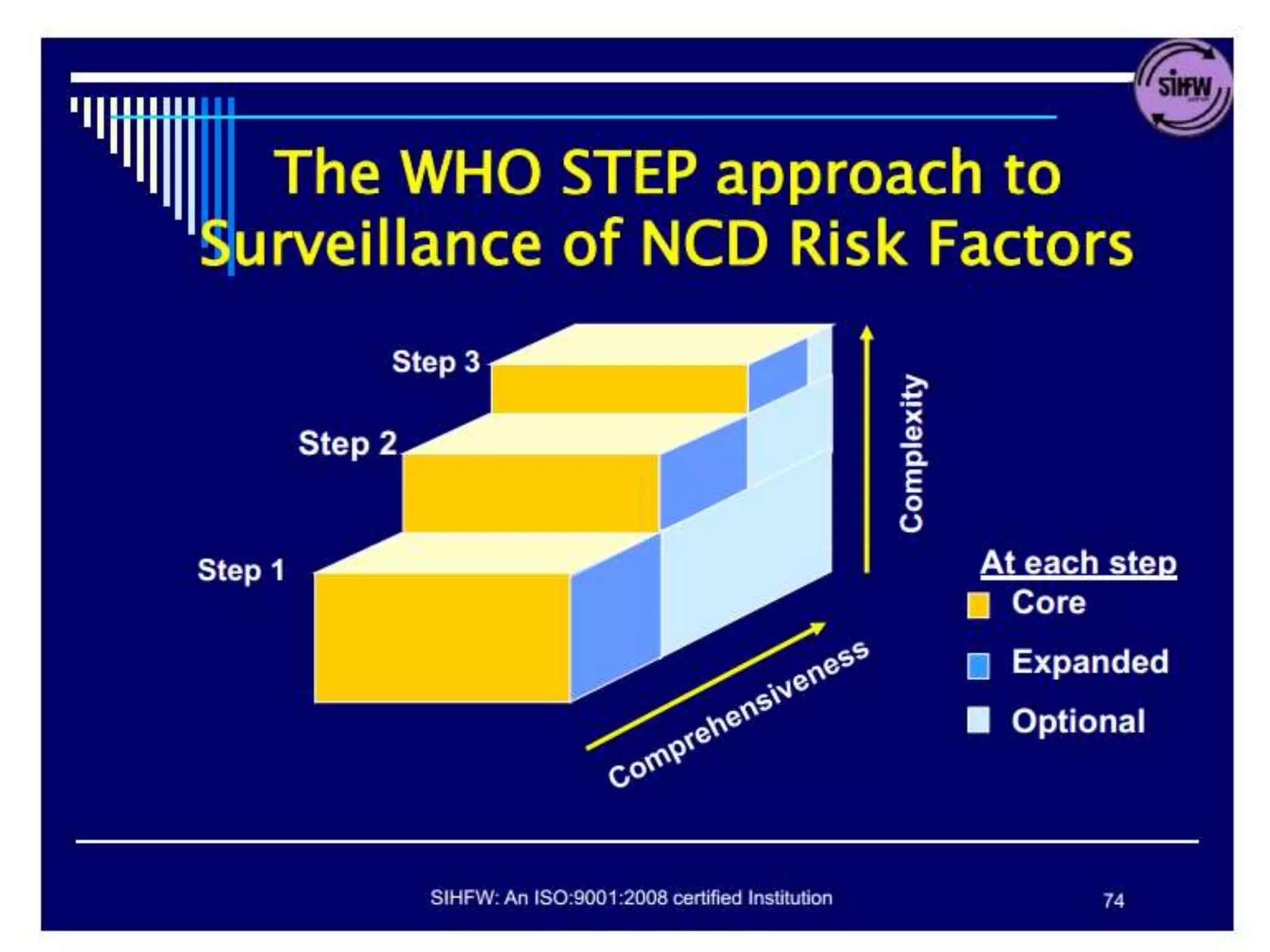
• Survey for risk factors for NCDs would be conducted
at frequency and by methods decided for experts.
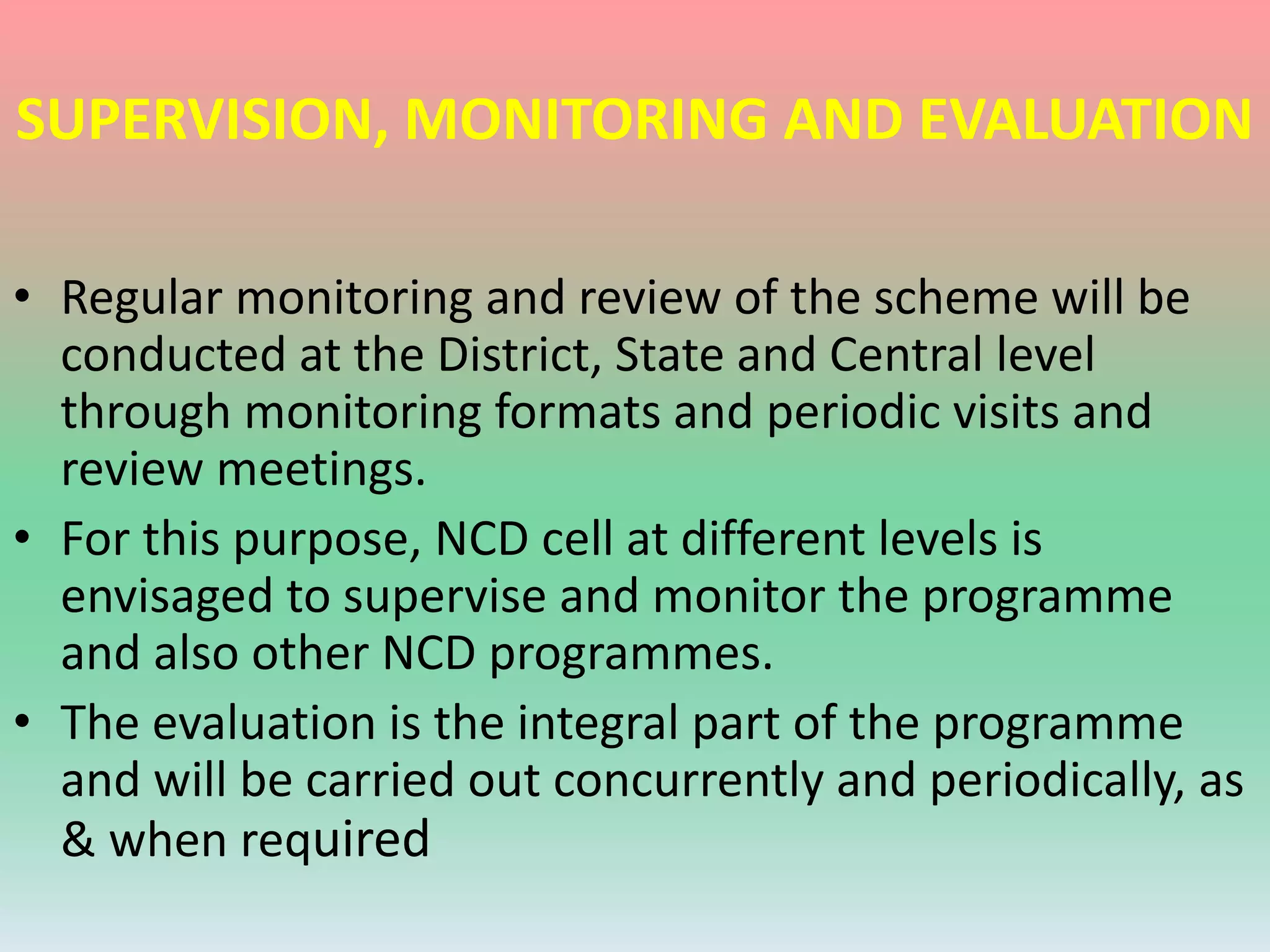
SUPERVISION, MONITORING AND EVALUATION
• Regular monitoring and review of the scheme will be
conducted at the District, State and Central level
through monitoring formats and periodic visits and
review meetings.
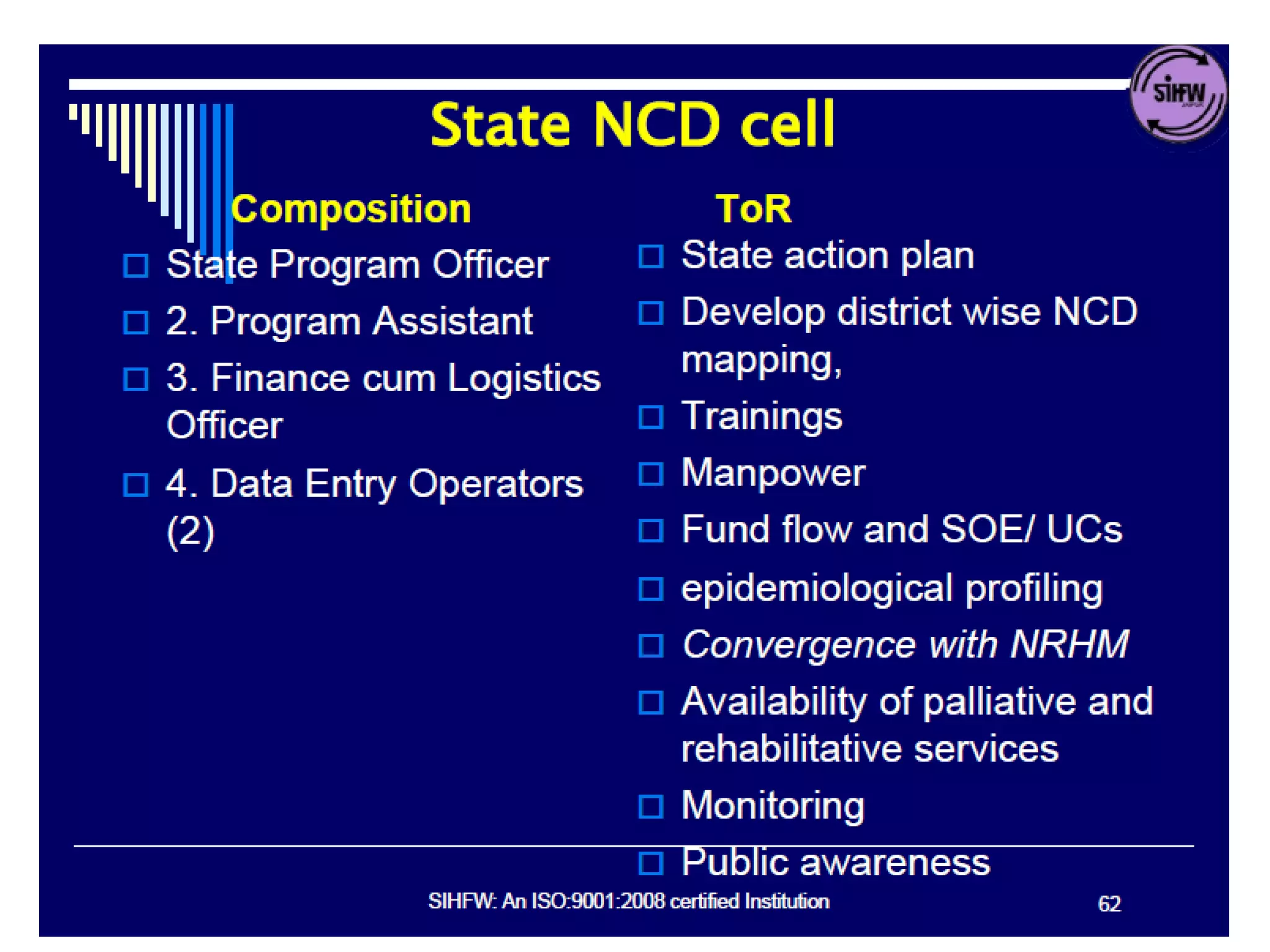
• For this purpose, NCD cell at different levels is
envisaged to supervise and monitor the programme
and also other NCD programmes.
• The evaluation is the integral part of the programme
and will be carried out concurrently and periodically, as
& when required
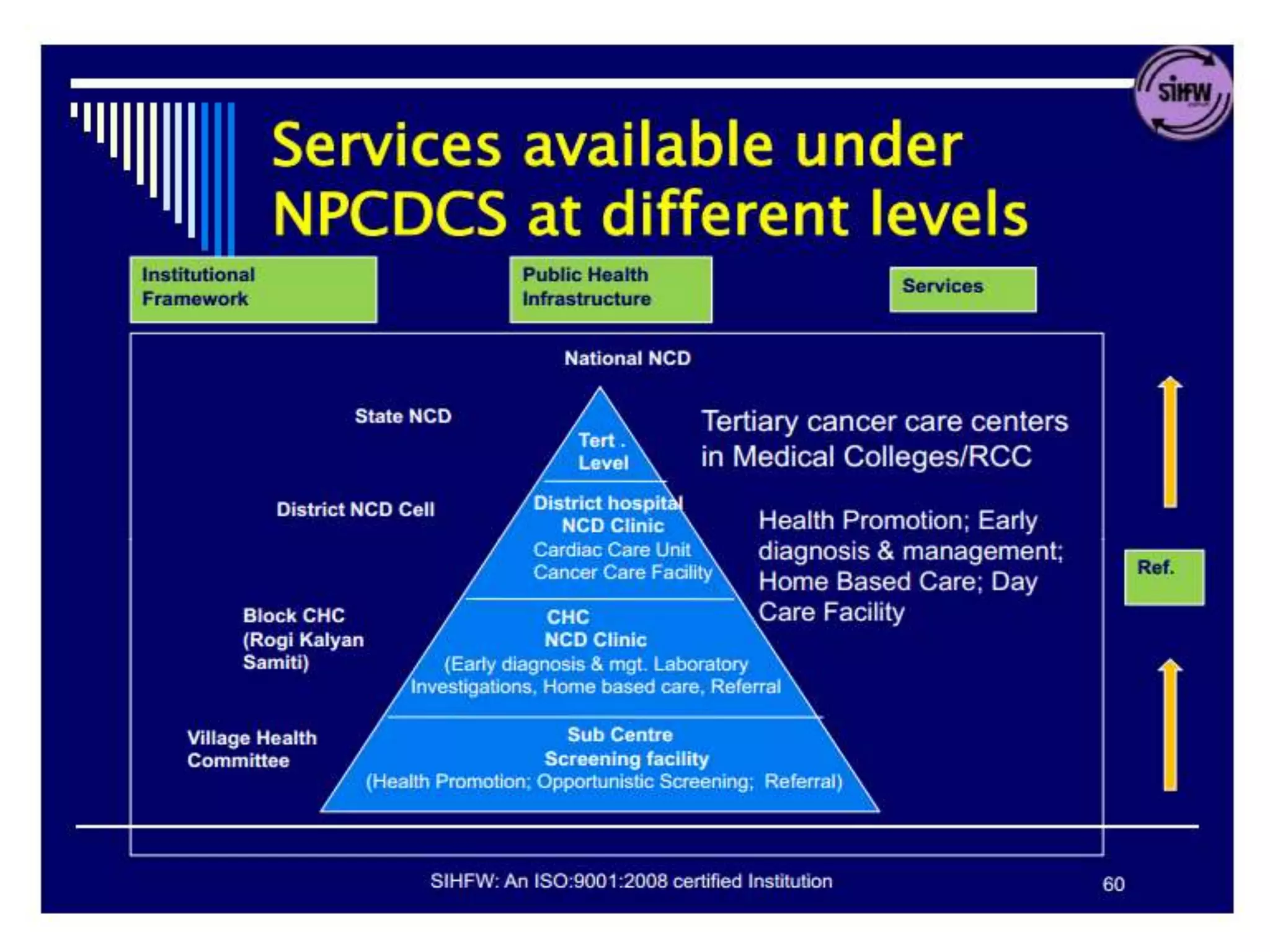
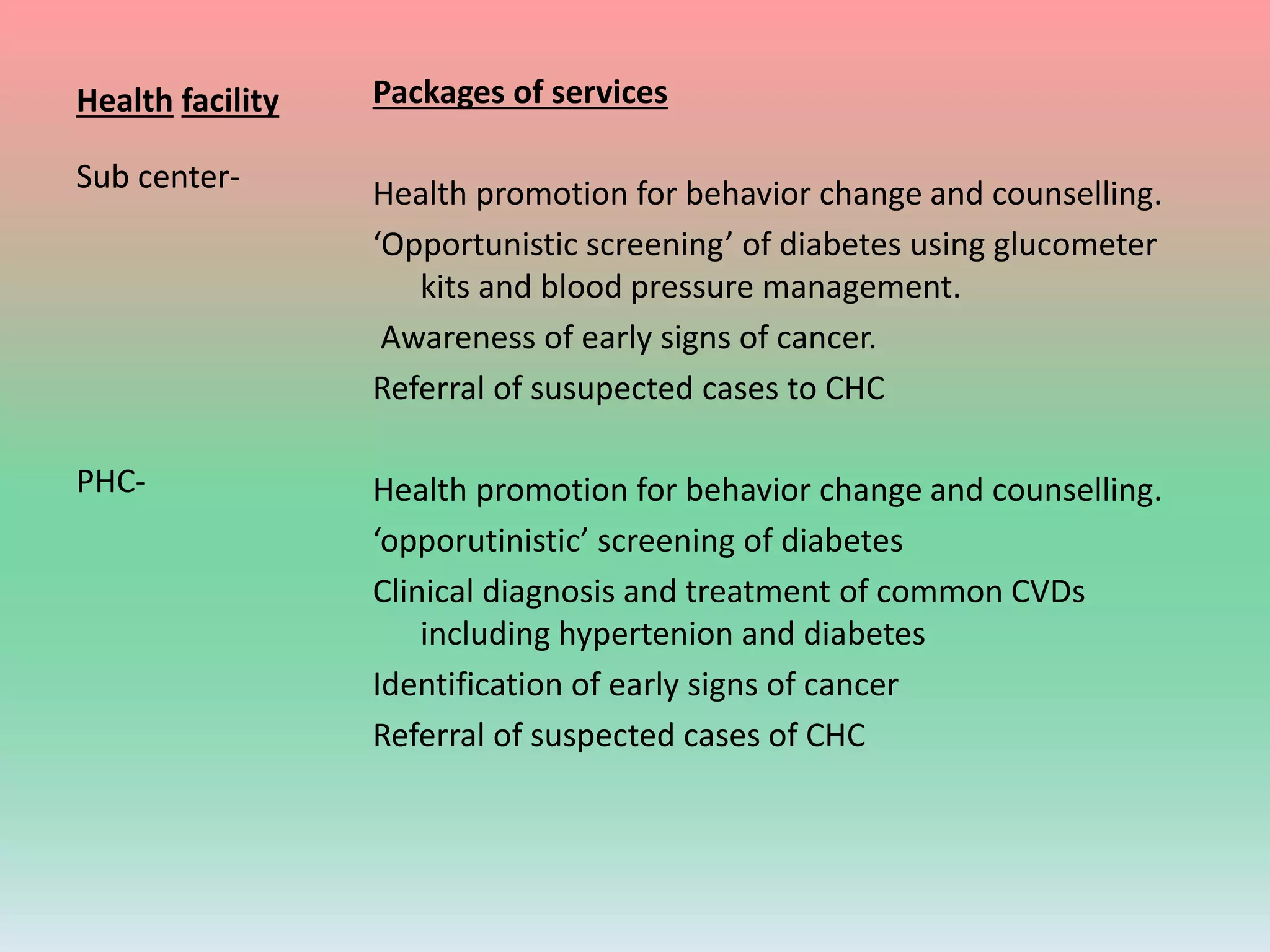
Health facility Packages of services
Health promotion for behavior change and counselling.
‘Opportunistic screening’ of diabetes using glucometer
kits and blood pressure management.
Awareness of early signs of cancer.
Referral of susupected cases to CHC
Health promotion for behavior change and counselling.
‘opporutinistic’ screening of diabetes
Clinical diagnosis and treatment of common CVDs
including hypertenion and diabetes
Identification of early signs of cancer
Referral of suspected cases of CHC
Sub center-
PHC-
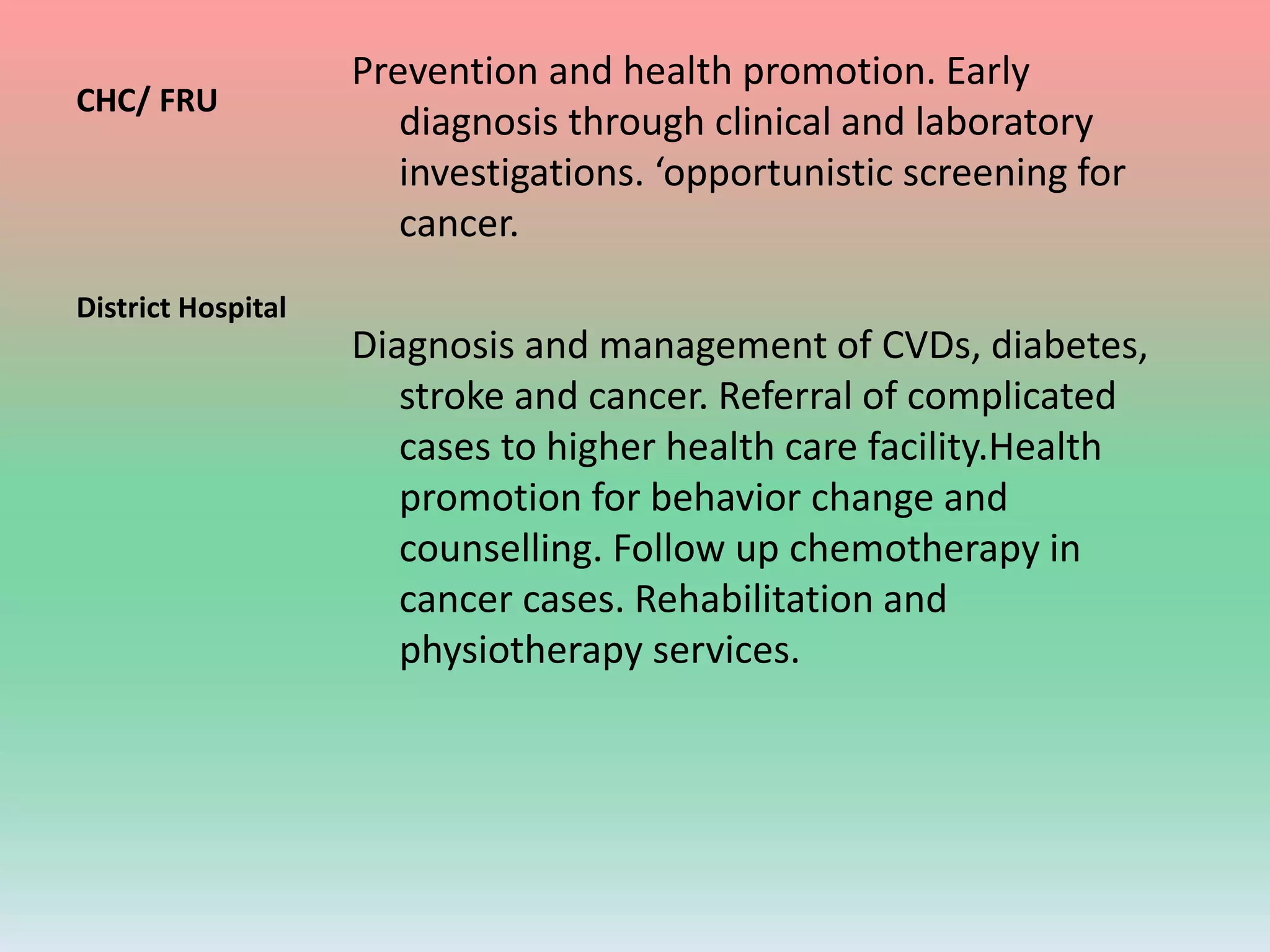
CHC/ FRU
Prevention and health promotion. Early
diagnosis through clinical and laboratory
investigations. ‘opportunistic screening for
cancer.
Diagnosis and management of CVDs, diabetes,
stroke and cancer. Referral of complicated
cases to higher health care facility.Health
promotion for behavior change and
counselling. Follow up chemotherapy in
cancer cases. Rehabilitation and
physiotherapy services.
District Hospital
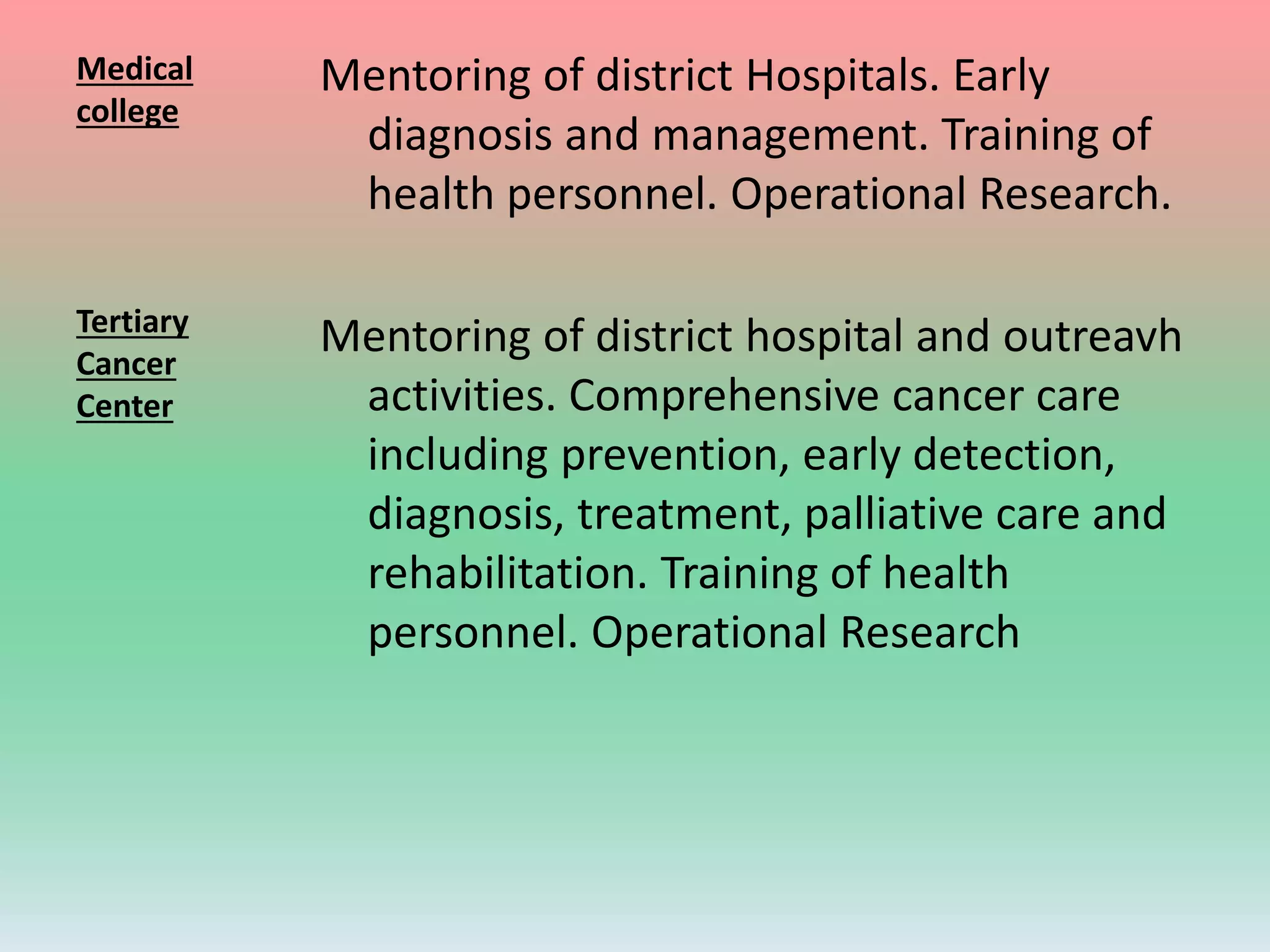
Medical
college
Mentoring of district Hospitals. Early
diagnosis and management. Training of
health personnel. Operational Research.
Mentoring of district hospital and outreavh
activities. Comprehensive cancer care
including prevention, early detection,
diagnosis, treatment, palliative care and
rehabilitation. Training of health
personnel. Operational Research
Tertiary
Cancer
Center
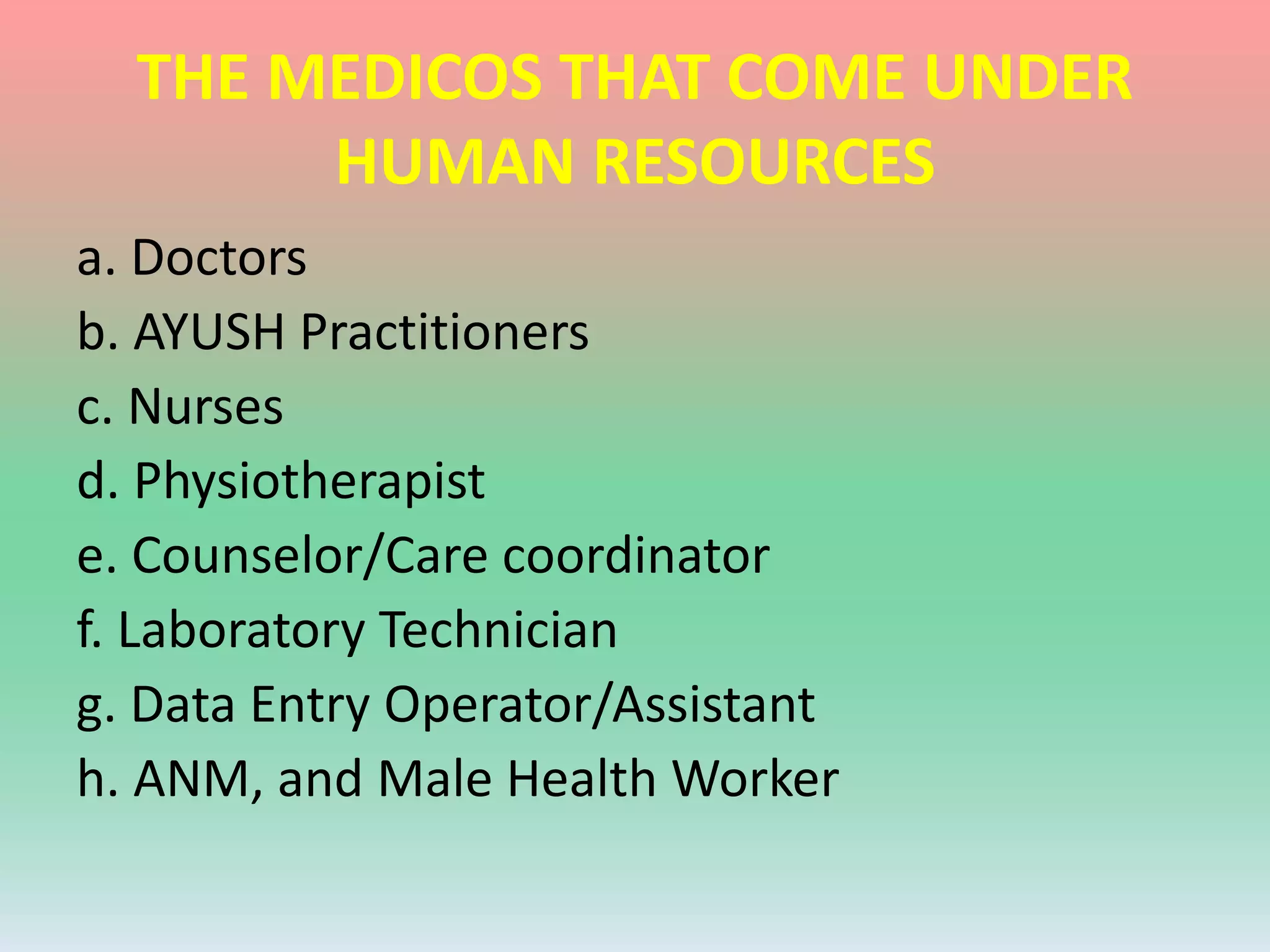
THE MEDICOS THAT COME UNDER
HUMAN RESOURCES
a. Doctors
b. AYUSH Practitioners
c. Nurses
d. Physiotherapist
e. Counselor/Care coordinator
f. Laboratory Technician
g. Data Entry Operator/Assistant
h. ANM, and Male Health Worker
Role of ANM/Health worker
Health promotion:
• Behaviour and life style changes through health promotion is
an important componen of the programme at sub centre level
and would be carried out by the front line health workers.
• Various approaches can be used such as camp,interpersonal
communication (IPC), posters, banners etc. to educate people
at community/school/workplace settings. Camps may be
organized for this activity in the village
• On Village Health and Nutrition Days when the Health Worker
goes to the village for immunization and other health services.
• During the camps/days these health workers
will discuss the various approached of healthy
life style and its benefits with the target
groups and
• motivate them to adopt healthy lifestyle and
to practice regularly prevention of common
NCDs.
Referral
• ANM and (or) Male Health Worker will refer the
suspected case of Diabetes and Hypertension to
the CHC or higher Health Facility for further
diagnosis and management.
Data recording and reporting
• ANM and (or) Male Health Worker at Sub Centre
will maintain in prescribed format to related CHC
under the programme and will submit the report
monthly to CHC.
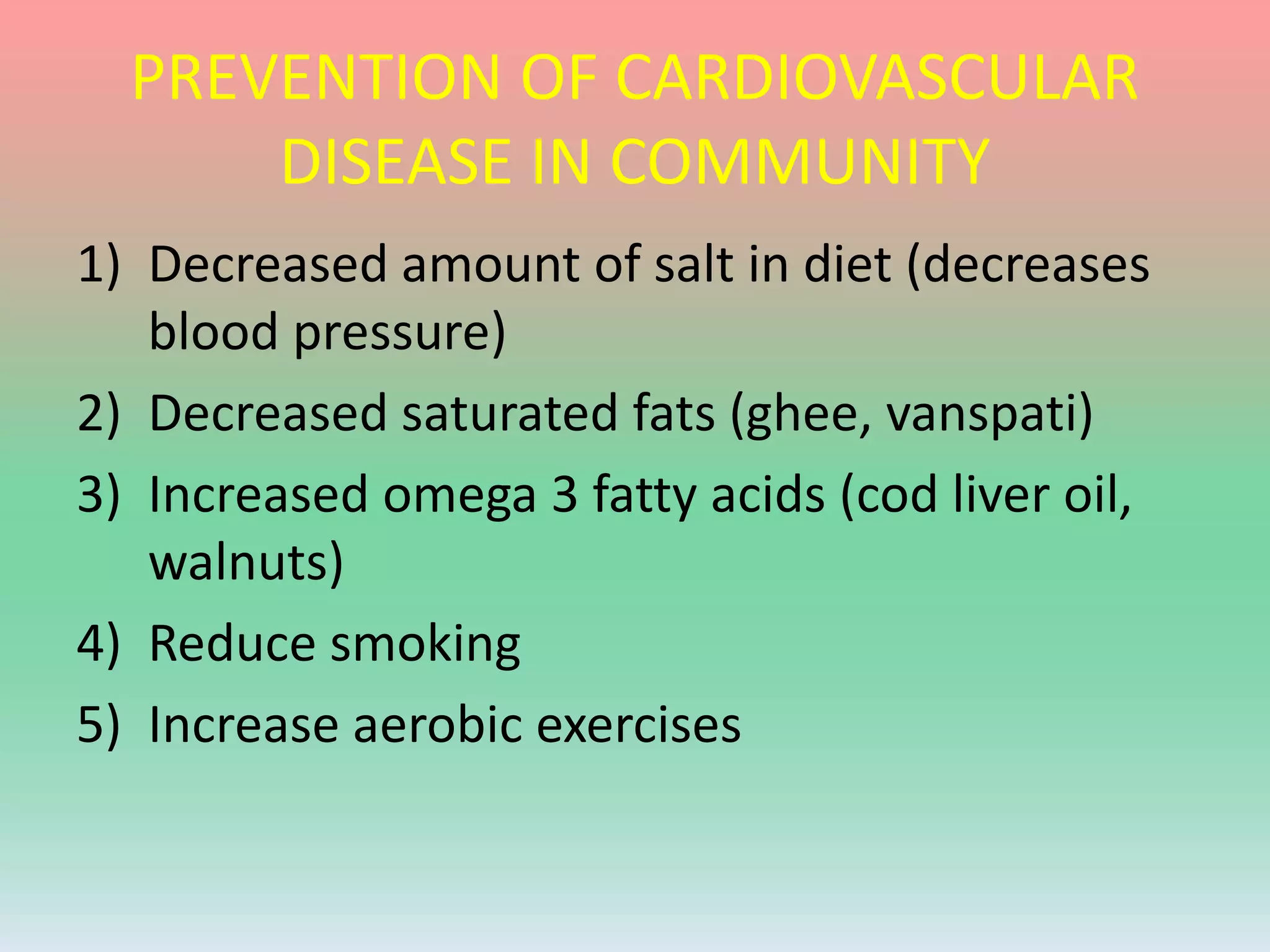
PREVENTION OF CARDIOVASCULAR
DISEASE IN COMMUNITY
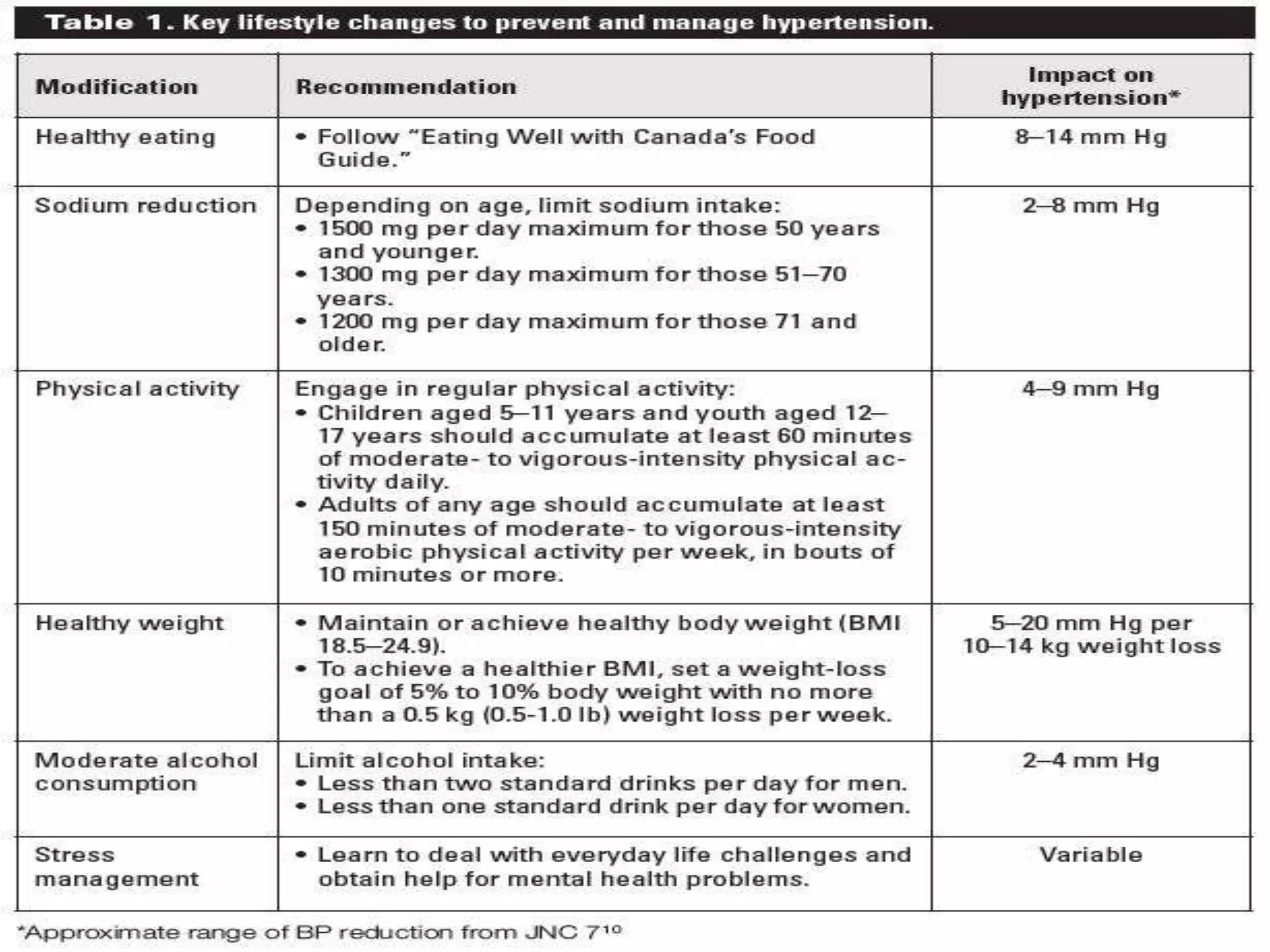
1) Decreased amount of salt in diet (decreases
blood pressure)
2) Decreased saturated fats (ghee, vanspati)
3) Increased omega 3 fatty acids (cod liver oil,
walnuts)
4) Reduce smoking
5) Increase aerobic exercises
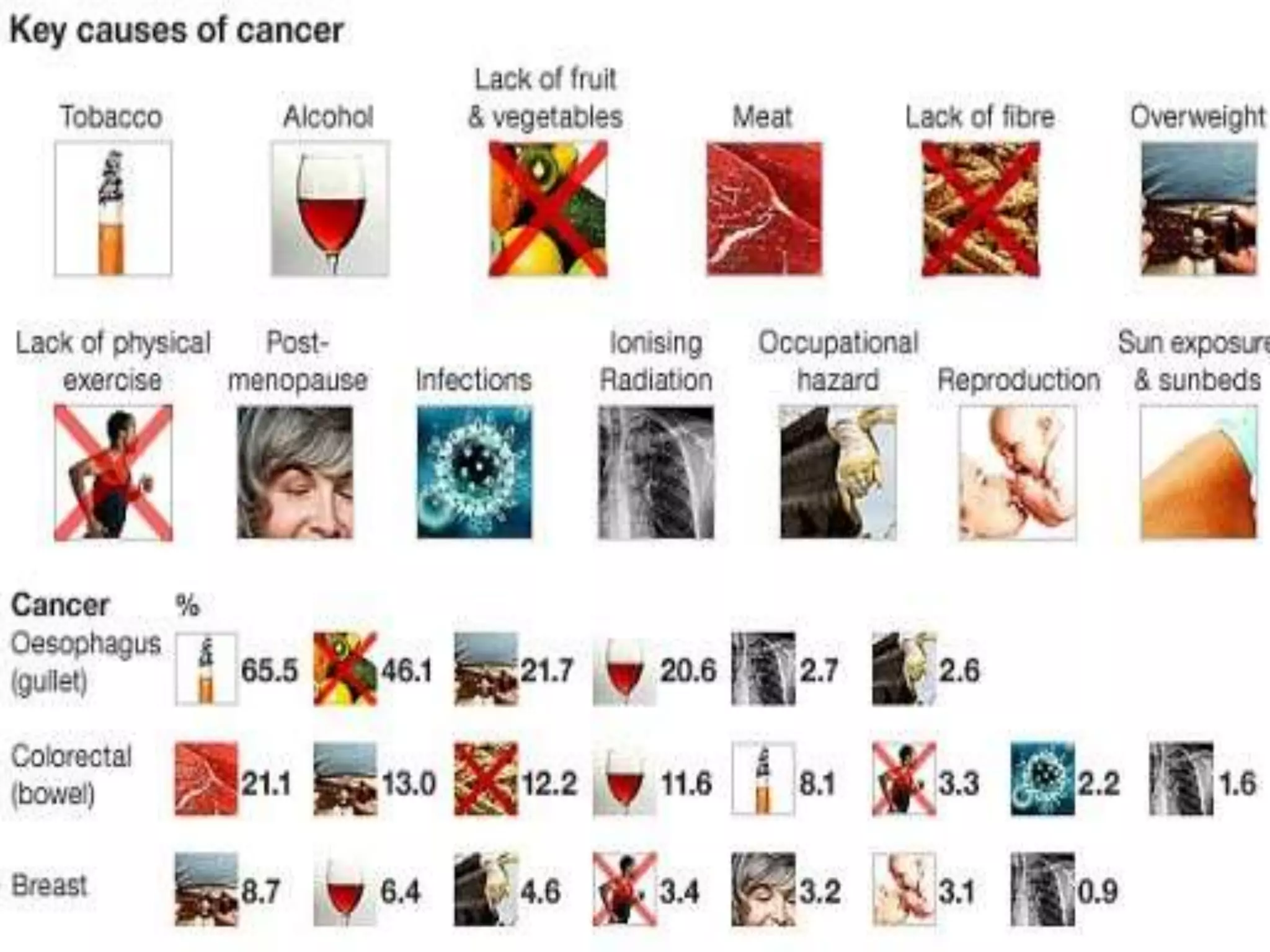
CONTROL OF CANCER UNDER NPCDCS
• Common diagnostic services, basic surgery, chemotherapy
and palliative care for cancer cases at 100 district hospitals.
• Support for Chemotherapy drugs at each district hospital
• Day care Chemotherapy facilities at 100 district hospitals.
• Facility for laboratory investigations including
Mammography at 100 district hospitals
• Home based palliative care for chronic, debilitating and
progressive cancer patients at 100 districts.
• Support for contractual manpower and equipment for
management of cancer cases at the 100 district hospitals.
• Strengthening of 65 centre Tertiary Cancer Centres (TCCs)
STROKE PREVENTION
• Do not smoke. If you do smoke, quit.
• Control your cholesterol through diet, exercise, and medicines, if
needed.
• Control high blood pressure through diet, exercise, and medicines, if
needed.
• Control diabetes through diet, exercise, and medicines, if needed.
• Exercise at least 30 minutes a day.
• Maintain a healthy weight by eating healthy foods, eating less, and
joining a weight loss program, if needed.
• Limit how much alcohol you drink. This means 1 drink a day for women
and 2 a day for men.
• Avoid cocaine and other illegal drugs.
• Talk to your doctor about the risk of birth control pills. Birth control pills
can increase the chance of blood clots, which can lead to stroke.
DISEASE PREVENTION OF THE HIGH
RISK
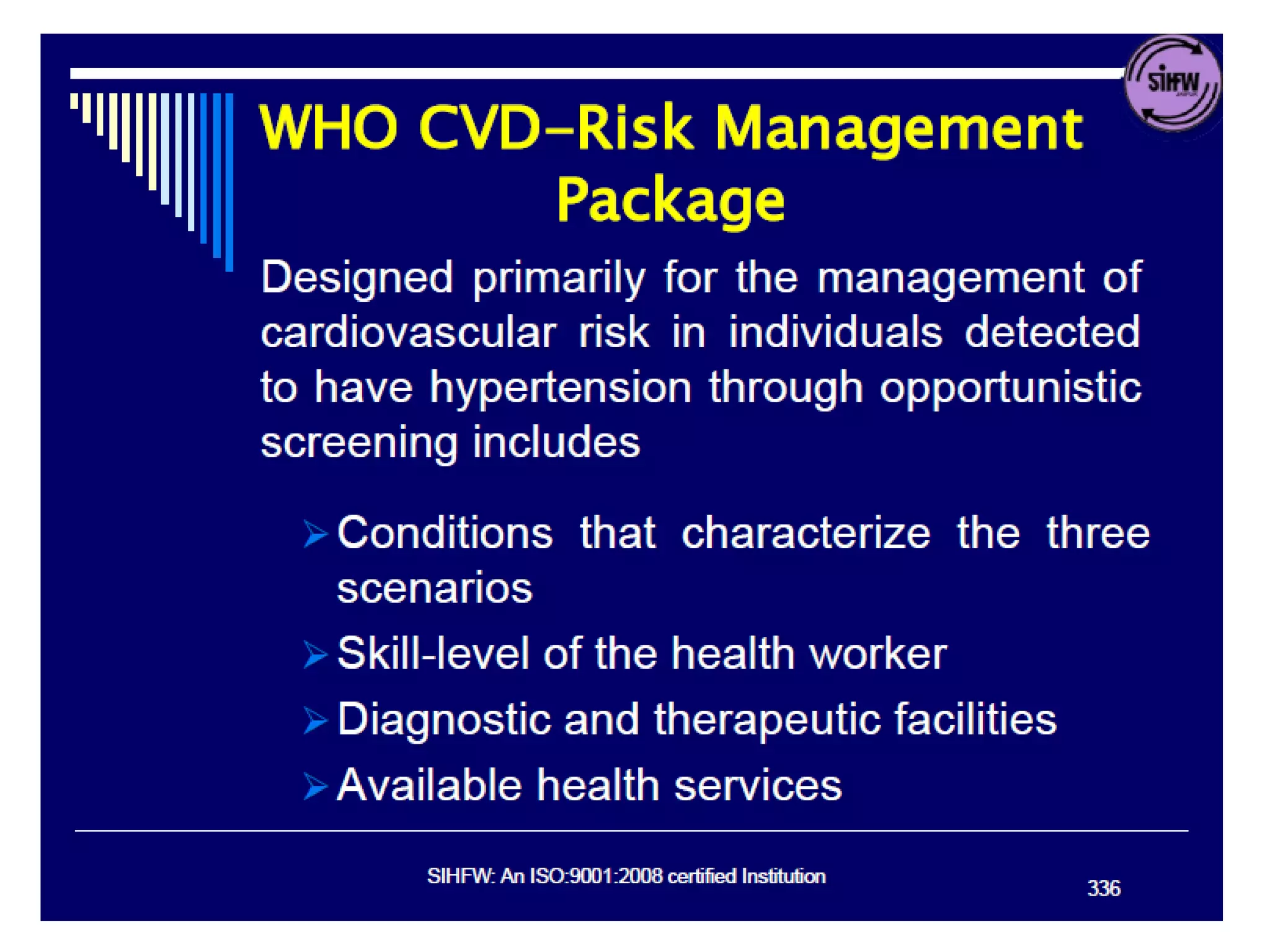
. Reorienting the Public Health Delivery system
• System strengthening at the primary, secondary level and tertiary level. HealthCare
providers at all levels will be mobilized and trained to involve in risk detection and
screening viz. blood pressure checks, recommending lifestyle modifications,
dissemination of information and referring for further management.
• Setting up special clinics
• Special clinic for Diabetes/Cardiovascular disease /Stroke will be established at the
District Hospital. Services of Private Practitioners may be taken for this clinic as a
visiting consultant. The clinic will do the screening and will also provide the
management. Difficult and complicated will be referred to tertiary care centre or
the nearby Medical College
• Specific interventions at the tertiary level to
enhance capacity to respond to the needs of NCD
It has been established that prompt intervention to manage
a cardiac event can reduce
• mortality to a large extent. Identification of a referral centre
and strengthening the linkage to
• the nearest referral centre at the tertiary/secondary level
and strengthening of the centre
• through provision of necessary infrastructure and
manpower

NCPCDS presentation

  • 1.
    NATIONAL PROGRAMME FORCONTROL AND PREVENTION CANCER, DIABETES, CARDIOVASCULAR DISEASES AND STROKE
  • 2.
    INTRODUCTION NPCDCS aims atintegration of non communicable diseases with NRHM. The following diseases have been incorporated : • Cancer • Diabetes • Cardiovascular Diseases • Stroke These diseases are also called lifestyle associated diseases.
  • 4.
    GLOBAL BURDEN • In2008, out of the 57 million global deaths, 36 million deaths, or 63%, were due to NCDs, principally cardiovascular diseases, diabetes, cancers and chronic respiratory diseases. • Nearly 80% of NCD deaths occur in low and middle income countries. • It is projected that globally NCDs will account for nearly 44 million deaths in 2020.
  • 7.
    INDIAN SCENARIO • InIndia deaths due to NCDs in 2008 were 5.3million. • The prevalence of DM, HT,IHD and stroke is 62.3,159.5,37,1.5 per 1000 population.
  • 10.
    Pilot Phase • Pilotphase of the National Programme for Prevention and Control of Diabetes, Cardiovascular Diseases and Stroke (NPDCS) launched on 4th Jan 2008 by Deputy Chairman, Planning Commission.
  • 23.
    OBJECTIVES OF NPCDCS •1) Prevent and control common NCDs through behaviour and life style changes, • 2) Provide early diagnosis and management of common NCDs through opportunistic screening • 3) Build capacity at various levels of health care for prevention, diagnosis and treatment of common NCDs
  • 24.
    • 4) Trainhuman resource within the public health setup viz doctors, paramedics and nursing staff to cope with the increasing burden of NCDs • 5) Establish and develop capacity for palliative & rehabilitative care
  • 25.
    STRATEGY • Health Promotion,Awareness Generation and promotion of Healthy Lifestyle screening and early detection • Timely, affordable and accurate diagnosis • Access to affordable treatment • Rehabilitation
  • 28.
    HEALTH PROMOTION • Thevarious approaches such as mass media, community education and interpersonal communication will be used for behavior change focusing on the following five messages: • increased intake of healthy foods • increased physical activity through sports, exercise, etc.;
  • 29.
    • avoidance oftobacco and alcohol • stress management • warning signs of cancer etc.
  • 30.
    SCREENING AND EARLYDIAGNOSIS • Strategy for early diagnosis of chronic non- communicable diseases will consist of Opportunistic screening of persons above the age of 30 years at the point of primary contact with any health care facility, be it the village, CHC, District hospital, tertiary care hospital etc. • Such screening involves simple clinical examination comprising of relevant questions and easily conducted physical measurements (such as history of tobacco consumption and measurement of blood pressure etc.)
  • 31.
    OPPORTUNISTIC screening • Duringthe camps/ designated day ANM and (or) Male Health Worker shall also examine persons at and above the age of 30 years for alcohol and tobacco intake, physical activity, blood sugar and blood pressure. • During the examination, health worker shall also carry out the measurement of weight, height, and Body Mass Index (BMI) etc.
  • 33.
    • Method ofScreening of Diabetes by Strip method Things Needed: • A glucometer • Test strips • A lancet • A notebook & pen
  • 35.
    ESTABLISHING/STRENGTHENING OF HEALTH INFRASTRUCTURE •CHCs and district hospitals would be supported for prevention, early detection and management of cancer, diabetes, CVD and stroke. • Support would be given for establishing NCD clinics and strengthening laboratory at CHCs and district hospitals
  • 36.
    NCD Clinics • “NCDclinic’’ will be established at CHC and District Hospital (NCD here refers to • Cancer Diabetes, Hypertension, Cardiovascular diseases and Stroke) where comprehensive examination of patients referred by lower health facility /Health Worker will be conducted for ruling out complications or advanced stages of common NCDs. • Screening, diagnosis and management (including diet counseling, Lifestyle management) and home based care will be the key functions.
  • 37.
    CAPACITY BUILDING FORHUMAN DEVELOPMENT • Health personnel at various levels will be trained for health promotion, prevention • Early detection and management by a team of trainers at identified Training Institutes/Centres. • These Training Institutes/Centres will be identified by the State in consultation with the Centre
  • 38.
    RESEARCH AND SURVEILLANCE •Support would be given to states and institutes for surveillance and research on NCDs. • Emphasis would be given on creating database, applied and operational research related to the programme. • Survey for risk factors for NCDs would be conducted at frequency and by methods decided for experts.
  • 43.
    SUPERVISION, MONITORING ANDEVALUATION • Regular monitoring and review of the scheme will be conducted at the District, State and Central level through monitoring formats and periodic visits and review meetings. • For this purpose, NCD cell at different levels is envisaged to supervise and monitor the programme and also other NCD programmes. • The evaluation is the integral part of the programme and will be carried out concurrently and periodically, as & when required
  • 47.
    Health facility Packagesof services Health promotion for behavior change and counselling. ‘Opportunistic screening’ of diabetes using glucometer kits and blood pressure management. Awareness of early signs of cancer. Referral of susupected cases to CHC Health promotion for behavior change and counselling. ‘opporutinistic’ screening of diabetes Clinical diagnosis and treatment of common CVDs including hypertenion and diabetes Identification of early signs of cancer Referral of suspected cases of CHC Sub center- PHC-
  • 48.
    CHC/ FRU Prevention andhealth promotion. Early diagnosis through clinical and laboratory investigations. ‘opportunistic screening for cancer. Diagnosis and management of CVDs, diabetes, stroke and cancer. Referral of complicated cases to higher health care facility.Health promotion for behavior change and counselling. Follow up chemotherapy in cancer cases. Rehabilitation and physiotherapy services. District Hospital
  • 49.
    Medical college Mentoring of districtHospitals. Early diagnosis and management. Training of health personnel. Operational Research. Mentoring of district hospital and outreavh activities. Comprehensive cancer care including prevention, early detection, diagnosis, treatment, palliative care and rehabilitation. Training of health personnel. Operational Research Tertiary Cancer Center
  • 50.
    THE MEDICOS THATCOME UNDER HUMAN RESOURCES a. Doctors b. AYUSH Practitioners c. Nurses d. Physiotherapist e. Counselor/Care coordinator f. Laboratory Technician g. Data Entry Operator/Assistant h. ANM, and Male Health Worker
  • 51.
    Role of ANM/Healthworker Health promotion: • Behaviour and life style changes through health promotion is an important componen of the programme at sub centre level and would be carried out by the front line health workers. • Various approaches can be used such as camp,interpersonal communication (IPC), posters, banners etc. to educate people at community/school/workplace settings. Camps may be organized for this activity in the village • On Village Health and Nutrition Days when the Health Worker goes to the village for immunization and other health services.
  • 52.
    • During thecamps/days these health workers will discuss the various approached of healthy life style and its benefits with the target groups and • motivate them to adopt healthy lifestyle and to practice regularly prevention of common NCDs.
  • 53.
    Referral • ANM and(or) Male Health Worker will refer the suspected case of Diabetes and Hypertension to the CHC or higher Health Facility for further diagnosis and management. Data recording and reporting • ANM and (or) Male Health Worker at Sub Centre will maintain in prescribed format to related CHC under the programme and will submit the report monthly to CHC.
  • 55.
    PREVENTION OF CARDIOVASCULAR DISEASEIN COMMUNITY 1) Decreased amount of salt in diet (decreases blood pressure) 2) Decreased saturated fats (ghee, vanspati) 3) Increased omega 3 fatty acids (cod liver oil, walnuts) 4) Reduce smoking 5) Increase aerobic exercises
  • 59.
    CONTROL OF CANCERUNDER NPCDCS • Common diagnostic services, basic surgery, chemotherapy and palliative care for cancer cases at 100 district hospitals. • Support for Chemotherapy drugs at each district hospital • Day care Chemotherapy facilities at 100 district hospitals. • Facility for laboratory investigations including Mammography at 100 district hospitals • Home based palliative care for chronic, debilitating and progressive cancer patients at 100 districts. • Support for contractual manpower and equipment for management of cancer cases at the 100 district hospitals. • Strengthening of 65 centre Tertiary Cancer Centres (TCCs)
  • 61.
    STROKE PREVENTION • Donot smoke. If you do smoke, quit. • Control your cholesterol through diet, exercise, and medicines, if needed. • Control high blood pressure through diet, exercise, and medicines, if needed. • Control diabetes through diet, exercise, and medicines, if needed. • Exercise at least 30 minutes a day. • Maintain a healthy weight by eating healthy foods, eating less, and joining a weight loss program, if needed. • Limit how much alcohol you drink. This means 1 drink a day for women and 2 a day for men. • Avoid cocaine and other illegal drugs. • Talk to your doctor about the risk of birth control pills. Birth control pills can increase the chance of blood clots, which can lead to stroke.
  • 62.
    DISEASE PREVENTION OFTHE HIGH RISK . Reorienting the Public Health Delivery system • System strengthening at the primary, secondary level and tertiary level. HealthCare providers at all levels will be mobilized and trained to involve in risk detection and screening viz. blood pressure checks, recommending lifestyle modifications, dissemination of information and referring for further management. • Setting up special clinics • Special clinic for Diabetes/Cardiovascular disease /Stroke will be established at the District Hospital. Services of Private Practitioners may be taken for this clinic as a visiting consultant. The clinic will do the screening and will also provide the management. Difficult and complicated will be referred to tertiary care centre or the nearby Medical College
  • 63.
    • Specific interventionsat the tertiary level to enhance capacity to respond to the needs of NCD It has been established that prompt intervention to manage a cardiac event can reduce • mortality to a large extent. Identification of a referral centre and strengthening the linkage to • the nearest referral centre at the tertiary/secondary level and strengthening of the centre • through provision of necessary infrastructure and manpower