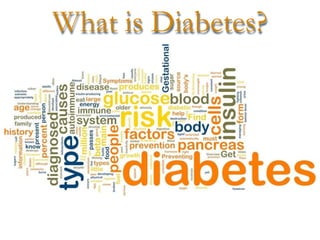
What is Diabetes?
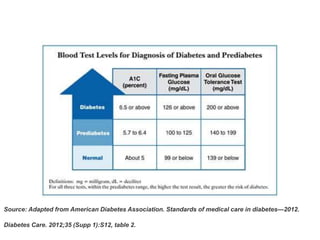
Source: Adapted from American Diabetes Association. Standards of medical care in diabetes—2012.
Diabetes Care. 2012;35 (Supp 1):S12, table 2.
2013
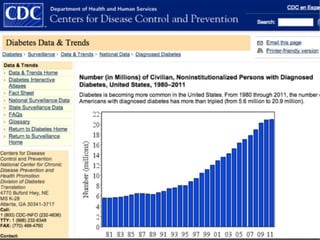
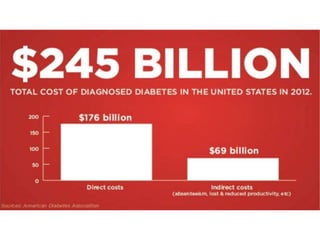
Cost of Diabetes In the
US 2013
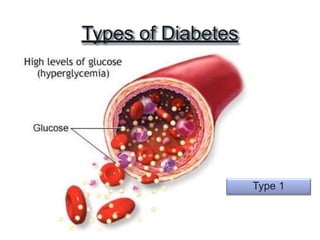
Types of Diabetes
Type 1
Type I
• Usually diagnosed in children and young
adults
Previously known as juvenile-onset
diabetes
The immune system attacks the insulin-
producing cells of the pancreas
Insulin is a hormone that is needed to
convert sugar, starches, and other food into
energy needed for daily life
•
•
•
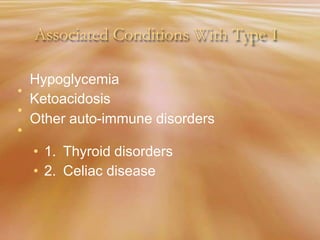
Associated Conditions With Type I
•
•
•
Hypoglycemia
Ketoacidosis
Other auto-immune disorders
• 1.
• 2.
Thyroid disorders
Celiac disease
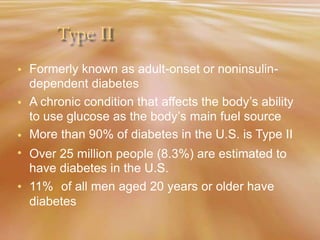
Type II
Formerly known as adult-onset or noninsulin-
dependent diabetes
A chronic condition that affects the body’s ability
to use glucose as the body’s main fuel source
More than 90% of diabetes in the U.S. is Type II
•
•
•
• Over
have
11%
25 million people (8.3%) are estimated to
diabetes in the U.S.
of all men aged 20 years or older have•
diabetes
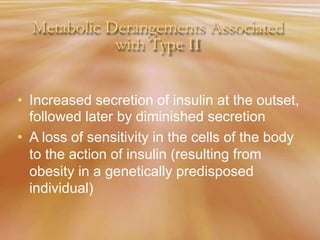
Metabolic Derangements Associated
with Type II
• Increased secretion of insulin at the outset,
followed later by diminished secretion
A loss of sensitivity in the cells of the body
to the action of insulin (resulting from
obesity in a genetically predisposed
individual)
•
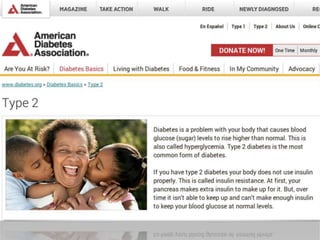
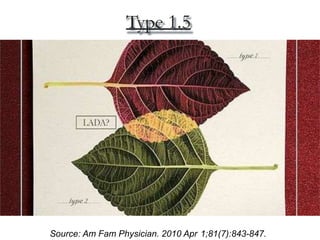
Type 1.5
Source: Am Fam Physician. 2010 Apr 1;81(7):843-847.
Latent Diabetes of
Adulthood
(LADA)
• Latent autoimmune diabetes in adults
(LADA) is a slow progressing form of
autoimmune diabetes. Like type 1 diabetes,
LADA occurs because your pancreas stops
producing adequate insulin, most likely
from some "insult" that slowly damages the
insulin-producing cells in the pancreas. But
unlike type 1 diabetes, with LADA, you
often won't need insulin for several months
up to years after you've been diagnosed.
LADA
• Many researchers believe
sometimes called type 1.5
LADA,
diabetes, is
a subtype of type 1 diabetes. Other
researchers believe diabetes occurs
on a continuum, with LADA falling
between type 1 and type 2 diabetes.
Maturity Onset Diabetes
Young (MODY)
of the
• MODY is a rare form of diabetes which is
different from both Type 1 and Type 2
diabetes, and runs strongly in families.
MODY is caused by a mutation (or change)
in a single gene. If a parent has this gene
mutation, any child they have, has a 50%
chance of inheriting it from them.
MODY
• If a child does inherit the mutation
they will generally go
MODY before they’re
their weight, lifestyle,
on to develop
25, whatever
ethnic group etc.
MODY
•
•
The key features of MODY are:
Being diagnosed with diabetes under
the age of 25.
Having a parent with diabetes, with
diabetes in two or more generations.
Not necessarily needing insulin.
•
•
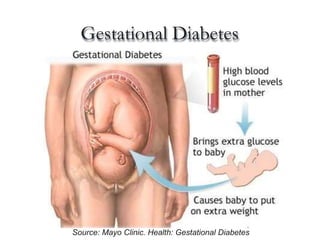
Gestational Diabetes
Source: Mayo Clinic. Health: Gestational Diabetes
Type 3 ?
Type 2 Diabetes
Risk Factors
Obesity and
excess fat
Inactivity
Too many
calories and
too little
exercise
Additional Risk Factors – Type 2
•
•
•
•
•
Metabolic syndrome
Genetics
PCOS
Gestational diabetes
Ethnic background – Hispanic/Latino Americans,
African Americans, Native Americans, Asian-
Americans, Pacific islanders, and Alaska Natives
• Medicines: diuretics, steroids
Obesity
“Diabesity”
• Obesity is the
most powerful
risk factor for
type 2 diabetes.
Diabetologia. 2003 Nov;46(11):1586-7
Diabetes Care. 2007 Jun;30(6):1562-6.
How Big Is The Risk?
Diabetes and Obesity
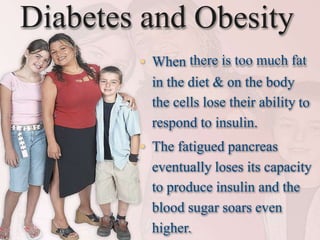
there is too much fat• When
in the diet & on the body
the cells lose their ability
respond to insulin.
The fatigued pancreas
to
•
eventually loses its capacity
to produce insulin and the
blood sugar soars even
higher.
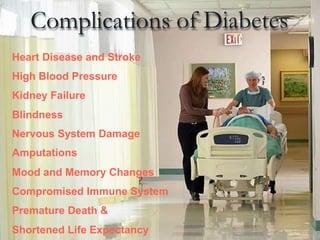
Complications
Heart Disease and Stroke
High Blood Pressure
Kidney Failure
Blindness
Nervous System Damage
Amputations
Mood and Memory Changes
Compromised Immune System
Premature Death &
Shortened Life Expectancy
of Diabetes
How?
Lifestyle Modifications
"
"
Dietary Excess and Imbalances
Diet has a vital influence on health.
At least 6 of the ten leading causes of illness and
death are associated with diet: coronary artery
disease, hypertension, cancer,
diabetes, and obesity.
stroke, and
Dietary Excess and Imbalances
~ Neil Nedley, M.D.
“It is now clear that diet
i n
the
c o n t r i b u t e s
tosubstantial ways
development of these
t h a td i s e a s e s a n d
modification of diet can
c o n t r ib u t e t o t h e ir
prevention and control.”
~ Neil Nedley, M.D.
Current Dietary
Recommendations
• A calorie restricted, low fat, high fiber diet
Benefits of High Fiber Foods
Fiber protects
against…
•
•
•
•
•
•
•
Constipation.
High cholesterol.
Heart disease.
High blood sugar.
Diabetes.
Certain cancers.
Obesity.
J Am Coll Nutr. 2004 Feb;23(1):5-17.
Grains
Whole
Health
Grains, Whole
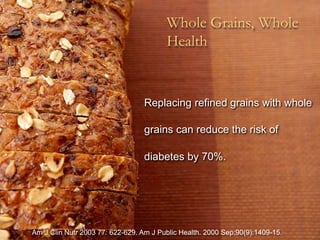
Replacing refined grains with whole
grains can reduce the risk of
diabetes by 70%.
Am J Clin Nutr 2003 77: 622-629. Am J Public Health. 2000 Sep;90(9):1409-15.
WebMD – Best Grain
For Diabetics
Baked sweet or white potato
Whole-grain flour or corn tortillas
Whole-grain wheat pastas, cereals, &
breads
Brown rice, and other whole- grain
pastas, cereals, and breads
Vegetables
WebMD – BestVegetable Choices
for Diabetics
Fresh vegetables, eaten raw or lightly
roasted, or grilled.
steamed,
Plain frozen vegetables, lightly steamed.
Low sodium or unsalted canned vegetables.
Lettuces, greens, kale, spinach, arugula.
Fruits
WebMD – Best Fruit
Choices for Diabetics
fruit (no added sugar)•
•
•
•
Plain frozen or canned
Fresh fruit
Sugar-free or low-sugar jam or preserves
No sugar-added applesauce
What About Juices?
Use At Your Own Risk
Time
Orange Juice
Whole Orange
Am J Clin Nutr. 1981 Feb;34(2):211-7.
BloodSugar
Proteins
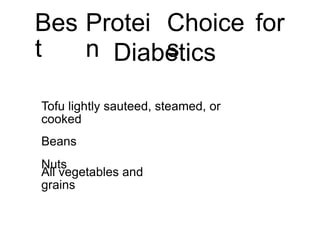
Best Protein Choices for
Diabetics
Tofu lightly sauteed, steamed, or cooked
Beans
Nuts
All vegetables and grains
Fats
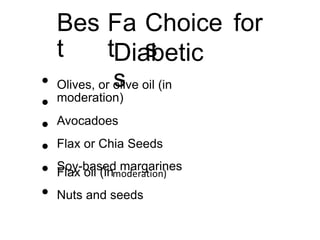
Best Fat Choices for
Diabetics
•
•
•
•
•
•
Olives, or olive oil (in moderation)
Avocadoes
Flax or Chia Seeds
Soy-based margarines
Flax oil (in
Nuts and seeds
moderation)
Other Lifestyle
Interventions
Exercise
regularly
Achieve a
healthy weight
Medications
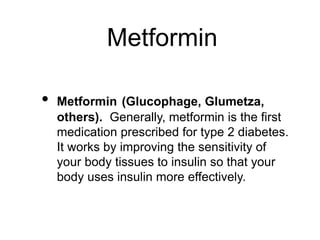
Metformin
• Metformin (Glucophage, Glumetza,
others). Generally, metformin is the first
medication prescribed for type 2 diabetes. It
works by improving the sensitivity of your
body tissues to insulin so that your body uses
insulin more effectively.
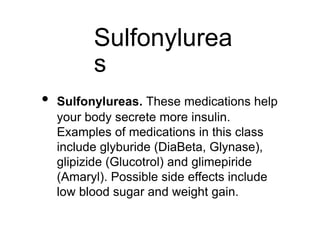
Sulfonylureas
• Sulfonylureas. These medications help
your body secrete more insulin. Examples of
medications in this class include glyburide
(DiaBeta, Glynase), glipizide (Glucotrol) and
glimepiride (Amaryl). Possible side effects
include low blood sugar and weight gain.
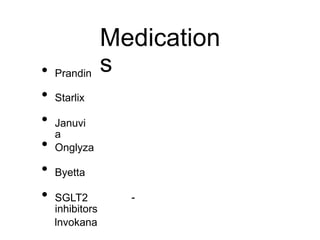
Medications
•
•
•
•
•
•
Prandin
Starlix
Januvia
Onglyza
Byetta
SGLT2 inhibitors
lnvokana
-
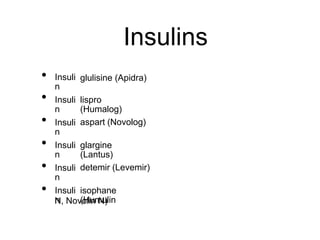
Insulins
glulisine (Apidra)•
•
•
•
•
•
Insulin
Insulin lispro (Humalog)
Insulin aspart (Novolog)
Insulin glargine (Lantus)
Insulin detemir (Levemir)
Insulin isophane (Humulin
N, Novolin N)
Botanical
Garlic
Gymnema sylvestre
Cinnamon
Berberine
Bitter melon
Chromium
Vanadium
Medicines
•
•
•
•
•
•
•
Renal Insufficiency
Natural Therapies
Hydrotherapy and
Charcoal
Russian Steam Bath - to induce sweating
Sauna - same
Revulsive Fomentations over the kidney
areas (mid back) -increase blood flow to
the kidneys
Charcoal baths
Internal charcoal
•
•
•
•
•
Dietary Modifications
• If you do not have a problem eating
carbohydrates, these foods are a good
source of energy. If your health care provider
has recommended a low-protein diet, you
may replace the calories from protein with:
Fruits, breads, grains, and vegetables•
• Fats can be a good source of calories. Make
sure to use monounsaturated and
polyunsaturated fats (olive oil, canola oil,
safflower oil) to protect your heart health.
• Low-protein diets may be helpful before you
start dialysis.Your doctor or dietitian may
recommend a moderate-protein diet (1 gram
of protein per kilogram of body weight per
day).
Once you start dialysis, you will need to eat
more protein.
•
Protein Sources in a
Vegetarian
Grains
Vegetables
Nuts
Legumes
Diet
•
•
•
•
•
•
Soy protein powders
**** Doctors may recommend limiting some of the
legumes and nuts because of phosphorus and iron
content
• You may need to take calcium supplements
to prevent bone disease, and vitamin D to
control the balance of calcium and
phosphorous in your body.
Your doctor may recommend medicines
called "phosphorous binders" if diet changes
alone do not work to control the balance of
this mineral in your body.
•
Botanical Medicine
• Kidney disease -- Preliminary research
suggests astragalus may help protect the
kidneys and may help treat kidney disease.
More studies are needed.
University of Maryland Medical Center
Diabetes Reduction Summary
• Regular exercise in the open air and sunshine.
• Eat an unrefined plant based diet, low in fat, high in fiber.
• Make weight control a habit.
• Drink plenty of water.
• Get adequate sleep.
• Avoid stimulants such as coffee, alcohol and tobacco.
• Turn your stress over to God Who only can handle it.

Diabesity

  • 2.
  • 4.
    Source: Adapted fromAmerican Diabetes Association. Standards of medical care in diabetes—2012. Diabetes Care. 2012;35 (Supp 1):S12, table 2.
  • 6.
  • 8.
    Cost of DiabetesIn the US 2013
  • 11.
  • 12.
    Type I • Usuallydiagnosed in children and young adults Previously known as juvenile-onset diabetes The immune system attacks the insulin- producing cells of the pancreas Insulin is a hormone that is needed to convert sugar, starches, and other food into energy needed for daily life • • •
  • 13.
    Associated Conditions WithType I • • • Hypoglycemia Ketoacidosis Other auto-immune disorders • 1. • 2. Thyroid disorders Celiac disease
  • 15.
    Type II Formerly knownas adult-onset or noninsulin- dependent diabetes A chronic condition that affects the body’s ability to use glucose as the body’s main fuel source More than 90% of diabetes in the U.S. is Type II • • • • Over have 11% 25 million people (8.3%) are estimated to diabetes in the U.S. of all men aged 20 years or older have• diabetes
  • 16.
    Metabolic Derangements Associated withType II • Increased secretion of insulin at the outset, followed later by diminished secretion A loss of sensitivity in the cells of the body to the action of insulin (resulting from obesity in a genetically predisposed individual) •
  • 17.
    Type 1.5 Source: AmFam Physician. 2010 Apr 1;81(7):843-847.
  • 18.
    Latent Diabetes of Adulthood (LADA) •Latent autoimmune diabetes in adults (LADA) is a slow progressing form of autoimmune diabetes. Like type 1 diabetes, LADA occurs because your pancreas stops producing adequate insulin, most likely from some "insult" that slowly damages the insulin-producing cells in the pancreas. But unlike type 1 diabetes, with LADA, you often won't need insulin for several months up to years after you've been diagnosed.
  • 19.
    LADA • Many researchersbelieve sometimes called type 1.5 LADA, diabetes, is a subtype of type 1 diabetes. Other researchers believe diabetes occurs on a continuum, with LADA falling between type 1 and type 2 diabetes.
  • 20.
    Maturity Onset Diabetes Young(MODY) of the • MODY is a rare form of diabetes which is different from both Type 1 and Type 2 diabetes, and runs strongly in families. MODY is caused by a mutation (or change) in a single gene. If a parent has this gene mutation, any child they have, has a 50% chance of inheriting it from them.
  • 21.
    MODY • If achild does inherit the mutation they will generally go MODY before they’re their weight, lifestyle, on to develop 25, whatever ethnic group etc.
  • 22.
    MODY • • The key featuresof MODY are: Being diagnosed with diabetes under the age of 25. Having a parent with diabetes, with diabetes in two or more generations. Not necessarily needing insulin. • •
  • 23.
    Gestational Diabetes Source: MayoClinic. Health: Gestational Diabetes
  • 24.
  • 26.
  • 27.
  • 28.
  • 29.
  • 30.
  • 31.
    Additional Risk Factors– Type 2 • • • • • Metabolic syndrome Genetics PCOS Gestational diabetes Ethnic background – Hispanic/Latino Americans, African Americans, Native Americans, Asian- Americans, Pacific islanders, and Alaska Natives • Medicines: diuretics, steroids
  • 32.
  • 33.
    “Diabesity” • Obesity isthe most powerful risk factor for type 2 diabetes. Diabetologia. 2003 Nov;46(11):1586-7
  • 34.
    Diabetes Care. 2007Jun;30(6):1562-6. How Big Is The Risk?
  • 35.
    Diabetes and Obesity thereis too much fat• When in the diet & on the body the cells lose their ability respond to insulin. The fatigued pancreas to • eventually loses its capacity to produce insulin and the blood sugar soars even higher.
  • 36.
    Complications Heart Disease andStroke High Blood Pressure Kidney Failure Blindness Nervous System Damage Amputations Mood and Memory Changes Compromised Immune System Premature Death & Shortened Life Expectancy of Diabetes
  • 37.
  • 40.
  • 43.
    " " Dietary Excess andImbalances Diet has a vital influence on health. At least 6 of the ten leading causes of illness and death are associated with diet: coronary artery disease, hypertension, cancer, diabetes, and obesity. stroke, and
  • 44.
    Dietary Excess andImbalances ~ Neil Nedley, M.D. “It is now clear that diet i n the c o n t r i b u t e s tosubstantial ways development of these t h a td i s e a s e s a n d modification of diet can c o n t r ib u t e t o t h e ir prevention and control.” ~ Neil Nedley, M.D.
  • 45.
    Current Dietary Recommendations • Acalorie restricted, low fat, high fiber diet
  • 46.
    Benefits of HighFiber Foods Fiber protects against… • • • • • • • Constipation. High cholesterol. Heart disease. High blood sugar. Diabetes. Certain cancers. Obesity. J Am Coll Nutr. 2004 Feb;23(1):5-17.
  • 47.
  • 48.
    Whole Health Grains, Whole Replacing refinedgrains with whole grains can reduce the risk of diabetes by 70%. Am J Clin Nutr 2003 77: 622-629. Am J Public Health. 2000 Sep;90(9):1409-15.
  • 49.
    WebMD – BestGrain For Diabetics Baked sweet or white potato Whole-grain flour or corn tortillas Whole-grain wheat pastas, cereals, & breads Brown rice, and other whole- grain pastas, cereals, and breads
  • 50.
  • 51.
    WebMD – BestVegetableChoices for Diabetics Fresh vegetables, eaten raw or lightly roasted, or grilled. steamed, Plain frozen vegetables, lightly steamed. Low sodium or unsalted canned vegetables. Lettuces, greens, kale, spinach, arugula.
  • 52.
  • 53.
    WebMD – BestFruit Choices for Diabetics fruit (no added sugar)• • • • Plain frozen or canned Fresh fruit Sugar-free or low-sugar jam or preserves No sugar-added applesauce
  • 54.
  • 55.
    Use At YourOwn Risk
  • 56.
    Time Orange Juice Whole Orange AmJ Clin Nutr. 1981 Feb;34(2):211-7. BloodSugar
  • 57.
  • 58.
    Best Protein Choicesfor Diabetics Tofu lightly sauteed, steamed, or cooked Beans Nuts All vegetables and grains
  • 59.
  • 60.
    Best Fat Choicesfor Diabetics • • • • • • Olives, or olive oil (in moderation) Avocadoes Flax or Chia Seeds Soy-based margarines Flax oil (in Nuts and seeds moderation)
  • 61.
  • 62.
  • 63.
  • 64.
  • 65.
    Metformin • Metformin (Glucophage,Glumetza, others). Generally, metformin is the first medication prescribed for type 2 diabetes. It works by improving the sensitivity of your body tissues to insulin so that your body uses insulin more effectively.
  • 66.
    Sulfonylureas • Sulfonylureas. Thesemedications help your body secrete more insulin. Examples of medications in this class include glyburide (DiaBeta, Glynase), glipizide (Glucotrol) and glimepiride (Amaryl). Possible side effects include low blood sugar and weight gain.
  • 67.
  • 68.
    Insulins glulisine (Apidra)• • • • • • Insulin Insulin lispro(Humalog) Insulin aspart (Novolog) Insulin glargine (Lantus) Insulin detemir (Levemir) Insulin isophane (Humulin N, Novolin N)
  • 69.
  • 70.
  • 71.
  • 72.
    Hydrotherapy and Charcoal Russian SteamBath - to induce sweating Sauna - same Revulsive Fomentations over the kidney areas (mid back) -increase blood flow to the kidneys Charcoal baths Internal charcoal • • • • •
  • 73.
    Dietary Modifications • Ifyou do not have a problem eating carbohydrates, these foods are a good source of energy. If your health care provider has recommended a low-protein diet, you may replace the calories from protein with: Fruits, breads, grains, and vegetables•
  • 74.
    • Fats canbe a good source of calories. Make sure to use monounsaturated and polyunsaturated fats (olive oil, canola oil, safflower oil) to protect your heart health.
  • 75.
    • Low-protein dietsmay be helpful before you start dialysis.Your doctor or dietitian may recommend a moderate-protein diet (1 gram of protein per kilogram of body weight per day). Once you start dialysis, you will need to eat more protein. •
  • 76.
    Protein Sources ina Vegetarian Grains Vegetables Nuts Legumes Diet • • • • • • Soy protein powders **** Doctors may recommend limiting some of the legumes and nuts because of phosphorus and iron content
  • 77.
    • You mayneed to take calcium supplements to prevent bone disease, and vitamin D to control the balance of calcium and phosphorous in your body. Your doctor may recommend medicines called "phosphorous binders" if diet changes alone do not work to control the balance of this mineral in your body. •
  • 78.
    Botanical Medicine • Kidneydisease -- Preliminary research suggests astragalus may help protect the kidneys and may help treat kidney disease. More studies are needed. University of Maryland Medical Center

  • 80.
    Diabetes Reduction Summary •Regular exercise in the open air and sunshine. • Eat an unrefined plant based diet, low in fat, high in fiber. • Make weight control a habit. • Drink plenty of water. • Get adequate sleep. • Avoid stimulants such as coffee, alcohol and tobacco. • Turn your stress over to God Who only can handle it.