DR B R AMBEDKAR NATIONAL INSTITUTE OF
TECHNOLOGY, JALANDHAR
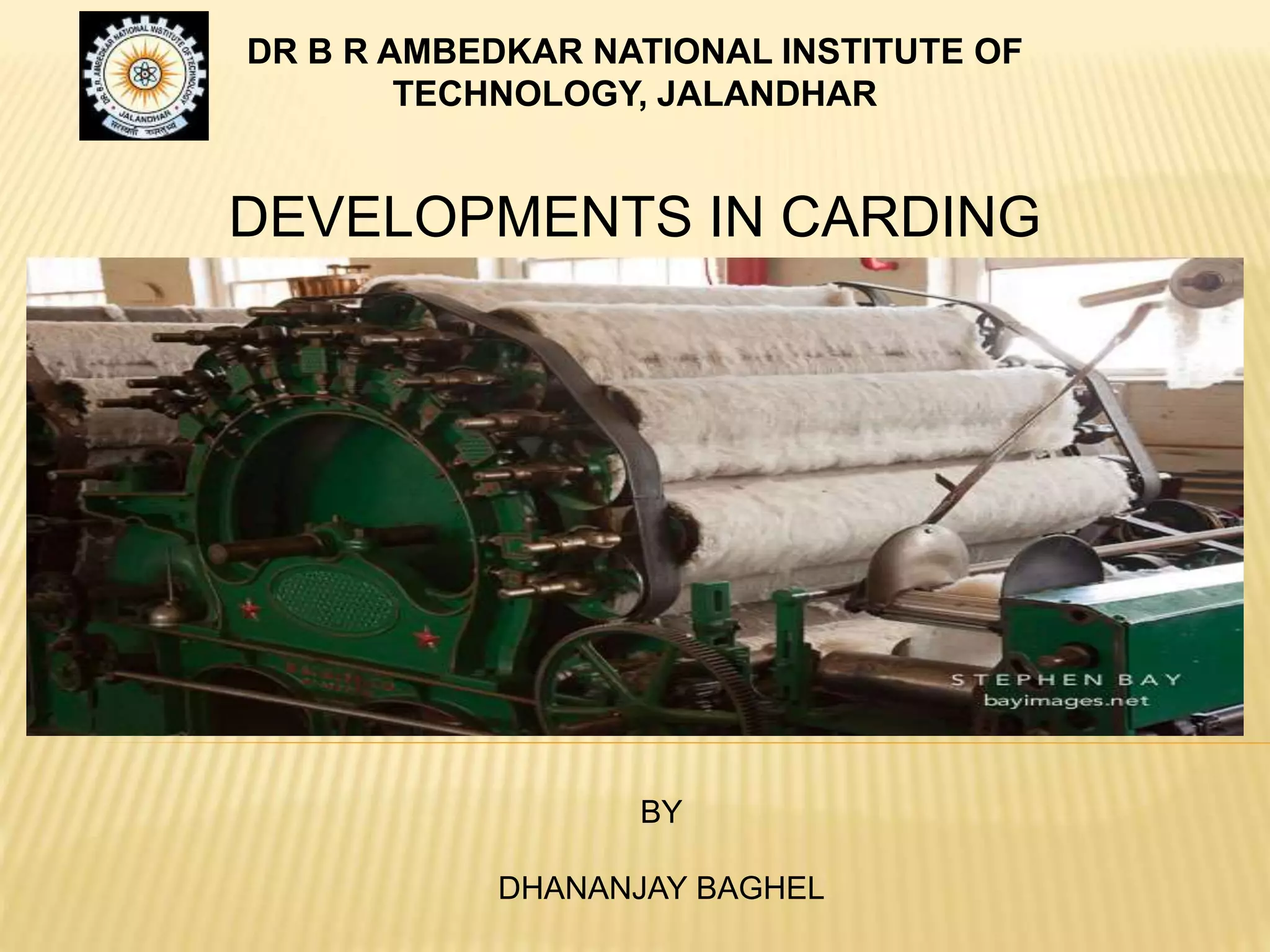
DEVELOPMENTS IN CARDING
BY
DHANANJAY BAGHEL
INTRODUCTION
 Carding is the immediate process after blow
room.
 Carding is a mechanical process that
disentangles, cleans and intermixes fibres to
produce a continuous web or sliver suitable
for subsequent processing.
 This is achieved due to the clothed rollers
moving with differential speeds.
OBJECTS OF CARDING MACHINE
 To individualize the fibres.
 To remove impurities.
 To clean cotton thoroughly off the lighter dirt &
trash as well as to remove a certain proportion of
neps & short fibers from the opened material.
 To convert Blow Room lap/ Chute feed sheet
into the loose, roughly parallel, untwisted strand
fibres called sliver.
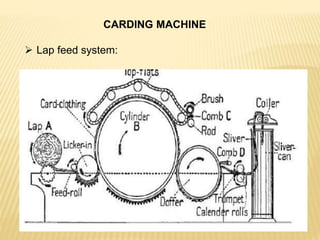
CARDING MACHINE
 Lap feed system:
PARTS OF CARDING MACHINE
 FEED ROLLER AND LICKER-IN
 CYLINDER AND FLATS
 DOFFER
 TRUMPET
 COILER ARRANGEMENT
ADVANCEMENTS IN CARDING MACHINE
 CHUTE FEED SYSTEM
 UNIDIRECTIONAL FEED
 MULTIPLE LICKER-IN
 INCREASE IN THE CARDING WIDTH
 INTEGRATED GRINDING SYSTEM
 USE OF AUTOLEVELLERS
 DUST EXTRACTION SYSTEM
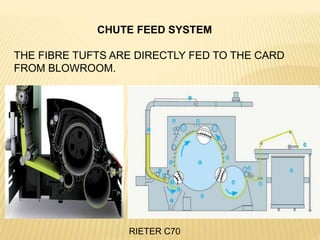
CHUTE FEED SYSTEM
THE FIBRE TUFTS ARE DIRECTLY FED TO THE CARD
FROM BLOWROOM.
RIETER C70
UNIDIRECTIONAL FEED
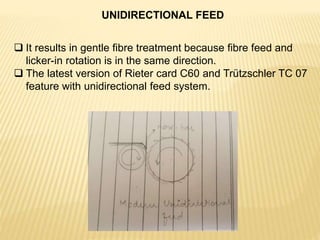
 It results in gentle fibre treatment because fibre feed and
licker-in rotation is in the same direction.
 The latest version of Rieter card C60 and Trützschler TC 07
feature with unidirectional feed system.
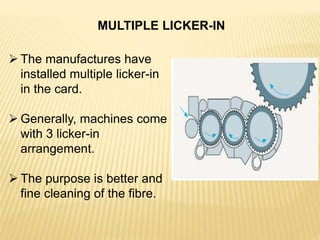
 The manufactures have
installed multiple licker-in
in the card.
 Generally, machines come
with 3 licker-in
arrangement.
 The purpose is better and
fine cleaning of the fibre.
MULTIPLE LICKER-IN
INCREASE IN THE CARDING WIDTH
 The modern machines achieve production rates of 60 - 220
kg/h, compared with output of 5 - 15 kg/h in 1970.
 Rieter C 60 Card has 50% more working width (from 1 m to
1.5 m).
 Trützschler TC 07 has the longest carding section of about
2.82 m .
 Increase in production is equivalent to increased fibre mass
on cylinder that may reduce the sliver quality and ultimately
the yarn quality.
 But since the carding surface is also increased, the
production is enhanced without hampering the sliver quality.
INTEGRATED GRINDING SYSTEM
 Card wire grinding is not only a troublesome job but also
time consuming.
 Therefore, grinding stones are now being installed near the
wire points of cylinder and flats.
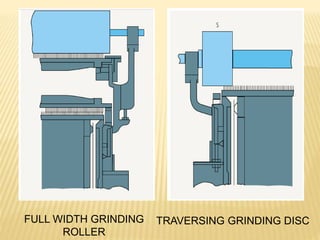
 Rieter IGS-system has integrated grinding:
 IGS-Classic for cylinder wire points and performs
400 grinding cycles per clothing lifecycle.
 IGS-Top for flats wire points and performs 100
grinding cycles per clothing lifecycle.
FULL WIDTH GRINDING
ROLLER
TRAVERSING GRINDING DISC
USE OF AUTOLEVELLERS
 To control card sliver count variations, count CV% and
unevenness, modern cards are equipped with autoleveller.
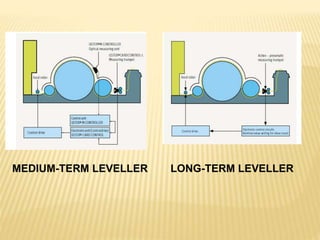
 Medium-term leveller measures the feed mat thickness at
the feed trough and, as required, the feed roller speed is
adjusted through the control system.
 Long-term leveller measures the sliver thickness by the
step roller pair and adjusts the chute system accordingly.
MEDIUM-TERM LEVELLER LONG-TERM LEVELLER
DUST EXTRACTION SYSTEM
 There is a lot of dust removal at various stages of
carding machine.
 These areas can be:
 Licker-in
 cylinder and flats
 cylinder and doffer
 This leads to the deterioration of the working conditions
and can cause health hazards.
 Thus to prevent this, suction units are installed near
these regions that collects the dust and pass it to a
specific place.

Developments in Carding

  • 1.
    DR B RAMBEDKAR NATIONAL INSTITUTE OF TECHNOLOGY, JALANDHAR DEVELOPMENTS IN CARDING BY DHANANJAY BAGHEL
  • 2.
    INTRODUCTION  Carding isthe immediate process after blow room.  Carding is a mechanical process that disentangles, cleans and intermixes fibres to produce a continuous web or sliver suitable for subsequent processing.  This is achieved due to the clothed rollers moving with differential speeds.
  • 3.
    OBJECTS OF CARDINGMACHINE  To individualize the fibres.  To remove impurities.  To clean cotton thoroughly off the lighter dirt & trash as well as to remove a certain proportion of neps & short fibers from the opened material.  To convert Blow Room lap/ Chute feed sheet into the loose, roughly parallel, untwisted strand fibres called sliver.
  • 4.
  • 5.
    PARTS OF CARDINGMACHINE  FEED ROLLER AND LICKER-IN  CYLINDER AND FLATS  DOFFER  TRUMPET  COILER ARRANGEMENT
  • 6.
    ADVANCEMENTS IN CARDINGMACHINE  CHUTE FEED SYSTEM  UNIDIRECTIONAL FEED  MULTIPLE LICKER-IN  INCREASE IN THE CARDING WIDTH  INTEGRATED GRINDING SYSTEM  USE OF AUTOLEVELLERS  DUST EXTRACTION SYSTEM
  • 7.
    CHUTE FEED SYSTEM THEFIBRE TUFTS ARE DIRECTLY FED TO THE CARD FROM BLOWROOM. RIETER C70
  • 8.
    UNIDIRECTIONAL FEED  Itresults in gentle fibre treatment because fibre feed and licker-in rotation is in the same direction.  The latest version of Rieter card C60 and Trützschler TC 07 feature with unidirectional feed system.
  • 9.
     The manufactureshave installed multiple licker-in in the card.  Generally, machines come with 3 licker-in arrangement.  The purpose is better and fine cleaning of the fibre. MULTIPLE LICKER-IN
  • 10.
    INCREASE IN THECARDING WIDTH  The modern machines achieve production rates of 60 - 220 kg/h, compared with output of 5 - 15 kg/h in 1970.  Rieter C 60 Card has 50% more working width (from 1 m to 1.5 m).  Trützschler TC 07 has the longest carding section of about 2.82 m .  Increase in production is equivalent to increased fibre mass on cylinder that may reduce the sliver quality and ultimately the yarn quality.  But since the carding surface is also increased, the production is enhanced without hampering the sliver quality.
  • 11.
    INTEGRATED GRINDING SYSTEM Card wire grinding is not only a troublesome job but also time consuming.  Therefore, grinding stones are now being installed near the wire points of cylinder and flats.  Rieter IGS-system has integrated grinding:  IGS-Classic for cylinder wire points and performs 400 grinding cycles per clothing lifecycle.  IGS-Top for flats wire points and performs 100 grinding cycles per clothing lifecycle.
  • 12.
  • 13.
    USE OF AUTOLEVELLERS To control card sliver count variations, count CV% and unevenness, modern cards are equipped with autoleveller.  Medium-term leveller measures the feed mat thickness at the feed trough and, as required, the feed roller speed is adjusted through the control system.  Long-term leveller measures the sliver thickness by the step roller pair and adjusts the chute system accordingly.
  • 14.
  • 15.
    DUST EXTRACTION SYSTEM There is a lot of dust removal at various stages of carding machine.  These areas can be:  Licker-in  cylinder and flats  cylinder and doffer  This leads to the deterioration of the working conditions and can cause health hazards.  Thus to prevent this, suction units are installed near these regions that collects the dust and pass it to a specific place.