1
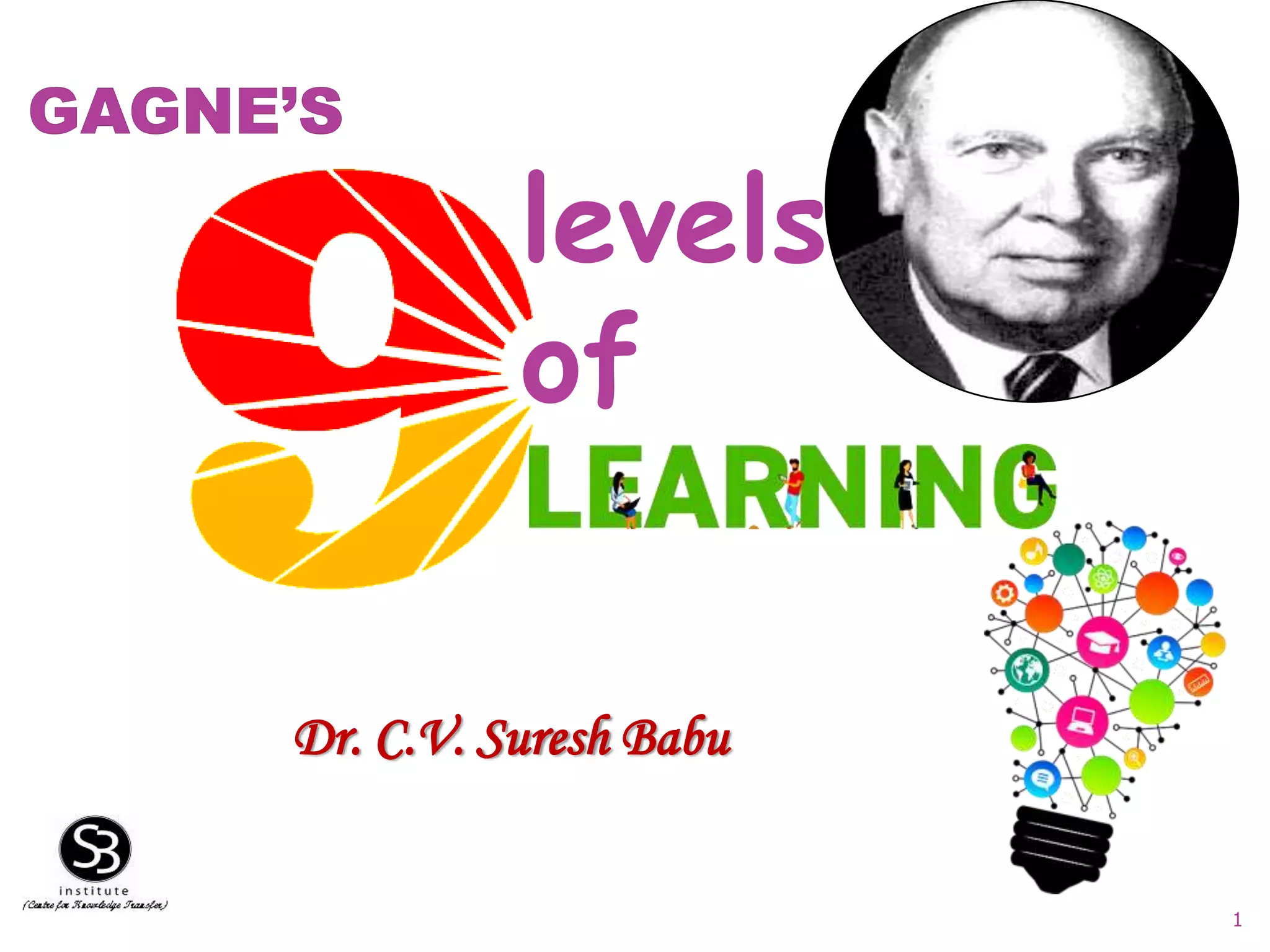
Dr. C.V. Suresh Babu
levels
of
2
 Robert Gagné is best known for his:
 Learning Outcomes
 Learning Conditions
 Nine Events of Instruction
 Gagné’s theories have been applied to instructional
design in many other areas:
 Military
 Instructional Systems Development
 Flying
 Lots of others
3
 Gagné’s theory should be classified as
instructional theory - as opposed to learning
theory.
 A learning theory consists of a set of
propositions and constructs that account for how
changes in human performance abilities come
about.
 An instructional theory describes the conditions
under which one can intentionally arrange for
the learning of specific performance outcomes.
4
 Gagné’s instructional theory tends to side with
behavioristic principles (teacher-centered
approach)
 He focuses on outcomes/behaviors that result from
instruction
 He believes that the results of learning are
measurable through testing, and that drill,
practice, and immediate feedback are effective.
 As a result, he does have some hecklers!
5
 Gagné’s theories became influenced by
cognitive theorists. He proposed that the
information-processing model of learning
could be combined with
behaviorist concepts
to provide a more complete view of learning
tasks (Molenda, 2002)
6
 When the Events of Instruction occur, internal learning
processes take place that lead to various learning
outcomes. (Campos, 1999)
 The Events of Instruction constitute a set of
communications to the student, which have the aim of
aiding the learning process.
 Instruction consists of a set of events external to the
learner designed to support the internal processes of
learning. (Gagné, Briggs, & Wager, 1988)
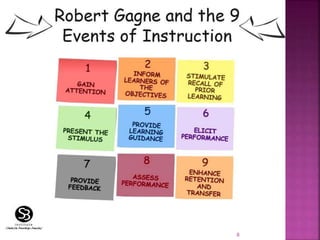
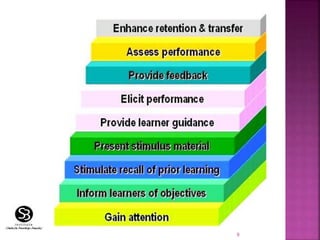
 The theory outlines Nine Instructional Events and their
corresponding processes.
7
8
9
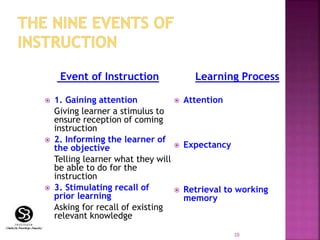
Event of Instruction
 1. Gaining attention
Giving learner a stimulus to
ensure reception of coming
instruction
 2. Informing the learner of
the objective
Telling learner what they will
be able to do for the
instruction
 3. Stimulating recall of
prior learning
Asking for recall of existing
relevant knowledge
Learning Process
 Attention
 Expectancy
 Retrieval to working
memory
10
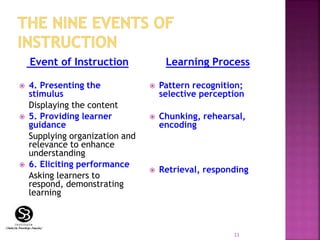
Event of Instruction
 4. Presenting the
stimulus
Displaying the content
 5. Providing learner
guidance
Supplying organization and
relevance to enhance
understanding
 6. Eliciting performance
Asking learners to
respond, demonstrating
learning
Learning Process
 Pattern recognition;
selective perception
 Chunking, rehearsal,
encoding
 Retrieval, responding
11
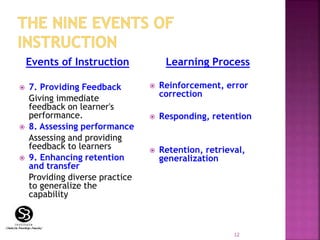
Events of Instruction
 7. Providing Feedback
Giving immediate
feedback on learner's
performance.
 8. Assessing performance
Assessing and providing
feedback to learners
 9. Enhancing retention
and transfer
Providing diverse practice
to generalize the
capability
Learning Process
 Reinforcement, error
correction
 Responding, retention
 Retention, retrieval,
generalization
12
 Keep in mind that the exact form of these events
is not something that can be specified in general
for all lessons, but rather must be decided for
each learning objective.
 The events of instruction must be deliberately
arranged by the teacher to support learning
processes.
13

Gagnes levels of learning

  • 1.
    1 Dr. C.V. SureshBabu levels of
  • 2.
  • 3.
     Robert Gagnéis best known for his:  Learning Outcomes  Learning Conditions  Nine Events of Instruction  Gagné’s theories have been applied to instructional design in many other areas:  Military  Instructional Systems Development  Flying  Lots of others 3
  • 4.
     Gagné’s theoryshould be classified as instructional theory - as opposed to learning theory.  A learning theory consists of a set of propositions and constructs that account for how changes in human performance abilities come about.  An instructional theory describes the conditions under which one can intentionally arrange for the learning of specific performance outcomes. 4
  • 5.
     Gagné’s instructionaltheory tends to side with behavioristic principles (teacher-centered approach)  He focuses on outcomes/behaviors that result from instruction  He believes that the results of learning are measurable through testing, and that drill, practice, and immediate feedback are effective.  As a result, he does have some hecklers! 5
  • 6.
     Gagné’s theoriesbecame influenced by cognitive theorists. He proposed that the information-processing model of learning could be combined with behaviorist concepts to provide a more complete view of learning tasks (Molenda, 2002) 6
  • 7.
     When theEvents of Instruction occur, internal learning processes take place that lead to various learning outcomes. (Campos, 1999)  The Events of Instruction constitute a set of communications to the student, which have the aim of aiding the learning process.  Instruction consists of a set of events external to the learner designed to support the internal processes of learning. (Gagné, Briggs, & Wager, 1988)  The theory outlines Nine Instructional Events and their corresponding processes. 7
  • 8.
  • 9.
  • 10.
    Event of Instruction 1. Gaining attention Giving learner a stimulus to ensure reception of coming instruction  2. Informing the learner of the objective Telling learner what they will be able to do for the instruction  3. Stimulating recall of prior learning Asking for recall of existing relevant knowledge Learning Process  Attention  Expectancy  Retrieval to working memory 10
  • 11.
    Event of Instruction 4. Presenting the stimulus Displaying the content  5. Providing learner guidance Supplying organization and relevance to enhance understanding  6. Eliciting performance Asking learners to respond, demonstrating learning Learning Process  Pattern recognition; selective perception  Chunking, rehearsal, encoding  Retrieval, responding 11
  • 12.
    Events of Instruction 7. Providing Feedback Giving immediate feedback on learner's performance.  8. Assessing performance Assessing and providing feedback to learners  9. Enhancing retention and transfer Providing diverse practice to generalize the capability Learning Process  Reinforcement, error correction  Responding, retention  Retention, retrieval, generalization 12
  • 13.
     Keep inmind that the exact form of these events is not something that can be specified in general for all lessons, but rather must be decided for each learning objective.  The events of instruction must be deliberately arranged by the teacher to support learning processes. 13