Development in
Technology since
Independence in India
CONTENT CREATORS OF THIS
PRESENTATION
• Shreya Jha(Class & Section-VII A, Roll Number-33)
• Shriosree Biswas(Class & Section-VII A, Roll
Number-34)
• Shrutam Sharma(Class & Section-VII A, Roll
Number-35)
• Sikta Naskar (Class & Section-VII A, Roll Number-
36)
- :The
Creators of
this
presentation:
-
- : Condition of
India after
Independence : -
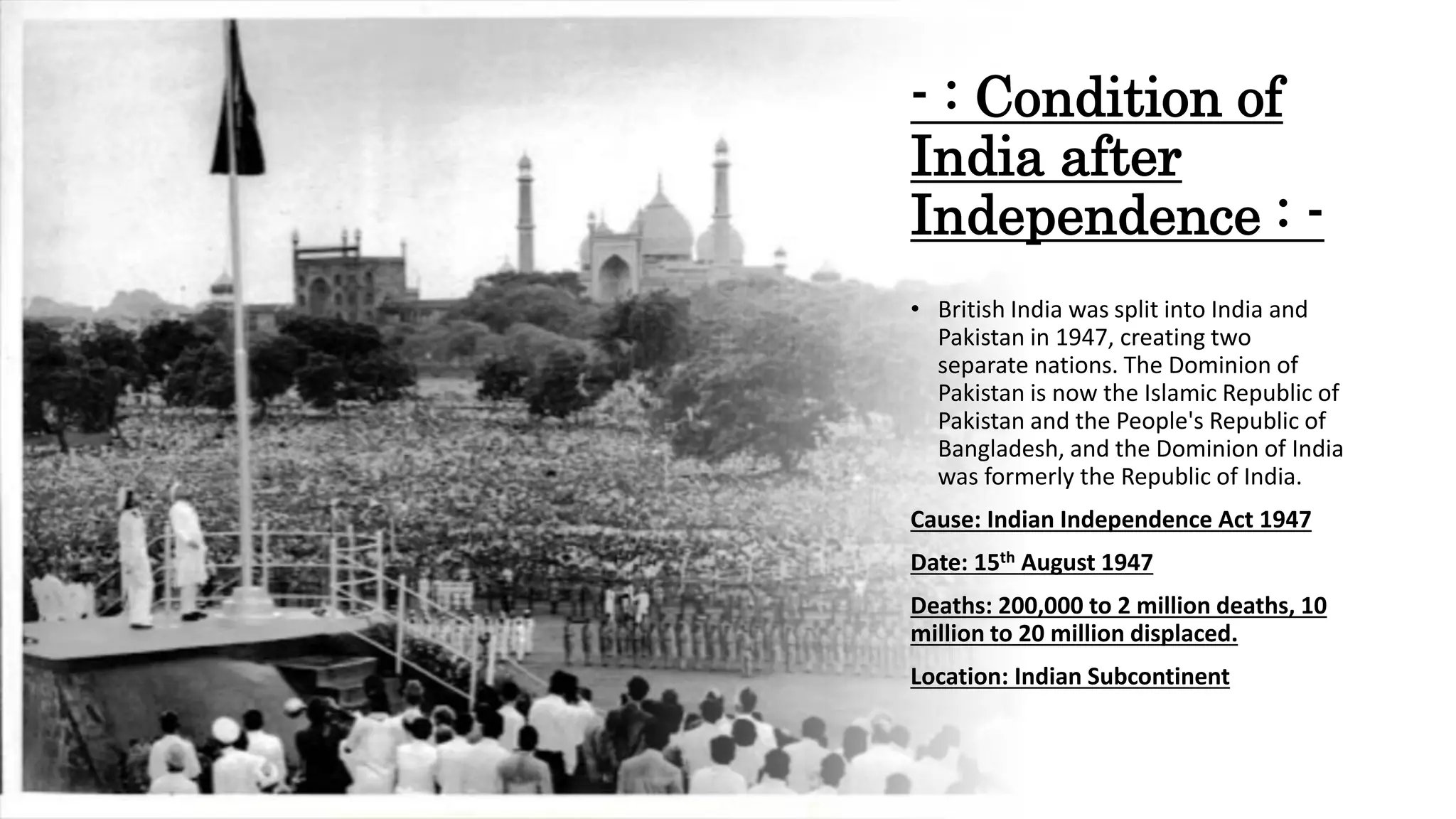
• British India was split into India and
Pakistan in 1947, creating two
separate nations. The Dominion of
Pakistan is now the Islamic Republic of
Pakistan and the People's Republic of
Bangladesh, and the Dominion of India
was formerly the Republic of India.
Cause: Indian Independence Act 1947
Date: 15th August 1947
Deaths: 200,000 to 2 million deaths, 10
million to 20 million displaced.
Location: Indian Subcontinent
- : India’s 1st
national
laboratory : -
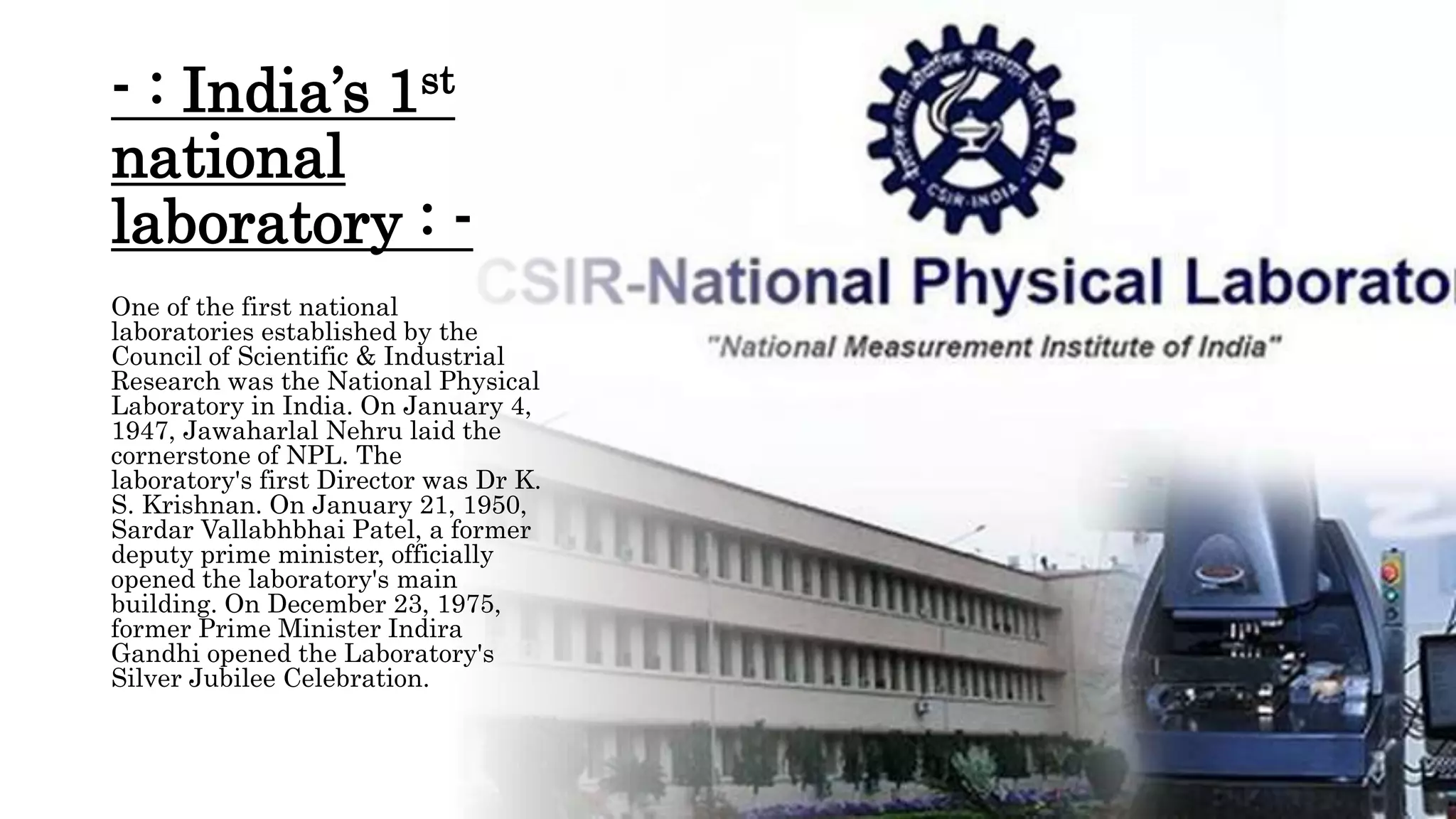
One of the first national
laboratories established by the
Council of Scientific & Industrial
Research was the National Physical
Laboratory in India. On January 4,
1947, Jawaharlal Nehru laid the
cornerstone of NPL. The
laboratory's first Director was Dr K.
S. Krishnan. On January 21, 1950,
Sardar Vallabhbhai Patel, a former
deputy prime minister, officially
opened the laboratory's main
building. On December 23, 1975,
former Prime Minister Indira
Gandhi opened the Laboratory's
Silver Jubilee Celebration.
- : Recognizing the
importance of
nuclear energy : -
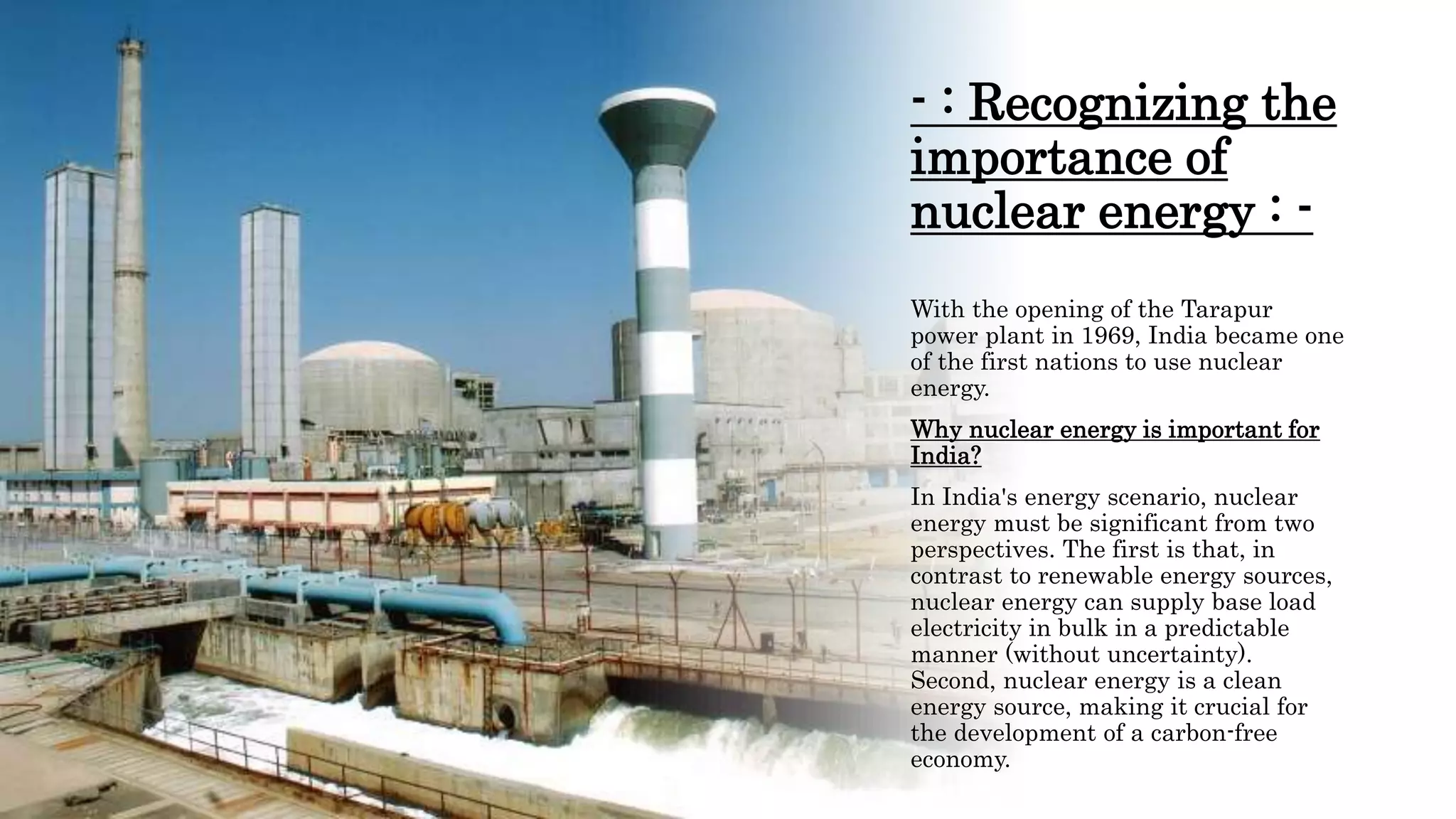
With the opening of the Tarapur
power plant in 1969, India became one
of the first nations to use nuclear
energy.
Why nuclear energy is important for
India?
In India's energy scenario, nuclear
energy must be significant from two
perspectives. The first is that, in
contrast to renewable energy sources,
nuclear energy can supply base load
electricity in bulk in a predictable
manner (without uncertainty).
Second, nuclear energy is a clean
energy source, making it crucial for
the development of a carbon-free
economy.
- :1st generation
INSAT-1: -
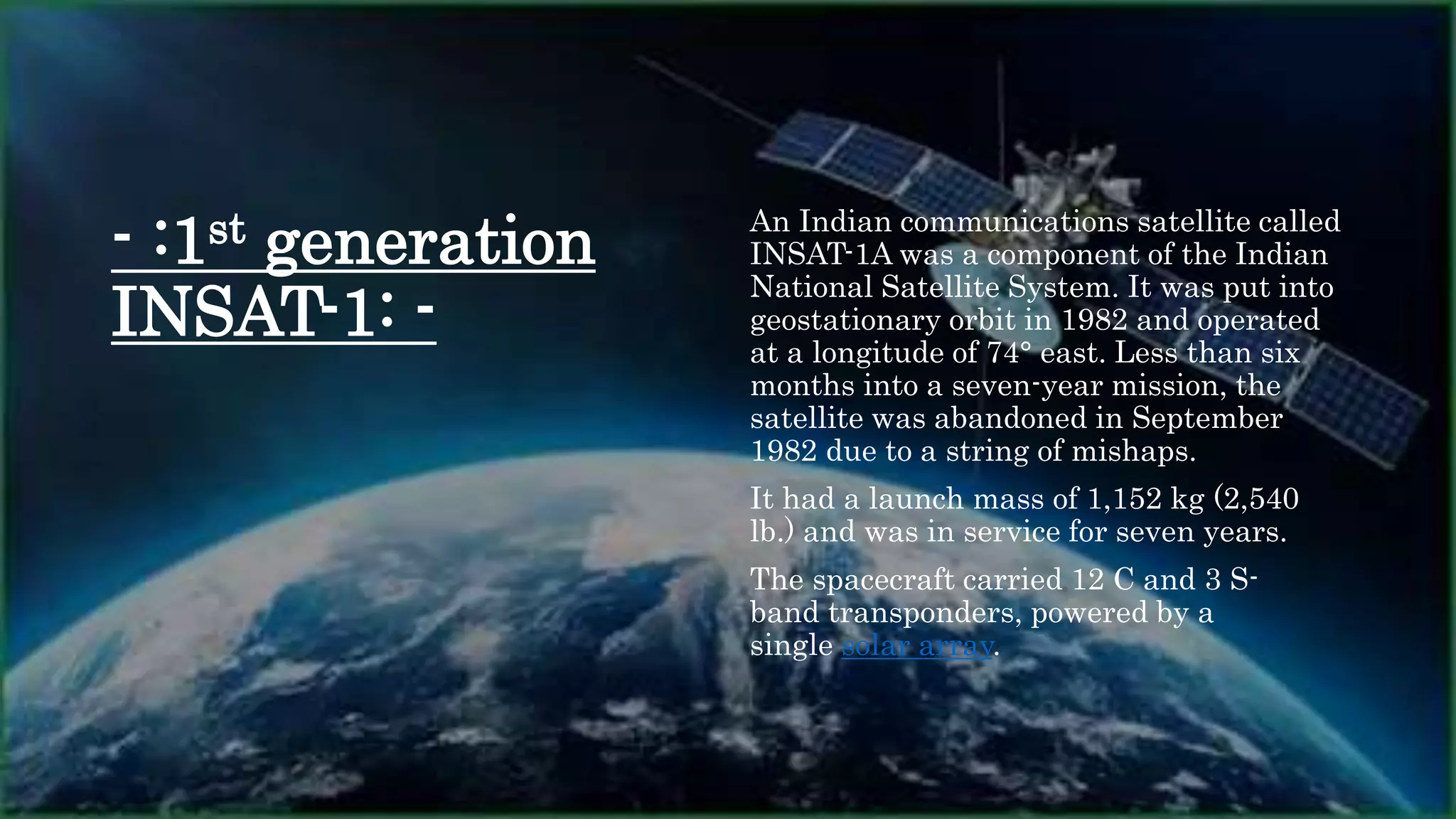
An Indian communications satellite called
INSAT-1A was a component of the Indian
National Satellite System. It was put into
geostationary orbit in 1982 and operated
at a longitude of 74° east. Less than six
months into a seven-year mission, the
satellite was abandoned in September
1982 due to a string of mishaps.
It had a launch mass of 1,152 kg (2,540
lb.) and was in service for seven years.
The spacecraft carried 12 C and 3 S-
band transponders, powered by a
single solar array.
- : Aryabhata-
1975 : -
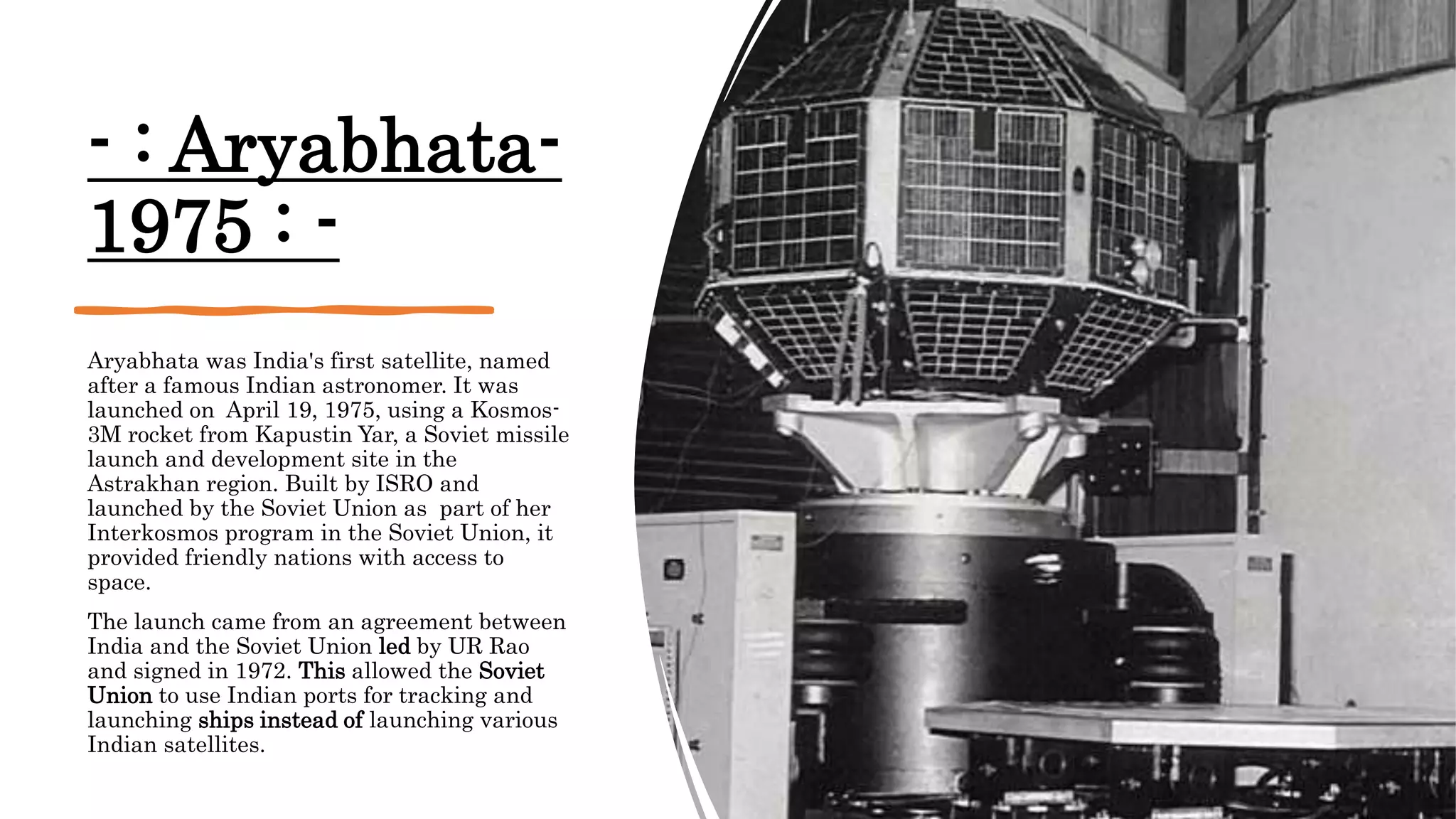
Aryabhata was India's first satellite, named
after a famous Indian astronomer. It was
launched on April 19, 1975, using a Kosmos-
3M rocket from Kapustin Yar, a Soviet missile
launch and development site in the
Astrakhan region. Built by ISRO and
launched by the Soviet Union as part of her
Interkosmos program in the Soviet Union, it
provided friendly nations with access to
space.
The launch came from an agreement between
India and the Soviet Union led by UR Rao
and signed in 1972. This allowed the Soviet
Union to use Indian ports for tracking and
launching ships instead of launching various
Indian satellites.
- : Mangalyaan -
2013 : -
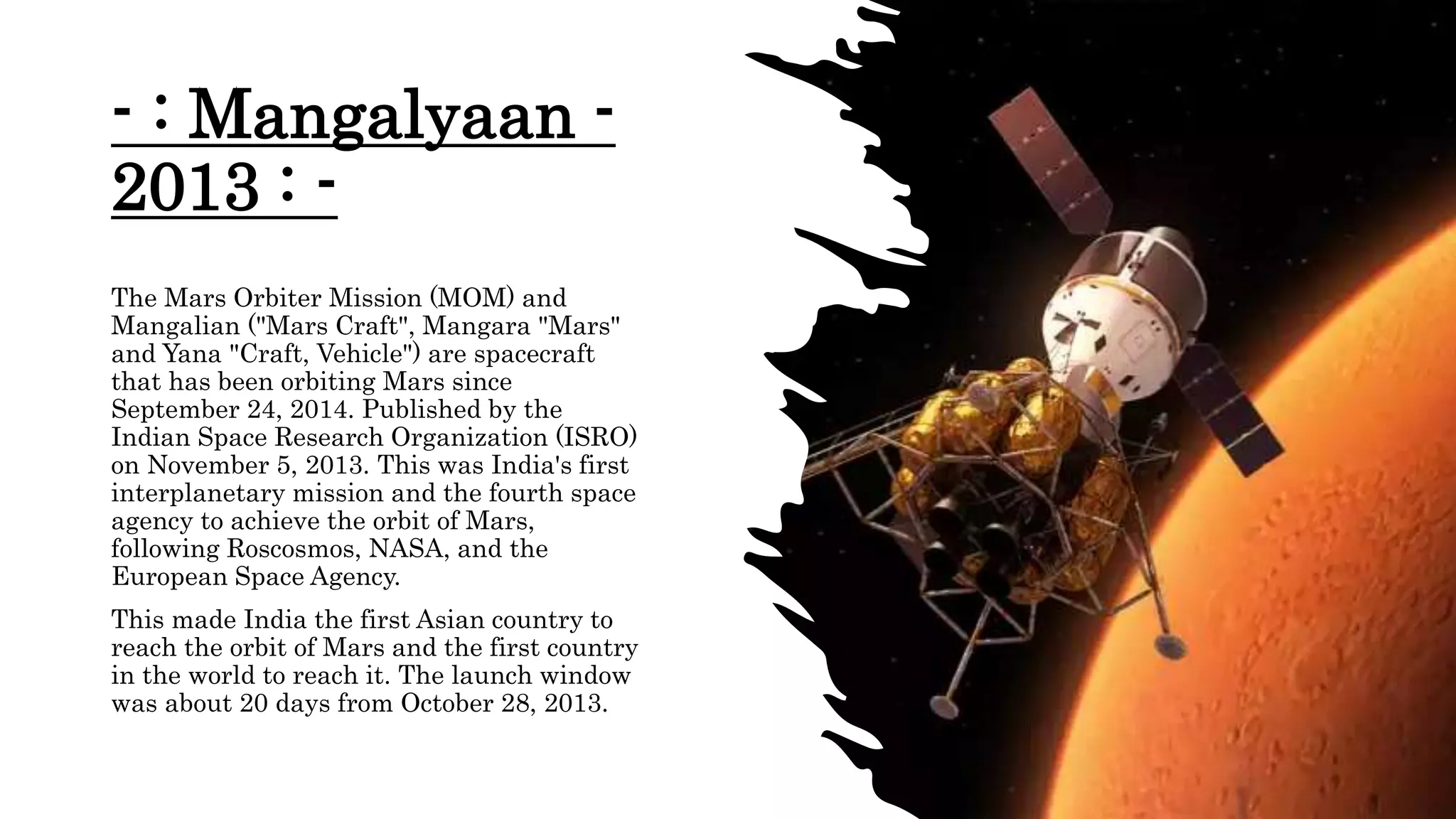
The Mars Orbiter Mission (MOM) and
Mangalian ("Mars Craft", Mangara "Mars"
and Yana "Craft, Vehicle") are spacecraft
that has been orbiting Mars since
September 24, 2014. Published by the
Indian Space Research Organization (ISRO)
on November 5, 2013. This was India's first
interplanetary mission and the fourth space
agency to achieve the orbit of Mars,
following Roscosmos, NASA, and the
European Space Agency.
This made India the first Asian country to
reach the orbit of Mars and the first country
in the world to reach it. The launch window
was about 20 days from October 28, 2013.
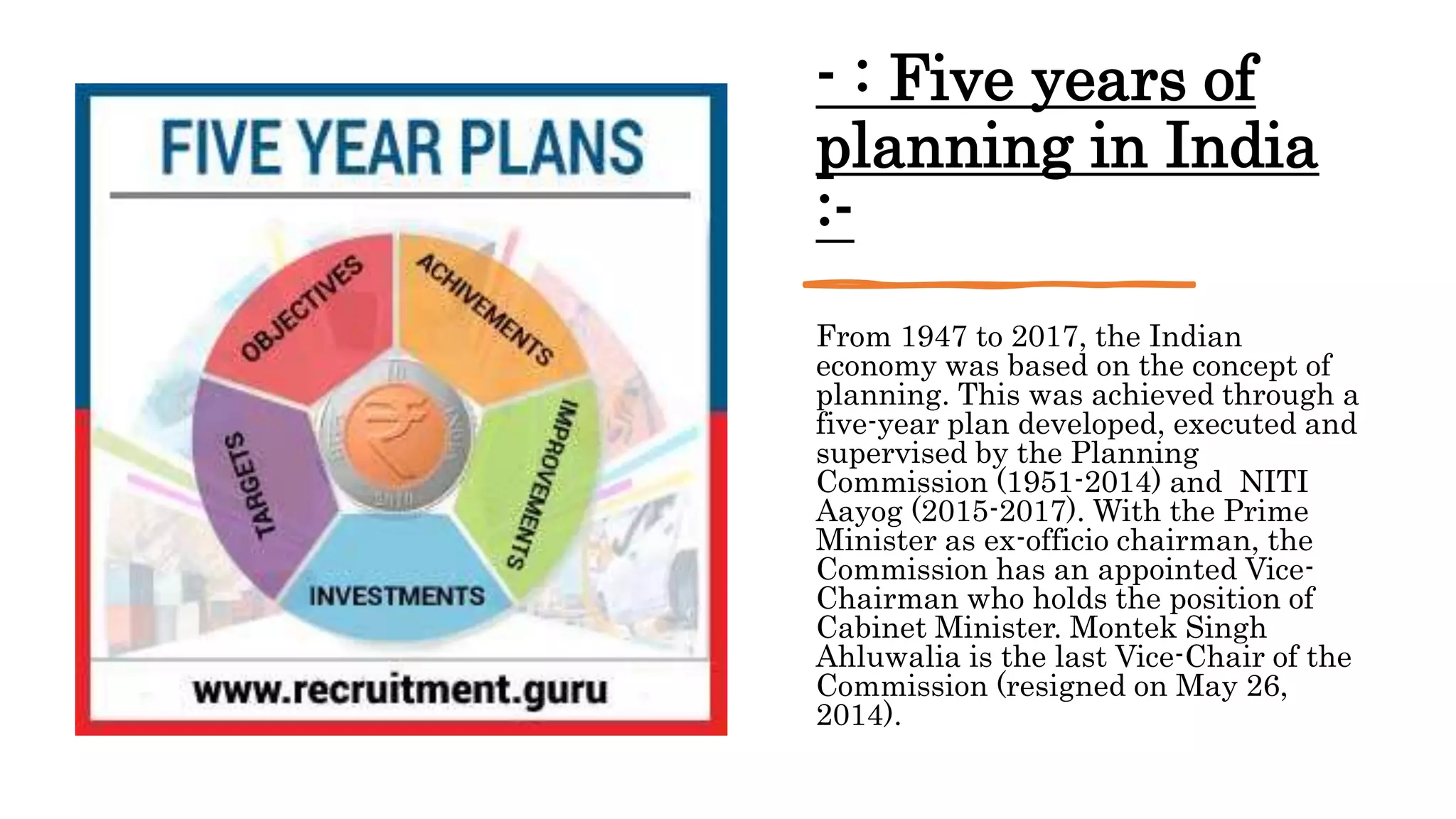
- : Five years of
planning in India
:-
From 1947 to 2017, the Indian
economy was based on the concept of
planning. This was achieved through a
five-year plan developed, executed and
supervised by the Planning
Commission (1951-2014) and NITI
Aayog (2015-2017). With the Prime
Minister as ex-officio chairman, the
Commission has an appointed Vice-
Chairman who holds the position of
Cabinet Minister. Montek Singh
Ahluwalia is the last Vice-Chair of the
Commission (resigned on May 26,
2014).
- : Green Revolution -1968
: -
The Green Revolution began in the 1960s and was a time
when Indian agriculture was transformed into a modern
industrial system by introducing technologies such as B.
Use of high yield varieties (HYV) seeds, mechanized
Agricultural equipment, irrigation systems, pesticides and
fertilizers. This period was largely led by Indian
agronomist M.S. Swaminathan and initiated by Norman E.
Borlaug, a larger Green Revolution that used agricultural
research and technology to increase agricultural
productivity in developing countries. It was part of the
effort.
During the term of Parliament Speaker Lal Bahadur
Shastri, the Green Revolution began in India in 1968 and
increased cereal production, especially in Punjab, Haryana
and Uttar Pradesh. A key milestone in this effort was the
development of high-yielding and rust-resistant wheat
varieties.
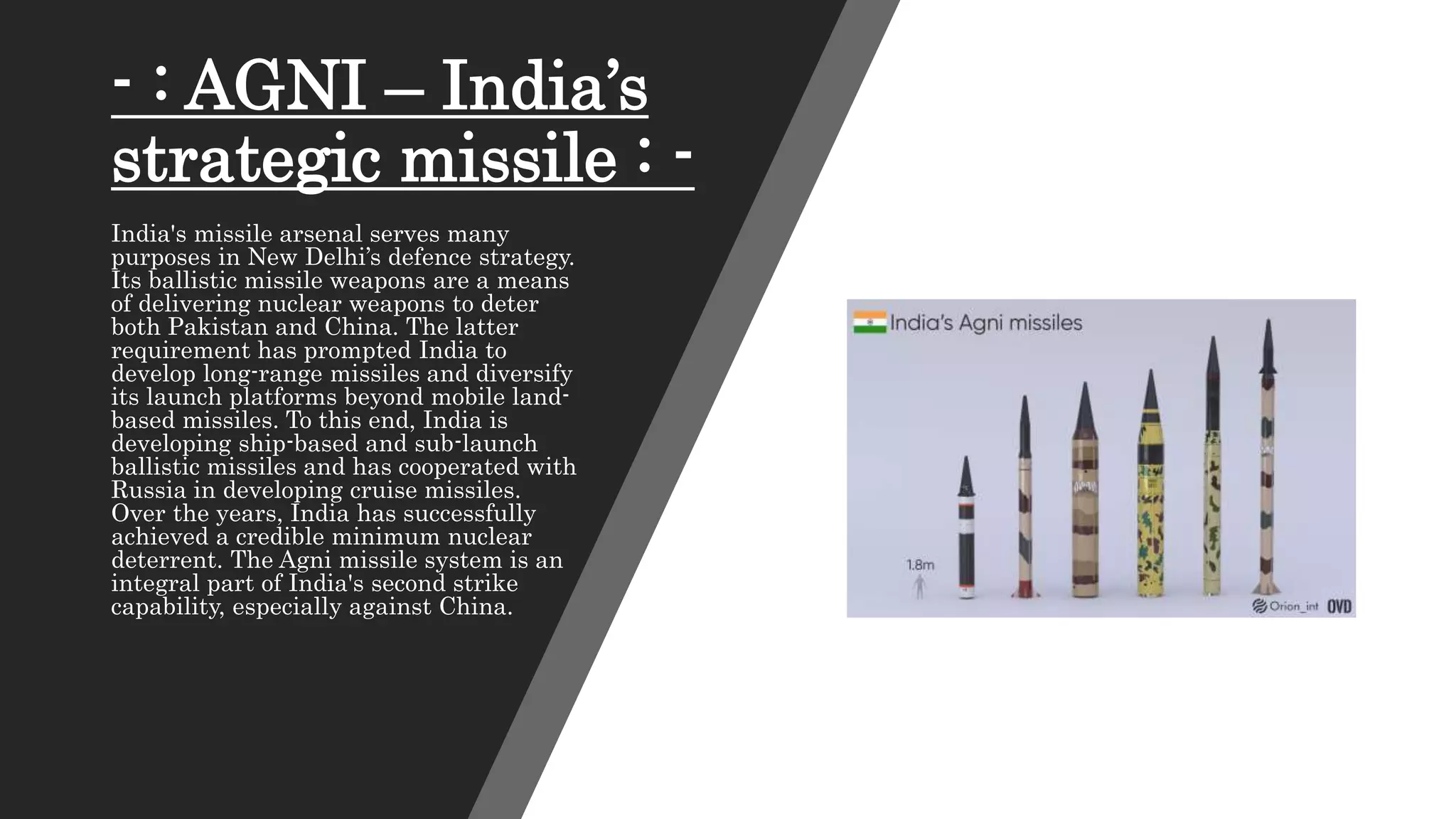
- : AGNI – India’s
strategic missile : -
India's missile arsenal serves many
purposes in New Delhi’s defence strategy.
Its ballistic missile weapons are a means
of delivering nuclear weapons to deter
both Pakistan and China. The latter
requirement has prompted India to
develop long-range missiles and diversify
its launch platforms beyond mobile land-
based missiles. To this end, India is
developing ship-based and sub-launch
ballistic missiles and has cooperated with
Russia in developing cruise missiles.
Over the years, India has successfully
achieved a credible minimum nuclear
deterrent. The Agni missile system is an
integral part of India's second strike
capability, especially against China.
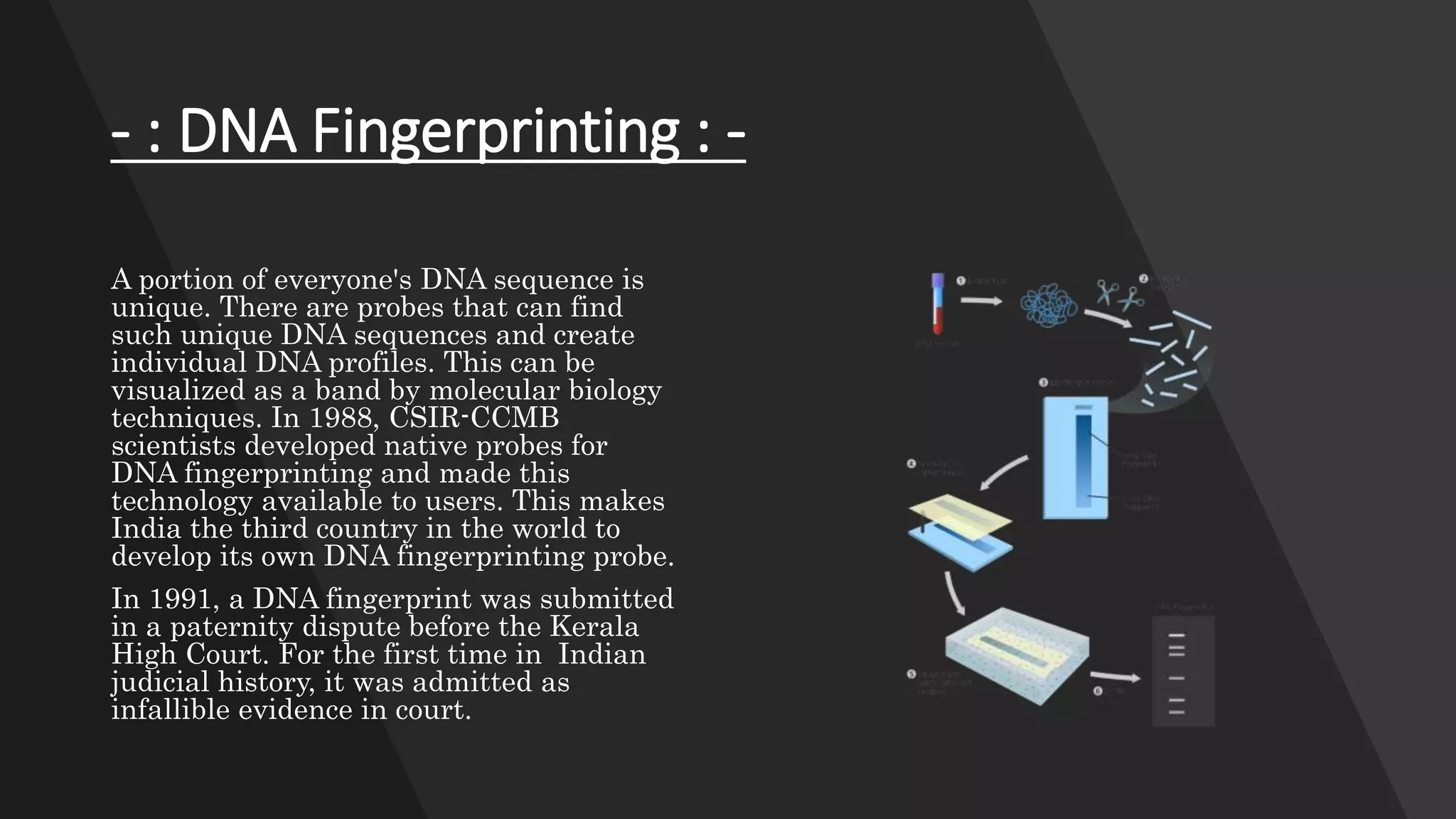
- : DNA Fingerprinting : -
A portion of everyone's DNA sequence is
unique. There are probes that can find
such unique DNA sequences and create
individual DNA profiles. This can be
visualized as a band by molecular biology
techniques. In 1988, CSIR-CCMB
scientists developed native probes for
DNA fingerprinting and made this
technology available to users. This makes
India the third country in the world to
develop its own DNA fingerprinting probe.
In 1991, a DNA fingerprint was submitted
in a paternity dispute before the Kerala
High Court. For the first time in Indian
judicial history, it was admitted as
infallible evidence in court.
- : Pokhran-II nuclear
test : -
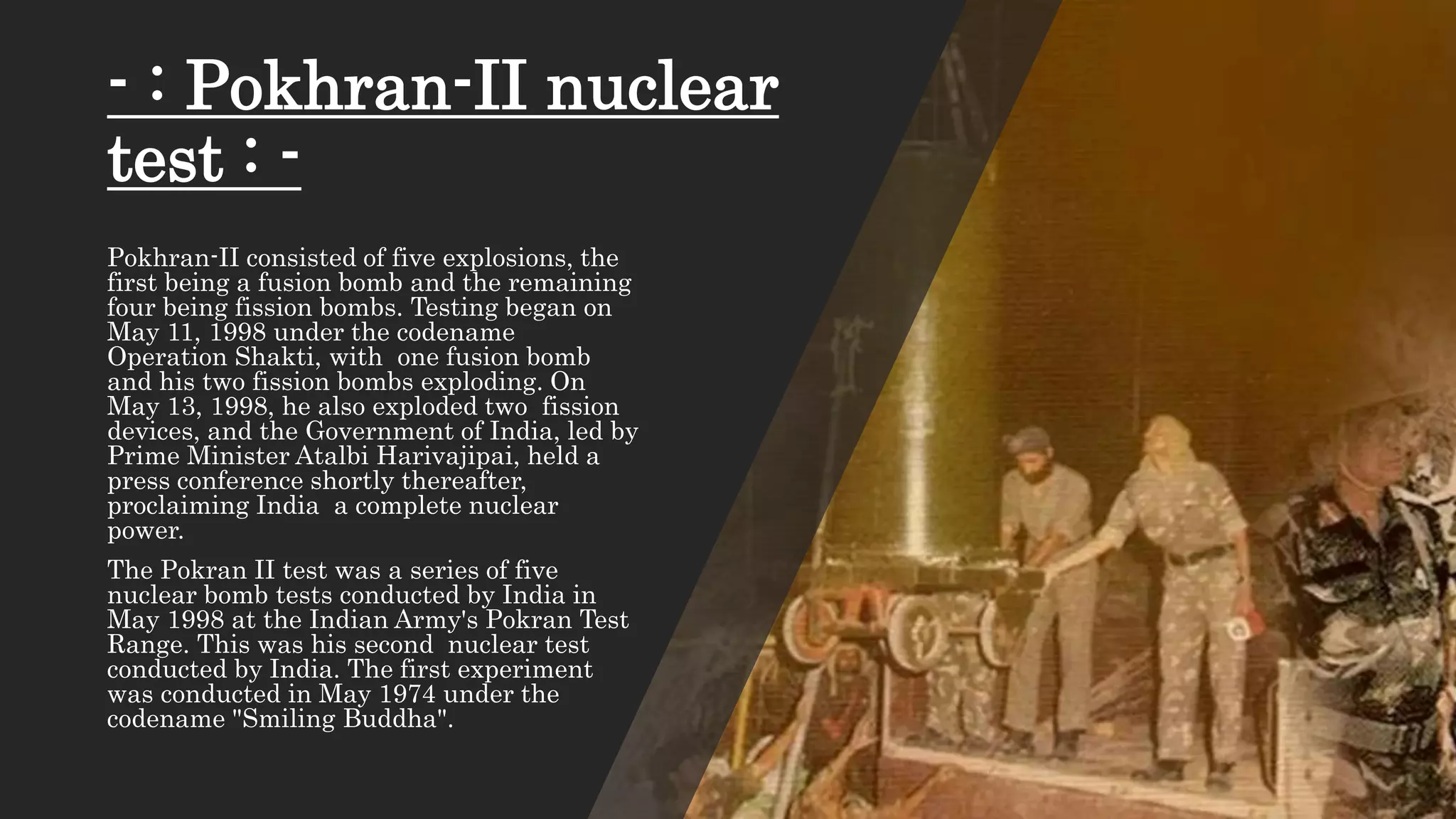
Pokhran-II consisted of five explosions, the
first being a fusion bomb and the remaining
four being fission bombs. Testing began on
May 11, 1998 under the codename
Operation Shakti, with one fusion bomb
and his two fission bombs exploding. On
May 13, 1998, he also exploded two fission
devices, and the Government of India, led by
Prime Minister Atalbi Harivajipai, held a
press conference shortly thereafter,
proclaiming India a complete nuclear
power.
The Pokran II test was a series of five
nuclear bomb tests conducted by India in
May 1998 at the Indian Army's Pokran Test
Range. This was his second nuclear test
conducted by India. The first experiment
was conducted in May 1974 under the
codename "Smiling Buddha".
- : Chandrayaan-1 & 2 :
-
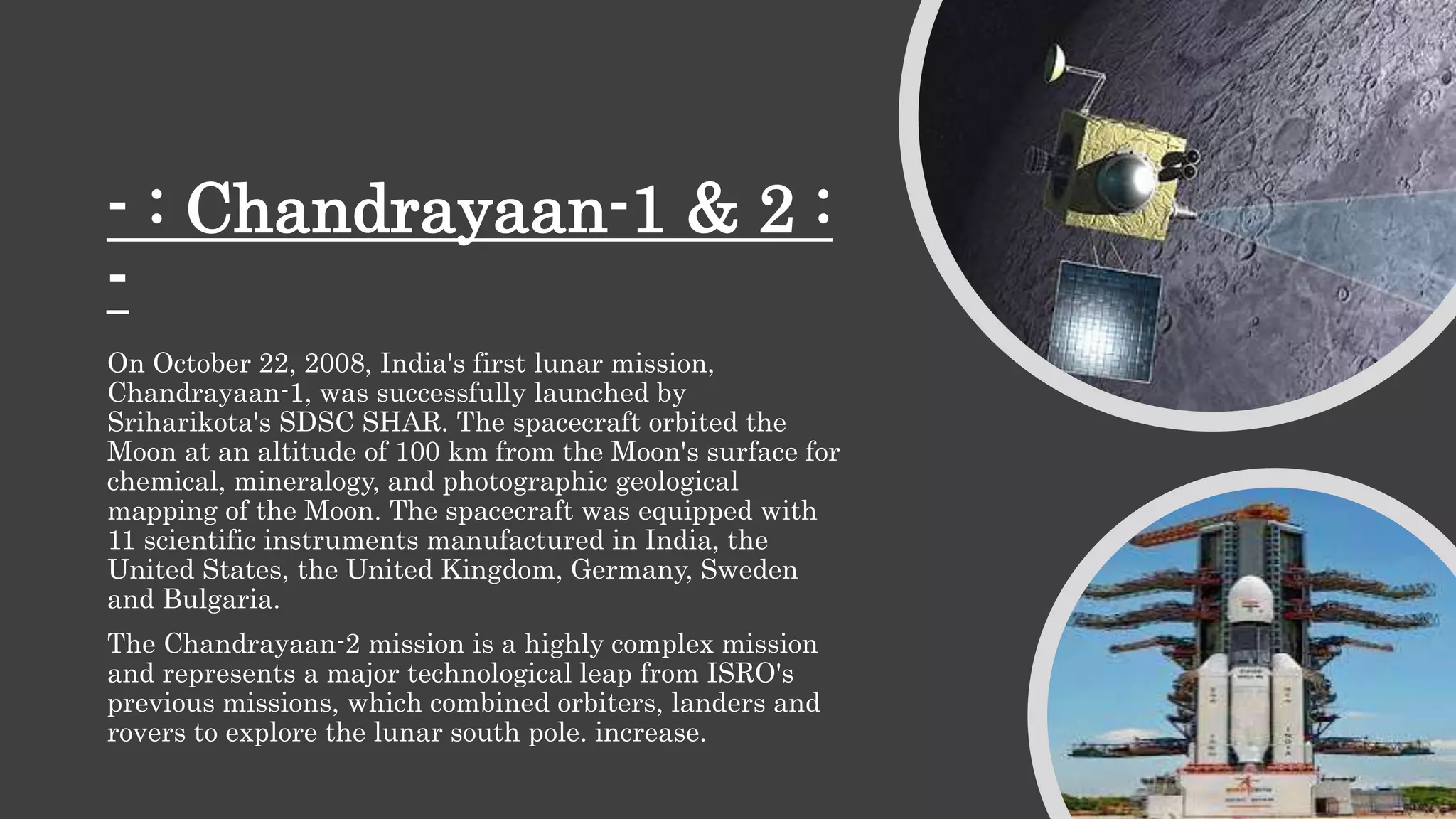
On October 22, 2008, India's first lunar mission,
Chandrayaan-1, was successfully launched by
Sriharikota's SDSC SHAR. The spacecraft orbited the
Moon at an altitude of 100 km from the Moon's surface for
chemical, mineralogy, and photographic geological
mapping of the Moon. The spacecraft was equipped with
11 scientific instruments manufactured in India, the
United States, the United Kingdom, Germany, Sweden
and Bulgaria.
The Chandrayaan-2 mission is a highly complex mission
and represents a major technological leap from ISRO's
previous missions, which combined orbiters, landers and
rovers to explore the lunar south pole. increase.
- :Gaganyaan: -
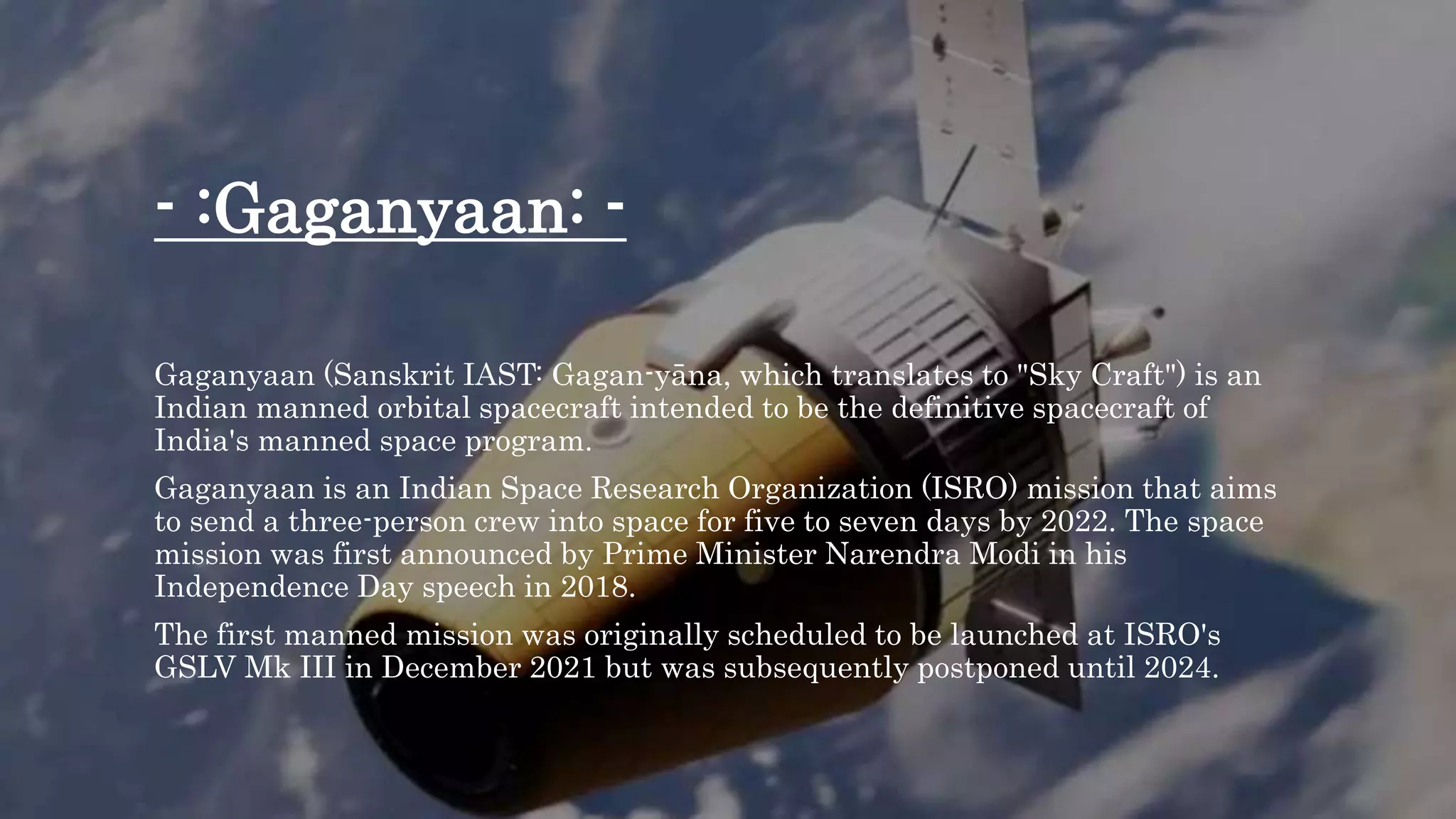
Gaganyaan (Sanskrit IAST: Gagan-yāna, which translates to "Sky Craft") is an
Indian manned orbital spacecraft intended to be the definitive spacecraft of
India's manned space program.
Gaganyaan is an Indian Space Research Organization (ISRO) mission that aims
to send a three-person crew into space for five to seven days by 2022. The space
mission was first announced by Prime Minister Narendra Modi in his
Independence Day speech in 2018.
The first manned mission was originally scheduled to be launched at ISRO's
GSLV Mk III in December 2021 but was subsequently postponed until 2024.
JAI HIND

Development in technology since independence in india

  • 1.
  • 2.
    CONTENT CREATORS OFTHIS PRESENTATION • Shreya Jha(Class & Section-VII A, Roll Number-33) • Shriosree Biswas(Class & Section-VII A, Roll Number-34) • Shrutam Sharma(Class & Section-VII A, Roll Number-35) • Sikta Naskar (Class & Section-VII A, Roll Number- 36) - :The Creators of this presentation: -
  • 3.
    - : Conditionof India after Independence : - • British India was split into India and Pakistan in 1947, creating two separate nations. The Dominion of Pakistan is now the Islamic Republic of Pakistan and the People's Republic of Bangladesh, and the Dominion of India was formerly the Republic of India. Cause: Indian Independence Act 1947 Date: 15th August 1947 Deaths: 200,000 to 2 million deaths, 10 million to 20 million displaced. Location: Indian Subcontinent
  • 4.
    - : India’s1st national laboratory : - One of the first national laboratories established by the Council of Scientific & Industrial Research was the National Physical Laboratory in India. On January 4, 1947, Jawaharlal Nehru laid the cornerstone of NPL. The laboratory's first Director was Dr K. S. Krishnan. On January 21, 1950, Sardar Vallabhbhai Patel, a former deputy prime minister, officially opened the laboratory's main building. On December 23, 1975, former Prime Minister Indira Gandhi opened the Laboratory's Silver Jubilee Celebration.
  • 5.
    - : Recognizingthe importance of nuclear energy : - With the opening of the Tarapur power plant in 1969, India became one of the first nations to use nuclear energy. Why nuclear energy is important for India? In India's energy scenario, nuclear energy must be significant from two perspectives. The first is that, in contrast to renewable energy sources, nuclear energy can supply base load electricity in bulk in a predictable manner (without uncertainty). Second, nuclear energy is a clean energy source, making it crucial for the development of a carbon-free economy.
  • 6.
    - :1st generation INSAT-1:- An Indian communications satellite called INSAT-1A was a component of the Indian National Satellite System. It was put into geostationary orbit in 1982 and operated at a longitude of 74° east. Less than six months into a seven-year mission, the satellite was abandoned in September 1982 due to a string of mishaps. It had a launch mass of 1,152 kg (2,540 lb.) and was in service for seven years. The spacecraft carried 12 C and 3 S- band transponders, powered by a single solar array.
  • 7.
    - : Aryabhata- 1975: - Aryabhata was India's first satellite, named after a famous Indian astronomer. It was launched on April 19, 1975, using a Kosmos- 3M rocket from Kapustin Yar, a Soviet missile launch and development site in the Astrakhan region. Built by ISRO and launched by the Soviet Union as part of her Interkosmos program in the Soviet Union, it provided friendly nations with access to space. The launch came from an agreement between India and the Soviet Union led by UR Rao and signed in 1972. This allowed the Soviet Union to use Indian ports for tracking and launching ships instead of launching various Indian satellites.
  • 8.
    - : Mangalyaan- 2013 : - The Mars Orbiter Mission (MOM) and Mangalian ("Mars Craft", Mangara "Mars" and Yana "Craft, Vehicle") are spacecraft that has been orbiting Mars since September 24, 2014. Published by the Indian Space Research Organization (ISRO) on November 5, 2013. This was India's first interplanetary mission and the fourth space agency to achieve the orbit of Mars, following Roscosmos, NASA, and the European Space Agency. This made India the first Asian country to reach the orbit of Mars and the first country in the world to reach it. The launch window was about 20 days from October 28, 2013.
  • 9.
    - : Fiveyears of planning in India :- From 1947 to 2017, the Indian economy was based on the concept of planning. This was achieved through a five-year plan developed, executed and supervised by the Planning Commission (1951-2014) and NITI Aayog (2015-2017). With the Prime Minister as ex-officio chairman, the Commission has an appointed Vice- Chairman who holds the position of Cabinet Minister. Montek Singh Ahluwalia is the last Vice-Chair of the Commission (resigned on May 26, 2014).
  • 10.
    - : GreenRevolution -1968 : - The Green Revolution began in the 1960s and was a time when Indian agriculture was transformed into a modern industrial system by introducing technologies such as B. Use of high yield varieties (HYV) seeds, mechanized Agricultural equipment, irrigation systems, pesticides and fertilizers. This period was largely led by Indian agronomist M.S. Swaminathan and initiated by Norman E. Borlaug, a larger Green Revolution that used agricultural research and technology to increase agricultural productivity in developing countries. It was part of the effort. During the term of Parliament Speaker Lal Bahadur Shastri, the Green Revolution began in India in 1968 and increased cereal production, especially in Punjab, Haryana and Uttar Pradesh. A key milestone in this effort was the development of high-yielding and rust-resistant wheat varieties.
  • 11.
    - : AGNI– India’s strategic missile : - India's missile arsenal serves many purposes in New Delhi’s defence strategy. Its ballistic missile weapons are a means of delivering nuclear weapons to deter both Pakistan and China. The latter requirement has prompted India to develop long-range missiles and diversify its launch platforms beyond mobile land- based missiles. To this end, India is developing ship-based and sub-launch ballistic missiles and has cooperated with Russia in developing cruise missiles. Over the years, India has successfully achieved a credible minimum nuclear deterrent. The Agni missile system is an integral part of India's second strike capability, especially against China.
  • 12.
    - : DNAFingerprinting : - A portion of everyone's DNA sequence is unique. There are probes that can find such unique DNA sequences and create individual DNA profiles. This can be visualized as a band by molecular biology techniques. In 1988, CSIR-CCMB scientists developed native probes for DNA fingerprinting and made this technology available to users. This makes India the third country in the world to develop its own DNA fingerprinting probe. In 1991, a DNA fingerprint was submitted in a paternity dispute before the Kerala High Court. For the first time in Indian judicial history, it was admitted as infallible evidence in court.
  • 13.
    - : Pokhran-IInuclear test : - Pokhran-II consisted of five explosions, the first being a fusion bomb and the remaining four being fission bombs. Testing began on May 11, 1998 under the codename Operation Shakti, with one fusion bomb and his two fission bombs exploding. On May 13, 1998, he also exploded two fission devices, and the Government of India, led by Prime Minister Atalbi Harivajipai, held a press conference shortly thereafter, proclaiming India a complete nuclear power. The Pokran II test was a series of five nuclear bomb tests conducted by India in May 1998 at the Indian Army's Pokran Test Range. This was his second nuclear test conducted by India. The first experiment was conducted in May 1974 under the codename "Smiling Buddha".
  • 14.
    - : Chandrayaan-1& 2 : - On October 22, 2008, India's first lunar mission, Chandrayaan-1, was successfully launched by Sriharikota's SDSC SHAR. The spacecraft orbited the Moon at an altitude of 100 km from the Moon's surface for chemical, mineralogy, and photographic geological mapping of the Moon. The spacecraft was equipped with 11 scientific instruments manufactured in India, the United States, the United Kingdom, Germany, Sweden and Bulgaria. The Chandrayaan-2 mission is a highly complex mission and represents a major technological leap from ISRO's previous missions, which combined orbiters, landers and rovers to explore the lunar south pole. increase.
  • 15.
    - :Gaganyaan: - Gaganyaan(Sanskrit IAST: Gagan-yāna, which translates to "Sky Craft") is an Indian manned orbital spacecraft intended to be the definitive spacecraft of India's manned space program. Gaganyaan is an Indian Space Research Organization (ISRO) mission that aims to send a three-person crew into space for five to seven days by 2022. The space mission was first announced by Prime Minister Narendra Modi in his Independence Day speech in 2018. The first manned mission was originally scheduled to be launched at ISRO's GSLV Mk III in December 2021 but was subsequently postponed until 2024.
  • 16.