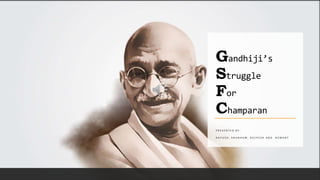
Gandhiji’s
Struggle
For
Champaran
P R E S E N T E D B Y -
A A Y U S H , S H U B H A M , D E E P E S H A N D H E M A N T
About the Author…
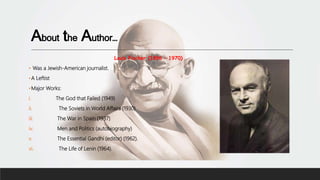
Louis Fischer (1896 – 1970)
• Was a Jewish-American journalist.
•A Leftist
•Major Works:
i. The God that Failed (1949)
ii. The Soviets in World Affairs (1930)
iii. The War in Spain (1937)
iv. Men and Politics (autobiography)
v. The Essential Gandhi (editor) (1962).
vi. The Life of Lenin (1964).
Indigo Plantation during British India
Main Issue In Champaran…
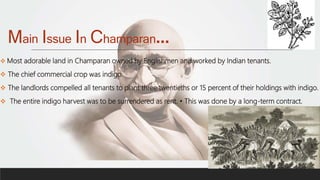
 Most adorable land in Champaran owned by Englishmen and worked by Indian tenants.
 The chief commercial crop was indigo.
 The landlords compelled all tenants to plant three twentieths or 15 percent of their holdings with indigo.
 The entire indigo harvest was to be surrendered as rent. • This was done by a long-term contract.
Indian National Congress - 1885
 Allan Octavian Hume -
founder
 it was the first modern
nationalist movement to
emerge in the British Empire
in Asia and Africa.
 After 1920, under the
leadership of Mahatma
Gandhi, Congress became
principal leader of the Indian
independence movement. •
influenced other anti-
nationalist movements in the
British Empire.
• Congress led India to
independence from
Great Britain
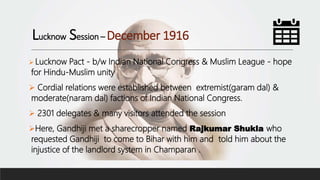
Lucknow Session – December 1916
 Lucknow Pact - b/w Indian National Congress & Muslim League - hope
for Hindu-Muslim unity
 Cordial relations were established between extremist(garam dal) &
moderate(naram dal) factions of Indian National Congress.
 2301 delegates & many visitors attended the session
Here, Gandhiji met a sharecropper named Rajkumar Shukla who
requested Gandhiji to come to Bihar with him and told him about the
injustice of the landlord system in Champaran .
Rajkumar Shukla
“Happiness is when what you think, what you say, and what you do are in harmony”
- M.K Gandhi
•Was the person who convinced Mr.
M.K. Gandhi to visit Champaran
village in Bihar.
•Was a villager who became famous
for his association with Mahatma
Gandhi during Champaran
Satyagrah and this struggle was a
turning point in India's fight for
independence.
Gandhiji And Rajkumar Shukla
 During the 31st session of the Congress in Lucknow in 1916, Gandhiji
met Raj Kumar Shukla, a representative of farmers from Champaran, who
requested him to come and see for himself the miseries of the indigo
ryots (tenant farmers) there..
Shukla followed Gandhi everywhere and begged him to fix a date to
come to his district
Gandhi was much impressed and fixed a schedule.
Gandhi and Shukla reached Patna to meet Dr. Rajendra prasad but he
was out of town.
Sabarmati Ashram- Ahemdabad
Rajendra Prasad (1884-1963)
o Lawyer by training
o A major leader from the region of
Bihar
o 1946 - Minister of Food and
Agriculture
o 1947 - President of the Constituent
Assembly of India, which prepared
the Constitution of India
o The first President of India, in office
from 1952 to 1962
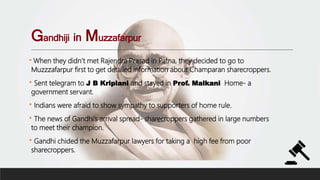
Gandhiji in Muzzafarpur
* When they didn’t met Rajendra Prasad in Patna, they decided to go to
Muzzzafarpur first to get detailed information about Champaran sharecroppers.
* Sent telegram to J B Kriplani and stayed in Prof. Malkani Home- a
government servant.
* Indians were afraid to show sympathy to supporters of home rule.
* The news of Gandhi’s arrival spread- sharecroppers gathered in large numbers
to meet their champion.
* Gandhi chided the Muzzafarpur lawyers for taking a high fee from poor
sharecroppers.
Jivatram Bhagwandas Kripalani- (1888-
1982)
1947 - President of INC
 A Gandhian socialist, environmentalist, mystic
and independence activist.
 The husband of Sucheta Kriplani
 Kripalani was a familiar figure, from the Non-
Cooperation Movements of the 1920s to the
Emergency of the 1970s one of Gandhi's most
ardent disciples
Later Developments
Ӝ Germany developed synthetic indigo.
Ӝ Landlords obtained agreements from the sharecroppers to pay them
compensation for being released from the 15 per cent arrangement.
Ӝ Many peasants signed & paid willingly; others who went to court were
threatened/intimidated by landlord's thugs.
Ӝ Peasants came to know of synthetic indigo & they demanded their
money back.
Ӝ Thus arose the conflict - Gandhiji arrived at this point
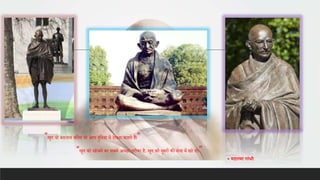
”खुद वो बदलाव बनिए जो आप दुनिया में देखिा चाहते हैं।”
“खुद को खोजिे का सबसे अच्छा तरीका है, खुद को दूसरों की सेवा में खो दो।”
- महात्मा गाांधी
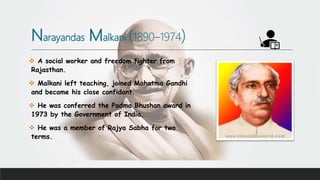
Narayandas Malkani (1890–1974)
 A social worker and freedom fighter from
Rajasthan.
 Malkani left teaching, joined Mahatma Gandhi
and became his close confidant.
 He was conferred the Padma Bhushan award in
1973 by the Government of India.
 He was a member of Rajya Sabha for two
terms.
Gandhiji’s Approach
• Gandhiji had a very systematic approach to the problem- he along with
his lawyer friends gathered as much information about the problem in
Champaran.
• Gathered evidence & documents to support their case - everything was
documented(written down) -convinced the British officials - who finally set
up an official commission of enquiry.
• Commission awarded 25% refund to the peasants.
Eradicating fear & Infusing
Confidence
• Gandhi explained that the amount of the refund was less
important than the fact that the landlords had been obliged to
surrender part of the money and, with it, part of their prestige.
• Now the peasant saw that he had rights and defenders.
• He learned courage. He gained confidence
Indigo Movement

Indigo Movement

  • 1.
    Gandhiji’s Struggle For Champaran P R ES E N T E D B Y - A A Y U S H , S H U B H A M , D E E P E S H A N D H E M A N T
  • 2.
    About the Author… LouisFischer (1896 – 1970) • Was a Jewish-American journalist. •A Leftist •Major Works: i. The God that Failed (1949) ii. The Soviets in World Affairs (1930) iii. The War in Spain (1937) iv. Men and Politics (autobiography) v. The Essential Gandhi (editor) (1962). vi. The Life of Lenin (1964).
  • 3.
  • 4.
    Main Issue InChamparan…  Most adorable land in Champaran owned by Englishmen and worked by Indian tenants.  The chief commercial crop was indigo.  The landlords compelled all tenants to plant three twentieths or 15 percent of their holdings with indigo.  The entire indigo harvest was to be surrendered as rent. • This was done by a long-term contract.
  • 5.
    Indian National Congress- 1885  Allan Octavian Hume - founder  it was the first modern nationalist movement to emerge in the British Empire in Asia and Africa.  After 1920, under the leadership of Mahatma Gandhi, Congress became principal leader of the Indian independence movement. • influenced other anti- nationalist movements in the British Empire. • Congress led India to independence from Great Britain
  • 6.
    Lucknow Session –December 1916  Lucknow Pact - b/w Indian National Congress & Muslim League - hope for Hindu-Muslim unity  Cordial relations were established between extremist(garam dal) & moderate(naram dal) factions of Indian National Congress.  2301 delegates & many visitors attended the session Here, Gandhiji met a sharecropper named Rajkumar Shukla who requested Gandhiji to come to Bihar with him and told him about the injustice of the landlord system in Champaran .
  • 7.
    Rajkumar Shukla “Happiness iswhen what you think, what you say, and what you do are in harmony” - M.K Gandhi •Was the person who convinced Mr. M.K. Gandhi to visit Champaran village in Bihar. •Was a villager who became famous for his association with Mahatma Gandhi during Champaran Satyagrah and this struggle was a turning point in India's fight for independence.
  • 8.
    Gandhiji And RajkumarShukla  During the 31st session of the Congress in Lucknow in 1916, Gandhiji met Raj Kumar Shukla, a representative of farmers from Champaran, who requested him to come and see for himself the miseries of the indigo ryots (tenant farmers) there.. Shukla followed Gandhi everywhere and begged him to fix a date to come to his district Gandhi was much impressed and fixed a schedule. Gandhi and Shukla reached Patna to meet Dr. Rajendra prasad but he was out of town.
  • 9.
  • 10.
    Rajendra Prasad (1884-1963) oLawyer by training o A major leader from the region of Bihar o 1946 - Minister of Food and Agriculture o 1947 - President of the Constituent Assembly of India, which prepared the Constitution of India o The first President of India, in office from 1952 to 1962
  • 11.
    Gandhiji in Muzzafarpur *When they didn’t met Rajendra Prasad in Patna, they decided to go to Muzzzafarpur first to get detailed information about Champaran sharecroppers. * Sent telegram to J B Kriplani and stayed in Prof. Malkani Home- a government servant. * Indians were afraid to show sympathy to supporters of home rule. * The news of Gandhi’s arrival spread- sharecroppers gathered in large numbers to meet their champion. * Gandhi chided the Muzzafarpur lawyers for taking a high fee from poor sharecroppers.
  • 12.
    Jivatram Bhagwandas Kripalani-(1888- 1982) 1947 - President of INC  A Gandhian socialist, environmentalist, mystic and independence activist.  The husband of Sucheta Kriplani  Kripalani was a familiar figure, from the Non- Cooperation Movements of the 1920s to the Emergency of the 1970s one of Gandhi's most ardent disciples
  • 13.
    Later Developments Ӝ Germanydeveloped synthetic indigo. Ӝ Landlords obtained agreements from the sharecroppers to pay them compensation for being released from the 15 per cent arrangement. Ӝ Many peasants signed & paid willingly; others who went to court were threatened/intimidated by landlord's thugs. Ӝ Peasants came to know of synthetic indigo & they demanded their money back. Ӝ Thus arose the conflict - Gandhiji arrived at this point
  • 14.
    ”खुद वो बदलावबनिए जो आप दुनिया में देखिा चाहते हैं।” “खुद को खोजिे का सबसे अच्छा तरीका है, खुद को दूसरों की सेवा में खो दो।” - महात्मा गाांधी
  • 15.
    Narayandas Malkani (1890–1974) A social worker and freedom fighter from Rajasthan.  Malkani left teaching, joined Mahatma Gandhi and became his close confidant.  He was conferred the Padma Bhushan award in 1973 by the Government of India.  He was a member of Rajya Sabha for two terms.
  • 16.
    Gandhiji’s Approach • Gandhijihad a very systematic approach to the problem- he along with his lawyer friends gathered as much information about the problem in Champaran. • Gathered evidence & documents to support their case - everything was documented(written down) -convinced the British officials - who finally set up an official commission of enquiry. • Commission awarded 25% refund to the peasants.
  • 17.
    Eradicating fear &Infusing Confidence • Gandhi explained that the amount of the refund was less important than the fact that the landlords had been obliged to surrender part of the money and, with it, part of their prestige. • Now the peasant saw that he had rights and defenders. • He learned courage. He gained confidence