Strategic Management Developing Mission, Vision and Long-Term Objectives
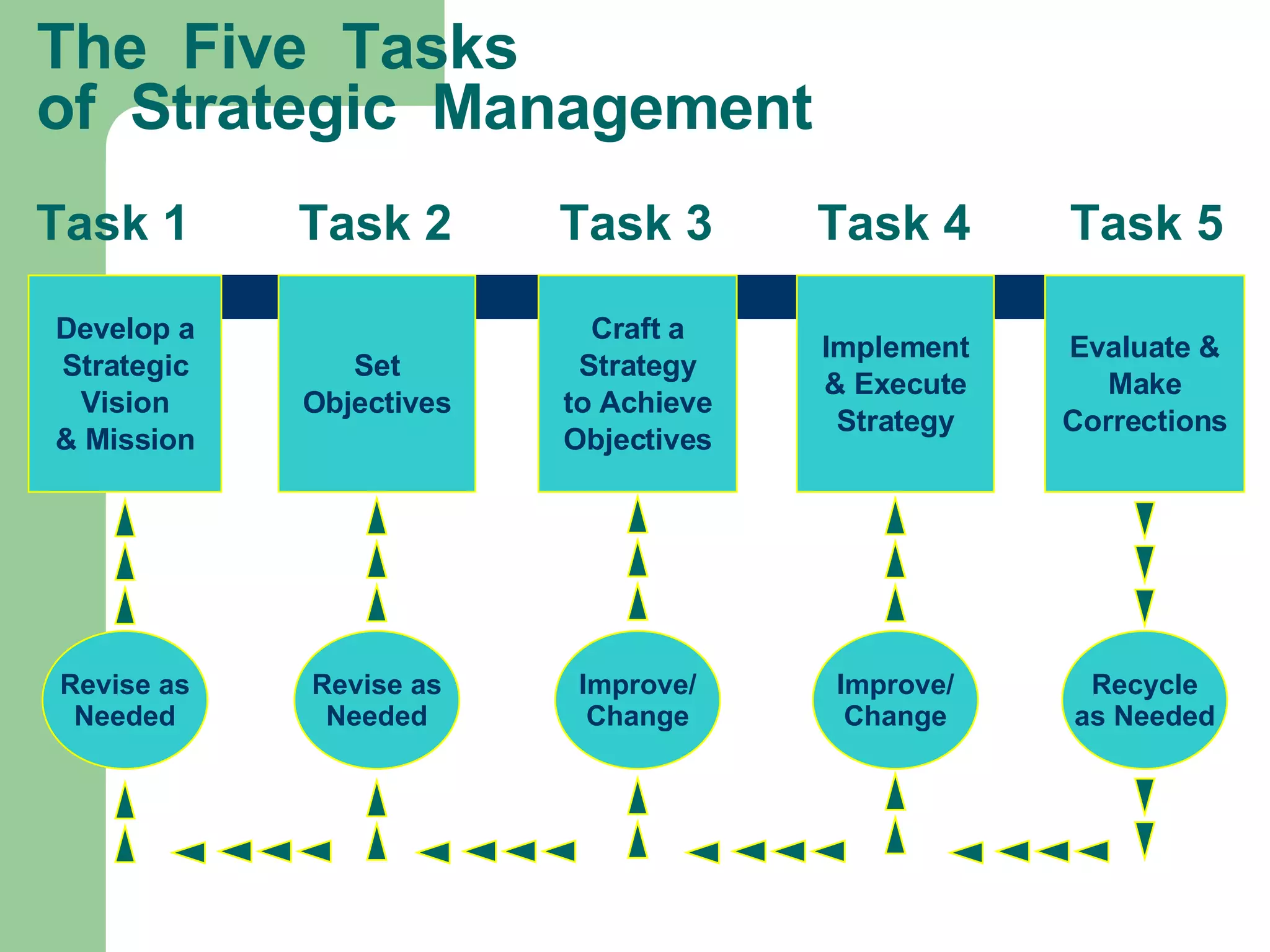
The  Five  Tasks of  Strategic  Management Craft a Strategy to Achieve Objectives Set Objectives Develop a Strategic Vision & Mission Implement & Execute Strategy Evaluate & Make Corrections Improve/ Change Revise as Needed Revise as Needed Improve/ Change Recycle as Needed Task 1 Task 2 Task 3 Task 4 Task 5
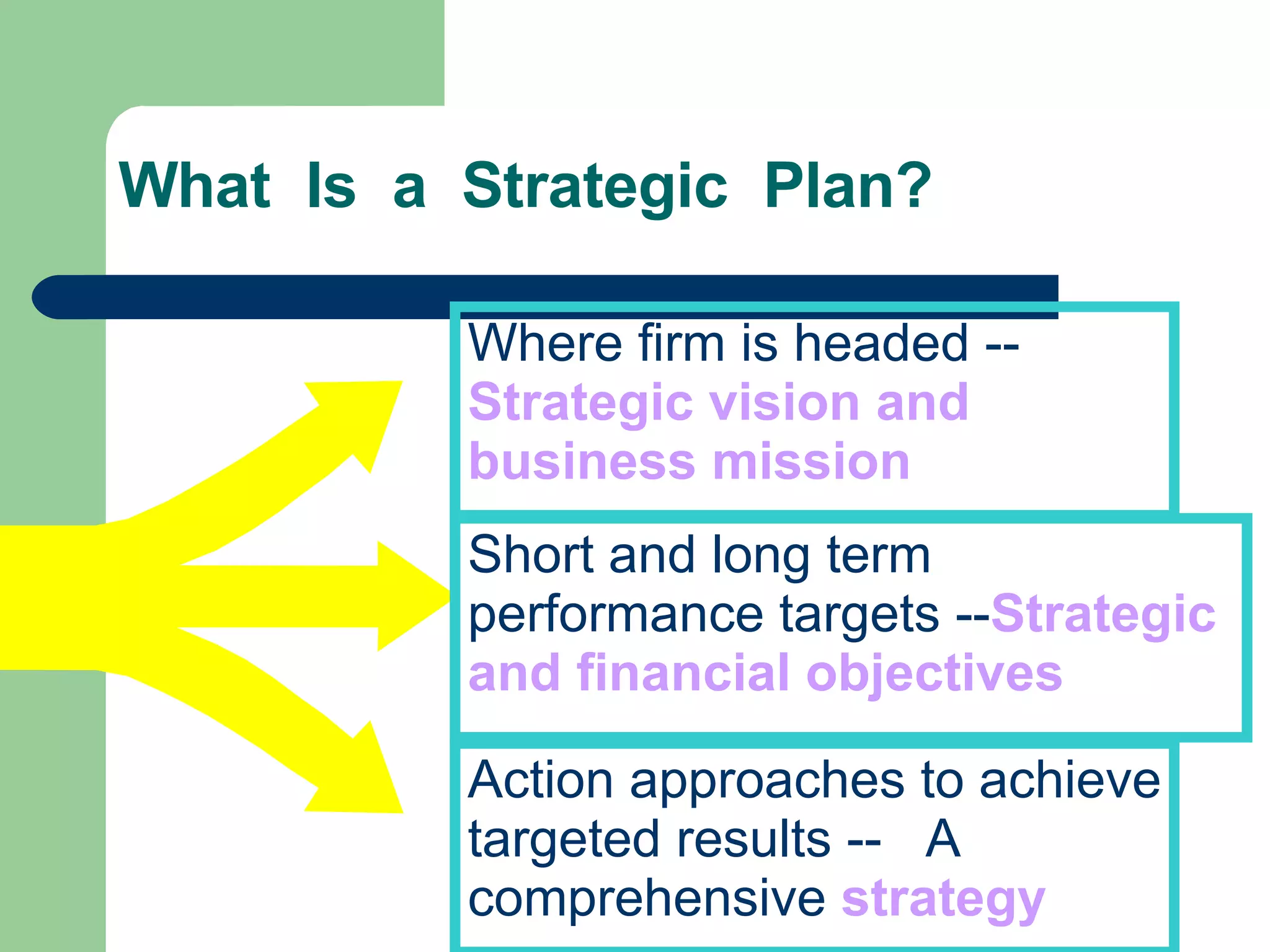
What  Is  a  Strategic  Plan? Where firm is headed --  Strategic vision and  business mission Action approaches to achieve targeted results --  A comprehensive  strategy  Short and long term performance targets -- Strategic  and financial objectives
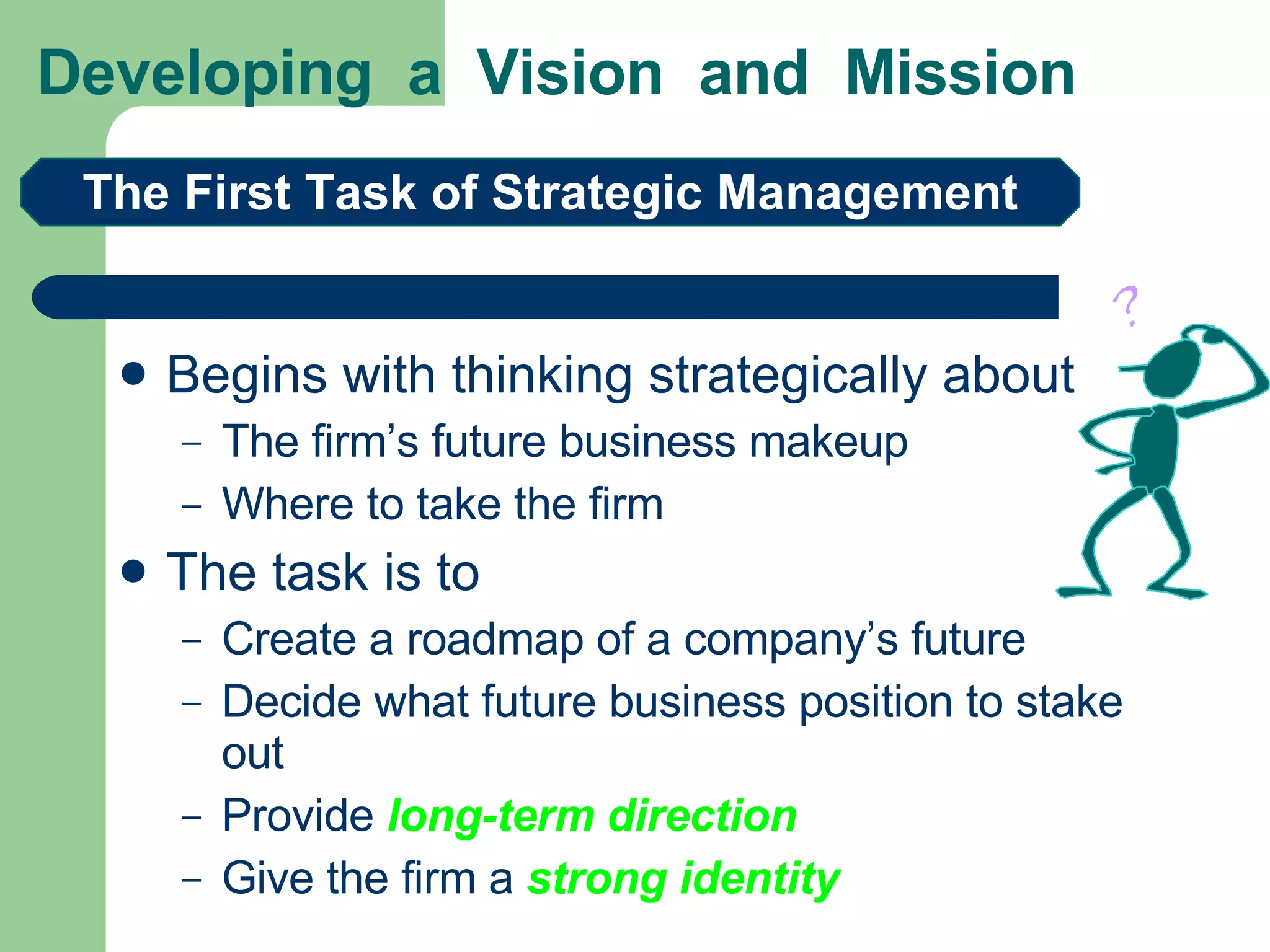
Developing  a  Vision  and  Mission Begins with thinking strategically about The firm’s future business makeup  Where to take the firm  The task is to Create a roadmap of a company’s future Decide what future business position to stake out Provide  long-term direction Give the firm a  strong identity The First Task of Strategic Management
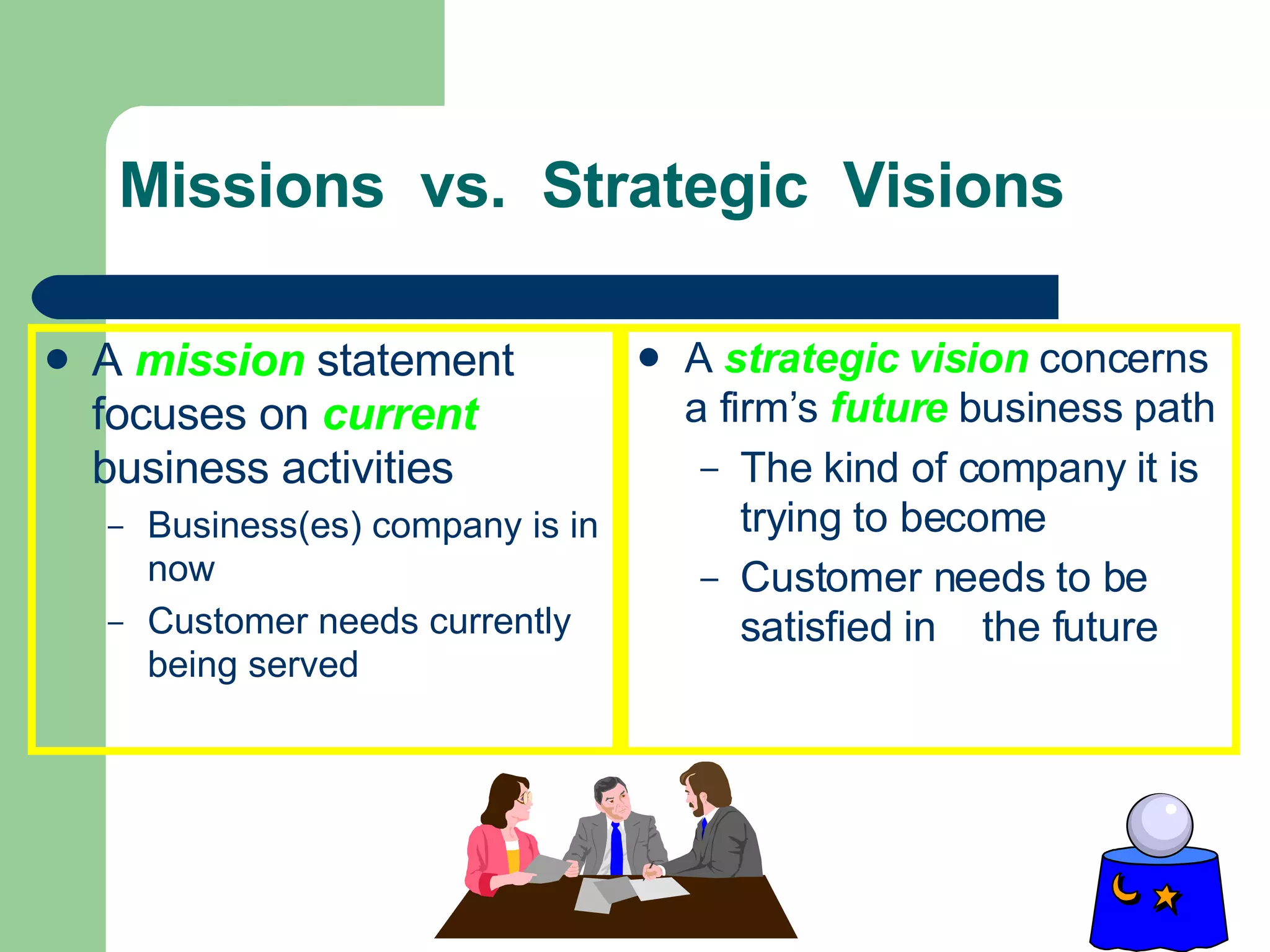
Missions  vs.  Strategic  Visions A  mission   statement focuses on  current  business activities Business(es) company is in now Customer needs currently being served A   strategic vision  concerns a firm’s   future  business path   The kind of company it is trying to become Customer needs to be satisfied in  the future
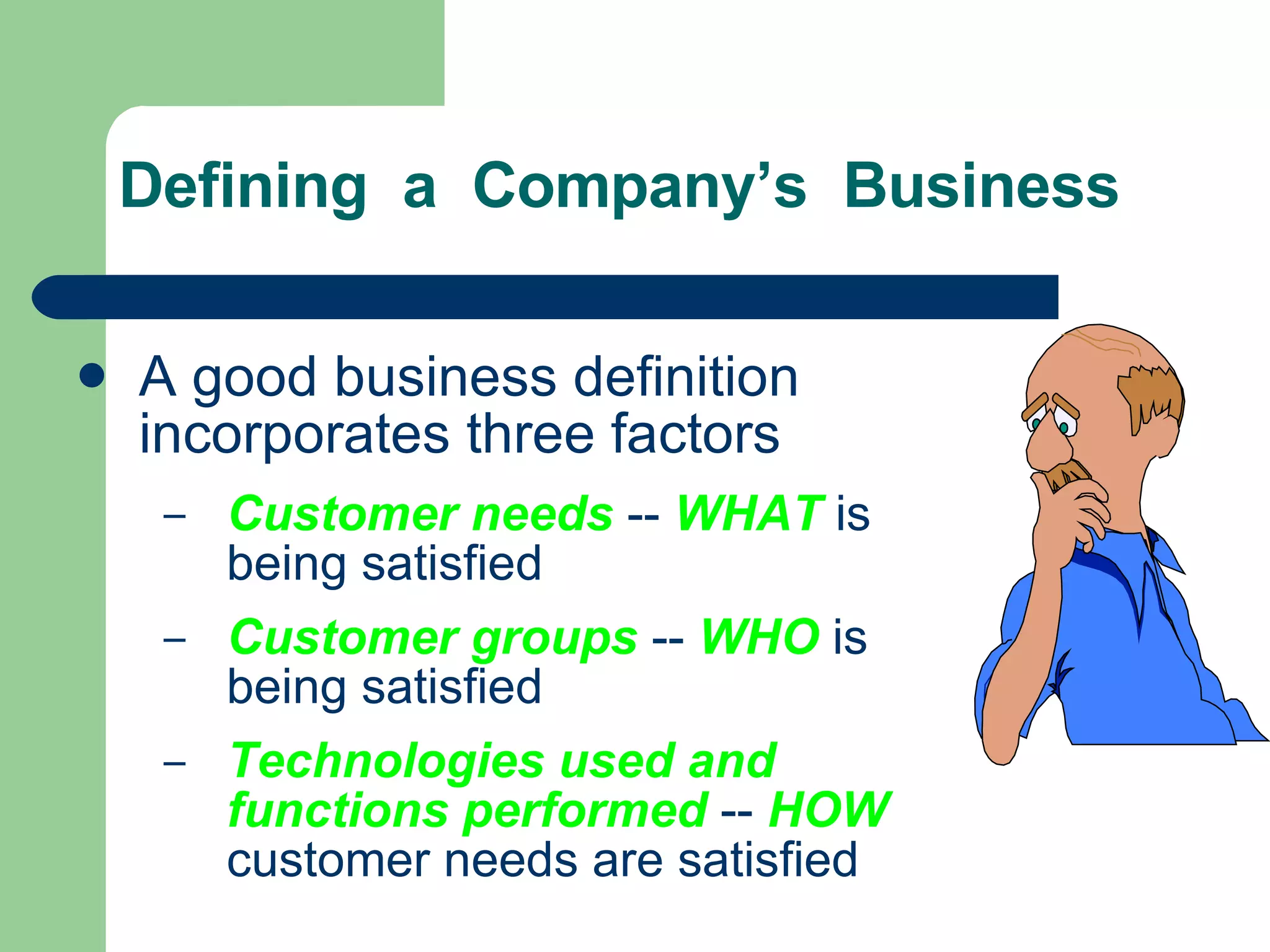
Defining  a  Company’s  Business A good business definition incorporates three factors Customer needs   --  WHAT   is being satisfied Customer groups   --  WHO  is  being satisfied Technologies used and functions performed   --   HOW  customer needs are satisfied
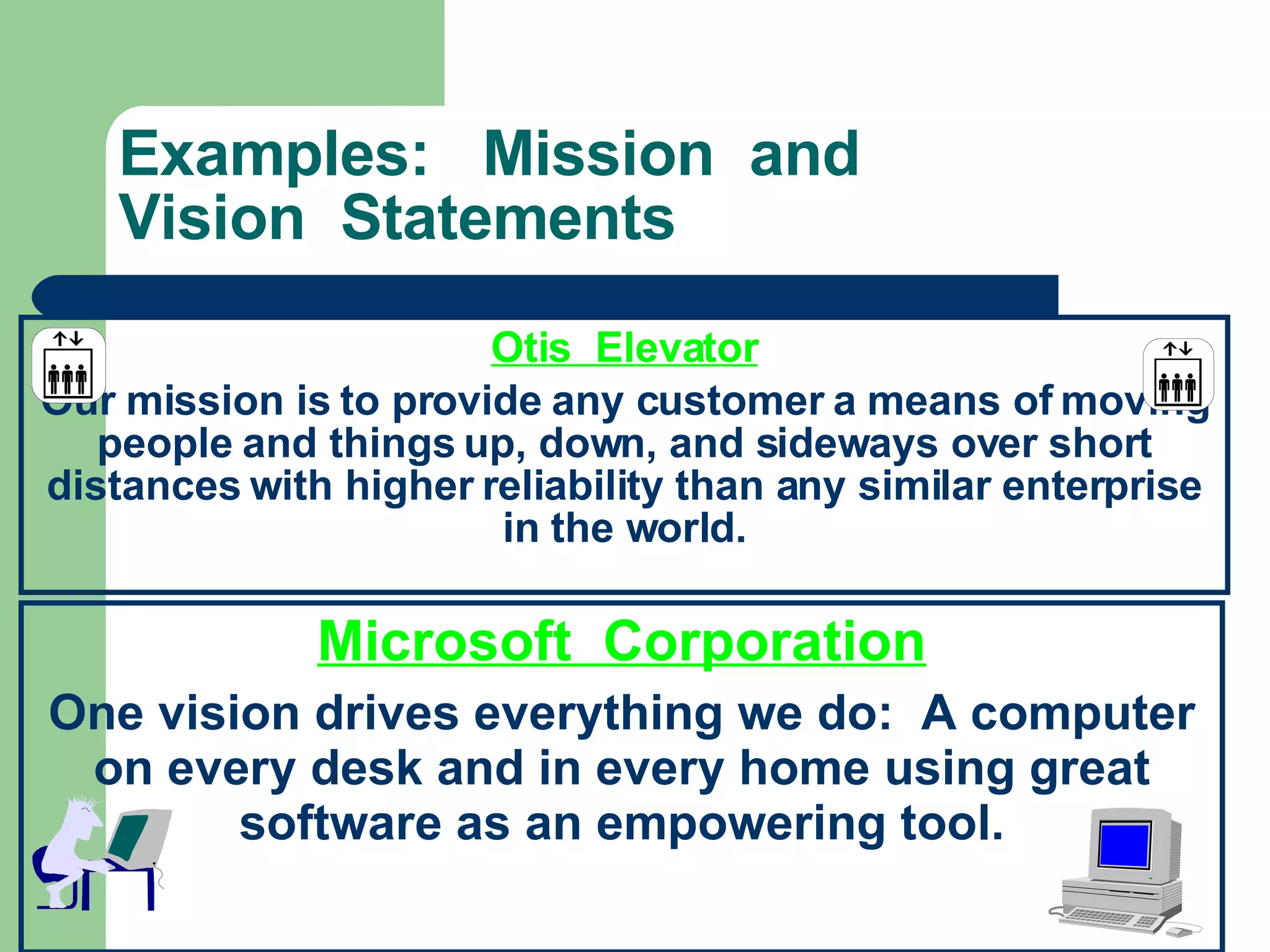
Examples:  Mission  and Vision  Statements Otis  Elevator Our mission is to provide any customer a means of moving people and things up, down, and sideways over short distances with higher reliability than any similar enterprise in the world. Microsoft  Corporation One vision drives everything we do:  A computer on every desk and in every home using great software as an empowering tool.
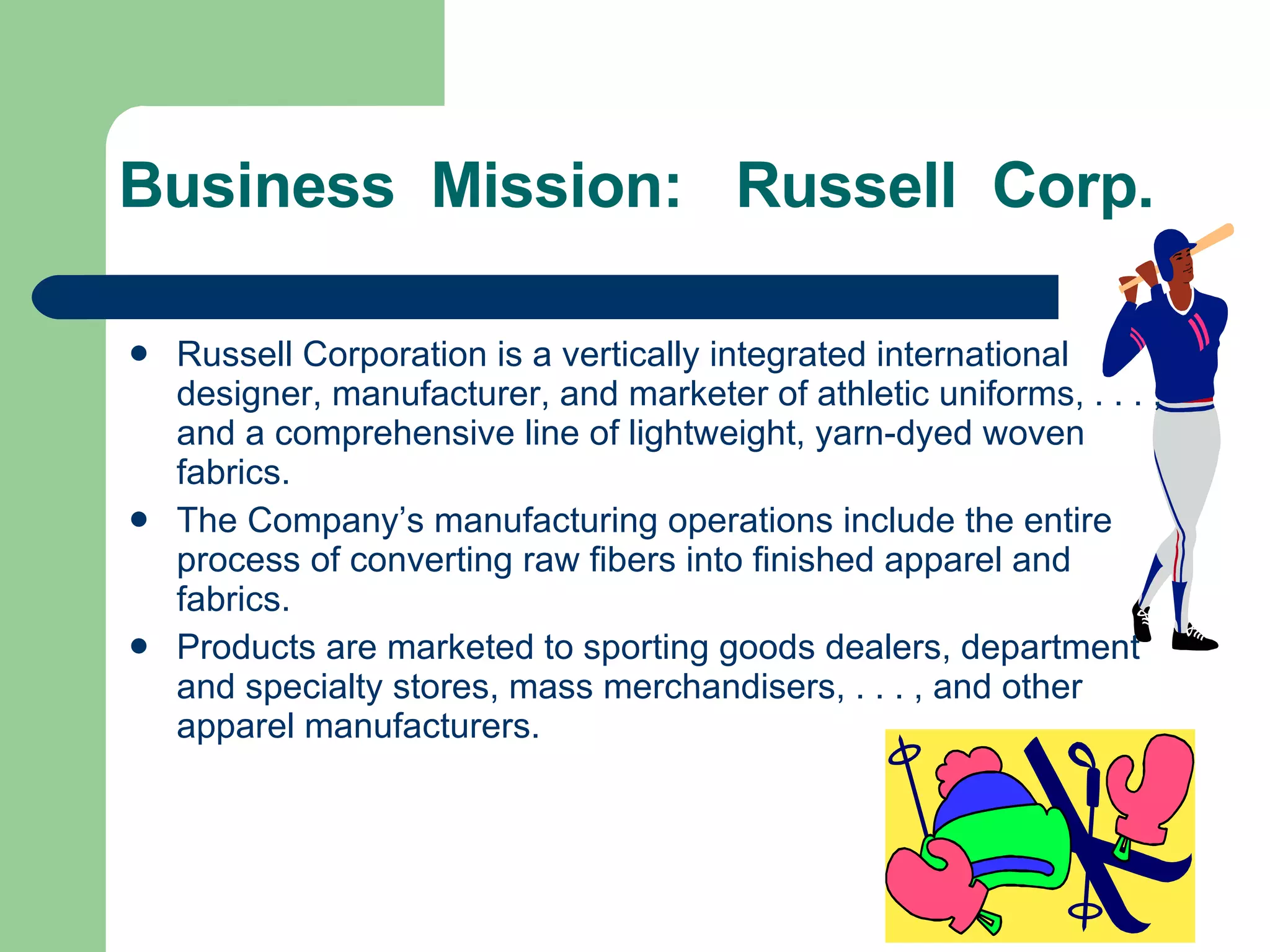
Business  Mission:  Russell  Corp. Russell Corporation is a vertically integrated international designer, manufacturer, and marketer of athletic uniforms, . . . , and a comprehensive line of lightweight, yarn-dyed woven fabrics. The Company’s manufacturing operations include the entire process of converting raw fibers into finished apparel and fabrics. Products are marketed to sporting goods dealers, department and specialty stores, mass merchandisers, . . . , and other apparel manufacturers.
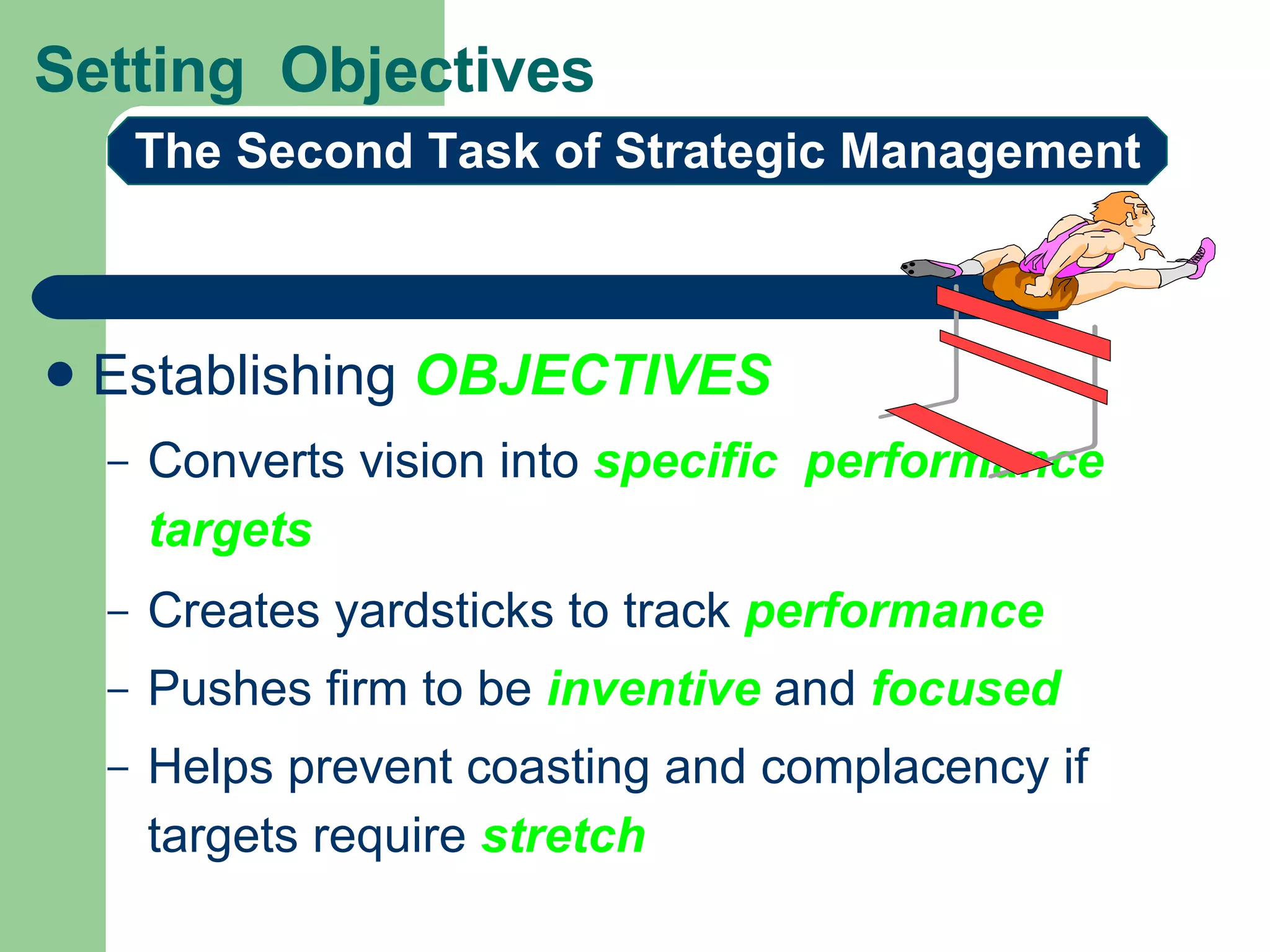
Setting  Objectives Establishing  OBJECTIVES Converts vision into  specific  performance targets Creates yardsticks to track  performance Pushes firm to be  inventive   and   focused Helps prevent coasting and complacency if targets require  stretch The Second Task of Strategic Management
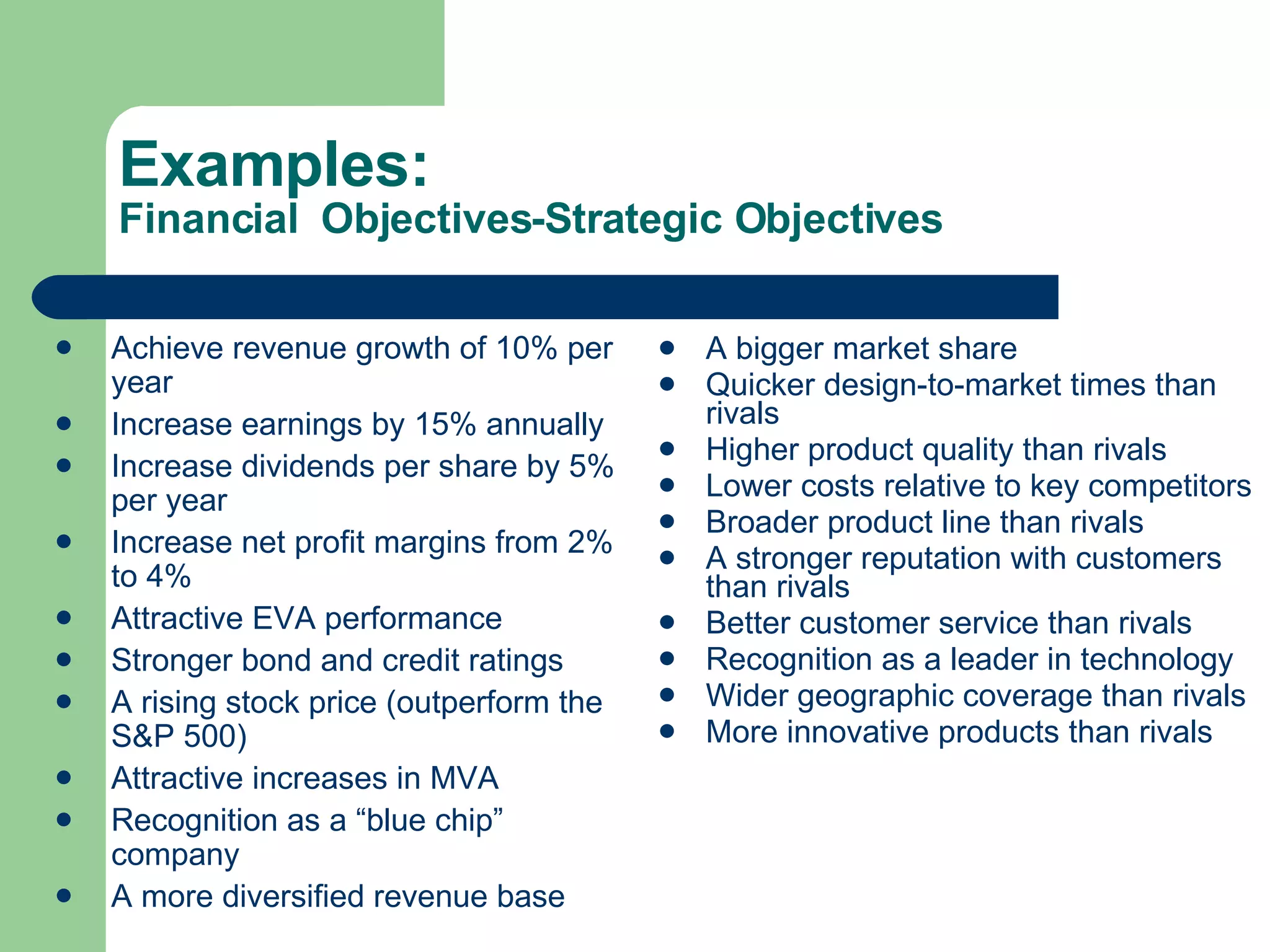
Examples:  Financial  Objectives-Strategic Objectives Achieve revenue growth of 10% per year Increase earnings by 15% annually Increase dividends per share by 5% per year Increase net profit margins from 2% to 4% Attractive EVA performance Stronger bond and credit ratings A rising stock price (outperform the S&P 500) Attractive increases in MVA Recognition as a “blue chip” company A more diversified revenue base A bigger market share Quicker design-to-market times than rivals Higher product quality than rivals Lower costs relative to key competitors Broader product line than rivals A stronger reputation with customers than rivals Better customer service than rivals Recognition as a leader in technology Wider geographic coverage than rivals More innovative products than rivals

Developing Mission Vision And Lt Os

  • 1.
    Strategic Management DevelopingMission, Vision and Long-Term Objectives
  • 2.
    The Five Tasks of Strategic Management Craft a Strategy to Achieve Objectives Set Objectives Develop a Strategic Vision & Mission Implement & Execute Strategy Evaluate & Make Corrections Improve/ Change Revise as Needed Revise as Needed Improve/ Change Recycle as Needed Task 1 Task 2 Task 3 Task 4 Task 5
  • 3.
    What Is a Strategic Plan? Where firm is headed -- Strategic vision and business mission Action approaches to achieve targeted results -- A comprehensive strategy Short and long term performance targets -- Strategic and financial objectives
  • 4.
    Developing a Vision and Mission Begins with thinking strategically about The firm’s future business makeup Where to take the firm The task is to Create a roadmap of a company’s future Decide what future business position to stake out Provide long-term direction Give the firm a strong identity The First Task of Strategic Management
  • 5.
    Missions vs. Strategic Visions A mission statement focuses on current business activities Business(es) company is in now Customer needs currently being served A strategic vision concerns a firm’s future business path The kind of company it is trying to become Customer needs to be satisfied in the future
  • 6.
    Defining a Company’s Business A good business definition incorporates three factors Customer needs -- WHAT is being satisfied Customer groups -- WHO is being satisfied Technologies used and functions performed -- HOW customer needs are satisfied
  • 7.
    Examples: Mission and Vision Statements Otis Elevator Our mission is to provide any customer a means of moving people and things up, down, and sideways over short distances with higher reliability than any similar enterprise in the world. Microsoft Corporation One vision drives everything we do: A computer on every desk and in every home using great software as an empowering tool.
  • 8.
    Business Mission: Russell Corp. Russell Corporation is a vertically integrated international designer, manufacturer, and marketer of athletic uniforms, . . . , and a comprehensive line of lightweight, yarn-dyed woven fabrics. The Company’s manufacturing operations include the entire process of converting raw fibers into finished apparel and fabrics. Products are marketed to sporting goods dealers, department and specialty stores, mass merchandisers, . . . , and other apparel manufacturers.
  • 9.
    Setting ObjectivesEstablishing OBJECTIVES Converts vision into specific performance targets Creates yardsticks to track performance Pushes firm to be inventive and focused Helps prevent coasting and complacency if targets require stretch The Second Task of Strategic Management
  • 10.
    Examples: Financial Objectives-Strategic Objectives Achieve revenue growth of 10% per year Increase earnings by 15% annually Increase dividends per share by 5% per year Increase net profit margins from 2% to 4% Attractive EVA performance Stronger bond and credit ratings A rising stock price (outperform the S&P 500) Attractive increases in MVA Recognition as a “blue chip” company A more diversified revenue base A bigger market share Quicker design-to-market times than rivals Higher product quality than rivals Lower costs relative to key competitors Broader product line than rivals A stronger reputation with customers than rivals Better customer service than rivals Recognition as a leader in technology Wider geographic coverage than rivals More innovative products than rivals