Developing
Instructional
Materials
PRESENTED: MICHAEL MERRIWEATHER
Background
Watch
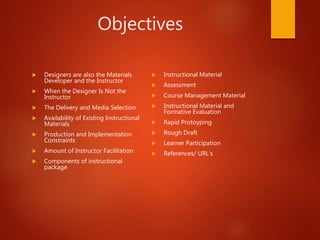
Objectives
 Designers are also the Materials
Developer and the Instructor
 When the Designer Is Not the
Instructor
 The Delivery and Media Selection
 Availability of Existing Instructional
Materials
 Production and Implementation
Constraints
 Amount of Instructor Facilitation
 Components of instructional
package
 Instructional Material
 Assessment
 Course Management Material
 Instructional Material and
Formative Evaluation
 Rapid Protoyping
 Rough Draft
 Learner Participation
 References/ URL’s
Designers are also the Materials Developer
and the Instructor
 The person who designs the instruction also develops materials and
teaches students.
 They take on different teaching responsibilities based on the types
of materials prescribed in the instructional strategy.
 Can be delivered independently of an instructor
When the Designer Is Not the Instructor
 In a smaller ID setting:
 one individual may be
responsible for more than
one function,
 whereas in a larger setting,
 multiple individuals may be
assigned to each function.
 In ID teams, it is common
for the manager to be a
senior-level instructional
designer and for the
instructional designer also
to be a materials
developer,
The Delivery and Media Selection
Three factors often cause compromise in
selections of media and delivery system:
1. Availability of existing instructional
materials,
2. Production and implementation constraints
3. The amount of facilitation provided by the
instructor during instruction.
Availability of Existing Instructional
Materials
 Existing materials are an attractive alternative to going through the
development and production process.
 Oftentimes substituted for planned materials on a scale ranging
from a single motivational sequence in one lesson to an entire
course or curriculum.
Production and Implementation Constraints
Novice designers who have not worked with complex media often:
1. Severely underestimate the costs of hiring commercial production
2. Equally underestimate the expertise
3. Infrastructure
4. Time requirements for in-house production.
Amount of Instructor
Facilitation
 Instructor facilitation is a particular feature of classroom instruction
favored by students and instructors alike, whether meeting face-to-
face or at a distance.
 Different levels of classroom facilitation are provided by the
designer when he or she is also the instructor.
Components of instructional
package
 Instructional Material
 Assessment
 Course Management Material
Instructional Material
Refers to any preexisting materials being incorporated,
as well as to those materials developed specifically for
the objectives.
Assessment
 All instructional materials should be accompanied by
objective tests or by product or performance
assessments
Course Management Material
Course management support for the instructor consist of:
 Automated class listing
 Student tracking
 Online testing
 Project monitoring
 Grade book
 Variety of communication
 Messaging mechanisms.
Instructional Material and Formative
Evaluation
 Rough Draft
 Rapid Prototyping
Rapid Protoyping
Click on the link below to watch
Rough Draft
The purpose for doing a rough draft of materials is to
create a quick low-cost version of your design.
Learner Participation
learner participation component is also:
 formatted for web-based instruction
 enabling learners to study independently. Learners
can print the pages containing the script,
 locating and marking all instances of behavior directly
on the printed pages.
References/ URL’s
 Carey, Lou, and James O. Carey. "Developing
Assessment Instruments."The Systematic Design of
Instruction. By Walter Dick. 8th ed. N.p.: n.p., n.d. 282-
251. Print
Change Agent, Reflective Practitioner,
Lifelong Learner
 Reflective Practitioner: Understand their disciplines and how
learners learn. This understanding enables them to make
judgments about the knowledge level of students and to make
decisions about representing the content in ways that facilitate
the students’ intellectual growth
 Change Agent: Collaborate with other members of the
professional community and take responsibility for school,
curricular, and instructional decisions which help create student-
centered learning communities.
 Lifelong Learner: Continue to expand their repertoire of
knowledge and experience, update their skills, evaluate and
enhance their dispositions, and further their ability to refine and
adapt their decision making process to more diverse and
continuously changing educational settings.
Presenter Contact
Michael Merriwether
Email: Mr.Mmerriweather@gmail.com
Cell #: 404-775-9222

Developing instructional materials

  • 1.
  • 2.
  • 3.
    Objectives  Designers arealso the Materials Developer and the Instructor  When the Designer Is Not the Instructor  The Delivery and Media Selection  Availability of Existing Instructional Materials  Production and Implementation Constraints  Amount of Instructor Facilitation  Components of instructional package  Instructional Material  Assessment  Course Management Material  Instructional Material and Formative Evaluation  Rapid Protoyping  Rough Draft  Learner Participation  References/ URL’s
  • 4.
    Designers are alsothe Materials Developer and the Instructor  The person who designs the instruction also develops materials and teaches students.  They take on different teaching responsibilities based on the types of materials prescribed in the instructional strategy.  Can be delivered independently of an instructor
  • 5.
    When the DesignerIs Not the Instructor  In a smaller ID setting:  one individual may be responsible for more than one function,  whereas in a larger setting,  multiple individuals may be assigned to each function.  In ID teams, it is common for the manager to be a senior-level instructional designer and for the instructional designer also to be a materials developer,
  • 6.
    The Delivery andMedia Selection Three factors often cause compromise in selections of media and delivery system: 1. Availability of existing instructional materials, 2. Production and implementation constraints 3. The amount of facilitation provided by the instructor during instruction.
  • 7.
    Availability of ExistingInstructional Materials  Existing materials are an attractive alternative to going through the development and production process.  Oftentimes substituted for planned materials on a scale ranging from a single motivational sequence in one lesson to an entire course or curriculum.
  • 8.
    Production and ImplementationConstraints Novice designers who have not worked with complex media often: 1. Severely underestimate the costs of hiring commercial production 2. Equally underestimate the expertise 3. Infrastructure 4. Time requirements for in-house production.
  • 9.
    Amount of Instructor Facilitation Instructor facilitation is a particular feature of classroom instruction favored by students and instructors alike, whether meeting face-to- face or at a distance.  Different levels of classroom facilitation are provided by the designer when he or she is also the instructor.
  • 10.
    Components of instructional package Instructional Material  Assessment  Course Management Material
  • 11.
    Instructional Material Refers toany preexisting materials being incorporated, as well as to those materials developed specifically for the objectives.
  • 12.
    Assessment  All instructionalmaterials should be accompanied by objective tests or by product or performance assessments
  • 13.
    Course Management Material Coursemanagement support for the instructor consist of:  Automated class listing  Student tracking  Online testing  Project monitoring  Grade book  Variety of communication  Messaging mechanisms.
  • 14.
    Instructional Material andFormative Evaluation  Rough Draft  Rapid Prototyping
  • 15.
    Rapid Protoyping Click onthe link below to watch
  • 16.
    Rough Draft The purposefor doing a rough draft of materials is to create a quick low-cost version of your design.
  • 17.
    Learner Participation learner participationcomponent is also:  formatted for web-based instruction  enabling learners to study independently. Learners can print the pages containing the script,  locating and marking all instances of behavior directly on the printed pages.
  • 18.
    References/ URL’s  Carey,Lou, and James O. Carey. "Developing Assessment Instruments."The Systematic Design of Instruction. By Walter Dick. 8th ed. N.p.: n.p., n.d. 282- 251. Print
  • 19.
    Change Agent, ReflectivePractitioner, Lifelong Learner  Reflective Practitioner: Understand their disciplines and how learners learn. This understanding enables them to make judgments about the knowledge level of students and to make decisions about representing the content in ways that facilitate the students’ intellectual growth  Change Agent: Collaborate with other members of the professional community and take responsibility for school, curricular, and instructional decisions which help create student- centered learning communities.  Lifelong Learner: Continue to expand their repertoire of knowledge and experience, update their skills, evaluate and enhance their dispositions, and further their ability to refine and adapt their decision making process to more diverse and continuously changing educational settings.
  • 20.
    Presenter Contact Michael Merriwether Email:Mr.Mmerriweather@gmail.com Cell #: 404-775-9222