DEVELOPING CRITICAL THINKING
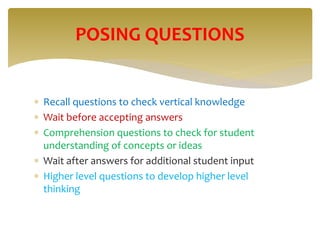
 Recall questions to check vertical knowledge
 Wait before accepting answers
 Comprehension questions to check for student
understanding of concepts or ideas
 Wait after answers for additional student input
 Higher level questions to develop higher level
thinking
POSING QUESTIONS
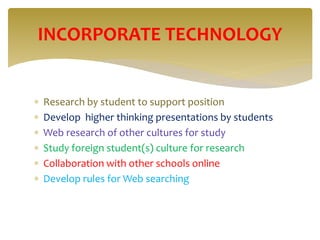
 Research by student to support position
 Develop higher thinking presentations by students
 Web research of other cultures for study
 Study foreign student(s) culture for research
 Collaboration with other schools online
 Develop rules for Web searching
INCORPORATE TECHNOLOGY
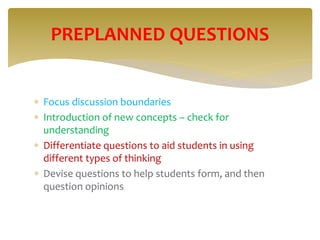
 Focus discussion boundaries
 Introduction of new concepts – check for
understanding
 Differentiate questions to aid students in using
different types of thinking
 Devise questions to help students form, and then
question opinions
PREPLANNED QUESTIONS
 Learning to work in groups – high level answers to
posed problems
 No way – Best way; support your group’s solution
 Intra-group cooperation – group dynamic skills
 Inter-group competition – teamwork and pressure
 Higher order thinking problems to stimulate group
 Learn to combine differing talents to succeed
GROUP PROBLEM SOLVING
 Have groups develop a sample problem
 Brainstorm with groups to develop questions to guide
problem solution
 discuss importance of activating previous knowledge
 Show process of analyzing information to reach solution
 Model research techniques with technology
 Discuss potential obstacles and ways to cross them
 Present solution for higher order discussion by groups
MODELING CRITICAL THINKING
DEVELOPING CREATIVITY
 Show students how to be Creative
 Build student confidence
 Be creative yourself
 Make it FUN
 Mistakes are OKAY
 Try different materials
 Allow students to discover
MODELING
 Integrate subjects to stimulate creativity
 Allow time after questions for higher thinking
 Allow time after answer for others to engage
 Help students discover vertical knowledge
 Develop questions to help students self-assess
 Student devised questions for discussion
 Build to higher level questions for higher thinking
DISCUSSION QUESTIONS
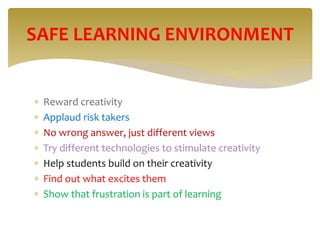
 Reward creativity
 Applaud risk takers
 No wrong answer, just different views
 Try different technologies to stimulate creativity
 Help students build on their creativity
 Find out what excites them
 Show that frustration is part of learning
SAFE LEARNING ENVIRONMENT
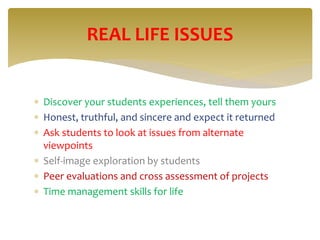
 Discover your students experiences, tell them yours
 Honest, truthful, and sincere and expect it returned
 Ask students to look at issues from alternate
viewpoints
 Self-image exploration by students
 Peer evaluations and cross assessment of projects
 Time management skills for life
REAL LIFE ISSUES
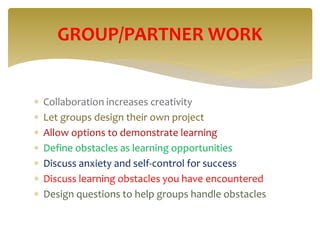
 Collaboration increases creativity
 Let groups design their own project
 Allow options to demonstrate learning
 Define obstacles as learning opportunities
 Discuss anxiety and self-control for success
 Discuss learning obstacles you have encountered
 Design questions to help groups handle obstacles
GROUP/PARTNER WORK

Developing creative thinking and creativity

  • 1.
  • 2.
     Recall questionsto check vertical knowledge  Wait before accepting answers  Comprehension questions to check for student understanding of concepts or ideas  Wait after answers for additional student input  Higher level questions to develop higher level thinking POSING QUESTIONS
  • 3.
     Research bystudent to support position  Develop higher thinking presentations by students  Web research of other cultures for study  Study foreign student(s) culture for research  Collaboration with other schools online  Develop rules for Web searching INCORPORATE TECHNOLOGY
  • 4.
     Focus discussionboundaries  Introduction of new concepts – check for understanding  Differentiate questions to aid students in using different types of thinking  Devise questions to help students form, and then question opinions PREPLANNED QUESTIONS
  • 5.
     Learning towork in groups – high level answers to posed problems  No way – Best way; support your group’s solution  Intra-group cooperation – group dynamic skills  Inter-group competition – teamwork and pressure  Higher order thinking problems to stimulate group  Learn to combine differing talents to succeed GROUP PROBLEM SOLVING
  • 6.
     Have groupsdevelop a sample problem  Brainstorm with groups to develop questions to guide problem solution  discuss importance of activating previous knowledge  Show process of analyzing information to reach solution  Model research techniques with technology  Discuss potential obstacles and ways to cross them  Present solution for higher order discussion by groups MODELING CRITICAL THINKING
  • 7.
  • 8.
     Show studentshow to be Creative  Build student confidence  Be creative yourself  Make it FUN  Mistakes are OKAY  Try different materials  Allow students to discover MODELING
  • 9.
     Integrate subjectsto stimulate creativity  Allow time after questions for higher thinking  Allow time after answer for others to engage  Help students discover vertical knowledge  Develop questions to help students self-assess  Student devised questions for discussion  Build to higher level questions for higher thinking DISCUSSION QUESTIONS
  • 10.
     Reward creativity Applaud risk takers  No wrong answer, just different views  Try different technologies to stimulate creativity  Help students build on their creativity  Find out what excites them  Show that frustration is part of learning SAFE LEARNING ENVIRONMENT
  • 11.
     Discover yourstudents experiences, tell them yours  Honest, truthful, and sincere and expect it returned  Ask students to look at issues from alternate viewpoints  Self-image exploration by students  Peer evaluations and cross assessment of projects  Time management skills for life REAL LIFE ISSUES
  • 12.
     Collaboration increasescreativity  Let groups design their own project  Allow options to demonstrate learning  Define obstacles as learning opportunities  Discuss anxiety and self-control for success  Discuss learning obstacles you have encountered  Design questions to help groups handle obstacles GROUP/PARTNER WORK