DEVELOPING CRITICAL THINKING
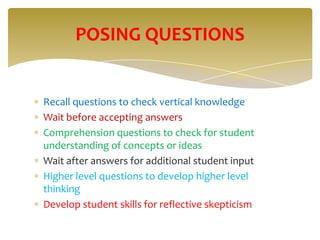
POSING QUESTIONS


Recall questions to check vertical knowledge
Wait before accepting answers
Comprehension questions to check for student
understanding of concepts or ideas
Wait after answers for additional student input
Higher level questions to develop higher level
thinking
Develop student skills for reflective skepticism
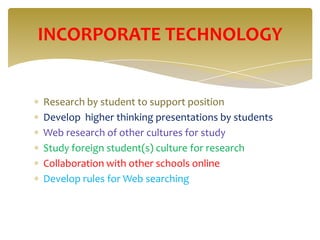
INCORPORATE TECHNOLOGY


Research by student to support position
Develop higher thinking presentations by students
Web research of other cultures for study
Study foreign student(s) culture for research
Collaboration with other schools online
Develop rules for Web searching
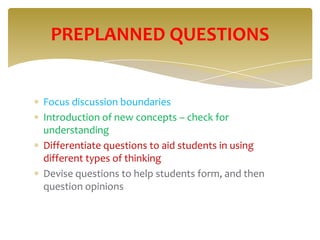
PREPLANNED QUESTIONS


Focus discussion boundaries
Introduction of new concepts – check for
understanding
Differentiate questions to aid students in using
different types of thinking
Devise questions to help students form, and then
question opinions
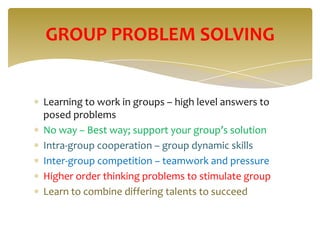
GROUP PROBLEM SOLVING


Learning to work in groups – high level answers to
posed problems
No way – Best way; support your group’s solution
Intra-group cooperation – group dynamic skills
Inter-group competition – teamwork and pressure
Higher order thinking problems to stimulate group
Learn to combine differing talents to succeed
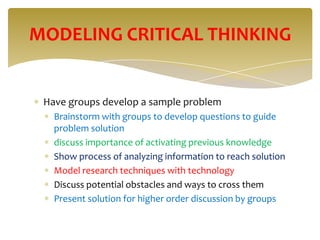
MODELING CRITICAL THINKING


 Have groups develop a sample problem
   Brainstorm with groups to develop questions to guide
   problem solution
   discuss importance of activating previous knowledge
   Show process of analyzing information to reach solution
   Model research techniques with technology
   Discuss potential obstacles and ways to cross them
   Present solution for higher order discussion by groups
DEVELOPING CREATIVITY
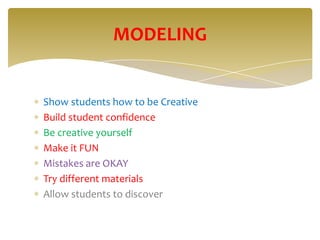
MODELING


Show students how to be Creative
Build student confidence
Be creative yourself
Make it FUN
Mistakes are OKAY
Try different materials
Allow students to discover
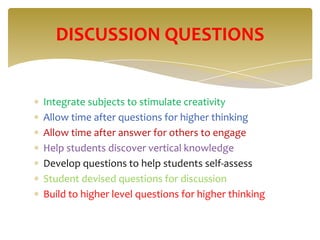
DISCUSSION QUESTIONS


Integrate subjects to stimulate creativity
Allow time after questions for higher thinking
Allow time after answer for others to engage
Help students discover vertical knowledge
Develop questions to help students self-assess
Student devised questions for discussion
Build to higher level questions for higher thinking
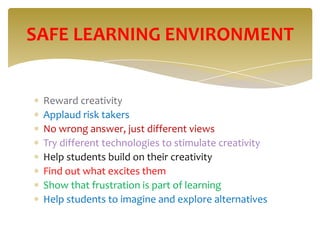
SAFE LEARNING ENVIRONMENT


 Reward creativity
 Applaud risk takers
 No wrong answer, just different views
 Try different technologies to stimulate creativity
 Help students build on their creativity
 Find out what excites them
 Show that frustration is part of learning
 Help students to imagine and explore alternatives
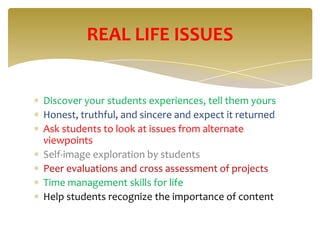
REAL LIFE ISSUES


Discover your students experiences, tell them yours
Honest, truthful, and sincere and expect it returned
Ask students to look at issues from alternate
viewpoints
Self-image exploration by students
Peer evaluations and cross assessment of projects
Time management skills for life
Help students recognize the importance of content
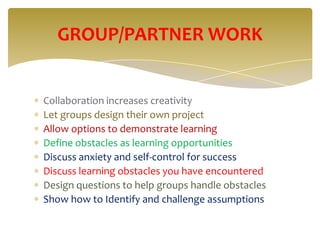
GROUP/PARTNER WORK


Collaboration increases creativity
Let groups design their own project
Allow options to demonstrate learning
Define obstacles as learning opportunities
Discuss anxiety and self-control for success
Discuss learning obstacles you have encountered
Design questions to help groups handle obstacles
Show how to Identify and challenge assumptions

Developing creative thinking and creativity

  • 1.
  • 2.
    POSING QUESTIONS Recall questionsto check vertical knowledge Wait before accepting answers Comprehension questions to check for student understanding of concepts or ideas Wait after answers for additional student input Higher level questions to develop higher level thinking Develop student skills for reflective skepticism
  • 3.
    INCORPORATE TECHNOLOGY Research bystudent to support position Develop higher thinking presentations by students Web research of other cultures for study Study foreign student(s) culture for research Collaboration with other schools online Develop rules for Web searching
  • 4.
    PREPLANNED QUESTIONS Focus discussionboundaries Introduction of new concepts – check for understanding Differentiate questions to aid students in using different types of thinking Devise questions to help students form, and then question opinions
  • 5.
    GROUP PROBLEM SOLVING Learningto work in groups – high level answers to posed problems No way – Best way; support your group’s solution Intra-group cooperation – group dynamic skills Inter-group competition – teamwork and pressure Higher order thinking problems to stimulate group Learn to combine differing talents to succeed
  • 6.
    MODELING CRITICAL THINKING Have groups develop a sample problem Brainstorm with groups to develop questions to guide problem solution discuss importance of activating previous knowledge Show process of analyzing information to reach solution Model research techniques with technology Discuss potential obstacles and ways to cross them Present solution for higher order discussion by groups
  • 7.
  • 8.
    MODELING Show students howto be Creative Build student confidence Be creative yourself Make it FUN Mistakes are OKAY Try different materials Allow students to discover
  • 9.
    DISCUSSION QUESTIONS Integrate subjectsto stimulate creativity Allow time after questions for higher thinking Allow time after answer for others to engage Help students discover vertical knowledge Develop questions to help students self-assess Student devised questions for discussion Build to higher level questions for higher thinking
  • 10.
    SAFE LEARNING ENVIRONMENT Reward creativity Applaud risk takers No wrong answer, just different views Try different technologies to stimulate creativity Help students build on their creativity Find out what excites them Show that frustration is part of learning Help students to imagine and explore alternatives
  • 11.
    REAL LIFE ISSUES Discoveryour students experiences, tell them yours Honest, truthful, and sincere and expect it returned Ask students to look at issues from alternate viewpoints Self-image exploration by students Peer evaluations and cross assessment of projects Time management skills for life Help students recognize the importance of content
  • 12.
    GROUP/PARTNER WORK Collaboration increasescreativity Let groups design their own project Allow options to demonstrate learning Define obstacles as learning opportunities Discuss anxiety and self-control for success Discuss learning obstacles you have encountered Design questions to help groups handle obstacles Show how to Identify and challenge assumptions