 Don’t Sweat It: 10
 Easy Ways to Bring
 Creativity and
 Critical Thinking
 Into Your
 Classroom Today!
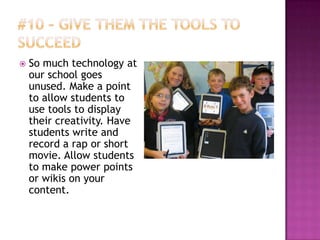
   So much technology at
    our school goes
    unused. Make a point
    to allow students to
    use tools to display
    their creativity. Have
    students write and
    record a rap or short
    movie. Allow students
    to make power points
    or wikis on your
    content.
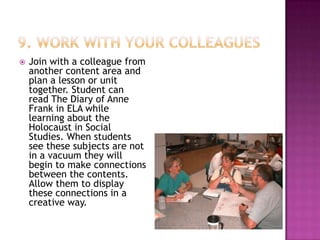
   Join with a colleague from
    another content area and
    plan a lesson or unit
    together. Student can
    read The Diary of Anne
    Frank in ELA while
    learning about the
    Holocaust in Social
    Studies. When students
    see these subjects are not
    in a vacuum they will
    begin to make connections
    between the contents.
    Allow them to display
    these connections in a
    creative way.
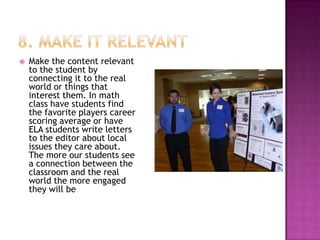
   Make the content relevant
    to the student by
    connecting it to the real
    world or things that
    interest them. In math
    class have students find
    the favorite players career
    scoring average or have
    ELA students write letters
    to the editor about local
    issues they care about.
    The more our students see
    a connection between the
    classroom and the real
    world the more engaged
    they will be
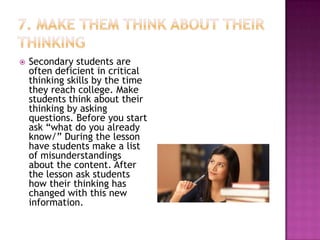
   Secondary students are
    often deficient in critical
    thinking skills by the time
    they reach college. Make
    students think about their
    thinking by asking
    questions. Before you start
    ask “what do you already
    know/” During the lesson
    have students make a list
    of misunderstandings
    about the content. After
    the lesson ask students
    how their thinking has
    changed with this new
    information.
 Have students
 compare and contrast
 two people, ideas,
 place, or characters.
 Ask, “how are they
 alike? How are they
 different?” By making
 students enumerate
 how things are similar
 or different they are
 developing critical
 thinking by evaluating
 both variables.
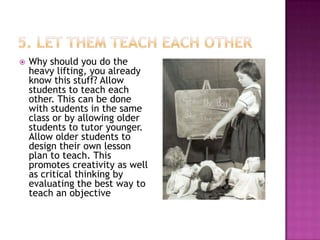
   Why should you do the
    heavy lifting, you already
    know this stuff? Allow
    students to teach each
    other. This can be done
    with students in the same
    class or by allowing older
    students to tutor younger.
    Allow older students to
    design their own lesson
    plan to teach. This
    promotes creativity as well
    as critical thinking by
    evaluating the best way to
    teach an objective
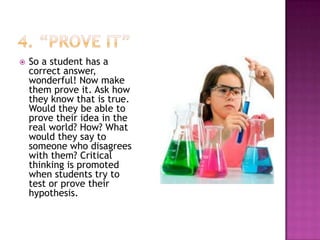
   So a student has a
    correct answer,
    wonderful! Now make
    them prove it. Ask how
    they know that is true.
    Would they be able to
    prove their idea in the
    real world? How? What
    would they say to
    someone who disagrees
    with them? Critical
    thinking is promoted
    when students try to
    test or prove their
    hypothesis.
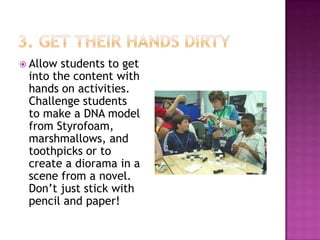
 Allow students to get
 into the content with
 hands on activities.
 Challenge students
 to make a DNA model
 from Styrofoam,
 marshmallows, and
 toothpicks or to
 create a diorama in a
 scene from a novel.
 Don’t just stick with
 pencil and paper!
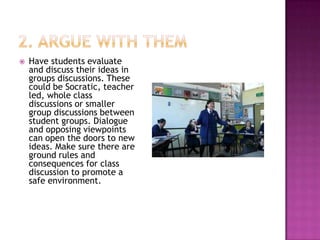
   Have students evaluate
    and discuss their ideas in
    groups discussions. These
    could be Socratic, teacher
    led, whole class
    discussions or smaller
    group discussions between
    student groups. Dialogue
    and opposing viewpoints
    can open the doors to new
    ideas. Make sure there are
    ground rules and
    consequences for class
    discussion to promote a
    safe environment.
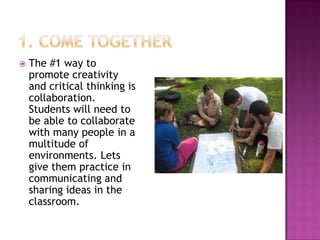
   The #1 way to
    promote creativity
    and critical thinking is
    collaboration.
    Students will need to
    be able to collaborate
    with many people in a
    multitude of
    environments. Lets
    give them practice in
    communicating and
    sharing ideas in the
    classroom.

Med560creativityshare

  • 1.
     Don’t SweatIt: 10 Easy Ways to Bring Creativity and Critical Thinking Into Your Classroom Today!
  • 2.
    So much technology at our school goes unused. Make a point to allow students to use tools to display their creativity. Have students write and record a rap or short movie. Allow students to make power points or wikis on your content.
  • 3.
    Join with a colleague from another content area and plan a lesson or unit together. Student can read The Diary of Anne Frank in ELA while learning about the Holocaust in Social Studies. When students see these subjects are not in a vacuum they will begin to make connections between the contents. Allow them to display these connections in a creative way.
  • 4.
    Make the content relevant to the student by connecting it to the real world or things that interest them. In math class have students find the favorite players career scoring average or have ELA students write letters to the editor about local issues they care about. The more our students see a connection between the classroom and the real world the more engaged they will be
  • 5.
    Secondary students are often deficient in critical thinking skills by the time they reach college. Make students think about their thinking by asking questions. Before you start ask “what do you already know/” During the lesson have students make a list of misunderstandings about the content. After the lesson ask students how their thinking has changed with this new information.
  • 6.
     Have students compare and contrast two people, ideas, place, or characters. Ask, “how are they alike? How are they different?” By making students enumerate how things are similar or different they are developing critical thinking by evaluating both variables.
  • 7.
    Why should you do the heavy lifting, you already know this stuff? Allow students to teach each other. This can be done with students in the same class or by allowing older students to tutor younger. Allow older students to design their own lesson plan to teach. This promotes creativity as well as critical thinking by evaluating the best way to teach an objective
  • 8.
    So a student has a correct answer, wonderful! Now make them prove it. Ask how they know that is true. Would they be able to prove their idea in the real world? How? What would they say to someone who disagrees with them? Critical thinking is promoted when students try to test or prove their hypothesis.
  • 9.
     Allow studentsto get into the content with hands on activities. Challenge students to make a DNA model from Styrofoam, marshmallows, and toothpicks or to create a diorama in a scene from a novel. Don’t just stick with pencil and paper!
  • 10.
    Have students evaluate and discuss their ideas in groups discussions. These could be Socratic, teacher led, whole class discussions or smaller group discussions between student groups. Dialogue and opposing viewpoints can open the doors to new ideas. Make sure there are ground rules and consequences for class discussion to promote a safe environment.
  • 11.
    The #1 way to promote creativity and critical thinking is collaboration. Students will need to be able to collaborate with many people in a multitude of environments. Lets give them practice in communicating and sharing ideas in the classroom.