How to get the best out of your students
Carol Begg. ECAP 2013
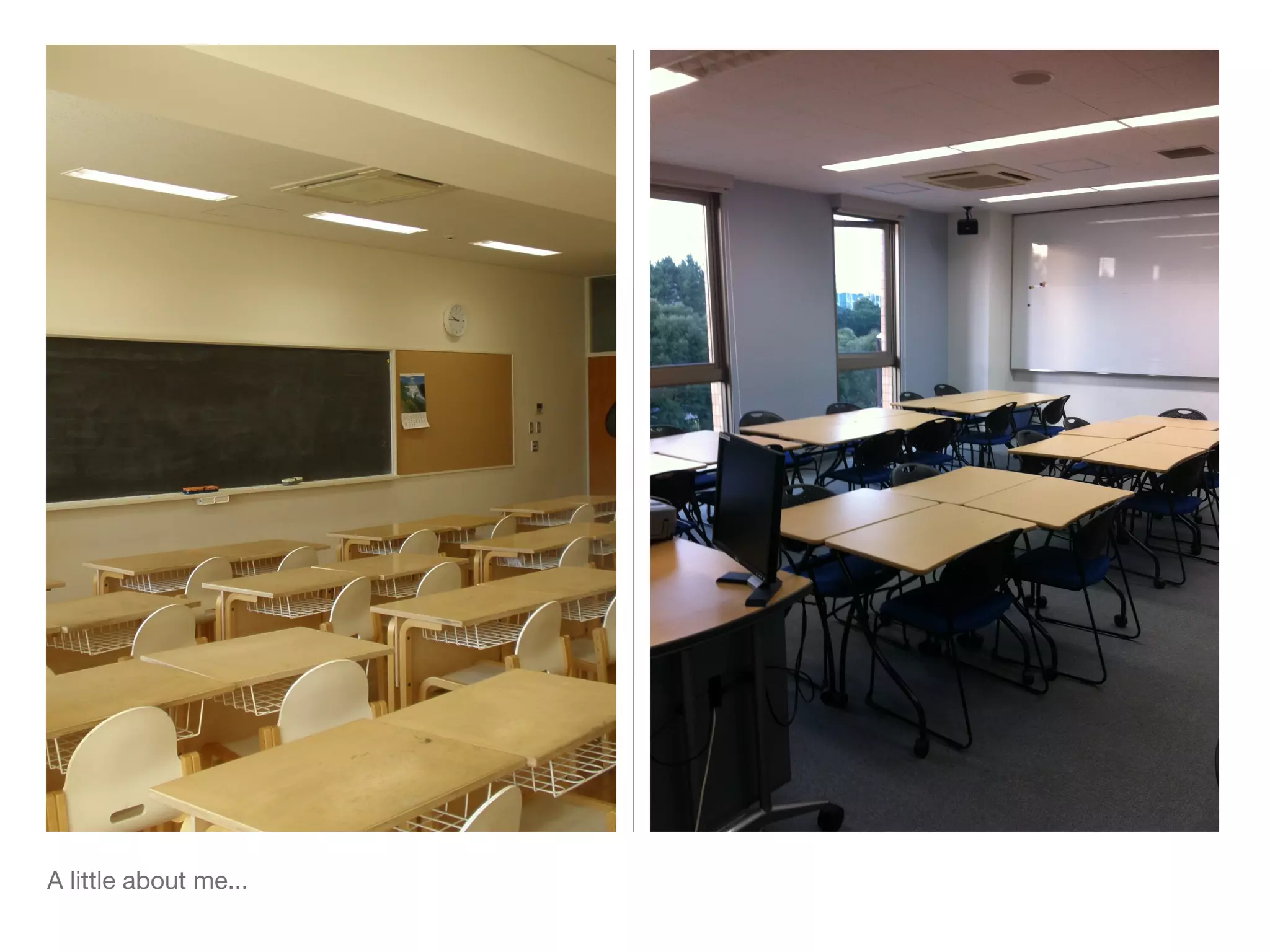
A little about me...
“Disaffected children can be bored,
depressed, anxious, or even angry
about their presence in the
classroom; they can be withdrawn
from learning opportunities or even
rebellious towards teachers and
classmates.”
- Skinner & Belmont (1993, p.571)
Top 5 demotivating factors (Dörnyei (2001))
• Unfair / Confusing grading & assignments
• Teacher being... bored, boring or
unorganised
• Dislike of subject
• Poor organisation of materials
• Teacher being... unapproachable, self-
centred or insulting
“Highly motivated children are easy
to identify: They are enthusiastic,
interested, involved, and curious;
and they actively cope with
challenges and set-backs. These are
children who should stay in school
longer, learn more, feel better about
themselves, and continue their
education after high school.”
- Skinner & Belmont (1993, p.571)
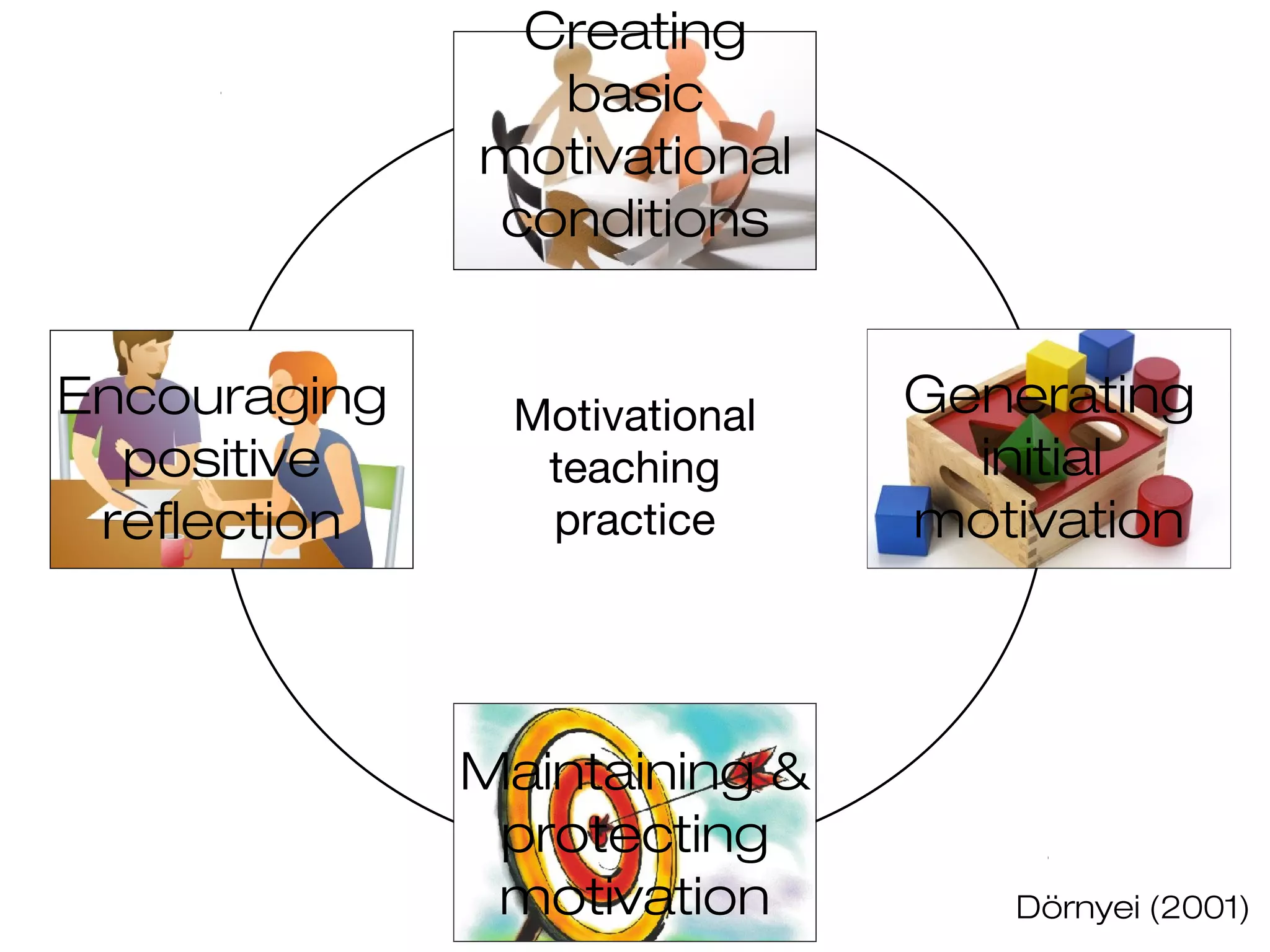
Motivational
teaching
practice
Creating
basic
motivational
conditions
Generating
initial
motivation
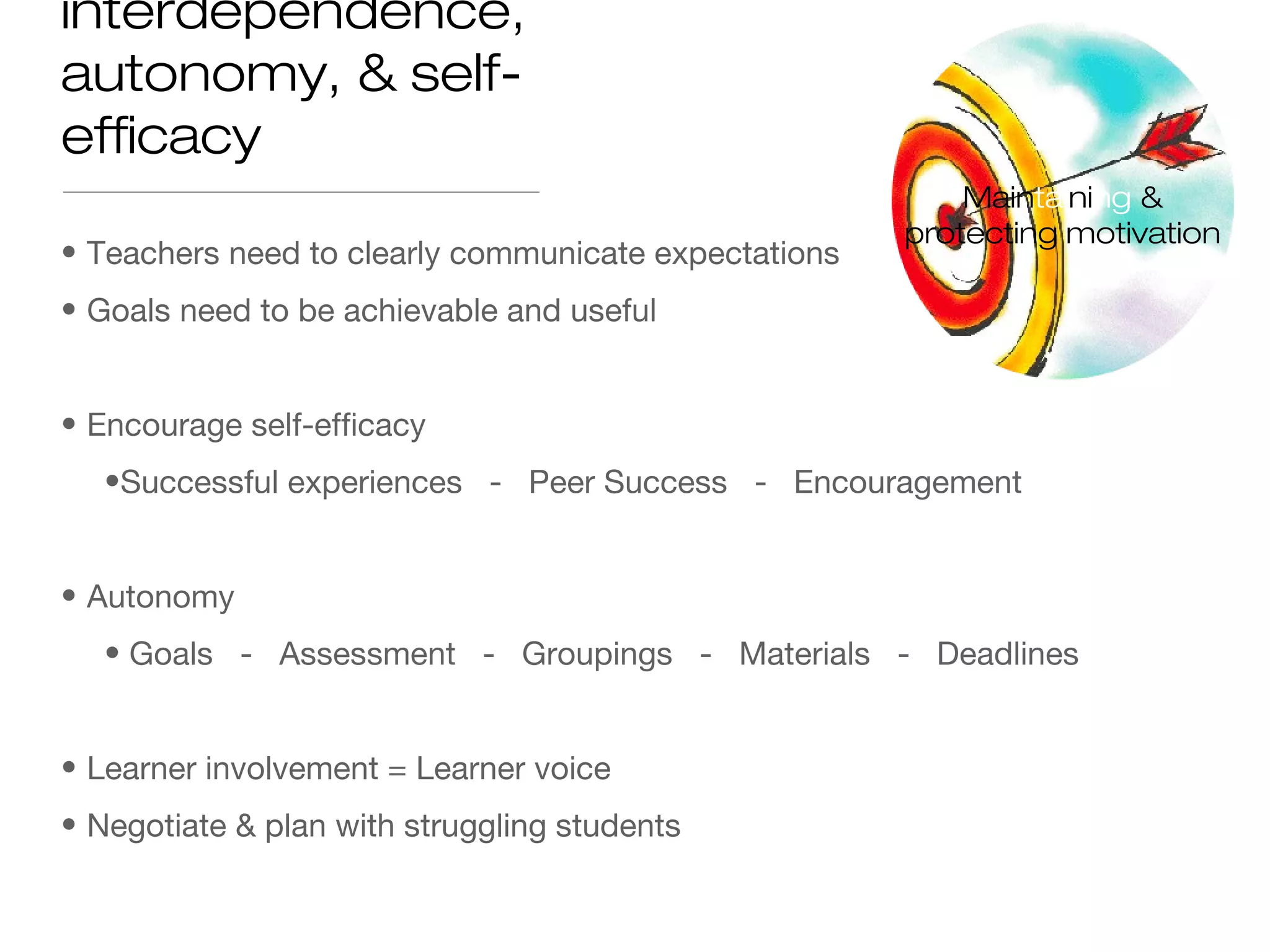
Maintaining &
protecting
motivation
Encouraging
positive
reflection
Dörnyei (2001)
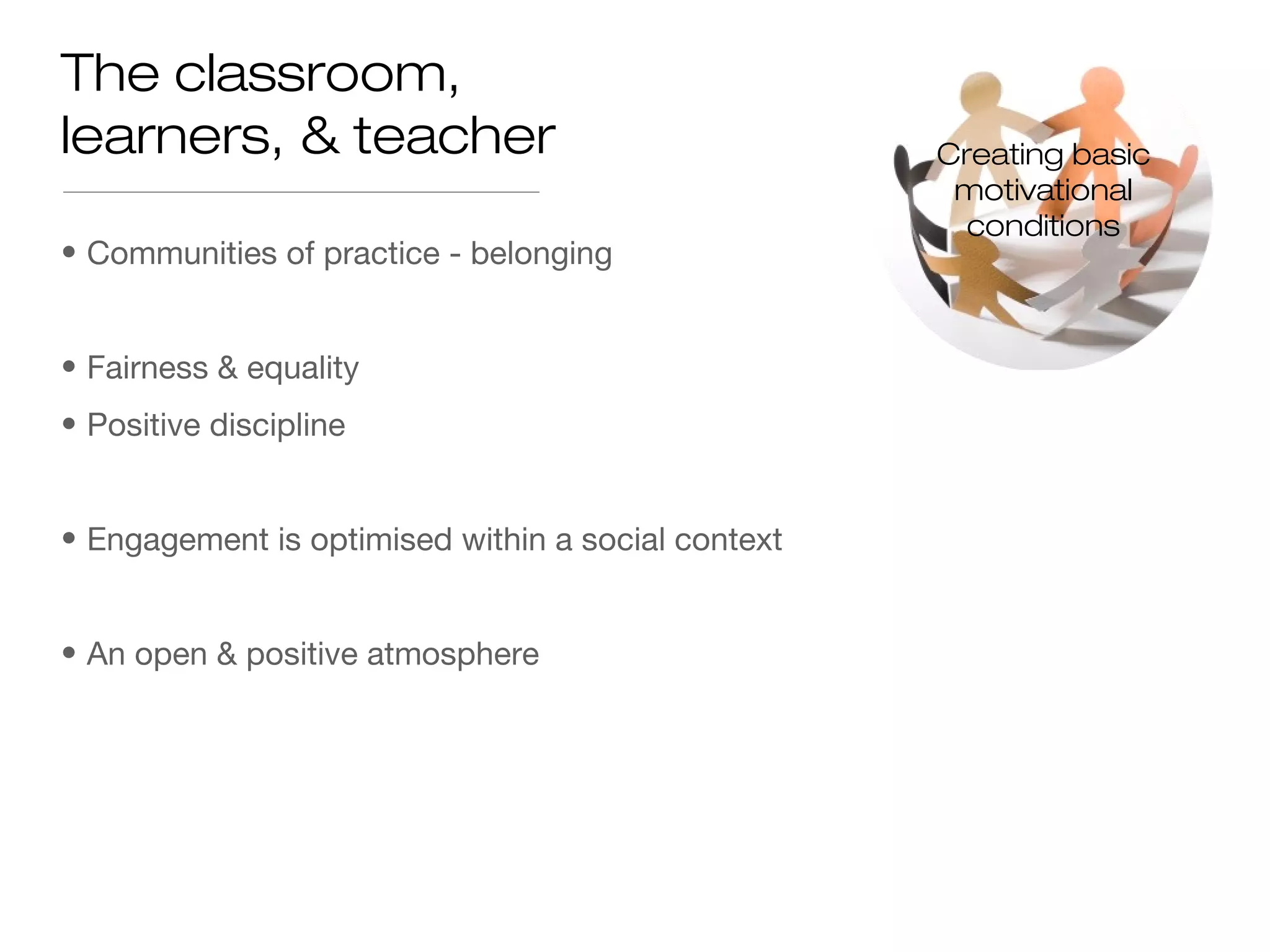
• Communities of practice - belonging
• Fairness & equality
• Positive discipline
• Engagement is optimised within a social context
• An open & positive atmosphere
The classroom,
learners, & teacher Creating basic
motivational
conditions
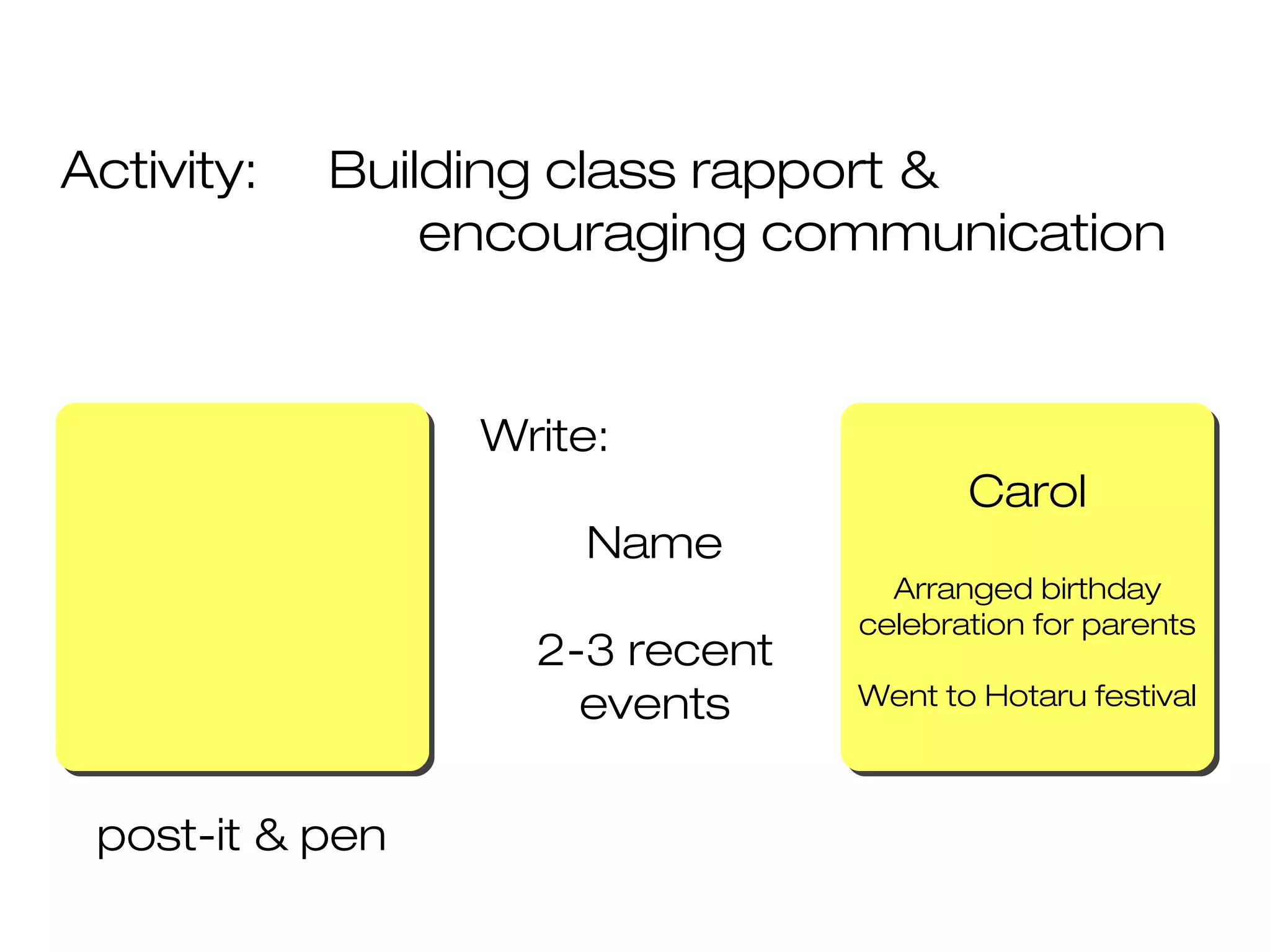
Activity: Building class rapport &
encouraging communication
post-it & pen
Write:
Name
2-3 recent
events
Carol
Arranged birthday
celebration for parents
Went to Hotaru festival
Carol
Arranged birthday
celebration for parents
Went to Hotaru festival
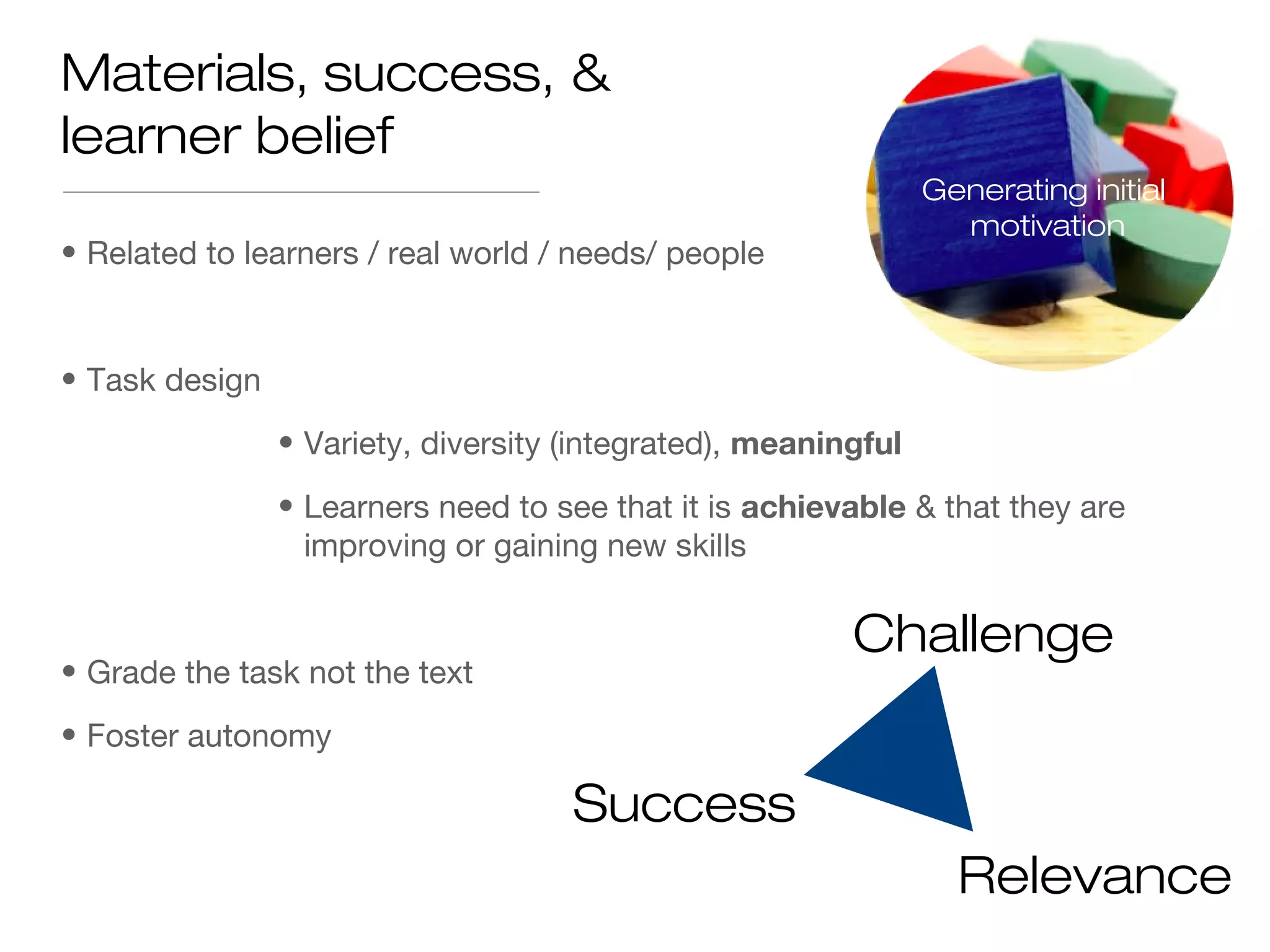
• Related to learners / real world / needs/ people
• Task design
• Variety, diversity (integrated), meaningful
• Learners need to see that it is achievable & that they are
improving or gaining new skills
• Grade the task not the text
• Foster autonomy
Materials, success, &
learner belief
Challenge
Success
Relevance
Generating initial
motivation
Activities:
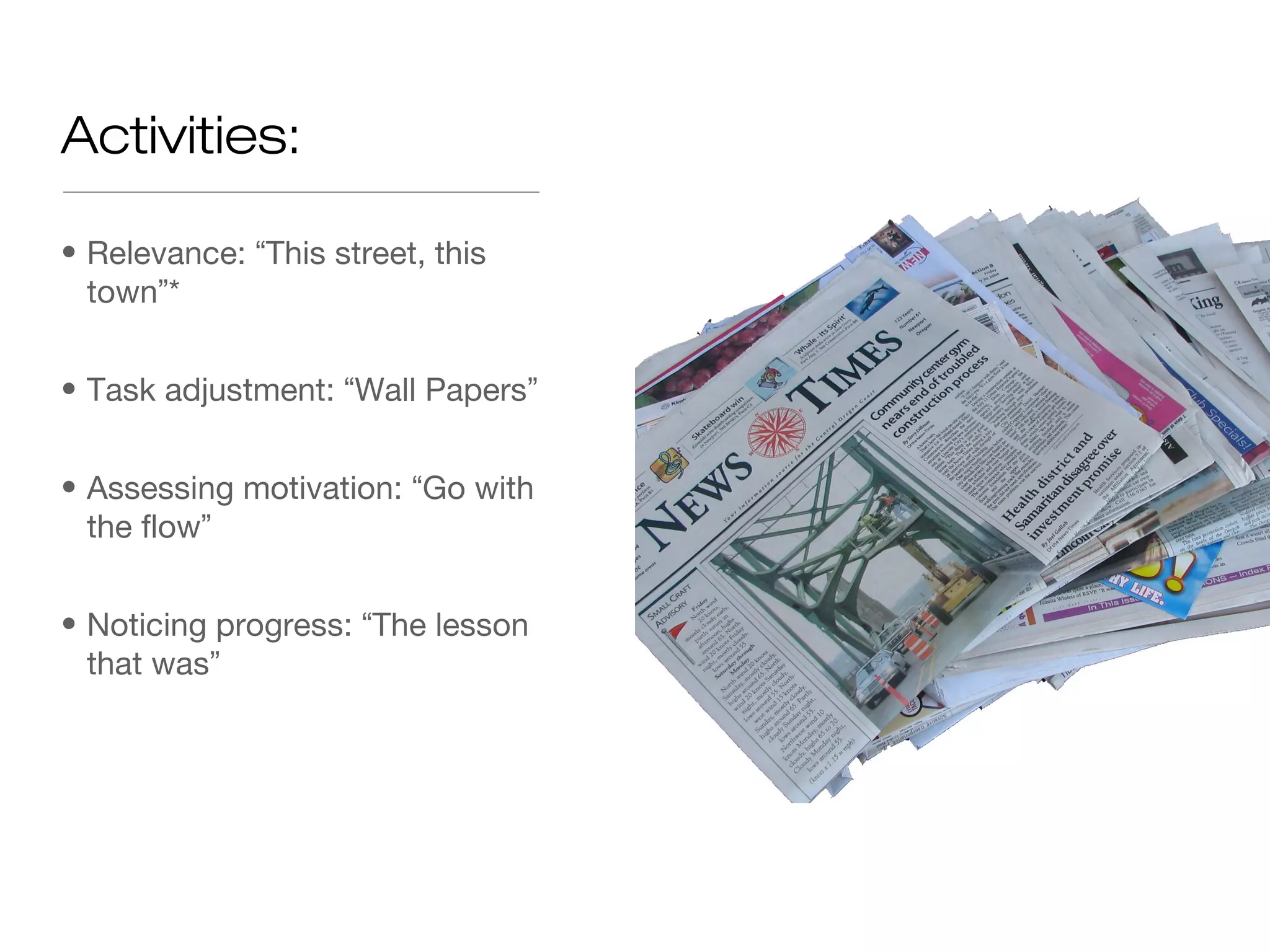
• Relevance: “This street, this
town”*
• Task adjustment: “Wall Papers”
• Assessing motivation: “Go with
the flow”
• Noticing progress: “The lesson
that was”
• Teachers need to clearly communicate expectations
• Goals need to be achievable and useful
• Encourage self-efficacy
•Successful experiences - Peer Success - Encouragement
• Autonomy
• Goals - Assessment - Groupings - Materials - Deadlines
• Learner involvement = Learner voice
• Negotiate & plan with struggling students
interdependence,
autonomy, & self-
efficacy
Maintaining &
protecting motivation
Activities:
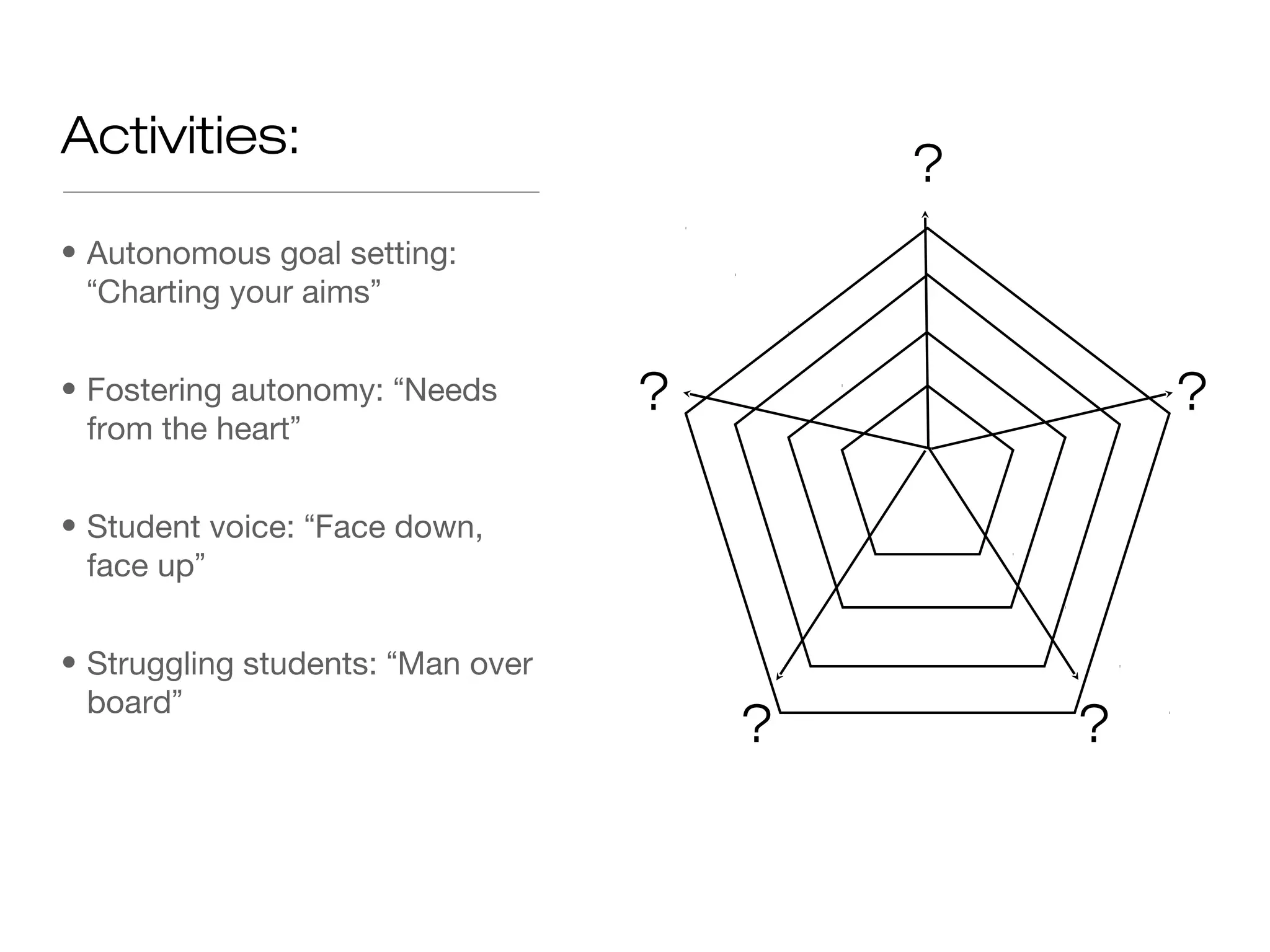
• Autonomous goal setting:
“Charting your aims”
• Fostering autonomy: “Needs
from the heart”
• Student voice: “Face down,
face up”
• Struggling students: “Man over
board”
?
?
?
?
?
• Sincerity of praise
• Encourage positive self-reflection
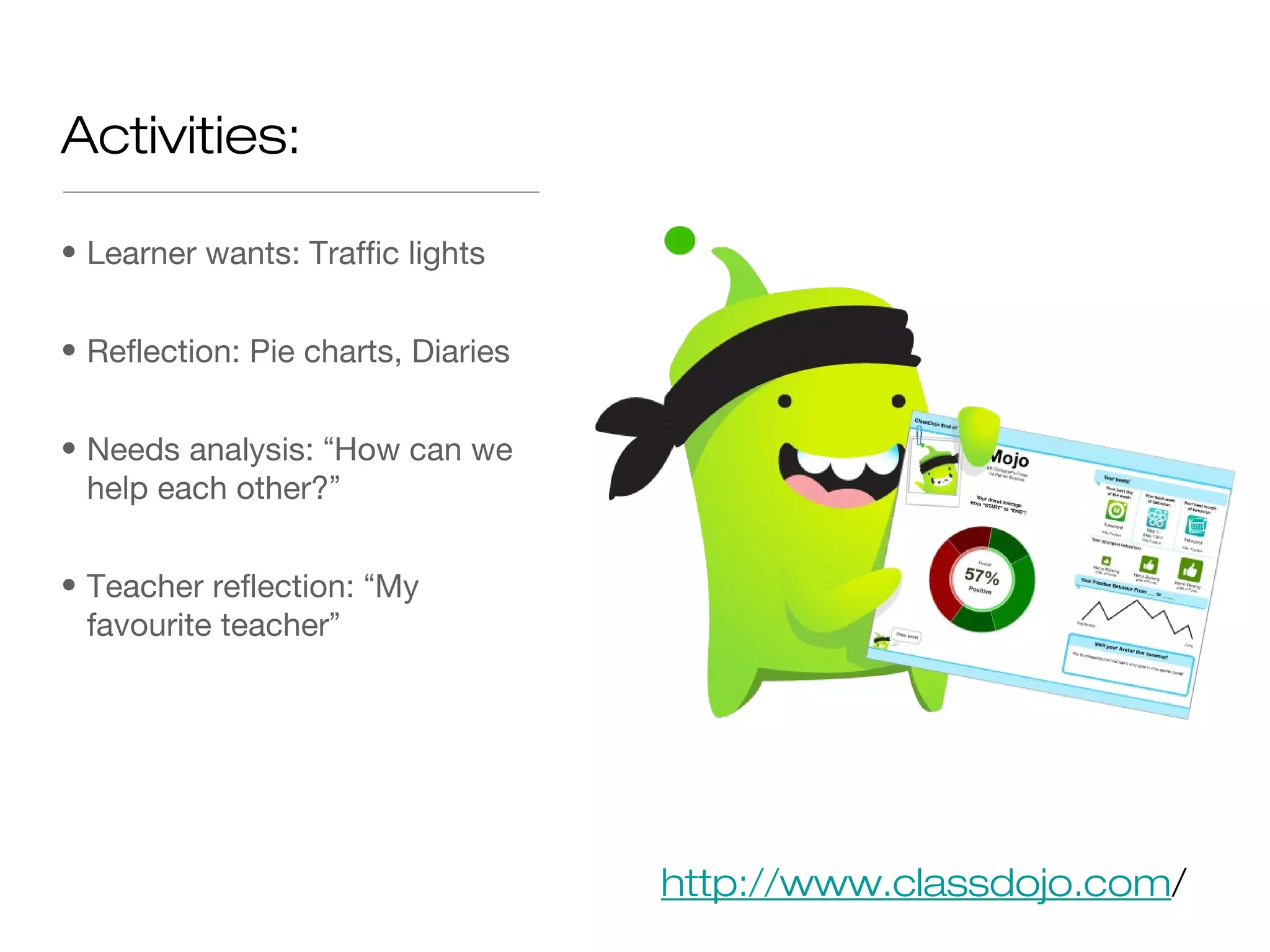
• Positive rewards (ClassDojo)
• Grading vs. Rewarding
Feedback, rewards, &
learner satisfaction
Motivation = qualitative changes in learners’
self perception
Motivation ≠ quantitative achievement
goals
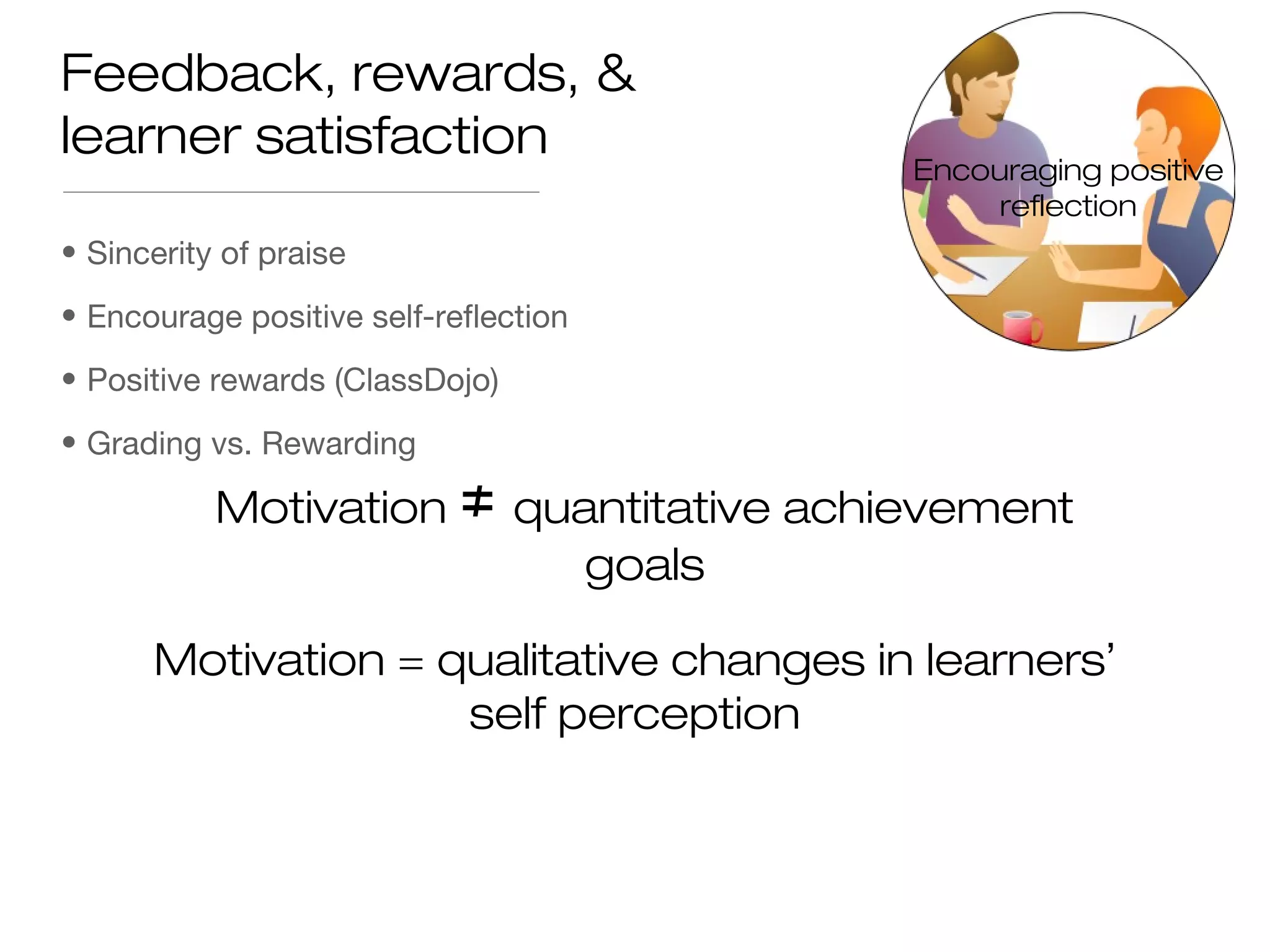
Encouraging positive
reflection
Activities:
• Learner wants: Traffic lights
• Reflection: Pie charts, Diaries
• Needs analysis: “How can we
help each other?”
• Teacher reflection: “My
favourite teacher”
http://www.classdojo.com/
Review
• Make it achievable
• Add variety
• Highlight meaning
• Encourage reflection
• Foster autonomy
Be...
positive
clear supportive
role-model
• Ames,C., (1992). Classrooms: Goals, structures, and student motivation.
Journal of Educational Psychology, 84 (3) 261-271.
• Dörnyei, Z., Ushioda, E,.(2011). Teaching and Researching Motivation.
Great Britain, Pearson.
• Dörnyei, Z., (2001) Motivational strategies in the language classroom.
United Kingdom, Cambridge University Press.
• Foord, D., (2009) The Developing Teacher: Practical activities for
professional development. England, DELTA Publishing.
• Gross Davis, B., (1993). Tools for teaching. San Francisco, Jossey-Bass.
• Meddings, L., Thornbury, S., (2009) Teaching Unplugged: Dogme in
English Language Teaching. England, DELTA Publishing
• Skinner, E., Belmont, M., (1993). Motivation in the classroom: Reciprocal
effects of teacher behaviour and student engagement across the
school year. Journal of Educational Psychology, 85 (4), 571-581.
References

ECAP 2013: How to get the best out of your students

  • 1.
    How to getthe best out of your students Carol Begg. ECAP 2013
  • 2.
  • 3.
    “Disaffected children canbe bored, depressed, anxious, or even angry about their presence in the classroom; they can be withdrawn from learning opportunities or even rebellious towards teachers and classmates.” - Skinner & Belmont (1993, p.571)
  • 4.
    Top 5 demotivatingfactors (Dörnyei (2001)) • Unfair / Confusing grading & assignments • Teacher being... bored, boring or unorganised • Dislike of subject • Poor organisation of materials • Teacher being... unapproachable, self- centred or insulting
  • 5.
    “Highly motivated childrenare easy to identify: They are enthusiastic, interested, involved, and curious; and they actively cope with challenges and set-backs. These are children who should stay in school longer, learn more, feel better about themselves, and continue their education after high school.” - Skinner & Belmont (1993, p.571)
  • 6.
  • 7.
    • Communities ofpractice - belonging • Fairness & equality • Positive discipline • Engagement is optimised within a social context • An open & positive atmosphere The classroom, learners, & teacher Creating basic motivational conditions
  • 8.
    Activity: Building classrapport & encouraging communication post-it & pen Write: Name 2-3 recent events Carol Arranged birthday celebration for parents Went to Hotaru festival Carol Arranged birthday celebration for parents Went to Hotaru festival
  • 9.
    • Related tolearners / real world / needs/ people • Task design • Variety, diversity (integrated), meaningful • Learners need to see that it is achievable & that they are improving or gaining new skills • Grade the task not the text • Foster autonomy Materials, success, & learner belief Challenge Success Relevance Generating initial motivation
  • 10.
    Activities: • Relevance: “Thisstreet, this town”* • Task adjustment: “Wall Papers” • Assessing motivation: “Go with the flow” • Noticing progress: “The lesson that was”
  • 11.
    • Teachers needto clearly communicate expectations • Goals need to be achievable and useful • Encourage self-efficacy •Successful experiences - Peer Success - Encouragement • Autonomy • Goals - Assessment - Groupings - Materials - Deadlines • Learner involvement = Learner voice • Negotiate & plan with struggling students interdependence, autonomy, & self- efficacy Maintaining & protecting motivation
  • 12.
    Activities: • Autonomous goalsetting: “Charting your aims” • Fostering autonomy: “Needs from the heart” • Student voice: “Face down, face up” • Struggling students: “Man over board” ? ? ? ? ?
  • 13.
    • Sincerity ofpraise • Encourage positive self-reflection • Positive rewards (ClassDojo) • Grading vs. Rewarding Feedback, rewards, & learner satisfaction Motivation = qualitative changes in learners’ self perception Motivation ≠ quantitative achievement goals Encouraging positive reflection
  • 14.
    Activities: • Learner wants:Traffic lights • Reflection: Pie charts, Diaries • Needs analysis: “How can we help each other?” • Teacher reflection: “My favourite teacher” http://www.classdojo.com/
  • 15.
    Review • Make itachievable • Add variety • Highlight meaning • Encourage reflection • Foster autonomy Be... positive clear supportive role-model
  • 16.
    • Ames,C., (1992).Classrooms: Goals, structures, and student motivation. Journal of Educational Psychology, 84 (3) 261-271. • Dörnyei, Z., Ushioda, E,.(2011). Teaching and Researching Motivation. Great Britain, Pearson. • Dörnyei, Z., (2001) Motivational strategies in the language classroom. United Kingdom, Cambridge University Press. • Foord, D., (2009) The Developing Teacher: Practical activities for professional development. England, DELTA Publishing. • Gross Davis, B., (1993). Tools for teaching. San Francisco, Jossey-Bass. • Meddings, L., Thornbury, S., (2009) Teaching Unplugged: Dogme in English Language Teaching. England, DELTA Publishing • Skinner, E., Belmont, M., (1993). Motivation in the classroom: Reciprocal effects of teacher behaviour and student engagement across the school year. Journal of Educational Psychology, 85 (4), 571-581. References

Editor's Notes

  • #7 1) Teacher behaviour; Classroom atmosphere; Inter-student rapport 2) Make materials relevant; create realistic learner beliefs; increase sts expectancy of success 3) Set learning goals; learning is stimulating and enjoyable; promote cooperation; encourage autonomy 4) Provide good feedback; using rewards/grade in a positive manner; increase learner satisfaction
  • #8 Help students feel that they are valued members of a learning community. - student voice Establish a sense of belonging (teacher is approachable) Belonging: sts have a higher degree of intrinsic motivation and academic confidence. Increases sts participation, enthusiasm, friendliness and helpfulness Accountability - more organised
  • #10 Personal meaning and value in the material - local examples, current events, using pop culture/ technology Students perform best when the level of difficulty is slightly above their current ability level. opportunities for success AND noticeable improvement A task that is too difficult may be seen as unattainable, may undermine self-efficacy, and may create anxiety. Scaffold - adjust/adapt tasks - ensure sts end on a positive experience Learners have a need to be (seen as) competent
  • #11 this city this town --- tied to needs from the heart
  • #12 What are you evaluating? & How are you evaluating? Lesson structure - Intro & review - Offer help and support Learners should understand the context of the task and see that is has personal relevance Students can learn by watching a peer succeed at a task - Neg. focus on winning - Pos. reflective social comparison Give students a voice Strategize with struggling students
  • #14 Give frequent, early, positive feedback that supports students' beliefs that they can do well.
  • #16 Role model - you bring the energy and set the tone - reflect on your own favourite teacher... how similar are you to him/her