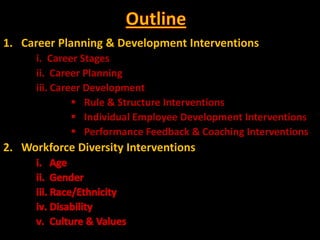
1. Career Planning & Development Interventions
      i. Career Stages
      ii. Career Planning
      iii. Career Development
                Rule & Structure Interventions
                Individual Employee Development Interventions
                Performance Feedback & Coaching Interventions
2. Workforce Diversity Interventions
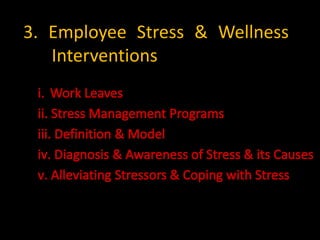
3. Employee Stress & Wellness
   Interventions
1. Career Planning & Development
   Interventions


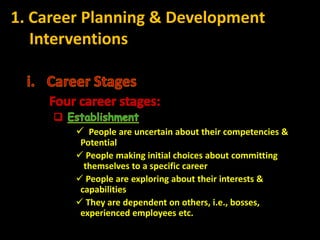
         People are uncertain about their competencies &
         Potential
         People making initial choices about committing
          themselves to a specific career
         People are exploring about their interests &
         capabilities
         They are dependent on others, i.e., bosses,
         experienced employees etc.
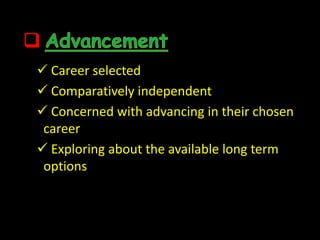
 Career selected
 Comparatively independent
 Concerned with advancing in their chosen
 career
 Exploring about the available long term
 options
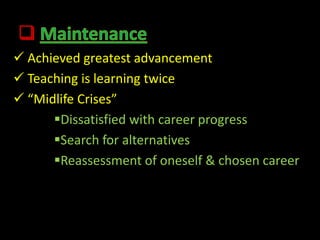
 Achieved greatest advancement
 Teaching is learning twice
 “Midlife Crises”
      Dissatisfied with career progress
      Search for alternatives
      Reassessment of oneself & chosen career
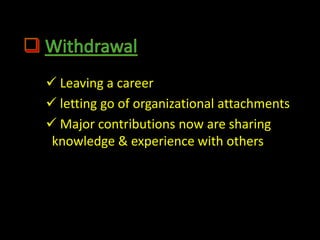
 Leaving a career
 letting go of organizational attachments
 Major contributions now are sharing
 knowledge & experience with others
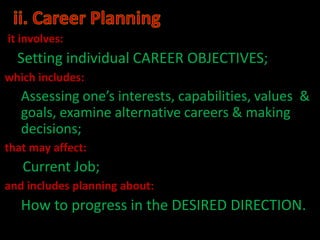
it involves:
  Setting individual CAREER OBJECTIVES;
which includes:
   Assessing one’s interests, capabilities, values &
   goals, examine alternative careers & making
   decisions;
that may affect:
   Current Job;
and includes planning about:
   How to progress in the DESIRED DIRECTION.
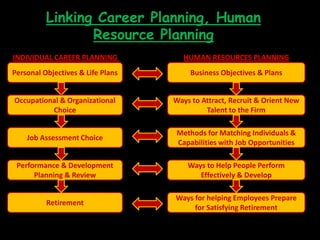
Linking Career Planning, Human
                 Resource Planning
INDIVIDUAL CAREER PLANNING            HUMAN RESOURCES PLANNING
Personal Objectives & Life Plans        Business Objectives & Plans


Occupational & Organizational      Ways to Attract, Recruit & Orient New
          Choice                            Talent to the Firm

                                   Methods for Matching Individuals &
    Job Assessment Choice
                                   Capabilities with Job Opportunities

 Performance & Development             Ways to Help People Perform
      Planning & Review                   Effectively & Develop

                                   Ways for helping Employees Prepare
          Retirement
                                        for Satisfying Retirement
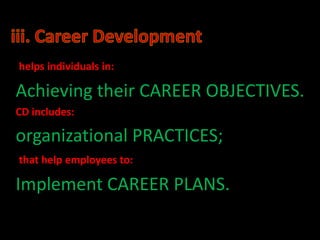
helps individuals in:

Achieving their CAREER OBJECTIVES.
CD includes:

organizational PRACTICES;
that help employees to:

Implement CAREER PLANS.
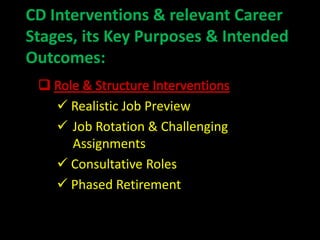
CD Interventions & relevant Career
Stages, its Key Purposes & Intended
Outcomes:

     Realistic Job Preview
     Job Rotation & Challenging
      Assignments
     Consultative Roles
     Phased Retirement

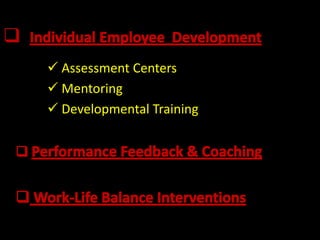
     Assessment Centers
     Mentoring
     Developmental Training
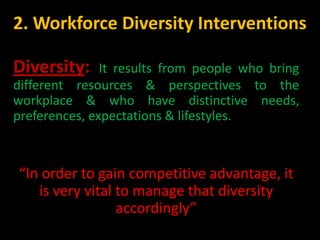
2. Workforce Diversity Interventions

Diversity:     It results from people who bring
different resources & perspectives to the
workplace & who have distinctive needs,
preferences, expectations & lifestyles.


“In order to gain competitive advantage, it
   is very vital to manage that diversity
                 accordingly”
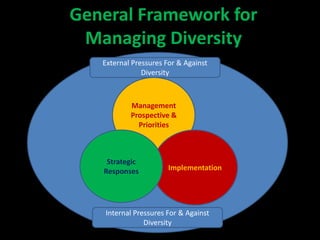
General Framework for
 Managing Diversity
   External Pressures For & Against
               Diversity


           Management
           Prospective &
             Priorities


    Strategic
   Responses           Implementation


    Internal Pressures For & Against
                Diversity
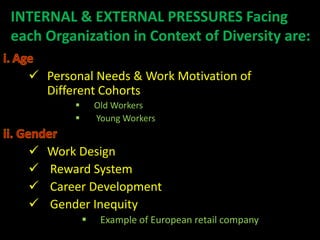
INTERNAL & EXTERNAL PRESSURES Facing
each Organization in Context of Diversity are:

   Personal Needs & Work Motivation of
    Different Cohorts
                 Old Workers
                 Young Workers


     Work Design
     Reward System
     Career Development
     Gender Inequity
                  Example of European retail company
 Critical area in diversity management
 Unequal distribution of authorities
 Sensitive training can overcome the issue:
      Selection criteria
      Performance appraisals
      Develop & enforce appropriate rules
 American standards
   Banned all discrimination forms on the basis of mental
    & physical disability.
   Modified many organizations to accommodate
     people with disabilities.
 Work design
   Simplify the work.
 Career planning & development
   Let them aware of Career Opportunities.
 Performance management
   Goal Setting, Monitoring & Coaching performance.
Cultural diversity can be adopt by following
planned change interventions:
 Employee involvement
       These fulfill the need for participation in decision making
       Employee productivity can be increased by letting them
        involve in different works among different types of groups.
 Reward System
       Flexi timing
       Work Locations
       Holidays
 Career Planning & Development

     It helps identify advancement opportunities in line
      with their cultural values
    As cultures values differs, so each management
     must match programs with them by such they can
     improve:
          o Job satisfaction
          o Productivity
          o Employee Retention
3. Employee Stress & Wellness
  Interventions

“Individual well-being or wellness comprises the
 various life/non-work satisfactions enjoyed by
  individuals, work/job-related satisfactions &
                 general health”
Leave Encashment [annual leaves]
 Medical Leaves
 Casual Leaves


Problems:
    Turnover
    Absenteeism
    Low performance
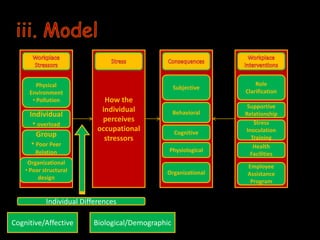
Physical                                                    Role
                                                   Subjective
     Environment                                                Clarification
      • Pollution             How the
                                                                 Supportive
                             individual            Behavioral
     Individual                                                 Relationship
                             perceives
      • overload                                                   Stress
                            occupational           Cognitive    Inoculation
        Group                 stressors                           Training
      • Poor Peer                                                  Health
        Relation                               Physiological
                                                                  Facilities
     Organizational
                                                                Employee
    • Poor structural                         Organizational    Assistance
         design
                                                                 Program


            Individual Differences

Cognitive/Affective       Biological/Demographic
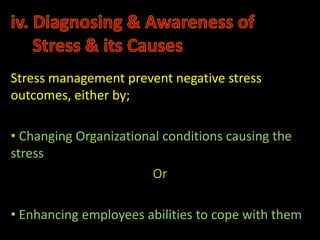
Stress management prevent negative stress
outcomes, either by;

• Changing Organizational conditions causing the
stress
                        Or

• Enhancing employees abilities to cope with them
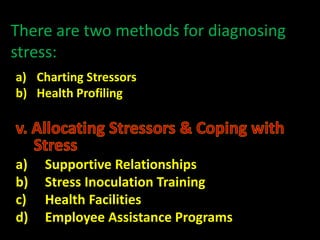
There are two methods for diagnosing
stress:
a) Charting Stressors
b) Health Profiling


a)   Supportive Relationships
b)   Stress Inoculation Training
c)   Health Facilities
d)   Employee Assistance Programs
Developing and Assisting Members in organizational development

Developing and Assisting Members in organizational development

  • 4.
    1. Career Planning& Development Interventions i. Career Stages ii. Career Planning iii. Career Development  Rule & Structure Interventions  Individual Employee Development Interventions  Performance Feedback & Coaching Interventions 2. Workforce Diversity Interventions
  • 5.
    3. Employee Stress& Wellness Interventions
  • 6.
    1. Career Planning& Development Interventions  People are uncertain about their competencies & Potential  People making initial choices about committing themselves to a specific career  People are exploring about their interests & capabilities  They are dependent on others, i.e., bosses, experienced employees etc.
  • 7.
     Career selected Comparatively independent  Concerned with advancing in their chosen career  Exploring about the available long term options
  • 8.
     Achieved greatestadvancement  Teaching is learning twice  “Midlife Crises” Dissatisfied with career progress Search for alternatives Reassessment of oneself & chosen career
  • 9.
     Leaving acareer  letting go of organizational attachments  Major contributions now are sharing knowledge & experience with others
  • 10.
    it involves: Setting individual CAREER OBJECTIVES; which includes: Assessing one’s interests, capabilities, values & goals, examine alternative careers & making decisions; that may affect: Current Job; and includes planning about: How to progress in the DESIRED DIRECTION.
  • 11.
    Linking Career Planning,Human Resource Planning INDIVIDUAL CAREER PLANNING HUMAN RESOURCES PLANNING Personal Objectives & Life Plans Business Objectives & Plans Occupational & Organizational Ways to Attract, Recruit & Orient New Choice Talent to the Firm Methods for Matching Individuals & Job Assessment Choice Capabilities with Job Opportunities Performance & Development Ways to Help People Perform Planning & Review Effectively & Develop Ways for helping Employees Prepare Retirement for Satisfying Retirement
  • 12.
    helps individuals in: Achievingtheir CAREER OBJECTIVES. CD includes: organizational PRACTICES; that help employees to: Implement CAREER PLANS.
  • 13.
    CD Interventions &relevant Career Stages, its Key Purposes & Intended Outcomes:  Realistic Job Preview  Job Rotation & Challenging Assignments  Consultative Roles  Phased Retirement
  • 14.
     Assessment Centers  Mentoring  Developmental Training
  • 15.
    2. Workforce DiversityInterventions Diversity: It results from people who bring different resources & perspectives to the workplace & who have distinctive needs, preferences, expectations & lifestyles. “In order to gain competitive advantage, it is very vital to manage that diversity accordingly”
  • 16.
    General Framework for Managing Diversity External Pressures For & Against Diversity Management Prospective & Priorities Strategic Responses Implementation Internal Pressures For & Against Diversity
  • 17.
    INTERNAL & EXTERNALPRESSURES Facing each Organization in Context of Diversity are:  Personal Needs & Work Motivation of Different Cohorts  Old Workers  Young Workers  Work Design  Reward System  Career Development  Gender Inequity  Example of European retail company
  • 18.
     Critical areain diversity management  Unequal distribution of authorities  Sensitive training can overcome the issue:  Selection criteria  Performance appraisals  Develop & enforce appropriate rules
  • 19.
     American standards  Banned all discrimination forms on the basis of mental & physical disability.  Modified many organizations to accommodate people with disabilities.  Work design  Simplify the work.  Career planning & development  Let them aware of Career Opportunities.  Performance management  Goal Setting, Monitoring & Coaching performance.
  • 20.
    Cultural diversity canbe adopt by following planned change interventions:  Employee involvement  These fulfill the need for participation in decision making  Employee productivity can be increased by letting them involve in different works among different types of groups.  Reward System  Flexi timing  Work Locations  Holidays
  • 21.
     Career Planning& Development  It helps identify advancement opportunities in line with their cultural values  As cultures values differs, so each management must match programs with them by such they can improve: o Job satisfaction o Productivity o Employee Retention
  • 22.
    3. Employee Stress& Wellness Interventions “Individual well-being or wellness comprises the various life/non-work satisfactions enjoyed by individuals, work/job-related satisfactions & general health”
  • 23.
    Leave Encashment [annualleaves]  Medical Leaves  Casual Leaves Problems:  Turnover  Absenteeism  Low performance
  • 24.
    Physical Role Subjective Environment Clarification • Pollution How the Supportive individual Behavioral Individual Relationship perceives • overload Stress occupational Cognitive Inoculation Group stressors Training • Poor Peer Health Relation Physiological Facilities Organizational Employee • Poor structural Organizational Assistance design Program Individual Differences Cognitive/Affective Biological/Demographic
  • 25.
    Stress management preventnegative stress outcomes, either by; • Changing Organizational conditions causing the stress Or • Enhancing employees abilities to cope with them
  • 26.
    There are twomethods for diagnosing stress: a) Charting Stressors b) Health Profiling a) Supportive Relationships b) Stress Inoculation Training c) Health Facilities d) Employee Assistance Programs