eResearch Africa Conference,
Research Data Management track,
UCT, Cape Town, November 2014
Dr Heila Pienaar
Deputy Director: Innovation & Technology
University of Pretoria Library
studio.cul.columbia.edu
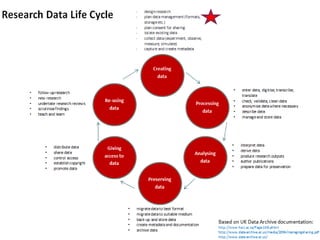
 Research data (management) cycle
 What is a data management plan?
 Benefits of a research data management
(RDM) plan
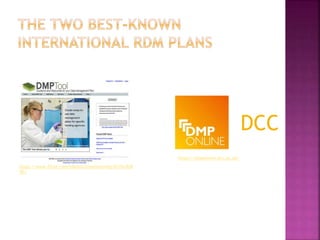
 The two best-known international RDM plans
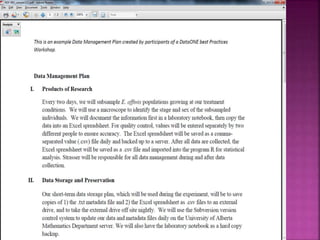
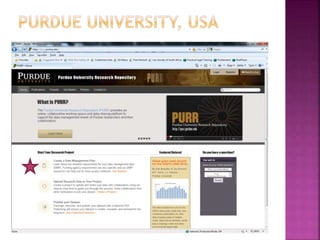
 Examples of university RDM plans
 Guidelines
http://datumrdm.blogspot.com/2012/01/data-management-plan.html
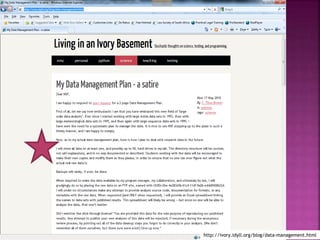
http://ivory.idyll.org/blog/data-management.html
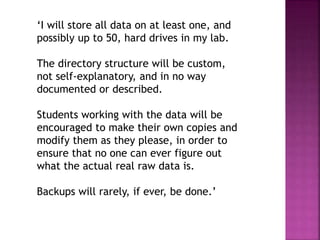
‘I will store all data on at least one, and
possibly up to 50, hard drives in my lab.
The directory structure will be custom,
not self-explanatory, and in no way
documented or described.
Students working with the data will be
encouraged to make their own copies and
modify them as they please, in order to
ensure that no one can ever figure out
what the actual real raw data is.
Backups will rarely, if ever, be done.’
 A data management plan (DMP) is a
document that describes how you will
collect, organise, manage, store, secure,
back- up, preserve, and where applicable,
share your data
 A data management plan should be created
at the start of a research project so that
good practices are established early
http://www.sheffield.ac.uk/library/rdm/dmp
 Helping you to identify issues and strategies
early in your research project
 Ensuring that you have documented your
compliance with institutional and funder
policies and ethics approval requirements
 Helping you think about data sharing and
reuse opportunities of your research data
 Ensuring that your research data remains
useful and stored safely for future use
http://www.sheffield.ac.uk/library/rdm/dmp
https://www.flickr.com/photos/rosefirerising/67761828
90/
DCC
https://dmponline.dcc.ac.uk/
 What data will you collect or create?
 How will the data be collected or created?
 What documentation and metadata will accompany the
data?
 How will you manage any ethical issues?
 How will you manage copyright and Intellectual Property
Rights (IPR) issues?
 How will the data be stored and backed up during the
research?
 How will you manage access and security?
 Which data should be retained, shared, and/or preserved?
 What is the long-term preservation plan for the dataset?
 How will you share the data?
 Are any restrictions on data sharing required?
 Who will be responsible for data management?
 What resources will you require to deliver your plan?
DCC. (2013). Checklist for a Data Management Plan. v.4.0. Edinburgh: Digital Curation
Centre. Available online: http://www.dcc.ac.uk/resources/data-management-plans
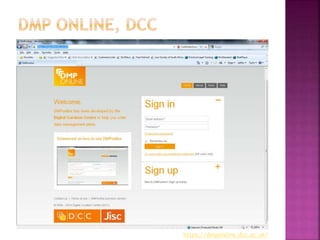
https://dmponline.dcc.ac.uk/
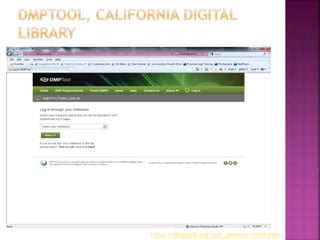
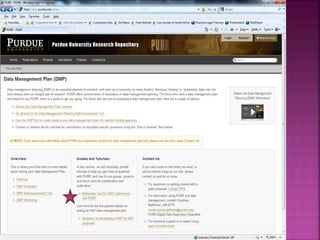
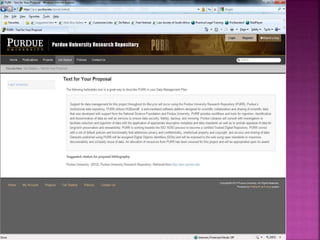
https://dmptool.org/user_sessions/institution
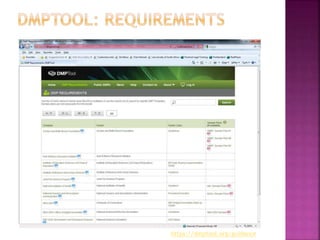
https://dmptool.org/guidance
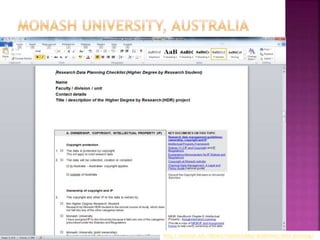
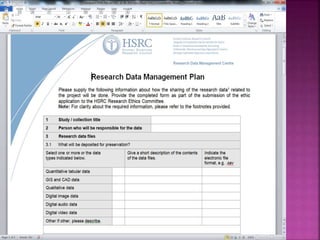
http://monash.edu/library/researchdata/guidelines/data-planning/
 Do not try to create a data management plan
from scratch: many good examples are available
 Use current examples to co-create with role
players a data management plan framework with
minimum requirements for your institution
 Each research group can adapt the plan as long
as the minimum requirements are included
 Plan should be short, easy and available online
 Must link with or include ethical requirements
 Must form an integral part of research planning
& process

Developing an institutional research management plan: guidelines

  • 1.
    eResearch Africa Conference, ResearchData Management track, UCT, Cape Town, November 2014 Dr Heila Pienaar Deputy Director: Innovation & Technology University of Pretoria Library studio.cul.columbia.edu
  • 2.
     Research data(management) cycle  What is a data management plan?  Benefits of a research data management (RDM) plan  The two best-known international RDM plans  Examples of university RDM plans  Guidelines http://datumrdm.blogspot.com/2012/01/data-management-plan.html
  • 3.
  • 4.
    ‘I will storeall data on at least one, and possibly up to 50, hard drives in my lab. The directory structure will be custom, not self-explanatory, and in no way documented or described. Students working with the data will be encouraged to make their own copies and modify them as they please, in order to ensure that no one can ever figure out what the actual real raw data is. Backups will rarely, if ever, be done.’
  • 6.
     A datamanagement plan (DMP) is a document that describes how you will collect, organise, manage, store, secure, back- up, preserve, and where applicable, share your data  A data management plan should be created at the start of a research project so that good practices are established early http://www.sheffield.ac.uk/library/rdm/dmp
  • 7.
     Helping youto identify issues and strategies early in your research project  Ensuring that you have documented your compliance with institutional and funder policies and ethics approval requirements  Helping you think about data sharing and reuse opportunities of your research data  Ensuring that your research data remains useful and stored safely for future use http://www.sheffield.ac.uk/library/rdm/dmp
  • 8.
  • 9.
     What datawill you collect or create?  How will the data be collected or created?  What documentation and metadata will accompany the data?  How will you manage any ethical issues?  How will you manage copyright and Intellectual Property Rights (IPR) issues?  How will the data be stored and backed up during the research?  How will you manage access and security?  Which data should be retained, shared, and/or preserved?  What is the long-term preservation plan for the dataset?  How will you share the data?  Are any restrictions on data sharing required?  Who will be responsible for data management?  What resources will you require to deliver your plan? DCC. (2013). Checklist for a Data Management Plan. v.4.0. Edinburgh: Digital Curation Centre. Available online: http://www.dcc.ac.uk/resources/data-management-plans
  • 10.
  • 11.
  • 12.
  • 17.
  • 20.
     Do nottry to create a data management plan from scratch: many good examples are available  Use current examples to co-create with role players a data management plan framework with minimum requirements for your institution  Each research group can adapt the plan as long as the minimum requirements are included  Plan should be short, easy and available online  Must link with or include ethical requirements  Must form an integral part of research planning & process