DESTINATIONS
Prepared by: Ma'am L
●

●

Often seen by the tourist as the outwardly
facing element of a tourism service or product,
being a place where their consumption occurs.
Principal motivating factor behind the
consumer's decision and expectations.
DESTINATION TYPES
●

Coastal
●Urban
●Rural
COASTAL
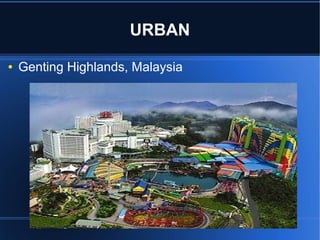
URBAN
●

Genting Highlands, Malaysia
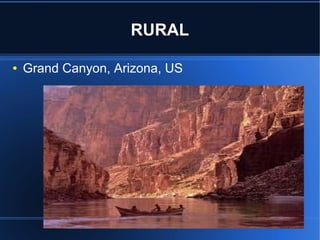
RURAL
●

Grand Canyon, Arizona, US
KEY FEATURES OF TOURIST
DESTINATION
●

Logical geographical unit recognized by visitors

●

Significant visitor attractions

●

Access or possible provision of access

●

Internal transport network

●

●

Tourist infrastructure and superstructure
present and can be developed
Administratively possible to plan and manage
DESTINATION COMPETITIVENESS
●

●

●

Ability to compete effectively and profitably in
the marketplace alongside with sensitivity to the
environmental impacts.
Ability to manage its natural and man-made
reources effectively over the long term.
Awareness of both demand and supply factors
to remain competitive
DESTINATION COLLABORATION
Advantages acc to Fyall and Garrod (2005)
●

Reduction in risk

●

Exchange of resources for mutual benefit

●

Increased visitor flows

●

Collaborative initiatives

●

Innovation domain

●

Destination-wide reservation systems and twoway dialogue with customers through
techonology collaboration
DESTINATION MANAGEMENT
ORANIZATIONS
●

This focused philosophy represents a more
holistic approach to the management of
detinations whereby the DMO is responsibe for
the well being of all aspects of the destination.
DMO characteristics;
Ritchie and Crouch (2003)
●

●

●

●

Coordinating and directing efforts of complex
tourism system
Command support of important sectors and
major actors in the tourism system
Influence the deisions and actions of public
sectors and private firms
Develop innovative strategies sufficiently and
independently
DMO Roles
●

Strategy planning/policy

●

Representation of interest

●

Product development

●

Marketing

●

Skills/training

●

Infrastructure development
DMO Roles
●

Information management and research

●

Sustainability

●

Business support and advice

●

●

Effective communication and management of
quality
Creation of a strong unified voice for the local
industry
4 Critical factors for success of
governance of DMO's of globally
competitive destinations
●
●

●

●

Level of private sector control over spending
The need to incorporate public sector
objectives to achieve balance between
marketing and new product development
Revenue stream that is not subject to annual
government control
Integrated mandate encompassing function to
develop tourism industry ; marketing,
education, research and infrastructure
development.
Seatwork No. 1
½ crosswise
Essay (10 points) 3-5 sentences
●

Give a scenario wherein the transportation,
accommodation or any tourism sector would be
the attraction rather than the destination and
explain why.

Destinations 3

  • 1.
  • 2.
    ● ● Often seen bythe tourist as the outwardly facing element of a tourism service or product, being a place where their consumption occurs. Principal motivating factor behind the consumer's decision and expectations.
  • 3.
  • 4.
  • 5.
  • 6.
  • 7.
    KEY FEATURES OFTOURIST DESTINATION ● Logical geographical unit recognized by visitors ● Significant visitor attractions ● Access or possible provision of access ● Internal transport network ● ● Tourist infrastructure and superstructure present and can be developed Administratively possible to plan and manage
  • 8.
    DESTINATION COMPETITIVENESS ● ● ● Ability tocompete effectively and profitably in the marketplace alongside with sensitivity to the environmental impacts. Ability to manage its natural and man-made reources effectively over the long term. Awareness of both demand and supply factors to remain competitive
  • 9.
    DESTINATION COLLABORATION Advantages accto Fyall and Garrod (2005) ● Reduction in risk ● Exchange of resources for mutual benefit ● Increased visitor flows ● Collaborative initiatives ● Innovation domain ● Destination-wide reservation systems and twoway dialogue with customers through techonology collaboration
  • 10.
    DESTINATION MANAGEMENT ORANIZATIONS ● This focusedphilosophy represents a more holistic approach to the management of detinations whereby the DMO is responsibe for the well being of all aspects of the destination.
  • 11.
    DMO characteristics; Ritchie andCrouch (2003) ● ● ● ● Coordinating and directing efforts of complex tourism system Command support of important sectors and major actors in the tourism system Influence the deisions and actions of public sectors and private firms Develop innovative strategies sufficiently and independently
  • 12.
    DMO Roles ● Strategy planning/policy ● Representationof interest ● Product development ● Marketing ● Skills/training ● Infrastructure development
  • 13.
    DMO Roles ● Information managementand research ● Sustainability ● Business support and advice ● ● Effective communication and management of quality Creation of a strong unified voice for the local industry
  • 14.
    4 Critical factorsfor success of governance of DMO's of globally competitive destinations ● ● ● ● Level of private sector control over spending The need to incorporate public sector objectives to achieve balance between marketing and new product development Revenue stream that is not subject to annual government control Integrated mandate encompassing function to develop tourism industry ; marketing, education, research and infrastructure development.
  • 15.
    Seatwork No. 1 ½crosswise Essay (10 points) 3-5 sentences ● Give a scenario wherein the transportation, accommodation or any tourism sector would be the attraction rather than the destination and explain why.