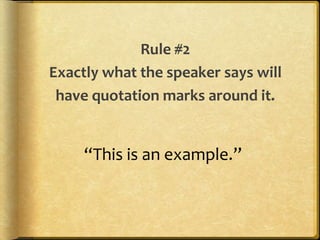

Rule #2 
Exactly what the speaker says will 
have quotation marks around it. 
“This is an example.”
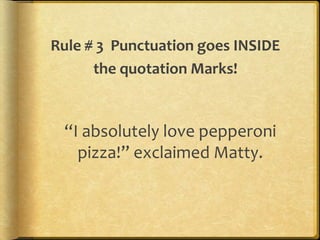
Rule # 3 Punctuation goes INSIDE 
the quotation Marks! 
“I absolutely love pepperoni 
pizza!” exclaimed Matty.
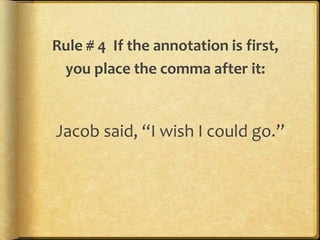
Rule # 4 If the annotation is first, 
you place the comma after it: 
Jacob said, “I wish I could go.”
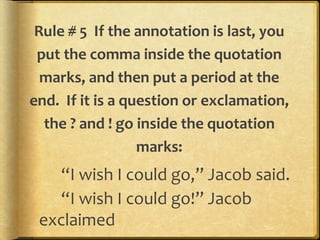
Rule # 5 If the annotation is last, you 
put the comma inside the quotation 
marks, and then put a period at the 
end. If it is a question or exclamation, 
the ? and ! go inside the quotation 
marks: 
“I wish I could go,” Jacob said. 
“I wish I could go!” Jacob 
exclaimed
Rule # 6 You do not have to tell 
who the speaker is each time if the 
dialogue is between two people 
and they are having a lot of back-and- 
forth conversations. Your 
readers will understand.
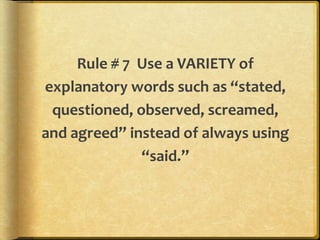
Rule # 7 Use a VARIETY of 
explanatory words such as “stated, 
questioned, observed, screamed, 
and agreed” instead of always using 
“said.”
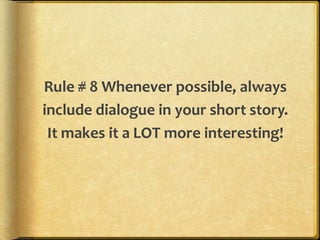
Rule # 8 Whenever possible, always 
include dialogue in your short story. 
It makes it a LOT more interesting!
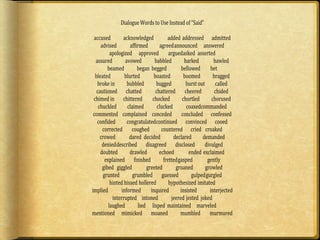
Dialogue Words to Use Instead of “Said” 
accused acknowledged added addressed admitted 
advised affirmed agreed announced answered 
apologized approved argued asked asserted 
assured avowed babbled barked bawled 
beamed began begged bellowed bet 
bleated blurted boasted boomed bragged 
broke in bubbled bugged burst out called 
cautioned chatted chattered cheered chided 
chimed in chittered chocked chortled chorused 
chuckled claimed clucked coaxed commanded 
commented complained conceded concluded confessed 
confided congratulated continued convinced cooed 
corrected coughed countered cried croaked 
crowed dared decided declared demanded 
denied described disagreed disclosed divulged 
doubted drawled echoed ended exclaimed 
explained finished fretted gasped gently 
gibed giggled greeted groaned growled 
grunted grumbled guessed gulped gurgled 
hinted hissed hollered hypothesized imitated 
implied informed inquired insisted interjected 
interrupted intoned jeered jested joked 
laughed lied lisped maintained marveled 
mentioned mimicked moaned mumbled murmured
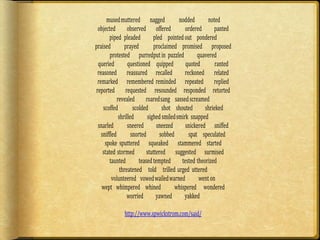
mused muttered nagged nodded noted 
objected observed offered ordered panted 
piped pleaded pled pointed out pondered 
praised prayed proclaimed promised proposed 
protested purred put in puzzled quavered 
queried questioned quipped quoted ranted 
reasoned reassured recalled reckoned related 
remarked remembered reminded repeated replied 
reported requested resounded responded retorted 
revealed roared sang sassed screamed 
scoffed scolded shot shouted shrieked 
shrilled sighed smiled smirk snapped 
snarled sneered sneezed snickered sniffed 
sniffled snorted sobbed spat speculated 
spoke sputtered squeaked stammered started 
stated stormed stuttered suggested surmised 
taunted teased tempted tested theorized 
threatened told trilled urged uttered 
volunteered vowed wailed warned went on 
wept whimpered whined whispered wondered 
worried yawned yakked 
http://www.spwickstrom.com/said/
Other great resources: 
http://fictionwriting.about.com/od/writingexercises/qt/punctuation.htm 
http://www.writingfix.com/PDFs/Writing_Tools/Rules_of_dialogue.pdf 
http://writingfix.com/PDFs/Writing_Tools/Tom_Swiftie_Dialogue_rules.pdf 
http://ywp.nanowrimo.org/files/ywp/ywp_10_hs_dialogue.pdf
http://teacher1stop.com/ 
Visit us on our website for more wonderful resources or 
Follow us on Twitter @MSELA_T1s 
https://twitter.com/MSELA_T1s 
Like us on Facebook: https://www.facebook.com/teacher1stop 
Follow us on Pinterest: 
http://www.pinterest.com/karen550/english-language-arts-middle-school/

Dialogue Rules!

  • 3.
    Rule #2 Exactlywhat the speaker says will have quotation marks around it. “This is an example.”
  • 4.
    Rule # 3Punctuation goes INSIDE the quotation Marks! “I absolutely love pepperoni pizza!” exclaimed Matty.
  • 5.
    Rule # 4If the annotation is first, you place the comma after it: Jacob said, “I wish I could go.”
  • 6.
    Rule # 5If the annotation is last, you put the comma inside the quotation marks, and then put a period at the end. If it is a question or exclamation, the ? and ! go inside the quotation marks: “I wish I could go,” Jacob said. “I wish I could go!” Jacob exclaimed
  • 7.
    Rule # 6You do not have to tell who the speaker is each time if the dialogue is between two people and they are having a lot of back-and- forth conversations. Your readers will understand.
  • 8.
    Rule # 7Use a VARIETY of explanatory words such as “stated, questioned, observed, screamed, and agreed” instead of always using “said.”
  • 9.
    Rule # 8Whenever possible, always include dialogue in your short story. It makes it a LOT more interesting!
  • 10.
    Dialogue Words toUse Instead of “Said” accused acknowledged added addressed admitted advised affirmed agreed announced answered apologized approved argued asked asserted assured avowed babbled barked bawled beamed began begged bellowed bet bleated blurted boasted boomed bragged broke in bubbled bugged burst out called cautioned chatted chattered cheered chided chimed in chittered chocked chortled chorused chuckled claimed clucked coaxed commanded commented complained conceded concluded confessed confided congratulated continued convinced cooed corrected coughed countered cried croaked crowed dared decided declared demanded denied described disagreed disclosed divulged doubted drawled echoed ended exclaimed explained finished fretted gasped gently gibed giggled greeted groaned growled grunted grumbled guessed gulped gurgled hinted hissed hollered hypothesized imitated implied informed inquired insisted interjected interrupted intoned jeered jested joked laughed lied lisped maintained marveled mentioned mimicked moaned mumbled murmured
  • 11.
    mused muttered naggednodded noted objected observed offered ordered panted piped pleaded pled pointed out pondered praised prayed proclaimed promised proposed protested purred put in puzzled quavered queried questioned quipped quoted ranted reasoned reassured recalled reckoned related remarked remembered reminded repeated replied reported requested resounded responded retorted revealed roared sang sassed screamed scoffed scolded shot shouted shrieked shrilled sighed smiled smirk snapped snarled sneered sneezed snickered sniffed sniffled snorted sobbed spat speculated spoke sputtered squeaked stammered started stated stormed stuttered suggested surmised taunted teased tempted tested theorized threatened told trilled urged uttered volunteered vowed wailed warned went on wept whimpered whined whispered wondered worried yawned yakked http://www.spwickstrom.com/said/
  • 12.
    Other great resources: http://fictionwriting.about.com/od/writingexercises/qt/punctuation.htm http://www.writingfix.com/PDFs/Writing_Tools/Rules_of_dialogue.pdf http://writingfix.com/PDFs/Writing_Tools/Tom_Swiftie_Dialogue_rules.pdf http://ywp.nanowrimo.org/files/ywp/ywp_10_hs_dialogue.pdf
  • 13.
    http://teacher1stop.com/ Visit uson our website for more wonderful resources or Follow us on Twitter @MSELA_T1s https://twitter.com/MSELA_T1s Like us on Facebook: https://www.facebook.com/teacher1stop Follow us on Pinterest: http://www.pinterest.com/karen550/english-language-arts-middle-school/