Design Thinking
in marketing
By Glyn Britton
Why I’m qualified to talk about this?
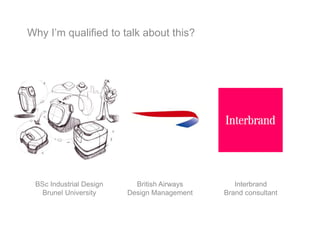
BSc Industrial Design
Brunel University
British Airways
Design Management
Interbrand
Brand consultant
Glyn Britton
Managing Partner at Albion
About Albion
A ‘new model’
digitally-led
integrated
advertising agency.
What that actually means
An expansive view
of what marketing can be.
Not much we make
looks like advertising.
We design content,
and we design media.
Innocent Kids
What do they have in common?
Design
Thinking.
From Wikipedia, the free encyclopedia
Design Thinking is a process for practical, creative resolution of
problems or issues that looks for an improved future result.[1] It is
the essential ability to combine empathy, creativity and rationality to
meet user needs and drive business success. Unlike analytical
thinking, design thinking is a creative process based around the
"building up" of ideas. There are no judgments early on in design
thinking. This eliminates the fear of failure and encourages
maximum input and participation in the ideation and prototype
phases. Outside the box thinking is encouraged in these earlier
processes since this can often lead to creative solutions.
Design thinking.
In short
Design isn’t restricted
to graphics and ‘style’.
Some assumptions
We want to sell more of our stuff.
We want to charge more for our stuff.
In the long term.
We want to make the world a better place.
We can do all of these by making the
purchase decision more meaningful.
Design Thinking is...
A process.
A way of thinking
about the world.
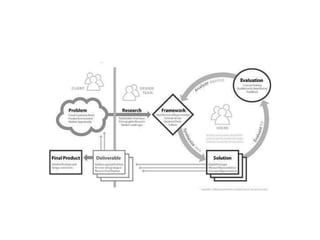
Whether we know it
or not, we’re all going
through a version of
this process.
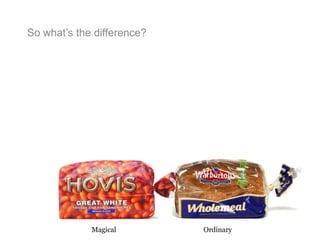
So what’s the difference?
Magical Ordinary
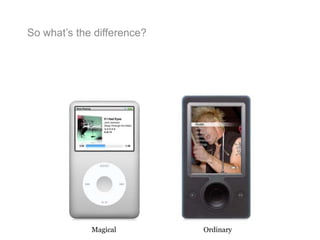
So what’s the difference?
Magical Ordinary
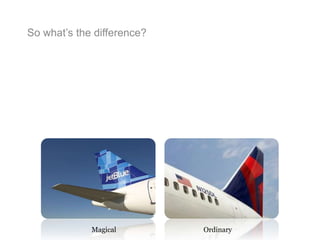
So what’s the difference?
Magical Ordinary
They’re a
pleasure to ‘use’.
Design Thinking is...
A process.
A way of thinking
about the world.
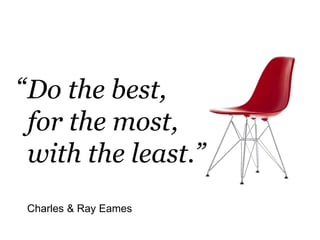
Charles & Ray Eames
Do the best,
for the most,
with the least.”
“
Ten things Google know to be true:
1. Focus on the user and all else will follow.
2. It's best to do one thing really, really well.
3. Fast is better than slow.
4. Democracy on the web works.
5. You don't need to be at your desk to need an answer.
6. You can make money without doing evil.
7. There's always more information out there.
8. The need for information crosses all borders.
9. You can be serious without a suit.
10.Great just isn't good enough.
Narrow
• Surface
• Narrow context
• Evolution
• Managing risk
Broad
• Experience
• Cultural context
• Doing the right thing
• Changing the game
Noticing
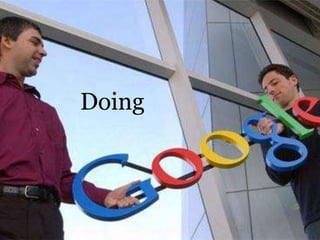
Doing
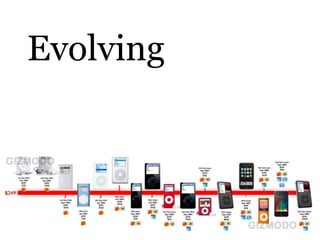
Evolving
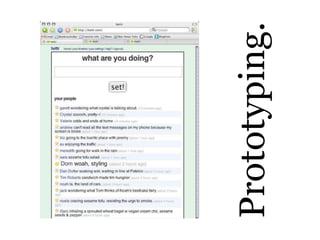
Prototyping.
Why we
don’t practice
Design Thinking?
Because
corporations are
designed to not
allow it.
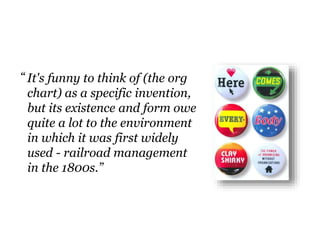
It's funny to think of (the org
chart) as a specific invention,
but its existence and form owe
quite a lot to the environment
in which it was first widely
used - railroad management
in the 1800s.”
“
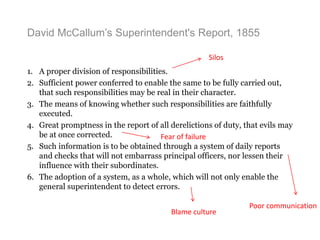
David McCallum’s Superintendent's Report, 1855
1. A proper division of responsibilities.
2. Sufficient power conferred to enable the same to be fully carried out,
that such responsibilities may be real in their character.
3. The means of knowing whether such responsibilities are faithfully
executed.
4. Great promptness in the report of all derelictions of duty, that evils may
be at once corrected.
5. Such information is to be obtained through a system of daily reports
and checks that will not embarrass principal officers, nor lessen their
influence with their subordinates.
6. The adoption of a system, as a whole, which will not only enable the
general superintendent to detect errors.
Silos
Blame culture
Poor communication
Fear of failure
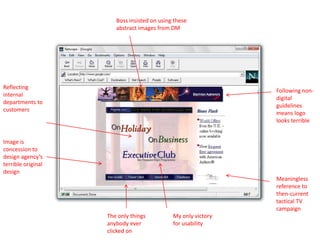
Following non-
digital
guidelines
means logo
looks terrible
Boss insisted on using these
abstract images from DM
Meaningless
reference to
then-current
tactical TV
campaign
Image is
concession to
design agency’s
terrible original
design
Reflecting
internal
departments to
customers
The only things
anybody ever
clicked on
My only victory
for usability
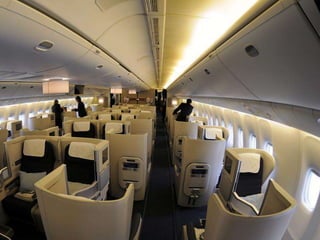
Conventional wisdom
People will never
accept sitting
backwards on an
aeroplane.”
“
So how did
they do that?
By breaking the
hierarchical model.
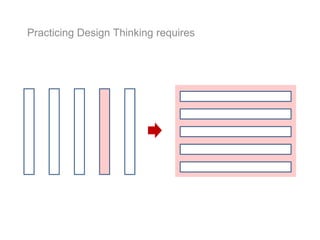
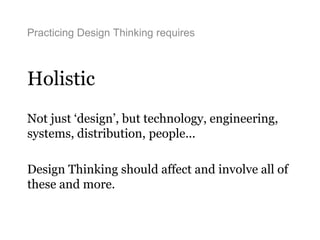
Practicing Design Thinking requires
Holistic
Not just ‘design’, but technology, engineering,
systems, distribution, people...
Design Thinking should affect and involve all of
these and more.
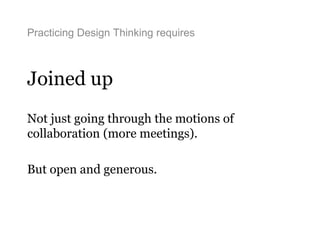
Practicing Design Thinking requires
Joined up
Not just going through the motions of
collaboration (more meetings).
But open and generous.
Practicing Design Thinking requires
Business focused
“At any given time, a team using design
thinking should be able to give a sense of how
strong a business they are creating”
Diego Rodriguez, IDEO
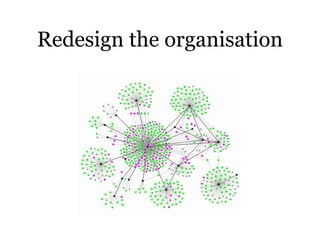
Redesign the organisation
The future?
The new (management) model will have
to be more like the marketplace, and less
like corporations of the past. It will need
to be flexible, agile, able to quickly adjust
to market developments, and ruthless in
reallocating resources to new
opportunities.”
http://bit.ly/cbS1h3
“
In conclusion
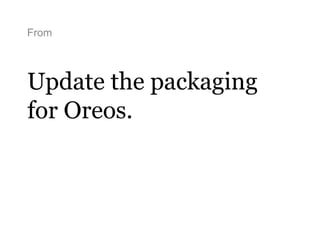
From
Update the packaging
for Oreos.
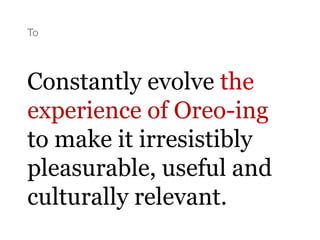
To
Constantly evolve the
experience of Oreo-ing
to make it irresistibly
pleasurable, useful and
culturally relevant.
By
Becoming
‘corporate
entrepreneurs’.
More
www.glyndot.com
@glyndot
www.albionlondon.com
@albionlondon
Thank you

Design Thinking talk

  • 1.
  • 2.
    Why I’m qualifiedto talk about this? BSc Industrial Design Brunel University British Airways Design Management Interbrand Brand consultant
  • 3.
  • 4.
    About Albion A ‘newmodel’ digitally-led integrated advertising agency.
  • 5.
    What that actuallymeans An expansive view of what marketing can be. Not much we make looks like advertising. We design content, and we design media.
  • 6.
  • 9.
    What do theyhave in common? Design Thinking.
  • 10.
    From Wikipedia, thefree encyclopedia Design Thinking is a process for practical, creative resolution of problems or issues that looks for an improved future result.[1] It is the essential ability to combine empathy, creativity and rationality to meet user needs and drive business success. Unlike analytical thinking, design thinking is a creative process based around the "building up" of ideas. There are no judgments early on in design thinking. This eliminates the fear of failure and encourages maximum input and participation in the ideation and prototype phases. Outside the box thinking is encouraged in these earlier processes since this can often lead to creative solutions. Design thinking.
  • 11.
    In short Design isn’trestricted to graphics and ‘style’.
  • 13.
    Some assumptions We wantto sell more of our stuff. We want to charge more for our stuff. In the long term. We want to make the world a better place. We can do all of these by making the purchase decision more meaningful.
  • 14.
    Design Thinking is... Aprocess. A way of thinking about the world.
  • 17.
    Whether we knowit or not, we’re all going through a version of this process.
  • 18.
    So what’s thedifference? Magical Ordinary
  • 19.
    So what’s thedifference? Magical Ordinary
  • 20.
    So what’s thedifference? Magical Ordinary
  • 21.
  • 22.
    Design Thinking is... Aprocess. A way of thinking about the world.
  • 23.
    Charles & RayEames Do the best, for the most, with the least.” “
  • 24.
    Ten things Googleknow to be true: 1. Focus on the user and all else will follow. 2. It's best to do one thing really, really well. 3. Fast is better than slow. 4. Democracy on the web works. 5. You don't need to be at your desk to need an answer. 6. You can make money without doing evil. 7. There's always more information out there. 8. The need for information crosses all borders. 9. You can be serious without a suit. 10.Great just isn't good enough.
  • 25.
    Narrow • Surface • Narrowcontext • Evolution • Managing risk
  • 26.
    Broad • Experience • Culturalcontext • Doing the right thing • Changing the game
  • 27.
  • 29.
  • 30.
  • 31.
  • 32.
  • 33.
  • 34.
    It's funny tothink of (the org chart) as a specific invention, but its existence and form owe quite a lot to the environment in which it was first widely used - railroad management in the 1800s.” “
  • 35.
    David McCallum’s Superintendent'sReport, 1855 1. A proper division of responsibilities. 2. Sufficient power conferred to enable the same to be fully carried out, that such responsibilities may be real in their character. 3. The means of knowing whether such responsibilities are faithfully executed. 4. Great promptness in the report of all derelictions of duty, that evils may be at once corrected. 5. Such information is to be obtained through a system of daily reports and checks that will not embarrass principal officers, nor lessen their influence with their subordinates. 6. The adoption of a system, as a whole, which will not only enable the general superintendent to detect errors. Silos Blame culture Poor communication Fear of failure
  • 36.
    Following non- digital guidelines means logo looksterrible Boss insisted on using these abstract images from DM Meaningless reference to then-current tactical TV campaign Image is concession to design agency’s terrible original design Reflecting internal departments to customers The only things anybody ever clicked on My only victory for usability
  • 37.
    Conventional wisdom People willnever accept sitting backwards on an aeroplane.” “
  • 39.
    So how did theydo that? By breaking the hierarchical model.
  • 40.
  • 41.
    Practicing Design Thinkingrequires Holistic Not just ‘design’, but technology, engineering, systems, distribution, people... Design Thinking should affect and involve all of these and more.
  • 42.
    Practicing Design Thinkingrequires Joined up Not just going through the motions of collaboration (more meetings). But open and generous.
  • 43.
    Practicing Design Thinkingrequires Business focused “At any given time, a team using design thinking should be able to give a sense of how strong a business they are creating” Diego Rodriguez, IDEO
  • 44.
  • 45.
    The future? The new(management) model will have to be more like the marketplace, and less like corporations of the past. It will need to be flexible, agile, able to quickly adjust to market developments, and ruthless in reallocating resources to new opportunities.” http://bit.ly/cbS1h3 “
  • 46.
  • 47.
  • 48.
    To Constantly evolve the experienceof Oreo-ing to make it irresistibly pleasurable, useful and culturally relevant.
  • 49.
  • 50.
  • 51.

Editor's Notes

  • #6 Hardly anyone talks about ‘designing’ advertising.
  • #10 BTW, not a lot of people talk about ‘designing’ advertising.
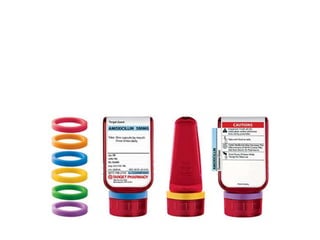
  • #13 The Target pill bottle isn’t a bottle, it’s a system by Brandon Schauer It’s unfortunate that the 2005 design of the Target pill bottle has too often been treated as just a product design and graphic design solution. Yes, it received much earned respect for being a collaboration of graphic design with industrial design and for its sensitive approach to addressing sometimes life-threatening circumstances. But perhaps because it’s been put on a pedestal at the MoMA that we forgot to check out what’s going on behind the scenes at Target. Target appropriately calls the bottle ClearRX, describing it more broadly as a, “prescription distribution and communication system.” That’s because it required quite a bit of work on the back-of-the-house to make the pill bottles work on the front-of-the-house. Let’s take one aspect of the design as an example. The bottles have rings that fit around the collar of the bottle which are color coded to identify different members of the family — 7 colors in all. The concept is simple enough: Make sure you’re not accidentally taking someone else’s prescription just because the bottles look similar. However, the implementation is much more difficult because Target has to ensure the right color ring is going around the right subscription. Therefore Target’s Pharmacy IT system has to track which family member has which color ring so the colors are not accidentally switched when prescriptions are filled. From listening to Deborah Adler tell the story of working with Target, it’s clear that considerable (if not more) design effort went towards the processes and systems surrounding the pill bottle. It was, “an enormous undertaking… a huge collaborative effort,” she said. Here’s a hint of some of the overall system that had to be coordinated: “I work with the pharmacy team, pharmacy operations… the Target technology team to build the software to accommodate the new labeling system, the marketing team… there were major training sessions to train all the pharmacists on how to use this new system because they were the most important people to us… they were the front line… they had to explain how to use this new system, and they had to learn how to use it.. there was a bit of a learning curve involved.” I’m guessing that it’s not just the design patents that have kept other pharmacies from mimicking the Target pill bottle. The pill bottle isn’t just a new SKU in a retail environment or just a piece of packaging that can be swapped out for the old design. The bottle is just the visible tip of a much deeper system of drug delivery that would take significant time and investment to emulate.
  • #24 Charles (1907–1978) and Ray (1912–1988) Eames were American designers, who worked in and made major contributions to modern architecture and furniture. They also worked in the fields of industrial and graphic design, fine art and film.
  • #25 Key thing about these philosophies: Broad, expansive.
  • #27 Couple of other things common to all good design philosophies.
  • #39 If you ask them, people won’t like the idea. If you ask them to trade off, they’re more open. If you put them in a prototype, they barely mention it. This leap enabled the first flat bed in business class, and added millions to the top-line and bottom-line. So what worked here?
  • #49 Think beyond the moment at the fixture.