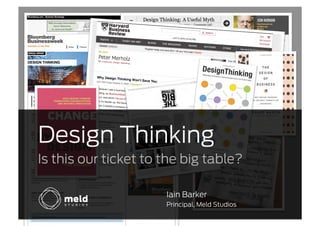
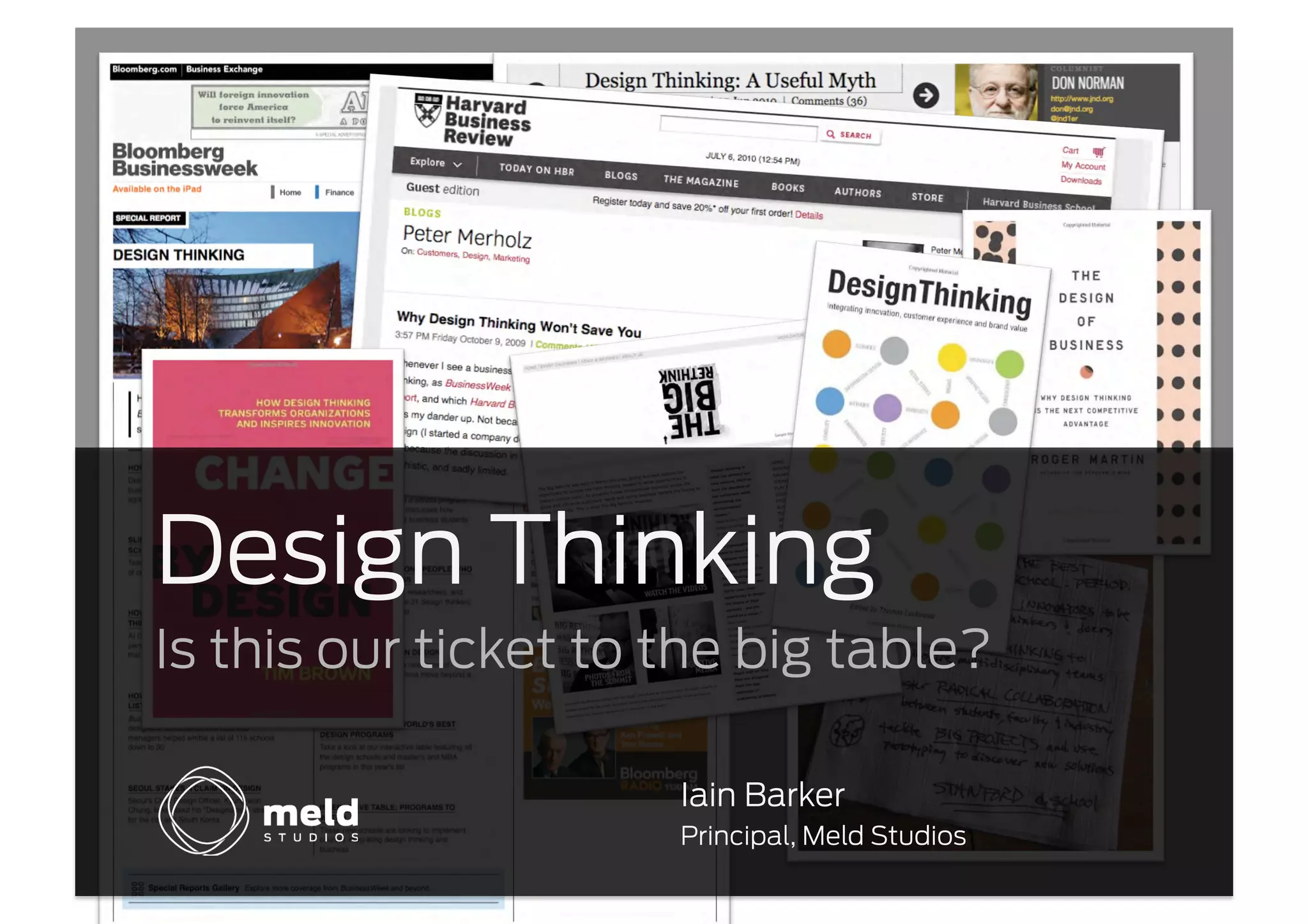
Design Thinking
Is this our ticket to the big table?

                      Iain Barker
                      Principal, Meld Studios
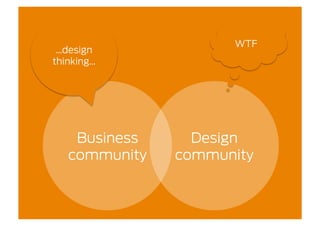
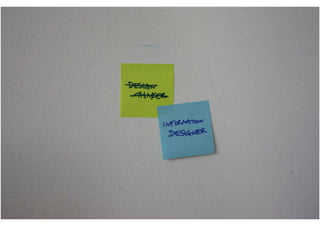
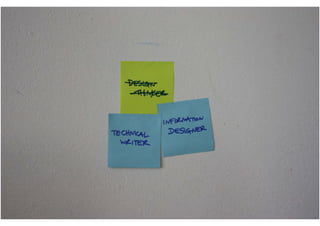
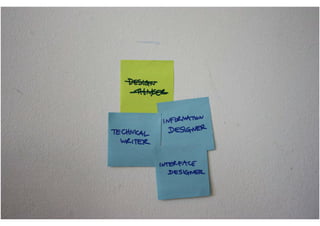
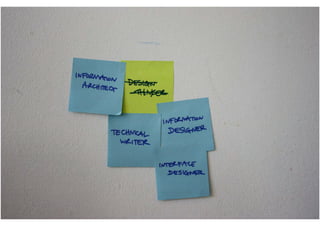
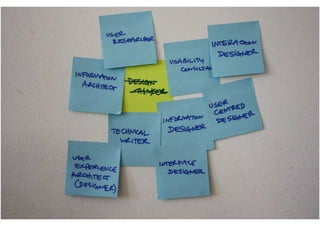
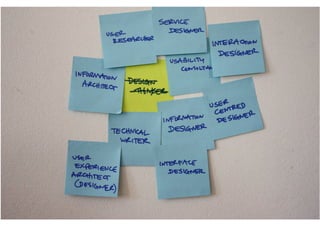
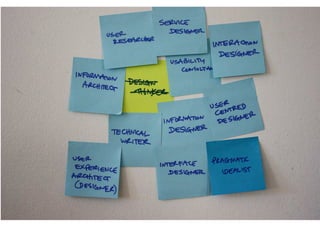
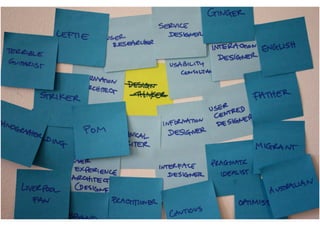
WTF
 …design
thinking…


    Business     Design
   community   community
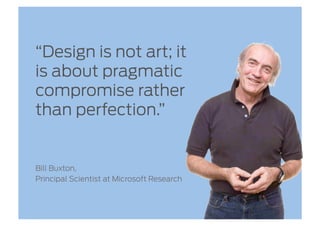
“Design is not art; it
is about pragmatic
compromise rather
than perfection.”


Bill Buxton,
Principal Scientist at Microsoft Research
“There's something odd
going on when business
and political leaders flatter
design with potentially
holding the key to such big
and pressing problems,
and the design community
looks the other way.”
Kevin McCullagh
http://www.core77.com/blog/featured_items/
design_thinkingeverywhere_and_nowhere_reflections_on_the_big_re-think__16277.asp
“For now, the business community seems
to have the ball, and it's running with it.
But designers can't afford not to be a part
of this conversation. If you opt out, the
purpose and value of the wider discipline
of design is going to get twisted and
subverted by well-meaning individuals
who don't know what they're talking
about. Designers, surely, need to be at the
heart of the design thinking discussion.”
Helen Walters
http://www.businessweek.com/innovate/next/archives/2010/04/design_week_van.html
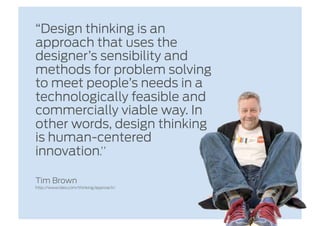
“Design thinking is an
approach that uses the
designer’s sensibility and
methods for problem solving
to meet people’s needs in a
technologically feasible and
commercially viable way. In
other words, design thinking
is human-centered
innovation.” 

Tim Brown
http://www.ideo.com/thinking/approach/
“[Design thinking] means stepping
back from the immediate issue and
taking a broader look. It requires…
  …systems thinking…
  …deep immersion into the topic…
  …tests and frequent revisions…
  …done in groups…
Perhaps the most important point is
to move away from the problem
description and take a new, broader
approach.”
Don Norman
http://www.core77.com/blog/columns/design_thinking_a_useful_myth_16790.asp
Familiar
  Empathy
  Collaboration
  Prototyping
  Iteration
  Broader context
It isn’t all so familiar
  Innovation not optimisation
  Solving problems, not designing
   interactions
  Advocated by businesses, not designers
  They use terms like “abductive
   reasoning” and “synthesis”
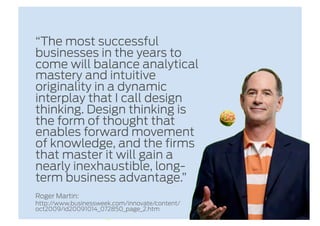
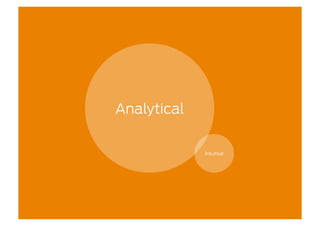
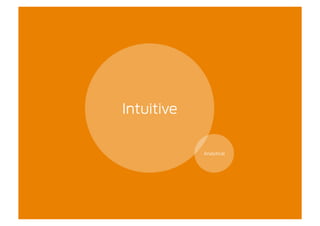
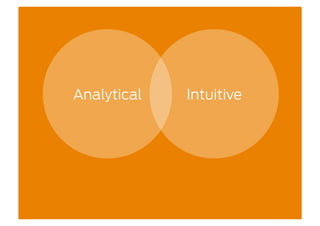
“The most successful
businesses in the years to
come will balance analytical
mastery and intuitive
originality in a dynamic
interplay that I call design
thinking. Design thinking is
the form of thought that
enables forward movement
of knowledge, and the firms
that master it will gain a
nearly inexhaustible, long-
term business advantage.”
Roger Martin:
http://www.businessweek.com/innovate/content/
oct2009/id20091014_072850_page_2.htm
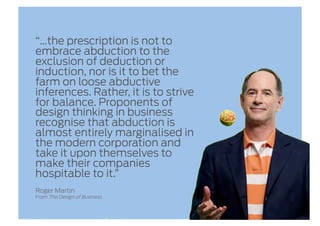
“…the prescription is not to
embrace abduction to the
exclusion of deduction or
induction, nor is it to bet the
farm on loose abductive
inferences. Rather, it is to strive
for balance. Proponents of
design thinking in business
recognise that abduction is
almost entirely marginalised in
the modern corporation and
take it upon themselves to
make their companies
hospitable to it.”
Roger Martin
From The Design of Business
Analytical

             Intuitive
Intuitive

            Analytical
Analytical   Intuitive
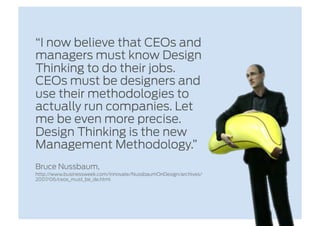
“I now believe that CEOs and
managers must know Design
Thinking to do their jobs.
CEOs must be designers and
use their methodologies to
actually run companies. Let
me be even more precise.
Design Thinking is the new
Management Methodology.”
Bruce Nussbaum,
http://www.businessweek.com/innovate/NussbaumOnDesign/archives/
2007/06/ceos_must_be_de.html
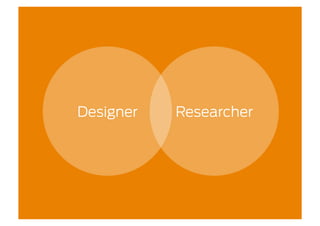
Designer   Researcher
“I now believe that CEOs and
managers must know Design
Thinking to do their jobs.
CEOs must be designers
and use their methodologies
to actually run companies.
Let me be even more precise.
Design Thinking is the new
Management Methodology.”
Bruce Nussbaum,
http://www.businessweek.com/innovate/NussbaumOnDesign/archives/
2007/06/ceos_must_be_de.html
“…long live the phrase "design thinking."
It will help in the transformation of
design from the world of form and style
to that of function and structure. It will
help spread the word that designers can
add value to almost any problem,
from healthcare to pollution,
business strategy and company
organization...”
Don Norman
http://www.core77.com/blog/columns/design_thinking_a_useful_myth_16790.asp
“…When this transformation takes place,
the term can be put
away to die a natural death.
Meanwhile exploit the myth. Act as if
you believe it. Just don't actually
do so.”
Don Norman
http://www.core77.com/blog/columns/design_thinking_a_useful_myth_16790.asp
Are businesses
really interested in
design thinking?
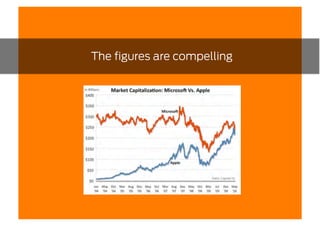
The figures are compelling
Shares in design-led businesses
outperform key stock market indices by
200%

Where design is integral, less than half
of businesses compete mainly on price,
compared to two thirds of those who
don’t use design

On average, design alert businesses
increase their market share by 6.3%
through using design
More at http://www.designfactfinder.co.uk/
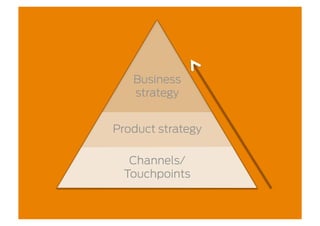
Business
   strategy


Product strategy

  Channels/
 Touchpoints
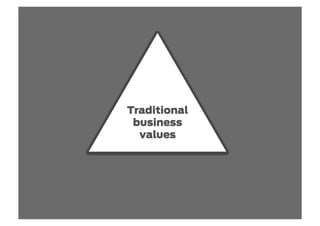
Traditional
 business
  values
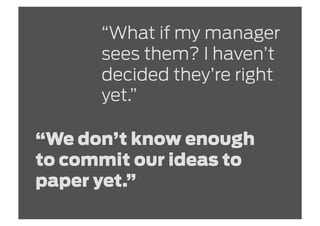
“What if my manager
      sees them? I haven’t
      decided they’re right
      yet.”

“We don’t know enough
to commit our ideas to
paper yet.”
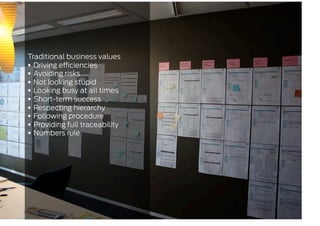
Traditional business values
  Driving e ciencies
  Avoiding risks
  Not looking stupid
  Looking busy at all times
  Short-term success
  Respecting hierarchy
  Following procedure
  Providing full traceability
  Numbers rule
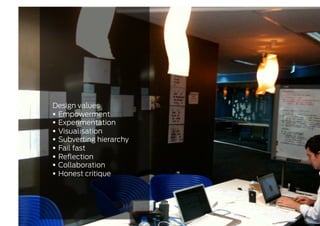
Design values
  Empowerment
  Experimentation
  Visualisation
  Subverting hierarchy
  Fail fast
  Reflection
  Collaboration
  Honest critique
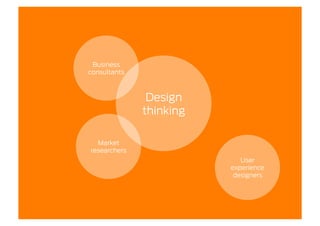
Business
consultants


               Design
              thinking

  Market
researchers
                            User
                         experience
                          designers
Meld
Studios
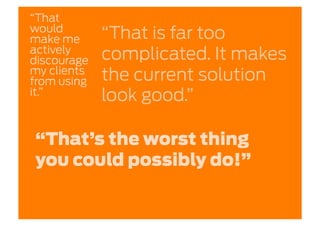
“That
would
make me      “That is far too
actively
discourage   complicated. It makes
my clients
from using   the current solution
it.”         look good.”

“That’s the worst thing
you could possibly do!”
Design space
Meld
Studios
Meld
Studios
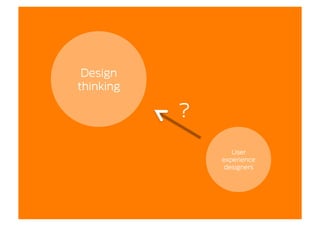
Design
thinking

           ?
                  User
               experience
                designers
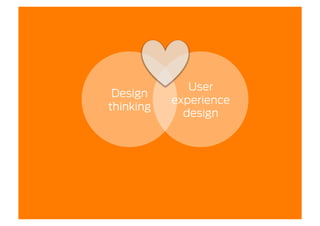
User
 Design
           experience
thinking
             design
Do you…

a)  Tell them that you don’t do “design thinking”
b)  Tell them that what they’re after isn’t actually
    called design thinking and that they should refer
    to it as design strategy, or something we’re far
    more comfortable with, or else you won’t do the
    work
c)  Ask them when they want you to start
Thoughts or questions?


  Iain Barker, Principal, Meld Studios
       iain@meldstudios.com.au

Design thinking (ux australia)

  • 1.
    Design Thinking Is thisour ticket to the big table? Iain Barker Principal, Meld Studios
  • 2.
    WTF …design thinking… Business Design community community
  • 15.
    “Design is notart; it is about pragmatic compromise rather than perfection.” Bill Buxton, Principal Scientist at Microsoft Research
  • 17.
    “There's something odd goingon when business and political leaders flatter design with potentially holding the key to such big and pressing problems, and the design community looks the other way.” Kevin McCullagh http://www.core77.com/blog/featured_items/ design_thinkingeverywhere_and_nowhere_reflections_on_the_big_re-think__16277.asp
  • 18.
    “For now, thebusiness community seems to have the ball, and it's running with it. But designers can't afford not to be a part of this conversation. If you opt out, the purpose and value of the wider discipline of design is going to get twisted and subverted by well-meaning individuals who don't know what they're talking about. Designers, surely, need to be at the heart of the design thinking discussion.” Helen Walters http://www.businessweek.com/innovate/next/archives/2010/04/design_week_van.html
  • 19.
    “Design thinking isan approach that uses the designer’s sensibility and methods for problem solving to meet people’s needs in a technologically feasible and commercially viable way. In other words, design thinking is human-centered innovation.” Tim Brown http://www.ideo.com/thinking/approach/
  • 20.
    “[Design thinking] meansstepping back from the immediate issue and taking a broader look. It requires…   …systems thinking…   …deep immersion into the topic…   …tests and frequent revisions…   …done in groups… Perhaps the most important point is to move away from the problem description and take a new, broader approach.” Don Norman http://www.core77.com/blog/columns/design_thinking_a_useful_myth_16790.asp
  • 21.
    Familiar   Empathy   Collaboration  Prototyping   Iteration   Broader context
  • 22.
    It isn’t allso familiar   Innovation not optimisation   Solving problems, not designing interactions   Advocated by businesses, not designers   They use terms like “abductive reasoning” and “synthesis”
  • 23.
    “The most successful businessesin the years to come will balance analytical mastery and intuitive originality in a dynamic interplay that I call design thinking. Design thinking is the form of thought that enables forward movement of knowledge, and the firms that master it will gain a nearly inexhaustible, long- term business advantage.” Roger Martin: http://www.businessweek.com/innovate/content/ oct2009/id20091014_072850_page_2.htm
  • 24.
    “…the prescription isnot to embrace abduction to the exclusion of deduction or induction, nor is it to bet the farm on loose abductive inferences. Rather, it is to strive for balance. Proponents of design thinking in business recognise that abduction is almost entirely marginalised in the modern corporation and take it upon themselves to make their companies hospitable to it.” Roger Martin From The Design of Business
  • 25.
    Analytical Intuitive
  • 26.
    Intuitive Analytical
  • 27.
    Analytical Intuitive
  • 28.
    “I now believethat CEOs and managers must know Design Thinking to do their jobs. CEOs must be designers and use their methodologies to actually run companies. Let me be even more precise. Design Thinking is the new Management Methodology.” Bruce Nussbaum, http://www.businessweek.com/innovate/NussbaumOnDesign/archives/ 2007/06/ceos_must_be_de.html
  • 29.
    Designer Researcher
  • 30.
    “I now believethat CEOs and managers must know Design Thinking to do their jobs. CEOs must be designers and use their methodologies to actually run companies. Let me be even more precise. Design Thinking is the new Management Methodology.” Bruce Nussbaum, http://www.businessweek.com/innovate/NussbaumOnDesign/archives/ 2007/06/ceos_must_be_de.html
  • 32.
    “…long live thephrase "design thinking." It will help in the transformation of design from the world of form and style to that of function and structure. It will help spread the word that designers can add value to almost any problem, from healthcare to pollution, business strategy and company organization...” Don Norman http://www.core77.com/blog/columns/design_thinking_a_useful_myth_16790.asp
  • 33.
    “…When this transformationtakes place, the term can be put away to die a natural death. Meanwhile exploit the myth. Act as if you believe it. Just don't actually do so.” Don Norman http://www.core77.com/blog/columns/design_thinking_a_useful_myth_16790.asp
  • 34.
  • 35.
    The figures arecompelling
  • 36.
    Shares in design-ledbusinesses outperform key stock market indices by 200% Where design is integral, less than half of businesses compete mainly on price, compared to two thirds of those who don’t use design On average, design alert businesses increase their market share by 6.3% through using design More at http://www.designfactfinder.co.uk/
  • 37.
    Business strategy Product strategy Channels/ Touchpoints
  • 38.
  • 39.
    “What if mymanager sees them? I haven’t decided they’re right yet.” “We don’t know enough to commit our ideas to paper yet.”
  • 40.
    Traditional business values  Driving e ciencies   Avoiding risks   Not looking stupid   Looking busy at all times   Short-term success   Respecting hierarchy   Following procedure   Providing full traceability   Numbers rule
  • 41.
    Design values   Empowerment  Experimentation   Visualisation   Subverting hierarchy   Fail fast   Reflection   Collaboration   Honest critique
  • 42.
    Business consultants Design thinking Market researchers User experience designers
  • 43.
  • 44.
    “That would make me “That is far too actively discourage complicated. It makes my clients from using the current solution it.” look good.” “That’s the worst thing you could possibly do!”
  • 45.
  • 46.
  • 47.
  • 48.
    Design thinking ? User experience designers
  • 49.
    User Design experience thinking design
  • 50.
    Do you… a)  Tellthem that you don’t do “design thinking” b)  Tell them that what they’re after isn’t actually called design thinking and that they should refer to it as design strategy, or something we’re far more comfortable with, or else you won’t do the work c)  Ask them when they want you to start
  • 51.
    Thoughts or questions? Iain Barker, Principal, Meld Studios iain@meldstudios.com.au