10/02/2014
Workshop 1
Serge Van Oudenhove
WHAT IS
DESIGN
THINKING ?
2
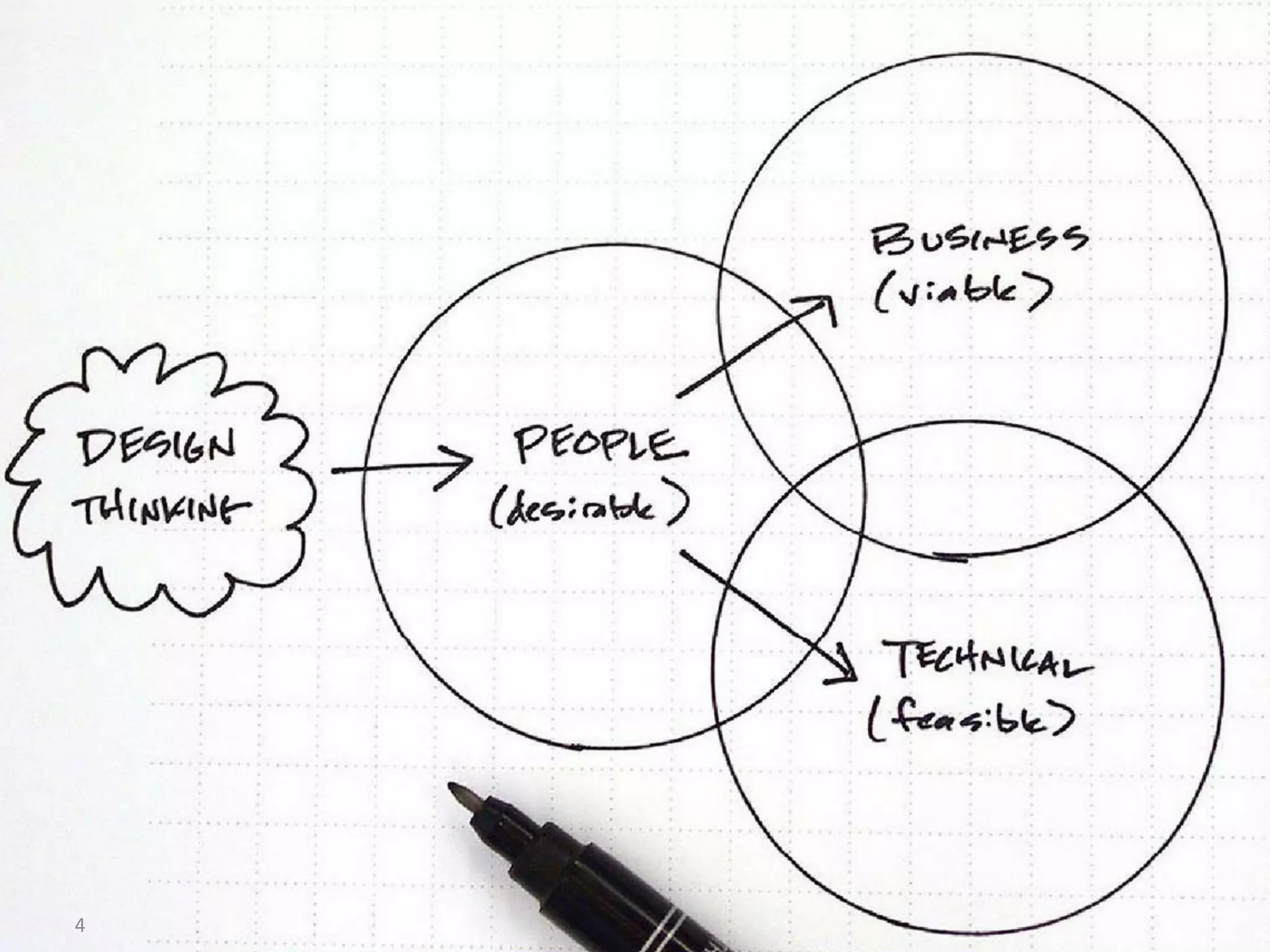
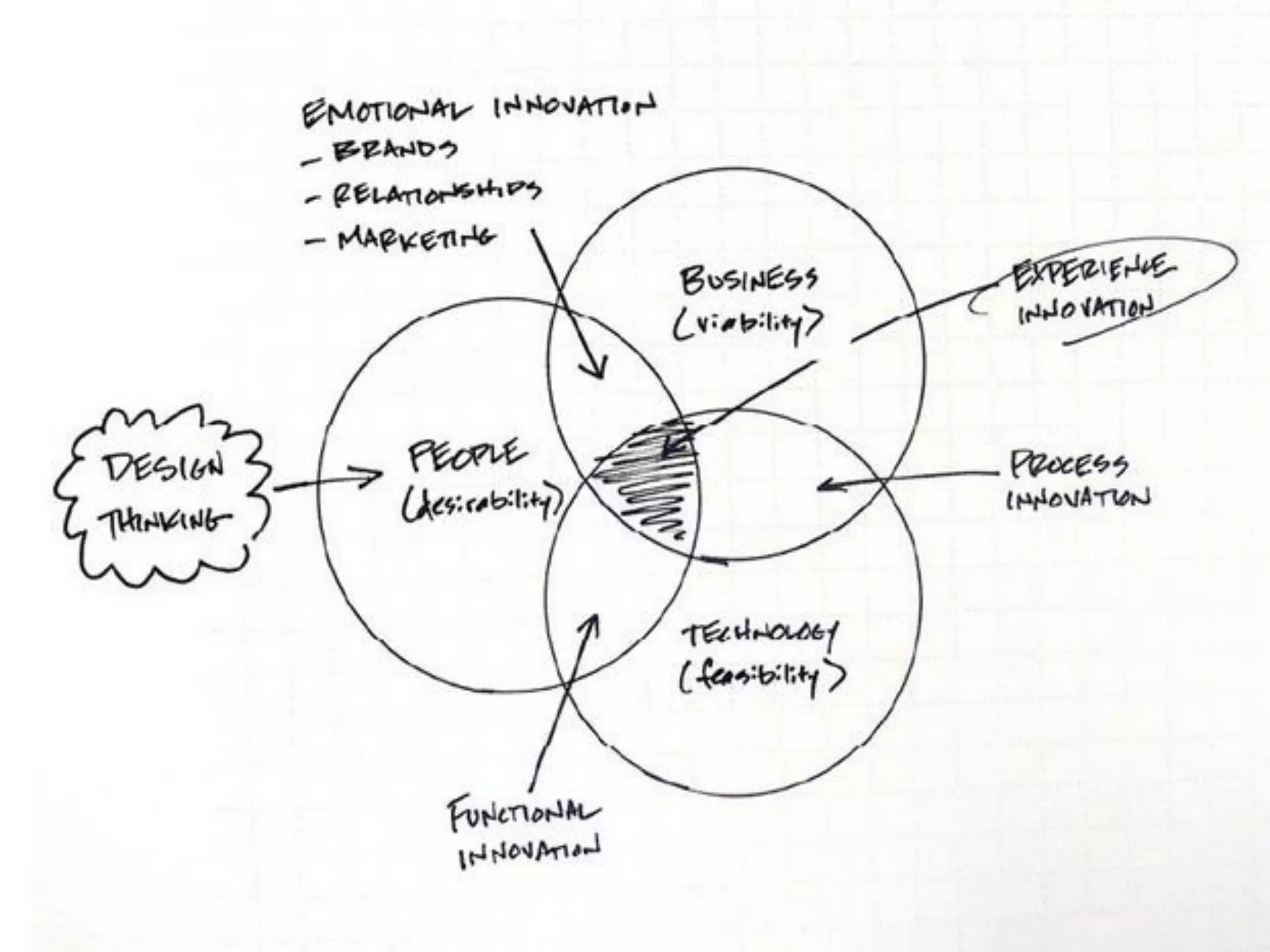
“Design thinking can be described
as a discipline that uses
the designer’s sensibility and methods
to match people’s needs
with what is technologically feasible and
what a viable business strategy can convert
into customer value and market opportunity.”
Tim Brown (Ideo)

3
4
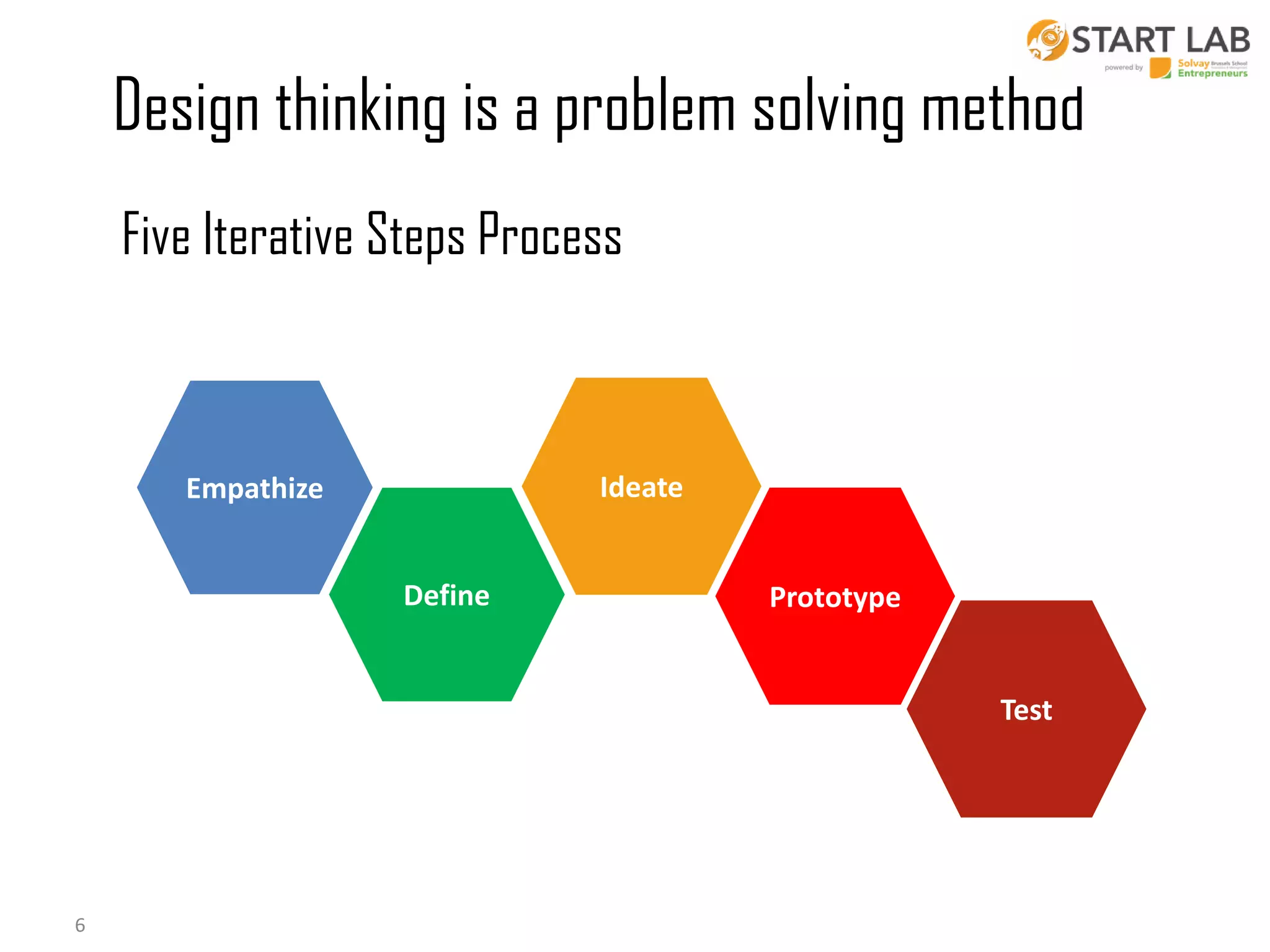
Design thinking is a problem solving method
Five Iterative Steps Process

Ideate

Empathize
Define

Prototype

Test

6
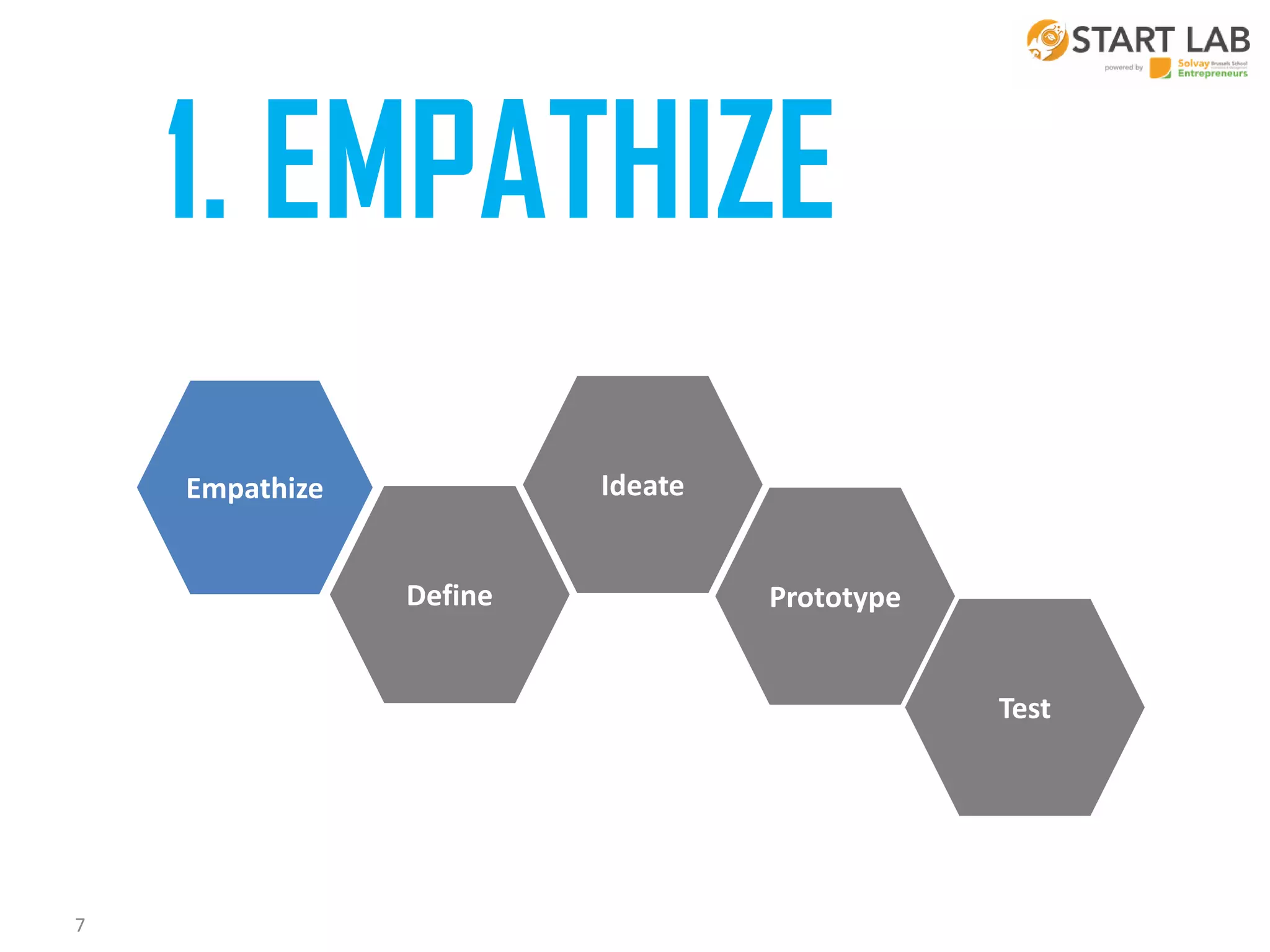
1. EMPATHIZE
Ideate

Empathize
Define

Prototype

Test

7
8
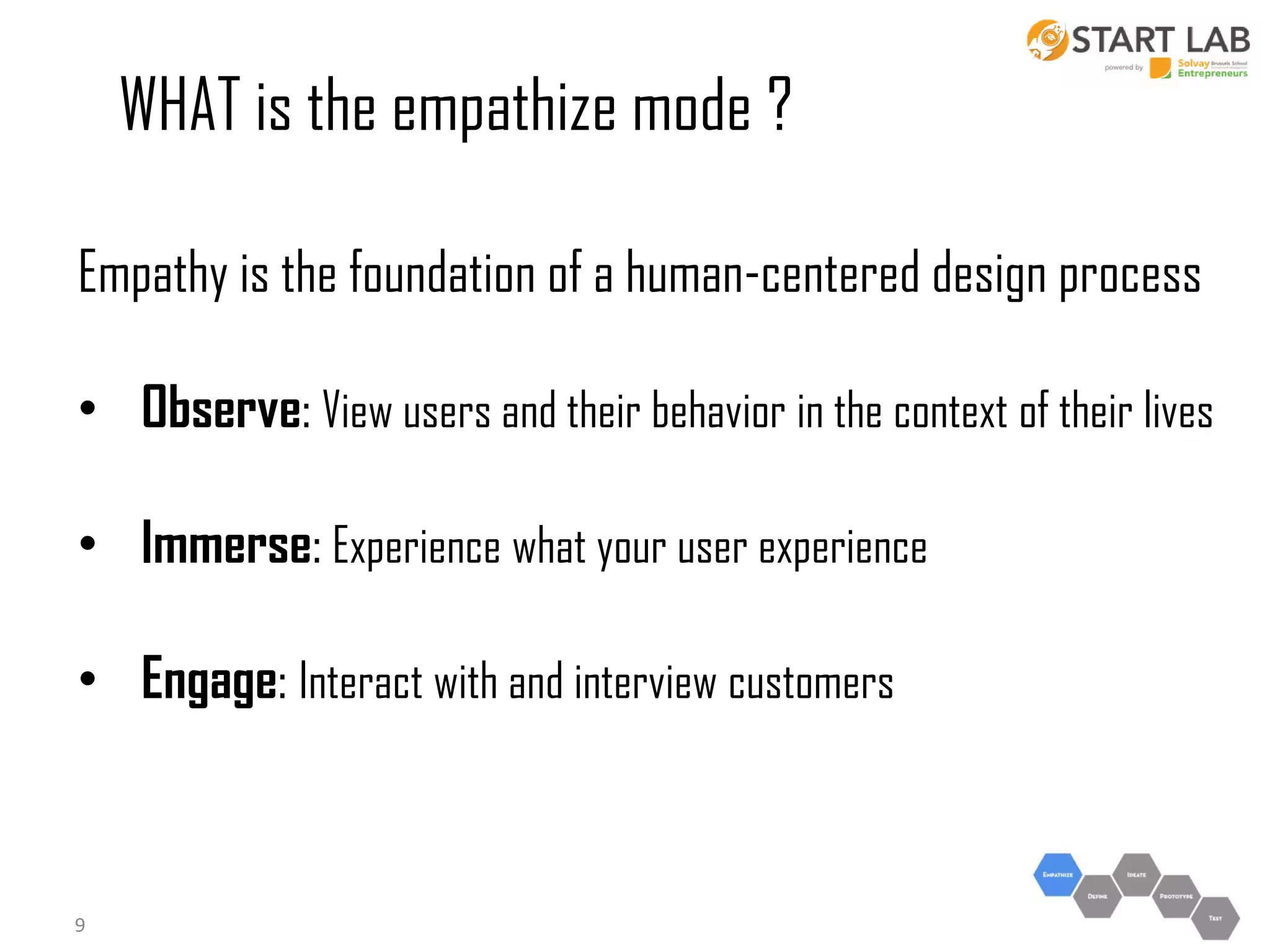
WHAT is the empathize mode ?
Empathy is the foundation of a human-centered design process
• Observe: View users and their behavior in the context of their lives
• Immerse: Experience what your user experience
• Engage: Interact with and interview customers

9
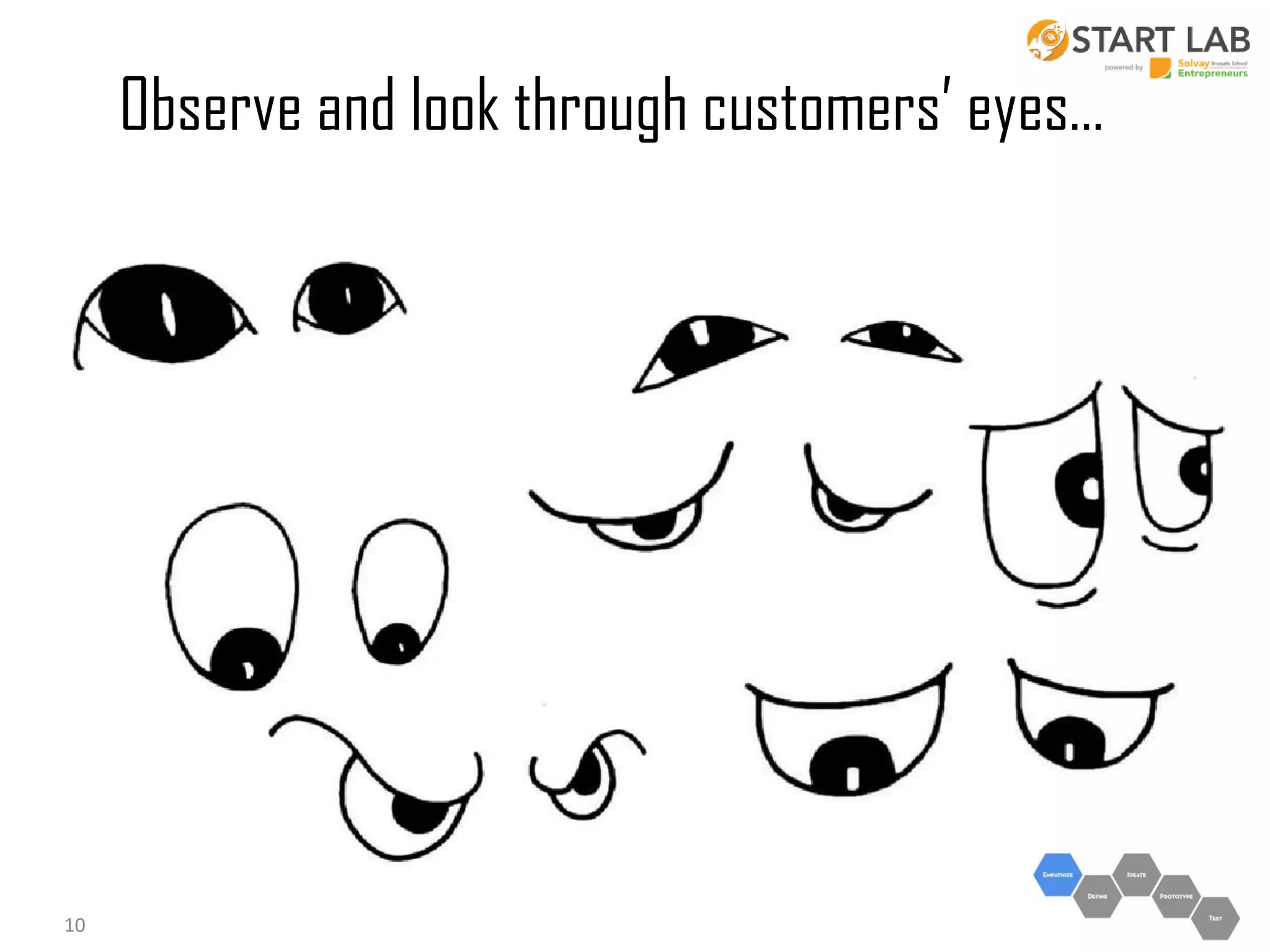
Observe and look through customers’ eyes…

10
Live like the customers…

11
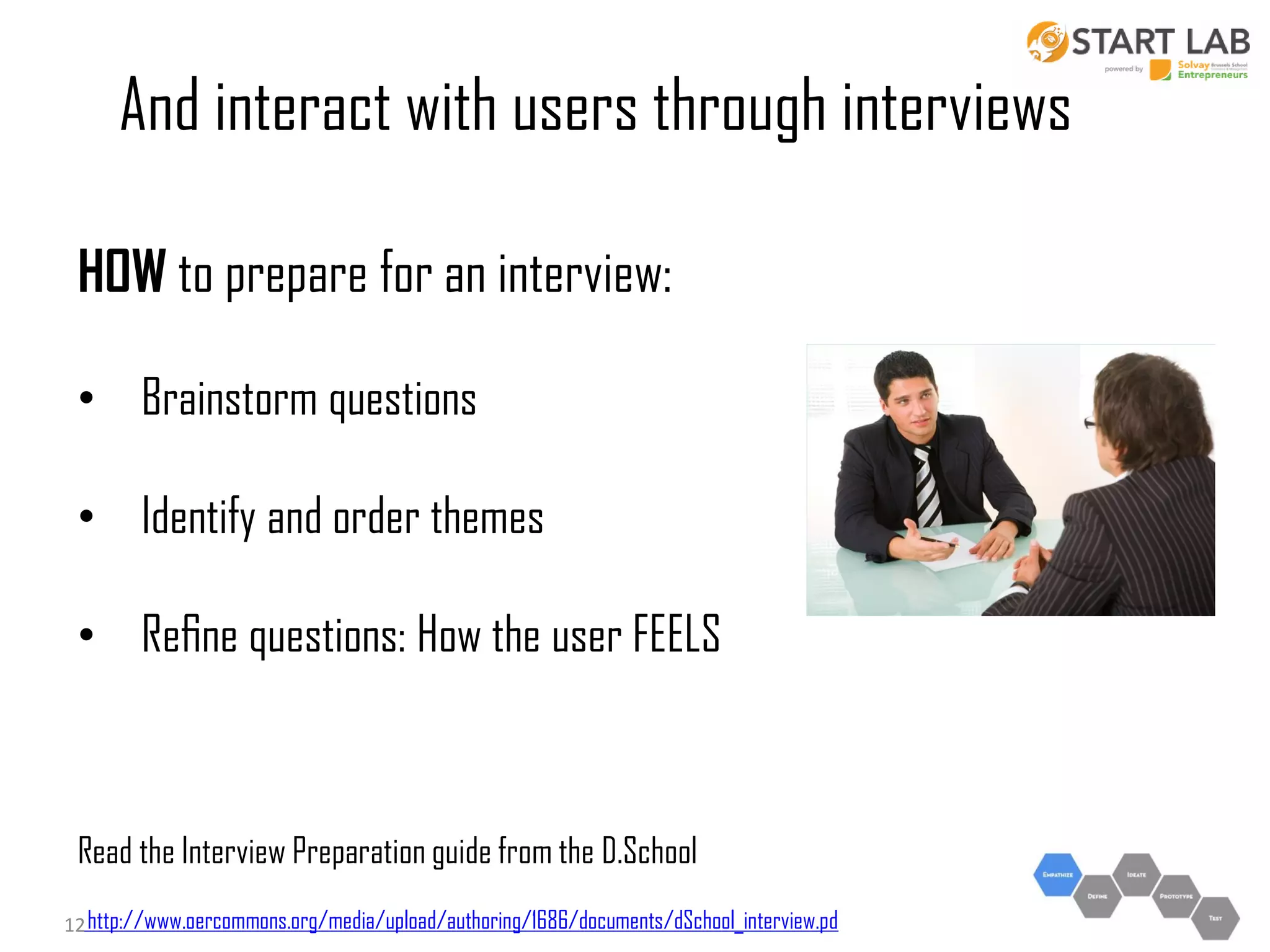
And interact with users through interviews
HOW to prepare for an interview:
• Brainstorm questions
• Identify and order themes
• Refine questions: How the user FEELS

Read the Interview Preparation guide from the D.School
12 http://www.oercommons.org/media/upload/authoring/1686/documents/dSchool_interview.pd
GO OUT TO TALK TO
YOUR CUSTOMERS !
13
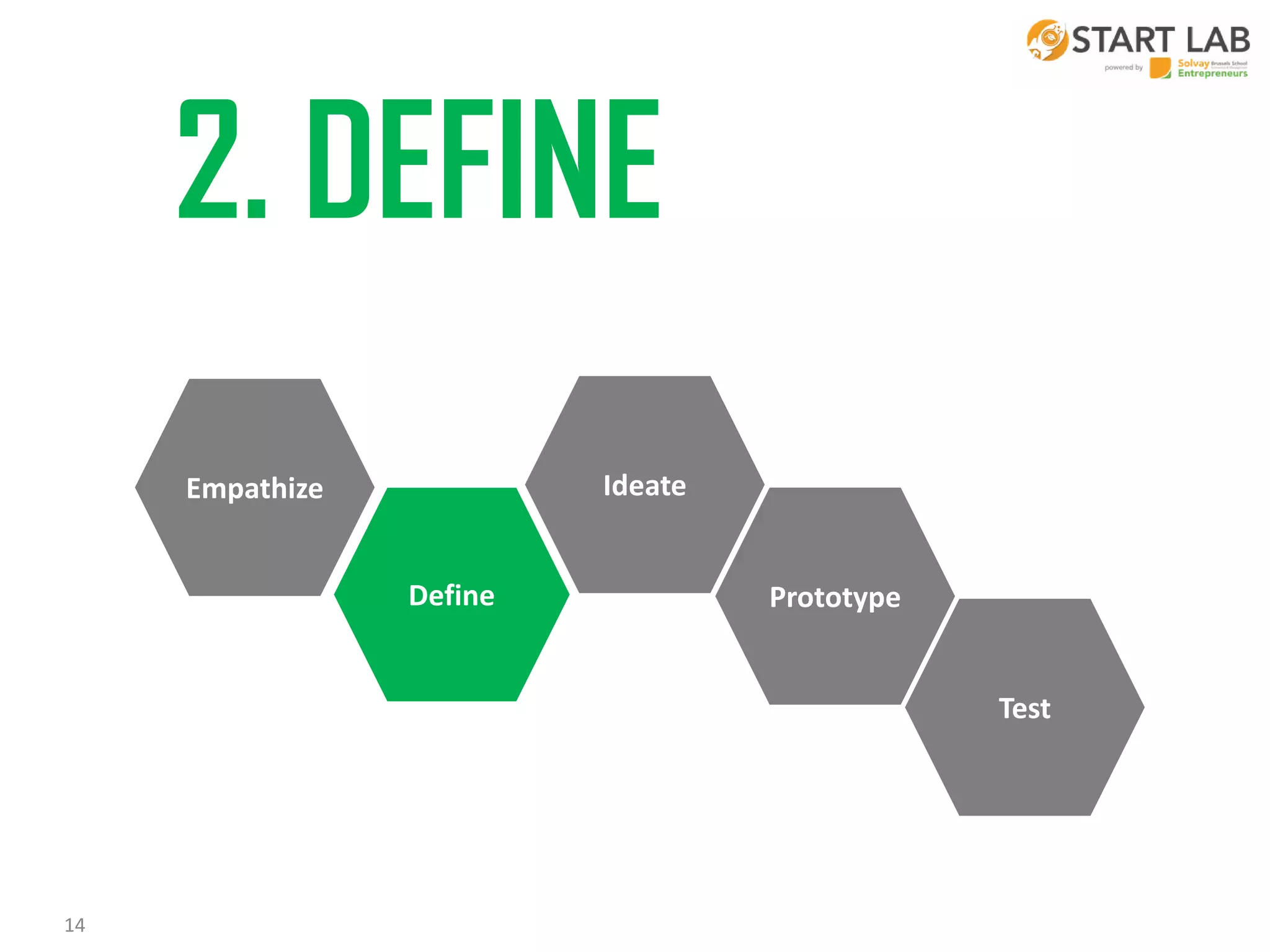
2. DEFINE
Ideate

Empathize
Define

Prototype

Test

14
WHAT IS
THE PROBLEM
YOU WANT TO
SOLVE ?
15
“If I had an hour to solve a problem solution. I would
spend the first fifty minutes determining how to…
Frame the problem
...for once I know the proper question to ask
I can solve the problem in less than 5 minutes”
Albert Einstein
16
WHAT is the define mode ?
Synthesize your empathy findings into needs and insights
• Focus rather than flaring
• Develop a deep understanding of your users
• Come up with an actionable problem statement

17
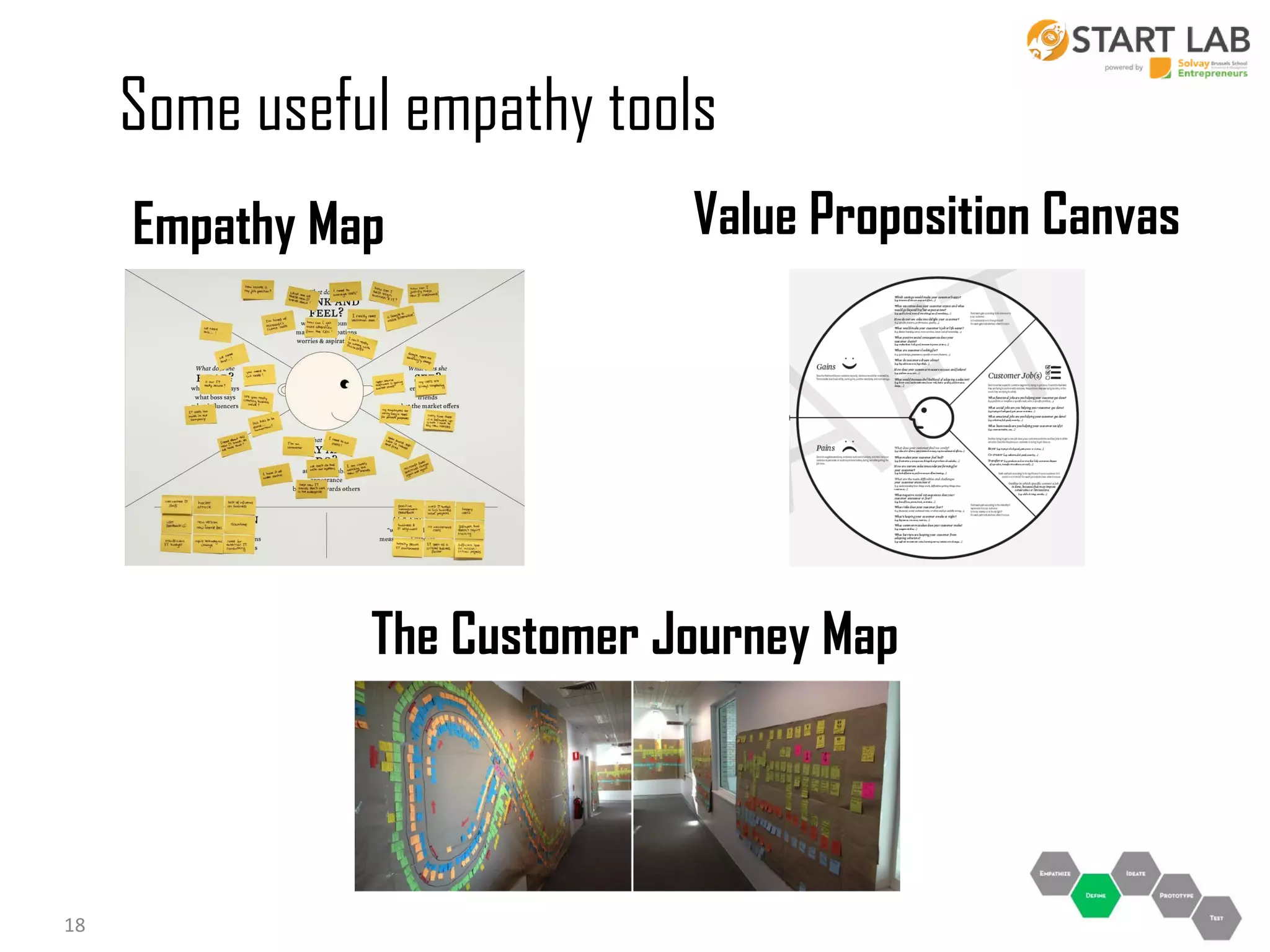
Some useful empathy tools
Empathy Map

Value Proposition Canvas

The Customer Journey Map

18
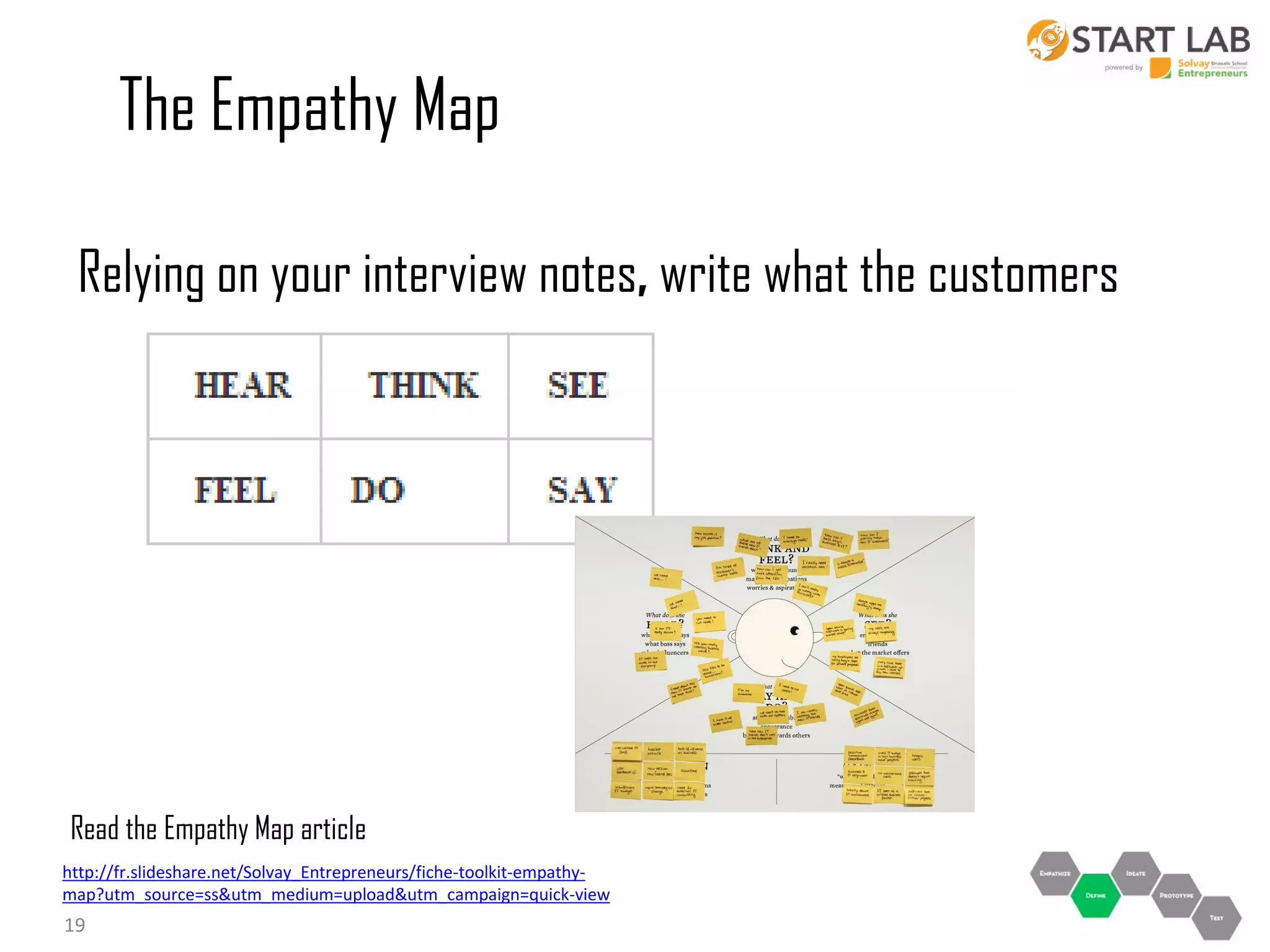
The Empathy Map
Relying on your interview notes, write what the customers

Read the Empathy Map article
http://fr.slideshare.net/Solvay_Entrepreneurs/fiche-toolkit-empathymap?utm_source=ss&utm_medium=upload&utm_campaign=quick-view

19
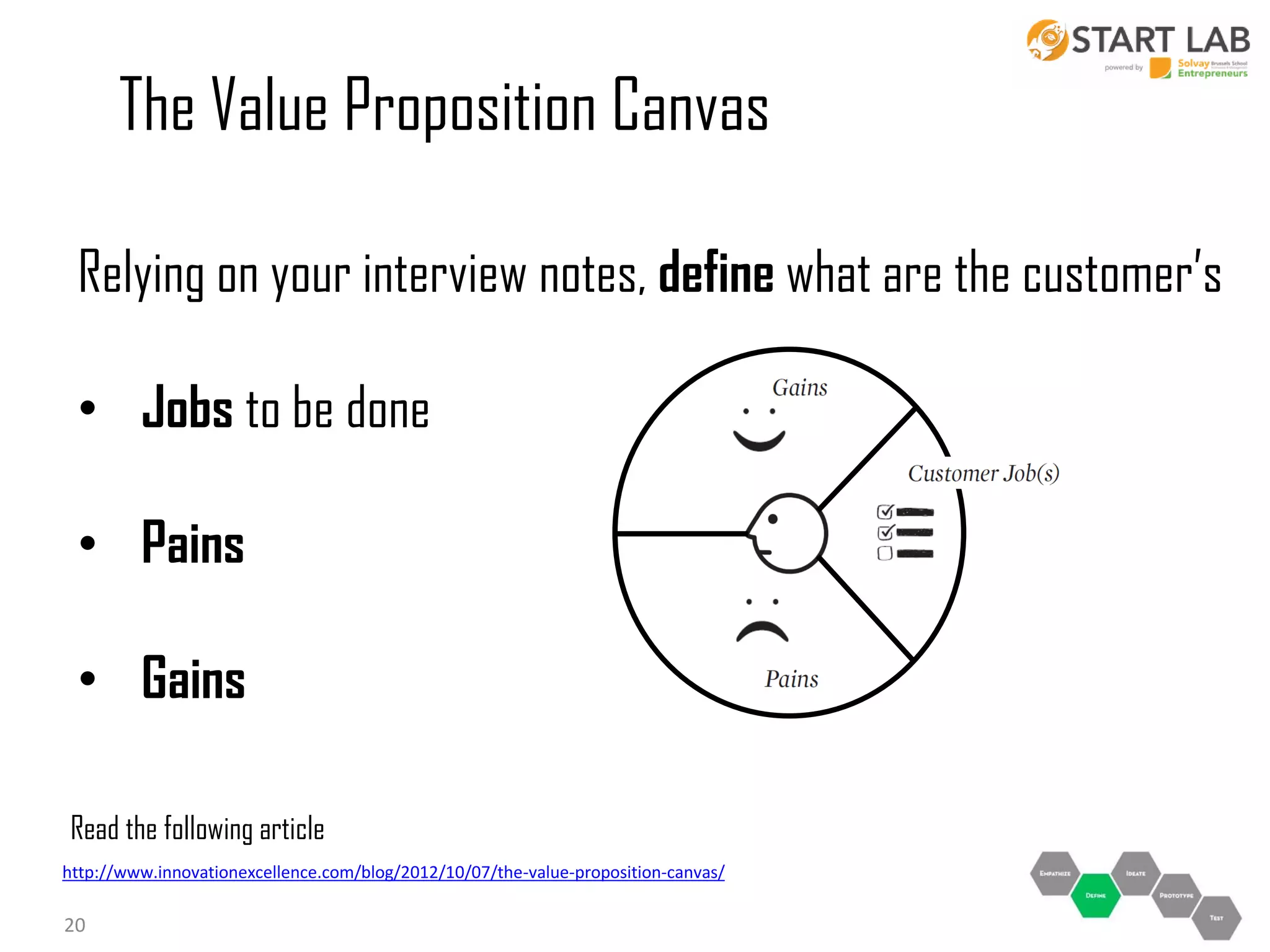
The Value Proposition Canvas
Relying on your interview notes, define what are the customer’s
• Jobs to be done
• Pains
• Gains
Read the following article
http://www.innovationexcellence.com/blog/2012/10/07/the-value-proposition-canvas/

20
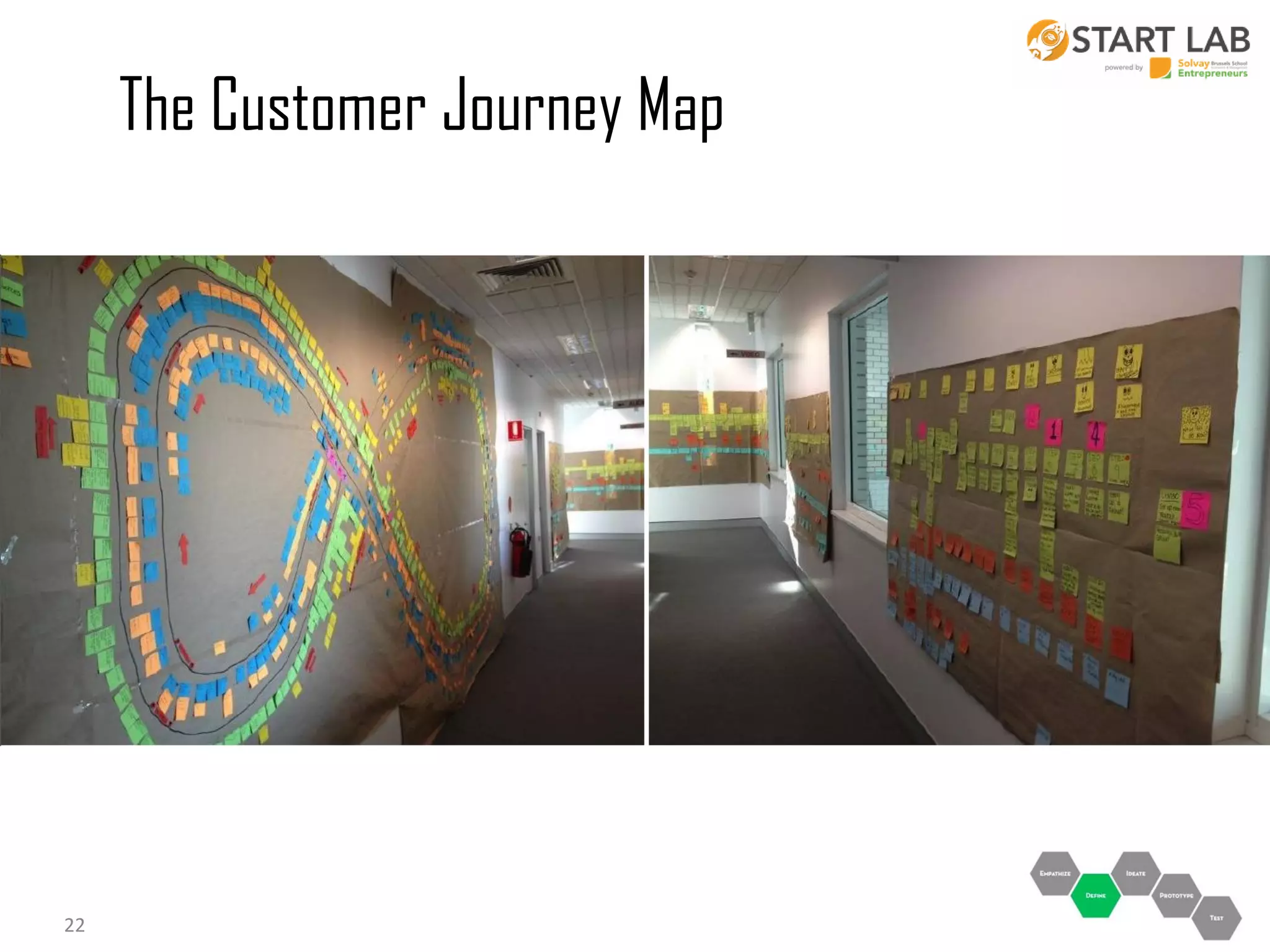
The Customer Journey Map
Describes the journey of a customer and emphases on
• The goal of your customers
• The customer experience flow
• The touch points that characterize the service experience

• The interaction and the relationship
21
The Customer Journey Map

22
23
3. IDEATE
24
3. IDEATE
Ideate

Empathize
Define

Prototype

Test

25
WHAT IF ?
26
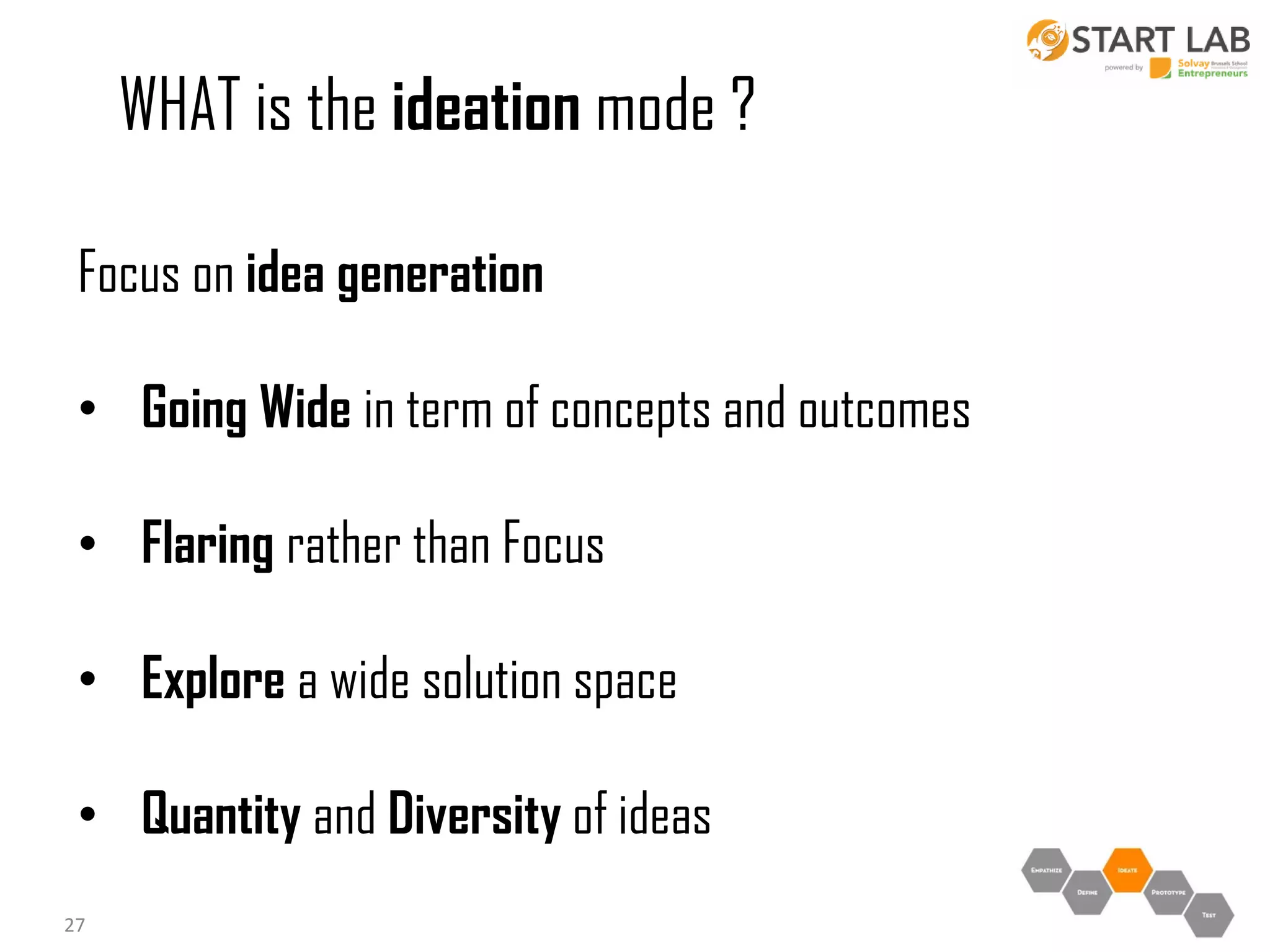
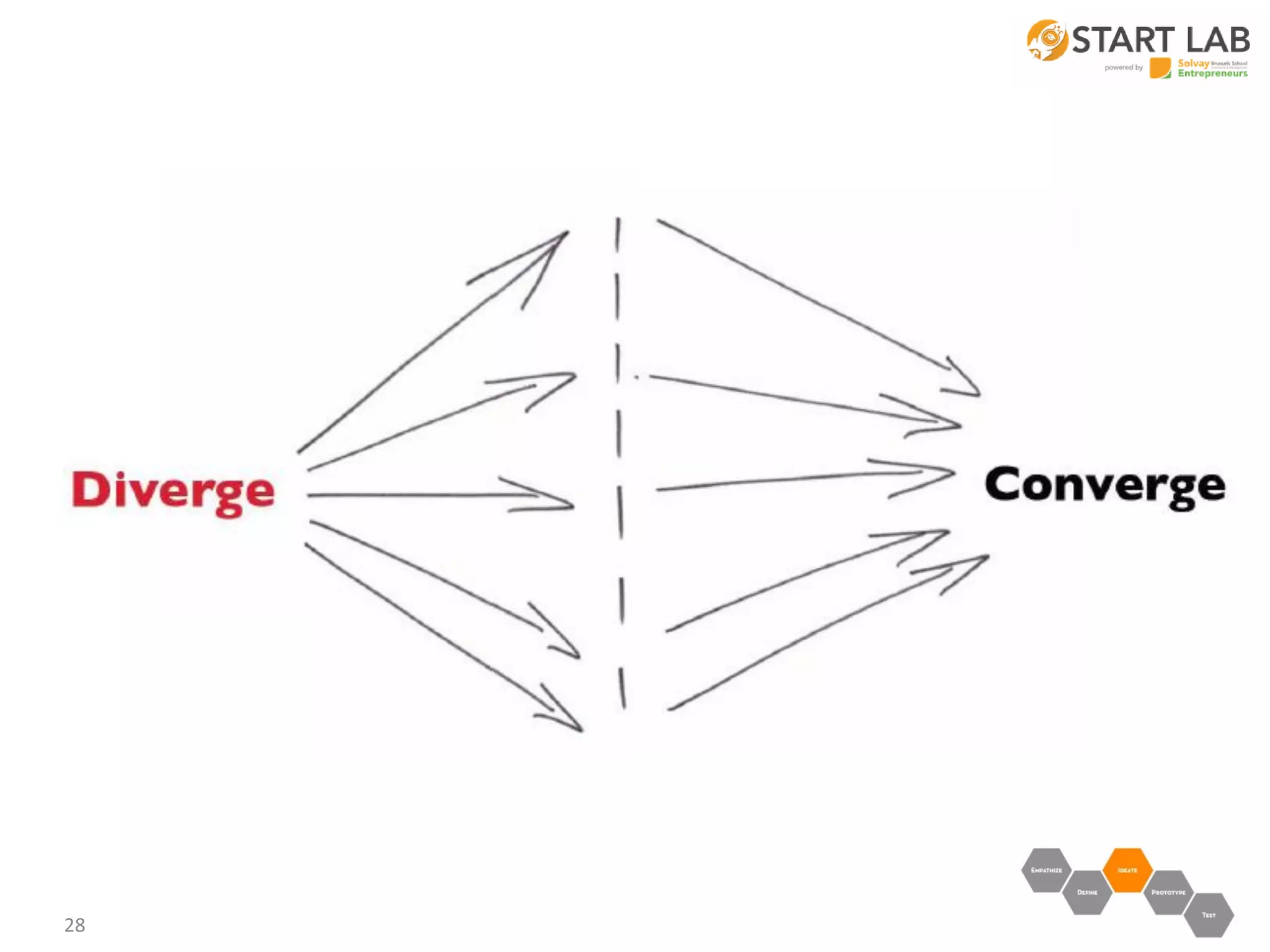
WHAT is the ideation mode ?
Focus on idea generation
• Going Wide in term of concepts and outcomes
• Flaring rather than Focus
• Explore a wide solution space

• Quantity and Diversity of ideas
27
28
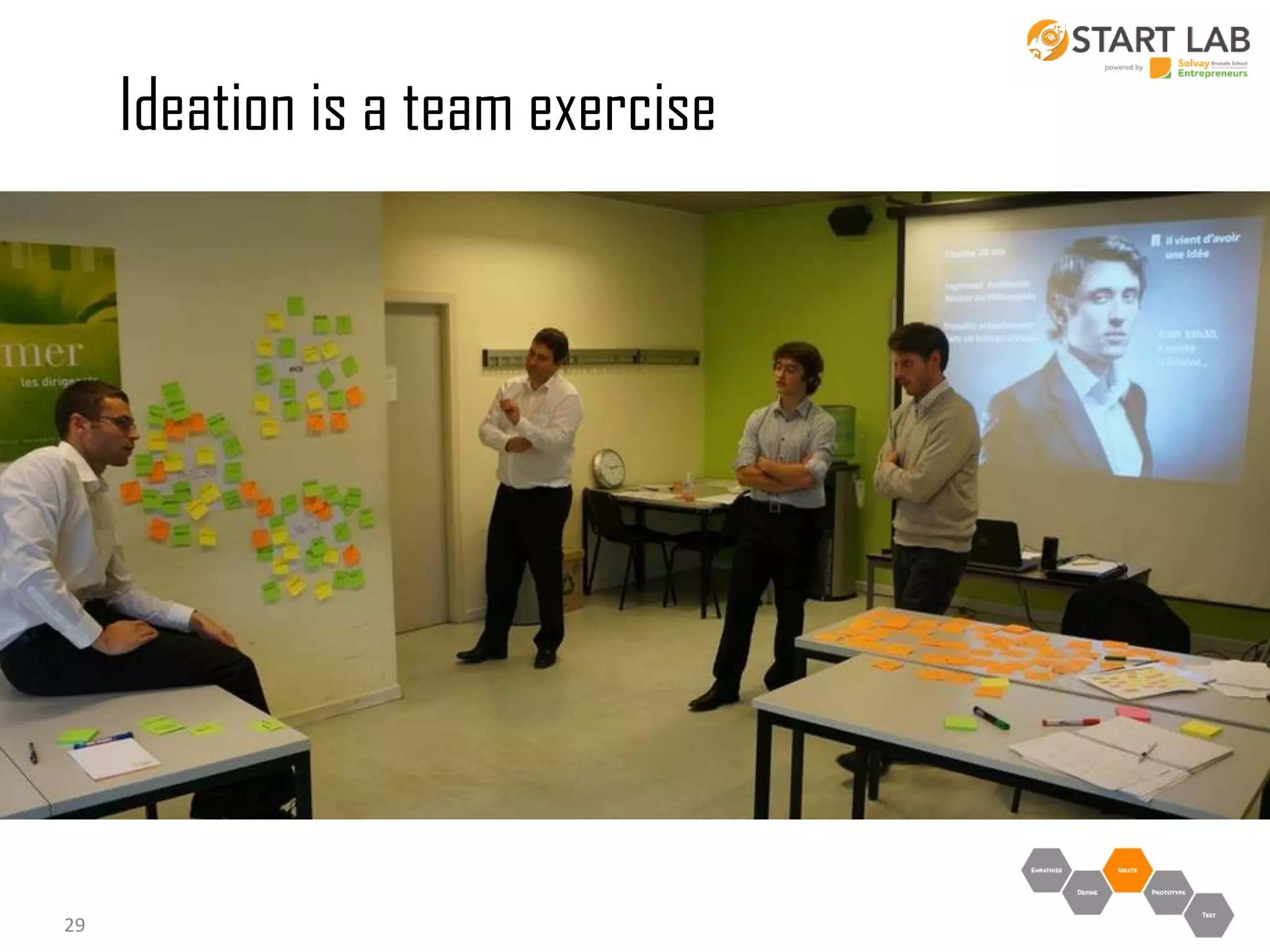
Ideation is a team exercise

29
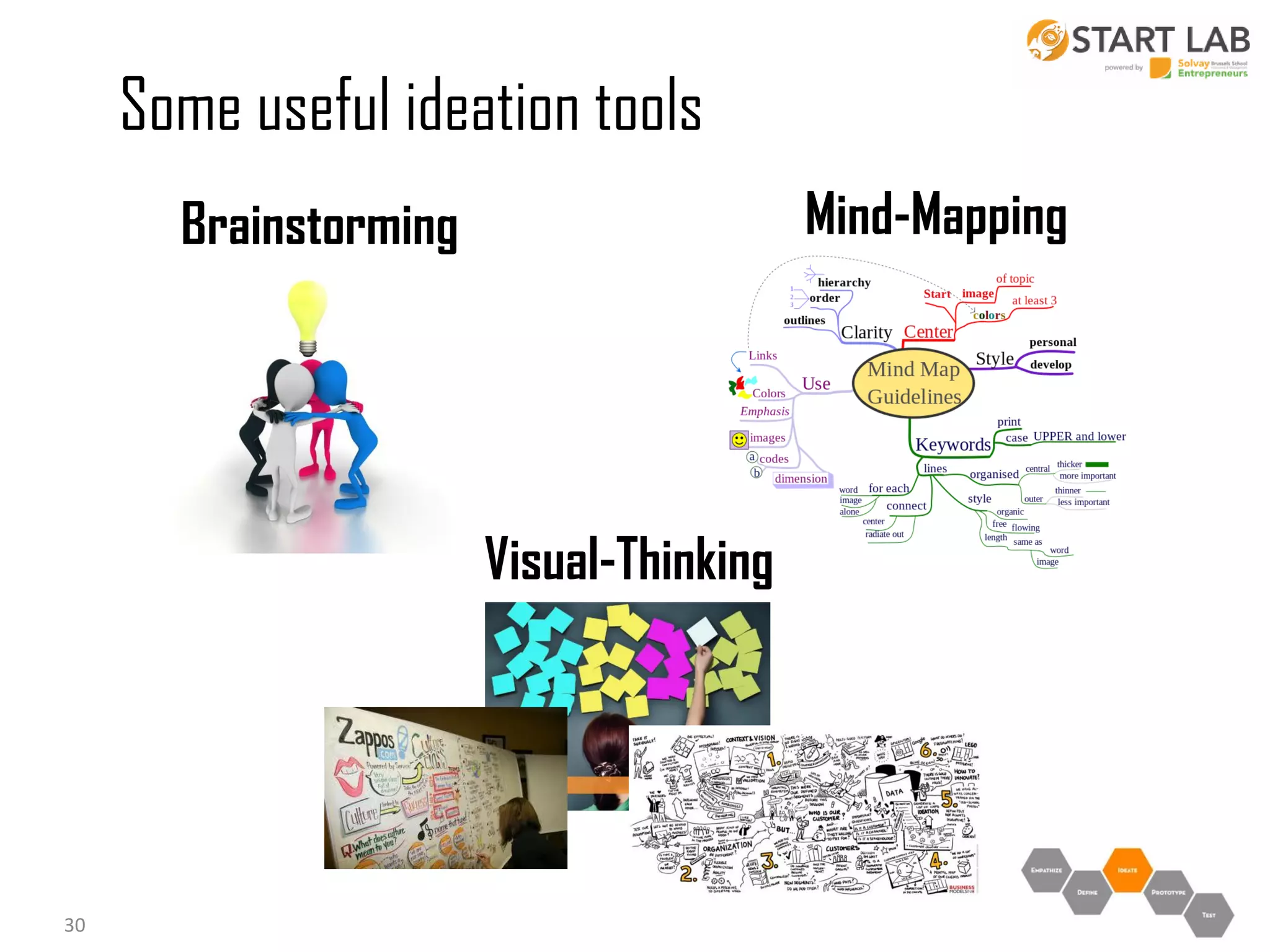
Some useful ideation tools
Mind-Mapping

Brainstorming

Visual-Thinking

30
4. Prototype
Ideate

Empathize
Define

Prototype

Test

31
WHAT is the prototype mode ?
Getting ideas out of our head in a physical world
• Several physical forms
• Linked to the progress of your exploration
• Explore possibilities with rapid iterative prototyping

• Fast learning approach
32
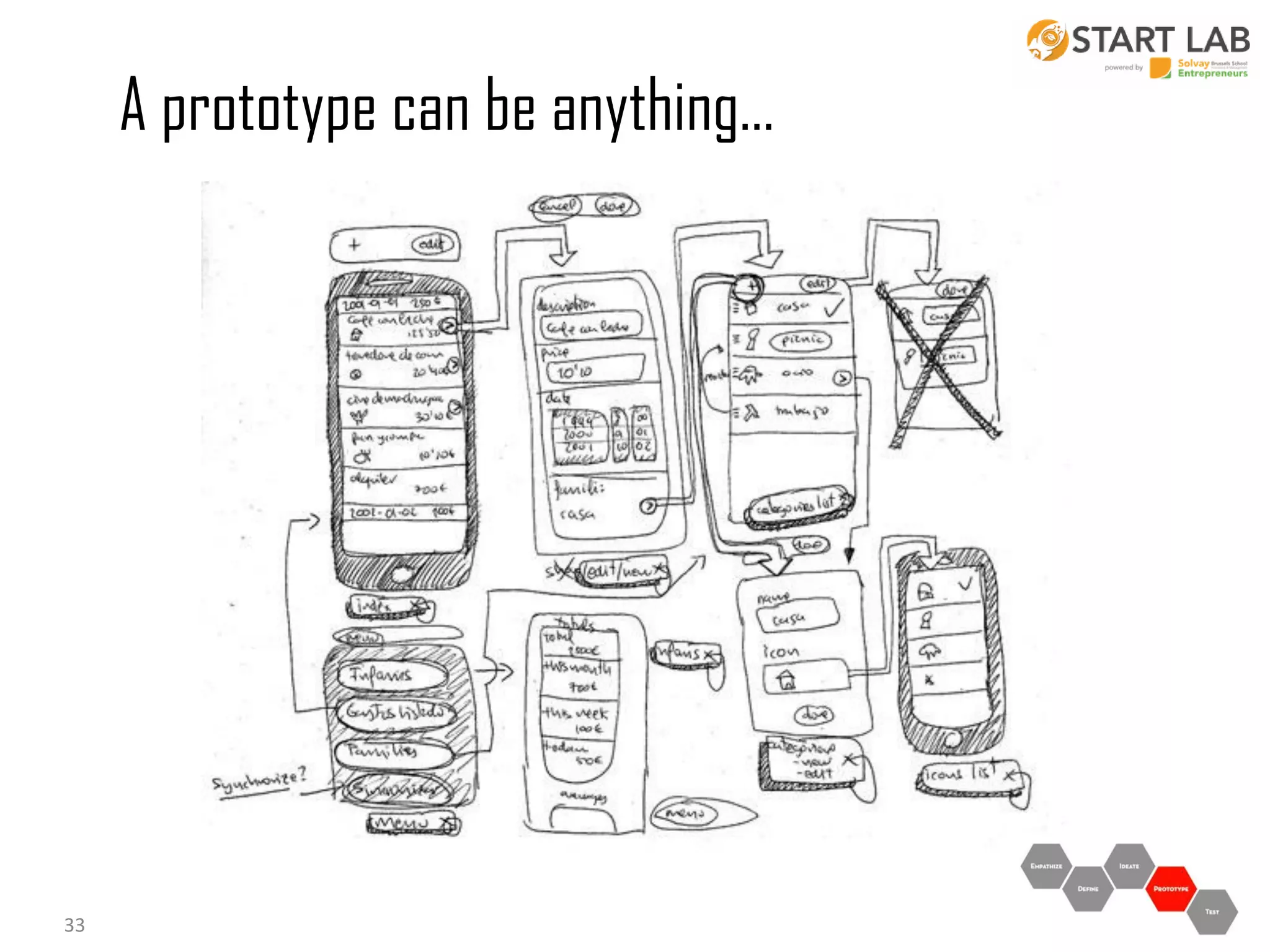
A prototype can be anything…

33
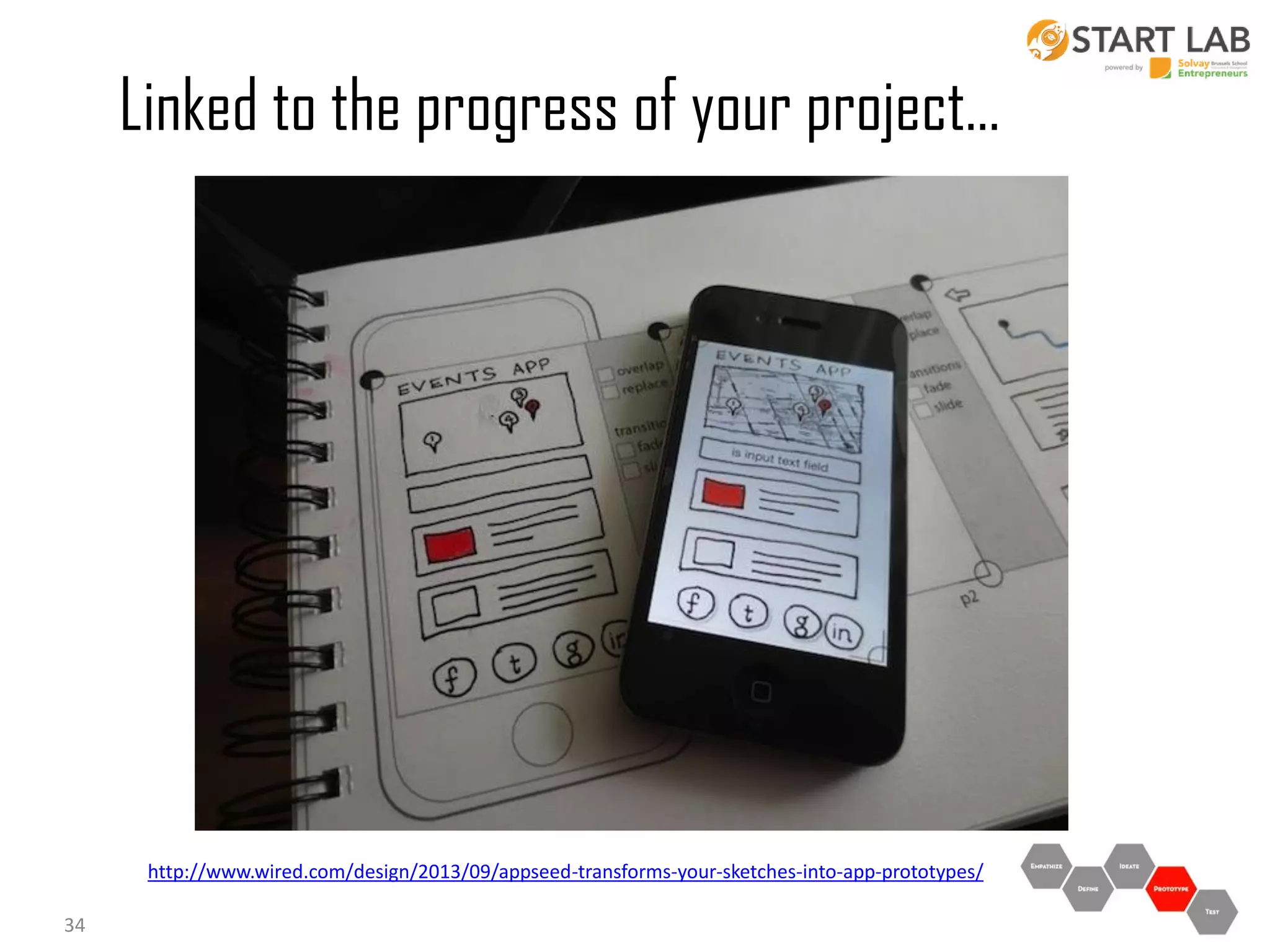
Linked to the progress of your project…

http://www.wired.com/design/2013/09/appseed-transforms-your-sketches-into-app-prototypes/
34
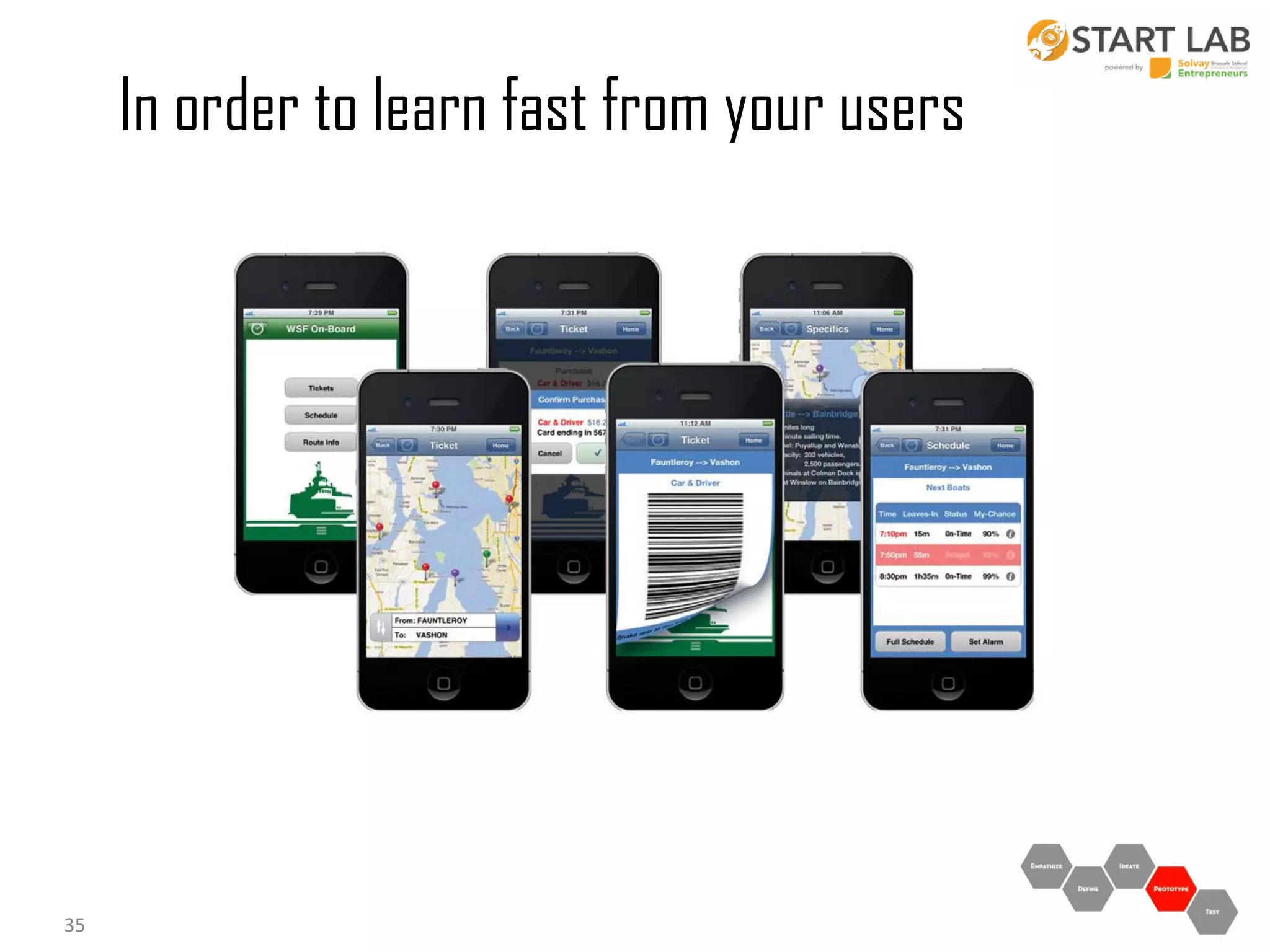
In order to learn fast from your users

35
Prototypes are most successful
when people interact with them…
…What you learn from those interactions
can help drive deeper empathy,
as well as shape successful solutions.

36
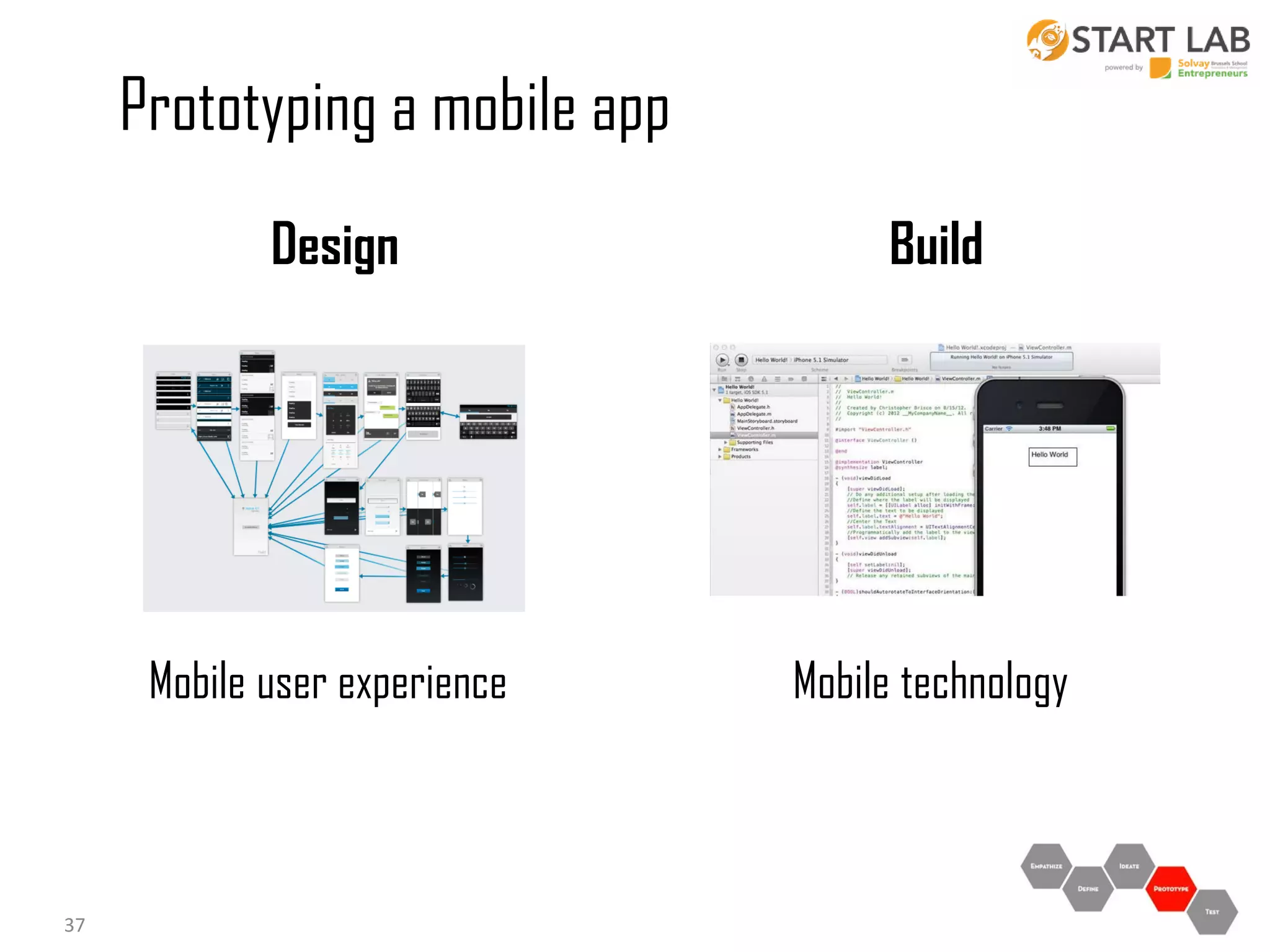
Prototyping a mobile app
Design

Mobile user experience

37

Build

Mobile technology
BUILD THE
EXPERIENCE,
NOT
THE TECHNOLOGY !
38
5. TEST
Ideate

Empathize
Define

Prototype

Test

39
“Failure is simply the opportunity to begin again,
this time more intelligently.“
Henry Ford

40
WHAT is the Test mode ?
Testing is the chance to refine your solution
• Real context in use
• Hypothesis validation
• Get feedback from our users

• Use Metrics
41
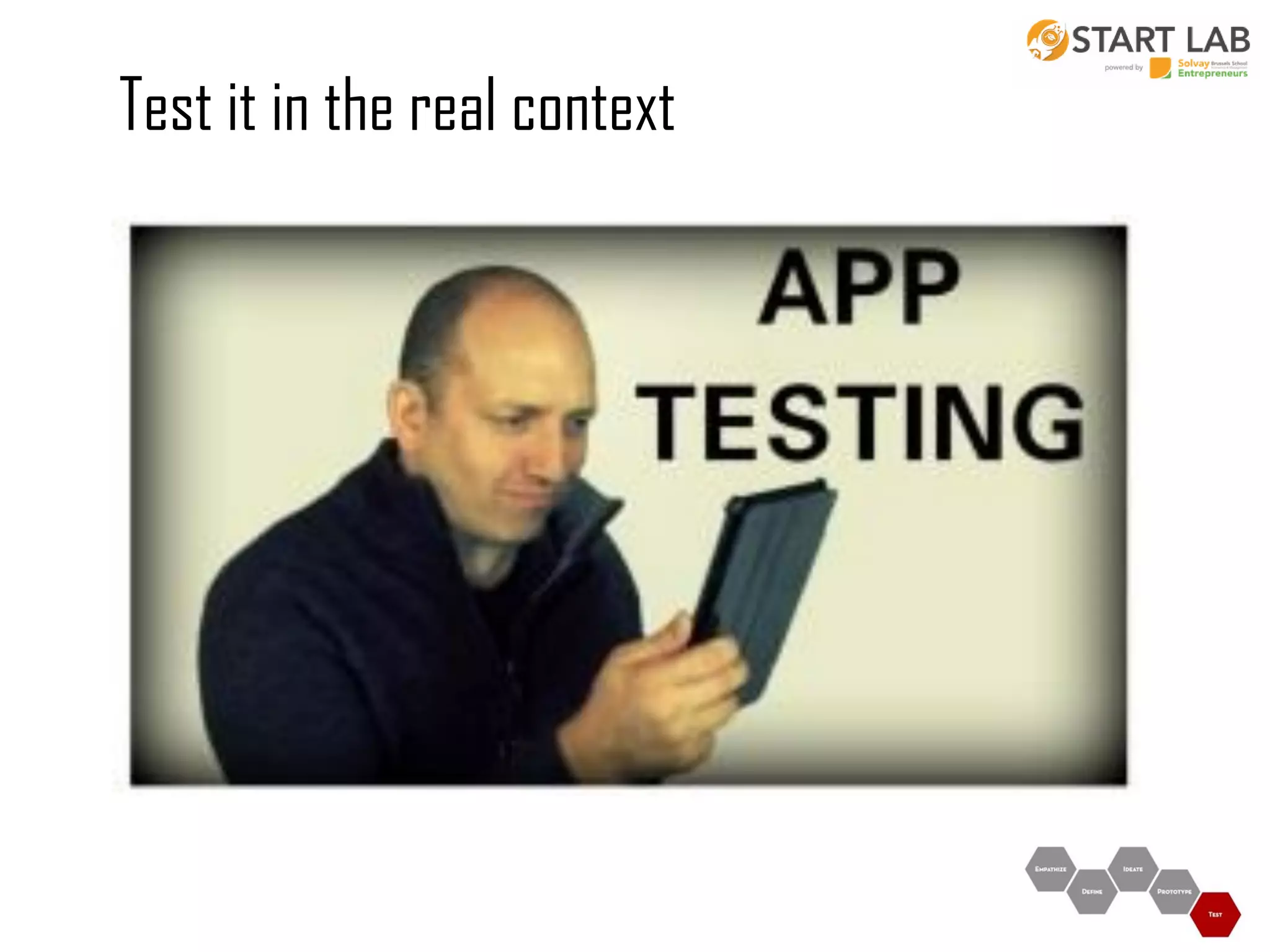
Test it in the real context
Get Feedback

43
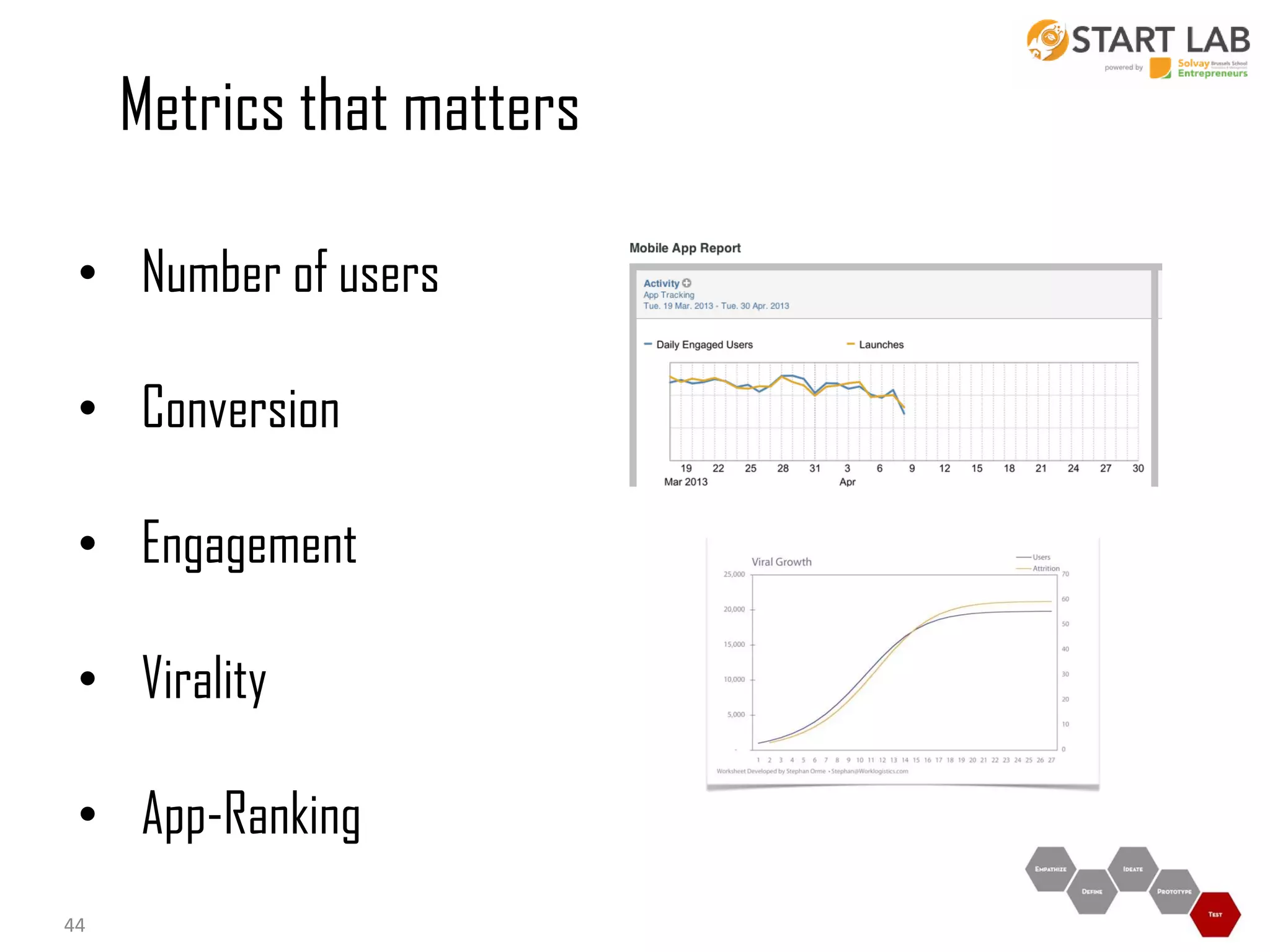
Metrics that matters
• Number of users
• Conversion
• Engagement
• Virality

• App-Ranking
44
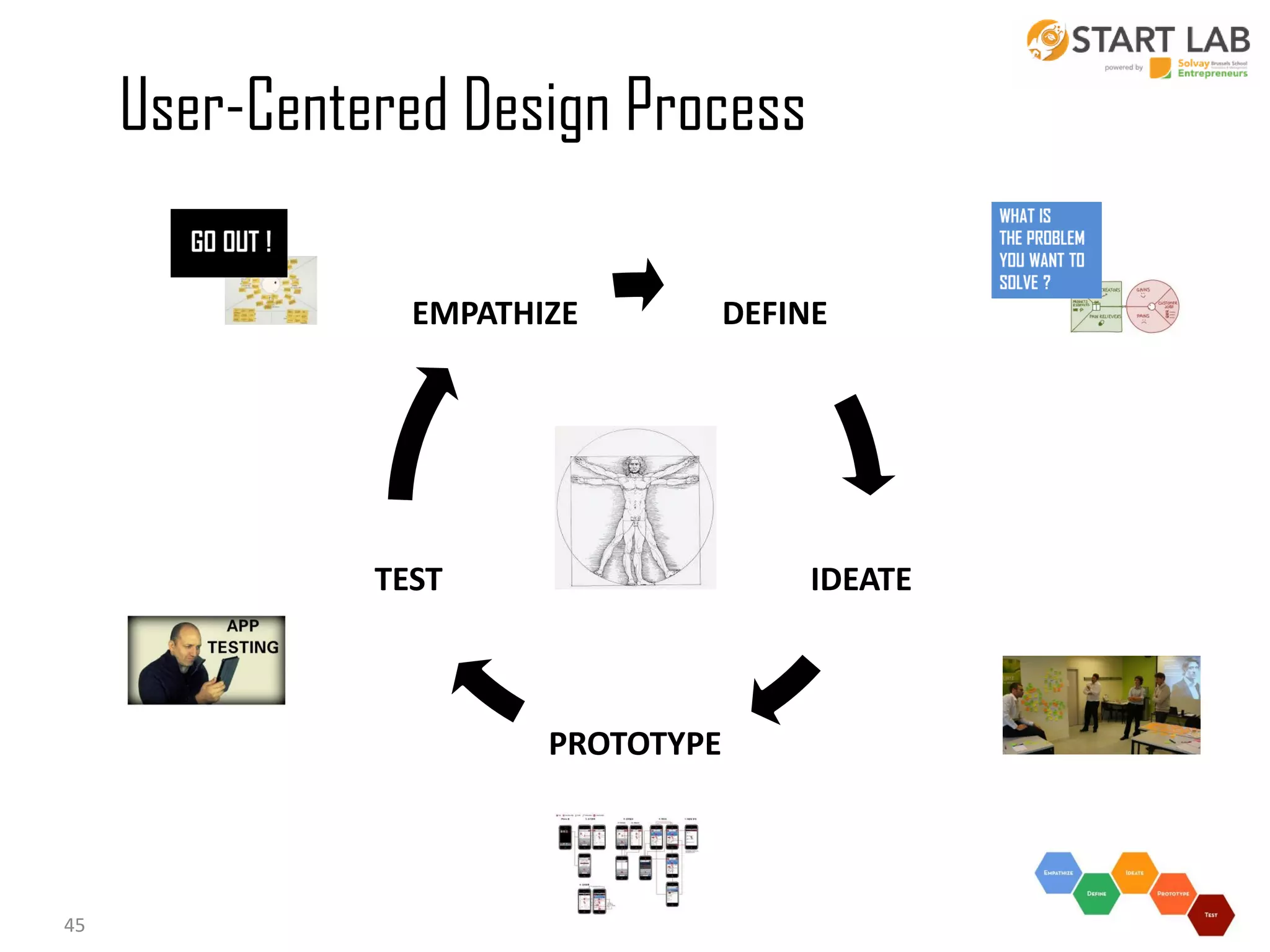
User-Centered Design Process
EMPATHIZE

TEST

IDEATE

PROTOTYPE

45

DEFINE
46
BUSINESS MODEL
DESIGN
47
48
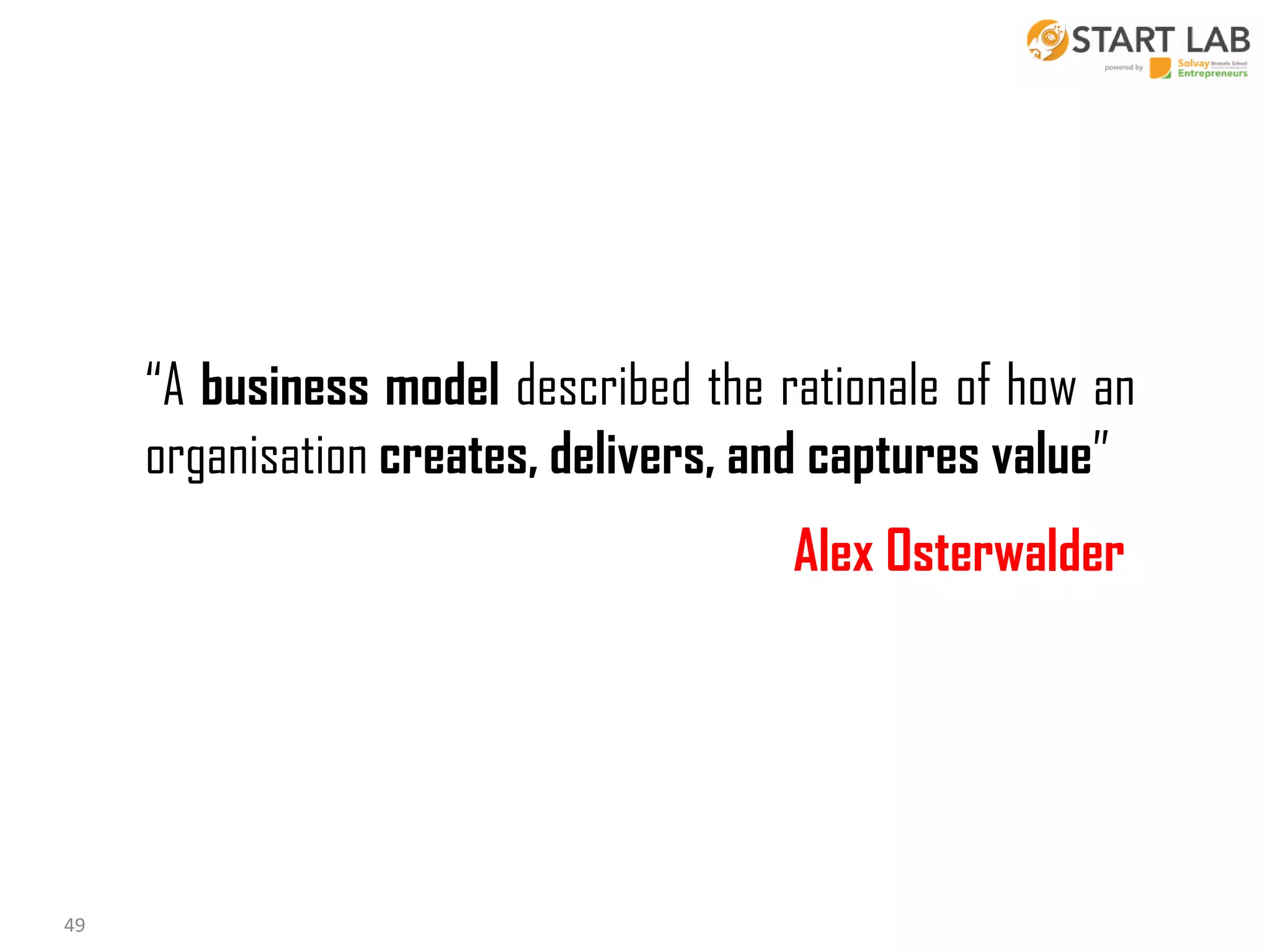
“A business model described the rationale of how an
organisation creates, delivers, and captures value”
Alex Osterwalder

49
questions
50
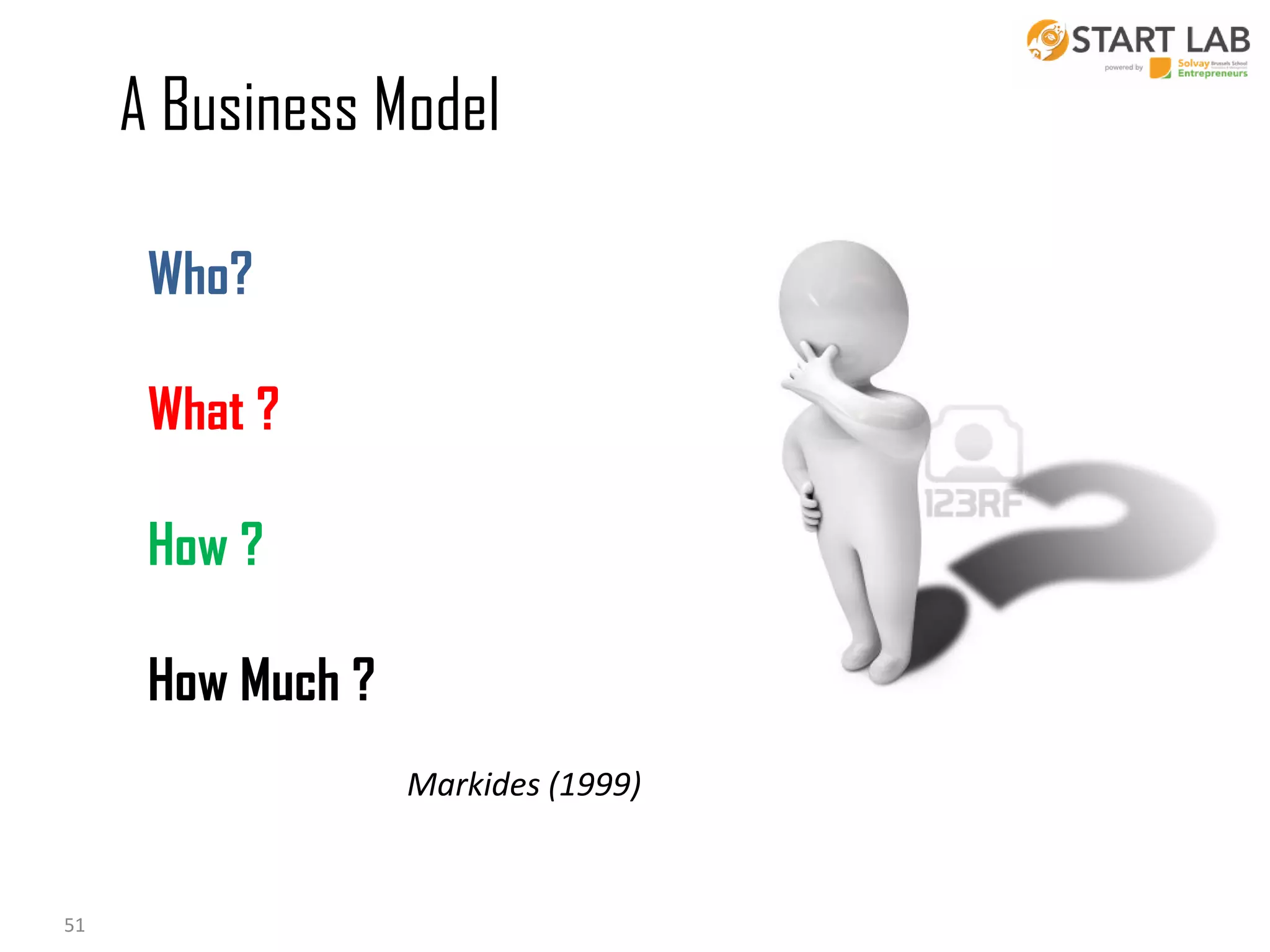
A Business Model
Who?
What ?
How ?

How Much ?
Markides (1999)

51
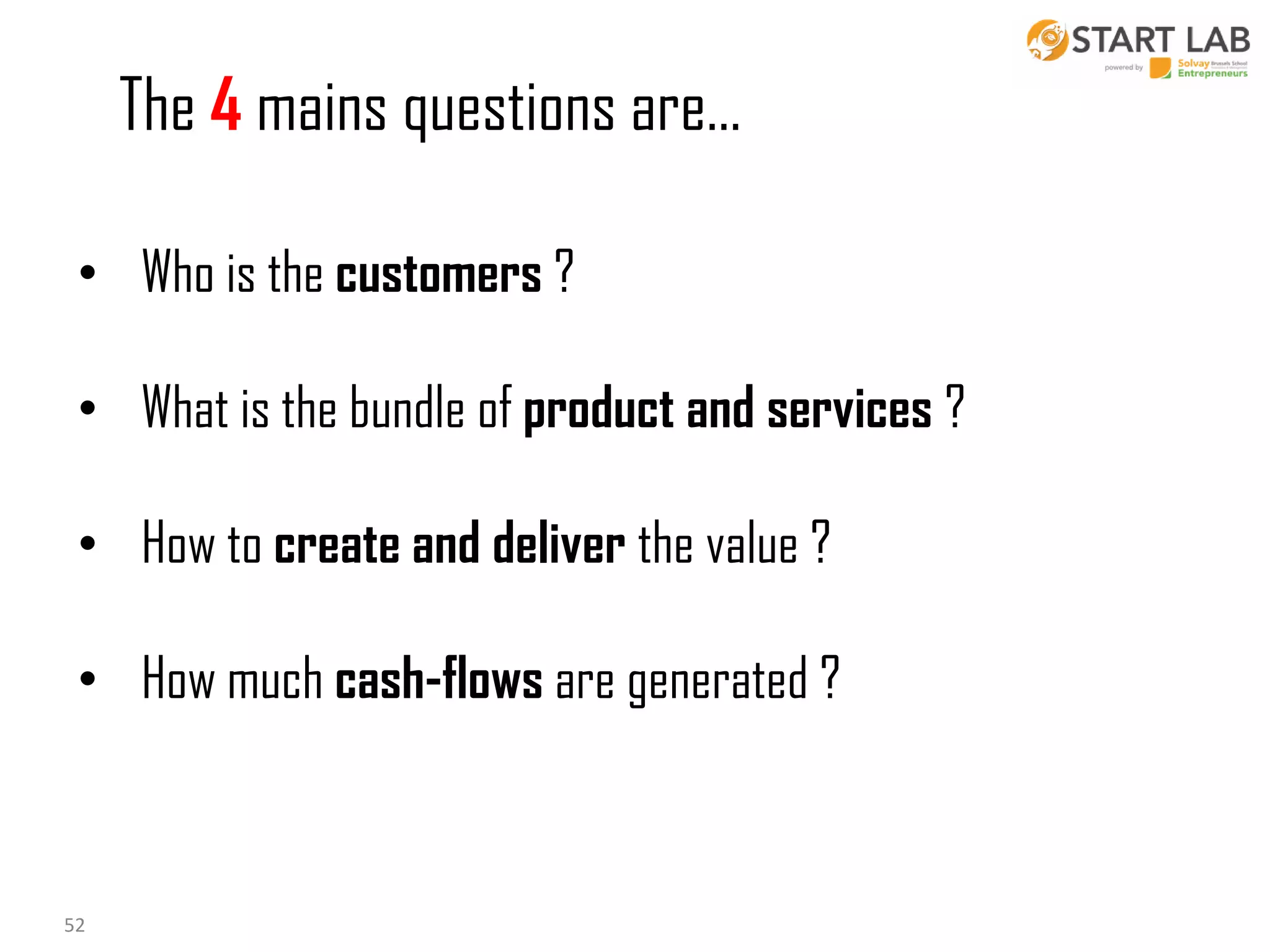
The 4 mains questions are…
• Who is the customers ?
• What is the bundle of product and services ?
• How to create and deliver the value ?
• How much cash-flows are generated ?

52
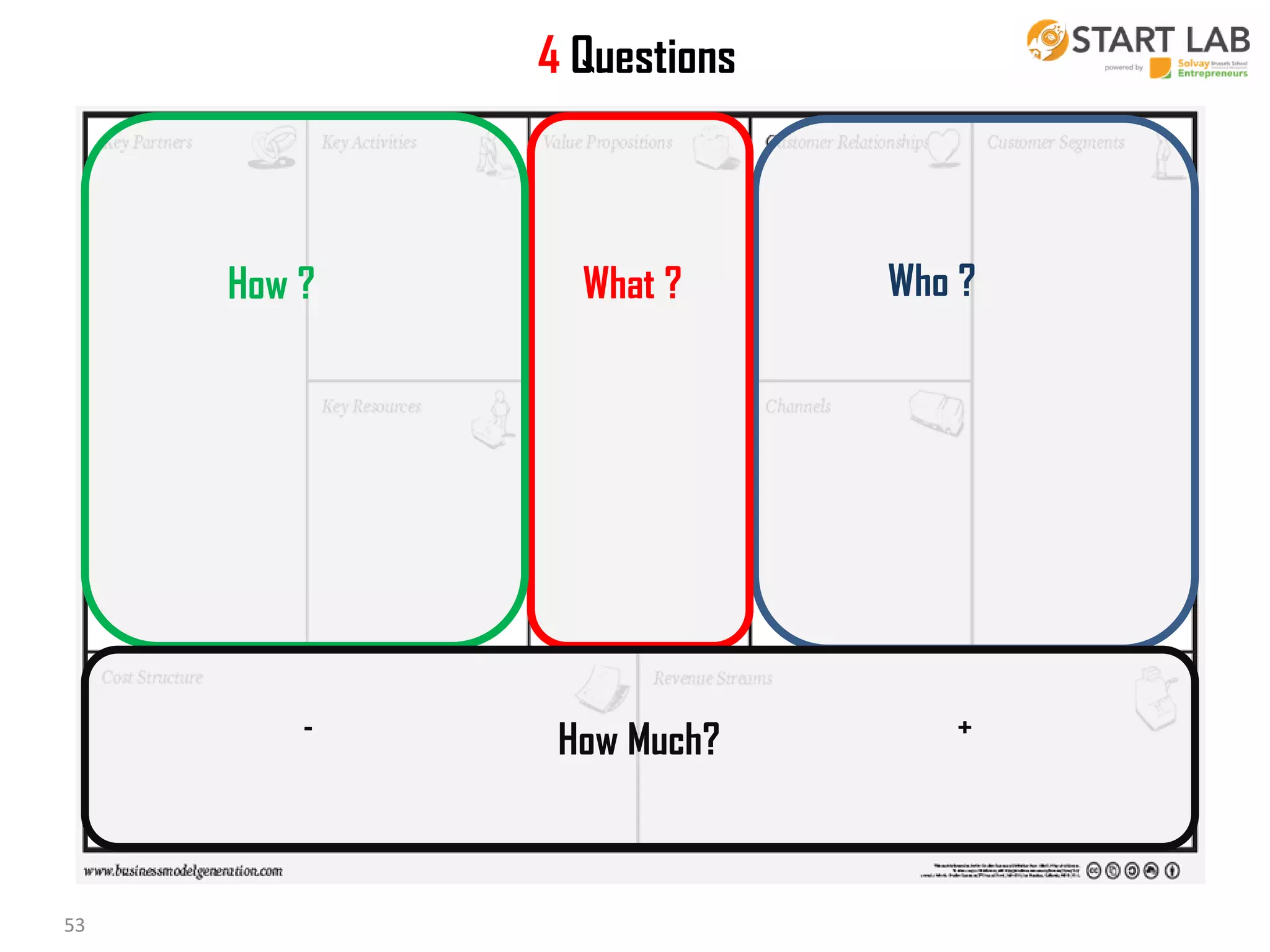
4 Questions

How ?

-

53

What ?

How Much?

Who ?

+
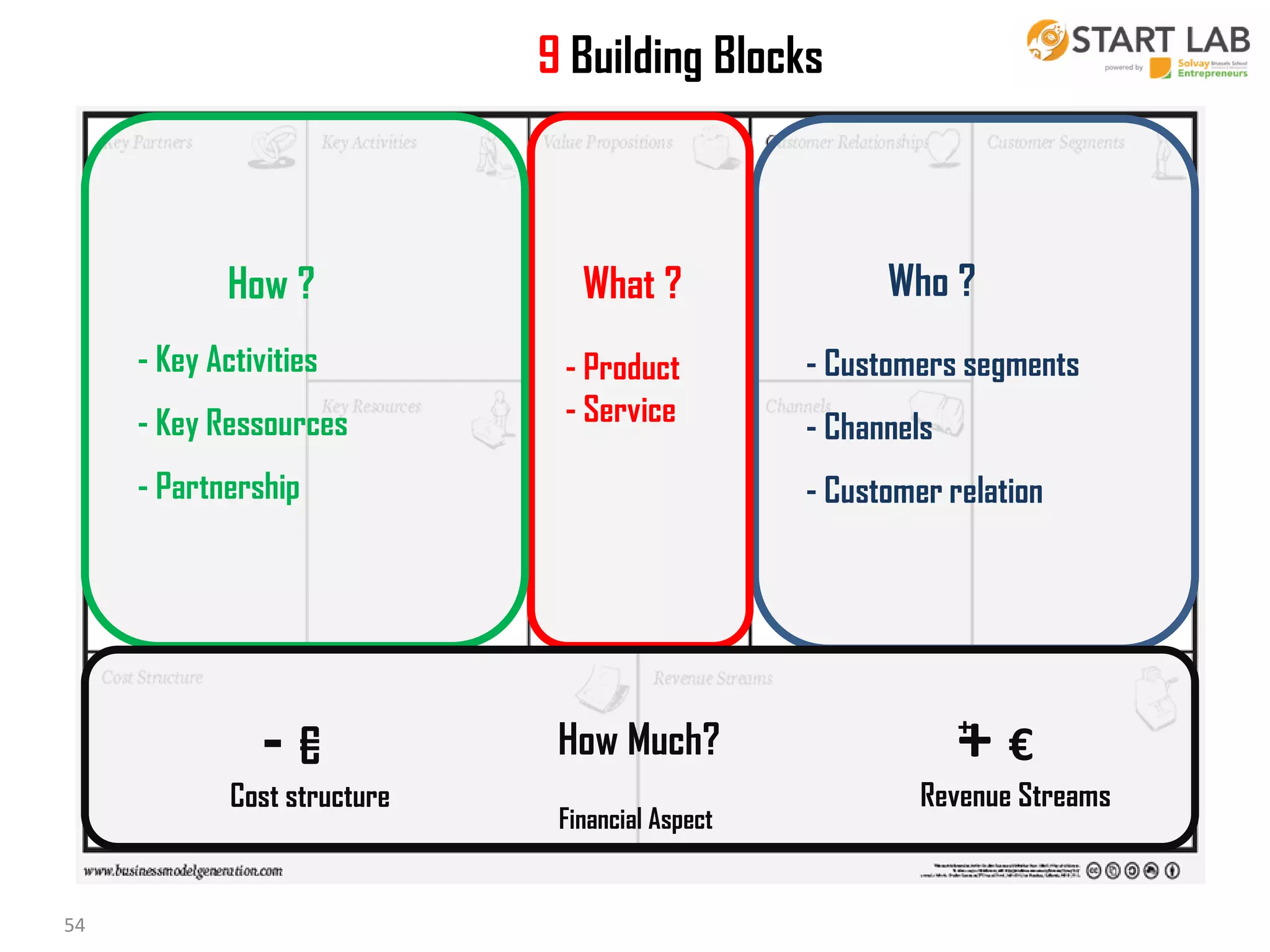
9 Building Blocks

How ?

What ?

- Key Activities

- Product
- Service

- Key Ressources
- Partnership

- Customers segments
- Channels
- Customer relation

-€
-

Cost structure

54

Who ?

How Much?
Financial Aspect

+

+€

Revenue Streams
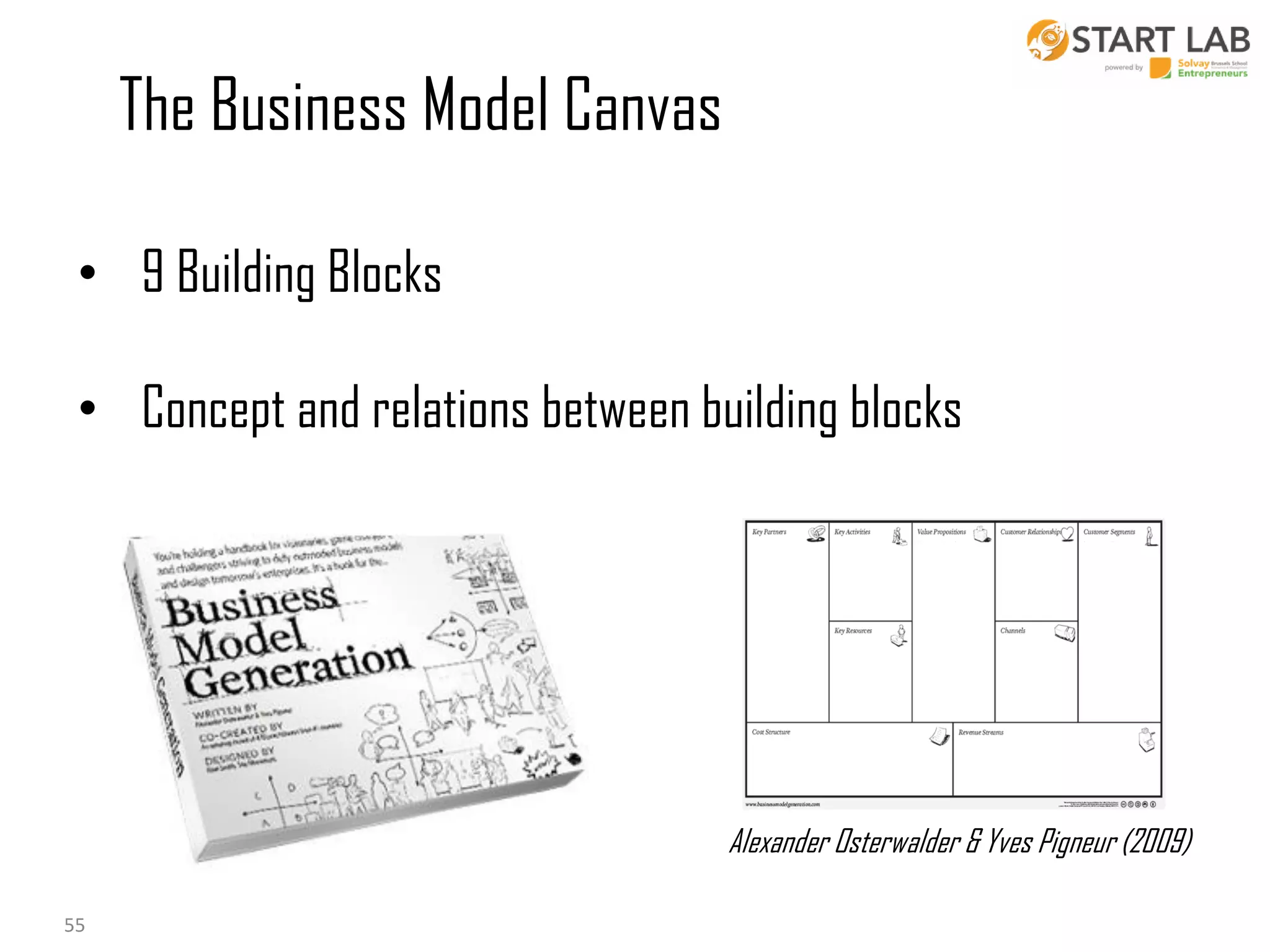
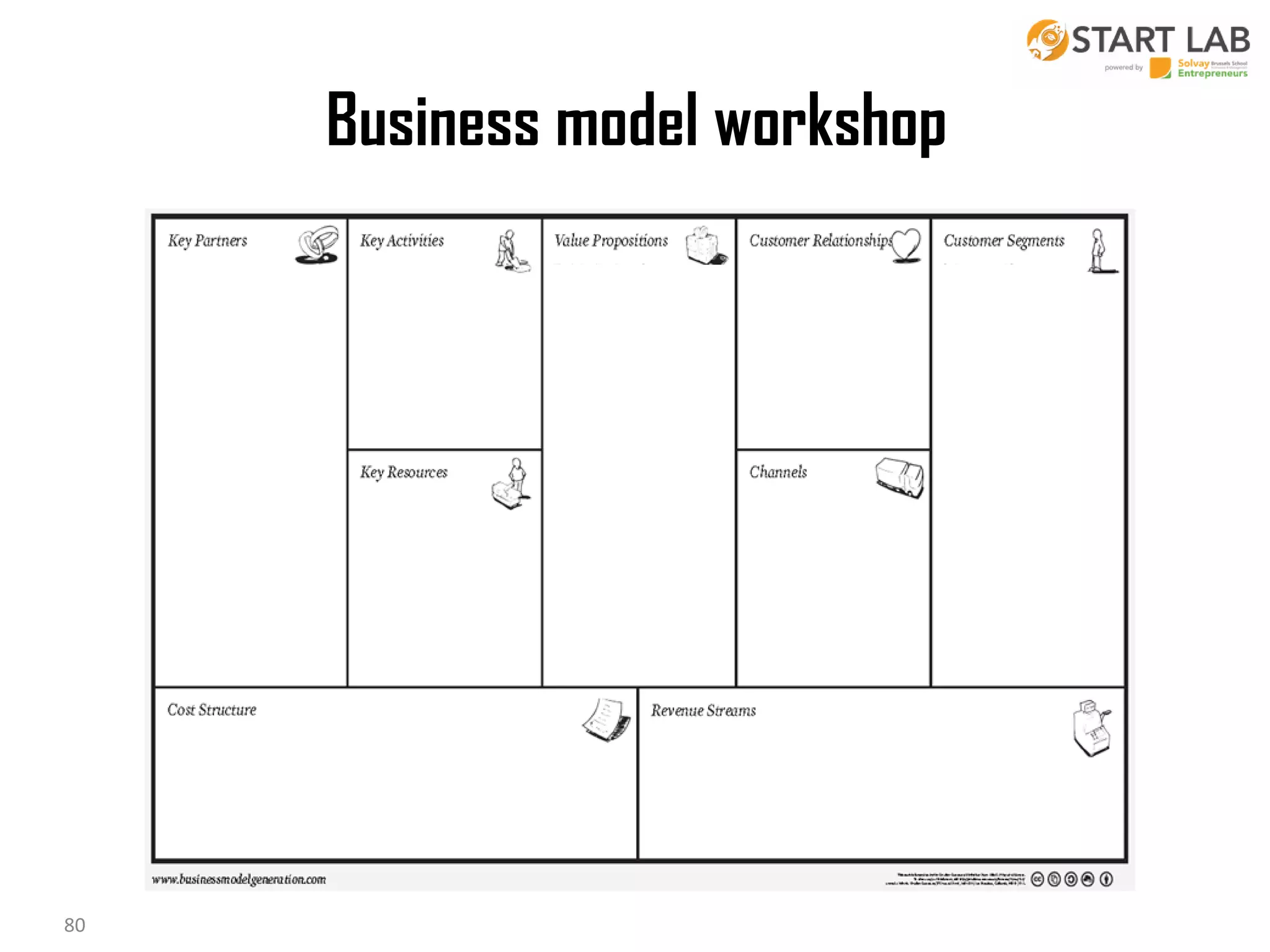
The Business Model Canvas
• 9 Building Blocks
• Concept and relations between building blocks

Alexander Osterwalder & Yves Pigneur (2009)
55
Building
Blocks
56
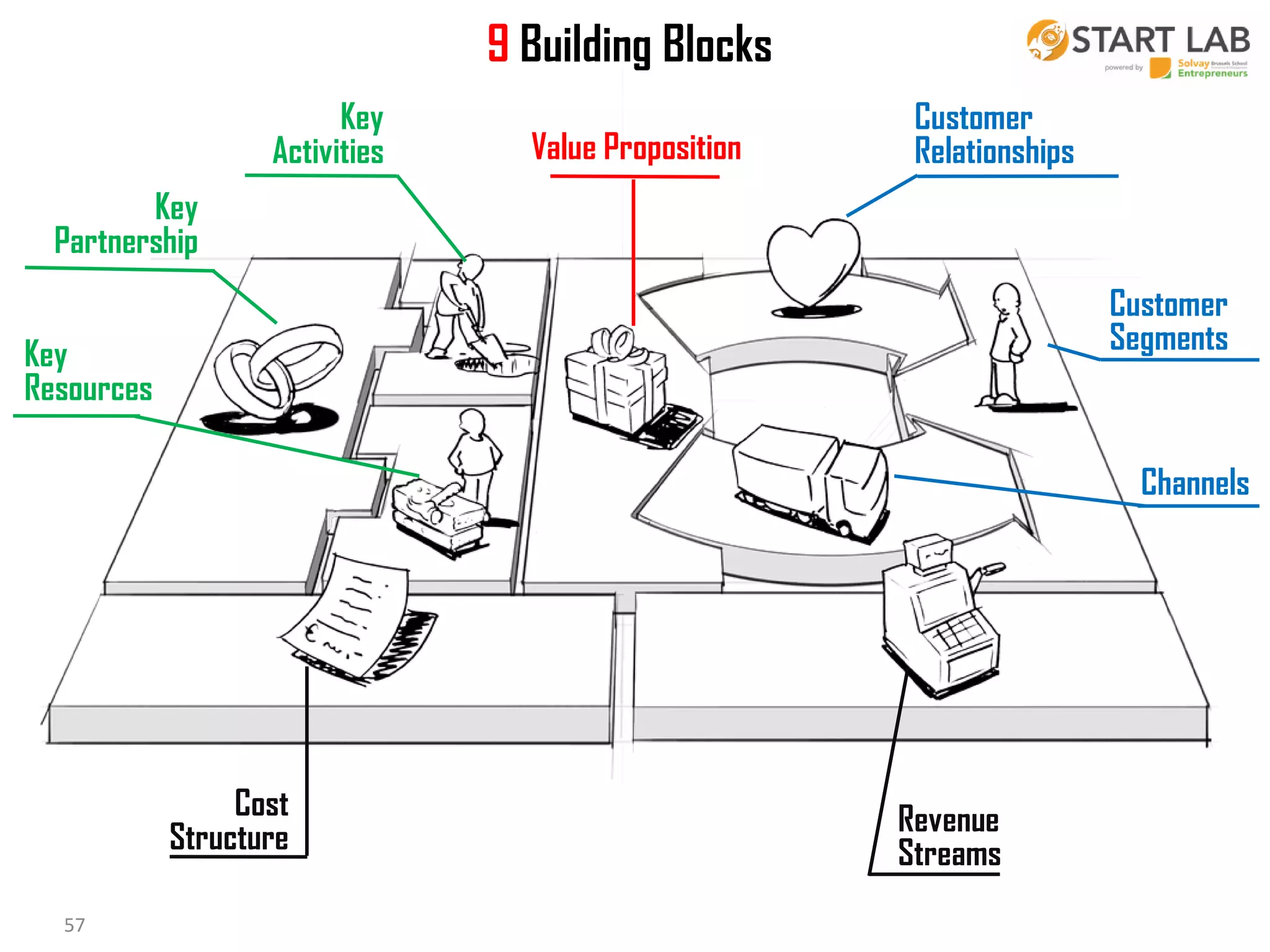
9 Building Blocks
Key
Activities

Value Proposition

Customer
Relationships

Key
Partnership
Customer
Segments

Key
Resources

Channels

Cost
Structure
57

Revenue
Streams
57
Business Modeling
Building Blocks

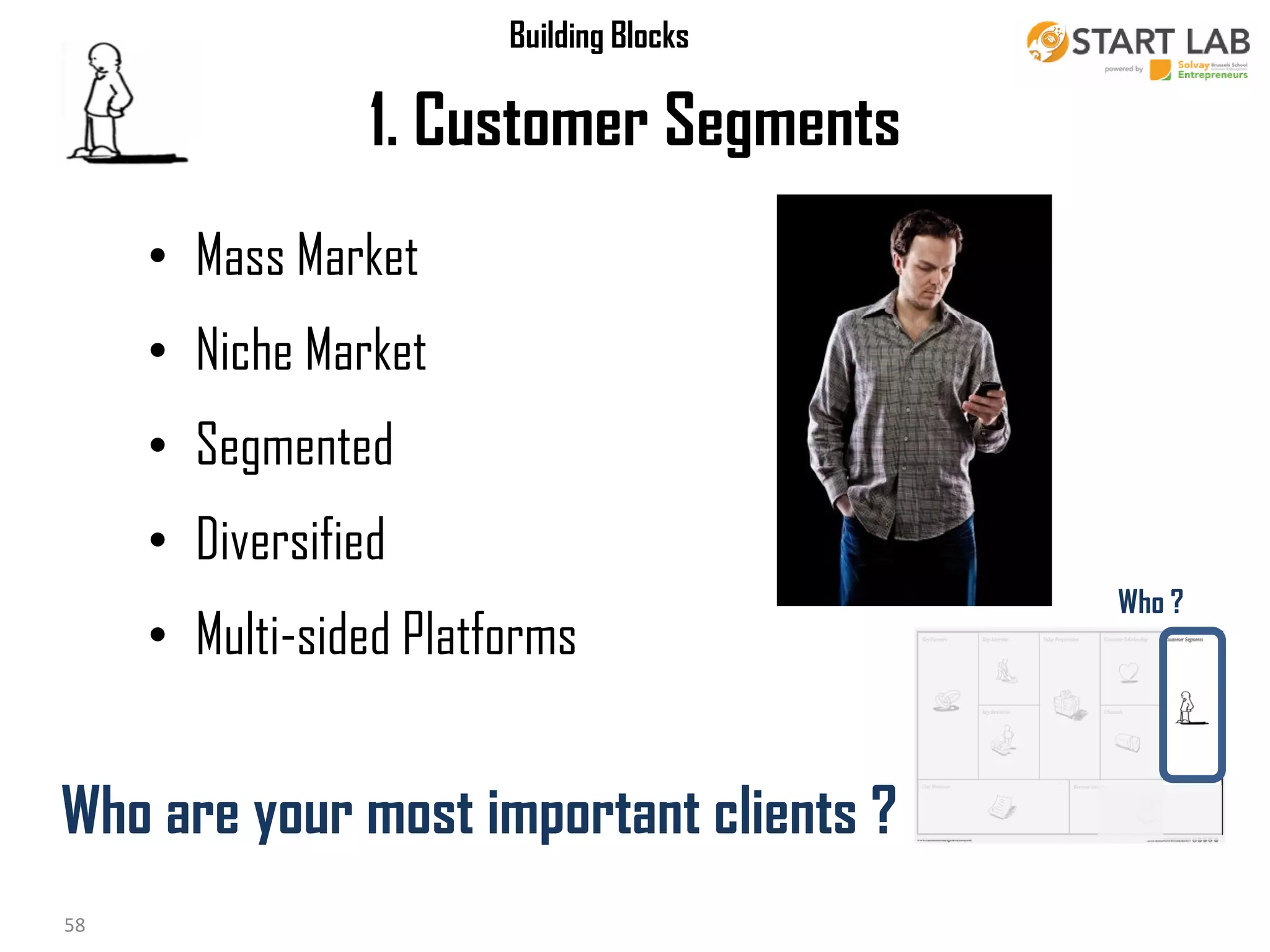
1. Customer Segments
• Mass Market
• Niche Market

• Segmented
• Diversified

• Multi-sided Platforms

Who are your most important clients ?
58

Who ?
Building Blocks

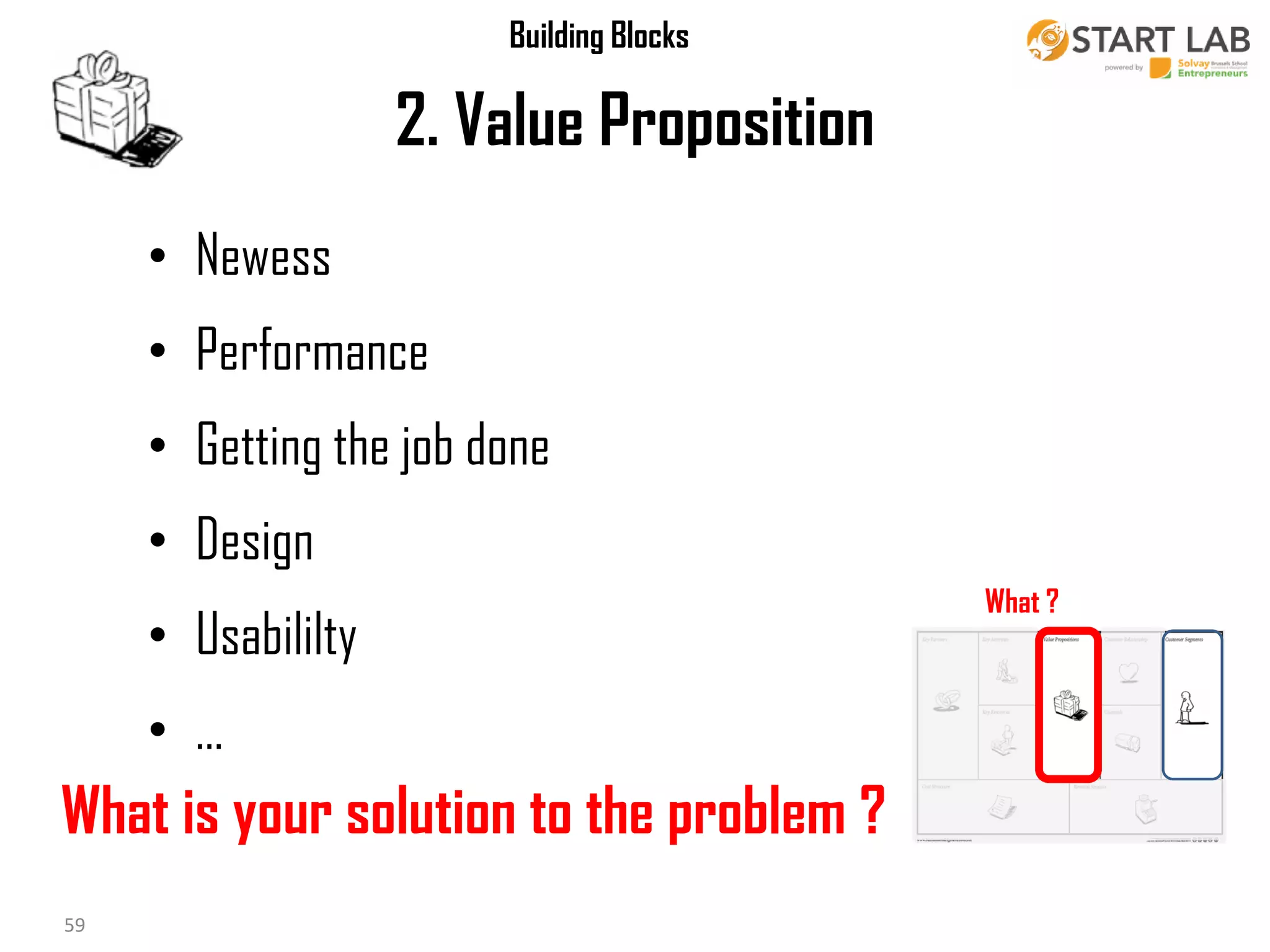
2. Value Proposition
• Newess
• Performance

• Getting the job done
• Design
What ?

• Usabililty
• …

What is your solution to the problem ?
18/10/2013
59

59
Business Modeling
WHAT IS
THE PROBLEM
YOU WANT TO
SOLVE ?
60
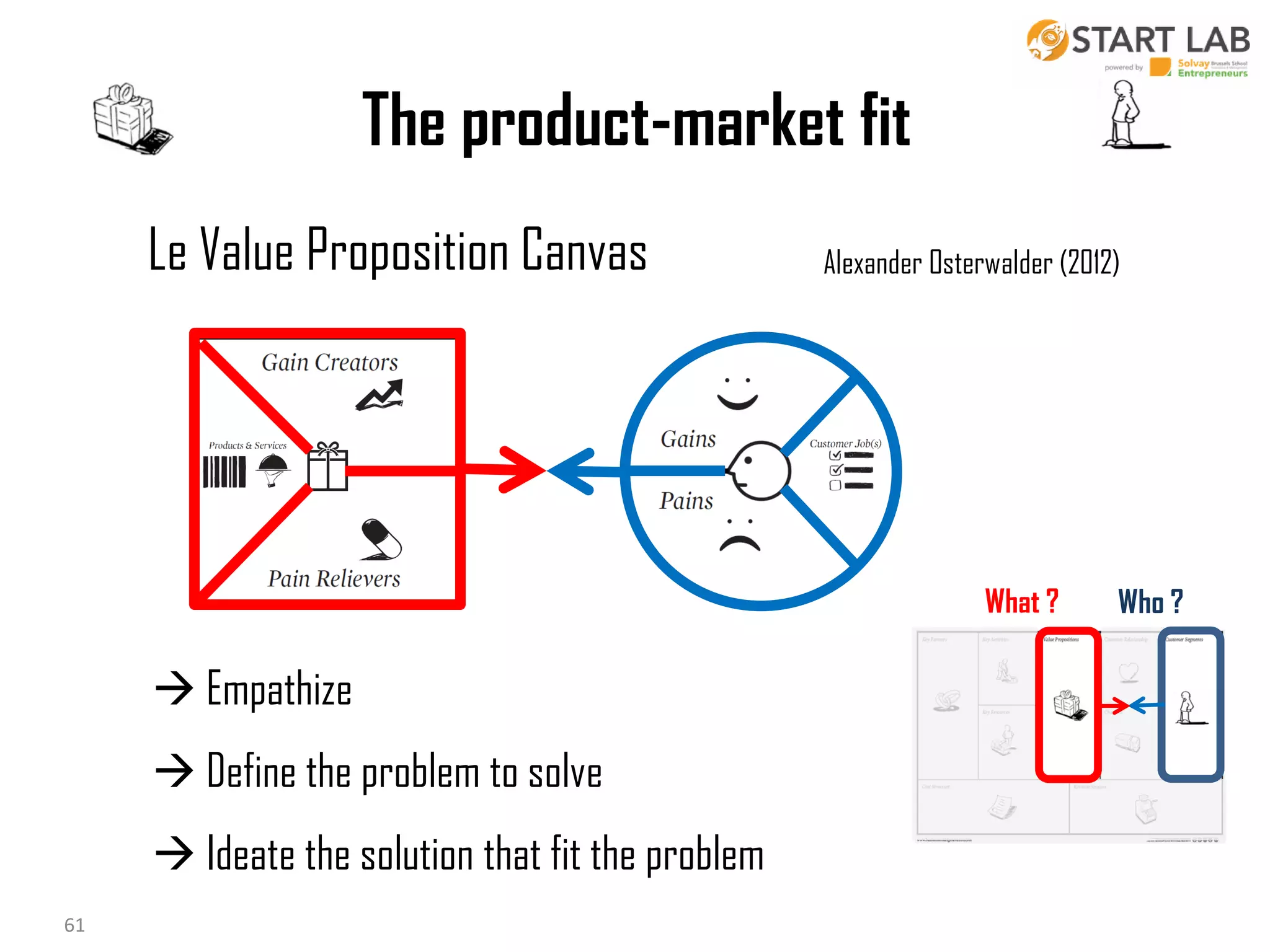
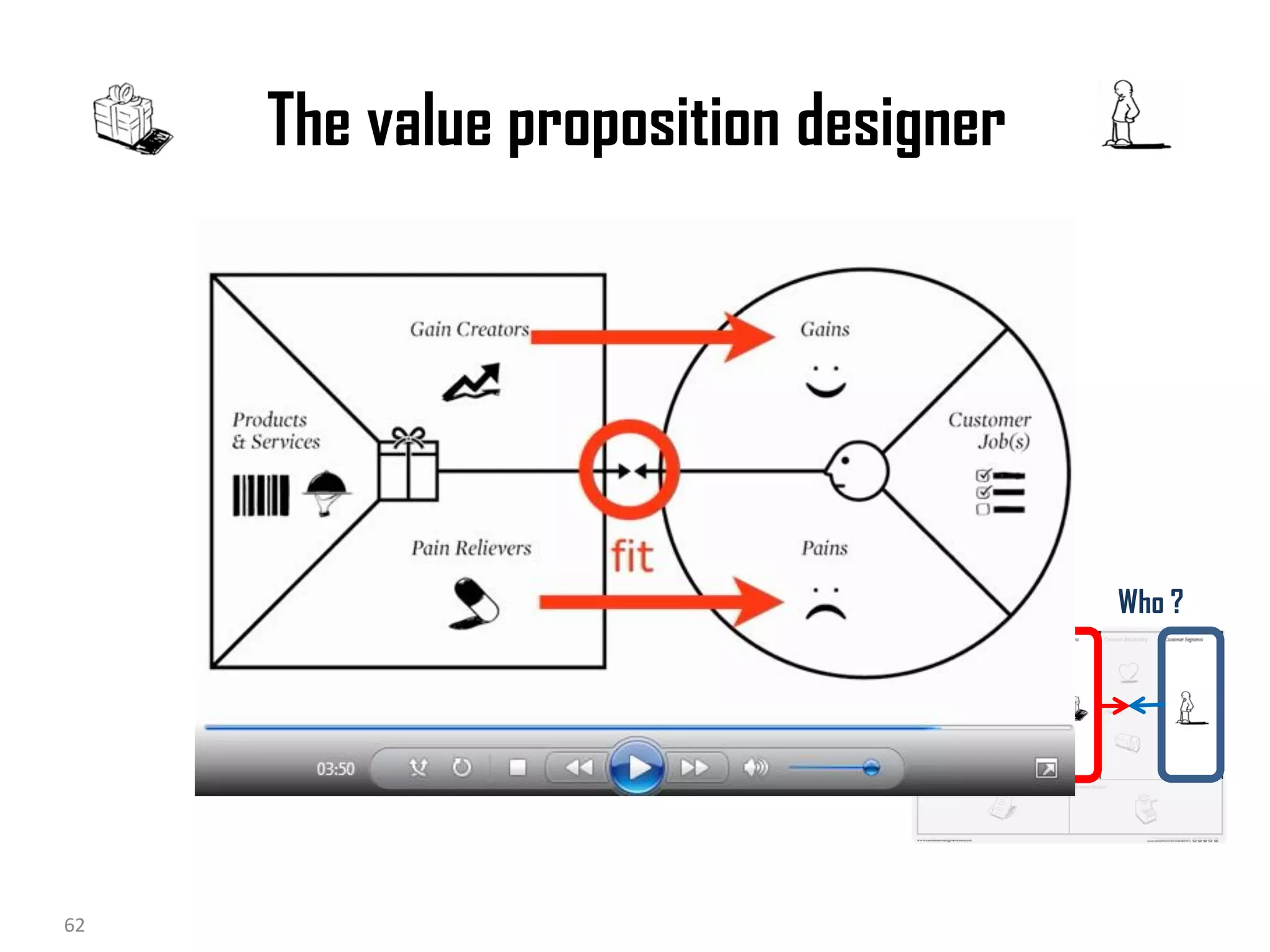
The product-market fit
Le Value Proposition Canvas

Alexander Osterwalder (2012)

What ?

Who ?

 Empathize
 Define the problem to solve
 Ideate the solution that fit the problem
18/10/2013
61

61
Business Modeling
The value proposition designer

What ?

18/10/2013
62

Who ?

62
Business Modeling
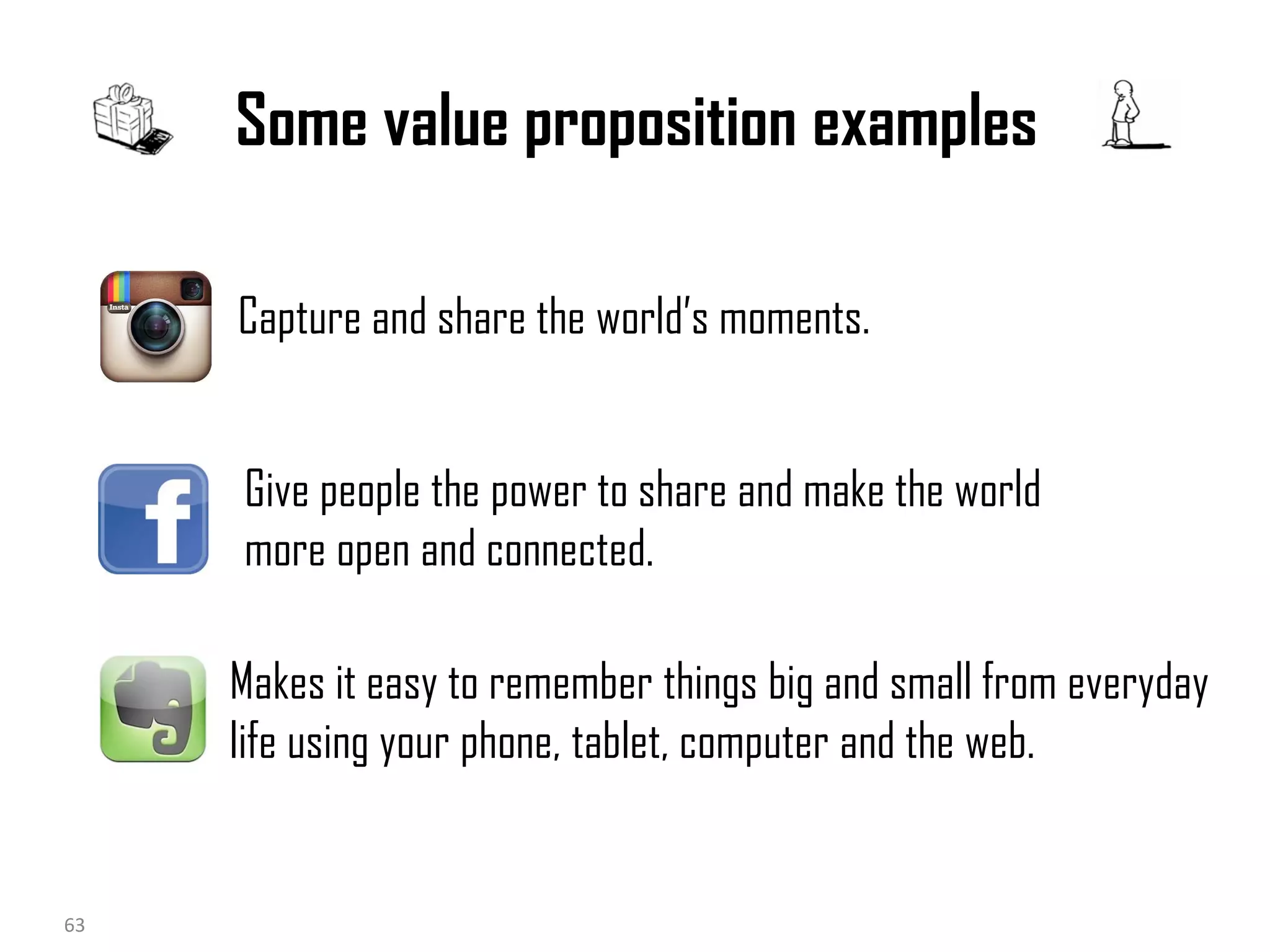
Some value proposition examples
Capture and share the world’s moments.

Give people the power to share and make the world
more open and connected.
Makes it easy to remember things big and small from everyday
life using your phone, tablet, computer and the web.

18/10/2013
63

63
Business Modeling
“In the mobile context, you need to explain what you do
in 30 seconds or less because people move on to the
next shiny object...

…. There are so many apps and people are vying for
your attention on the go…
... You're not sitting in front of a computer; you're at a
bus stop or in a meeting."
Kevin Systrom
Instagram Founder
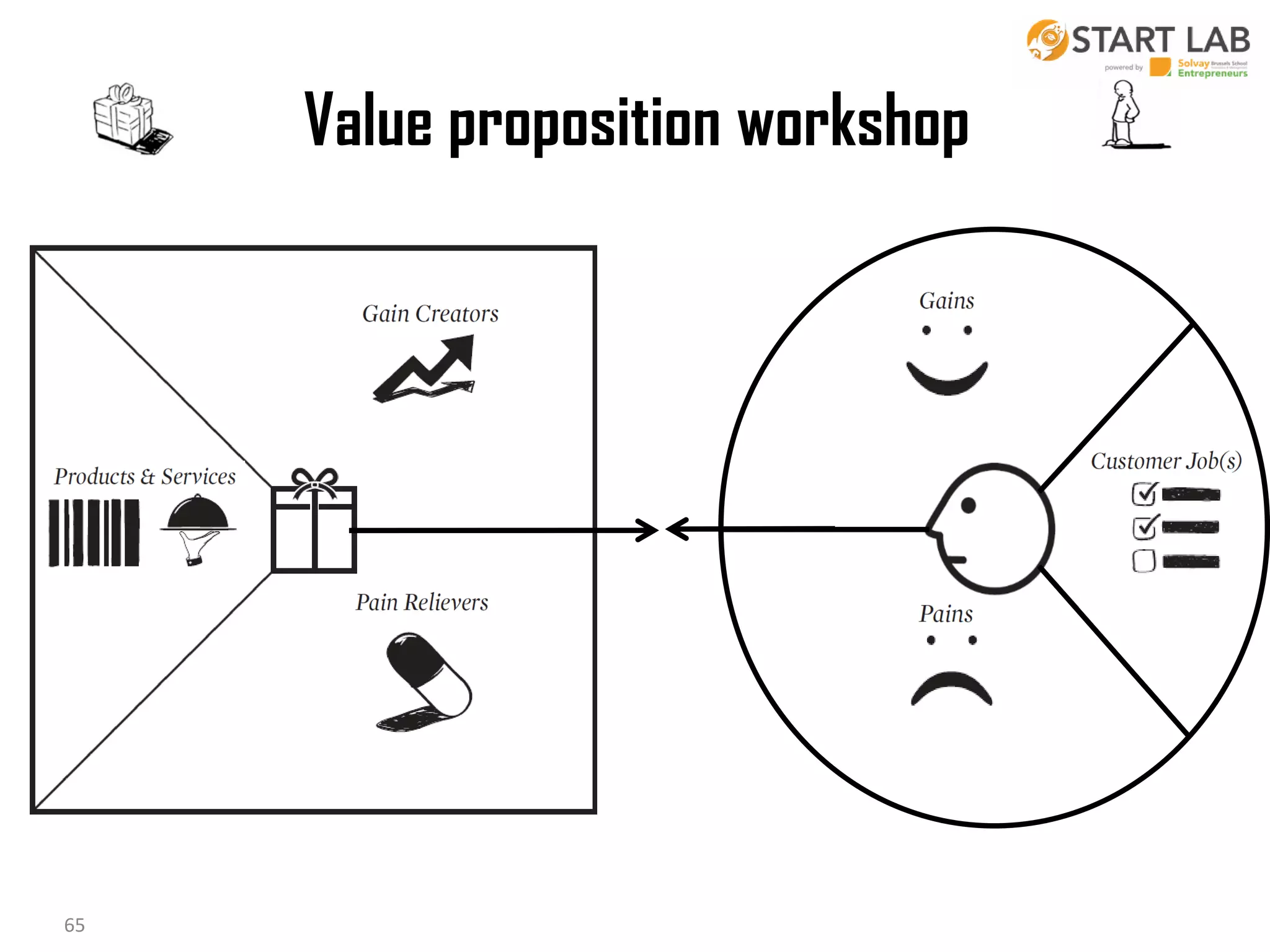
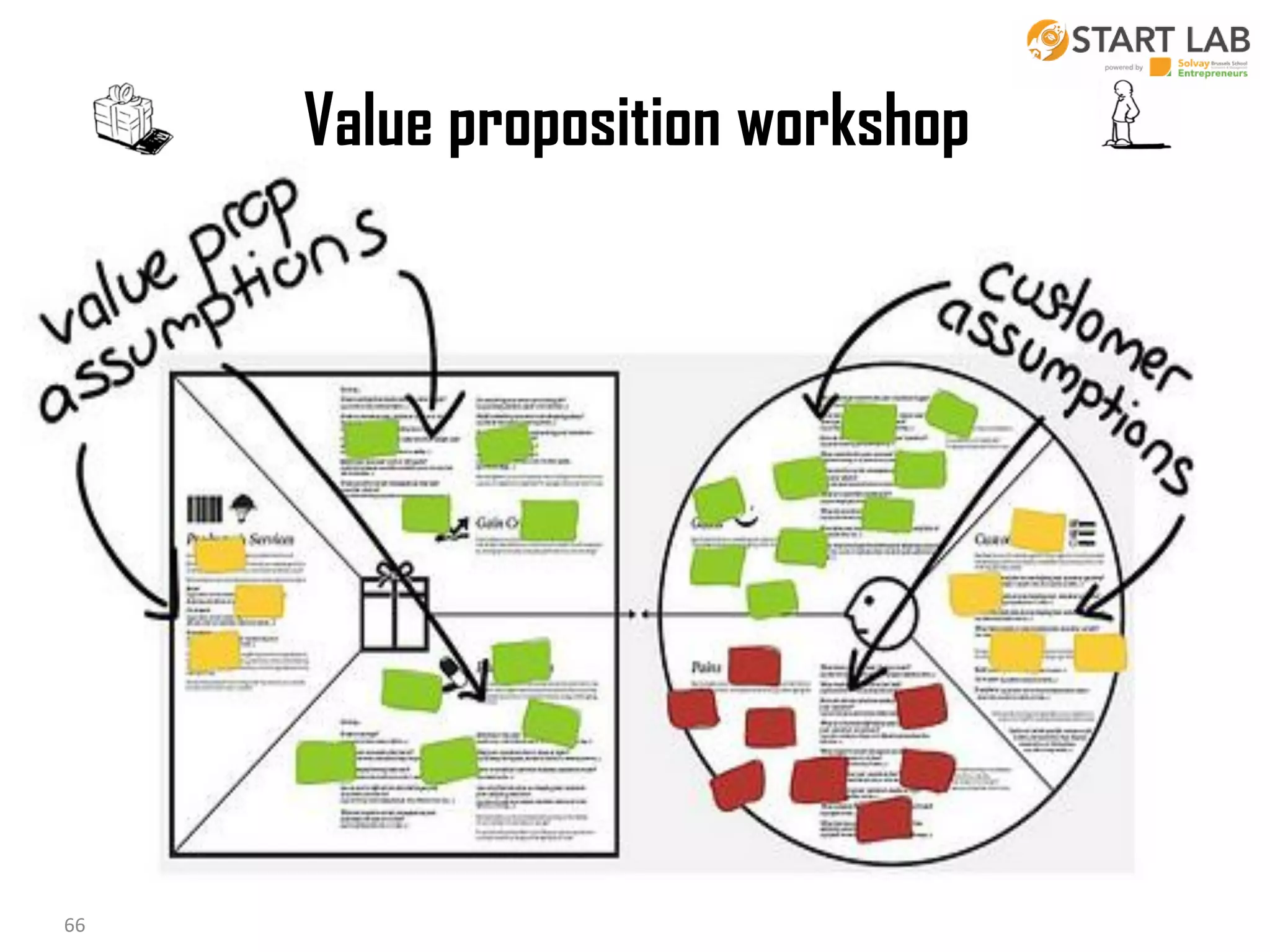
Value proposition workshop

18/10/2013
65

Business Modeling
Value proposition workshop

18/10/2013
66

Business Modeling
GET OUT
OF THE
BUILDING !
Building Blocks

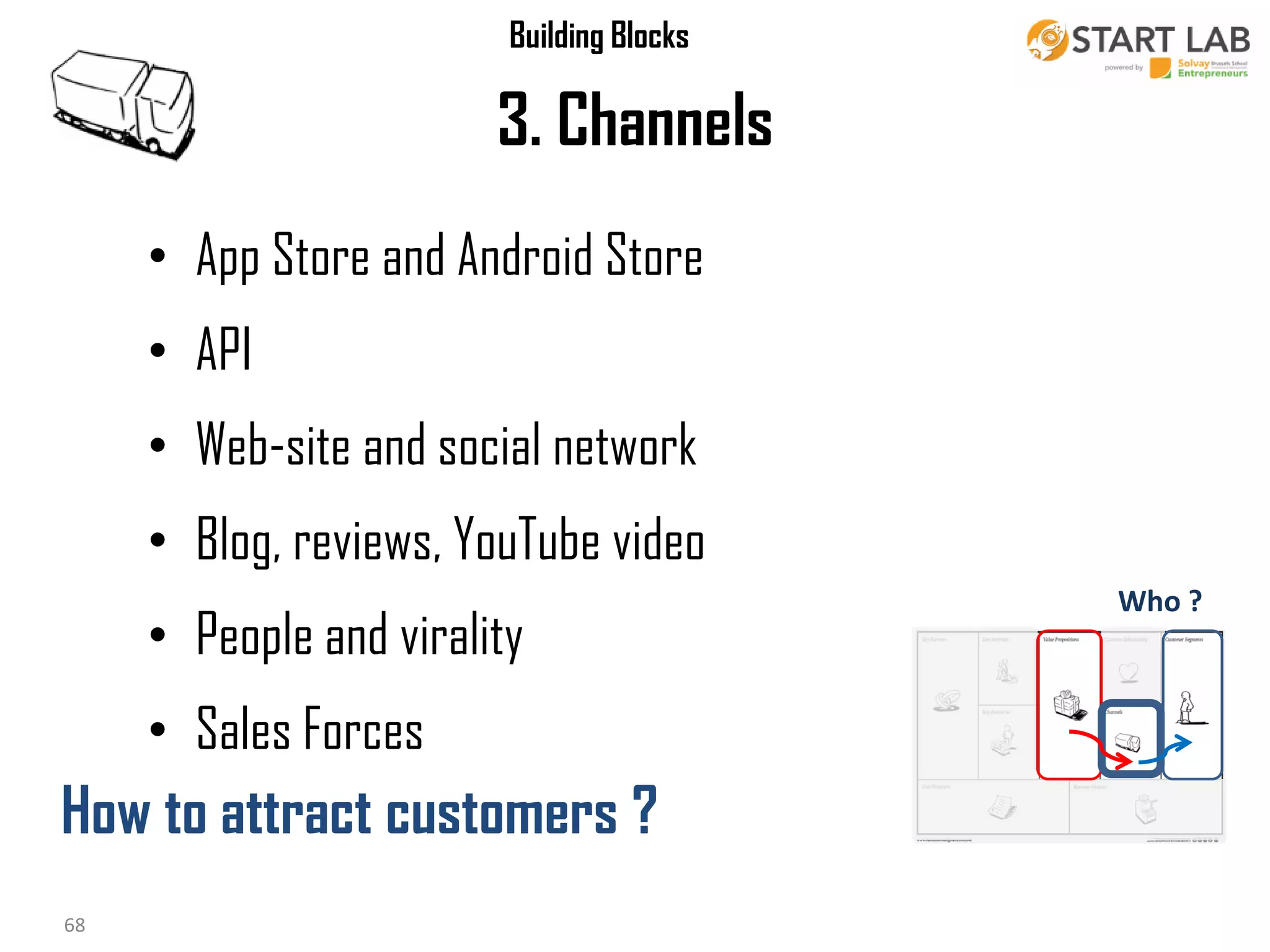
3. Channels
• App Store and Android Store
• API

• Web-site and social network
• Blog, reviews, YouTube video
Who ?

• People and virality
• Sales Forces

How to attract customers ?
18/10/2013
68

Business Modeling
Building Blocks

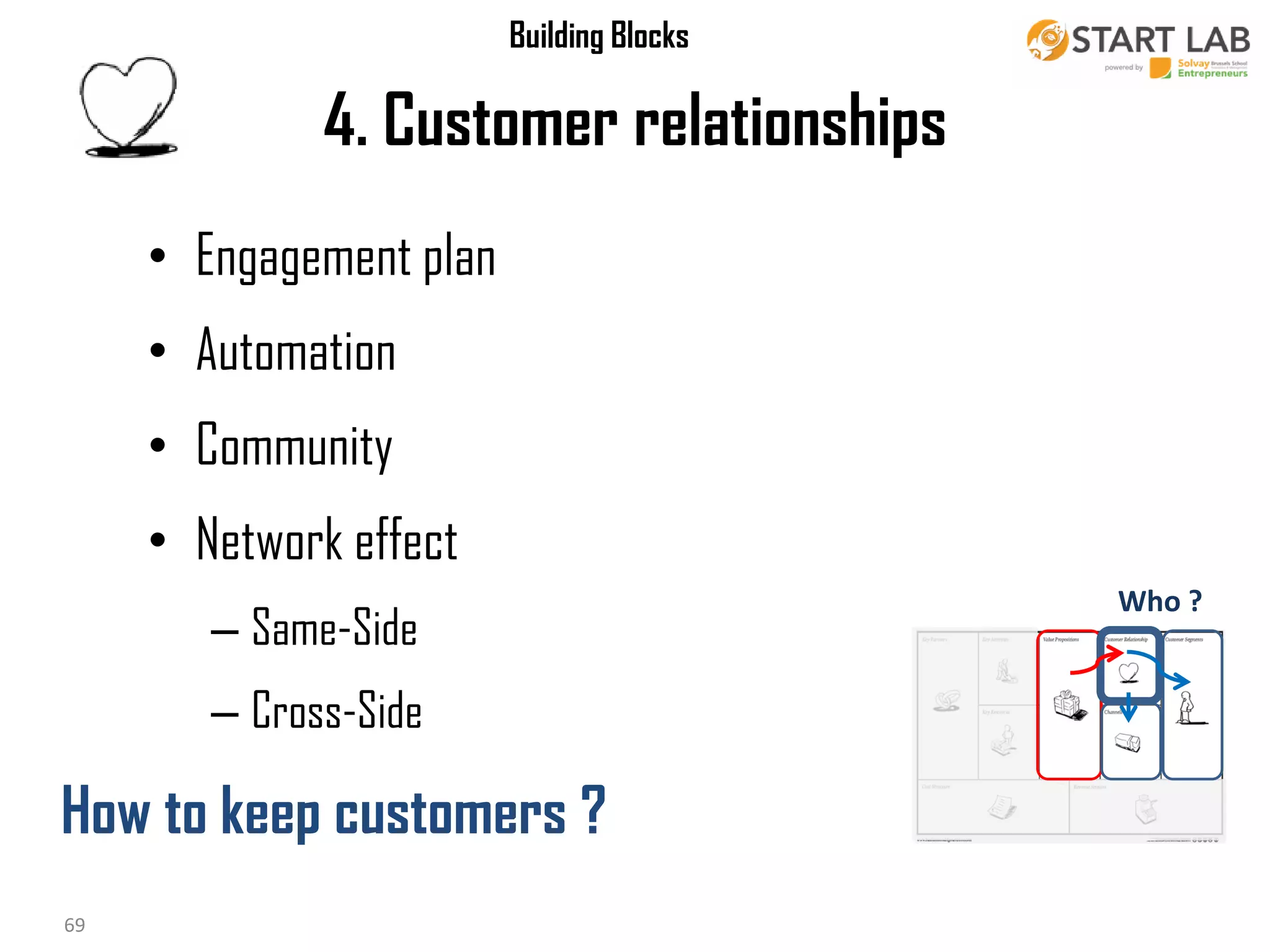
4. Customer relationships
• Engagement plan
• Automation

• Community
• Network effect
Who ?

– Same-Side
– Cross-Side

How to keep customers ?
18/10/2013
69

Business Modeling
Building Blocks

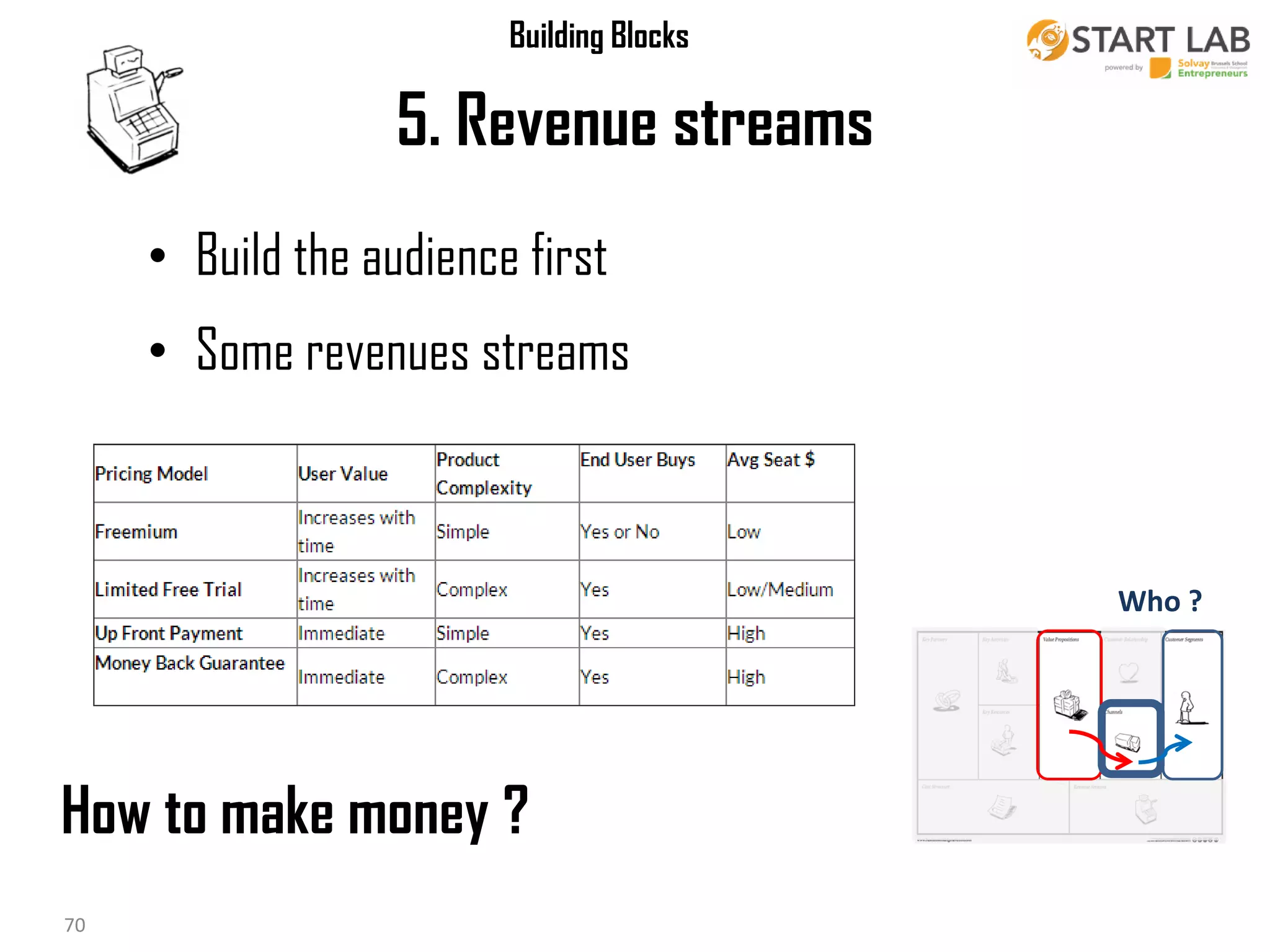
5. Revenue streams
• Build the audience first
• Some revenues streams

Who ?

How to make money ?
18/10/2013
70

Business Modeling
Building Blocks

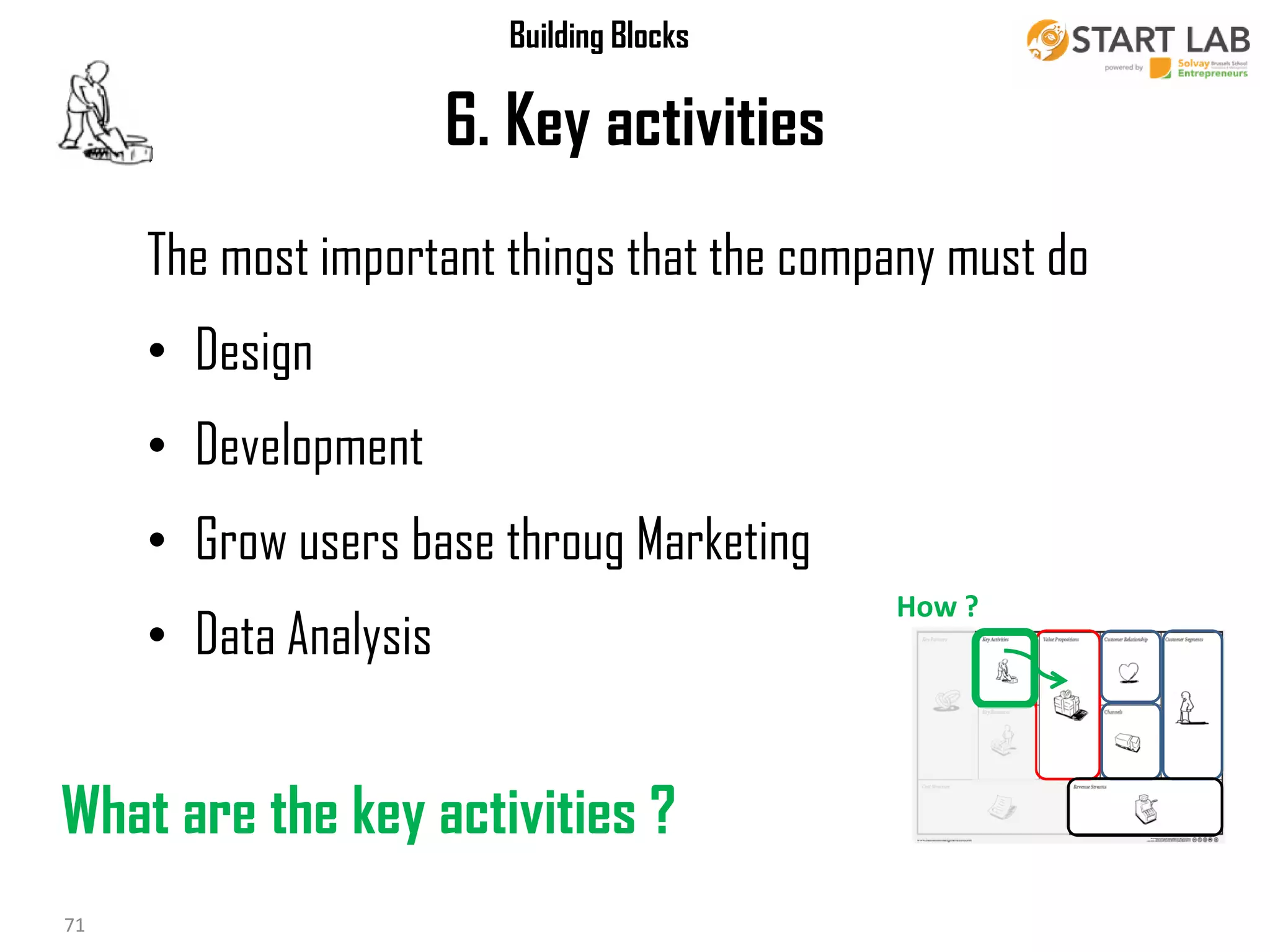
6. Key activities
The most important things that the company must do
• Design

• Development
• Grow users base throug Marketing
How ?

• Data Analysis

What are the key activities ?
18/10/2013
71

Business Modeling
Building Blocks

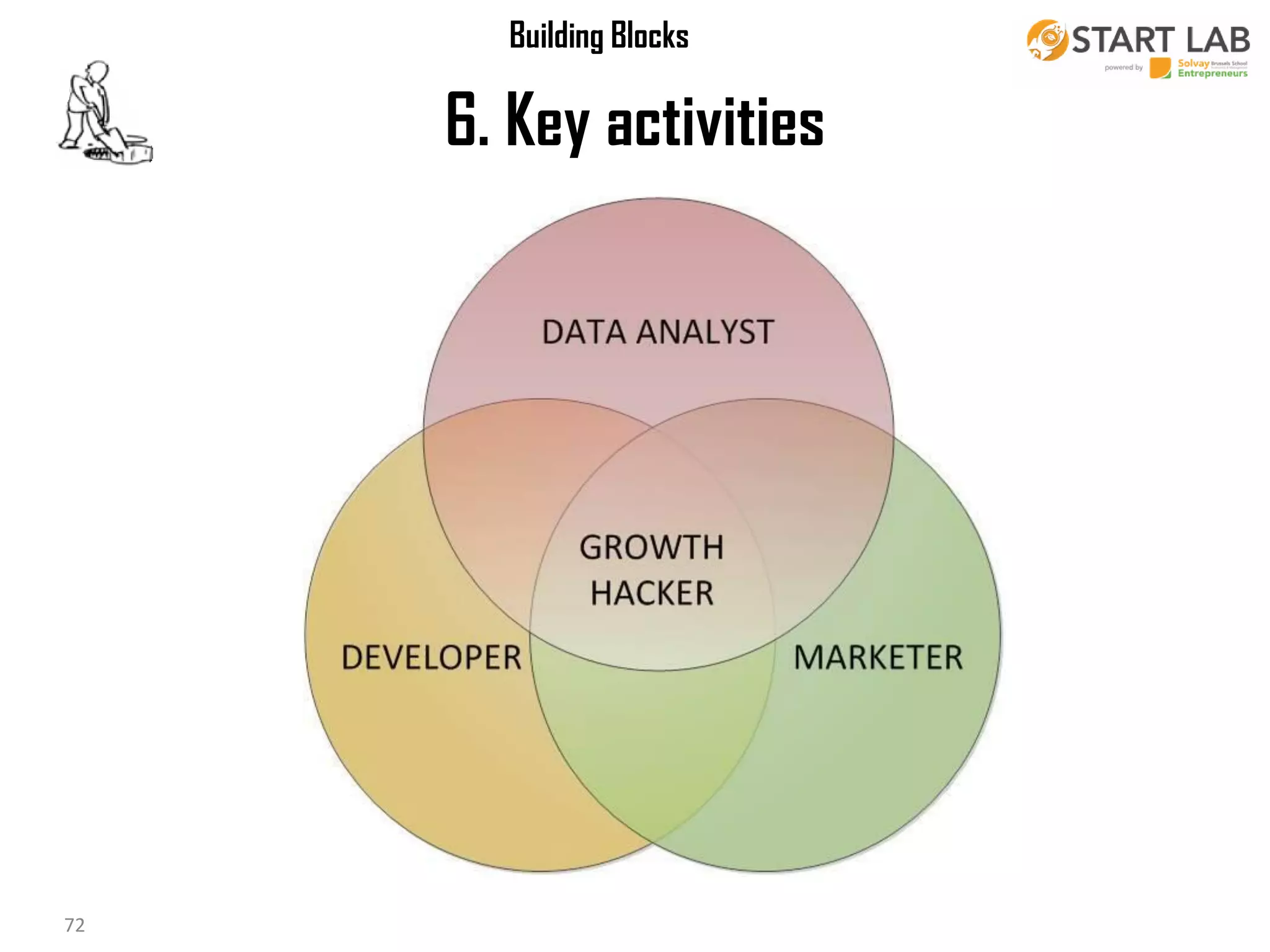
6. Key activities

18/10/2013
72

Business Modeling
Building Blocks

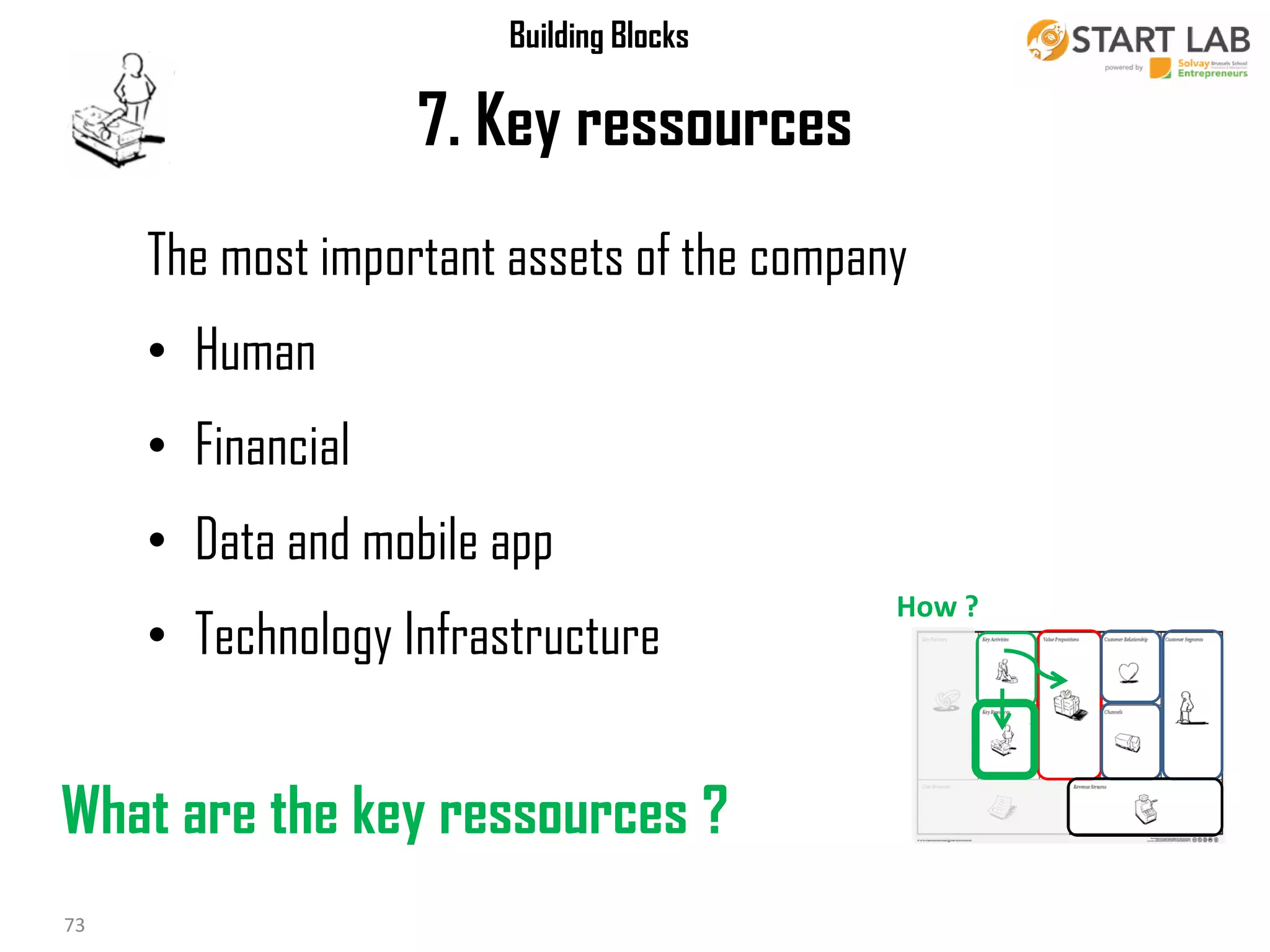
7. Key ressources
The most important assets of the company
• Human

• Financial
• Data and mobile app

• Technology Infrastructure

What are the key ressources ?
18/10/2013
73

Business Modeling

How ?
Building Blocks

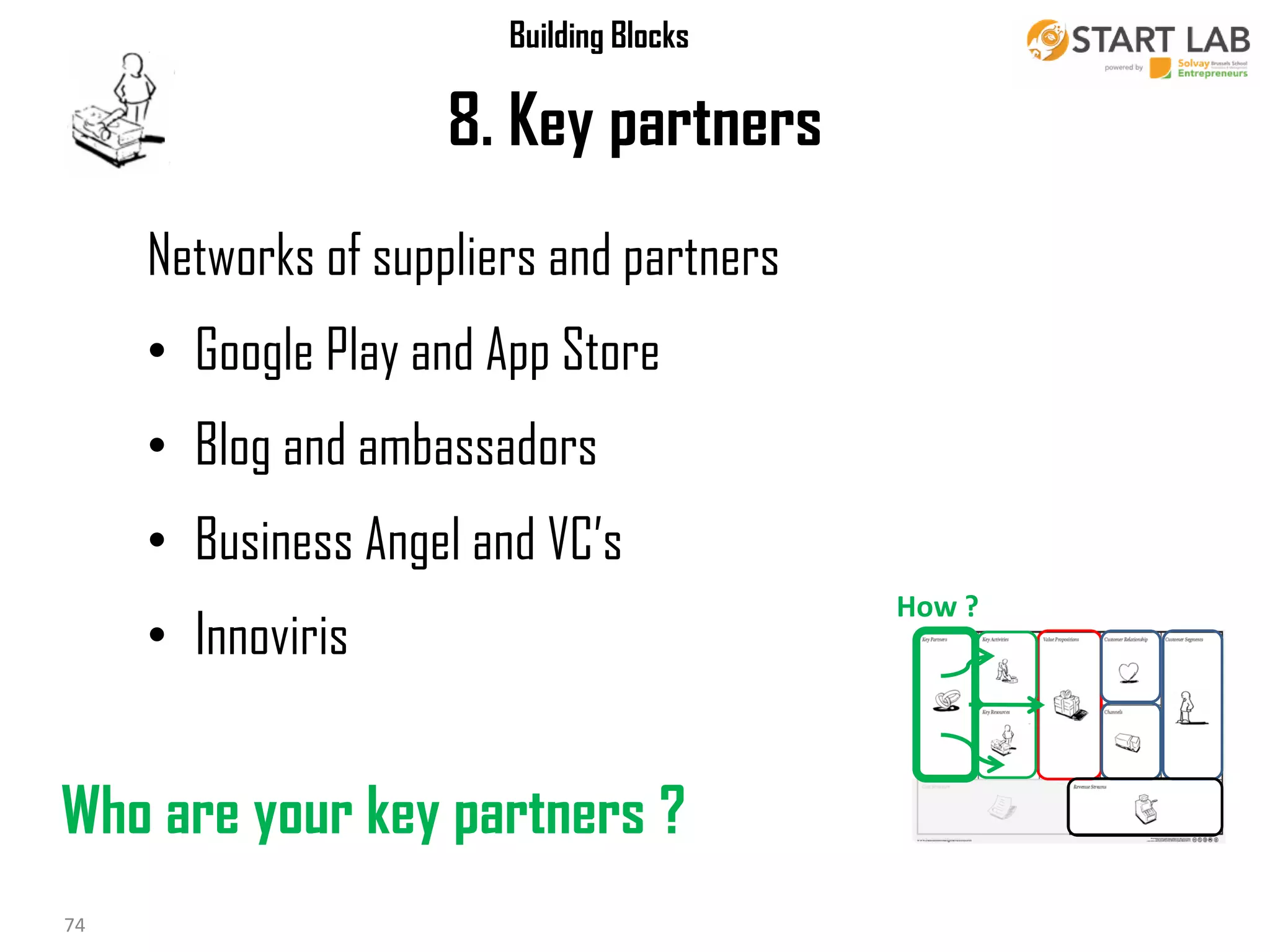
8. Key partners
Networks of suppliers and partners
• Google Play and App Store

• Blog and ambassadors
• Business Angel and VC’s
How ?

• Innoviris

Who are your key partners ?
18/10/2013
74

Business Modeling
Building Blocks

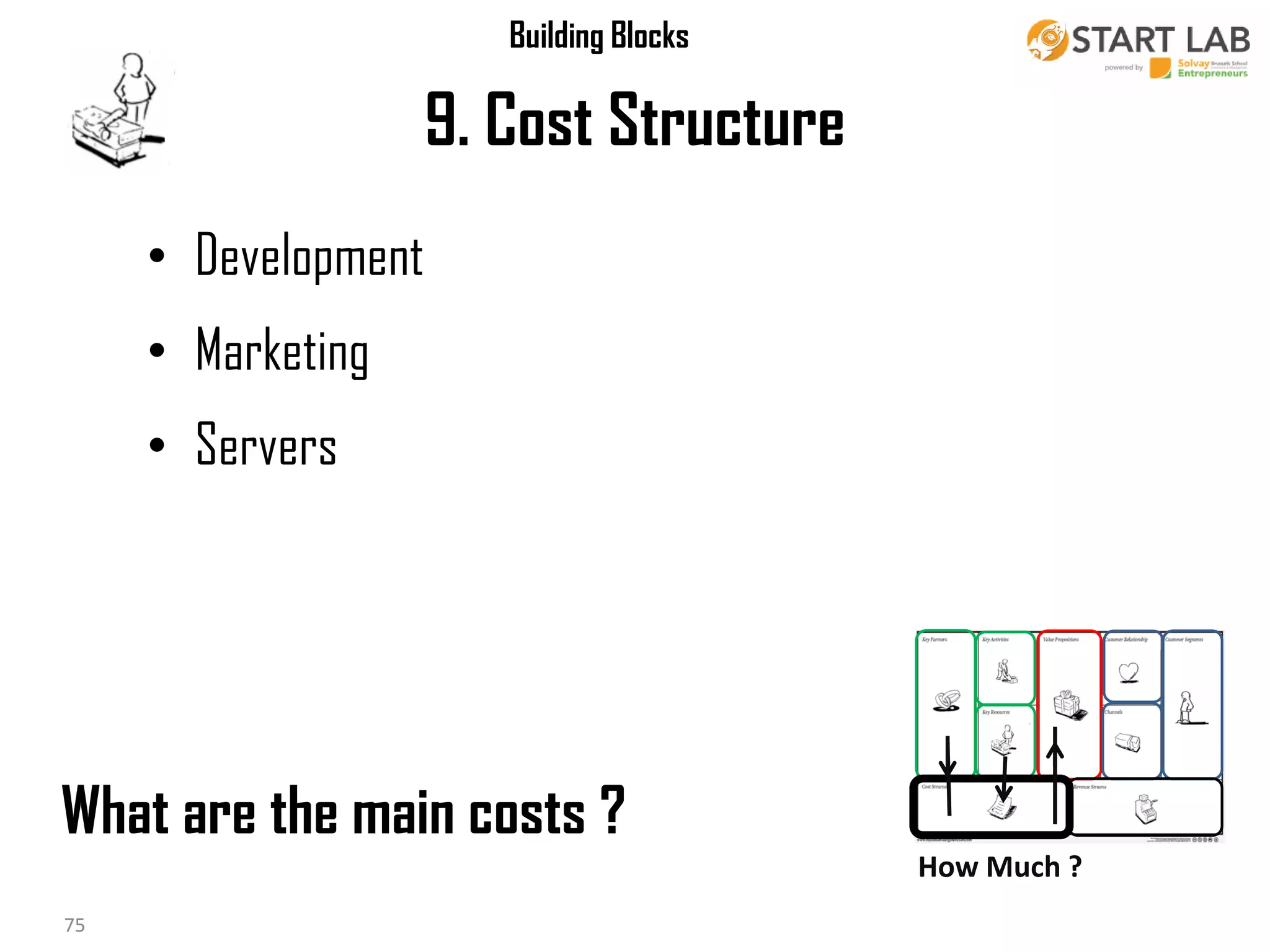
9. Cost Structure
• Development
• Marketing

• Servers

What are the main costs ?
How Much ?
18/10/2013
75

75
Business Modeling
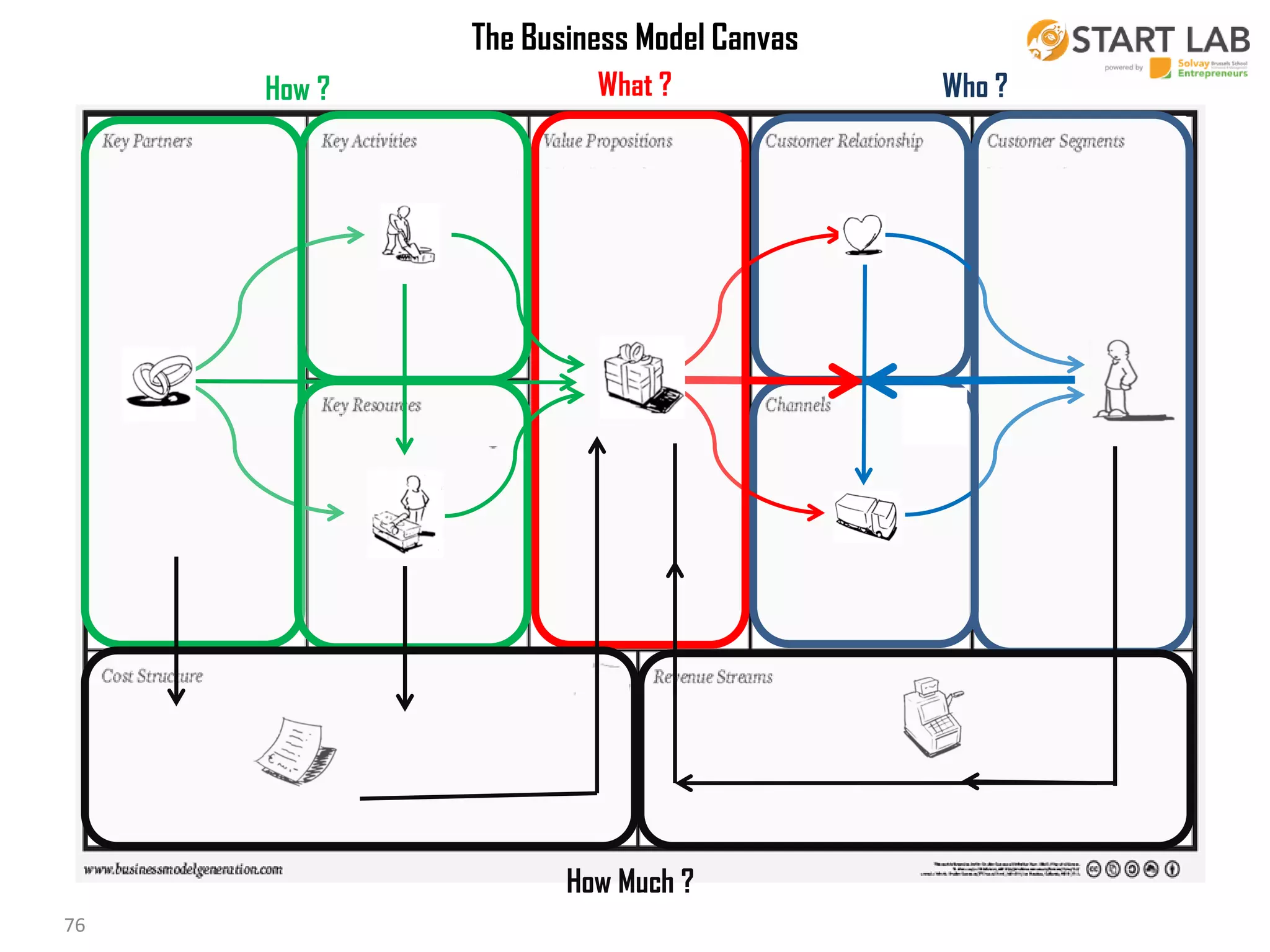
The Business Model Canvas
How ?

What ?

Who ?

How Much ?
18/10/2013
76

76
Business Modeling
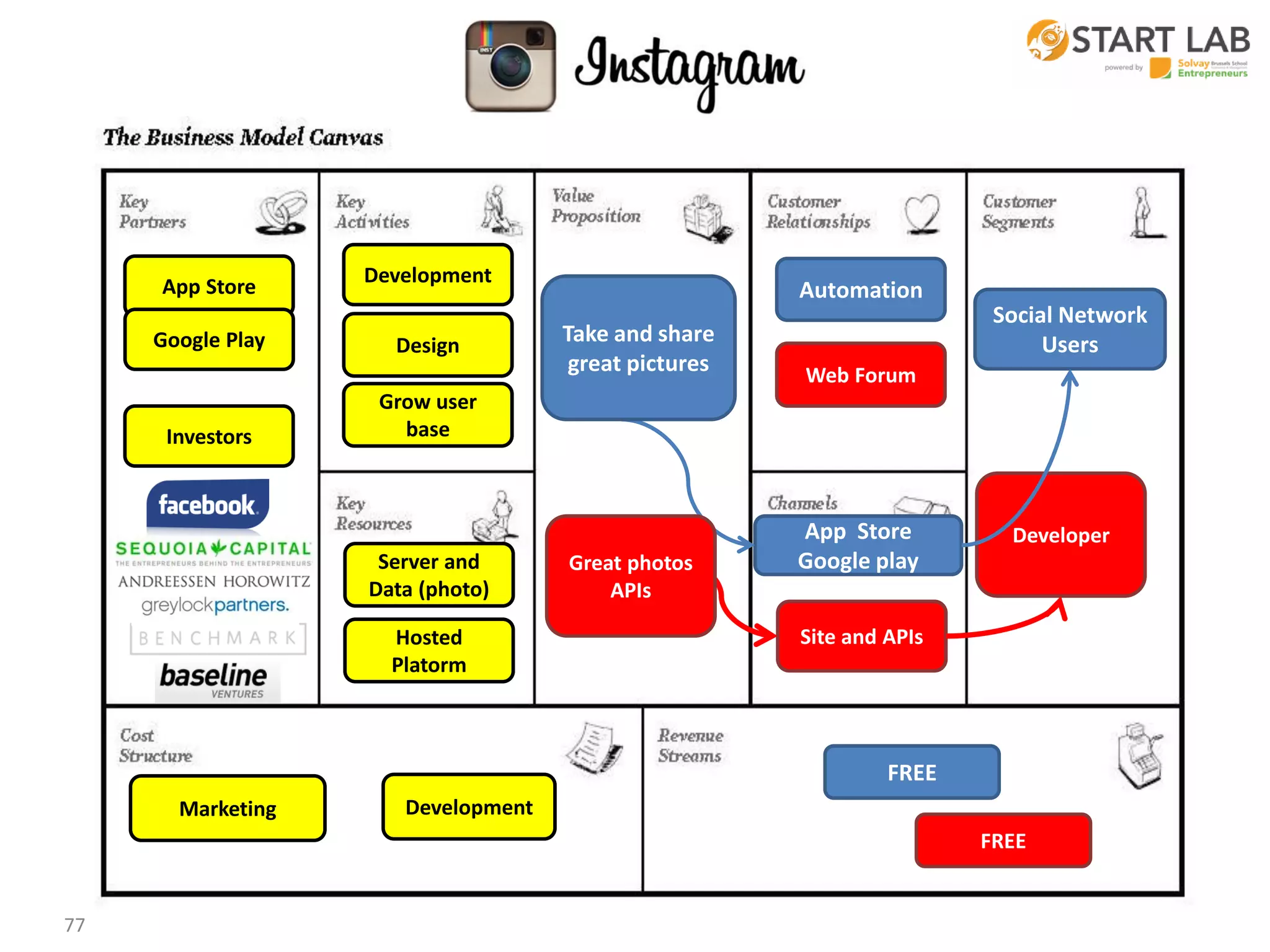
App Store

Development

Google Play

Design

Investors

Automation
Take and share
great pictures

Social Network
Users

Grow user
base

Server and
Data (photo)
Hosted
Platorm

Great photos
APIs

Web Forum

App Store
Google play

Developer

Site and APIs

FREE
Marketing

Development
FREE

77
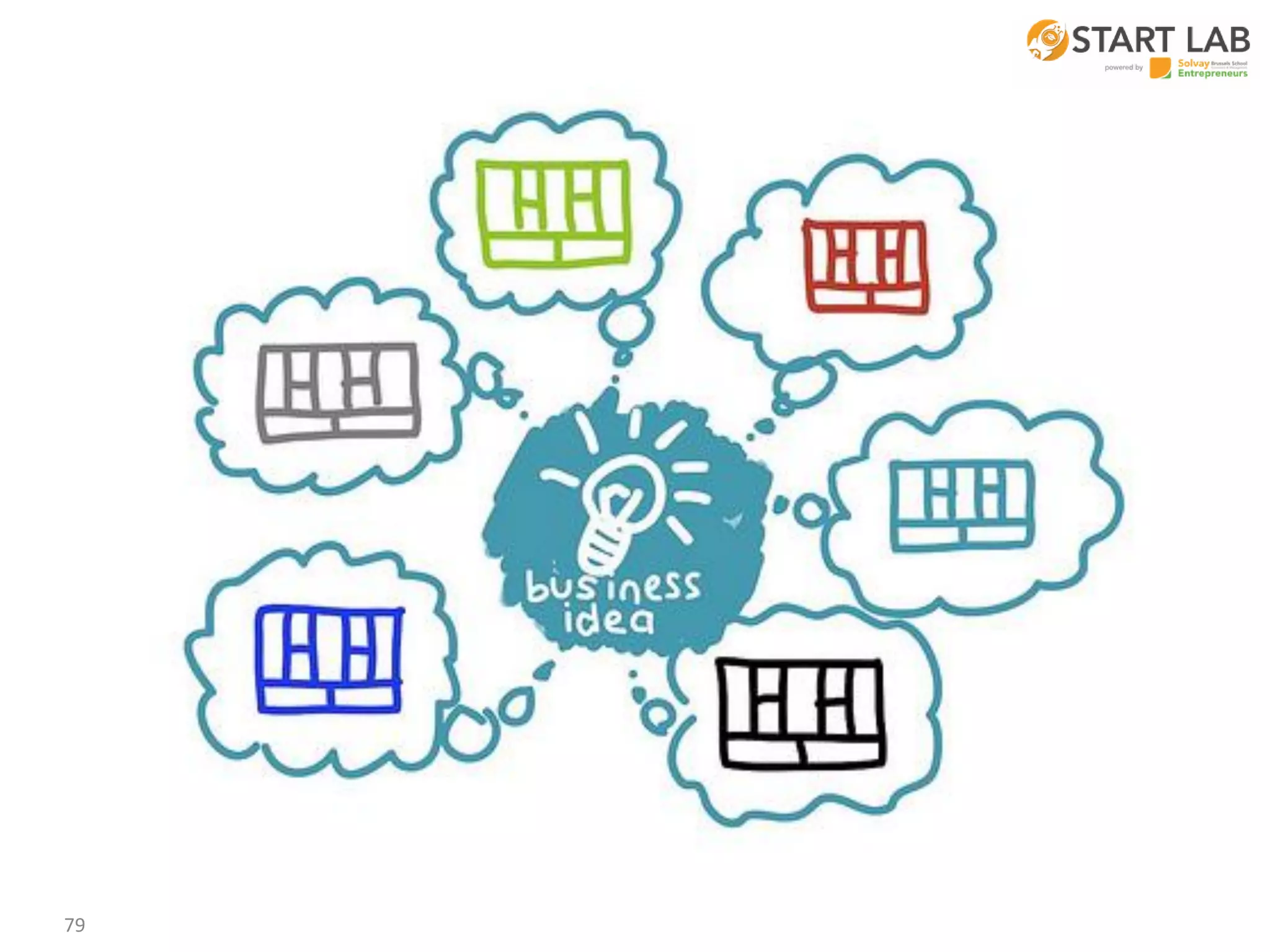
WHAT IS YOUR
BUSINESS MODEL ?
78
18/10/2013
79

79
Business model workshop

18/10/2013
80
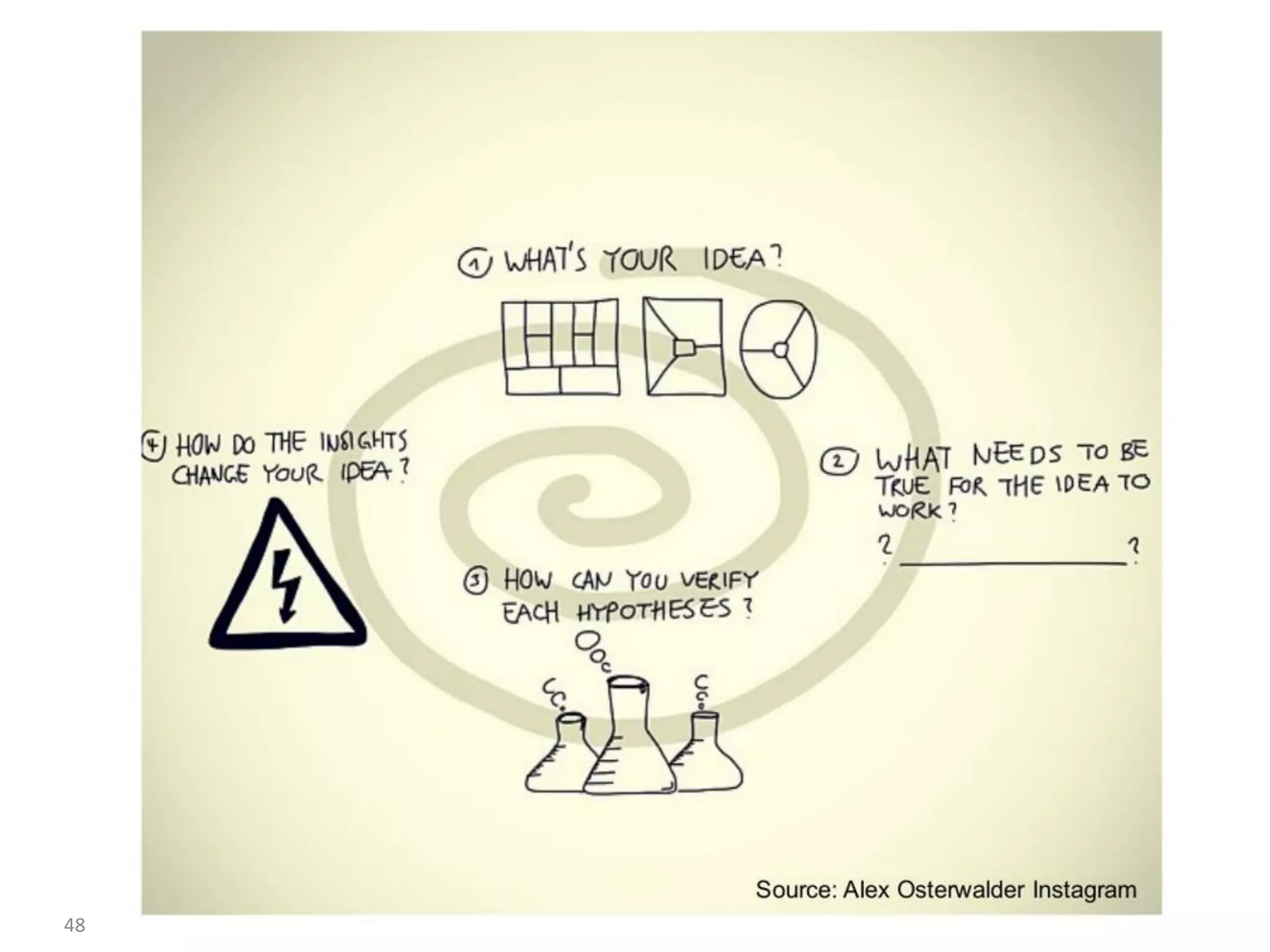
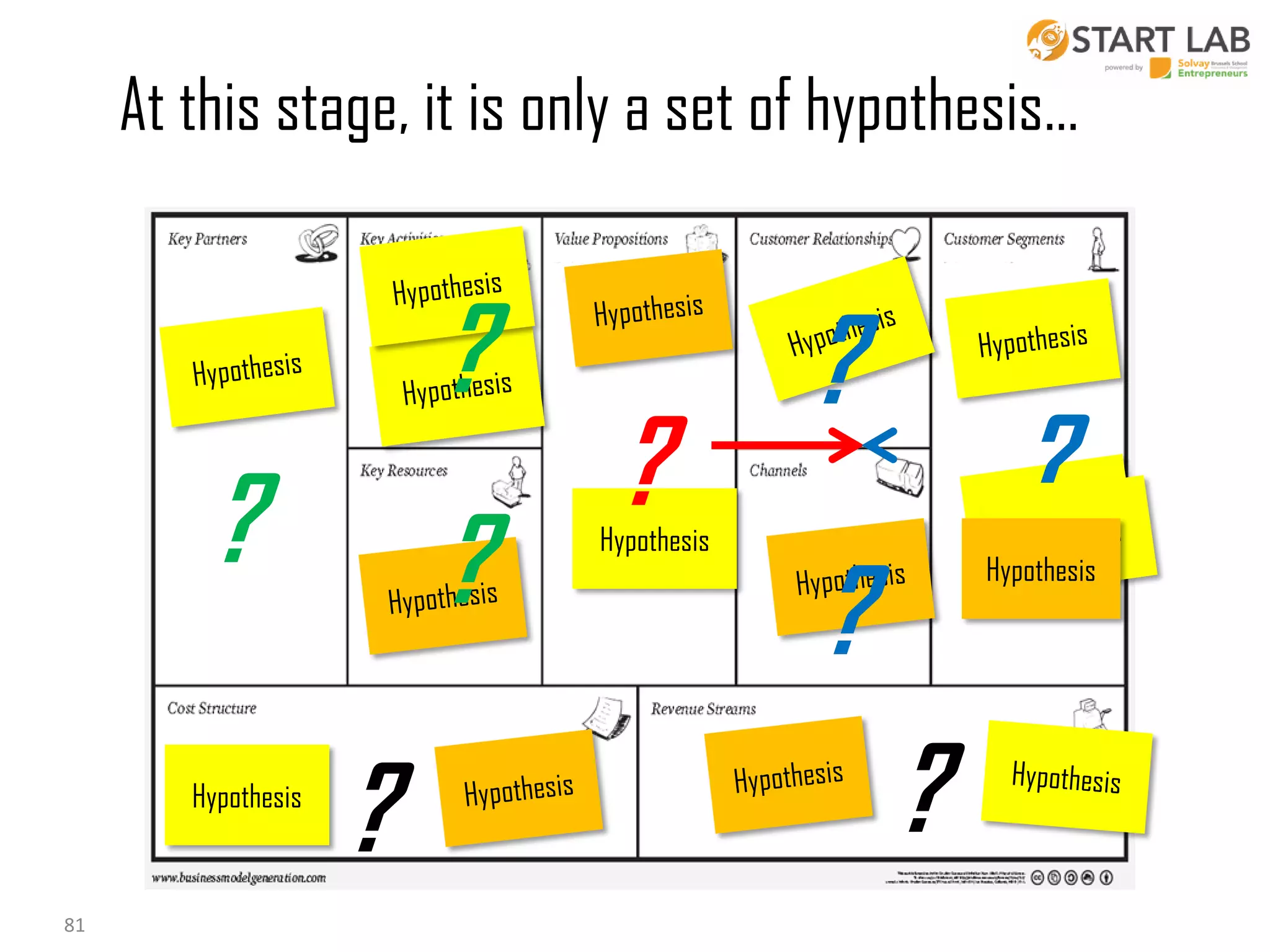
At this stage, it is only a set of hypothesis…

?
?
Hypothesis

18/10/2013
81

?
?

?

Hypothesis

?

?

?

Hypothesis

?
TEST IT !
82
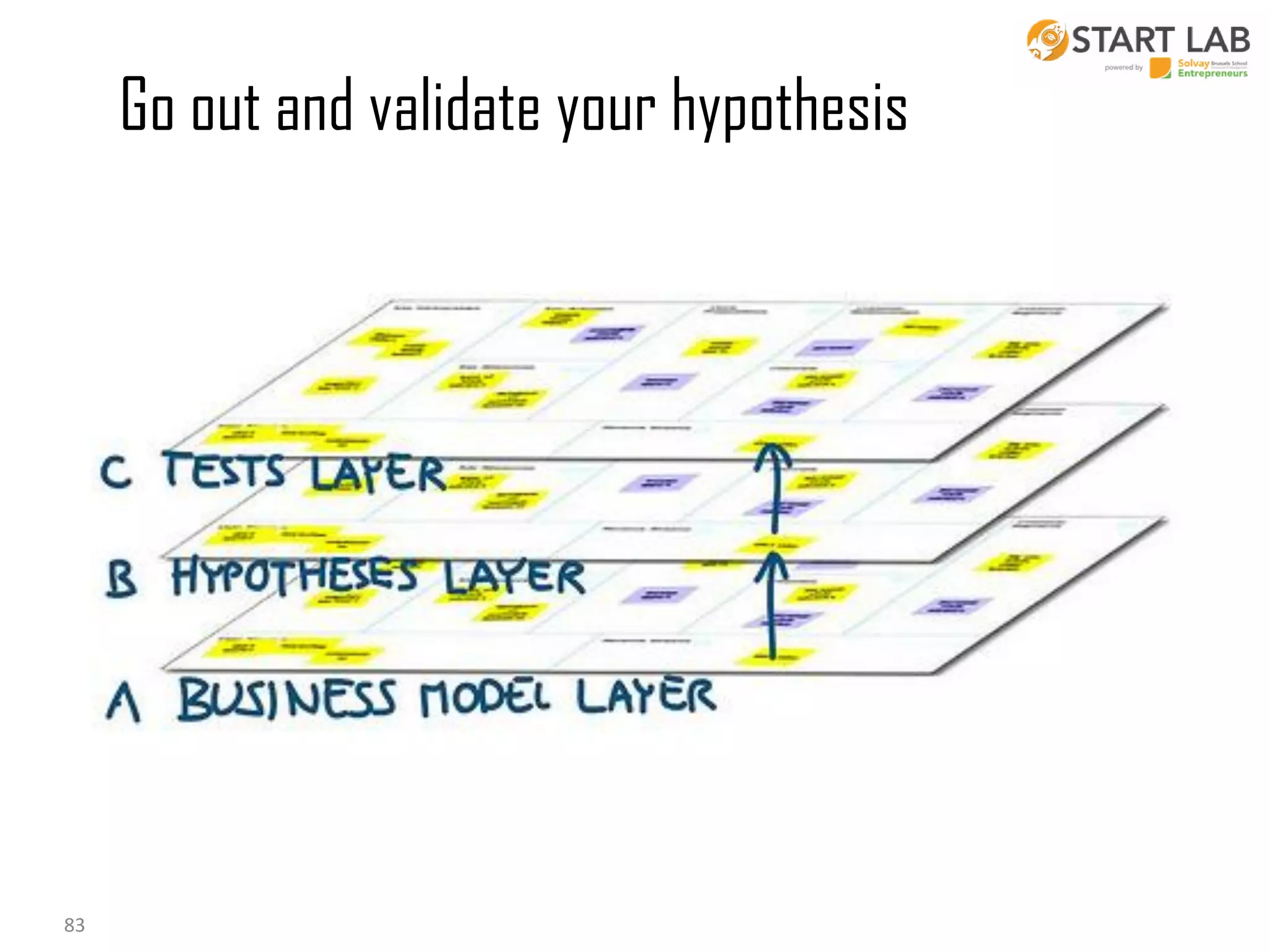
Go out and validate your hypothesis

83
THANKS FOR
YOUR ATTENTION
84

Design Thinking and the Business Model Canvas for the Mobile Economy

  • 1.
  • 2.
  • 3.
    “Design thinking canbe described as a discipline that uses the designer’s sensibility and methods to match people’s needs with what is technologically feasible and what a viable business strategy can convert into customer value and market opportunity.” Tim Brown (Ideo) 3
  • 4.
  • 6.
    Design thinking isa problem solving method Five Iterative Steps Process Ideate Empathize Define Prototype Test 6
  • 7.
  • 8.
  • 9.
    WHAT is theempathize mode ? Empathy is the foundation of a human-centered design process • Observe: View users and their behavior in the context of their lives • Immerse: Experience what your user experience • Engage: Interact with and interview customers 9
  • 10.
    Observe and lookthrough customers’ eyes… 10
  • 11.
    Live like thecustomers… 11
  • 12.
    And interact withusers through interviews HOW to prepare for an interview: • Brainstorm questions • Identify and order themes • Refine questions: How the user FEELS Read the Interview Preparation guide from the D.School 12 http://www.oercommons.org/media/upload/authoring/1686/documents/dSchool_interview.pd
  • 13.
    GO OUT TOTALK TO YOUR CUSTOMERS ! 13
  • 14.
  • 15.
    WHAT IS THE PROBLEM YOUWANT TO SOLVE ? 15
  • 16.
    “If I hadan hour to solve a problem solution. I would spend the first fifty minutes determining how to… Frame the problem ...for once I know the proper question to ask I can solve the problem in less than 5 minutes” Albert Einstein 16
  • 17.
    WHAT is thedefine mode ? Synthesize your empathy findings into needs and insights • Focus rather than flaring • Develop a deep understanding of your users • Come up with an actionable problem statement 17
  • 18.
    Some useful empathytools Empathy Map Value Proposition Canvas The Customer Journey Map 18
  • 19.
    The Empathy Map Relyingon your interview notes, write what the customers Read the Empathy Map article http://fr.slideshare.net/Solvay_Entrepreneurs/fiche-toolkit-empathymap?utm_source=ss&utm_medium=upload&utm_campaign=quick-view 19
  • 20.
    The Value PropositionCanvas Relying on your interview notes, define what are the customer’s • Jobs to be done • Pains • Gains Read the following article http://www.innovationexcellence.com/blog/2012/10/07/the-value-proposition-canvas/ 20
  • 21.
    The Customer JourneyMap Describes the journey of a customer and emphases on • The goal of your customers • The customer experience flow • The touch points that characterize the service experience • The interaction and the relationship 21
  • 22.
  • 23.
  • 24.
  • 25.
  • 26.
  • 27.
    WHAT is theideation mode ? Focus on idea generation • Going Wide in term of concepts and outcomes • Flaring rather than Focus • Explore a wide solution space • Quantity and Diversity of ideas 27
  • 28.
  • 29.
    Ideation is ateam exercise 29
  • 30.
    Some useful ideationtools Mind-Mapping Brainstorming Visual-Thinking 30
  • 31.
  • 32.
    WHAT is theprototype mode ? Getting ideas out of our head in a physical world • Several physical forms • Linked to the progress of your exploration • Explore possibilities with rapid iterative prototyping • Fast learning approach 32
  • 33.
    A prototype canbe anything… 33
  • 34.
    Linked to theprogress of your project… http://www.wired.com/design/2013/09/appseed-transforms-your-sketches-into-app-prototypes/ 34
  • 35.
    In order tolearn fast from your users 35
  • 36.
    Prototypes are mostsuccessful when people interact with them… …What you learn from those interactions can help drive deeper empathy, as well as shape successful solutions. 36
  • 37.
    Prototyping a mobileapp Design Mobile user experience 37 Build Mobile technology
  • 38.
  • 39.
  • 40.
    “Failure is simplythe opportunity to begin again, this time more intelligently.“ Henry Ford 40
  • 41.
    WHAT is theTest mode ? Testing is the chance to refine your solution • Real context in use • Hypothesis validation • Get feedback from our users • Use Metrics 41
  • 42.
    Test it inthe real context
  • 43.
  • 44.
    Metrics that matters •Number of users • Conversion • Engagement • Virality • App-Ranking 44
  • 45.
  • 46.
  • 47.
  • 48.
  • 49.
    “A business modeldescribed the rationale of how an organisation creates, delivers, and captures value” Alex Osterwalder 49
  • 50.
  • 51.
    A Business Model Who? What? How ? How Much ? Markides (1999) 51
  • 52.
    The 4 mainsquestions are… • Who is the customers ? • What is the bundle of product and services ? • How to create and deliver the value ? • How much cash-flows are generated ? 52
  • 53.
    4 Questions How ? - 53 What? How Much? Who ? +
  • 54.
    9 Building Blocks How? What ? - Key Activities - Product - Service - Key Ressources - Partnership - Customers segments - Channels - Customer relation -€ - Cost structure 54 Who ? How Much? Financial Aspect + +€ Revenue Streams
  • 55.
    The Business ModelCanvas • 9 Building Blocks • Concept and relations between building blocks Alexander Osterwalder & Yves Pigneur (2009) 55
  • 56.
  • 57.
    9 Building Blocks Key Activities ValueProposition Customer Relationships Key Partnership Customer Segments Key Resources Channels Cost Structure 57 Revenue Streams 57 Business Modeling
  • 58.
    Building Blocks 1. CustomerSegments • Mass Market • Niche Market • Segmented • Diversified • Multi-sided Platforms Who are your most important clients ? 58 Who ?
  • 59.
    Building Blocks 2. ValueProposition • Newess • Performance • Getting the job done • Design What ? • Usabililty • … What is your solution to the problem ? 18/10/2013 59 59 Business Modeling
  • 60.
    WHAT IS THE PROBLEM YOUWANT TO SOLVE ? 60
  • 61.
    The product-market fit LeValue Proposition Canvas Alexander Osterwalder (2012) What ? Who ?  Empathize  Define the problem to solve  Ideate the solution that fit the problem 18/10/2013 61 61 Business Modeling
  • 62.
    The value propositiondesigner What ? 18/10/2013 62 Who ? 62 Business Modeling
  • 63.
    Some value propositionexamples Capture and share the world’s moments. Give people the power to share and make the world more open and connected. Makes it easy to remember things big and small from everyday life using your phone, tablet, computer and the web. 18/10/2013 63 63 Business Modeling
  • 64.
    “In the mobilecontext, you need to explain what you do in 30 seconds or less because people move on to the next shiny object... …. There are so many apps and people are vying for your attention on the go… ... You're not sitting in front of a computer; you're at a bus stop or in a meeting." Kevin Systrom Instagram Founder
  • 65.
  • 66.
  • 67.
  • 68.
    Building Blocks 3. Channels •App Store and Android Store • API • Web-site and social network • Blog, reviews, YouTube video Who ? • People and virality • Sales Forces How to attract customers ? 18/10/2013 68 Business Modeling
  • 69.
    Building Blocks 4. Customerrelationships • Engagement plan • Automation • Community • Network effect Who ? – Same-Side – Cross-Side How to keep customers ? 18/10/2013 69 Business Modeling
  • 70.
    Building Blocks 5. Revenuestreams • Build the audience first • Some revenues streams Who ? How to make money ? 18/10/2013 70 Business Modeling
  • 71.
    Building Blocks 6. Keyactivities The most important things that the company must do • Design • Development • Grow users base throug Marketing How ? • Data Analysis What are the key activities ? 18/10/2013 71 Business Modeling
  • 72.
    Building Blocks 6. Keyactivities 18/10/2013 72 Business Modeling
  • 73.
    Building Blocks 7. Keyressources The most important assets of the company • Human • Financial • Data and mobile app • Technology Infrastructure What are the key ressources ? 18/10/2013 73 Business Modeling How ?
  • 74.
    Building Blocks 8. Keypartners Networks of suppliers and partners • Google Play and App Store • Blog and ambassadors • Business Angel and VC’s How ? • Innoviris Who are your key partners ? 18/10/2013 74 Business Modeling
  • 75.
    Building Blocks 9. CostStructure • Development • Marketing • Servers What are the main costs ? How Much ? 18/10/2013 75 75 Business Modeling
  • 76.
    The Business ModelCanvas How ? What ? Who ? How Much ? 18/10/2013 76 76 Business Modeling
  • 77.
    App Store Development Google Play Design Investors Automation Takeand share great pictures Social Network Users Grow user base Server and Data (photo) Hosted Platorm Great photos APIs Web Forum App Store Google play Developer Site and APIs FREE Marketing Development FREE 77
  • 78.
  • 79.
  • 80.
  • 81.
    At this stage,it is only a set of hypothesis… ? ? Hypothesis 18/10/2013 81 ? ? ? Hypothesis ? ? ? Hypothesis ?
  • 82.
  • 83.
    Go out andvalidate your hypothesis 83
  • 84.