International Research Journal of Engineering and Technology (IRJET) e-ISSN: 2395-0056
Volume: 04 Issue: 11 | Nov -2017 www.irjet.net p-ISSN: 2395-0072
© 2017, IRJET | Impact Factor value: 6.171 | ISO 9001:2008 Certified Journal | Page 1045
Design Methodology for Feasible Railway Alignment
Miss.Priya Sharma1, Dr.Hemant Sood2
1Engineer (Civil), RITES Ltd., Nagpur, INDIA
2Professor and Head of Department, CIVIL Engineering, NITTTR, Chandigarh,INDIA
---------------------------------------------------------------------------------***-------------------------------------------------------------------------------
ABSTRACT— Designing a railway alignment is
incredibly advanced process. Due to increasing
urbanization, transportation system in urban areas is
facing new challenges. Transportation planning coming
up within geographical area has become complex because
of modes involved, mixed traffic, multiple origins and
multiple destinations. The task of adopting a specific route
selection for transit systems is complex and challenging as
it involves making decisions based on large set of spatial
dimensions.
So as to hold out this analysis, numerous
alternatives are studied by Engineers and the therefore
the feasible path is chosen based on factors such as soil
condition, land acquisition, topography, socio-economic
factors, cost benefits ratio. This research paper aims at
designing of railway alignment for a particular possible
route from Nimerkhedi Station situated at Madhya
Pradesh until a power plant at Khargone(M.P) for the
purpose of coal connectivity. Trail and error methods are
used in this research to freeze the gradients and curves of
the track to be laid.
Key words — Railway alignment, Gradients, Curves.
1. INTRODUCTION
The orientation provided to the centre line of the railway
track on the ground within the 2-D plane ie; horizontal
and vertical planes is called as the alignment of railway
line. Horizontal alignment suggests the direction of the
track and it includes straight path and curves (XY
Cartesian plane). Vertical alignment defines the
elevation, rise and fall within the vertical plane including
level track, gradients and vertical curves (The Z
component).The selection of alignment broadly depends
upon the choice of gauge, dominant points, topography
of the location, geological formation, climatic conditions
and flood impact on the particular chosen area. The
alignment of line should be so chosen that the
development cost is least. This is only workable by
providing balanced cuts and fill of earthwork, limiting
rock cutting and drainage crossing. The alignment
should be designed such that it provides safety to the
users or merchandise. This can be attained by providing
curves with appropriate transition lengths, designing
vertical curves for gradients and incorporating other
technical features.
2. PROPOSED METHODOLOGY
This analysis work has been carried out to formulate the
need to develop a standardize procedure to carry out the
survey work in order to provide coal connectivity for
Power plant from nearest feasible railway station. The
main work involved in the construction of new railway
line is land acquisition. The land to be inherited should
be adequate for the formation, berms and borrow pits. It
should also have adequate provision for future
enlargement. For station yard extra width of land is
acquired; for small station width commonly adopted is
15m x 1000 m.In order to have a proper and satisfactory
new route, various surveys are carried out:
1. Reconnaissance Survey
2. Preliminary Survey
3. Location Survey
2.1RECONNAISSANCE SURVEY
It is the primary engineering survey. It is administered in
the territory that has not been antecedent surveyed for
the purpose of laying a new railway line. A
reconnaissance survey provides knowledge that permits
design engineers to study the benefits and downside of a
range of routes. Contour maps provide essential
information regarding the relief of an area. Aerial
photographs provide a quick means for preparing
valuable sketches and overlays for the field. This
consists of collection of information regarding physical
characteristic of the country, the surface formation of the
ground, nature of soil and its classification, streams and
rivers of the immediate vicinity, especially those which
are likely to cross the proposed railway line, positions of
hills and lakes.
2.2PRELIMINARY SURVEY
The object of preliminary survey is to perform the
survey work along the alternative routes (found out by
reconnaissance survey) with the assistance of theodolite
and levelling instruments and to determine the greater
accuracy the cost of railway line along these alternative
routes involving cost of removing obstruction,
construction of bridges and then to decide the most
economical and efficient route. The x-sections of all
representative points along the route and feature of the
country are marked. The cross sections are determined
International Research Journal of Engineering and Technology (IRJET) e-ISSN: 2395-0056
Volume: 04 Issue: 11 | Nov -2017 www.irjet.net p-ISSN: 2395-0072
© 2017, IRJET | Impact Factor value: 6.171 | ISO 9001:2008 Certified Journal | Page 1046
at 500ft interval normally. Similarly where the route
crosses a river, the river is surveyed in detail for about
one mile on either the upstream and downstream sides.
The detail maps are prepared and the cost of different
alternatives is calculated accurately to select the most
economic routes.
2.3LOCATION SURVEY
It is the ultimate survey used to establish the centre line
of railway line. Its objective is to conduct the elaborated
survey along the finalised and most viable route from the
knowledge of preliminary survey.The location survey
aims to determine the center line of track which is to be
constructed and hence as the location survey ends,
construction work starts.
3. EXPERIMENTAL APPROACH
In an ideal world, railway alignment would be flat and
thus becomes most economical and requires negligible
maintenance. But in real world, it is not at all possible
and thus need for design of horizontal and vertical
alignment arises. This survey work had been started by
first conducting the topographical survey and collecting
all the knowledge about the entire route length to be
laid, corresponding hindrances in between, soil
characteristics, forest areas, rivers or craggy piece of
land if any. For performing this, DGPS survey and Total
station was used. The bench marks, formation level and
ground levels had been marked ranging from
Nimerkheri Station and heading towards power plant. As
a result of hindrances like village area, hilly area and
water bodies in between, the track has to be diverted in
some places and so the necessity arises for geometric
design of the alignment.
3.1HORIZONTAL ALIGNMENT DESIGN
The factors that influence the design of horizontal
alignment are topography of the site, presence of water
bodies,flaura and fauna, habitats, usage of land, impacts
of community and its utility etc.The most important
factor affecting the design of horizontal alignment is that
the design speed of the trains. But in this survey as goods
train has to travel under controlled speed and hence the
design speed has been given second preference. In this
study, topographical survey has been administered so as
to determine the co-ordinate and Ground level at every
20 m interval along the particular route. All the
information related to hindrances such as village area,
wells or nallah etc has been collected. While establishing
the co-ordinate, its X,Y and Z dimensions have been
studied and formation levels, ground level has been
established. Thorough study of the hindrances has been
carried out and remedies to get rid of the obstructions or
to divert the route has been done. As all the hindrances
cannot be removed, therefore the situation arises to
divert the track by providing the curves. Trial and error
method has been used to determine the positioning of
curves. Horizontal curves are provided when a change in
direction of track is required and vertical curves are
provided at point where two opposite gradients meets or
wherever a gradient meets formation level. The data
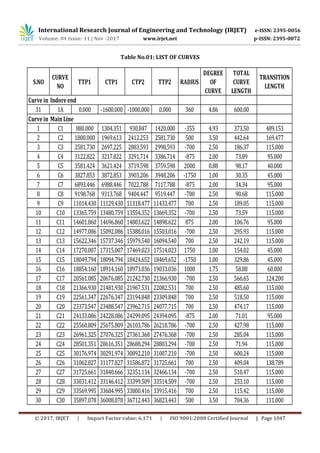
collected at site has been tabulated as Table No.01.
3.2 VERTICAL ALIGNMENT DESIGN
The vertical alignment analysis deals with gradient
design. These are provided to counteract the rise and fall
in the track level. Gradient design includes grade
compensation, falling and rising gradient. Grade
compensation aims at reducing the gradient in curved
portion of the tracks. Standard grade compensation
provided in Broad Gauge Tracks is 0.4% per degree.
Gradients are further classified as ruling, momentum
pusher and station yard gradient and have completely
different applications according to the geometry of the
track.
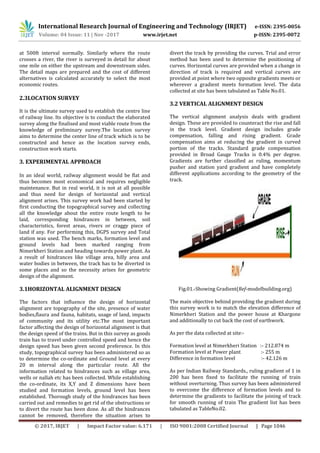
Fig.01.-Showing Gradient(Ref-modelbuilding.org)
The main objective behind providing the gradient during
this survey work is to match the elevation difference of
Nimerkheri Station and the power house at Khargone
and additionally to cut back the cost of earthwork.
As per the data collected at site:-
Formation level at Nimerkheri Station :- 212.874 m
Formation level at Power plant :- 255 m
Difference in formation level :- 42.126 m
As per Indian Railway Standards., ruling gradient of 1 in
200 has been fixed to facilitate the running of train
without overturning. Thus survey has been administered
to overcome the difference of formation levels and to
determine the gradients to facilitate the joining of track
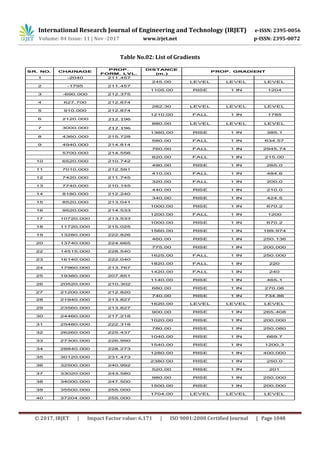
for smooth running of train The gradient list has been
tabulated as TableNo.02.
International Research Journal of Engineering and Technology (IRJET) e-ISSN: 2395-0056
Volume: 04 Issue: 11 | Nov -2017 www.irjet.net p-ISSN: 2395-0072
© 2017, IRJET | Impact Factor value: 6.171 | ISO 9001:2008 Certified Journal | Page 1047
Table No.01: LIST OF CURVES
S.NO
CURVE
NO
TTP1 CTP1 CTP2 TTP2 RADIUS
DEGREE
OF
CURVE
TOTAL
CURVE
LENGTH
TRANSITION
LENGTH
31 1A 0.000 -1600.000 -1000.000 0.000 360 4.86 600.00
1 C1 880.000 1304.351 930.847 1420.000 -355 4.93 373.50 489.153
2 C2 1800.000 1969.613 2412.253 2581.730 500 3.50 442.64 169.477
3 C3 2581.730 2697.225 2883.593 2998.593 -700 2.50 186.37 115.000
4 C4 3122.822 3217.822 3291.714 3386.714 -875 2.00 73.89 95.000
5 C5 3581.424 3621.424 3719.598 3759.598 2000 0.88 98.17 40.000
6 C6 3827.853 3872.853 3903.206 3948.206 -1750 1.00 30.35 45.000
7 C7 6893.446 6988.446 7022.788 7117.788 -875 2.00 34.34 95.000
8 C8 9198.768 9313.768 9404.447 9519.447 -700 2.50 90.68 115.000
9 C9 11014.430 11129.430 11318.477 11433.477 700 2.50 189.05 115.000
10 C10 13365.759 13480.759 13554.352 13669.352 -700 2.50 73.59 115.000
11 C11 14601.860 14696.860 14803.622 14898.622 875 2.00 106.76 95.000
12 C12 14977.086 15092.086 15388.016 15503.016 -700 2.50 295.93 115.000
13 C13 15622.346 15737.346 15979.540 16094.540 700 2.50 242.19 115.000
14 C14 17270.007 17315.007 17469.023 17514.023 1750 1.00 154.02 45.000
15 C15 18049.794 18094.794 18424.652 18469.652 -1750 1.00 329.86 45.000
16 C16 18854.160 18914.160 18973.036 19033.036 1000 1.75 58.88 60.000
17 C17 20561.085 20676.085 21242.730 21366.930 -700 2.50 566.65 124.200
18 C18 21366.930 21481.930 21967.531 22082.531 700 2.50 485.60 115.000
19 C19 22561.347 22676.347 23194.848 23309.848 700 2.50 518.50 115.000
20 C20 23373.547 23488.547 23962.715 24077.715 700 2.50 474.17 115.000
21 C21 24133.086 24228.086 24299.095 24394.095 -875 2.00 71.01 95.000
22 C22 25560.809 25675.809 26103.786 26218.786 -700 2.50 427.98 115.000
23 C23 26961.325 27076.325 27361.368 27476.368 -700 2.50 285.04 115.000
24 C24 28501.351 28616.351 28688.294 28803.294 -700 2.50 71.94 115.000
25 C25 30176.974 30291.974 30892.210 31007.210 -700 2.50 600.24 115.000
26 C26 31062.827 31177.827 31586.872 31725.661 700 2.50 409.04 138.789
27 C27 31725.661 31840.666 32351.134 32466.134 -700 2.50 510.47 115.000
28 C28 33031.412 33146.412 33399.509 33514.509 -700 2.50 253.10 115.000
29 C29 33569.995 33684.995 33800.416 33915.416 700 2.50 115.42 115.000
30 C30 35897.078 36008.078 36712.443 36823.443 500 3.50 704.36 111.000
Curvein Indoreend
Curvein MainLine
International Research Journal of Engineering and Technology (IRJET) e-ISSN: 2395-0056
Volume: 04 Issue: 11 | Nov -2017 www.irjet.net p-ISSN: 2395-0072
© 2017, IRJET | Impact Factor value: 6.171 | ISO 9001:2008 Certified Journal | Page 1048
Table No.02: List of Gradients
SR. NO. CHAINAGE
PROP.
FORM. LVL.
DISTANCE
(m.)
1 -2040 211.457
245.00 LEVEL LEVEL LEVEL
2 -1795 211.457
1105.00 RISE 1 IN 1204
3 -690.000 212.375
4 627.700 212.874
282.30 LEVEL LEVEL LEVEL
5 910.000 212.874
1210.00 FALL 1 IN 1785
6 2120.000 212.196
880.00 LEVEL LEVEL LEVEL
7 3000.000 212.196
1360.00 RISE 1 IN 385.1
8 4360.000 215.728
580.00 FALL 1 IN 634.57
9 4940.000 214.814
760.00 FALL 1 IN 2945.74
5700.000 214.556
820.00 FALL 1 IN 215.00
10 6520.000 210.742
490.00 RISE 1 IN 265.0
11 7010.000 212.591
410.00 FALL 1 IN 484.6
12 7420.000 211.745
320.00 FALL 1 IN 200.0
13 7740.000 210.145
440.00 RISE 1 IN 210.0
14 8180.000 212.240
340.00 RISE 1 IN 424.5
15 8520.000 213.041
1000.00 RISE 1 IN 670.2
16 9520.000 214.533
1200.00 FALL 1 IN 1200
17 10720.000 213.533
1000.00 RISE 1 IN 670.2
18 11720.000 215.025
1560.00 RISE 1 IN 199.974
19 13280.000 222.826
460.00 RISE 1 IN 250.136
20 13740.000 224.665
775.00 RISE 1 IN 200.000
22 14515.000 228.540
1625.00 FALL 1 IN 250.000
23 16140.000 222.040
1820.00 FALL 1 IN 220
24 17960.000 213.767
1420.00 FALL 1 IN 240
25 19380.000 207.851
1140.00 RISE 1 IN 465.1
26 20520.000 210.302
680.00 RISE 1 IN 270.06
27 21200.000 212.820
740.00 RISE 1 IN 734.86
28 21940.000 213.827
1620.00 LEVEL LEVEL LEVEL
29 23560.000 213.827
900.00 RISE 1 IN 265.408
30 24460.000 217.218
1020.00 RISE 1 IN 200.000
31 25480.000 222.318
780.00 RISE 1 IN 250.080
32 26260.000 225.437
1040.00 RISE 1 IN 669.7
33 27300.000 226.990
1540.00 RISE 1 IN 1200.3
34 28840.000 228.273
1280.00 RISE 1 IN 400.000
35 30120.000 231.473
2380.00 RISE 1 IN 250.0
36 32500.000 240.992
520.00 RISE 1 IN 201
37 33020.000 243.580
980.00 RISE 1 IN 250.000
38 34000.000 247.500
1500.00 RISE 1 IN 200.000
39 35500.000 255.000
1704.00 LEVEL LEVEL LEVEL
40 37204.000 255.000
PROP. GRADIENT
International Research Journal of Engineering and Technology (IRJET) e-ISSN: 2395-0056
Volume: 04 Issue: 11 | Nov -2017 www.irjet.net p-ISSN: 2395-0072
© 2017, IRJET | Impact Factor value: 6.171 | ISO 9001:2008 Certified Journal | Page 1049
5. CONCLUSION
This study work namely design of railway alignment has
been carried out using analytical approach. Feasibility
study, if applied properly reveals most knowledge
required for the construction purpose as well as for the
adaptability of the project. The planning phase of the
project should be carried out judiciously and precisely so
as to avoid further alterations during construction phase.
The detailed survey data containing chainages, Bench
marks and many other levels needs to be plotted on
paper so that construction according to the drawing can
be carried out. It has all details about change in course,
gradients, turnouts-connections etc. Railway feasible
alignment requires a special attention on all its stage of
work because it involves enormous financial
expenditure, in consideration with appreciable amount
of safety of the user or resource utilize, in its
operation.Thus, proper geometric design of railway
alignment is necessary to make it feasible and
economical in respect of cost and its commencement.
6. ACKNOWLEDGEMENT
It is a genuine pleasure to express my deep sense of
thanks to my mentor and guide, Dr. Hemant Sood ,
Professor & Head, Department of Civil Engineering,
NITTTR Chandigarh, for his timely advise, meticulous
scrutiny and overwhelming attitude for helping me in
accomplishing this task. I would additionally like to
thank my friend Md.Tauhid, Engineer (Civil), RITES Ltd.
for his providing me necessary technical suggestions
during my research pursuits.
7. REFERENCE
1. PRE-FEASIBILITY STUDY FOR BROAD GAUGE
RAILWAY CONNECTION BETWEEN KOSICE AND
VIENNA” (Vienna, May 2011 – Revised Version)
2. Tennakoon, N., “IMPACT OF BALLAST FOULING ON
RAIL TRACKS’’. Second international conference on
railway technology, Research, Development and
Maintenance (pp. 1-11). Scotland: Civil-Comp
Press.,(2014)
3. J.Sadeghi and H. Askarinejad ;“INFLUENCES OF
TRACK STRUCTURE, GEOMETRY AND TRAFFIC
PARAMETERS ON RAILWAY DETERIORATION”;
Department of Railway Engineering, Iran University
of Science and Technology Tehran, Iran IJCE
(Received: April 30, 2006 – Accepted in Revised
Form: November 22, 2007
4. J. M. Sadeghi and M. Youldashkhan “INVESTIGATION
ON THE ACCURACY OF THE CURRENT PRACTICES
IN ANALYSIS OF RAILWAY TRACK CONCRETE
SLEEPERS”, Iran University of Science and
Technology, Tehran, Iran IJCE-Volume 3, Number 1
(March 2005)
5. J.Sadeghi, “INVESTIGATION ON MODELING OF
RAILWAY TRACK SYSTEM’’,Sharif University of
Technology, Scientica iranica , vol.8, No.1,pp 76-
79,January 2001
6. Shigeru Miura, Hideyuki Takai “THE MECHANISM
OF RAILWAY TRACKS’’, Railway Technology Today 2
,Japan Railway & Transport Review.
7. Introduction to Railway Engineering, A book by M.M
Agrawal, 5th edition, 2009.

Design Methodology for Feasible Railway Alignment

  • 1.
    International Research Journalof Engineering and Technology (IRJET) e-ISSN: 2395-0056 Volume: 04 Issue: 11 | Nov -2017 www.irjet.net p-ISSN: 2395-0072 © 2017, IRJET | Impact Factor value: 6.171 | ISO 9001:2008 Certified Journal | Page 1045 Design Methodology for Feasible Railway Alignment Miss.Priya Sharma1, Dr.Hemant Sood2 1Engineer (Civil), RITES Ltd., Nagpur, INDIA 2Professor and Head of Department, CIVIL Engineering, NITTTR, Chandigarh,INDIA ---------------------------------------------------------------------------------***------------------------------------------------------------------------------- ABSTRACT— Designing a railway alignment is incredibly advanced process. Due to increasing urbanization, transportation system in urban areas is facing new challenges. Transportation planning coming up within geographical area has become complex because of modes involved, mixed traffic, multiple origins and multiple destinations. The task of adopting a specific route selection for transit systems is complex and challenging as it involves making decisions based on large set of spatial dimensions. So as to hold out this analysis, numerous alternatives are studied by Engineers and the therefore the feasible path is chosen based on factors such as soil condition, land acquisition, topography, socio-economic factors, cost benefits ratio. This research paper aims at designing of railway alignment for a particular possible route from Nimerkhedi Station situated at Madhya Pradesh until a power plant at Khargone(M.P) for the purpose of coal connectivity. Trail and error methods are used in this research to freeze the gradients and curves of the track to be laid. Key words — Railway alignment, Gradients, Curves. 1. INTRODUCTION The orientation provided to the centre line of the railway track on the ground within the 2-D plane ie; horizontal and vertical planes is called as the alignment of railway line. Horizontal alignment suggests the direction of the track and it includes straight path and curves (XY Cartesian plane). Vertical alignment defines the elevation, rise and fall within the vertical plane including level track, gradients and vertical curves (The Z component).The selection of alignment broadly depends upon the choice of gauge, dominant points, topography of the location, geological formation, climatic conditions and flood impact on the particular chosen area. The alignment of line should be so chosen that the development cost is least. This is only workable by providing balanced cuts and fill of earthwork, limiting rock cutting and drainage crossing. The alignment should be designed such that it provides safety to the users or merchandise. This can be attained by providing curves with appropriate transition lengths, designing vertical curves for gradients and incorporating other technical features. 2. PROPOSED METHODOLOGY This analysis work has been carried out to formulate the need to develop a standardize procedure to carry out the survey work in order to provide coal connectivity for Power plant from nearest feasible railway station. The main work involved in the construction of new railway line is land acquisition. The land to be inherited should be adequate for the formation, berms and borrow pits. It should also have adequate provision for future enlargement. For station yard extra width of land is acquired; for small station width commonly adopted is 15m x 1000 m.In order to have a proper and satisfactory new route, various surveys are carried out: 1. Reconnaissance Survey 2. Preliminary Survey 3. Location Survey 2.1RECONNAISSANCE SURVEY It is the primary engineering survey. It is administered in the territory that has not been antecedent surveyed for the purpose of laying a new railway line. A reconnaissance survey provides knowledge that permits design engineers to study the benefits and downside of a range of routes. Contour maps provide essential information regarding the relief of an area. Aerial photographs provide a quick means for preparing valuable sketches and overlays for the field. This consists of collection of information regarding physical characteristic of the country, the surface formation of the ground, nature of soil and its classification, streams and rivers of the immediate vicinity, especially those which are likely to cross the proposed railway line, positions of hills and lakes. 2.2PRELIMINARY SURVEY The object of preliminary survey is to perform the survey work along the alternative routes (found out by reconnaissance survey) with the assistance of theodolite and levelling instruments and to determine the greater accuracy the cost of railway line along these alternative routes involving cost of removing obstruction, construction of bridges and then to decide the most economical and efficient route. The x-sections of all representative points along the route and feature of the country are marked. The cross sections are determined
  • 2.
    International Research Journalof Engineering and Technology (IRJET) e-ISSN: 2395-0056 Volume: 04 Issue: 11 | Nov -2017 www.irjet.net p-ISSN: 2395-0072 © 2017, IRJET | Impact Factor value: 6.171 | ISO 9001:2008 Certified Journal | Page 1046 at 500ft interval normally. Similarly where the route crosses a river, the river is surveyed in detail for about one mile on either the upstream and downstream sides. The detail maps are prepared and the cost of different alternatives is calculated accurately to select the most economic routes. 2.3LOCATION SURVEY It is the ultimate survey used to establish the centre line of railway line. Its objective is to conduct the elaborated survey along the finalised and most viable route from the knowledge of preliminary survey.The location survey aims to determine the center line of track which is to be constructed and hence as the location survey ends, construction work starts. 3. EXPERIMENTAL APPROACH In an ideal world, railway alignment would be flat and thus becomes most economical and requires negligible maintenance. But in real world, it is not at all possible and thus need for design of horizontal and vertical alignment arises. This survey work had been started by first conducting the topographical survey and collecting all the knowledge about the entire route length to be laid, corresponding hindrances in between, soil characteristics, forest areas, rivers or craggy piece of land if any. For performing this, DGPS survey and Total station was used. The bench marks, formation level and ground levels had been marked ranging from Nimerkheri Station and heading towards power plant. As a result of hindrances like village area, hilly area and water bodies in between, the track has to be diverted in some places and so the necessity arises for geometric design of the alignment. 3.1HORIZONTAL ALIGNMENT DESIGN The factors that influence the design of horizontal alignment are topography of the site, presence of water bodies,flaura and fauna, habitats, usage of land, impacts of community and its utility etc.The most important factor affecting the design of horizontal alignment is that the design speed of the trains. But in this survey as goods train has to travel under controlled speed and hence the design speed has been given second preference. In this study, topographical survey has been administered so as to determine the co-ordinate and Ground level at every 20 m interval along the particular route. All the information related to hindrances such as village area, wells or nallah etc has been collected. While establishing the co-ordinate, its X,Y and Z dimensions have been studied and formation levels, ground level has been established. Thorough study of the hindrances has been carried out and remedies to get rid of the obstructions or to divert the route has been done. As all the hindrances cannot be removed, therefore the situation arises to divert the track by providing the curves. Trial and error method has been used to determine the positioning of curves. Horizontal curves are provided when a change in direction of track is required and vertical curves are provided at point where two opposite gradients meets or wherever a gradient meets formation level. The data collected at site has been tabulated as Table No.01. 3.2 VERTICAL ALIGNMENT DESIGN The vertical alignment analysis deals with gradient design. These are provided to counteract the rise and fall in the track level. Gradient design includes grade compensation, falling and rising gradient. Grade compensation aims at reducing the gradient in curved portion of the tracks. Standard grade compensation provided in Broad Gauge Tracks is 0.4% per degree. Gradients are further classified as ruling, momentum pusher and station yard gradient and have completely different applications according to the geometry of the track. Fig.01.-Showing Gradient(Ref-modelbuilding.org) The main objective behind providing the gradient during this survey work is to match the elevation difference of Nimerkheri Station and the power house at Khargone and additionally to cut back the cost of earthwork. As per the data collected at site:- Formation level at Nimerkheri Station :- 212.874 m Formation level at Power plant :- 255 m Difference in formation level :- 42.126 m As per Indian Railway Standards., ruling gradient of 1 in 200 has been fixed to facilitate the running of train without overturning. Thus survey has been administered to overcome the difference of formation levels and to determine the gradients to facilitate the joining of track for smooth running of train The gradient list has been tabulated as TableNo.02.
  • 3.
    International Research Journalof Engineering and Technology (IRJET) e-ISSN: 2395-0056 Volume: 04 Issue: 11 | Nov -2017 www.irjet.net p-ISSN: 2395-0072 © 2017, IRJET | Impact Factor value: 6.171 | ISO 9001:2008 Certified Journal | Page 1047 Table No.01: LIST OF CURVES S.NO CURVE NO TTP1 CTP1 CTP2 TTP2 RADIUS DEGREE OF CURVE TOTAL CURVE LENGTH TRANSITION LENGTH 31 1A 0.000 -1600.000 -1000.000 0.000 360 4.86 600.00 1 C1 880.000 1304.351 930.847 1420.000 -355 4.93 373.50 489.153 2 C2 1800.000 1969.613 2412.253 2581.730 500 3.50 442.64 169.477 3 C3 2581.730 2697.225 2883.593 2998.593 -700 2.50 186.37 115.000 4 C4 3122.822 3217.822 3291.714 3386.714 -875 2.00 73.89 95.000 5 C5 3581.424 3621.424 3719.598 3759.598 2000 0.88 98.17 40.000 6 C6 3827.853 3872.853 3903.206 3948.206 -1750 1.00 30.35 45.000 7 C7 6893.446 6988.446 7022.788 7117.788 -875 2.00 34.34 95.000 8 C8 9198.768 9313.768 9404.447 9519.447 -700 2.50 90.68 115.000 9 C9 11014.430 11129.430 11318.477 11433.477 700 2.50 189.05 115.000 10 C10 13365.759 13480.759 13554.352 13669.352 -700 2.50 73.59 115.000 11 C11 14601.860 14696.860 14803.622 14898.622 875 2.00 106.76 95.000 12 C12 14977.086 15092.086 15388.016 15503.016 -700 2.50 295.93 115.000 13 C13 15622.346 15737.346 15979.540 16094.540 700 2.50 242.19 115.000 14 C14 17270.007 17315.007 17469.023 17514.023 1750 1.00 154.02 45.000 15 C15 18049.794 18094.794 18424.652 18469.652 -1750 1.00 329.86 45.000 16 C16 18854.160 18914.160 18973.036 19033.036 1000 1.75 58.88 60.000 17 C17 20561.085 20676.085 21242.730 21366.930 -700 2.50 566.65 124.200 18 C18 21366.930 21481.930 21967.531 22082.531 700 2.50 485.60 115.000 19 C19 22561.347 22676.347 23194.848 23309.848 700 2.50 518.50 115.000 20 C20 23373.547 23488.547 23962.715 24077.715 700 2.50 474.17 115.000 21 C21 24133.086 24228.086 24299.095 24394.095 -875 2.00 71.01 95.000 22 C22 25560.809 25675.809 26103.786 26218.786 -700 2.50 427.98 115.000 23 C23 26961.325 27076.325 27361.368 27476.368 -700 2.50 285.04 115.000 24 C24 28501.351 28616.351 28688.294 28803.294 -700 2.50 71.94 115.000 25 C25 30176.974 30291.974 30892.210 31007.210 -700 2.50 600.24 115.000 26 C26 31062.827 31177.827 31586.872 31725.661 700 2.50 409.04 138.789 27 C27 31725.661 31840.666 32351.134 32466.134 -700 2.50 510.47 115.000 28 C28 33031.412 33146.412 33399.509 33514.509 -700 2.50 253.10 115.000 29 C29 33569.995 33684.995 33800.416 33915.416 700 2.50 115.42 115.000 30 C30 35897.078 36008.078 36712.443 36823.443 500 3.50 704.36 111.000 Curvein Indoreend Curvein MainLine
  • 4.
    International Research Journalof Engineering and Technology (IRJET) e-ISSN: 2395-0056 Volume: 04 Issue: 11 | Nov -2017 www.irjet.net p-ISSN: 2395-0072 © 2017, IRJET | Impact Factor value: 6.171 | ISO 9001:2008 Certified Journal | Page 1048 Table No.02: List of Gradients SR. NO. CHAINAGE PROP. FORM. LVL. DISTANCE (m.) 1 -2040 211.457 245.00 LEVEL LEVEL LEVEL 2 -1795 211.457 1105.00 RISE 1 IN 1204 3 -690.000 212.375 4 627.700 212.874 282.30 LEVEL LEVEL LEVEL 5 910.000 212.874 1210.00 FALL 1 IN 1785 6 2120.000 212.196 880.00 LEVEL LEVEL LEVEL 7 3000.000 212.196 1360.00 RISE 1 IN 385.1 8 4360.000 215.728 580.00 FALL 1 IN 634.57 9 4940.000 214.814 760.00 FALL 1 IN 2945.74 5700.000 214.556 820.00 FALL 1 IN 215.00 10 6520.000 210.742 490.00 RISE 1 IN 265.0 11 7010.000 212.591 410.00 FALL 1 IN 484.6 12 7420.000 211.745 320.00 FALL 1 IN 200.0 13 7740.000 210.145 440.00 RISE 1 IN 210.0 14 8180.000 212.240 340.00 RISE 1 IN 424.5 15 8520.000 213.041 1000.00 RISE 1 IN 670.2 16 9520.000 214.533 1200.00 FALL 1 IN 1200 17 10720.000 213.533 1000.00 RISE 1 IN 670.2 18 11720.000 215.025 1560.00 RISE 1 IN 199.974 19 13280.000 222.826 460.00 RISE 1 IN 250.136 20 13740.000 224.665 775.00 RISE 1 IN 200.000 22 14515.000 228.540 1625.00 FALL 1 IN 250.000 23 16140.000 222.040 1820.00 FALL 1 IN 220 24 17960.000 213.767 1420.00 FALL 1 IN 240 25 19380.000 207.851 1140.00 RISE 1 IN 465.1 26 20520.000 210.302 680.00 RISE 1 IN 270.06 27 21200.000 212.820 740.00 RISE 1 IN 734.86 28 21940.000 213.827 1620.00 LEVEL LEVEL LEVEL 29 23560.000 213.827 900.00 RISE 1 IN 265.408 30 24460.000 217.218 1020.00 RISE 1 IN 200.000 31 25480.000 222.318 780.00 RISE 1 IN 250.080 32 26260.000 225.437 1040.00 RISE 1 IN 669.7 33 27300.000 226.990 1540.00 RISE 1 IN 1200.3 34 28840.000 228.273 1280.00 RISE 1 IN 400.000 35 30120.000 231.473 2380.00 RISE 1 IN 250.0 36 32500.000 240.992 520.00 RISE 1 IN 201 37 33020.000 243.580 980.00 RISE 1 IN 250.000 38 34000.000 247.500 1500.00 RISE 1 IN 200.000 39 35500.000 255.000 1704.00 LEVEL LEVEL LEVEL 40 37204.000 255.000 PROP. GRADIENT
  • 5.
    International Research Journalof Engineering and Technology (IRJET) e-ISSN: 2395-0056 Volume: 04 Issue: 11 | Nov -2017 www.irjet.net p-ISSN: 2395-0072 © 2017, IRJET | Impact Factor value: 6.171 | ISO 9001:2008 Certified Journal | Page 1049 5. CONCLUSION This study work namely design of railway alignment has been carried out using analytical approach. Feasibility study, if applied properly reveals most knowledge required for the construction purpose as well as for the adaptability of the project. The planning phase of the project should be carried out judiciously and precisely so as to avoid further alterations during construction phase. The detailed survey data containing chainages, Bench marks and many other levels needs to be plotted on paper so that construction according to the drawing can be carried out. It has all details about change in course, gradients, turnouts-connections etc. Railway feasible alignment requires a special attention on all its stage of work because it involves enormous financial expenditure, in consideration with appreciable amount of safety of the user or resource utilize, in its operation.Thus, proper geometric design of railway alignment is necessary to make it feasible and economical in respect of cost and its commencement. 6. ACKNOWLEDGEMENT It is a genuine pleasure to express my deep sense of thanks to my mentor and guide, Dr. Hemant Sood , Professor & Head, Department of Civil Engineering, NITTTR Chandigarh, for his timely advise, meticulous scrutiny and overwhelming attitude for helping me in accomplishing this task. I would additionally like to thank my friend Md.Tauhid, Engineer (Civil), RITES Ltd. for his providing me necessary technical suggestions during my research pursuits. 7. REFERENCE 1. PRE-FEASIBILITY STUDY FOR BROAD GAUGE RAILWAY CONNECTION BETWEEN KOSICE AND VIENNA” (Vienna, May 2011 – Revised Version) 2. Tennakoon, N., “IMPACT OF BALLAST FOULING ON RAIL TRACKS’’. Second international conference on railway technology, Research, Development and Maintenance (pp. 1-11). Scotland: Civil-Comp Press.,(2014) 3. J.Sadeghi and H. Askarinejad ;“INFLUENCES OF TRACK STRUCTURE, GEOMETRY AND TRAFFIC PARAMETERS ON RAILWAY DETERIORATION”; Department of Railway Engineering, Iran University of Science and Technology Tehran, Iran IJCE (Received: April 30, 2006 – Accepted in Revised Form: November 22, 2007 4. J. M. Sadeghi and M. Youldashkhan “INVESTIGATION ON THE ACCURACY OF THE CURRENT PRACTICES IN ANALYSIS OF RAILWAY TRACK CONCRETE SLEEPERS”, Iran University of Science and Technology, Tehran, Iran IJCE-Volume 3, Number 1 (March 2005) 5. J.Sadeghi, “INVESTIGATION ON MODELING OF RAILWAY TRACK SYSTEM’’,Sharif University of Technology, Scientica iranica , vol.8, No.1,pp 76- 79,January 2001 6. Shigeru Miura, Hideyuki Takai “THE MECHANISM OF RAILWAY TRACKS’’, Railway Technology Today 2 ,Japan Railway & Transport Review. 7. Introduction to Railway Engineering, A book by M.M Agrawal, 5th edition, 2009.