
Descriptive Study Designs
(Basic Course in Biomedical Research)
Dr Snehashis Singha
Junior Resident
Department of Pharmacology and Therapeutics
King George’s Medical University, Lucknow
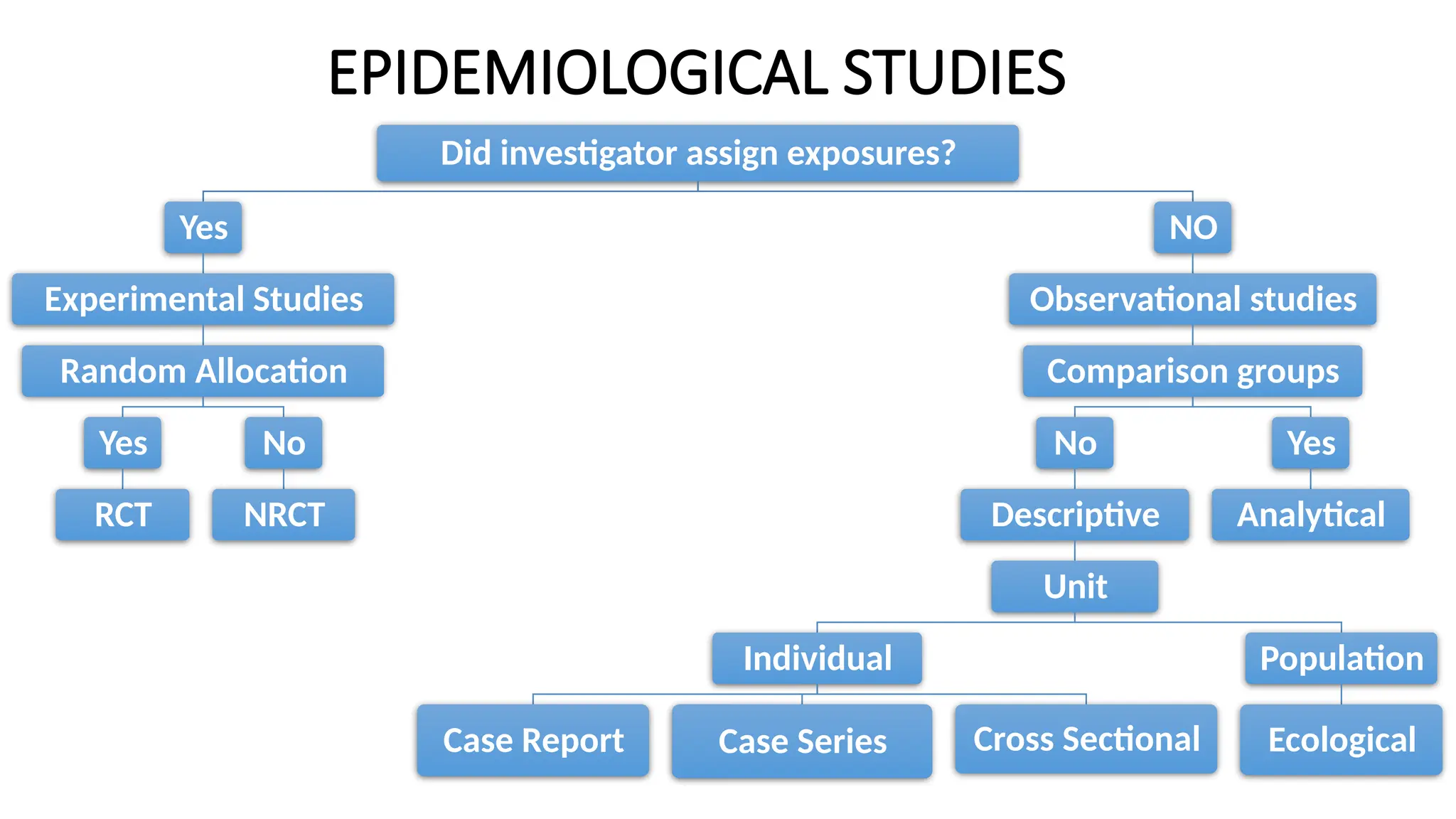
Did investigator assign exposures?
Yes
Experimental Studies
Random Allocation
Yes
RCT
No
NRCT
NO
Observational studies
Comparison groups
No
Descriptive
Unit
Individual
Case Report Case Series Cross Sectional
Population
Ecological
Yes
Analytical
EPIDEMIOLOGICAL STUDIES
Introduction
Systematically describe the characteristics of a population or health issue
without assessing causation.
• Purpose: Understand the "what," "where," "when," and "who" of health
problems, providing baseline data for planning and hypothesis generation.
• Scope: Overview of types (Case Reports, Case Series, Ecological Studies, Cross-
sectional Surveys), their applications, strengths, and limitations.
Types of Health Research Designs
Epidemiological Studies:
• Two Main Categories:
• Descriptive Studies: Focus on describing the
distribution of health conditions.
• Analytical Studies: Focus on identifying the
causes or determinants of health conditions.
Overview of Descriptive vs Analytical Studies
Descriptive Studies:
• Conducted on individuals or populations.
• Types: Case Reports, Case Series, Ecological Studies,
Cross-sectional Surveys.
Analytical Studies:
• Observational studies : Case-control, Cohort studies.
Types of Descriptive Study Designs
• Case Reports
• Case Series
• Ecological Studies
• Cross-sectional Surveys
Case Reports
Definition:
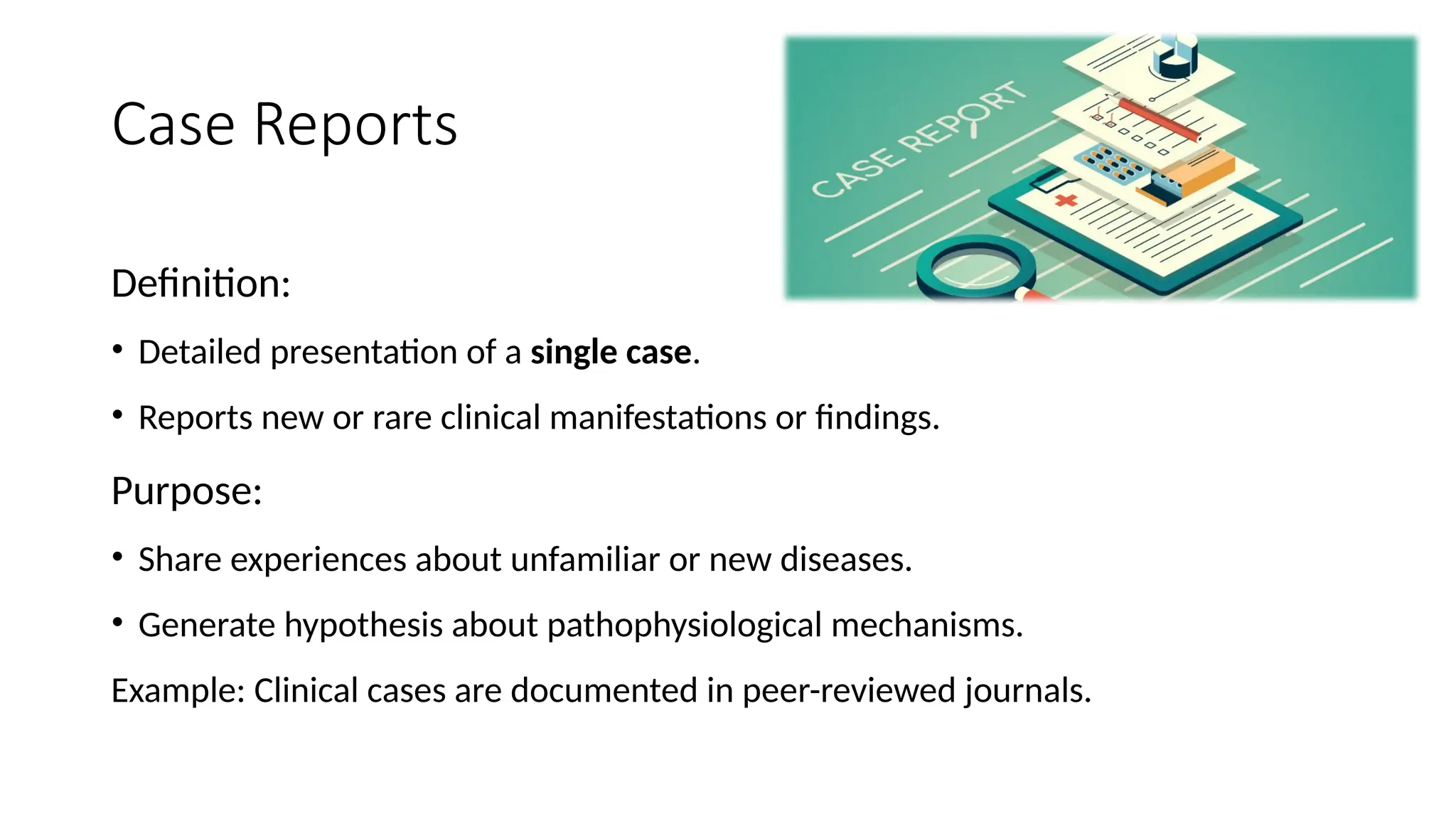
• Detailed presentation of a single case.
• Reports new or rare clinical manifestations or findings.
Purpose:
• Share experiences about unfamiliar or new diseases.
• Generate hypothesis about pathophysiological mechanisms.
Example: Clinical cases are documented in peer-reviewed journals.
Characteristics and Importance of Case Reports
Usefulness:
• Educate fellow clinicians about rare manifestations.
• Document unique findings, such as imaging or lab
results.
• Help in identifying new diseases or unusual
presentations of known diseases.
Case Series
Definition:
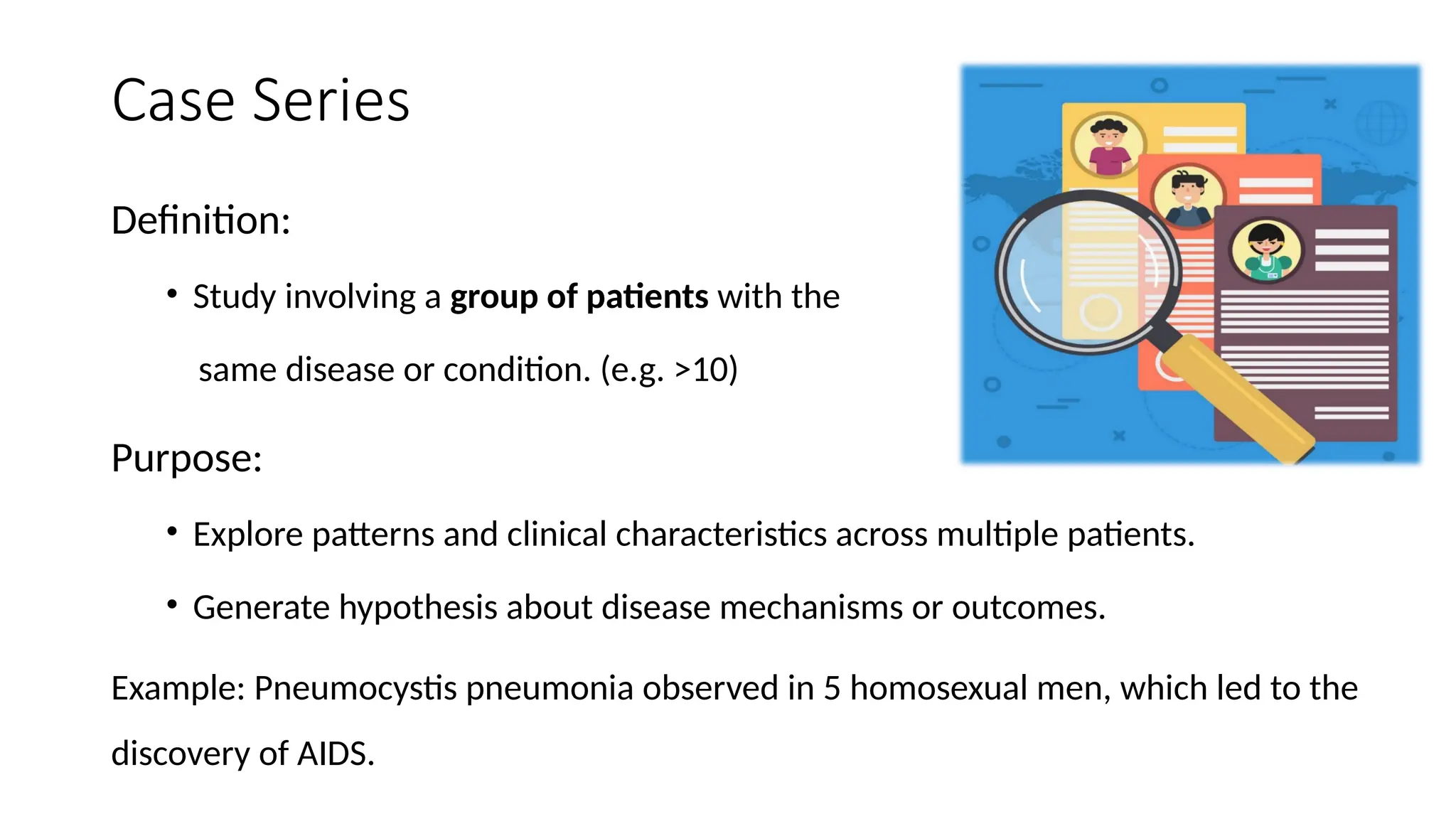
• Study involving a group of patients with the
same disease or condition. (e.g. >10)
Purpose:
• Explore patterns and clinical characteristics across multiple patients.
• Generate hypothesis about disease mechanisms or outcomes.
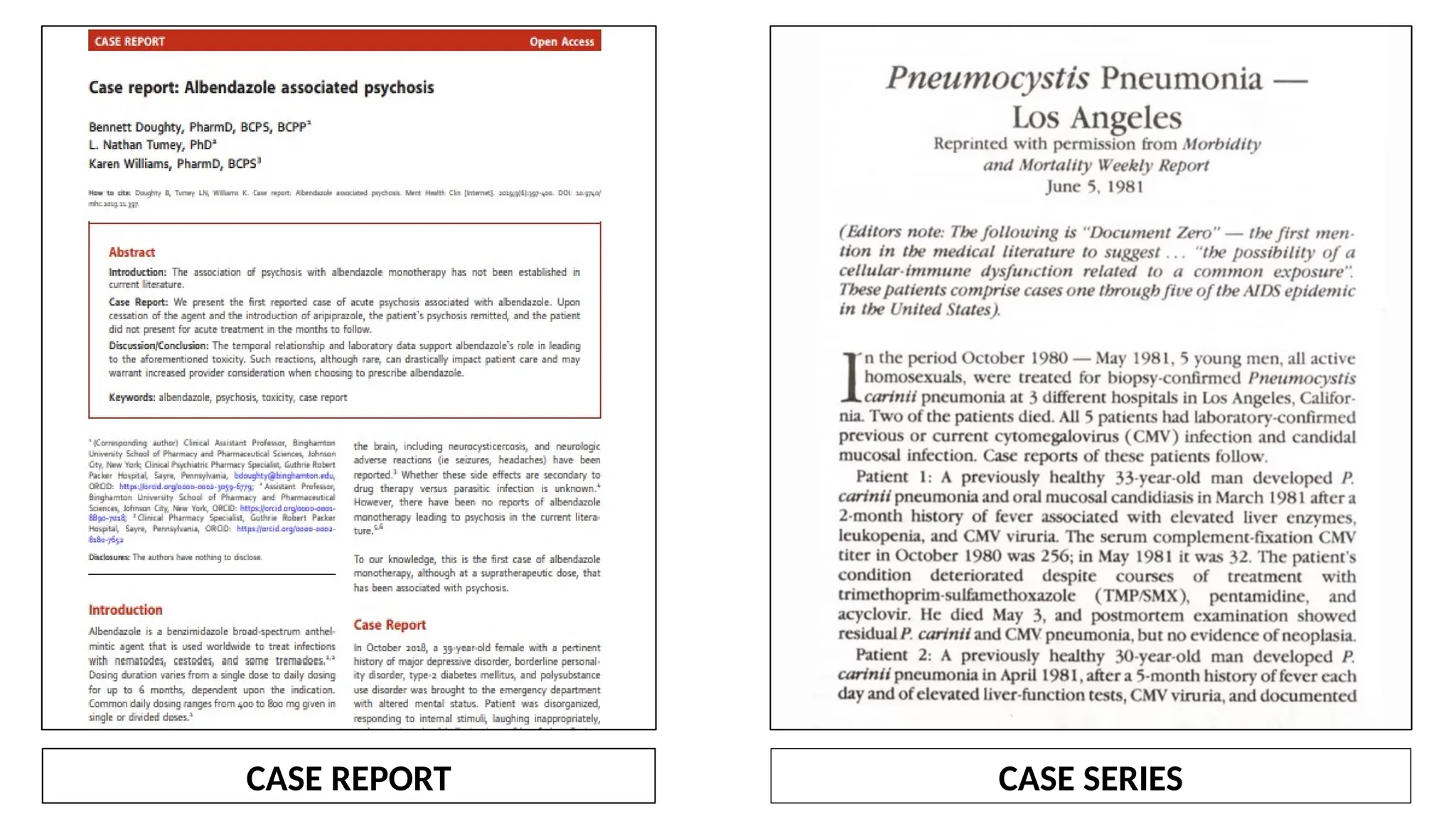
Example: Pneumocystis pneumonia observed in 5 homosexual men, which led to the
discovery of AIDS.
Advantages and Limitations of Case Series
Advantages:
• Useful for understanding patterns in rare
conditions.
• Helps to identify new health issues or trends.
Limitations:
• Lack of a comparison group.
• Cannot establish causation.
CASE REPORT CASE SERIES
Ecological Studies
Definition:
Studies conducted at the population or group
level rather than the individual level.
Characteristics:
• Unit of analysis is the group or population, not individuals.
• Helps identify patterns and associations at a community or national level.
Example of Ecological Studies
Example:
• Comparing average fat intake in different regions and its
association with the incidence of cardiovascular disease.
Limitations:
• Cannot determine individual-level exposure data.
• Susceptible to ecological fallacy (misinterpreting group data for individual risk).
Cross-sectional Surveys
Definition:
• Observational study assessing data at a single
point in time.
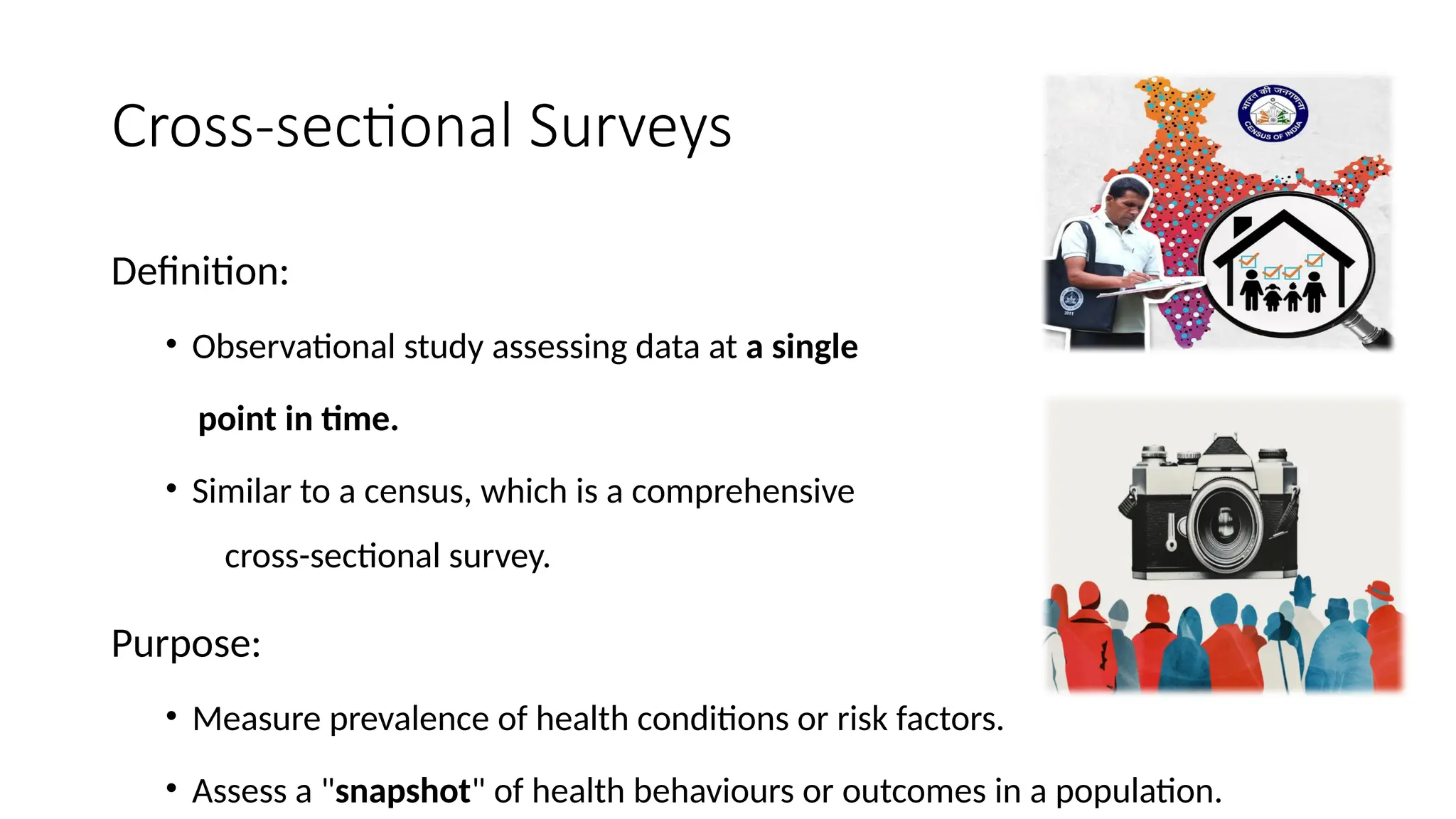
• Similar to a census, which is a comprehensive
cross-sectional survey.
Purpose:
• Measure prevalence of health conditions or risk factors.
• Assess a "snapshot" of health behaviours or outcomes in a population.
Common Applications:
• Measure burden of disease or prevalence of risk
factors (e.g., hypertension, smoking)
• Distribution of health problems by time, place and person
• Collect data on health and non-health related behaviours
at a single point in time
• Set priorities for disease control
• Examine evolving trends
• Generate hypothesis
Examples: NFHS, IIPS studies
Analytical Cross-sectional Surveys
Definition:
• Studies that assess associations between exposure
and outcomes at a single point in time.
Example:
• Survey assessing the prevalence of hypertension along with risk factors like
obesity, smoking, or alcohol use.
Purpose:
• Generate hypothesis, but not to test them conclusively.
Examples of Research Questions Addressed
by Cross-sectional Surveys
Examples:
• What is the prevalence of hypertension in a city?
• What is the pattern of healthcare utilization in a hospital?
• What is the prevalence of physical inactivity among school children?
Advantages of Cross-sectional Studies
Advantages:
• Quick, easy to perform and cost-effective.
• Useful for health planning and setting disease
control priorities.
• Provide baseline data for future research.
Limitations of Cross-sectional Studies
Limitations:
• Cannot establish cause-effect relationships (aetiology).
• Not suitable for studying rare diseases (e.g. cancer).
• Prevalent Cases (Old & New cases)
• Difficulty in determining the sequence of exposure and
outcome (Diabetes & Obesity, Smoking & Hypertension)
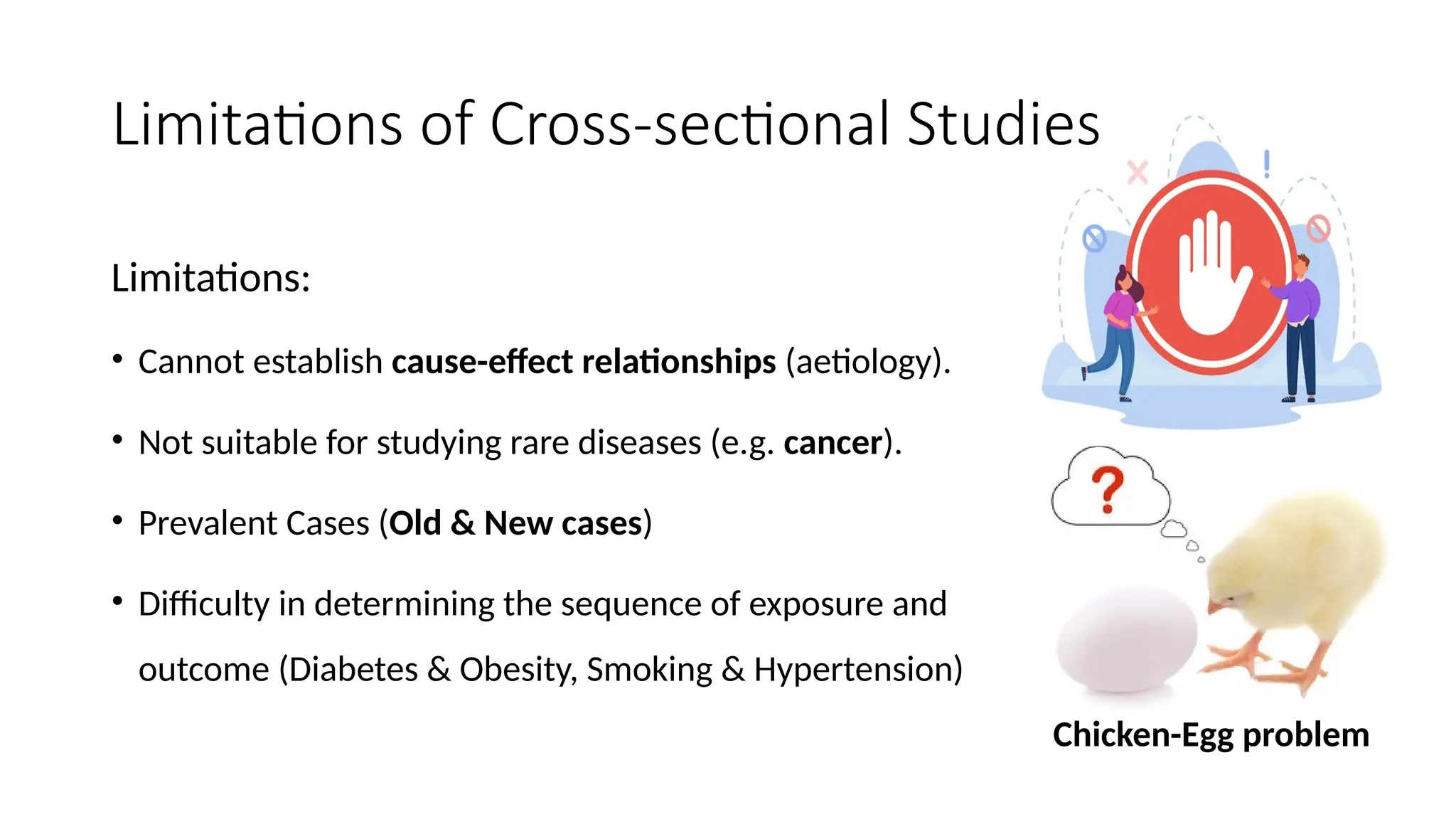
Chicken-Egg problem
Summary of Descriptive Study Designs
Key Points:
• Case Reports and Case Series: Document unique or
rare clinical manifestations.
• Ecological Studies: Examine associations at the group level.
• Cross-sectional Surveys: Measure burden or prevalence of health conditions
at a single point in time.
Descriptive studies provide crucial data that help in health planning, hypothesis
generation, and disease monitoring.
References:
• Essentials of Biostatistics | Basic Medical Biostatistics [Internet]. Based on: Basic
Course in Biomedical Research course material - Indian Council of Medical
Research, National Institute of Epidemiology, Chennai. YouTube; [cited 2024 Dec
10]. Available from: https://www.youtube.com/watch?v=IaiV0AqZB0A
• Mehta T. Basic and Clinical Biostatistics and Research Methodology. New Delhi:
Jaypee Brothers Medical Publishers; March 2021. (p.34-43).
Descriptive Study Designs, Basic Course in Biomedical Rresearch

Descriptive Study Designs, Basic Course in Biomedical Rresearch

  • 1.
    Descriptive Study Designs (BasicCourse in Biomedical Research) Dr Snehashis Singha Junior Resident Department of Pharmacology and Therapeutics King George’s Medical University, Lucknow
  • 2.
    Did investigator assignexposures? Yes Experimental Studies Random Allocation Yes RCT No NRCT NO Observational studies Comparison groups No Descriptive Unit Individual Case Report Case Series Cross Sectional Population Ecological Yes Analytical EPIDEMIOLOGICAL STUDIES
  • 3.
    Introduction Systematically describe thecharacteristics of a population or health issue without assessing causation. • Purpose: Understand the "what," "where," "when," and "who" of health problems, providing baseline data for planning and hypothesis generation. • Scope: Overview of types (Case Reports, Case Series, Ecological Studies, Cross- sectional Surveys), their applications, strengths, and limitations.
  • 4.
    Types of HealthResearch Designs Epidemiological Studies: • Two Main Categories: • Descriptive Studies: Focus on describing the distribution of health conditions. • Analytical Studies: Focus on identifying the causes or determinants of health conditions.
  • 5.
    Overview of Descriptivevs Analytical Studies Descriptive Studies: • Conducted on individuals or populations. • Types: Case Reports, Case Series, Ecological Studies, Cross-sectional Surveys. Analytical Studies: • Observational studies : Case-control, Cohort studies.
  • 6.
    Types of DescriptiveStudy Designs • Case Reports • Case Series • Ecological Studies • Cross-sectional Surveys
  • 7.
    Case Reports Definition: • Detailedpresentation of a single case. • Reports new or rare clinical manifestations or findings. Purpose: • Share experiences about unfamiliar or new diseases. • Generate hypothesis about pathophysiological mechanisms. Example: Clinical cases are documented in peer-reviewed journals.
  • 8.
    Characteristics and Importanceof Case Reports Usefulness: • Educate fellow clinicians about rare manifestations. • Document unique findings, such as imaging or lab results. • Help in identifying new diseases or unusual presentations of known diseases.
  • 9.
    Case Series Definition: • Studyinvolving a group of patients with the same disease or condition. (e.g. >10) Purpose: • Explore patterns and clinical characteristics across multiple patients. • Generate hypothesis about disease mechanisms or outcomes. Example: Pneumocystis pneumonia observed in 5 homosexual men, which led to the discovery of AIDS.
  • 10.
    Advantages and Limitationsof Case Series Advantages: • Useful for understanding patterns in rare conditions. • Helps to identify new health issues or trends. Limitations: • Lack of a comparison group. • Cannot establish causation.
  • 11.
  • 12.
    Ecological Studies Definition: Studies conductedat the population or group level rather than the individual level. Characteristics: • Unit of analysis is the group or population, not individuals. • Helps identify patterns and associations at a community or national level.
  • 13.
    Example of EcologicalStudies Example: • Comparing average fat intake in different regions and its association with the incidence of cardiovascular disease. Limitations: • Cannot determine individual-level exposure data. • Susceptible to ecological fallacy (misinterpreting group data for individual risk).
  • 14.
    Cross-sectional Surveys Definition: • Observationalstudy assessing data at a single point in time. • Similar to a census, which is a comprehensive cross-sectional survey. Purpose: • Measure prevalence of health conditions or risk factors. • Assess a "snapshot" of health behaviours or outcomes in a population.
  • 15.
    Common Applications: • Measureburden of disease or prevalence of risk factors (e.g., hypertension, smoking) • Distribution of health problems by time, place and person • Collect data on health and non-health related behaviours at a single point in time • Set priorities for disease control • Examine evolving trends • Generate hypothesis Examples: NFHS, IIPS studies
  • 16.
    Analytical Cross-sectional Surveys Definition: •Studies that assess associations between exposure and outcomes at a single point in time. Example: • Survey assessing the prevalence of hypertension along with risk factors like obesity, smoking, or alcohol use. Purpose: • Generate hypothesis, but not to test them conclusively.
  • 17.
    Examples of ResearchQuestions Addressed by Cross-sectional Surveys Examples: • What is the prevalence of hypertension in a city? • What is the pattern of healthcare utilization in a hospital? • What is the prevalence of physical inactivity among school children?
  • 18.
    Advantages of Cross-sectionalStudies Advantages: • Quick, easy to perform and cost-effective. • Useful for health planning and setting disease control priorities. • Provide baseline data for future research.
  • 19.
    Limitations of Cross-sectionalStudies Limitations: • Cannot establish cause-effect relationships (aetiology). • Not suitable for studying rare diseases (e.g. cancer). • Prevalent Cases (Old & New cases) • Difficulty in determining the sequence of exposure and outcome (Diabetes & Obesity, Smoking & Hypertension) Chicken-Egg problem
  • 20.
    Summary of DescriptiveStudy Designs Key Points: • Case Reports and Case Series: Document unique or rare clinical manifestations. • Ecological Studies: Examine associations at the group level. • Cross-sectional Surveys: Measure burden or prevalence of health conditions at a single point in time. Descriptive studies provide crucial data that help in health planning, hypothesis generation, and disease monitoring.
  • 21.
    References: • Essentials ofBiostatistics | Basic Medical Biostatistics [Internet]. Based on: Basic Course in Biomedical Research course material - Indian Council of Medical Research, National Institute of Epidemiology, Chennai. YouTube; [cited 2024 Dec 10]. Available from: https://www.youtube.com/watch?v=IaiV0AqZB0A • Mehta T. Basic and Clinical Biostatistics and Research Methodology. New Delhi: Jaypee Brothers Medical Publishers; March 2021. (p.34-43).