Molecular mechanism underlying Depression: The
relationship between serotonin system and glutamate
system in mouse cortical neurons and HT22 cells
Adiba SHABNAM
2015
Overview
•Depression: Definition
•Causes
•Affected Brain areas
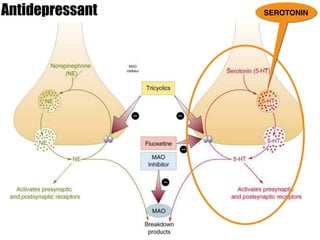
•Antidepressant: Mechanism
•Serotonin Theory
•Glutamate and GABA Theory
•Objective
•Experimental Method
•Results
•Conclusion
DEPRESSION
A common psychiatric
disorder characterized
by low mood, loss of
pleasure, sleep and
appetite changes, poor
concentration and
suicidal tendency
Depression
Why to study depression?
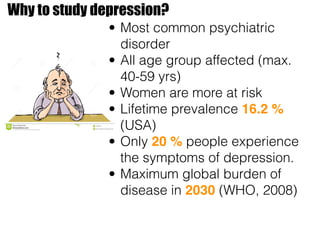
• Most common psychiatric
disorder
• All age group affected (max.
40-59 yrs)
• Women are more at risk
• Lifetime prevalence 16.2 %
(USA)
• Only 20 % people experience
the symptoms of depression.
• Maximum global burden of
disease in 2030 (WHO, 2008)
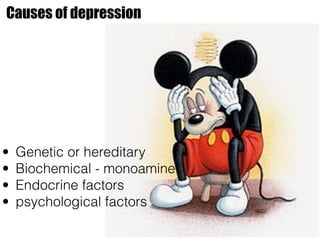
Causes of depression
• Genetic or hereditary
• Biochemical - monoamine
• Endocrine factors
• psychological factors
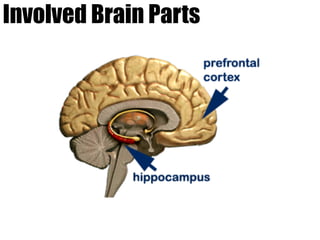
Involved Brain Parts
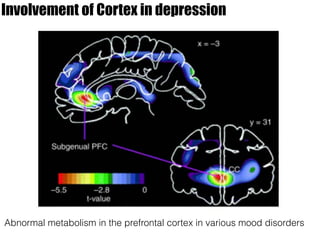
Involvement of Cortex in depression
Abnormal metabolism in the prefrontal cortex in various mood disorders
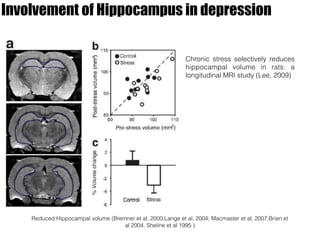
Involvement of Hippocampus in depression
Reduced Hippocampal volume (Bremner et al, 2000,Lange et al, 2004; Macmaster et al, 2007;Brien et
al 2004, Sheline et al 1995 )
Chronic stress selectively reduces
hippocampal volume in rats: a
longitudinal MRI study (Lee, 2009)
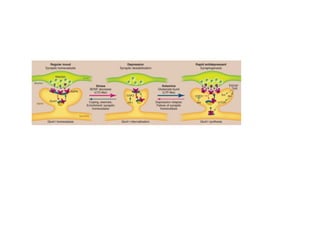
Antidepressant SEROTONIN
Serotonin
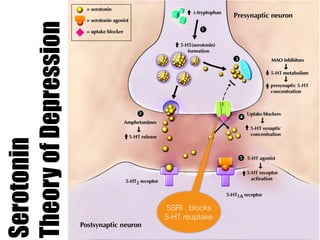
TheoryofDepression
SSRI blocks
5-HT reuptake
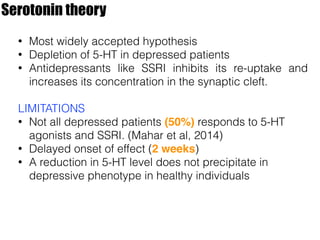
Serotonin theory
• Most widely accepted hypothesis
• Depletion of 5-HT in depressed patients
• Antidepressants like SSRI inhibits its re-uptake and
increases its concentration in the synaptic cleft.
LIMITATIONS
• Not all depressed patients (50%) responds to 5-HT
agonists and SSRI. (Mahar et al, 2014)
• Delayed onset of effect (2 weeks)
• A reduction in 5-HT level does not precipitate in
depressive phenotype in healthy individuals
What is the reason for the lag?
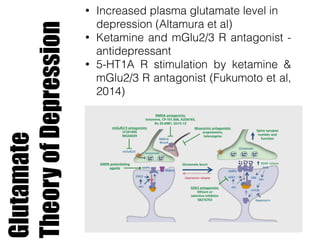
Glutamate
TheoryofDepression
• Increased plasma glutamate level in
depression (Altamura et al)
• Ketamine and mGlu2/3 R antagonist -
antidepressant
• 5-HT1A R stimulation by ketamine &
mGlu2/3 R antagonist (Fukumoto et al,
2014)
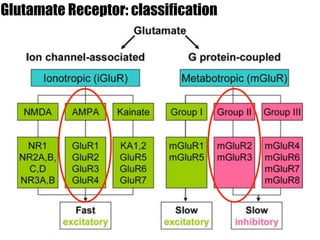
Glutamate Receptor: classification
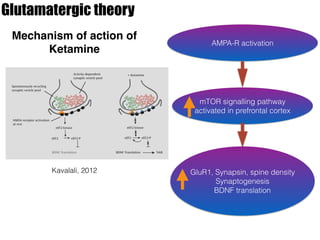
Glutamatergic theory
Mechanism of action of
Ketamine
AMPA-R activation
mTOR signalling pathway
activated in prefrontal cortex
GluR1, Synapsin, spine density
Synaptogenesis
BDNF translation
Kavalali, 2012
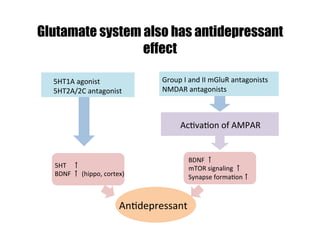
Glutamate system also has antidepressant
effect
Group&I&and&II&mGluR&antagonists&
NMDAR&antagonists&
An6depressant
5HT1A&agonist&
5HT2A/2C&antagonist&
Ac6va6on&of&AMPAR
BDNF&	
&
mTOR&signaling&	
&
Synapse&forma6on	
5HT&&&&	
&
BDNF&	
 (hippo,&cortex)&
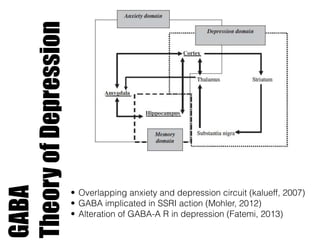
GABA
TheoryofDepression
• Overlapping anxiety and depression circuit (kalueff, 2007)
• GABA implicated in SSRI action (Mohler, 2012)
• Alteration of GABA-A R in depression (Fatemi, 2013)
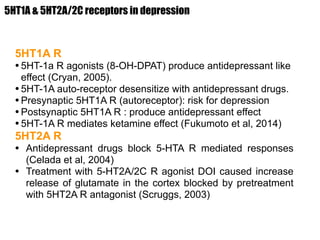
5HT1A & 5HT2A/2C receptors in depression
5HT1A R
•5HT-1a R agonists (8-OH-DPAT) produce antidepressant like
effect (Cryan, 2005).
•5HT-1A auto-receptor desensitize with antidepressant drugs.
•Presynaptic 5HT1A R (autoreceptor): risk for depression
•Postsynaptic 5HT1A R : produce antidepressant effect
•5HT-1A R mediates ketamine effect (Fukumoto et al, 2014)
5HT2A R
• Antidepressant drugs block 5-HTA R mediated responses
(Celada et al, 2004)
• Treatment with 5-HT2A/2C R agonist DOI caused increase
release of glutamate in the cortex blocked by pretreatment
with 5HT2A R antagonist (Scruggs, 2003)
Objective of the experiment
Investigation of the effect
of 5-HT1A agonist and 5-
HT 2A/2C agonist on m-
RNA expression of
AMPA-R (GluR1, GluR2,
GluR3,GluR4), GABA-
Aα1 and BDNF
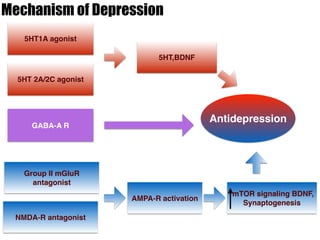
5HT 2A/2C agonist
5HT,BDNF
Group II mGluR
antagonist
NMDA-R antagonist
AMPA-R activation
mTOR signaling BDNF,
Synaptogenesis
Antidepression
GABA-A R
5HT1A agonist
Mechanism of Depression
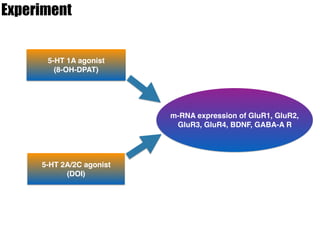
Experiment
m-RNA expression of GluR1, GluR2,
GluR3, GluR4, BDNF, GABA-A R
5-HT 1A agonist
(8-OH-DPAT)
5-HT 2A/2C agonist
(DOI)
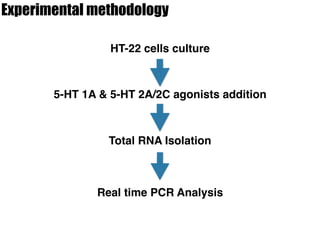
Experimental methodology
HT-22 cells culture
5-HT 1A & 5-HT 2A/2C agonists addition
Total RNA Isolation
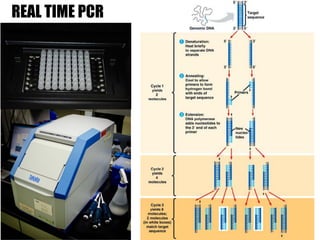
Real time PCR Analysis
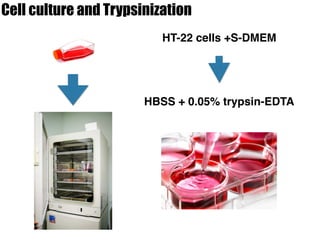
Cell culture and Trypsinization
HT-22 cells +S-DMEM
HBSS + 0.05% trypsin-EDTA
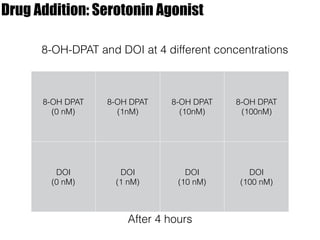
Drug Addition: Serotonin Agonist
8-OH-DPAT and DOI at 4 different concentrations
8-OH DPAT
(0 nM)
8-OH DPAT
(1nM)
8-OH DPAT
(10nM)
8-OH DPAT
(100nM)
DOI
(0 nM)
DOI
(1 nM)
DOI
(10 nM)
DOI
(100 nM)
After 4 hours
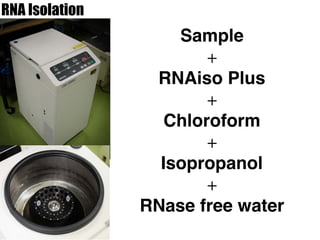
RNA Isolation
Sample
+
RNAiso Plus
+
Chloroform
+
Isopropanol
+
RNase free water
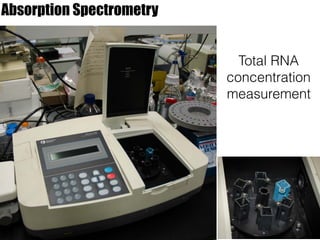
Absorption Spectrometry
Total RNA
concentration
measurement
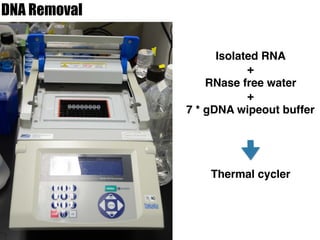
DNA Removal
Thermal cycler
Isolated RNA
+
RNase free water
+
7 * gDNA wipeout buffer
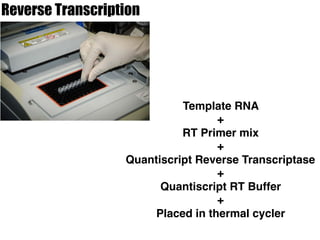
Reverse Transcription
Template RNA
+
RT Primer mix
+
Quantiscript Reverse Transcriptase
+
Quantiscript RT Buffer
+
Placed in thermal cycler
REAL TIME PCR
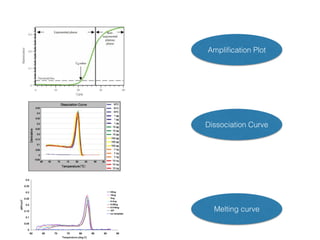
Amplification Plot
Dissociation Curve
Melting curve
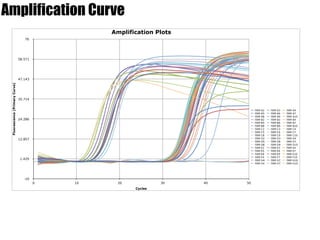
Amplification Curve
Amplification Plots
Fluorescence(PrimaryCurve)
-10
1.429
12.857
24.286
35.714
47.143
58.571
70
Cycles
0 10 20 30 40 50
FAM A2 FAM A3 FAM A4
FAM A5 FAM A6 FAM A7
FAM A8 FAM A9 FAM A10
FAM B2 FAM B3 FAM B4
FAM B5 FAM B6 FAM B7
FAM B8 FAM B9 FAM B10
FAM C2 FAM C3 FAM C4
FAM C5 FAM C6 FAM C7
FAM C8 FAM C9 FAM C10
FAM D2 FAM D3 FAM D4
FAM D5 FAM D6 FAM D7
FAM D8 FAM D9 FAM D10
FAM E2 FAM E3 FAM E4
FAM E5 FAM E6 FAM E7
FAM E8 FAM E9 FAM E10
FAM F4 FAM F7 FAM F10
FAM G4 FAM G7 FAM G10
FAM H4 FAM H7 FAM H10
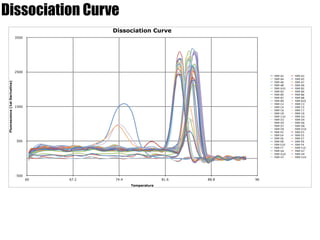
Dissociation Curve
Dissociation Curve
Fluorescence(1stDerivative)
-500
500
1500
2500
3500
Temperature
60 67.2 74.4 81.6 88.8 96
FAM A2 FAM A3
FAM A4 FAM A5
FAM A6 FAM A7
FAM A8 FAM A9
FAM A10 FAM B2
FAM B3 FAM B4
FAM B5 FAM B6
FAM B7 FAM B8
FAM B9 FAM B10
FAM C2 FAM C3
FAM C4 FAM C5
FAM C6 FAM C7
FAM C8 FAM C9
FAM C10 FAM D2
FAM D3 FAM D4
FAM D5 FAM D6
FAM D7 FAM D8
FAM D9 FAM D10
FAM E2 FAM E3
FAM E4 FAM E5
FAM E6 FAM E7
FAM E8 FAM E9
FAM E10 FAM F4
FAM F7 FAM F10
FAM G4 FAM G7
FAM G10 FAM H4
FAM H7 FAM H10
RESULTS
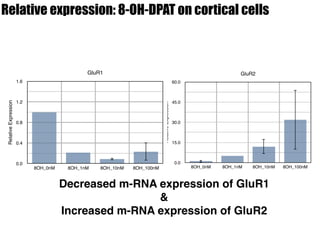
Relative expression: 8-OH-DPAT on cortical cells
GluR2
RelativeExplession
0.0
15.0
30.0
45.0
60.0
8OH_0nM 8OH_1nM 8OH_10nM 8OH_100nM
GluR1
RelativeExpression
0.0
0.4
0.8
1.2
1.6
8OH_0nM 8OH_1nM 8OH_10nM 8OH_100nM
Decreased m-RNA expression of GluR1
&
Increased m-RNA expression of GluR2
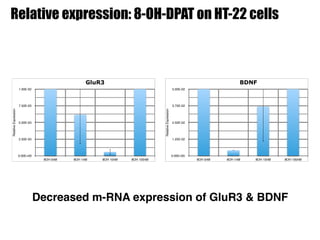
Relative expression: 8-OH-DPAT on HT-22 cells
GluR3
RelativeExpression
0.00E+00
2.50E-03
5.00E-03
7.50E-03
1.00E-02
8OH 0nM 8OH 1nM 8OH 10nM 8OH 100nM
BDNF
RelativeExpression
0.00E+00
1.25E-02
2.50E-02
3.75E-02
5.00E-02
8OH 0nM 8OH 1nM 8OH 10nM 8OH 100nM
Decreased m-RNA expression of GluR3 & BDNF
RelativeExpression
0.00E+00
2.50E+00
5.00E+00
7.50E+00
1.00E+01
DOI 0nM DOI 1nM DOI 10nM DOI 100nM
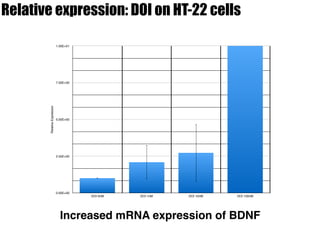
Relative expression: DOI on HT-22 cells
Increased mRNA expression of BDNF
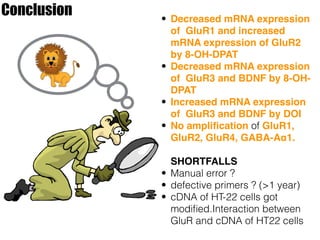
Conclusion • Decreased mRNA expression
of GluR1 and increased
mRNA expression of GluR2
by 8-OH-DPAT
• Decreased mRNA expression
of GluR3 and BDNF by 8-OH-
DPAT
• Increased mRNA expression
of GluR3 and BDNF by DOI
• No amplification of GluR1,
GluR2, GluR4, GABA-Aα1.
SHORTFALLS
• Manual error ?
• defective primers ? (>1 year)
• cDNA of HT-22 cells got
modified.Interaction between
GluR and cDNA of HT22 cells
depression

depression

  • 1.
    Molecular mechanism underlyingDepression: The relationship between serotonin system and glutamate system in mouse cortical neurons and HT22 cells Adiba SHABNAM 2015
  • 2.
    Overview •Depression: Definition •Causes •Affected Brainareas •Antidepressant: Mechanism •Serotonin Theory •Glutamate and GABA Theory •Objective •Experimental Method •Results •Conclusion
  • 4.
    DEPRESSION A common psychiatric disordercharacterized by low mood, loss of pleasure, sleep and appetite changes, poor concentration and suicidal tendency Depression
  • 5.
    Why to studydepression? • Most common psychiatric disorder • All age group affected (max. 40-59 yrs) • Women are more at risk • Lifetime prevalence 16.2 % (USA) • Only 20 % people experience the symptoms of depression. • Maximum global burden of disease in 2030 (WHO, 2008)
  • 6.
    Causes of depression •Genetic or hereditary • Biochemical - monoamine • Endocrine factors • psychological factors
  • 7.
  • 8.
    Involvement of Cortexin depression Abnormal metabolism in the prefrontal cortex in various mood disorders
  • 9.
    Involvement of Hippocampusin depression Reduced Hippocampal volume (Bremner et al, 2000,Lange et al, 2004; Macmaster et al, 2007;Brien et al 2004, Sheline et al 1995 ) Chronic stress selectively reduces hippocampal volume in rats: a longitudinal MRI study (Lee, 2009)
  • 10.
  • 11.
  • 12.
    Serotonin theory • Mostwidely accepted hypothesis • Depletion of 5-HT in depressed patients • Antidepressants like SSRI inhibits its re-uptake and increases its concentration in the synaptic cleft. LIMITATIONS • Not all depressed patients (50%) responds to 5-HT agonists and SSRI. (Mahar et al, 2014) • Delayed onset of effect (2 weeks) • A reduction in 5-HT level does not precipitate in depressive phenotype in healthy individuals
  • 13.
    What is thereason for the lag?
  • 14.
    Glutamate TheoryofDepression • Increased plasmaglutamate level in depression (Altamura et al) • Ketamine and mGlu2/3 R antagonist - antidepressant • 5-HT1A R stimulation by ketamine & mGlu2/3 R antagonist (Fukumoto et al, 2014)
  • 16.
  • 17.
    Glutamatergic theory Mechanism ofaction of Ketamine AMPA-R activation mTOR signalling pathway activated in prefrontal cortex GluR1, Synapsin, spine density Synaptogenesis BDNF translation Kavalali, 2012
  • 18.
    Glutamate system alsohas antidepressant effect Group&I&and&II&mGluR&antagonists& NMDAR&antagonists& An6depressant 5HT1A&agonist& 5HT2A/2C&antagonist& Ac6va6on&of&AMPAR BDNF& & mTOR&signaling& & Synapse&forma6on 5HT&&&& & BDNF& (hippo,&cortex)&
  • 19.
    GABA TheoryofDepression • Overlapping anxietyand depression circuit (kalueff, 2007) • GABA implicated in SSRI action (Mohler, 2012) • Alteration of GABA-A R in depression (Fatemi, 2013)
  • 20.
    5HT1A & 5HT2A/2Creceptors in depression 5HT1A R •5HT-1a R agonists (8-OH-DPAT) produce antidepressant like effect (Cryan, 2005). •5HT-1A auto-receptor desensitize with antidepressant drugs. •Presynaptic 5HT1A R (autoreceptor): risk for depression •Postsynaptic 5HT1A R : produce antidepressant effect •5HT-1A R mediates ketamine effect (Fukumoto et al, 2014) 5HT2A R • Antidepressant drugs block 5-HTA R mediated responses (Celada et al, 2004) • Treatment with 5-HT2A/2C R agonist DOI caused increase release of glutamate in the cortex blocked by pretreatment with 5HT2A R antagonist (Scruggs, 2003)
  • 21.
    Objective of theexperiment Investigation of the effect of 5-HT1A agonist and 5- HT 2A/2C agonist on m- RNA expression of AMPA-R (GluR1, GluR2, GluR3,GluR4), GABA- Aα1 and BDNF
  • 22.
    5HT 2A/2C agonist 5HT,BDNF GroupII mGluR antagonist NMDA-R antagonist AMPA-R activation mTOR signaling BDNF, Synaptogenesis Antidepression GABA-A R 5HT1A agonist Mechanism of Depression
  • 23.
    Experiment m-RNA expression ofGluR1, GluR2, GluR3, GluR4, BDNF, GABA-A R 5-HT 1A agonist (8-OH-DPAT) 5-HT 2A/2C agonist (DOI)
  • 24.
    Experimental methodology HT-22 cellsculture 5-HT 1A & 5-HT 2A/2C agonists addition Total RNA Isolation Real time PCR Analysis
  • 25.
    Cell culture andTrypsinization HT-22 cells +S-DMEM HBSS + 0.05% trypsin-EDTA
  • 26.
    Drug Addition: SerotoninAgonist 8-OH-DPAT and DOI at 4 different concentrations 8-OH DPAT (0 nM) 8-OH DPAT (1nM) 8-OH DPAT (10nM) 8-OH DPAT (100nM) DOI (0 nM) DOI (1 nM) DOI (10 nM) DOI (100 nM) After 4 hours
  • 27.
  • 28.
  • 29.
    DNA Removal Thermal cycler IsolatedRNA + RNase free water + 7 * gDNA wipeout buffer
  • 30.
    Reverse Transcription Template RNA + RTPrimer mix + Quantiscript Reverse Transcriptase + Quantiscript RT Buffer + Placed in thermal cycler
  • 31.
  • 32.
  • 33.
    Amplification Curve Amplification Plots Fluorescence(PrimaryCurve) -10 1.429 12.857 24.286 35.714 47.143 58.571 70 Cycles 010 20 30 40 50 FAM A2 FAM A3 FAM A4 FAM A5 FAM A6 FAM A7 FAM A8 FAM A9 FAM A10 FAM B2 FAM B3 FAM B4 FAM B5 FAM B6 FAM B7 FAM B8 FAM B9 FAM B10 FAM C2 FAM C3 FAM C4 FAM C5 FAM C6 FAM C7 FAM C8 FAM C9 FAM C10 FAM D2 FAM D3 FAM D4 FAM D5 FAM D6 FAM D7 FAM D8 FAM D9 FAM D10 FAM E2 FAM E3 FAM E4 FAM E5 FAM E6 FAM E7 FAM E8 FAM E9 FAM E10 FAM F4 FAM F7 FAM F10 FAM G4 FAM G7 FAM G10 FAM H4 FAM H7 FAM H10
  • 34.
    Dissociation Curve Dissociation Curve Fluorescence(1stDerivative) -500 500 1500 2500 3500 Temperature 6067.2 74.4 81.6 88.8 96 FAM A2 FAM A3 FAM A4 FAM A5 FAM A6 FAM A7 FAM A8 FAM A9 FAM A10 FAM B2 FAM B3 FAM B4 FAM B5 FAM B6 FAM B7 FAM B8 FAM B9 FAM B10 FAM C2 FAM C3 FAM C4 FAM C5 FAM C6 FAM C7 FAM C8 FAM C9 FAM C10 FAM D2 FAM D3 FAM D4 FAM D5 FAM D6 FAM D7 FAM D8 FAM D9 FAM D10 FAM E2 FAM E3 FAM E4 FAM E5 FAM E6 FAM E7 FAM E8 FAM E9 FAM E10 FAM F4 FAM F7 FAM F10 FAM G4 FAM G7 FAM G10 FAM H4 FAM H7 FAM H10
  • 35.
  • 36.
    Relative expression: 8-OH-DPATon cortical cells GluR2 RelativeExplession 0.0 15.0 30.0 45.0 60.0 8OH_0nM 8OH_1nM 8OH_10nM 8OH_100nM GluR1 RelativeExpression 0.0 0.4 0.8 1.2 1.6 8OH_0nM 8OH_1nM 8OH_10nM 8OH_100nM Decreased m-RNA expression of GluR1 & Increased m-RNA expression of GluR2
  • 37.
    Relative expression: 8-OH-DPATon HT-22 cells GluR3 RelativeExpression 0.00E+00 2.50E-03 5.00E-03 7.50E-03 1.00E-02 8OH 0nM 8OH 1nM 8OH 10nM 8OH 100nM BDNF RelativeExpression 0.00E+00 1.25E-02 2.50E-02 3.75E-02 5.00E-02 8OH 0nM 8OH 1nM 8OH 10nM 8OH 100nM Decreased m-RNA expression of GluR3 & BDNF
  • 38.
    RelativeExpression 0.00E+00 2.50E+00 5.00E+00 7.50E+00 1.00E+01 DOI 0nM DOI1nM DOI 10nM DOI 100nM Relative expression: DOI on HT-22 cells Increased mRNA expression of BDNF
  • 39.
    Conclusion • DecreasedmRNA expression of GluR1 and increased mRNA expression of GluR2 by 8-OH-DPAT • Decreased mRNA expression of GluR3 and BDNF by 8-OH- DPAT • Increased mRNA expression of GluR3 and BDNF by DOI • No amplification of GluR1, GluR2, GluR4, GABA-Aα1. SHORTFALLS • Manual error ? • defective primers ? (>1 year) • cDNA of HT-22 cells got modified.Interaction between GluR and cDNA of HT22 cells