3rd Year
Neurosciences II
Antidepressants
Fazia Ruth Pfau Medical College
Department of Pharmacology 1
Objectives:
 To explain pathogenesis of Depression
 To describe the synthesis, degradation and reuptake
mechanism of 5HT
 To classify Antidepressant drugs
 To describe mechanism of action of Antidepressants.
 To enlist side effects of Antidepressants.
Fazia Ruth
Pfau Medical
College
Department of Pharmacology 2
 The symptoms of depression are feelings of sadness and hopelessness, s well
as the inability to experience pleasure in usual activities, changes in sleep
patterns and appetite, loss of energy, and suicidal thoughts. Mania is
characterized by the opposite behavior: enthusiasm, anger, rapid thought and
speech patterns, extreme self-confidence, and impaired judgment.
Fazia Ruth
Pfau Medical
College
Department of Pharmacology 3
Serotonin: 5 HT (5 hydroxy tryptamine) Actions.
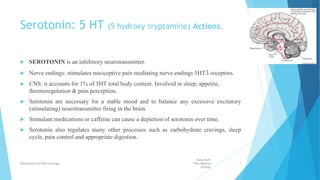
 SEROTONIN is an inhibitory neurotransmitter.
 Nerve endings: stimulates nociceptive pain mediating nerve endings 5HT3 receptors.
 CNS: it accounts for 1% of 5HT total body content. Involved in sleep, appetite,
thermoregulation & pain perception.
 Serotonin are necessary for a stable mood and to balance any excessive excitatory
(stimulating) neurotransmitter firing in the brain.
 Stimulant medications or caffeine can cause a depletion of serotonin over time.
 Serotonin also regulates many other processes such as carbohydrate cravings, sleep
cycle, pain control and appropriate digestion.
Fazia Ruth
Pfau Medical
College
Department of Pharmacology 4
Serotonin: 5 HT (5 hydroxy tryptamine)
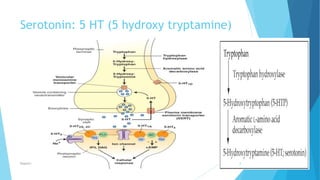
 Synthesis: Tryptophan – tryptophan
hydroxylase(enzyme limited to 5HT producing
cells) – 5 hydroxy tryptophan in chromaffin cells &
neurons – decarboxylase – 5HT
(5hydroxytryptamine).
 Degradation: by Monoamine oxidase
inhibitor(MAO-A) – 5HIAA (5hydroxyindoleacetic
acid) – excreted in urine. Serves as marker of 5HT
production as diagnostic evidence in carcinoid
syndromes.
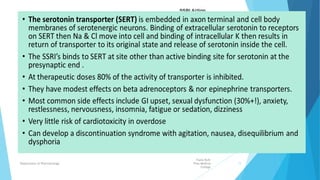
 5HT is transported into cells by SERT (serotonin
uptake transporters) Fazia Ruth
Pfau Medical
College
Department of Pharmacology 5
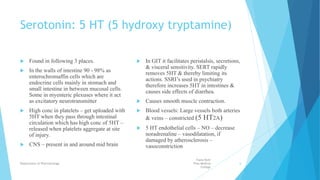
Serotonin: 5 HT (5 hydroxy tryptamine)
 Found in following 3 places.
 In the walls of intestine 90 - 98% as
enterochromaffin cells which are
endocrine cells mainly in stomach and
small intestine in between mucosal cells.
Some in myenteric plexuses where it act
as excitatory neurotransmitter
 High conc in platelets – get uploaded with
5HT when they pass through intestinal
circulation which has high conc of 5HT –
released when platelets aggregate at site
of injury.
 CNS – present in and around mid brain
 In GIT it facilitates peristalsis, secretions,
& visceral sensitivity. SERT rapidly
removes 5HT & thereby limiting its
actions. SSRI’s used in psychiatry
therefore increases 5HT in intestines &
causes side effects of diarrhea.
 Causes smooth muscle contraction.
 Blood vessels: Large vessels both arteries
& veins – constricted (5 HT2A)
 5 HT endothelial cells – NO – decrease
noradrenaline – vasodilatation, if
damaged by atherosclerosis –
vasoconstriction
Fazia Ruth
Pfau Medical
College
Department of Pharmacology 6
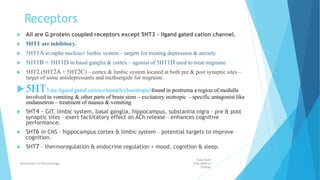
Receptors
 All are G protein coupled receptors except 5HT3 - ligand gated cation channel.
 5HT1 are inhibitory.
 5HT1A in raphe nucleus+ limbic system – targets for treating depression & anxiety.
 5HT1B + 5HT1D in basal ganglia & cortex – agonist of 5HT1D used to treat migraine.
 5HT2 (5HT2A + 5HT2C) – cortex & limbic system located at both pre & post synaptic sites –
target of some antidepressants and methsergide for migraine.
5HT3 are ligand gated cation channels (Ionotropic)found in postrema a region of medulla
involved in vomiting & other parts of brain stem – excitatory inotropic - specific antagonist like
ondansetron – treatment of nausea & vomiting
 5HT4 - GIT, limbic system, basal ganglia, hippocampus, substantia nigra – pre & post
synaptic sites – exert facilitatory effect on ACh release – enhances cognitive
performance.
 5HT6 in CNS – hippocampus cortex & limbic system – potential targets to improve
cognition.
 5HT7 – thermoregulation & endocrine regulation + mood, cognition & sleep.
Fazia Ruth
Pfau Medical
College
Department of Pharmacology 7
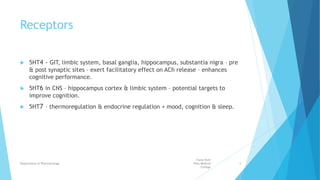
Receptors
 5HT4 - GIT, limbic system, basal ganglia, hippocampus, substantia nigra – pre
& post synaptic sites – exert facilitatory effect on ACh release – enhances
cognitive performance.
 5HT6 in CNS – hippocampus cortex & limbic system – potential targets to
improve cognition.
 5HT7 – thermoregulation & endocrine regulation + mood, cognition & sleep.
Fazia Ruth
Pfau Medical
College
Department of Pharmacology 8
Antidepressants
SSRI’s
SNRI’s
5-HT2
ANTAGONIST
TRICYCLICS
TETRACYCLICS
MAOI’
Fazia Ruth
Pfau Medical
College
Department of Pharmacology 9
SARI (serotonin adrenaline
reuptake inhibitors)
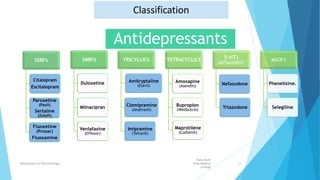
Classification
SSRI’s
Citalopram
Escitalopram
Paroxetine
(Paxil)
Sertaline
(Zoloft)
Fluoxetine
(Prozac)
Fluoxamine
SNRI’s
Duloxetine
Milnacipran
Venlafaxine
(Effexor)
TRICYCLICS
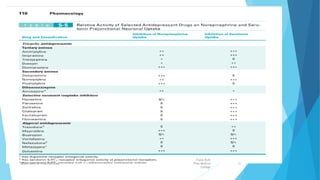
Amitryptaline
(Elavil)
Clomipramine
(Anafranil)
Imipramine
(Tofranil)
TETRACYCLICS
Amoxapine
(Asendin)
Bupropion
(Wellbutrin)
Maprotilene
(Ludiomil)
5-HT2
ANTAGONIST
Nefazodone
Trtazodone
MAOI’s
Phenelizine.
Selegiline
Fazia Ruth
Pfau Medical
College
Department of Pharmacology 10
Antidepressants
SSRIs
Fazia Ruth
Pfau Medical
College
Department of Pharmacology 11
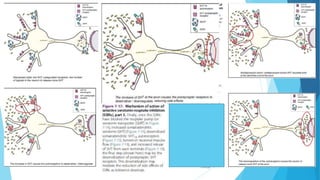
Selective Serotonin reuptake inhibitor (SSRI)
occupies the serotonin reuptake pump (the
serotonin transporter, or SERT), causing an
antidepressant effect.
Common property of
serotonin transporter
(SERT) inhibition.
Fazia Ruth
Pfau Medical
College
Department of Pharmacology 12
General guidelines for antidepressant use
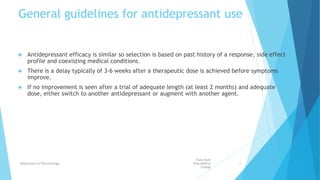
 Antidepressant efficacy is similar so selection is based on past history of a response, side effect
profile and coexisting medical conditions.
 There is a delay typically of 3-6 weeks after a therapeutic dose is achieved before symptoms
improve.
 If no improvement is seen after a trial of adequate length (at least 2 months) and adequate
dose, either switch to another antidepressant or augment with another agent.
Fazia Ruth
Pfau Medical
College
Department of Pharmacology 13
Fazia Ruth
Pfau Medical
College
Department of Pharmacology 14
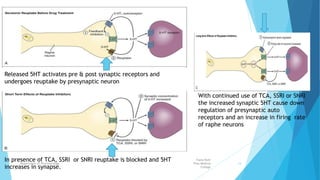
Released 5HT activates pre & post synaptic receptors and
undergoes reuptake by presynaptic neuron
In presence of TCA, SSRI or SNRI reuptake is blocked and 5HT
increases in synapse.
With continued use of TCA, SSRI or SNRI
the increased synaptic 5HT cause down
regulation of presynaptic auto
receptors and an increase in firing rate
of raphe neurons
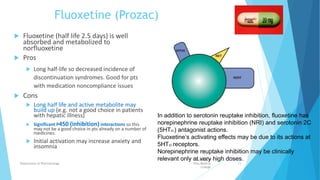
Fluoxetine (Prozac)
 Fluoxetine (half life 2.5 days) is well
absorbed and metabolized to
norfluoxetine
 Pros
 Long half-life so decreased incidence of
discontinuation syndromes. Good for pts
with medication noncompliance issues
 Cons
 Long half life and active metabolite may
build up (e.g. not a good choice in patients
with hepatic illness)
 Significant P450 (inhibition) interactions so this
may not be a good choice in pts already on a number of
medicines.
 Initial activation may increase anxiety and
insomnia
Fazia Ruth
Pfau Medical
College
Department of Pharmacology 15
In addition to serotonin reuptake inhibition, fluoxetine has
norepinephrine reuptake inhibition (NRI) and serotonin 2C
(5HT2C) antagonist actions.
Fluoxetine’s activating effects may be due to its actions at
5HT2C receptors.
Norepinephrine reuptake inhibition may be clinically
relevant only at very high doses.
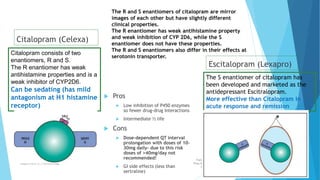
Citalopram (Celexa)
 Pros
 Low inhibition of P450 enzymes
so fewer drug-drug interactions
 Intermediate ½ life
 Cons
 Dose-dependent QT interval
prolongation with doses of 10-
30mg daily- due to this risk
doses of >40mg/day not
recommended!
 GI side effects (less than
sertraline)
Escitalopram (Lexapro)
Fazia Ruth
Pfau Medical
College
Department of Pharmacology 16
The S enantiomer of citalopram has
been developed and marketed as the
antidepressant Escitralopram.
More effective than Citalopram in
acute response and remission
Citalopram consists of two
enantiomers, R and S.
The R enantiomer has weak
antihistamine properties and is a
weak inhibitor of CYP2D6.
Can be sedating (has mild
antagonism at H1 histamine
receptor)
The R and S enantiomers of citalopram are mirror
images of each other but have slightly different
clinical properties.
The R enantiomer has weak antihistamine property
and weak inhibition of CYP 2D6, while the S
enantiomer does not have these properties.
The R and S enantiomers also differ in their effects at
serotonin transporter.
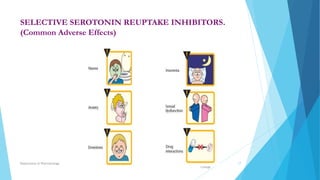
SELECTIVE SEROTONIN REUPTAKE INHIBITORS.
(Common Adverse Effects)
Fazia Ruth
Pfau Medical
College
Department of Pharmacology 17
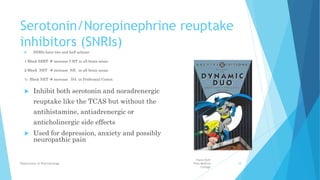
Serotonin/Norepinephrine reuptake
inhibitors (SNRIs)
 SNRIs have two and half actions:
1-Block SERT  increase 5-HT in all brain areas.
2-Block NET  increase NE in all brain areas.
½- Block NET  increase DA in Prefrontal Cortex
 Inhibit both serotonin and noradrenergic
reuptake like the TCAS but without the
antihistamine, antiadrenergic or
anticholinergic side effects
 Used for depression, anxiety and possibly
neuropathic pain
Fazia Ruth
Pfau Medical
College
Department of Pharmacology 18
Venlafaxine & Desvenlafaxine
 Pros
 Minimal drug interactions.
 Short half life and fast renal clearance avoids build-up
(good for geriatric populations)
 Cons
 Can cause a 10-15 mmHG dose dependent increase in
diastolic BP.
 May cause significant nausea, primarily with immediate-
release (IR) tabs
 Can cause a bad discontinuation syndrome, and taper
recommended after 2 weeks of administration
 Noted to cause QT prolongation
 Sexual side effects in >30%
Fazia Ruth
Pfau Medical
College
Department of Pharmacology 19
 Venlafaxine inhibits reuptake of both
serotonin (SRI) and norepinephrine
(NRI), thus combining two therapeutic
mechanisms in one agent.
 Venlafaxine’s serotonergic actions are
present at low doses, while its
noradrenergic actions are progressively
enhanced as dose increases.
 Venlafaxine is converted to its active
metabolite, desvenlafaxine, by CYP 2D6.
Monoamine Oxidase Inhibitors (MAOIs)
 Bind irreversibly to monoamine oxidase
thereby preventing inactivation of biogenic
amines such as norepinephrine, dopamine
and serotonin leading to increased
synaptic levels.
 Are very effective for depression
 Side effects include orthostatic
hypotension, weight gain, dry mouth,
sedation, sexual dysfunction and sleep
disturbance
 Hypertensive crisis can develop when MAOI’s
are taken with tyramine-rich foods or
sympathomimetics.
 Serotonin Syndrome can develop if MAOI
given with meds that increase serotonin or
have sympathomimetic actions. Serotonin
syndrome include abdominal pain, diarrhea,
sweats, tachycardia, HTN, myoclonus,
irritability, delirium. Can lead to
hyperpyrexia, cardiovascular shock and
death.
 To avoid need to wait 2 weeks before
switching from an SSRI to an MAOI. The
exception of fluoxetine where need to wait 5
weeks because of long half-life.
Fazia Ruth
Pfau Medical
College
Department of Pharmacology 20
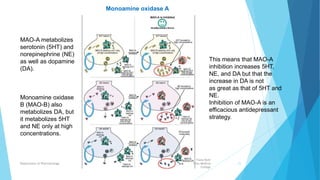
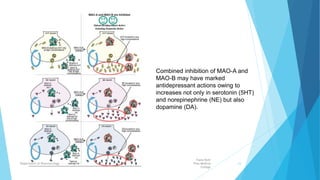
This means that MAO-A
inhibition increases 5HT,
NE, and DA but that the
increase in DA is not
as great as that of 5HT and
NE.
Inhibition of MAO-A is an
efficacious antidepressant
strategy.
Fazia Ruth
Pfau Medical
College
Department of Pharmacology 21
MAO-A metabolizes
serotonin (5HT) and
norepinephrine (NE)
as well as dopamine
(DA).
Monoamine oxidase
B (MAO-B) also
metabolizes DA, but
it metabolizes 5HT
and NE only at high
concentrations.
Monoamine oxidase A
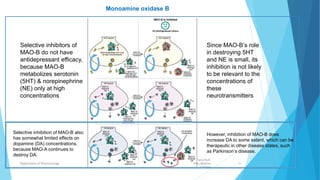
However, inhibition of MAO-B does
increase DA to some extent, which can be
therapeutic in other disease states, such
as Parkinson’s disease.
Fazia Ruth
Pfau Medical
College
Department of Pharmacology 22
Monoamine oxidase B
Selective inhibitors of
MAO-B do not have
antidepressant efficacy,
because MAO-B
metabolizes serotonin
(5HT) & norepinephrine
(NE) only at high
concentrations
Since MAO-B’s role
in destroying 5HT
and NE is small, its
inhibition is not likely
to be relevant to the
concentrations of
these
neurotransmitters
Selective inhibition of MAO-B also
has somewhat limited effects on
dopamine (DA) concentrations,
because MAO-A continues to
destroy DA.
Combined inhibition of MAO-A and
MAO-B may have marked
antidepressant actions owing to
increases not only in serotonin (5HT)
and norepinephrine (NE) but also
dopamine (DA).
Fazia Ruth
Pfau Medical
College
Department of Pharmacology 23
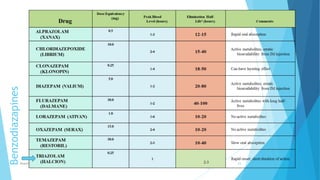
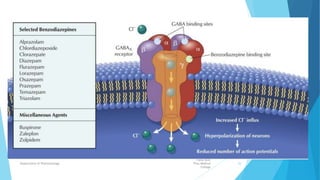
Benzodiazapines
 Used to treat insomnia, parasomnias and anxiety disorders.
 Often used for CNS depressant withdrawal protocols ex. ETOH
withdrawal.
 Side effects/cons
 Somnolence
 Cognitive deficits
 Amnesia
 Disinhibition
 Tolerance
 Dependence
Fazia Ruth
Pfau Medical
College
Department of Pharmacology 24
Fazia Ruth
Pfau Medical
College
Department of Pharmacology 25
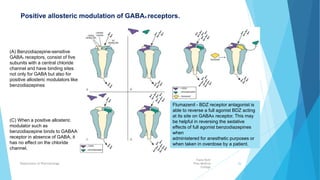
(B) When GABA binds to its sites on
GABAA receptor, it increases
frequency of opening of chloride
channel and thus allows more
chloride to pass through.
(D) When a positive allosteric
modulator such as a benzodiazepine
binds to the GABAA receptor in
presence of GABA, it causes the
channel to open even more frequently
than when GABA alone is present.
Positive allosteric modulation of GABAA receptors.
(A) Benzodiazepine-sensitive
GABAA receptors, consist of five
subunits with a central chloride
channel and have binding sites
not only for GABA but also for
positive allosteric modulators like
benzodiazepines
(C) When a positive allosteric
modulator such as
benzodiazepine binds to GABAA
receptor in absence of GABA, it
has no effect on the chloride
channel.
Flumazenil - BDZ receptor antagonist is
able to reverse a full agonist BDZ acting
at its site on GABAA receptor. This may
be helpful in reversing the sedative
effects of full agonist benzodiazepines
when
administered for anesthetic purposes or
when taken in overdose by a patient.
Fazia Ruth
Pfau Medical
College
Department of Pharmacology 26
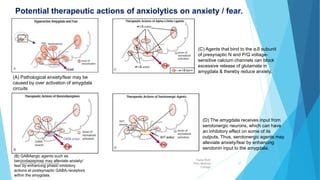
(C) Agents that bind to the α2δ subunit
of presynaptic N and P/Q voltage-
sensitive calcium channels can block
excessive release of glutamate in
amygdala & thereby reduce anxiety.
Potential therapeutic actions of anxiolytics on anxiety / fear.
(A) Pathological anxiety/fear may be
caused by over activation of amygdala
circuits
(B) GABAergic agents such as
benzodiazepines may alleviate anxiety/
fear by enhancing phasic inhibitory
actions at postsynaptic GABAA receptors
within the amygdala.
(D) The amygdala receives input from
serotonergic neurons, which can have
an inhibitory effect on some of its
outputs. Thus, serotonergic agents may
alleviate anxiety/fear by enhancing
serotonin input to the amygdala.
Fazia Ruth
Pfau Medical
College
Department of Pharmacology 27
(D) Prefrontal cortex, striatum, &
thalamus receive input from
serotonergic neurons, which can have
an inhibitory effect on output. Thus,
serotonergic agents may alleviate worry
by enhancing serotonin input within
CSTC circuits.
Hyperactive
CSTC Circuits
and Worry
Potential therapeutic actions of anxiolytics on worry
(A) Pathological worry may be
caused by over activation of
corticostriato-thalamo-cortical
(CSTC) circuits.
(B) GABAergic agents such
as BDZ may alleviate worry
by enhancing actions of
inhibitory GABA interneurons
within prefrontal cortex.
(C) Agents that bind to α2δ subunit of
presynaptic N and P/Q voltage-sensitive
calcium channels can block excessive
release of glutamate in CSTC circuits
and thereby reduce worry.
Fazia Ruth
Pfau Medical
College
Department of Pharmacology 28
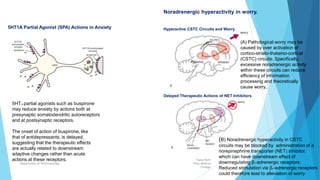
5HT1A partial agonists such as buspirone
may reduce anxiety by actions both at
presynaptic somatodendritic autoreceptors
and at postsynaptic receptors.
The onset of action of buspirone, like
that of antidepressants, is delayed,
suggesting that the therapeutic effects
are actually related to downstream
adaptive changes rather than acute
actions at these receptors.
Noradrenergic hyperactivity in worry.
Delayed Therapeutic Actions of NET Inhibitors
Hyperactive CSTC Circuits and Worry
5HT1A Partial Agonist (SPA) Actions in Anxiety
(B) Noradrenergic hyperactivity in CSTC
circuits may be blocked by administration of a
norepinephrine transporter (NET) inhibitor,
which can have downstream effect of
downregulating β1-adrenergic receptors.
Reduced stimulation via β1-adrenergic receptors
could therefore lead to alleviation of worry
(A) Pathological worry may be
caused by over activation of
cortico-striato-thalamo-cortical
(CSTC) circuits. Specifically,
excessive noradrenergic activity
within these circuits can reduce
efficiency of information
processing and theoretically
cause worry..
Fazia Ruth
Pfau Medical
College
Department of Pharmacology 29
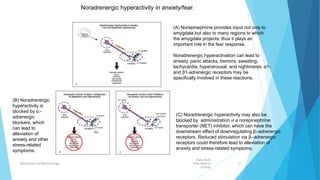
(B) Noradrenergic
hyperactivity is
blocked by α1-
adrenergic
blockers, which
can lead to
alleviation of
anxiety and other
stress-related
symptoms.
Noradrenergic hyperactivity in anxiety/fear.
(A) Norepinephrine provides input not only to
amygdala but also to many regions to which
the amygdala projects; thus it plays an
important role in the fear response.
Noradrenergic hyperactivation can lead to
anxiety, panic attacks, tremors, sweating,
tachycardia, hyperarousal, and nightmares. α1-
and β1-adrenergic receptors may be
specifically involved in these reactions.
(C) Noradrenergic hyperactivity may also be
blocked by administration of a norepinephrine
transporter (NET) inhibitor, which can have the
downstream effect of downregulating β1-adrenergic
receptors. Reduced stimulation via β1-adrenergic
receptors could therefore lead to alleviation of
anxiety and stress-related symptoms.
Fazia Ruth
Pfau Medical
College
Department of Pharmacology 30
Fazia Ruth
Pfau Medical
College
Department of Pharmacology 31
Fazia Ruth
Pfau Medical
College
Department of Pharmacology 32
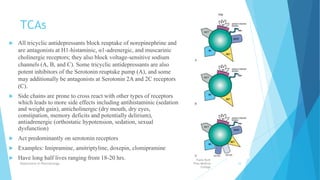
TCAs
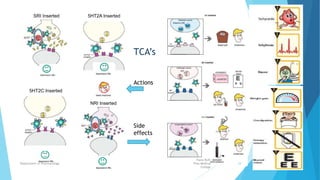
 All tricyclic antidepressants block reuptake of norepinephrine and
are antagonists at H1-histaminic, α1-adrenergic, and muscarinic
cholinergic receptors; they also block voltage-sensitive sodium
channels (A, B, and C). Some tricyclic antidepressants are also
potent inhibitors of the Serotonin reuptake pump (A), and some
may additionally be antagonists at Serotonin 2A and 2C receptors
(C).
 Side chains are prone to cross react with other types of receptors
which leads to more side effects including antihistaminic (sedation
and weight gain), anticholinergic (dry mouth, dry eyes,
constipation, memory deficits and potentially delirium),
antiadrenergic (orthostatic hypotension, sedation, sexual
dysfunction)
 Act predominantly on serotonin receptors
 Examples: Imipramine, amitriptyline, doxepin, clomipramine
 Have long half lives ranging from 18-20 hrs. Fazia Ruth
Pfau Medical
College
Department of Pharmacology 33
SRI Inserted
NRI Inserted
5HT2A Inserted
5HT2C Inserted
TCA’s
Actions
Side
effects
Fazia Ruth
Pfau Medical
College
Department of Pharmacology 34
TCAs
 Very effective but potentially
unacceptable side effect profile i.e.
antihistaminic, anticholinergic,
antiadrenergic
 Lethal in overdose (even a one week
supply can be lethal!)
 Can cause QT lengthening even at a
therapeutic serum level
Fazia Ruth
Pfau Medical
College
Department of Pharmacology 35
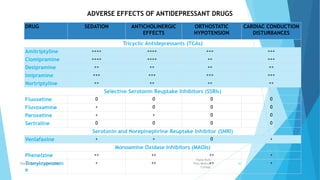
DRUG SEDATION ANTICHOLINERGIC
EFFECTS
ORTHOSTATIC
HYPOTENSION
CARDIAC CONDUCTION
DISTURBANCES
Tricyclic Antidepressants (TCAs)
Amitriptyline ++++ ++++ +++ +++
Clomipramine ++++ ++++ ++ +++
Desipramine ++ ++ ++ ++
Imipramine +++ +++ +++ +++
Nortriptyline ++ ++ ++ ++
Selective Serotonin Reuptake Inhibitors (SSRIs)
Fluoxetine 0 0 0 0
Fluvoxamine + 0 0 0
Paroxetine + + 0 0
Sertraline 0 0 0 0
Serotonin and Norepinephrine Reuptake Inhibitor (SNRI)
Venlafaxine + + 0 +
Monoamine Oxidase Inhibitors (MAOIs)
Phenelzine ++ ++ ++ +
Tranylcypromin
e
+ ++ ++ +
ADVERSE EFFECTS OF ANTIDEPRESSANT DRUGS
Fazia Ruth
Pfau Medical
College
Department of Pharmacology 36
TETRACYCLIC antidepressants
Mirtazapine (Remeron)
 It is an antagonist of presynaptic alpha 2 autoreceptor and
enhances the release of both nor epinenephrine & 5-HT.
 It is an antagonist of 5-HT2 & 5-HT3 receptor.
 It is potent agonist of H1 receptor and thus produce sedation.
 Pros
 Different mechanism of action may provide a good augmentation
strategy to SSRIs. Is a 5HT2 and 5HT3 receptor antagonist
 Cons
 Increases serum cholesterol and triglycerides by 20% in 15% in upto 6%
of patients
 Associated with weight gain.
Fazia Ruth
Pfau Medical
College
Department of Pharmacology 37
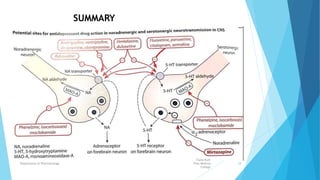
SUMMARY
Fazia Ruth
Pfau Medical
College
Department of Pharmacology 38
Take home points
 Be clear on the diagnosis you are treating
and any comorbid diagnoses when you are
selecting an agent to treat- often can get 2
birds with 1 stone!
 Select the agent based on patients history,
current symptom profile and the side effect
profile of the medication- there is no one
correct answer in most cases.
 Monitor for efficacy and tolerance and
adjust as indicated.
 If the patient does not improve step back,
rethink your diagnosis and treatment plan!
 Keep an eye on drug-drug interactions
Fazia Ruth
Pfau Medical
College
Department of Pharmacology 39
1. Basic & Clinical Pharmacology by Katzung 13th
edition.
2. Rang & Dale Pharmacology 8th edition.
3. Pharmacology by Brenner 3rd edition.
4. Board review series Pharmacology 5th edition.
5. Netters Pharmacology.
6. Stahl’s Psychopharmacology 4th edition.

Antidepressants.pptx

  • 1.
    3rd Year Neurosciences II Antidepressants FaziaRuth Pfau Medical College Department of Pharmacology 1
  • 2.
    Objectives:  To explainpathogenesis of Depression  To describe the synthesis, degradation and reuptake mechanism of 5HT  To classify Antidepressant drugs  To describe mechanism of action of Antidepressants.  To enlist side effects of Antidepressants. Fazia Ruth Pfau Medical College Department of Pharmacology 2
  • 3.
     The symptomsof depression are feelings of sadness and hopelessness, s well as the inability to experience pleasure in usual activities, changes in sleep patterns and appetite, loss of energy, and suicidal thoughts. Mania is characterized by the opposite behavior: enthusiasm, anger, rapid thought and speech patterns, extreme self-confidence, and impaired judgment. Fazia Ruth Pfau Medical College Department of Pharmacology 3
  • 4.
    Serotonin: 5 HT(5 hydroxy tryptamine) Actions.  SEROTONIN is an inhibitory neurotransmitter.  Nerve endings: stimulates nociceptive pain mediating nerve endings 5HT3 receptors.  CNS: it accounts for 1% of 5HT total body content. Involved in sleep, appetite, thermoregulation & pain perception.  Serotonin are necessary for a stable mood and to balance any excessive excitatory (stimulating) neurotransmitter firing in the brain.  Stimulant medications or caffeine can cause a depletion of serotonin over time.  Serotonin also regulates many other processes such as carbohydrate cravings, sleep cycle, pain control and appropriate digestion. Fazia Ruth Pfau Medical College Department of Pharmacology 4
  • 5.
    Serotonin: 5 HT(5 hydroxy tryptamine)  Synthesis: Tryptophan – tryptophan hydroxylase(enzyme limited to 5HT producing cells) – 5 hydroxy tryptophan in chromaffin cells & neurons – decarboxylase – 5HT (5hydroxytryptamine).  Degradation: by Monoamine oxidase inhibitor(MAO-A) – 5HIAA (5hydroxyindoleacetic acid) – excreted in urine. Serves as marker of 5HT production as diagnostic evidence in carcinoid syndromes.  5HT is transported into cells by SERT (serotonin uptake transporters) Fazia Ruth Pfau Medical College Department of Pharmacology 5
  • 6.
    Serotonin: 5 HT(5 hydroxy tryptamine)  Found in following 3 places.  In the walls of intestine 90 - 98% as enterochromaffin cells which are endocrine cells mainly in stomach and small intestine in between mucosal cells. Some in myenteric plexuses where it act as excitatory neurotransmitter  High conc in platelets – get uploaded with 5HT when they pass through intestinal circulation which has high conc of 5HT – released when platelets aggregate at site of injury.  CNS – present in and around mid brain  In GIT it facilitates peristalsis, secretions, & visceral sensitivity. SERT rapidly removes 5HT & thereby limiting its actions. SSRI’s used in psychiatry therefore increases 5HT in intestines & causes side effects of diarrhea.  Causes smooth muscle contraction.  Blood vessels: Large vessels both arteries & veins – constricted (5 HT2A)  5 HT endothelial cells – NO – decrease noradrenaline – vasodilatation, if damaged by atherosclerosis – vasoconstriction Fazia Ruth Pfau Medical College Department of Pharmacology 6
  • 7.
    Receptors  All areG protein coupled receptors except 5HT3 - ligand gated cation channel.  5HT1 are inhibitory.  5HT1A in raphe nucleus+ limbic system – targets for treating depression & anxiety.  5HT1B + 5HT1D in basal ganglia & cortex – agonist of 5HT1D used to treat migraine.  5HT2 (5HT2A + 5HT2C) – cortex & limbic system located at both pre & post synaptic sites – target of some antidepressants and methsergide for migraine. 5HT3 are ligand gated cation channels (Ionotropic)found in postrema a region of medulla involved in vomiting & other parts of brain stem – excitatory inotropic - specific antagonist like ondansetron – treatment of nausea & vomiting  5HT4 - GIT, limbic system, basal ganglia, hippocampus, substantia nigra – pre & post synaptic sites – exert facilitatory effect on ACh release – enhances cognitive performance.  5HT6 in CNS – hippocampus cortex & limbic system – potential targets to improve cognition.  5HT7 – thermoregulation & endocrine regulation + mood, cognition & sleep. Fazia Ruth Pfau Medical College Department of Pharmacology 7
  • 8.
    Receptors  5HT4 -GIT, limbic system, basal ganglia, hippocampus, substantia nigra – pre & post synaptic sites – exert facilitatory effect on ACh release – enhances cognitive performance.  5HT6 in CNS – hippocampus cortex & limbic system – potential targets to improve cognition.  5HT7 – thermoregulation & endocrine regulation + mood, cognition & sleep. Fazia Ruth Pfau Medical College Department of Pharmacology 8
  • 9.
  • 10.
  • 11.
    SSRIs Fazia Ruth Pfau Medical College Departmentof Pharmacology 11 Selective Serotonin reuptake inhibitor (SSRI) occupies the serotonin reuptake pump (the serotonin transporter, or SERT), causing an antidepressant effect. Common property of serotonin transporter (SERT) inhibition.
  • 12.
  • 13.
    General guidelines forantidepressant use  Antidepressant efficacy is similar so selection is based on past history of a response, side effect profile and coexisting medical conditions.  There is a delay typically of 3-6 weeks after a therapeutic dose is achieved before symptoms improve.  If no improvement is seen after a trial of adequate length (at least 2 months) and adequate dose, either switch to another antidepressant or augment with another agent. Fazia Ruth Pfau Medical College Department of Pharmacology 13
  • 14.
    Fazia Ruth Pfau Medical College Departmentof Pharmacology 14 Released 5HT activates pre & post synaptic receptors and undergoes reuptake by presynaptic neuron In presence of TCA, SSRI or SNRI reuptake is blocked and 5HT increases in synapse. With continued use of TCA, SSRI or SNRI the increased synaptic 5HT cause down regulation of presynaptic auto receptors and an increase in firing rate of raphe neurons
  • 15.
    Fluoxetine (Prozac)  Fluoxetine(half life 2.5 days) is well absorbed and metabolized to norfluoxetine  Pros  Long half-life so decreased incidence of discontinuation syndromes. Good for pts with medication noncompliance issues  Cons  Long half life and active metabolite may build up (e.g. not a good choice in patients with hepatic illness)  Significant P450 (inhibition) interactions so this may not be a good choice in pts already on a number of medicines.  Initial activation may increase anxiety and insomnia Fazia Ruth Pfau Medical College Department of Pharmacology 15 In addition to serotonin reuptake inhibition, fluoxetine has norepinephrine reuptake inhibition (NRI) and serotonin 2C (5HT2C) antagonist actions. Fluoxetine’s activating effects may be due to its actions at 5HT2C receptors. Norepinephrine reuptake inhibition may be clinically relevant only at very high doses.
  • 16.
    Citalopram (Celexa)  Pros Low inhibition of P450 enzymes so fewer drug-drug interactions  Intermediate ½ life  Cons  Dose-dependent QT interval prolongation with doses of 10- 30mg daily- due to this risk doses of >40mg/day not recommended!  GI side effects (less than sertraline) Escitalopram (Lexapro) Fazia Ruth Pfau Medical College Department of Pharmacology 16 The S enantiomer of citalopram has been developed and marketed as the antidepressant Escitralopram. More effective than Citalopram in acute response and remission Citalopram consists of two enantiomers, R and S. The R enantiomer has weak antihistamine properties and is a weak inhibitor of CYP2D6. Can be sedating (has mild antagonism at H1 histamine receptor) The R and S enantiomers of citalopram are mirror images of each other but have slightly different clinical properties. The R enantiomer has weak antihistamine property and weak inhibition of CYP 2D6, while the S enantiomer does not have these properties. The R and S enantiomers also differ in their effects at serotonin transporter.
  • 17.
    SELECTIVE SEROTONIN REUPTAKEINHIBITORS. (Common Adverse Effects) Fazia Ruth Pfau Medical College Department of Pharmacology 17
  • 18.
    Serotonin/Norepinephrine reuptake inhibitors (SNRIs) SNRIs have two and half actions: 1-Block SERT  increase 5-HT in all brain areas. 2-Block NET  increase NE in all brain areas. ½- Block NET  increase DA in Prefrontal Cortex  Inhibit both serotonin and noradrenergic reuptake like the TCAS but without the antihistamine, antiadrenergic or anticholinergic side effects  Used for depression, anxiety and possibly neuropathic pain Fazia Ruth Pfau Medical College Department of Pharmacology 18
  • 19.
    Venlafaxine & Desvenlafaxine Pros  Minimal drug interactions.  Short half life and fast renal clearance avoids build-up (good for geriatric populations)  Cons  Can cause a 10-15 mmHG dose dependent increase in diastolic BP.  May cause significant nausea, primarily with immediate- release (IR) tabs  Can cause a bad discontinuation syndrome, and taper recommended after 2 weeks of administration  Noted to cause QT prolongation  Sexual side effects in >30% Fazia Ruth Pfau Medical College Department of Pharmacology 19  Venlafaxine inhibits reuptake of both serotonin (SRI) and norepinephrine (NRI), thus combining two therapeutic mechanisms in one agent.  Venlafaxine’s serotonergic actions are present at low doses, while its noradrenergic actions are progressively enhanced as dose increases.  Venlafaxine is converted to its active metabolite, desvenlafaxine, by CYP 2D6.
  • 20.
    Monoamine Oxidase Inhibitors(MAOIs)  Bind irreversibly to monoamine oxidase thereby preventing inactivation of biogenic amines such as norepinephrine, dopamine and serotonin leading to increased synaptic levels.  Are very effective for depression  Side effects include orthostatic hypotension, weight gain, dry mouth, sedation, sexual dysfunction and sleep disturbance  Hypertensive crisis can develop when MAOI’s are taken with tyramine-rich foods or sympathomimetics.  Serotonin Syndrome can develop if MAOI given with meds that increase serotonin or have sympathomimetic actions. Serotonin syndrome include abdominal pain, diarrhea, sweats, tachycardia, HTN, myoclonus, irritability, delirium. Can lead to hyperpyrexia, cardiovascular shock and death.  To avoid need to wait 2 weeks before switching from an SSRI to an MAOI. The exception of fluoxetine where need to wait 5 weeks because of long half-life. Fazia Ruth Pfau Medical College Department of Pharmacology 20
  • 21.
    This means thatMAO-A inhibition increases 5HT, NE, and DA but that the increase in DA is not as great as that of 5HT and NE. Inhibition of MAO-A is an efficacious antidepressant strategy. Fazia Ruth Pfau Medical College Department of Pharmacology 21 MAO-A metabolizes serotonin (5HT) and norepinephrine (NE) as well as dopamine (DA). Monoamine oxidase B (MAO-B) also metabolizes DA, but it metabolizes 5HT and NE only at high concentrations. Monoamine oxidase A
  • 22.
    However, inhibition ofMAO-B does increase DA to some extent, which can be therapeutic in other disease states, such as Parkinson’s disease. Fazia Ruth Pfau Medical College Department of Pharmacology 22 Monoamine oxidase B Selective inhibitors of MAO-B do not have antidepressant efficacy, because MAO-B metabolizes serotonin (5HT) & norepinephrine (NE) only at high concentrations Since MAO-B’s role in destroying 5HT and NE is small, its inhibition is not likely to be relevant to the concentrations of these neurotransmitters Selective inhibition of MAO-B also has somewhat limited effects on dopamine (DA) concentrations, because MAO-A continues to destroy DA.
  • 23.
    Combined inhibition ofMAO-A and MAO-B may have marked antidepressant actions owing to increases not only in serotonin (5HT) and norepinephrine (NE) but also dopamine (DA). Fazia Ruth Pfau Medical College Department of Pharmacology 23
  • 24.
    Benzodiazapines  Used totreat insomnia, parasomnias and anxiety disorders.  Often used for CNS depressant withdrawal protocols ex. ETOH withdrawal.  Side effects/cons  Somnolence  Cognitive deficits  Amnesia  Disinhibition  Tolerance  Dependence Fazia Ruth Pfau Medical College Department of Pharmacology 24
  • 25.
  • 26.
    (B) When GABAbinds to its sites on GABAA receptor, it increases frequency of opening of chloride channel and thus allows more chloride to pass through. (D) When a positive allosteric modulator such as a benzodiazepine binds to the GABAA receptor in presence of GABA, it causes the channel to open even more frequently than when GABA alone is present. Positive allosteric modulation of GABAA receptors. (A) Benzodiazepine-sensitive GABAA receptors, consist of five subunits with a central chloride channel and have binding sites not only for GABA but also for positive allosteric modulators like benzodiazepines (C) When a positive allosteric modulator such as benzodiazepine binds to GABAA receptor in absence of GABA, it has no effect on the chloride channel. Flumazenil - BDZ receptor antagonist is able to reverse a full agonist BDZ acting at its site on GABAA receptor. This may be helpful in reversing the sedative effects of full agonist benzodiazepines when administered for anesthetic purposes or when taken in overdose by a patient. Fazia Ruth Pfau Medical College Department of Pharmacology 26
  • 27.
    (C) Agents thatbind to the α2δ subunit of presynaptic N and P/Q voltage- sensitive calcium channels can block excessive release of glutamate in amygdala & thereby reduce anxiety. Potential therapeutic actions of anxiolytics on anxiety / fear. (A) Pathological anxiety/fear may be caused by over activation of amygdala circuits (B) GABAergic agents such as benzodiazepines may alleviate anxiety/ fear by enhancing phasic inhibitory actions at postsynaptic GABAA receptors within the amygdala. (D) The amygdala receives input from serotonergic neurons, which can have an inhibitory effect on some of its outputs. Thus, serotonergic agents may alleviate anxiety/fear by enhancing serotonin input to the amygdala. Fazia Ruth Pfau Medical College Department of Pharmacology 27
  • 28.
    (D) Prefrontal cortex,striatum, & thalamus receive input from serotonergic neurons, which can have an inhibitory effect on output. Thus, serotonergic agents may alleviate worry by enhancing serotonin input within CSTC circuits. Hyperactive CSTC Circuits and Worry Potential therapeutic actions of anxiolytics on worry (A) Pathological worry may be caused by over activation of corticostriato-thalamo-cortical (CSTC) circuits. (B) GABAergic agents such as BDZ may alleviate worry by enhancing actions of inhibitory GABA interneurons within prefrontal cortex. (C) Agents that bind to α2δ subunit of presynaptic N and P/Q voltage-sensitive calcium channels can block excessive release of glutamate in CSTC circuits and thereby reduce worry. Fazia Ruth Pfau Medical College Department of Pharmacology 28
  • 29.
    5HT1A partial agonistssuch as buspirone may reduce anxiety by actions both at presynaptic somatodendritic autoreceptors and at postsynaptic receptors. The onset of action of buspirone, like that of antidepressants, is delayed, suggesting that the therapeutic effects are actually related to downstream adaptive changes rather than acute actions at these receptors. Noradrenergic hyperactivity in worry. Delayed Therapeutic Actions of NET Inhibitors Hyperactive CSTC Circuits and Worry 5HT1A Partial Agonist (SPA) Actions in Anxiety (B) Noradrenergic hyperactivity in CSTC circuits may be blocked by administration of a norepinephrine transporter (NET) inhibitor, which can have downstream effect of downregulating β1-adrenergic receptors. Reduced stimulation via β1-adrenergic receptors could therefore lead to alleviation of worry (A) Pathological worry may be caused by over activation of cortico-striato-thalamo-cortical (CSTC) circuits. Specifically, excessive noradrenergic activity within these circuits can reduce efficiency of information processing and theoretically cause worry.. Fazia Ruth Pfau Medical College Department of Pharmacology 29
  • 30.
    (B) Noradrenergic hyperactivity is blockedby α1- adrenergic blockers, which can lead to alleviation of anxiety and other stress-related symptoms. Noradrenergic hyperactivity in anxiety/fear. (A) Norepinephrine provides input not only to amygdala but also to many regions to which the amygdala projects; thus it plays an important role in the fear response. Noradrenergic hyperactivation can lead to anxiety, panic attacks, tremors, sweating, tachycardia, hyperarousal, and nightmares. α1- and β1-adrenergic receptors may be specifically involved in these reactions. (C) Noradrenergic hyperactivity may also be blocked by administration of a norepinephrine transporter (NET) inhibitor, which can have the downstream effect of downregulating β1-adrenergic receptors. Reduced stimulation via β1-adrenergic receptors could therefore lead to alleviation of anxiety and stress-related symptoms. Fazia Ruth Pfau Medical College Department of Pharmacology 30
  • 31.
  • 32.
  • 33.
    TCAs  All tricyclicantidepressants block reuptake of norepinephrine and are antagonists at H1-histaminic, α1-adrenergic, and muscarinic cholinergic receptors; they also block voltage-sensitive sodium channels (A, B, and C). Some tricyclic antidepressants are also potent inhibitors of the Serotonin reuptake pump (A), and some may additionally be antagonists at Serotonin 2A and 2C receptors (C).  Side chains are prone to cross react with other types of receptors which leads to more side effects including antihistaminic (sedation and weight gain), anticholinergic (dry mouth, dry eyes, constipation, memory deficits and potentially delirium), antiadrenergic (orthostatic hypotension, sedation, sexual dysfunction)  Act predominantly on serotonin receptors  Examples: Imipramine, amitriptyline, doxepin, clomipramine  Have long half lives ranging from 18-20 hrs. Fazia Ruth Pfau Medical College Department of Pharmacology 33
  • 34.
    SRI Inserted NRI Inserted 5HT2AInserted 5HT2C Inserted TCA’s Actions Side effects Fazia Ruth Pfau Medical College Department of Pharmacology 34
  • 35.
    TCAs  Very effectivebut potentially unacceptable side effect profile i.e. antihistaminic, anticholinergic, antiadrenergic  Lethal in overdose (even a one week supply can be lethal!)  Can cause QT lengthening even at a therapeutic serum level Fazia Ruth Pfau Medical College Department of Pharmacology 35
  • 36.
    DRUG SEDATION ANTICHOLINERGIC EFFECTS ORTHOSTATIC HYPOTENSION CARDIACCONDUCTION DISTURBANCES Tricyclic Antidepressants (TCAs) Amitriptyline ++++ ++++ +++ +++ Clomipramine ++++ ++++ ++ +++ Desipramine ++ ++ ++ ++ Imipramine +++ +++ +++ +++ Nortriptyline ++ ++ ++ ++ Selective Serotonin Reuptake Inhibitors (SSRIs) Fluoxetine 0 0 0 0 Fluvoxamine + 0 0 0 Paroxetine + + 0 0 Sertraline 0 0 0 0 Serotonin and Norepinephrine Reuptake Inhibitor (SNRI) Venlafaxine + + 0 + Monoamine Oxidase Inhibitors (MAOIs) Phenelzine ++ ++ ++ + Tranylcypromin e + ++ ++ + ADVERSE EFFECTS OF ANTIDEPRESSANT DRUGS Fazia Ruth Pfau Medical College Department of Pharmacology 36
  • 37.
    TETRACYCLIC antidepressants Mirtazapine (Remeron) It is an antagonist of presynaptic alpha 2 autoreceptor and enhances the release of both nor epinenephrine & 5-HT.  It is an antagonist of 5-HT2 & 5-HT3 receptor.  It is potent agonist of H1 receptor and thus produce sedation.  Pros  Different mechanism of action may provide a good augmentation strategy to SSRIs. Is a 5HT2 and 5HT3 receptor antagonist  Cons  Increases serum cholesterol and triglycerides by 20% in 15% in upto 6% of patients  Associated with weight gain. Fazia Ruth Pfau Medical College Department of Pharmacology 37
  • 38.
  • 39.
    Take home points Be clear on the diagnosis you are treating and any comorbid diagnoses when you are selecting an agent to treat- often can get 2 birds with 1 stone!  Select the agent based on patients history, current symptom profile and the side effect profile of the medication- there is no one correct answer in most cases.  Monitor for efficacy and tolerance and adjust as indicated.  If the patient does not improve step back, rethink your diagnosis and treatment plan!  Keep an eye on drug-drug interactions Fazia Ruth Pfau Medical College Department of Pharmacology 39 1. Basic & Clinical Pharmacology by Katzung 13th edition. 2. Rang & Dale Pharmacology 8th edition. 3. Pharmacology by Brenner 3rd edition. 4. Board review series Pharmacology 5th edition. 5. Netters Pharmacology. 6. Stahl’s Psychopharmacology 4th edition.