SEROTONIN AND
DRUGTHERAPY
OF MIGRAINE
• Serotonin is used throughout the body in multiple
physiological roles.
• 90% of all serotonin in human body in the GI tract -
enterochromaffin cells.
• 8% in blood platelets Platelets do not synthesize
but take up from blood (active uptake process in
platelets and nerve terminals).
• 2% in CNS.
• Neurons in brain make their own; does not cross
Blood Brain Barrier (BBB)
• Cell storage in granules similar to catecholamines
High serotonin levels within neuron do not inhibit
enzyme synthesis-serotonin just builds upNo end-
product negative feedback
Tryptophan hydroxylase (rate limiting step)
Rate of enzyme activity can be modulated by second
messengers involving cAMP.
Can be modulated by Oxygen levels in blood; more
oxygen, more synthesis of serotonin.
N
C
N
C NH2
COOH COOH
NH2
OH
N
C NH2
OH H
Tryptophan 5-Hydroxytryptophan
5-Hydroxytryptamine
N
C COOH
5-OH Indole
Acetaldehyde
5-Hydroxy Indole
Acetic Acid- 5-OHIAA
actively extruded from CNS
(probenecid-sensitive) and
excreted in urine
Tryptophan
hydroxylase
5-OH Tryptophan
decarboxylase
(Rate limiting)
In diet. Active
CNS transport
 Pain perception
 Sleep/Wakefulness
 Central neurotransmitter
 5HT synthesized by pineal glandPrecursor of
melatonin
 Various behaviors normal/abnormal: depression,
schizophrenia, obsessive compulsive behavior, etc.
 Neuroendocrine regulation – controls hypothalamic
cells involved in release of several anterior pituitary
hormones.
 CVS- constriction of vascular smooth muscles
Heart vasodilatation and bradycardia
hypotnsn
 In carcinoid tumors: large amounts released leading
to diarrhea, broncho constriction and edema
 Platelets: 5-HT2 receptors → aggrega on and
vasoconstriction
 Like histamine it can stimulate perception of pain
and itch
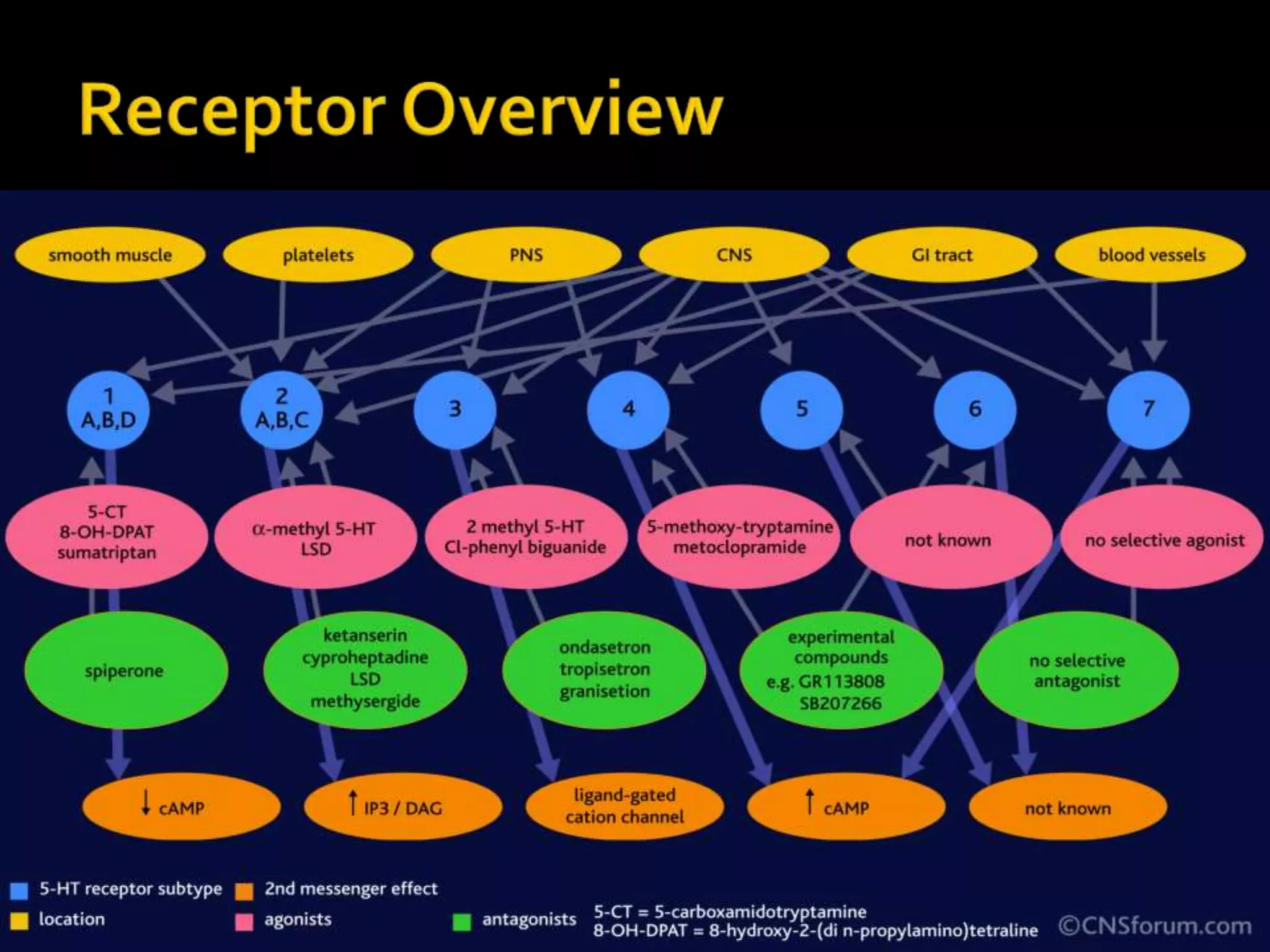
Receptors Distribution Agonist Antagonist
5-HT1 +subtypes CNS & Cerebral Blood
vessels
BUSPIRONE
SUMATRIPTAN
SPIPIRONE
ERGOTAMINE
5-HT2 + subtypes CNS, Smooth vessels,
platelets
LSD(non-selective) KETANSERIN
METHYSERGIDE
CLOZAPINE
CYPROHEPTADINE
5-HT3 CNS (area posterna),
PNS, ENS
2-methyl- 5-HT ONDANSETRON
GRANISETRON
5-HT4 CNS(Hippocampus)
ENS
METACLOPRAMIDE,
CISAPRIDE,
MOSAPRIDE
TEGASEROD
GR-113808
At least 15 types and subtypes
Multiple transduction mechanisms
5HT-1A: role in anxiety/depression, affects mood and
behavior
5HT-1D: role in migraine
5HT-2: role in CNS various behaviors, and in
cardiovascular system
5-HT3: role in nausea and vomiting esp. due to
Chemotherapy.
5-HT4: GI tract: increase motility
Lysergic acid diethylamide (LSD)
Objects appeared to gain in relief;
they assumed unusual dimensions;
and colours became more glowing.
Even self-perception and the sense
of time were changed. When the eyes
were closed, there surged upon me
an uninterrupted stream of fantastic
images of extraordinary plasticity and
vividness and accompanied by an intense,
kaleidoscope-like play of colours.”
(Albert Hofmann, discoverer of LSD, 1943)
 KETANSERIN -5-HT2A-on platelets antagonizes
aggregation
 α-adrenergic blocking property effective
antihypertensive drug
 - can be used in Raynaud’s disease
 RITANSERIN-5-HT2A-antagonist
 it reduces thromboxane formation and increases
bleeding time presumably by inhibiting platelet
aggregation
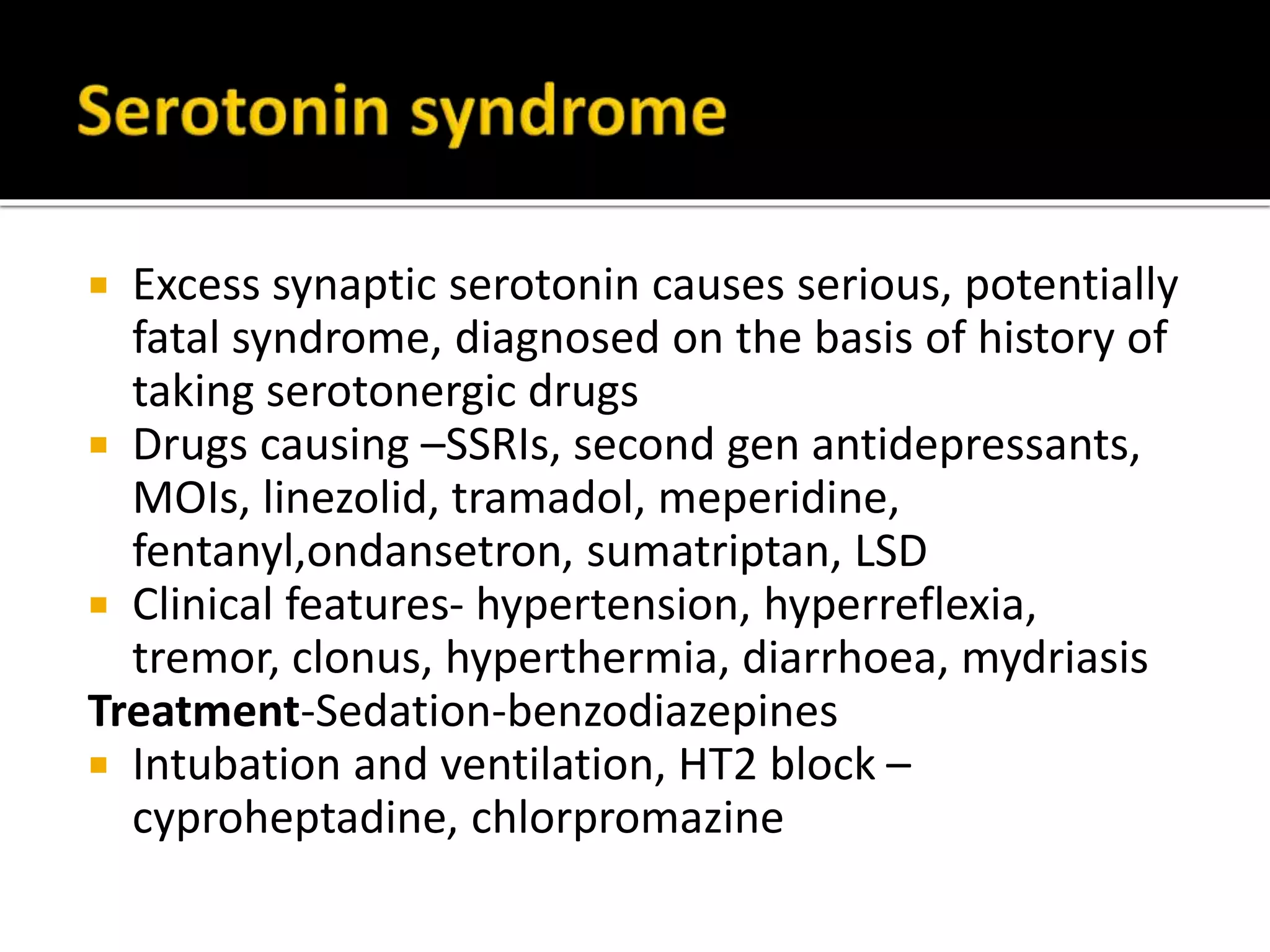
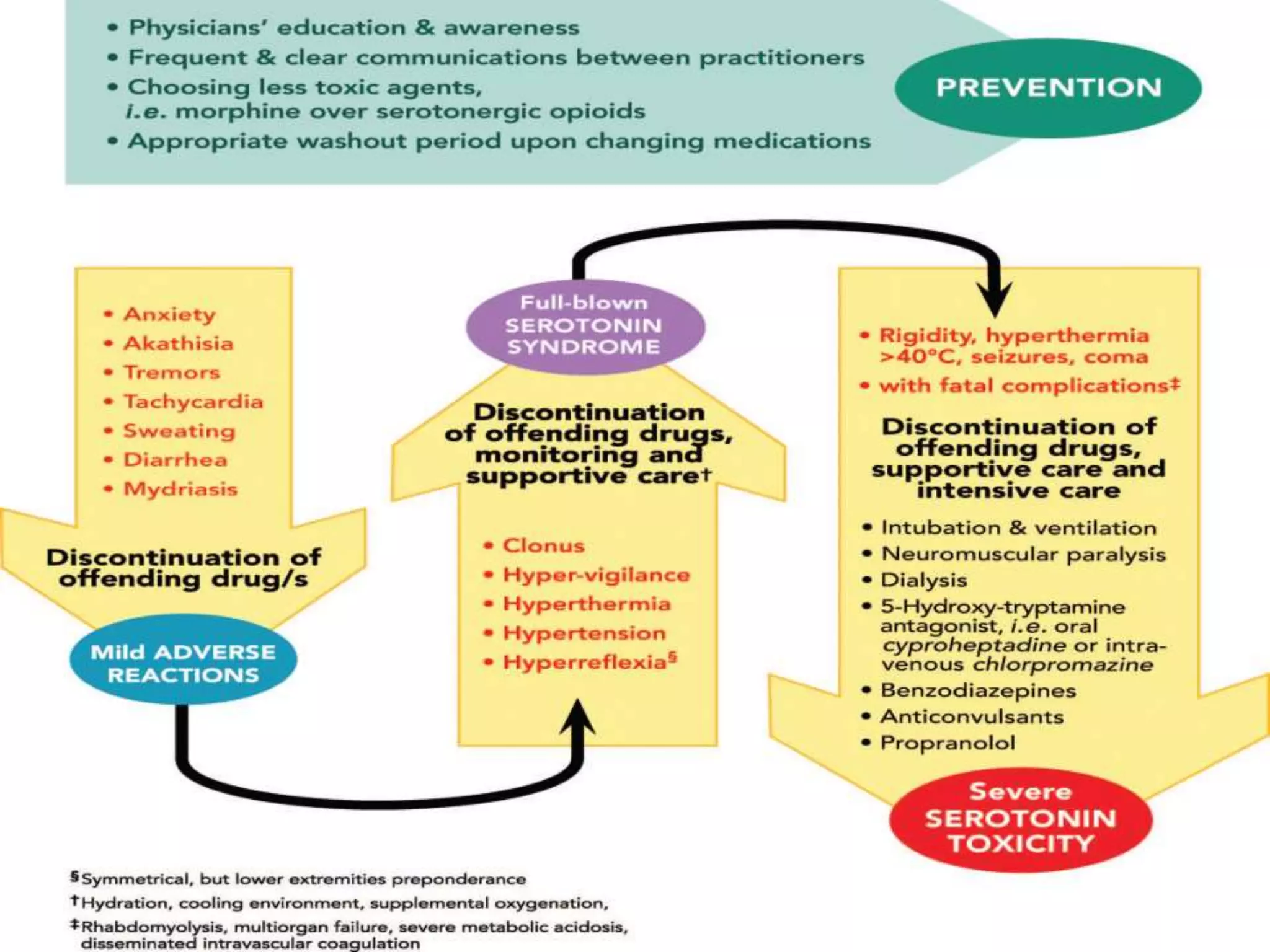
 Excess synaptic serotonin causes serious, potentially
fatal syndrome, diagnosed on the basis of history of
taking serotonergic drugs
 Drugs causing –SSRIs, second gen antidepressants,
MOIs, linezolid, tramadol, meperidine, fentanyl,
ondansetron, sumatriptan, LSD
 Clinical features- hypertension, hyperreflexia,
tremor, clonus, hyperthermia, diarrhoea, mydriasis
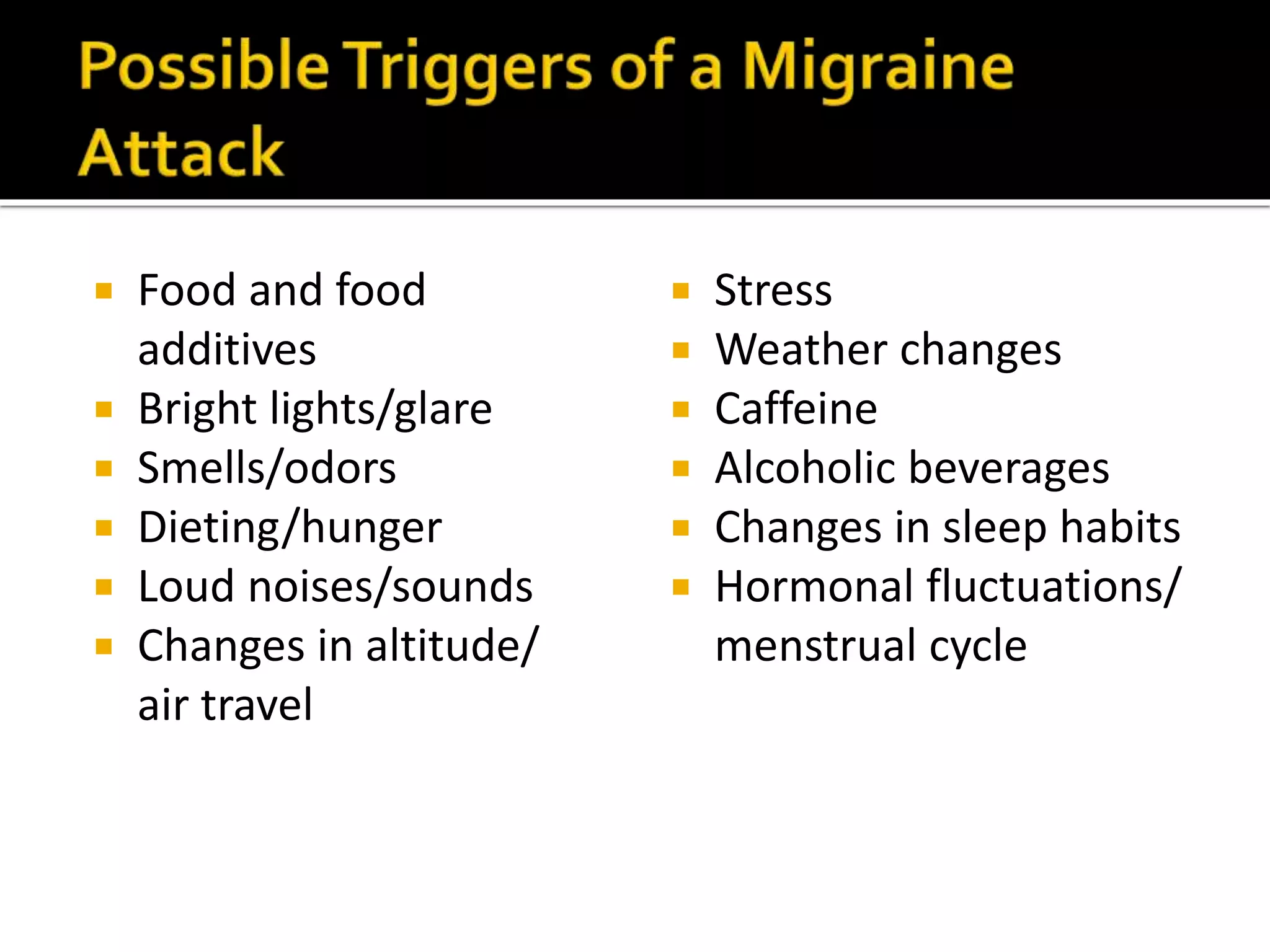
 Food and food
additives
 Bright lights/glare
 odors
 Dieting/hunger
 Loud noises/sounds
 Changes in altitude/
air travel
 Stress
 Weather changes
 Caffeine
 Alcoholic beverages
 Changes in sleep habits
 Hormonal fluctuations/
menstrual cycle
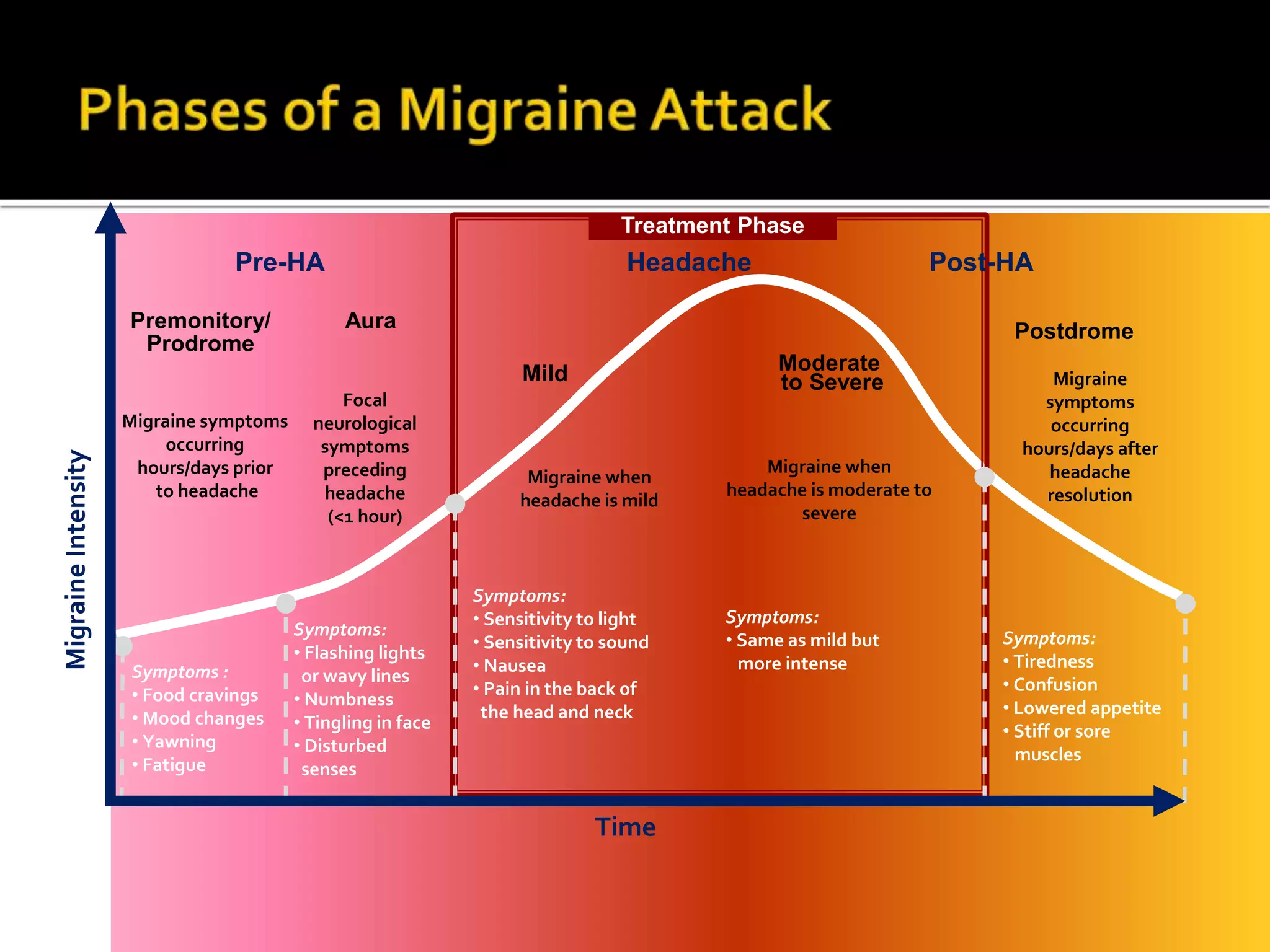
Premonitory/
Prodrome
Aura
Mild Moderate
to Severe
Postdrome
Time
MigraineIntensity
Migraine symptoms
occurring
hours/days prior
to headache
Migraine when
headache is mild
Migraine when
headache is moderate to
severe
Migraine
symptoms
occurring
hours/days after
headache
resolution
Focal
neurological
symptoms
preceding
headache
(<1 hour)
Symptoms :
• Food cravings
• Mood changes
• Yawning
• Fatigue
Symptoms:
• Tiredness
• Confusion
• Lowered appetite
• Stiff or sore
muscles
Symptoms:
• Same as mild but
more intense
Symptoms:
• Flashing lights
or wavy lines
• Numbness
• Tingling in face
• Disturbed
senses
Symptoms:
• Sensitivity to light
• Sensitivity to sound
• Nausea
• Pain in the back of
the head and neck
Pre-HA Post-HAHeadache
Treatment Phase
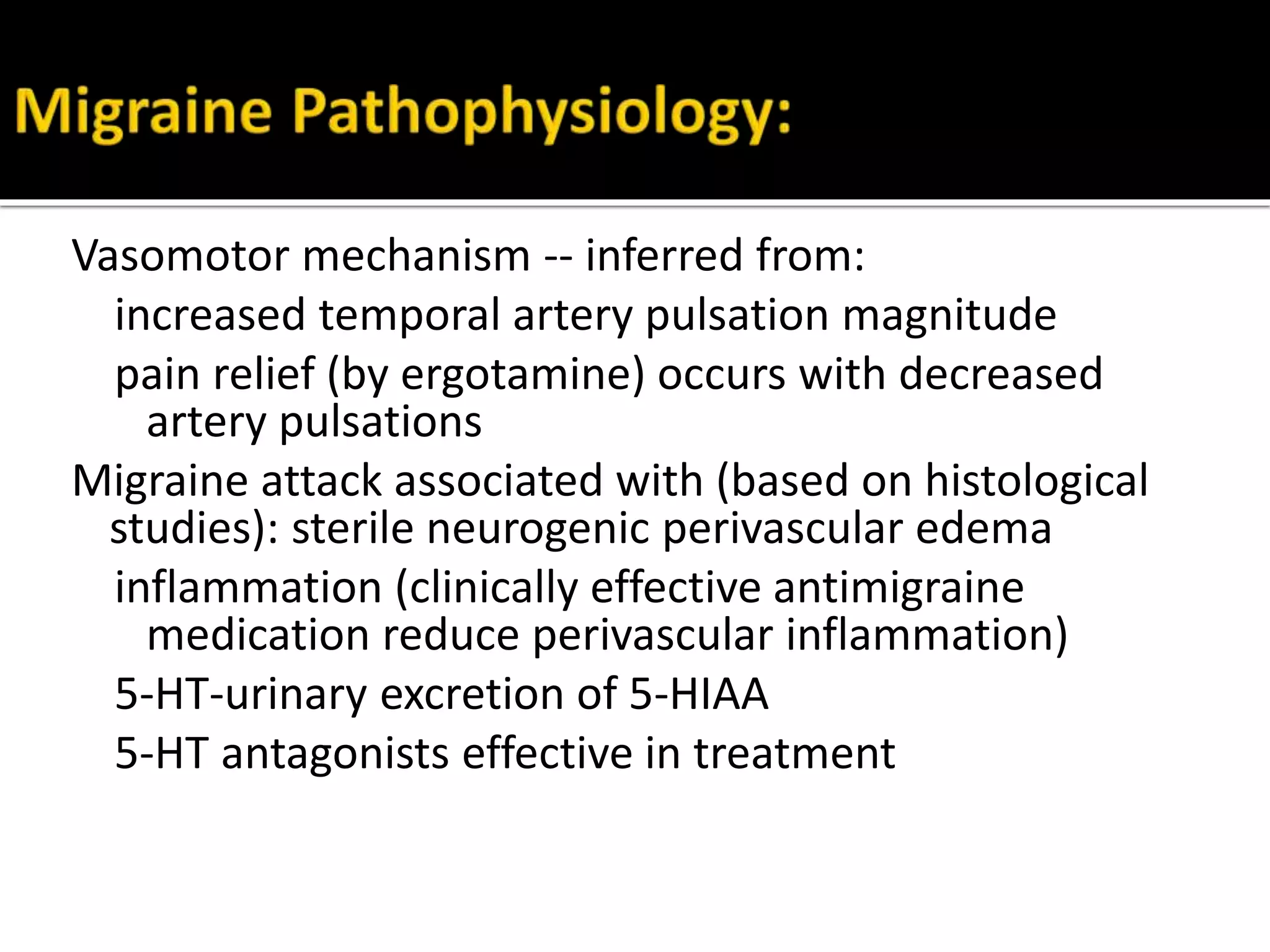
Vasomotor mechanism -- inferred from:
increased temporal artery pulsation magnitude
pain relief (by ergotamine) occurs with decreased
artery pulsations
Migraine attack associated with (based on histological
studies): sterile neurogenic perivascular edema
inflammation (clinically effective antimigraine
medication reduce perivascular inflammation)
5-HT-urinary excretion of 5-HIAA
5-HT antagonists effective in treatment
 5HT2 receptor activation dilatation of intra/extra
cranial vessels, activation of trigeminal nerve
terminals in meninges sensory nerve discharge
neurogenic inflammation(CGRP, substanceP)
PG+kinin release dilation of blood vessels,
perivascular edema pain
 Abnormal neuronal discharge spreading
depression+ hypoperfusionAURA+PAIN
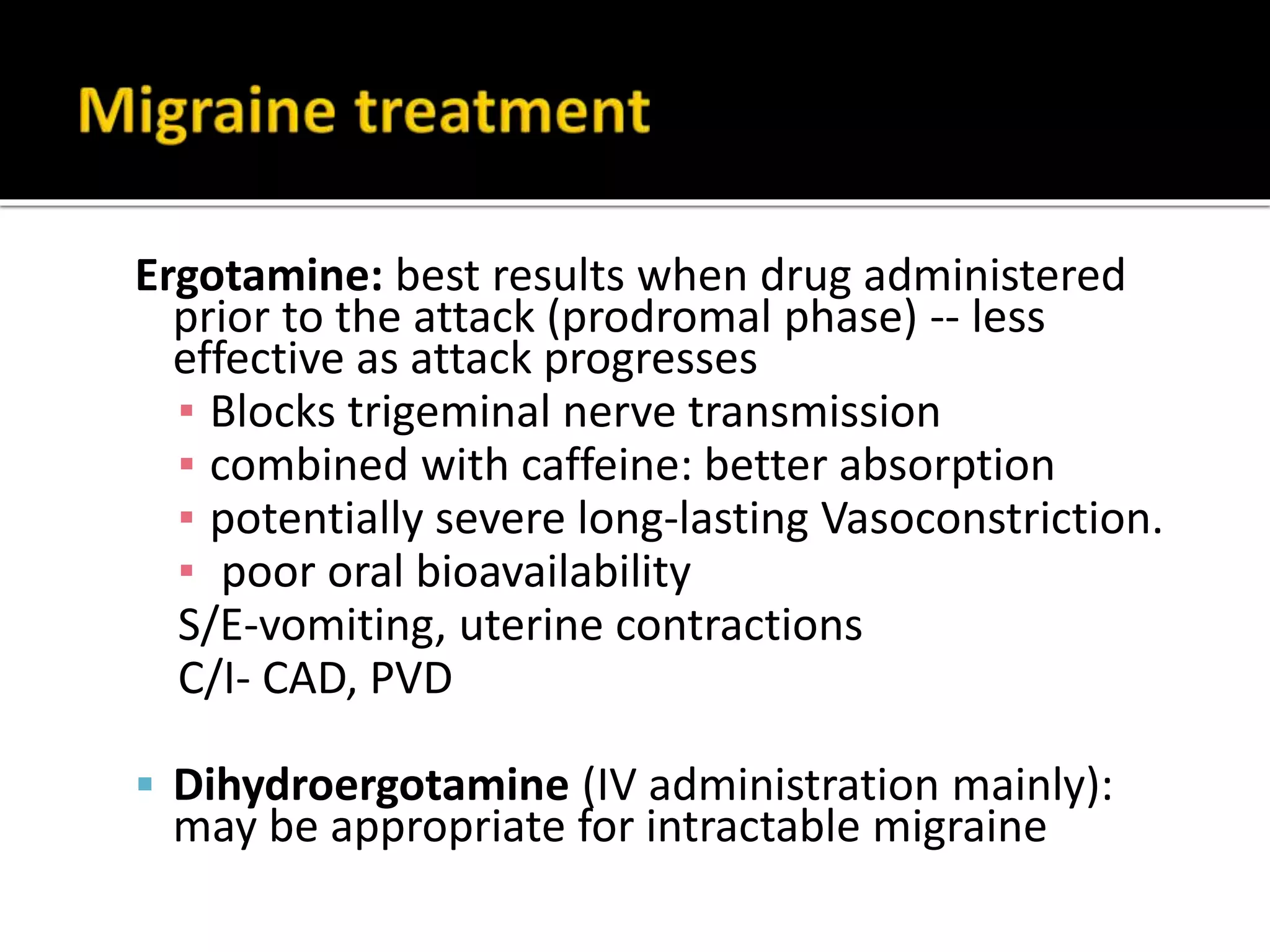
Ergotamine: best results when drug administered
prior to the attack (prodromal phase) -- less
effective as attack progresses
▪ Blocks trigeminal nerve transmission
▪ combined with caffeine: better absorption
▪ potentially severe long-lasting Vasoconstriction.
▪ poor oral bioavailability
S/E-vomiting, uterine contractions
C/I- CAD, PVD
 Dihydroergotamine (IV administration mainly):
may be appropriate for intractable migraine
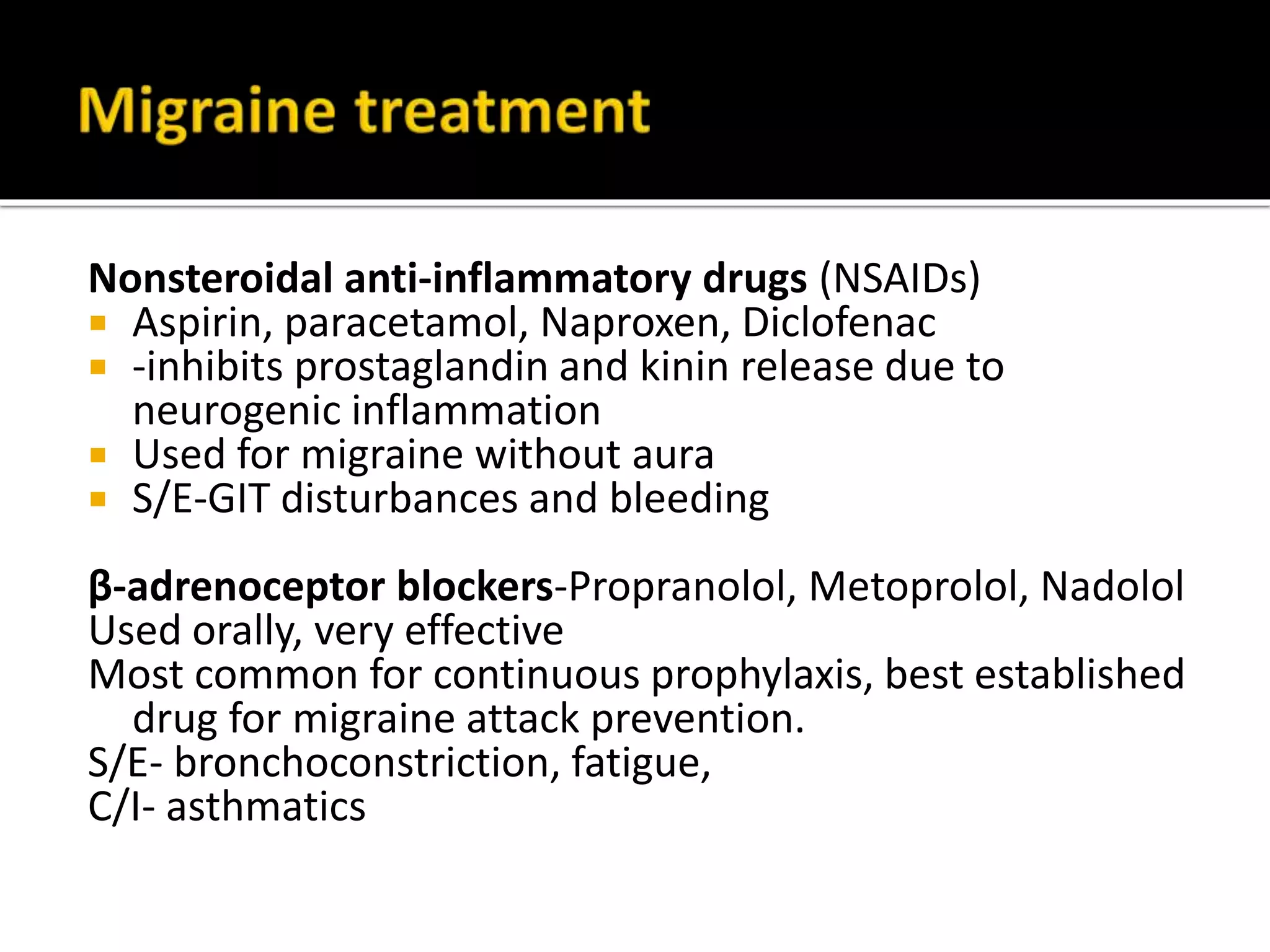
Nonsteroidal anti-inflammatory drugs (NSAIDs)
 Aspirin, paracetamol, Naproxen, Diclofenac
 -inhibits prostaglandin and kinin release due to
neurogenic inflammation
 Used for migraine without aura
 S/E-GIT disturbances and bleeding
β-adrenoceptor blockers-Propranolol, Metoprolol, Nadolol
Used orally, very effective
Most common for continuous prophylaxis, best established
drug for migraine attack prevention.
S/E- bronchoconstriction, fatigue,
C/I- asthmatics
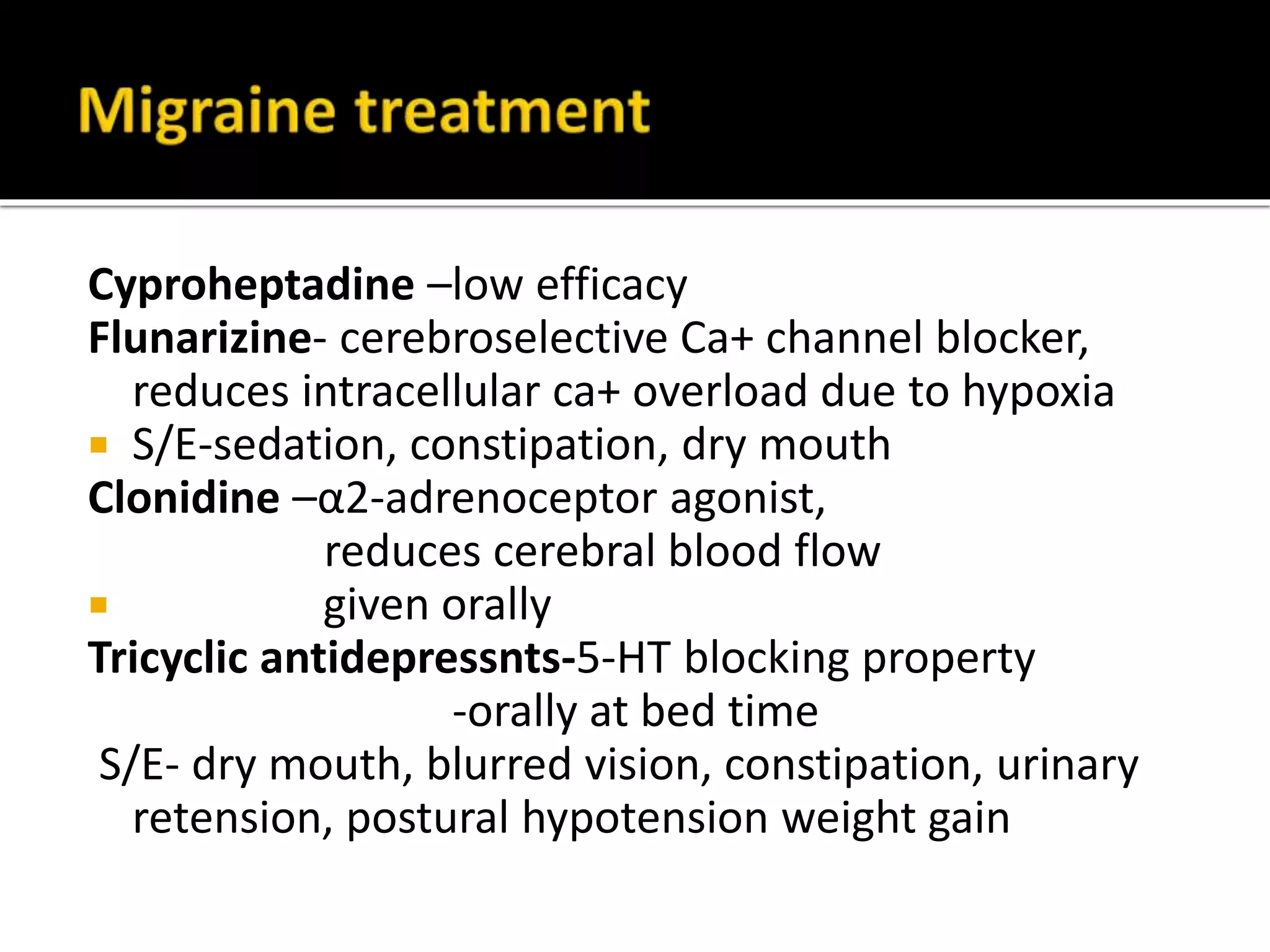
Cyproheptadine –low efficacy
Flunarizine- cerebroselective Ca+ channel blocker,
reduces intracellular ca+ overload due to hypoxia
 S/E-sedation, constipation, dry mouth
Clonidine –α2-adrenoceptor agonist,
reduces cerebral blood flow
 given orally
Tricyclic antidepressnts-5-HT blocking property
-orally at bed time
S/E- dry mouth, blurred vision, constipation, urinary
retention, postural hypotension weight gain
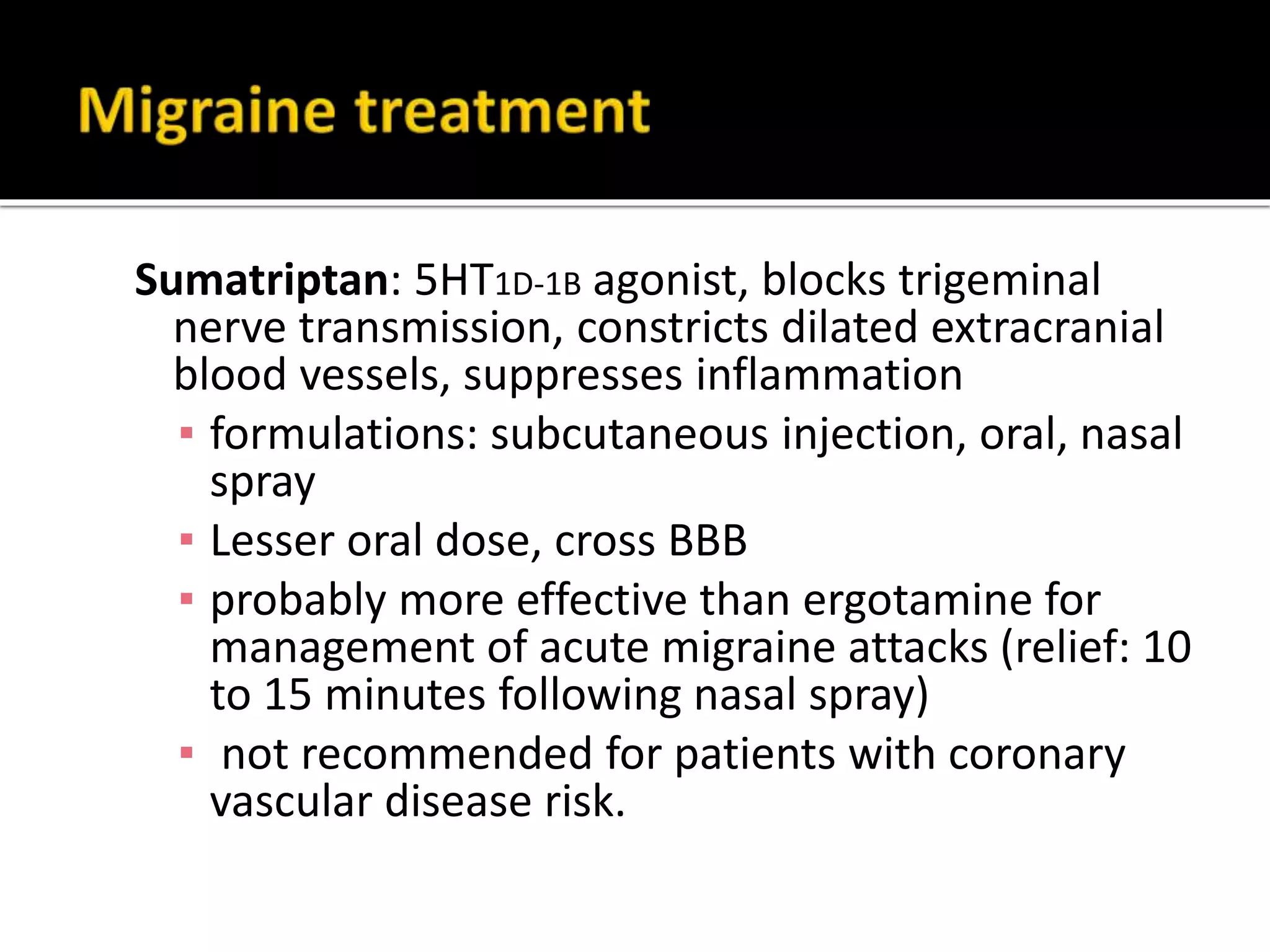
Sumatriptan: 5HT1D-1B agonist, blocks trigeminal
nerve transmission, constricts dilated extracranial
blood vessels, suppresses inflammation
▪ formulations: subcutaneous injection, oral, nasal
spray
▪ Lesser oral dose, cross BBB
▪ probably more effective than ergotamine for
management of acute migraine attacks (relief: 10
to 15 minutes following nasal spray)
▪ not recommended for patients with coronary
vascular disease risk.
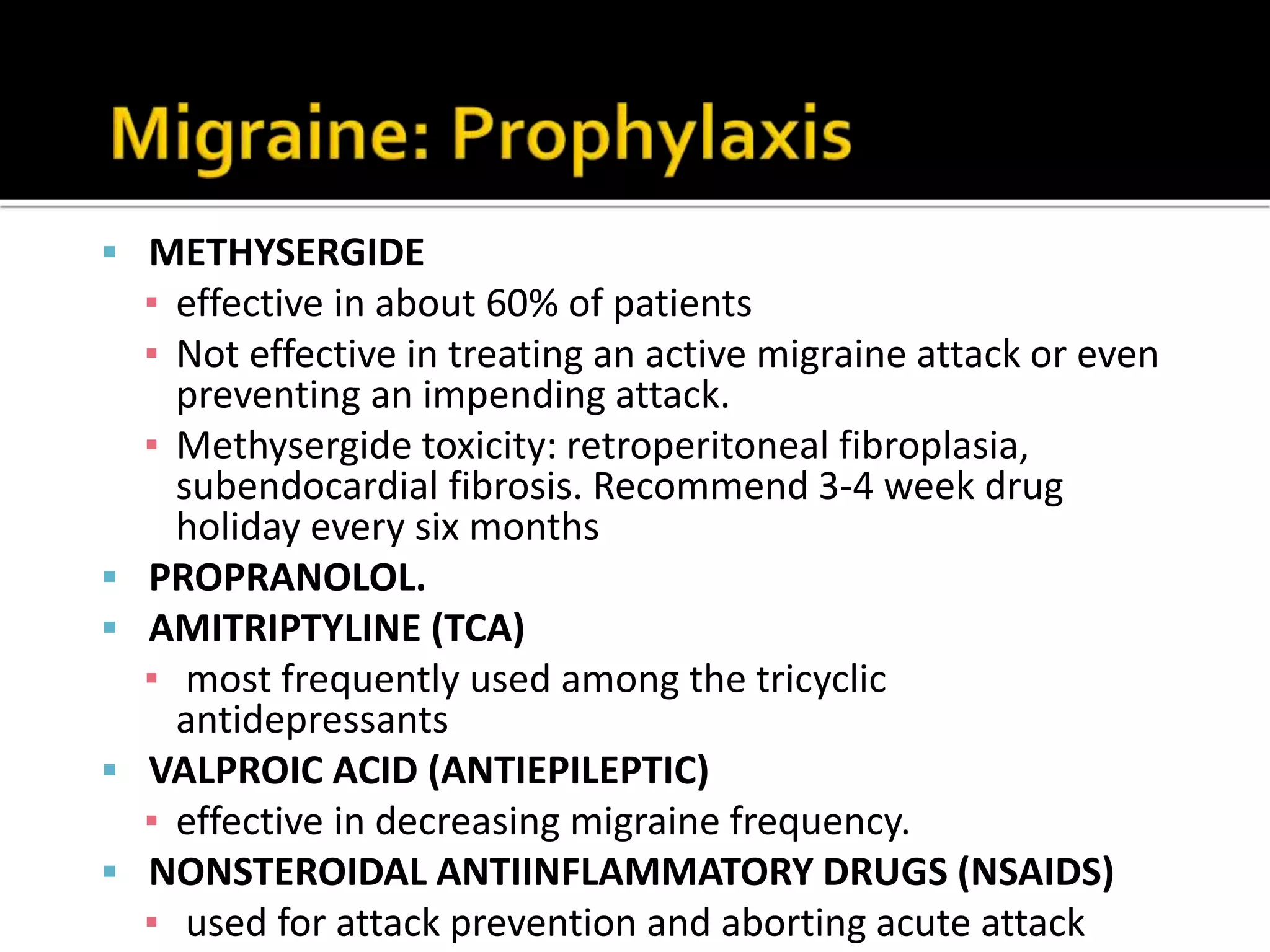
 METHYSERGIDE
▪ effective in about 60% of patients
▪ Not effective in treating an active migraine attack or even
preventing an impending attack.
▪ Methysergide toxicity: retroperitoneal fibroplasia,
subendocardial fibrosis. Recommend 3-4 week drug
holiday every six months
 PROPRANOLOL.
 AMITRIPTYLINE (TCA)
▪ most frequently used among the tricyclic
antidepressants
 VALPROIC ACID (ANTIEPILEPTIC)
▪ effective in decreasing migraine frequency.
 NONSTEROIDAL ANTIINFLAMMATORY DRUGS (NSAIDS)
▪ used for attack prevention and aborting acute attack
 Bradykinin-nonapeptideplasma
 Kallidin-lysyl-bradykinin-decapeptideurine
 Met-lys-bradykinin-methionyl-lysyl-bradykinin
Biosynthesis
A B
HMW kininogen----bradykinin--inactive
metabolites
A-plasma kallikrenin
B-ACE kinase II (with in 1 min)
 B2 receptormajority actionvisceral smooth
muscle, vascular endothelium, sensory nerve
endings
 GPCR
 Selective antagonist-ICATIBANT
 B1 receptor induced at site of inflammation
 CVS-potent vasodilator, more potent than histamine
 Released by release of EDRF,PGE2, PGI2
 Smooth muscles slow sustained contraction
 Endocrine and exocrinelocal modulators of blood flow
in kidney pancreas, sweat and intestine
 Sensory nerves-elicits pain by stimulating sensory nerve
endings
 Physiological roleinvolved in maintainance of BP,
inflammatory mediators, tissue growth and repair
 APROTININ-nonspecific kallikrein antagonist used of
minimising bleeding and fibrinolysis in coronary bypass
surgery
THANKYOU
Download slides from
Authorstream/presentations/raghuprasada
Slideshare/presentations/raghuprasada
Youtube-raghuprasada

Class serotonin and migraine 2

  • 1.
  • 2.
    • Serotonin isused throughout the body in multiple physiological roles. • 90% of all serotonin in human body in the GI tract - enterochromaffin cells. • 8% in blood platelets Platelets do not synthesize but take up from blood (active uptake process in platelets and nerve terminals). • 2% in CNS. • Neurons in brain make their own; does not cross Blood Brain Barrier (BBB) • Cell storage in granules similar to catecholamines
  • 3.
    High serotonin levelswithin neuron do not inhibit enzyme synthesis-serotonin just builds upNo end- product negative feedback Tryptophan hydroxylase (rate limiting step) Rate of enzyme activity can be modulated by second messengers involving cAMP. Can be modulated by Oxygen levels in blood; more oxygen, more synthesis of serotonin.
  • 4.
    N C N C NH2 COOH COOH NH2 OH N CNH2 OH H Tryptophan 5-Hydroxytryptophan 5-Hydroxytryptamine N C COOH 5-OH Indole Acetaldehyde 5-Hydroxy Indole Acetic Acid- 5-OHIAA actively extruded from CNS (probenecid-sensitive) and excreted in urine Tryptophan hydroxylase 5-OH Tryptophan decarboxylase (Rate limiting) In diet. Active CNS transport
  • 6.
     Pain perception Sleep/Wakefulness  Central neurotransmitter  5HT synthesized by pineal glandPrecursor of melatonin  Various behaviors normal/abnormal: depression, schizophrenia, obsessive compulsive behavior, etc.  Neuroendocrine regulation – controls hypothalamic cells involved in release of several anterior pituitary hormones.
  • 7.
     CVS- constrictionof vascular smooth muscles Heart vasodilatation and bradycardia hypotnsn  In carcinoid tumors: large amounts released leading to diarrhea, broncho constriction and edema  Platelets: 5-HT2 receptors → aggrega on and vasoconstriction  Like histamine it can stimulate perception of pain and itch
  • 8.
    Receptors Distribution AgonistAntagonist 5-HT1 +subtypes CNS & Cerebral Blood vessels BUSPIRONE SUMATRIPTAN SPIPIRONE ERGOTAMINE 5-HT2 + subtypes CNS, Smooth vessels, platelets LSD(non-selective) KETANSERIN METHYSERGIDE CLOZAPINE CYPROHEPTADINE 5-HT3 CNS (area posterna), PNS, ENS 2-methyl- 5-HT ONDANSETRON GRANISETRON 5-HT4 CNS(Hippocampus) ENS METACLOPRAMIDE, CISAPRIDE, MOSAPRIDE TEGASEROD GR-113808
  • 10.
    At least 15types and subtypes Multiple transduction mechanisms 5HT-1A: role in anxiety/depression, affects mood and behavior 5HT-1D: role in migraine 5HT-2: role in CNS various behaviors, and in cardiovascular system 5-HT3: role in nausea and vomiting esp. due to Chemotherapy. 5-HT4: GI tract: increase motility
  • 11.
    Lysergic acid diethylamide(LSD) Objects appeared to gain in relief; they assumed unusual dimensions; and colours became more glowing. Even self-perception and the sense of time were changed. When the eyes were closed, there surged upon me an uninterrupted stream of fantastic images of extraordinary plasticity and vividness and accompanied by an intense, kaleidoscope-like play of colours.” (Albert Hofmann, discoverer of LSD, 1943)
  • 12.
     KETANSERIN -5-HT2A-onplatelets antagonizes aggregation  α-adrenergic blocking property effective antihypertensive drug  - can be used in Raynaud’s disease  RITANSERIN-5-HT2A-antagonist  it reduces thromboxane formation and increases bleeding time presumably by inhibiting platelet aggregation
  • 13.
     Excess synapticserotonin causes serious, potentially fatal syndrome, diagnosed on the basis of history of taking serotonergic drugs  Drugs causing –SSRIs, second gen antidepressants, MOIs, linezolid, tramadol, meperidine, fentanyl, ondansetron, sumatriptan, LSD  Clinical features- hypertension, hyperreflexia, tremor, clonus, hyperthermia, diarrhoea, mydriasis
  • 16.
     Food andfood additives  Bright lights/glare  odors  Dieting/hunger  Loud noises/sounds  Changes in altitude/ air travel  Stress  Weather changes  Caffeine  Alcoholic beverages  Changes in sleep habits  Hormonal fluctuations/ menstrual cycle
  • 17.
    Premonitory/ Prodrome Aura Mild Moderate to Severe Postdrome Time MigraineIntensity Migrainesymptoms occurring hours/days prior to headache Migraine when headache is mild Migraine when headache is moderate to severe Migraine symptoms occurring hours/days after headache resolution Focal neurological symptoms preceding headache (<1 hour) Symptoms : • Food cravings • Mood changes • Yawning • Fatigue Symptoms: • Tiredness • Confusion • Lowered appetite • Stiff or sore muscles Symptoms: • Same as mild but more intense Symptoms: • Flashing lights or wavy lines • Numbness • Tingling in face • Disturbed senses Symptoms: • Sensitivity to light • Sensitivity to sound • Nausea • Pain in the back of the head and neck Pre-HA Post-HAHeadache Treatment Phase
  • 18.
    Vasomotor mechanism --inferred from: increased temporal artery pulsation magnitude pain relief (by ergotamine) occurs with decreased artery pulsations Migraine attack associated with (based on histological studies): sterile neurogenic perivascular edema inflammation (clinically effective antimigraine medication reduce perivascular inflammation) 5-HT-urinary excretion of 5-HIAA 5-HT antagonists effective in treatment
  • 19.
     5HT2 receptoractivation dilatation of intra/extra cranial vessels, activation of trigeminal nerve terminals in meninges sensory nerve discharge neurogenic inflammation(CGRP, substanceP) PG+kinin release dilation of blood vessels, perivascular edema pain  Abnormal neuronal discharge spreading depression+ hypoperfusionAURA+PAIN
  • 20.
    Ergotamine: best resultswhen drug administered prior to the attack (prodromal phase) -- less effective as attack progresses ▪ Blocks trigeminal nerve transmission ▪ combined with caffeine: better absorption ▪ potentially severe long-lasting Vasoconstriction. ▪ poor oral bioavailability S/E-vomiting, uterine contractions C/I- CAD, PVD  Dihydroergotamine (IV administration mainly): may be appropriate for intractable migraine
  • 21.
    Nonsteroidal anti-inflammatory drugs(NSAIDs)  Aspirin, paracetamol, Naproxen, Diclofenac  -inhibits prostaglandin and kinin release due to neurogenic inflammation  Used for migraine without aura  S/E-GIT disturbances and bleeding β-adrenoceptor blockers-Propranolol, Metoprolol, Nadolol Used orally, very effective Most common for continuous prophylaxis, best established drug for migraine attack prevention. S/E- bronchoconstriction, fatigue, C/I- asthmatics
  • 22.
    Cyproheptadine –low efficacy Flunarizine-cerebroselective Ca+ channel blocker, reduces intracellular ca+ overload due to hypoxia  S/E-sedation, constipation, dry mouth Clonidine –α2-adrenoceptor agonist, reduces cerebral blood flow  given orally Tricyclic antidepressnts-5-HT blocking property -orally at bed time S/E- dry mouth, blurred vision, constipation, urinary retention, postural hypotension weight gain
  • 23.
    Sumatriptan: 5HT1D-1B agonist,blocks trigeminal nerve transmission, constricts dilated extracranial blood vessels, suppresses inflammation ▪ formulations: subcutaneous injection, oral, nasal spray ▪ Lesser oral dose, cross BBB ▪ probably more effective than ergotamine for management of acute migraine attacks (relief: 10 to 15 minutes following nasal spray) ▪ not recommended for patients with coronary vascular disease risk.
  • 24.
     METHYSERGIDE ▪ effectivein about 60% of patients ▪ Not effective in treating an active migraine attack or even preventing an impending attack. ▪ Methysergide toxicity: retroperitoneal fibroplasia, subendocardial fibrosis. Recommend 3-4 week drug holiday every six months  PROPRANOLOL.  AMITRIPTYLINE (TCA) ▪ most frequently used among the tricyclic antidepressants  VALPROIC ACID (ANTIEPILEPTIC) ▪ effective in decreasing migraine frequency.  NONSTEROIDAL ANTIINFLAMMATORY DRUGS (NSAIDS) ▪ used for attack prevention and aborting acute attack
  • 26.
     Bradykinin-nonapeptideplasma  Kallidin-lysyl-bradykinin-decapeptideurine Met-lys-bradykinin-methionyl-lysyl-bradykinin Biosynthesis A B HMW kininogen----bradykinin--inactive metabolites A-plasma kallikrenin B-ACE kinase II (with in 1 min)
  • 27.
     B2 receptormajorityactionvisceral smooth muscle, vascular endothelium, sensory nerve endings  GPCR  Selective antagonist-ICATIBANT  B1 receptor induced at site of inflammation
  • 28.
     CVS-potent vasodilator,more potent than histamine  Released by release of EDRF,PGE2, PGI2  Smooth muscles slow sustained contraction  Endocrine and exocrinelocal modulators of blood flow in kidney pancreas, sweat and intestine  Sensory nerves-elicits pain by stimulating sensory nerve endings  Physiological roleinvolved in maintainance of BP, inflammatory mediators, tissue growth and repair  APROTININ-nonspecific kallikrein antagonist used of minimising bleeding and fibrinolysis in coronary bypass surgery
  • 29.