1
The Glutamate Hypothesis and
The Glutamate Linked
Treatments of Schizophrenia
Dr Khalid Mansour
Locum Consultant Psychiatrist
2
Contents
(I) The Glutamate System
(II) Glutamate System and Schizophrenia
a- NMDA Receptors HypofunctionTheory
 The Glutamate theory vs the Dopamine theory in
schizophrenia
 Cerebral Glutamate HypofunctioningTheory
 Cerebellar Glutamate HypofunctioningTheory
b- The Glutamate NeurodevelopmentalTheory
c- The Glutamate NeurodedegenarativeTheory
(III) Glutamate LinkedTreatments of Schizophrenia
(IV) GlutamateTheory and NewTrends in Molecular
Medicine
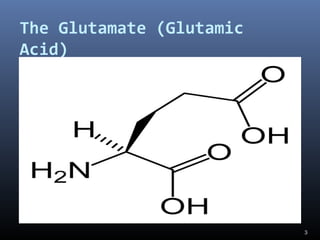
The Glutamate (Glutamic
Acid)
“the king of Neurotransmission”
3
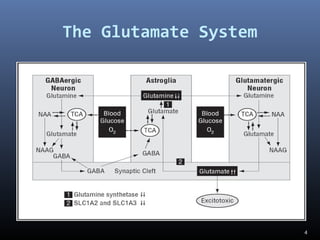
The Glutamate System
4
5
The Glutamate System:
(Moghaddam, 2005) Major excitatory neurotransmitter and
the most prevalent in the brain.
 Nearly in 50% of the neurons in the
brain.
 In mammalians‘ brains: balanced with
GABA (main inhibitory chemical
transmitter).
 Both transmitters influence almost
every other chemical transmitter and
brain areas.
Possible Therapeutic
Applications
(MRC Centre for Synaptic Plasticity
2010)
 Multifacet ischemia,
 Epilepsy,
 Parkinson's disease,
 Alzheimer’s disease,
 Hyperalgesia,
 Multiple Sclerosis,
 Diabetes,
 Schizophrenia
 Anxiety,
 Depression,
 etc.
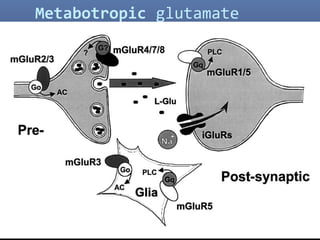
6
7
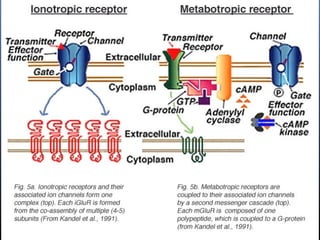
Glutamate Receptors:
(MRC Centre for Synaptic Plasticity 2010)
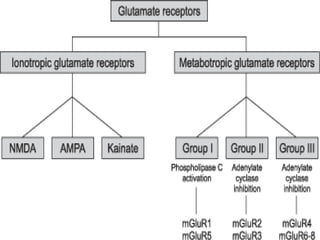
Two classes of receptors in both
neurones and glial cells:
 Ionotropic receptors (Ligand gated ion
channels): Four groups of receptors
 AMPA, NMDA, Kinate & Delta
 Metabotropic receptors (G-protein
coupled):
 3 groups & 8 subgroups: (mGlu1 -
mGlu8).
8
9
Glutamate receptors
10
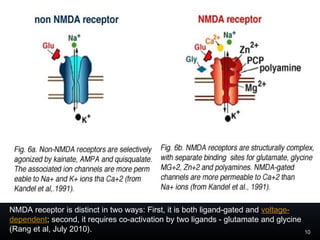
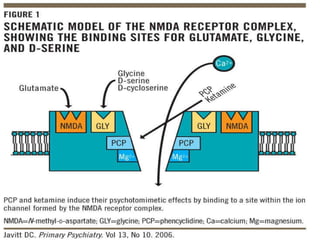
NMDA receptor is distinct in two ways: First, it is both ligand-gated and voltage-
dependent; second, it requires co-activation by two ligands - glutamate and glycine
(Rang et al, July 2010).
11
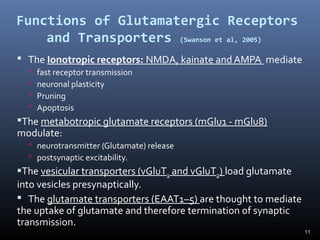
Functions of Glutamatergic Receptors
and Transporters (Swanson et al, 2005)
 The Ionotropic receptors: NMDA, kainate and AMPA mediate
 fast receptor transmission
 neuronal plasticity
 Pruning
 Apoptosis
The metabotropic glutamate receptors (mGlu1 - mGlu8)
modulate:
 neurotransmitter (Glutamate) release
 postsynaptic excitability.
The vesicular transporters (vGluT1 and vGluT2) load glutamate
into vesicles presynaptically.
 The glutamate transporters (EAAT1–5) are thought to mediate
the uptake of glutamate and therefore termination of synaptic
transmission.
12
13
NMDA Hypofunction
Hypothesis of
Schizophrenia:
(I)The Involvement of the Glutamate
System in schizophrenia
14
Glutamate system and
schizophrenia (Moghaddam, 2005)
(1) The idea of a glutamatergic abnormality in
schizophrenia was first proposed by Kim and colleagues in
1980: low cerebrospinal fluid (CSF) glutamate levels in
patients with schizophrenia.
(2) Studies about Antiglutamatergic substances:
Phencyclidine (PCP) or ketamine produces "schizophrenia-
like" symptoms in healthy individuals and profoundly
exacerbates pre-existing symptoms in patients with
schizophrenia (Javitt et al., 1991; Krystal et al., 1994; Lahti et
al., 1995).
15
Glutamate system and schizophrenia
(Moghaddam, 2005)
(3) Genetic studies:
 The majority of the genes that have recently been
associated with an increased risk for schizophrenia
can influence function linked to glutamate
receptors (Harrison et al., 2003; Moghaddam,
2003).
(4) Postmortem receptors studies:
 Postmortem studies show changes in glutamate
receptor binding, transcription, and subunit
protein expression in the prefrontal cortex,
thalamus, and hippocampus of subjects with
schizophrenia (Clinton and Meador-Woodruff,
2004).
16
Glutamate system and
schizophrenia (Moghaddam, 2005)
(5) Postmortem enzymes studies:
 Levels of amino acids N-acethylaspartate (NAA)
and N-acethylaspartylglutamate (NAAG), and the
activity of the enzyme that cleaves NAA to NAAG
and glutamate are altered in the CSF and
postmortem tissue from individuals with
schizophrenia (Tsai et al., 1995).
(6) Brain imaging studies:
 Recent imaging studies using a novel SPECT tracer
for the NMDA receptor (123I)CNS-1261 (Pilowsky
et al., 2005) have reported reduced NMDA
receptor binding in the hippocampus of
medication-free patients.
17
NMDA Hypofunction
Hypothesis of
Schizophrenia:
(II) The Glutamate theory vs the
Dopamine theory in schizophrenia
18
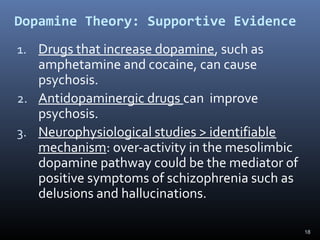
Dopamine Theory: Supportive Evidence
1. Drugs that increase dopamine, such as
amphetamine and cocaine, can cause
psychosis.
2. Antidopaminergic drugs can improve
psychosis.
3. Neurophysiological studies > identifiable
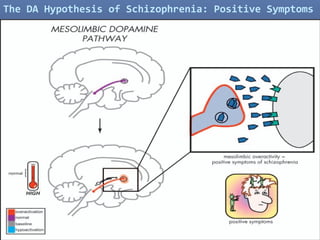
mechanism: over-activity in the mesolimbic
dopamine pathway could be the mediator of
positive symptoms of schizophrenia such as
delusions and hallucinations.
19
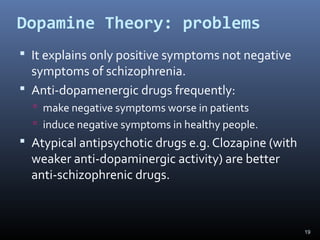
Dopamine Theory: problems
 It explains only positive symptoms not negative
symptoms of schizophrenia.
 Anti-dopamenergic drugs frequently:
 make negative symptoms worse in patients
 induce negative symptoms in healthy people.
 Atypical antipsychotic drugs e.g. Clozapine (with
weaker anti-dopaminergic activity) are better
anti-schizophrenic drugs.
20
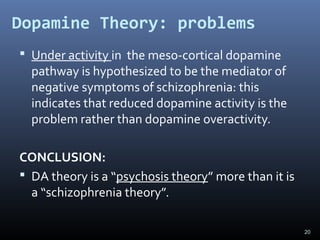
Dopamine Theory: problems
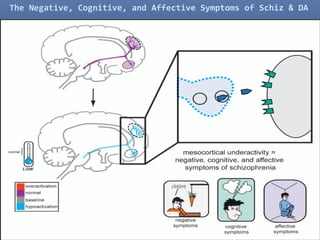
 Under activity in the meso-cortical dopamine
pathway is hypothesized to be the mediator of
negative symptoms of schizophrenia: this
indicates that reduced dopamine activity is the
problem rather than dopamine overactivity.
CONCLUSION:
 DA theory is a “psychosis theory” more than it is
a “schizophrenia theory”.
21
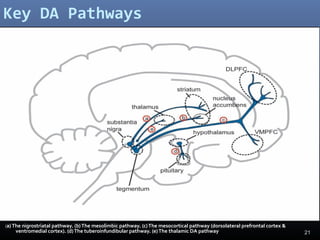
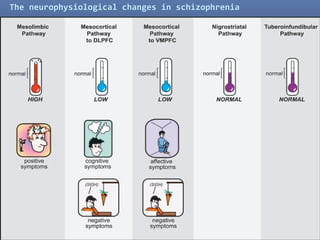
Key DA Pathways
(a)The nigrostriatal pathway. (b)The mesolimbic pathway. (c)The mesocortical pathway (dorsolateral prefrontal cortex &
ventromedial cortex). (d)The tuberoinfundibular pathway. (e)The thalamic DA pathway
22
The DA Hypothesis of Schizophrenia: Positive Symptoms
23
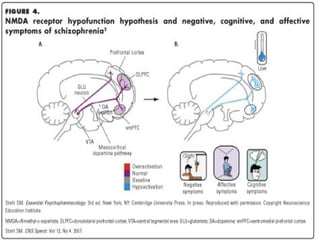
The Negative, Cognitive, and Affective Symptoms of Schiz & DA
24
NMDA Hypofunction
Hypothesis of
Schizophrenia:
25
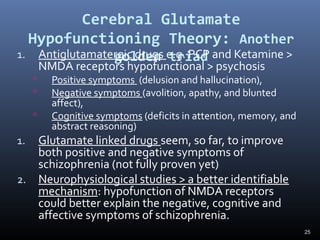
Cerebral Glutamate
Hypofunctioning Theory: Another
golden triad1. Antiglutamatergic drugs e.g. PCP and Ketamine >
NMDA receptors hypofunctional > psychosis
 Positive symptoms (delusion and hallucination),
 Negative symptoms (avolition, apathy, and blunted
affect),
 Cognitive symptoms (deficits in attention, memory, and
abstract reasoning)
1. Glutamate linked drugs seem, so far, to improve
both positive and negative symptoms of
schizophrenia (not fully proven yet)
2. Neurophysiological studies > a better identifiable
mechanism: hypofunction of NMDA receptors
could better explain the negative, cognitive and
affective symptoms of schizophrenia.
26
The neurophysiological changes in schizophrenia
27
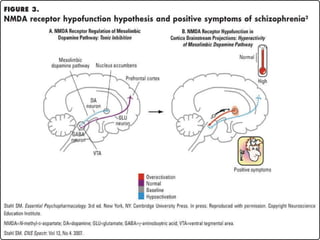
Role of Glutamate in the Mesolimbic System
28
Role of Glutamate in the Mesocortical System
Cerebellar Glutamate
Hypofunctioning Theory:
29
 Andreasen et al (1998): Cognitive Dysmetria
Theory of Schizophrenia
 The Cortico-Cerebellar-Thalamo-Cortical circuit is
dysfunctional in schizophrenia > poor mental coordination >
(Cognitive Dysmetria) > Schizophrenia.
 Yeganeh-Doost et al, 2011: hypofunctioning of the
NMDA receptors in the cerebellum > cognitive
dysmetria > schizophrenia
 Problems: ?Yeganeh-Doost study not repeated
and Andreasen theory not widly accepted.
30
Cerebellar Glutamate
Hypofunctioning Theory: (Yeganeh-
Doost et al, 2011)
31
(2)The Glutamate Excitotoxicity
as part of the
NeurodevelopmentalTheory of
Schizophrenia:
The excessive pruning theory
32
Neurodevelopmental Theories
of Schizophrenia (Fatemi & Folsom, 2009)
 Schizophrenia could be the result of an early
brain insult, which affects brain development
leading to abnormalities in the mature brain
(Murray et al, 1992).
 Similar theory has been postulated since
Kraeplin in the early 20th
century.
 The cause of the brain lesion is postulated to
be either of abnormal genes, which impair
brain development, or from some foetal or
neonatal adversity.
33
Neurodevelopmental Theories of
Schizophrenia: Evidence (Fatemi & Folsom,
2009) Congenital Abnormalities: e.g. agenesis of
corpus callosum, stenosis of sylvian
aqueduct, cerebral hamartomas, low-set
ears, epicanthal eye folds, etc.
 Obstetric and perinatal complications : e.g.,
periventicular hemorrhages, hypoxia, and
ischemic injuries and prenatal viral infections.
 Biological markers: e.g. changes in the
proteins that are involved in early migration
of neurons and glia, cell proliferation, axonal
outgrowth, synaptogenesis, and apoptosis
34
Neurodevelopmental Theories of
Schizophrenia: Evidence (Fatemi & Folsom,
2009)
 Genetics studies: e.g. various gene families,
involved in schizophrenia, involved in signal
transduction, cell growth and migration,
myelination, regulation of presynaptic
membrane function, and GABAergic function.
35
Neurodevelopmental Theories of
Schizophrenia: Evidence (Gupta & Kulhara,
2010) During adolescence, brain changes normally
include:
 Decrease in delta sleep
 Decrease in membrane synthesis
 Decreased volume of cortical gray matter
 Decreased prefrontal metabolism
 In schizophrenia, there are more pronounced
decrements in the same parameters.
36
Neurodevelopmental Theories of
Schizophrenia: Models (Corroon, 2005)
 (1)The Early Neurodevelopmental Model:
fixed lesion from early life interacts with
normal neurodevelopment occurring > lying
dormant until the brain matures sufficiently to
call into operation the damaged systems
(Murray & Lewis, 1987).
 (2)The late Neurodevelopmental Model:
schizophrenia may result from an abnormality
in peri-adolescent synaptic pruning (Feinberg,
1983).
37
Neurodevelopmental Theories of Schizophrenia:
(Fatemi & Folsom, 2009)
 (3) “2-hit” model (Keshavan and Hogarty, (1999):
maldevelopment in schizophrenia takes place
during 2 critical time points (early brain
development and adolescence):
 Early developmental insults may lead to dysfunction of
specific neural networks that would account for
premorbid signs
 At adolescence, excessive synaptic pruning and loss of
plasticity may account for the emergence of symptoms.
38
Glutmate System and
Neurodevelopmental Theories of
Schizophrenia
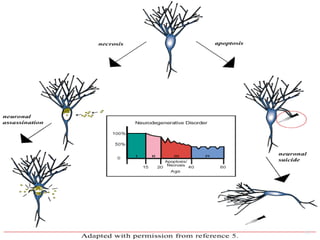
1. Necrosis theory
2. Apoptosis theory
39
Glutmate and Neurodevelopmental
Theories of Schizophrenia
 “NMDA receptors” is a critical component
of developmental processes during
adolescence (Moghaddam, 2005).This
includes:
 Development of neural pathways
 Neural migration,
 Neural survival,
 Neural plasticity
 Neural pruning of cortical connections
40
Glutamate and Neurodegenerative
Model of Schizophrenia (Woods, 1998)
 Kraeplin and others believed that Schizophrenia is caused by a
form of progressive neuronal degeneration characterizedby
earlier onset > “Dementia praecox” (NecrosisTheory)
 Later studies showed high association with:
 cortical atrophy,
 ventricular enlargement,
 reduced volume of various brain parts,
 abnormal laminar organization and orientation of neurons,
 decreased cellularity and
 cerebellar atrophy
 However > no evidence of Necrosis in early adulthood; only
late adulthood.
41
Glutamate and Neurodegenerative
Model of Schizophrenia (Woods, 1998; Benes,
2004; Jarskog, 2005; Glantz, 2006) (Apoptosis Theory)
• Some studies supported the
neurodegeneration theory by the
discoveries about Apoptosis in
schizophrenia
• Postmortem studies: markers of
apoptosis and levels of apoptotic
proteins indicate > increased apoptotic
vulnerability in schizophrenia.
42
43
Glutamate and
Neurodegenerative Model of
Schizophrenia Again glutamate is the main factor involved in
Apoptosis (Stahl, 2009):
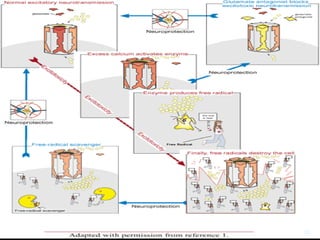
 High concentrations of glutamate accumulate in the
brain are thought to be involved in the aetiology of a
number of neurodegenerative disorders including
Alzheimer's disease (Coyle & Puttfarcken, 1993;
Lipton & Rosenberg, 1994;).
 A number of in-vitro studies > at high concentrations,
glutamate is a potent neurotoxin capable of
destroying neurons via apoptosis (Behl et al. 1995;
Zhang & Bhavnani, 2003).
44
(1)Glutamate Hypofunctioning Theory vs
Glutamate Neurodevelopmental Theories of
Schizophrenia
1. Two hit theory
2. Three hit theory
45
(1)Glutamate Hypofunctioning
Theory vs the Neurodevelopmental
Theories of Schizophrenia
 Stahl (2009): suggests that Glutamate
excitotoxicity in adolescence > apoptosis >
neurodevelopmental disorder in adolescence.
 Later, this results in a chronic state of
Glutamate hypofunctioning which maintains
the schizophrenic pathology in later stages.
 “Two Hit Hypothesis”
46
Glutamate Hypofunctioning Theory vs
the Neurodevelopmental Theories of
Schizophrenia
 Gupta & Kulhara (2010) suggested that:
 Schizophrenia cannot be explained by a single
process of development or degeneration.
 Research evidence exists for degeneration as
well as developmental disorders.
 The glutamatergic hypothesis bridges the gap
between developmental abnormalities and
differnt forms of neurodegeneration in
schizophrenia > “Three Hit Hypothesis"
(Keshavan, 1999).
 ? Apoptosis > Glutamate hypofunctioning >
Necrosis.
47
Glutamate Linked
Treatments of
Schizophrenia:
48
Glutamate Linked Treatments of
Schizophrenia:
 Three classes of medications:
1. NMDA partial antagonists (early & late stages in
schizophrenia)
2. NMDA partial agonists (midle stages
schizophrenia):
- Glycine co-agonists
- Glycine transporters inhibitors
1. NMDA modulators
- mGlu autoreceptors co-agonists
- Minocycline
49
(1) NMDA Partial Antagonists:
To treat excitotoxicity in early and late stage:
1. PCP and Ketamine > highly schizophrenogenic
2. NMDA partial antagonists e.g. Memantine
(already used in Alzheimer) (Lieberman, 2008; Krivoy et al,
2008; De Lucina et al, 2009)
3. Drugs which block presynaptic release of
glutamate e.g. Lamotrigine, gabapentin and
pregabalin (Tiihonen et al, 2003; Stahl, 2004; Gabriel, 2010).
4. Anti-free radicals drugs e.g. vitamin E and
experimental agents called lazaroids (so-named
because they purport to raise neurons from the
dead, like the biblical Lazarus) (Stahl, 2009)
50
51
NMDA Partial Agonists:
glycine co-agonists
To treat glutamate hypofunctioning in middle
stages of schiz > without causing neurotoxicity.
1. Glycine co-agonists (Chaves et al,2009) as indirect
way to potentiate the glutamte effect e.g.
glycine, d-serine, d-alanine and d-cycloserine.
 Provisional studies are promising.
 Research is still going on, using stronger agonists
1. Glycine transporters inhibitors (GlyT1
inhibitirs): e.g. sarcosine > promising remedy
for negative symptoms of schizophrenia
52
53
NMDA Modulators:
mGlu2/3 autoreceptors co-agonists
 Wieronska and Pilc (2009): mGlu receptors as the
ideal target for medication especially if using the
mGlu co-agonists e.g. methionine amide.
 They reverse the effects of PCP and Ketamine in
animals (Stahl, 2009)
 Methionine Amide > effective against + ve and -
ve symptoms of schizophrenia (Moghaddam, 2005).
 A RCT > after four weeks of treatment, an agonist
for the mGluR2/3 (LY404039 ) has similar efficacy as
Olanzapine in ameliorating positive and negative
symptoms of schizophrenia (Patil et al., 2007).
54
Metabotropic glutamate
receptors
55
NMDA Modulators: Minocycline
(Chaves et al, 2009)
 Second-generation tetracycline with anti-
inflammatory and neuroprotective
properties.
 Neuroprotective effects in several animal
and human models of Parkinson's disease,
amyotrophic lateral sclerosis, Huntington's
disease, and ischemia
 Reversed several NMDA antagonist effects
in animal studies
 Showed good provisional results in the
treatment of patients with schizophrenia.
56
1. Schizophrenia has numerous genetic, biological (non-genetic)
and environmental factors.
2. Abnormal genetic or molecular mechanisms >120 discovered so
far, associated with schizophrenia.
3. It is no longer realistic to have treatment base on a single or a
small number of factors.
4. Schizophrenia seems now to be a brain maturational disorder
that is caused by different genetic and none genetic factors; like
in Learning Disabilities; any group of factors can cause the
disorder.
5. The current tendency that individual schizophrenic patients are
assessed for their own vulnerability factors and treated on those
basis starting with personal genetic map for genetic effects.
6. Individualised treatment not single treatment for all.
Glutamate Theory and Recent Trends
in Molecular Medicine
(Lieber Institute for Brain Development; Daniel Weinberger, 2013)
57
Thank you

Glutamate 33

  • 1.
    1 The Glutamate Hypothesisand The Glutamate Linked Treatments of Schizophrenia Dr Khalid Mansour Locum Consultant Psychiatrist
  • 2.
    2 Contents (I) The GlutamateSystem (II) Glutamate System and Schizophrenia a- NMDA Receptors HypofunctionTheory  The Glutamate theory vs the Dopamine theory in schizophrenia  Cerebral Glutamate HypofunctioningTheory  Cerebellar Glutamate HypofunctioningTheory b- The Glutamate NeurodevelopmentalTheory c- The Glutamate NeurodedegenarativeTheory (III) Glutamate LinkedTreatments of Schizophrenia (IV) GlutamateTheory and NewTrends in Molecular Medicine
  • 3.
    The Glutamate (Glutamic Acid) “theking of Neurotransmission” 3
  • 4.
  • 5.
    5 The Glutamate System: (Moghaddam,2005) Major excitatory neurotransmitter and the most prevalent in the brain.  Nearly in 50% of the neurons in the brain.  In mammalians‘ brains: balanced with GABA (main inhibitory chemical transmitter).  Both transmitters influence almost every other chemical transmitter and brain areas.
  • 6.
    Possible Therapeutic Applications (MRC Centrefor Synaptic Plasticity 2010)  Multifacet ischemia,  Epilepsy,  Parkinson's disease,  Alzheimer’s disease,  Hyperalgesia,  Multiple Sclerosis,  Diabetes,  Schizophrenia  Anxiety,  Depression,  etc. 6
  • 7.
    7 Glutamate Receptors: (MRC Centrefor Synaptic Plasticity 2010) Two classes of receptors in both neurones and glial cells:  Ionotropic receptors (Ligand gated ion channels): Four groups of receptors  AMPA, NMDA, Kinate & Delta  Metabotropic receptors (G-protein coupled):  3 groups & 8 subgroups: (mGlu1 - mGlu8).
  • 8.
  • 9.
  • 10.
    10 NMDA receptor isdistinct in two ways: First, it is both ligand-gated and voltage- dependent; second, it requires co-activation by two ligands - glutamate and glycine (Rang et al, July 2010).
  • 11.
    11 Functions of GlutamatergicReceptors and Transporters (Swanson et al, 2005)  The Ionotropic receptors: NMDA, kainate and AMPA mediate  fast receptor transmission  neuronal plasticity  Pruning  Apoptosis The metabotropic glutamate receptors (mGlu1 - mGlu8) modulate:  neurotransmitter (Glutamate) release  postsynaptic excitability. The vesicular transporters (vGluT1 and vGluT2) load glutamate into vesicles presynaptically.  The glutamate transporters (EAAT1–5) are thought to mediate the uptake of glutamate and therefore termination of synaptic transmission.
  • 12.
  • 13.
    13 NMDA Hypofunction Hypothesis of Schizophrenia: (I)TheInvolvement of the Glutamate System in schizophrenia
  • 14.
    14 Glutamate system and schizophrenia(Moghaddam, 2005) (1) The idea of a glutamatergic abnormality in schizophrenia was first proposed by Kim and colleagues in 1980: low cerebrospinal fluid (CSF) glutamate levels in patients with schizophrenia. (2) Studies about Antiglutamatergic substances: Phencyclidine (PCP) or ketamine produces "schizophrenia- like" symptoms in healthy individuals and profoundly exacerbates pre-existing symptoms in patients with schizophrenia (Javitt et al., 1991; Krystal et al., 1994; Lahti et al., 1995).
  • 15.
    15 Glutamate system andschizophrenia (Moghaddam, 2005) (3) Genetic studies:  The majority of the genes that have recently been associated with an increased risk for schizophrenia can influence function linked to glutamate receptors (Harrison et al., 2003; Moghaddam, 2003). (4) Postmortem receptors studies:  Postmortem studies show changes in glutamate receptor binding, transcription, and subunit protein expression in the prefrontal cortex, thalamus, and hippocampus of subjects with schizophrenia (Clinton and Meador-Woodruff, 2004).
  • 16.
    16 Glutamate system and schizophrenia(Moghaddam, 2005) (5) Postmortem enzymes studies:  Levels of amino acids N-acethylaspartate (NAA) and N-acethylaspartylglutamate (NAAG), and the activity of the enzyme that cleaves NAA to NAAG and glutamate are altered in the CSF and postmortem tissue from individuals with schizophrenia (Tsai et al., 1995). (6) Brain imaging studies:  Recent imaging studies using a novel SPECT tracer for the NMDA receptor (123I)CNS-1261 (Pilowsky et al., 2005) have reported reduced NMDA receptor binding in the hippocampus of medication-free patients.
  • 17.
    17 NMDA Hypofunction Hypothesis of Schizophrenia: (II)The Glutamate theory vs the Dopamine theory in schizophrenia
  • 18.
    18 Dopamine Theory: SupportiveEvidence 1. Drugs that increase dopamine, such as amphetamine and cocaine, can cause psychosis. 2. Antidopaminergic drugs can improve psychosis. 3. Neurophysiological studies > identifiable mechanism: over-activity in the mesolimbic dopamine pathway could be the mediator of positive symptoms of schizophrenia such as delusions and hallucinations.
  • 19.
    19 Dopamine Theory: problems It explains only positive symptoms not negative symptoms of schizophrenia.  Anti-dopamenergic drugs frequently:  make negative symptoms worse in patients  induce negative symptoms in healthy people.  Atypical antipsychotic drugs e.g. Clozapine (with weaker anti-dopaminergic activity) are better anti-schizophrenic drugs.
  • 20.
    20 Dopamine Theory: problems Under activity in the meso-cortical dopamine pathway is hypothesized to be the mediator of negative symptoms of schizophrenia: this indicates that reduced dopamine activity is the problem rather than dopamine overactivity. CONCLUSION:  DA theory is a “psychosis theory” more than it is a “schizophrenia theory”.
  • 21.
    21 Key DA Pathways (a)Thenigrostriatal pathway. (b)The mesolimbic pathway. (c)The mesocortical pathway (dorsolateral prefrontal cortex & ventromedial cortex). (d)The tuberoinfundibular pathway. (e)The thalamic DA pathway
  • 22.
    22 The DA Hypothesisof Schizophrenia: Positive Symptoms
  • 23.
    23 The Negative, Cognitive,and Affective Symptoms of Schiz & DA
  • 24.
  • 25.
    25 Cerebral Glutamate Hypofunctioning Theory:Another golden triad1. Antiglutamatergic drugs e.g. PCP and Ketamine > NMDA receptors hypofunctional > psychosis  Positive symptoms (delusion and hallucination),  Negative symptoms (avolition, apathy, and blunted affect),  Cognitive symptoms (deficits in attention, memory, and abstract reasoning) 1. Glutamate linked drugs seem, so far, to improve both positive and negative symptoms of schizophrenia (not fully proven yet) 2. Neurophysiological studies > a better identifiable mechanism: hypofunction of NMDA receptors could better explain the negative, cognitive and affective symptoms of schizophrenia.
  • 26.
  • 27.
    27 Role of Glutamatein the Mesolimbic System
  • 28.
    28 Role of Glutamatein the Mesocortical System
  • 29.
  • 30.
     Andreasen etal (1998): Cognitive Dysmetria Theory of Schizophrenia  The Cortico-Cerebellar-Thalamo-Cortical circuit is dysfunctional in schizophrenia > poor mental coordination > (Cognitive Dysmetria) > Schizophrenia.  Yeganeh-Doost et al, 2011: hypofunctioning of the NMDA receptors in the cerebellum > cognitive dysmetria > schizophrenia  Problems: ?Yeganeh-Doost study not repeated and Andreasen theory not widly accepted. 30 Cerebellar Glutamate Hypofunctioning Theory: (Yeganeh- Doost et al, 2011)
  • 31.
    31 (2)The Glutamate Excitotoxicity aspart of the NeurodevelopmentalTheory of Schizophrenia: The excessive pruning theory
  • 32.
    32 Neurodevelopmental Theories of Schizophrenia(Fatemi & Folsom, 2009)  Schizophrenia could be the result of an early brain insult, which affects brain development leading to abnormalities in the mature brain (Murray et al, 1992).  Similar theory has been postulated since Kraeplin in the early 20th century.  The cause of the brain lesion is postulated to be either of abnormal genes, which impair brain development, or from some foetal or neonatal adversity.
  • 33.
    33 Neurodevelopmental Theories of Schizophrenia:Evidence (Fatemi & Folsom, 2009) Congenital Abnormalities: e.g. agenesis of corpus callosum, stenosis of sylvian aqueduct, cerebral hamartomas, low-set ears, epicanthal eye folds, etc.  Obstetric and perinatal complications : e.g., periventicular hemorrhages, hypoxia, and ischemic injuries and prenatal viral infections.  Biological markers: e.g. changes in the proteins that are involved in early migration of neurons and glia, cell proliferation, axonal outgrowth, synaptogenesis, and apoptosis
  • 34.
    34 Neurodevelopmental Theories of Schizophrenia:Evidence (Fatemi & Folsom, 2009)  Genetics studies: e.g. various gene families, involved in schizophrenia, involved in signal transduction, cell growth and migration, myelination, regulation of presynaptic membrane function, and GABAergic function.
  • 35.
    35 Neurodevelopmental Theories of Schizophrenia:Evidence (Gupta & Kulhara, 2010) During adolescence, brain changes normally include:  Decrease in delta sleep  Decrease in membrane synthesis  Decreased volume of cortical gray matter  Decreased prefrontal metabolism  In schizophrenia, there are more pronounced decrements in the same parameters.
  • 36.
    36 Neurodevelopmental Theories of Schizophrenia:Models (Corroon, 2005)  (1)The Early Neurodevelopmental Model: fixed lesion from early life interacts with normal neurodevelopment occurring > lying dormant until the brain matures sufficiently to call into operation the damaged systems (Murray & Lewis, 1987).  (2)The late Neurodevelopmental Model: schizophrenia may result from an abnormality in peri-adolescent synaptic pruning (Feinberg, 1983).
  • 37.
    37 Neurodevelopmental Theories ofSchizophrenia: (Fatemi & Folsom, 2009)  (3) “2-hit” model (Keshavan and Hogarty, (1999): maldevelopment in schizophrenia takes place during 2 critical time points (early brain development and adolescence):  Early developmental insults may lead to dysfunction of specific neural networks that would account for premorbid signs  At adolescence, excessive synaptic pruning and loss of plasticity may account for the emergence of symptoms.
  • 38.
    38 Glutmate System and NeurodevelopmentalTheories of Schizophrenia 1. Necrosis theory 2. Apoptosis theory
  • 39.
    39 Glutmate and Neurodevelopmental Theoriesof Schizophrenia  “NMDA receptors” is a critical component of developmental processes during adolescence (Moghaddam, 2005).This includes:  Development of neural pathways  Neural migration,  Neural survival,  Neural plasticity  Neural pruning of cortical connections
  • 40.
    40 Glutamate and Neurodegenerative Modelof Schizophrenia (Woods, 1998)  Kraeplin and others believed that Schizophrenia is caused by a form of progressive neuronal degeneration characterizedby earlier onset > “Dementia praecox” (NecrosisTheory)  Later studies showed high association with:  cortical atrophy,  ventricular enlargement,  reduced volume of various brain parts,  abnormal laminar organization and orientation of neurons,  decreased cellularity and  cerebellar atrophy  However > no evidence of Necrosis in early adulthood; only late adulthood.
  • 41.
    41 Glutamate and Neurodegenerative Modelof Schizophrenia (Woods, 1998; Benes, 2004; Jarskog, 2005; Glantz, 2006) (Apoptosis Theory) • Some studies supported the neurodegeneration theory by the discoveries about Apoptosis in schizophrenia • Postmortem studies: markers of apoptosis and levels of apoptotic proteins indicate > increased apoptotic vulnerability in schizophrenia.
  • 42.
  • 43.
    43 Glutamate and Neurodegenerative Modelof Schizophrenia Again glutamate is the main factor involved in Apoptosis (Stahl, 2009):  High concentrations of glutamate accumulate in the brain are thought to be involved in the aetiology of a number of neurodegenerative disorders including Alzheimer's disease (Coyle & Puttfarcken, 1993; Lipton & Rosenberg, 1994;).  A number of in-vitro studies > at high concentrations, glutamate is a potent neurotoxin capable of destroying neurons via apoptosis (Behl et al. 1995; Zhang & Bhavnani, 2003).
  • 44.
    44 (1)Glutamate Hypofunctioning Theoryvs Glutamate Neurodevelopmental Theories of Schizophrenia 1. Two hit theory 2. Three hit theory
  • 45.
    45 (1)Glutamate Hypofunctioning Theory vsthe Neurodevelopmental Theories of Schizophrenia  Stahl (2009): suggests that Glutamate excitotoxicity in adolescence > apoptosis > neurodevelopmental disorder in adolescence.  Later, this results in a chronic state of Glutamate hypofunctioning which maintains the schizophrenic pathology in later stages.  “Two Hit Hypothesis”
  • 46.
    46 Glutamate Hypofunctioning Theoryvs the Neurodevelopmental Theories of Schizophrenia  Gupta & Kulhara (2010) suggested that:  Schizophrenia cannot be explained by a single process of development or degeneration.  Research evidence exists for degeneration as well as developmental disorders.  The glutamatergic hypothesis bridges the gap between developmental abnormalities and differnt forms of neurodegeneration in schizophrenia > “Three Hit Hypothesis" (Keshavan, 1999).  ? Apoptosis > Glutamate hypofunctioning > Necrosis.
  • 47.
  • 48.
    48 Glutamate Linked Treatmentsof Schizophrenia:  Three classes of medications: 1. NMDA partial antagonists (early & late stages in schizophrenia) 2. NMDA partial agonists (midle stages schizophrenia): - Glycine co-agonists - Glycine transporters inhibitors 1. NMDA modulators - mGlu autoreceptors co-agonists - Minocycline
  • 49.
    49 (1) NMDA PartialAntagonists: To treat excitotoxicity in early and late stage: 1. PCP and Ketamine > highly schizophrenogenic 2. NMDA partial antagonists e.g. Memantine (already used in Alzheimer) (Lieberman, 2008; Krivoy et al, 2008; De Lucina et al, 2009) 3. Drugs which block presynaptic release of glutamate e.g. Lamotrigine, gabapentin and pregabalin (Tiihonen et al, 2003; Stahl, 2004; Gabriel, 2010). 4. Anti-free radicals drugs e.g. vitamin E and experimental agents called lazaroids (so-named because they purport to raise neurons from the dead, like the biblical Lazarus) (Stahl, 2009)
  • 50.
  • 51.
    51 NMDA Partial Agonists: glycineco-agonists To treat glutamate hypofunctioning in middle stages of schiz > without causing neurotoxicity. 1. Glycine co-agonists (Chaves et al,2009) as indirect way to potentiate the glutamte effect e.g. glycine, d-serine, d-alanine and d-cycloserine.  Provisional studies are promising.  Research is still going on, using stronger agonists 1. Glycine transporters inhibitors (GlyT1 inhibitirs): e.g. sarcosine > promising remedy for negative symptoms of schizophrenia
  • 52.
  • 53.
    53 NMDA Modulators: mGlu2/3 autoreceptorsco-agonists  Wieronska and Pilc (2009): mGlu receptors as the ideal target for medication especially if using the mGlu co-agonists e.g. methionine amide.  They reverse the effects of PCP and Ketamine in animals (Stahl, 2009)  Methionine Amide > effective against + ve and - ve symptoms of schizophrenia (Moghaddam, 2005).  A RCT > after four weeks of treatment, an agonist for the mGluR2/3 (LY404039 ) has similar efficacy as Olanzapine in ameliorating positive and negative symptoms of schizophrenia (Patil et al., 2007).
  • 54.
  • 55.
    55 NMDA Modulators: Minocycline (Chaveset al, 2009)  Second-generation tetracycline with anti- inflammatory and neuroprotective properties.  Neuroprotective effects in several animal and human models of Parkinson's disease, amyotrophic lateral sclerosis, Huntington's disease, and ischemia  Reversed several NMDA antagonist effects in animal studies  Showed good provisional results in the treatment of patients with schizophrenia.
  • 56.
    56 1. Schizophrenia hasnumerous genetic, biological (non-genetic) and environmental factors. 2. Abnormal genetic or molecular mechanisms >120 discovered so far, associated with schizophrenia. 3. It is no longer realistic to have treatment base on a single or a small number of factors. 4. Schizophrenia seems now to be a brain maturational disorder that is caused by different genetic and none genetic factors; like in Learning Disabilities; any group of factors can cause the disorder. 5. The current tendency that individual schizophrenic patients are assessed for their own vulnerability factors and treated on those basis starting with personal genetic map for genetic effects. 6. Individualised treatment not single treatment for all. Glutamate Theory and Recent Trends in Molecular Medicine (Lieber Institute for Brain Development; Daniel Weinberger, 2013)
  • 57.