LMS:  Selecting the Right Tool Kevin Corcoran Assoc. Executive Director CT Distance Learning Consortium George F. Claffey Jr. Chief Information Officer CTDLC & Charter Oak State College
CTDLC:  Who We Are Consortium, 50+ Members 10 Years Experience providing eLearning Experience in Northeast Non-Profit, State Agency, Higher-Ed Space
CTDLC:  What We Do Provide eLearning services Implementation, project management, and best practices consulting Instructional Design Tech Support (Helpdesk) SIS Integration Remote Management / Hosted Services Custom Development
Who We Support Higher Education 2-Year & 4-Year Public & Private K-12 and Adult Ed Program Non-Profits State Agencies Corporate (training)
What Do We Support Learning Management Systems Angel Moodle Blackboard Vista Blackboard Enterprise Edition Ancillary Products Adobe Connect Elluminate Echo 360 iTunes U Misc. Web 2.0 (Wikis, Blogs, etc.)
What We’ve Developed ePortfolio.org Project builder and assessment module Build portfolios for academic, career, personal User-Centered, flexible, reflective, goal oriented and career centered eTutoring.org Collaborative online tutoring platform Manage Tutors, Writing Lab, Synchronous Workspaces, Resources Centrally hosted, reporting tools, LMS Integration, Security Virtual Learning Center CT State Virtual High School
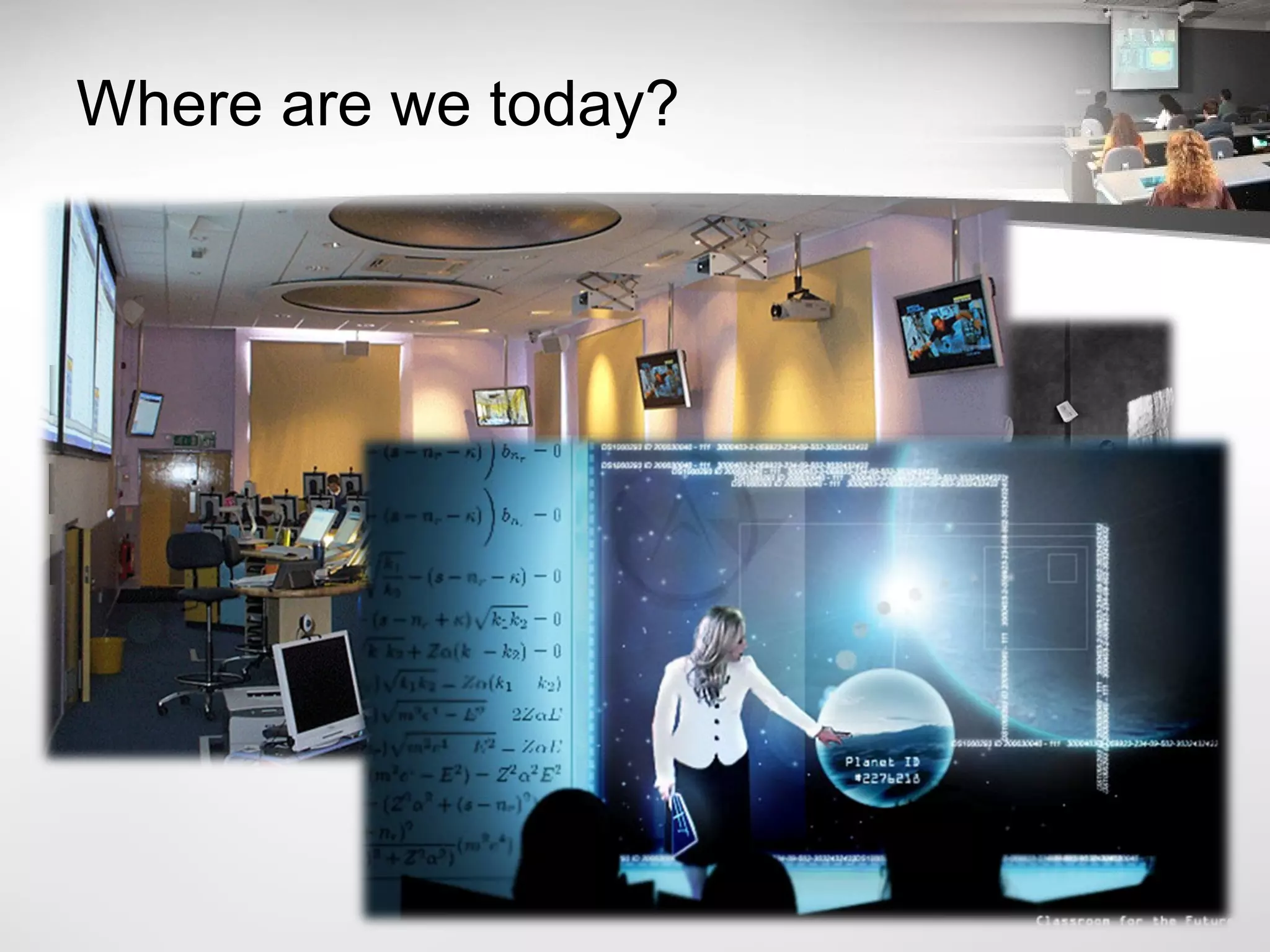
Where are we today? Not your parents  Higher Ed….
Challenges Teaching and Learning is a 24/7/365 Environment Technology Servers Bandwidth Generators, UPS, Redundant HVAC, Fire Suppression Firewalls, IPS/IDS Personnel Server & Application Support Helpdesk (min 12/7):  REDUNDANCY AT ALL LAYERS
Major Financial Issues Finance:  Reduction in budget Reduction in personnel Reduction in projects in pipeline due to above Reduction in training Reduction in travel Reduction in R&D / New Technologies
Looking through a New Lens Why are we doing it? Do we need to continue to do it? Is it a core competency? Has it become a utility? Are we good at it? Is it on mission? Who’s My Stakeholder? What’s My ROI?
Why Are Institutions Using LMS? -Supporting an Online Program -Hybrid Learning -Augment On-Ground Courses -Informational Portal -Prospective Students: Technological Competitiveness  -Continuing Ed / Adult Learners -Multi-Institution Partnership Programs
Catalysts for Change Cost / Cost Avoidance Vendor Experience / Roadmap Product Features Support / Supportability / Resources SIS Integration
Considerations Required Core Functionality Product Learning Curve Interoperability with existing systems Integration Scalability Migration Resources required Uptime requirements
Required Core Functionality What are “Must Have’s” Multi-institutional Portal Branding Portability (offline, pda, smartphone/iphone) Adaptive Learning / Assessment Suite of Complimentary Products
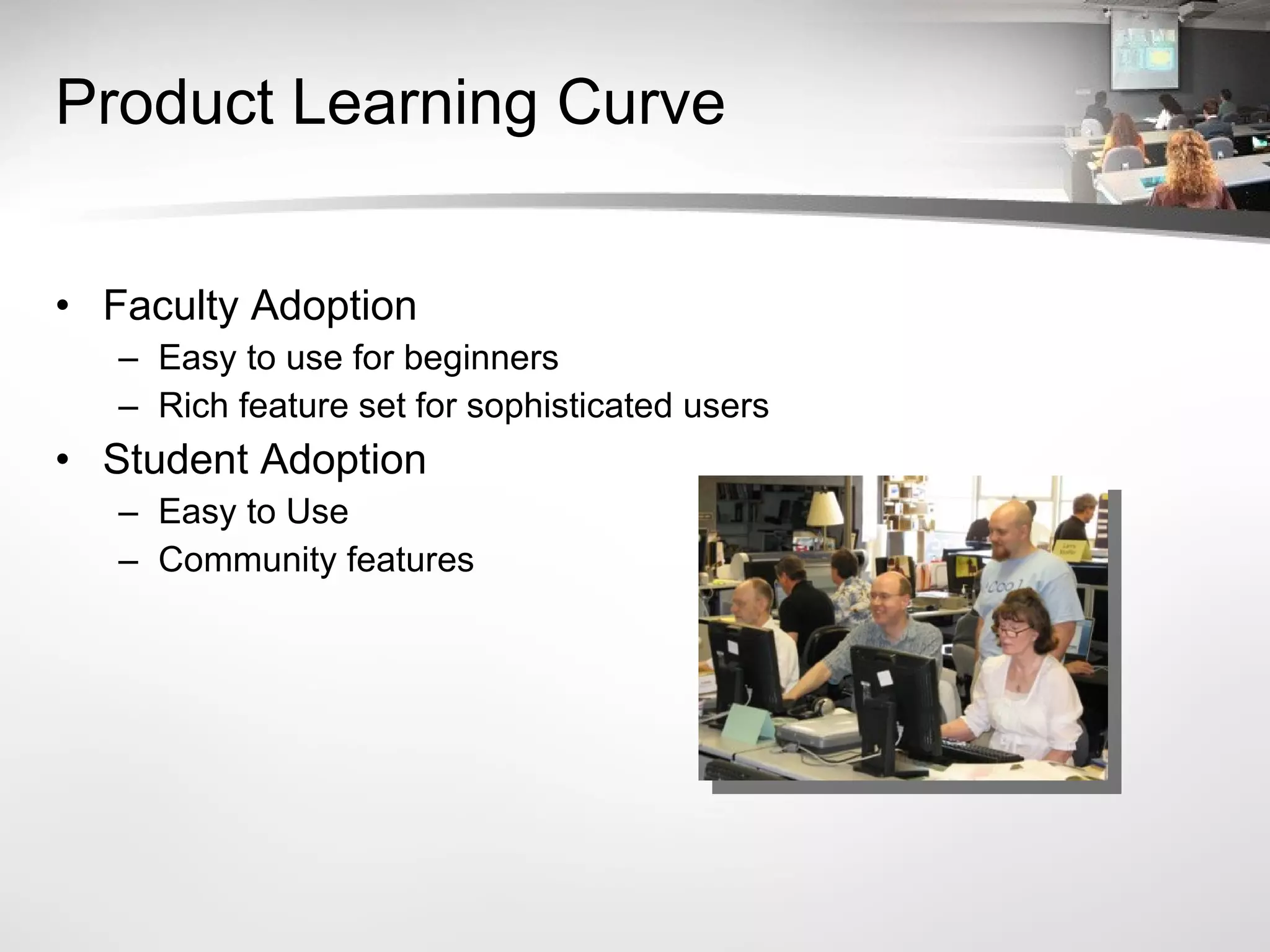
Product Learning Curve Faculty Adoption Easy to use for beginners Rich feature set for sophisticated users Student Adoption Easy to Use Community features
Interoperability Third-Party Tools (Respondus, SoftChalk, Lectora, Turn-It-In) Publisher Content Co-Production SCORM and IMS Compliant IMS (Instructional Management Systems)- specs and standards that allow system/data integration SCORM (Sharable Content Object Reference Model)- specs and standards allowing portable course content
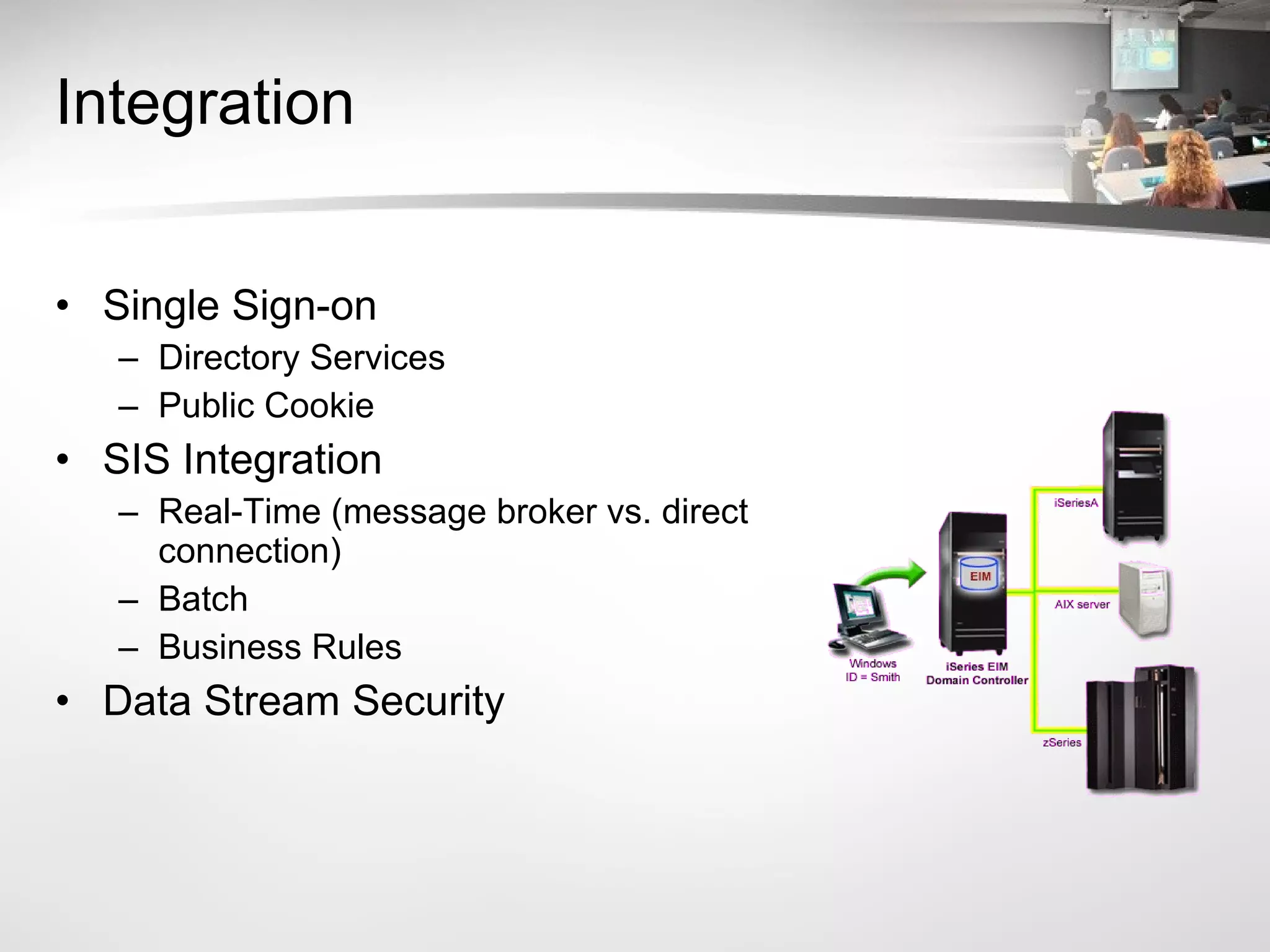
Integration Single Sign-on Directory Services Public Cookie SIS Integration Real-Time (message broker vs. direct connection) Batch Business Rules Data Stream Security
Scalability How many users are we going to connect at the same time??? Shared Multiple Institutions on same infrastructure Economies of Scale create significant cost savings May Create Limits (branding, customization, etc.) Dedicated Single Server (serves as both app and DB) Dedicated App and Database Clustered (Load-Balanced) High-Availability (Redundant)
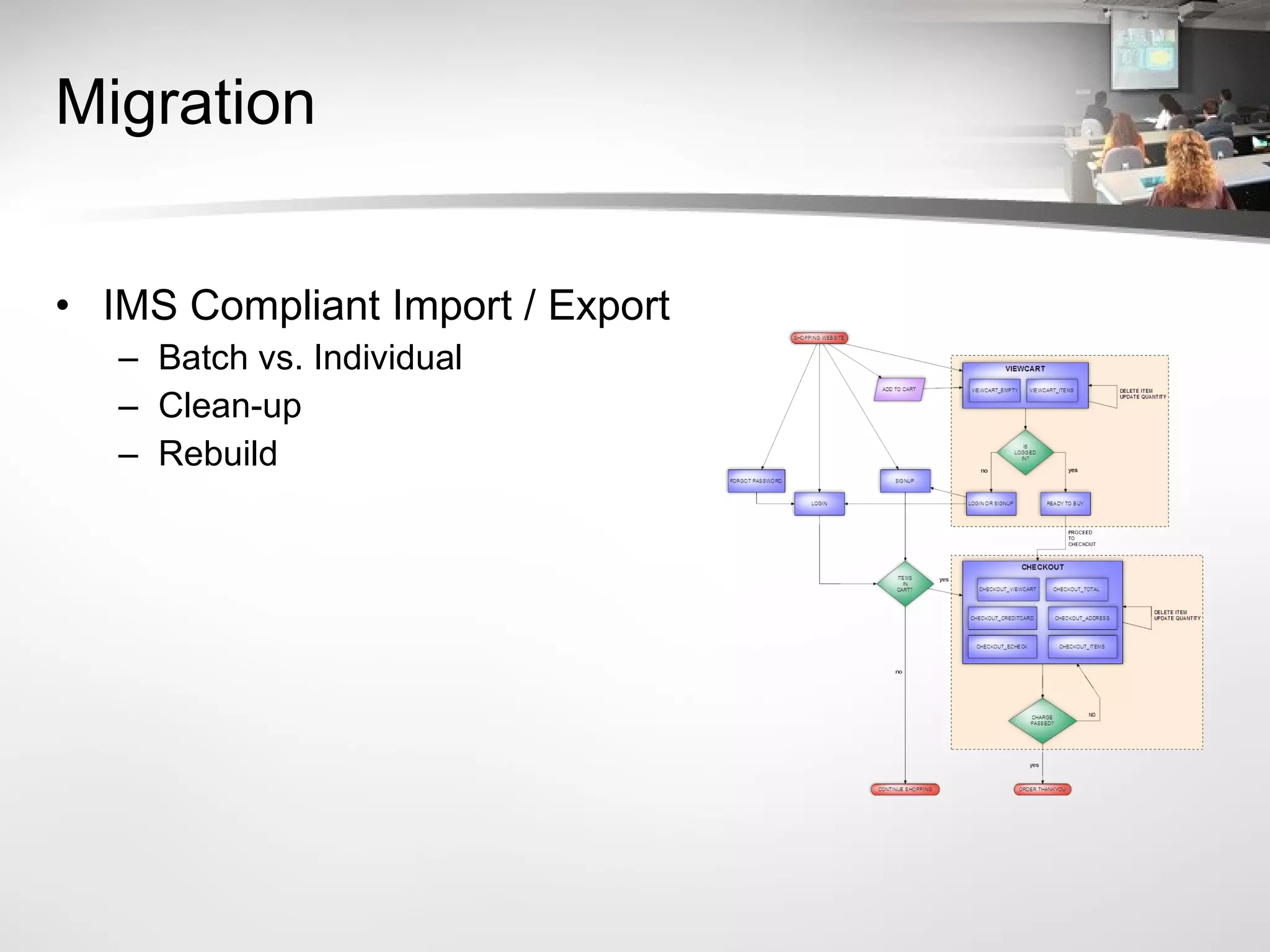
Migration IMS Compliant Import / Export Batch vs. Individual Clean-up Rebuild
Example Medium Size Online Learning
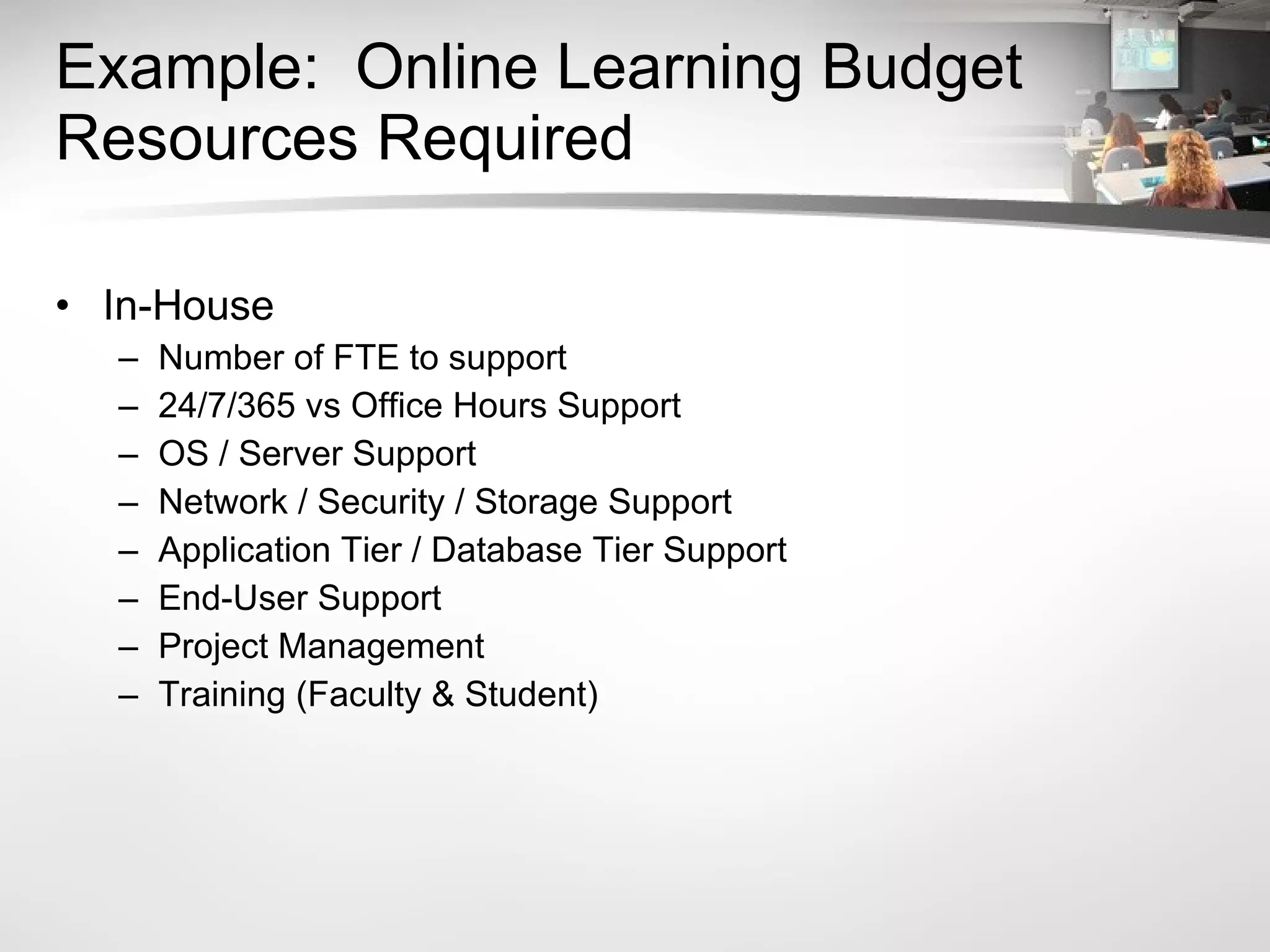
Example:  Online Learning Budget Resources Required In-House Number of FTE to support 24/7/365 vs Office Hours Support OS / Server Support Network / Security / Storage Support Application Tier / Database Tier Support End-User Support Project Management Training (Faculty & Student)
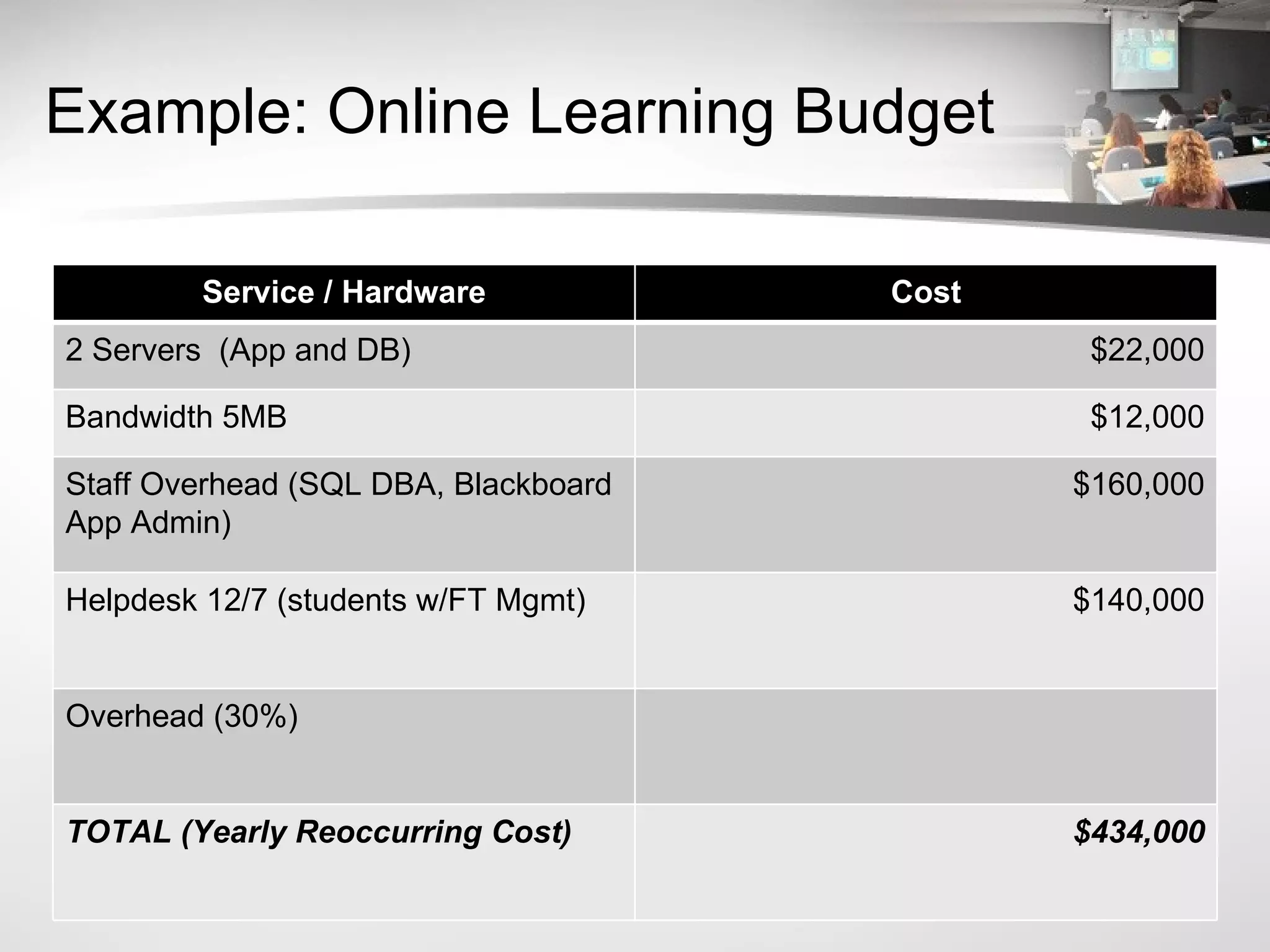
Example: Online Learning Budget  Service / Hardware Cost 2 Servers  (App and DB) $22,000 Bandwidth 5MB  $12,000 Staff Overhead (SQL DBA, Blackboard App Admin) $160,000 Helpdesk 12/7 (students w/FT Mgmt)  $140,000 Overhead (30%) TOTAL (Yearly Reoccurring Cost) $434,000
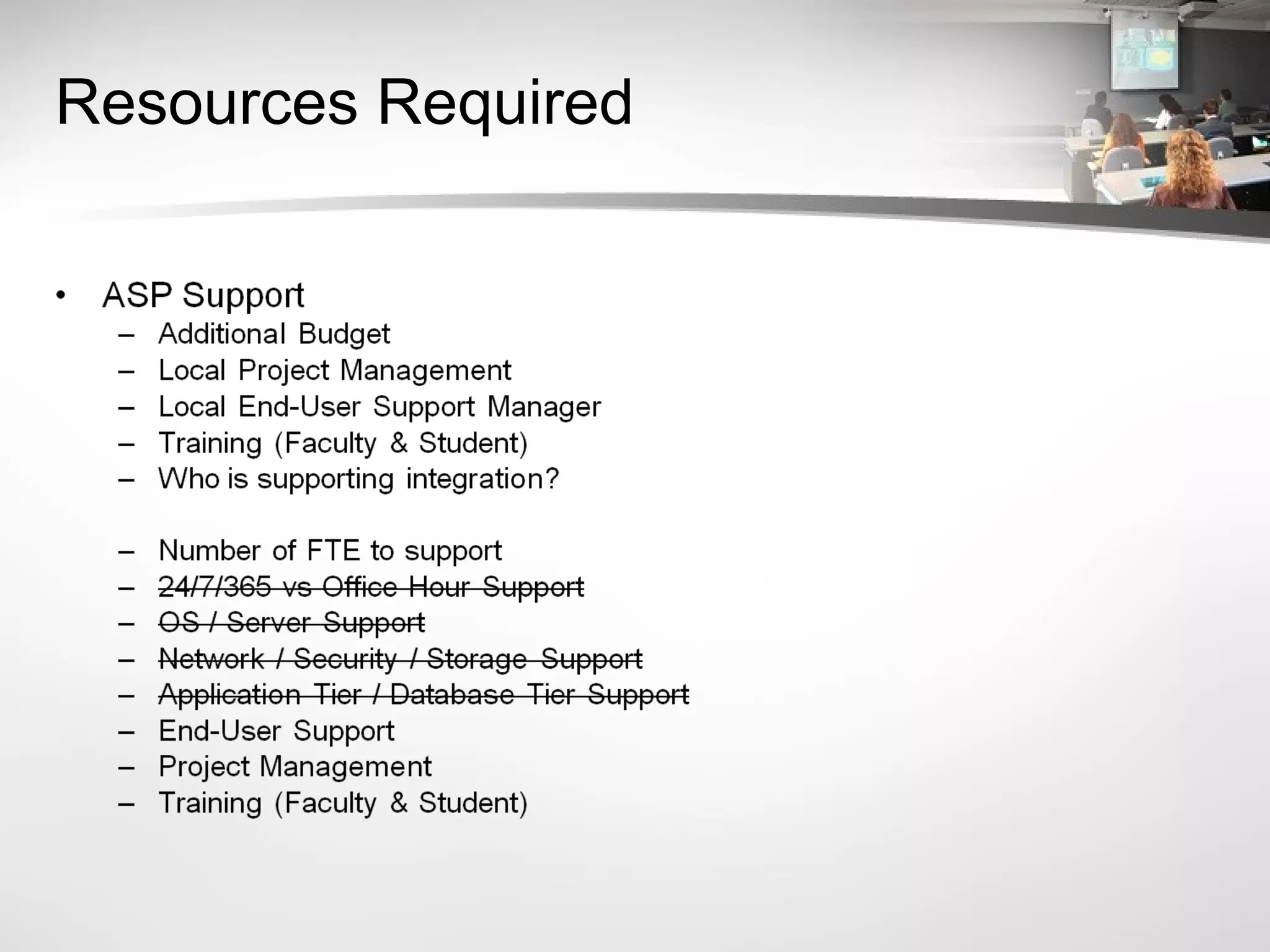
Resources Required
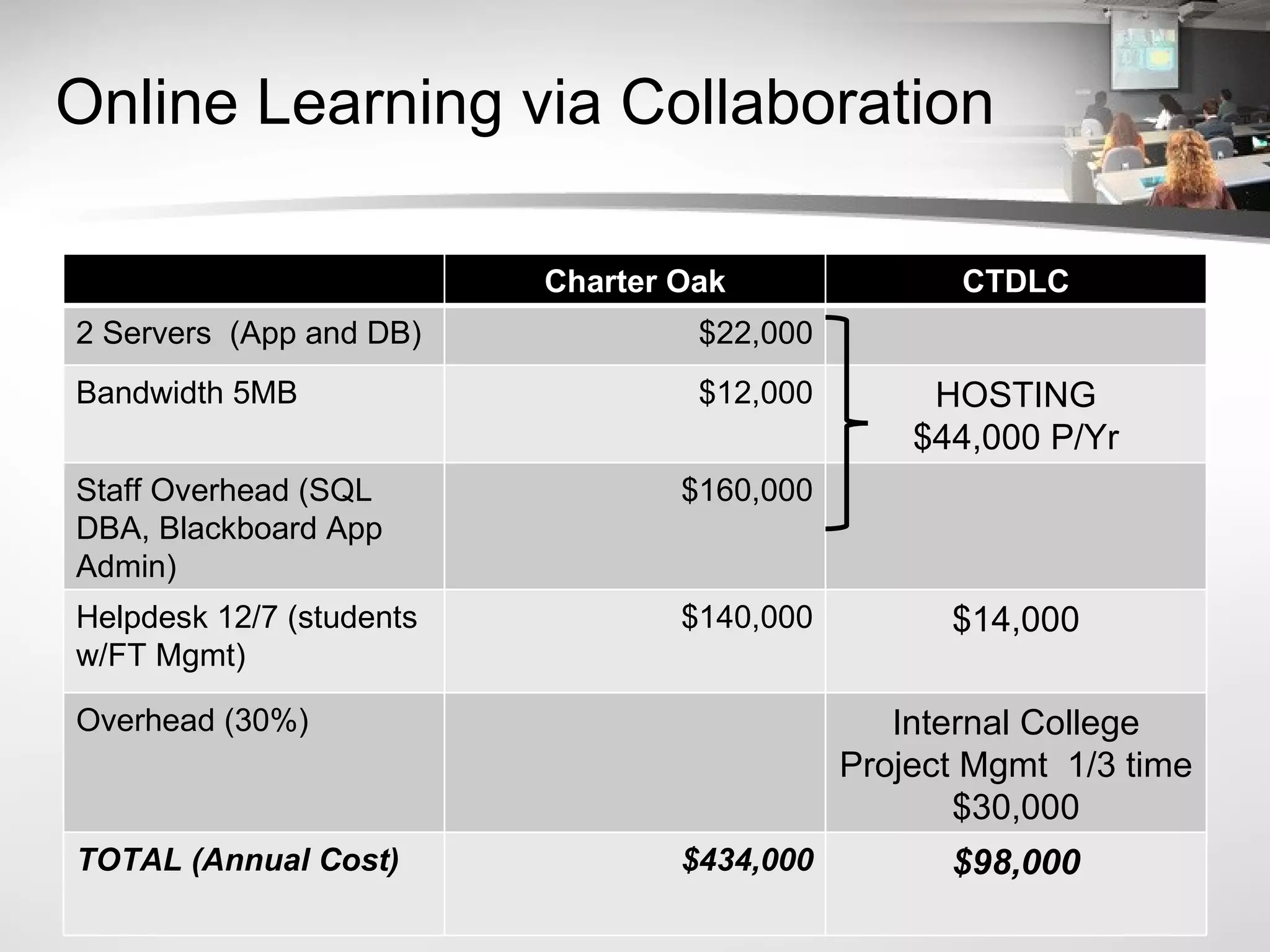
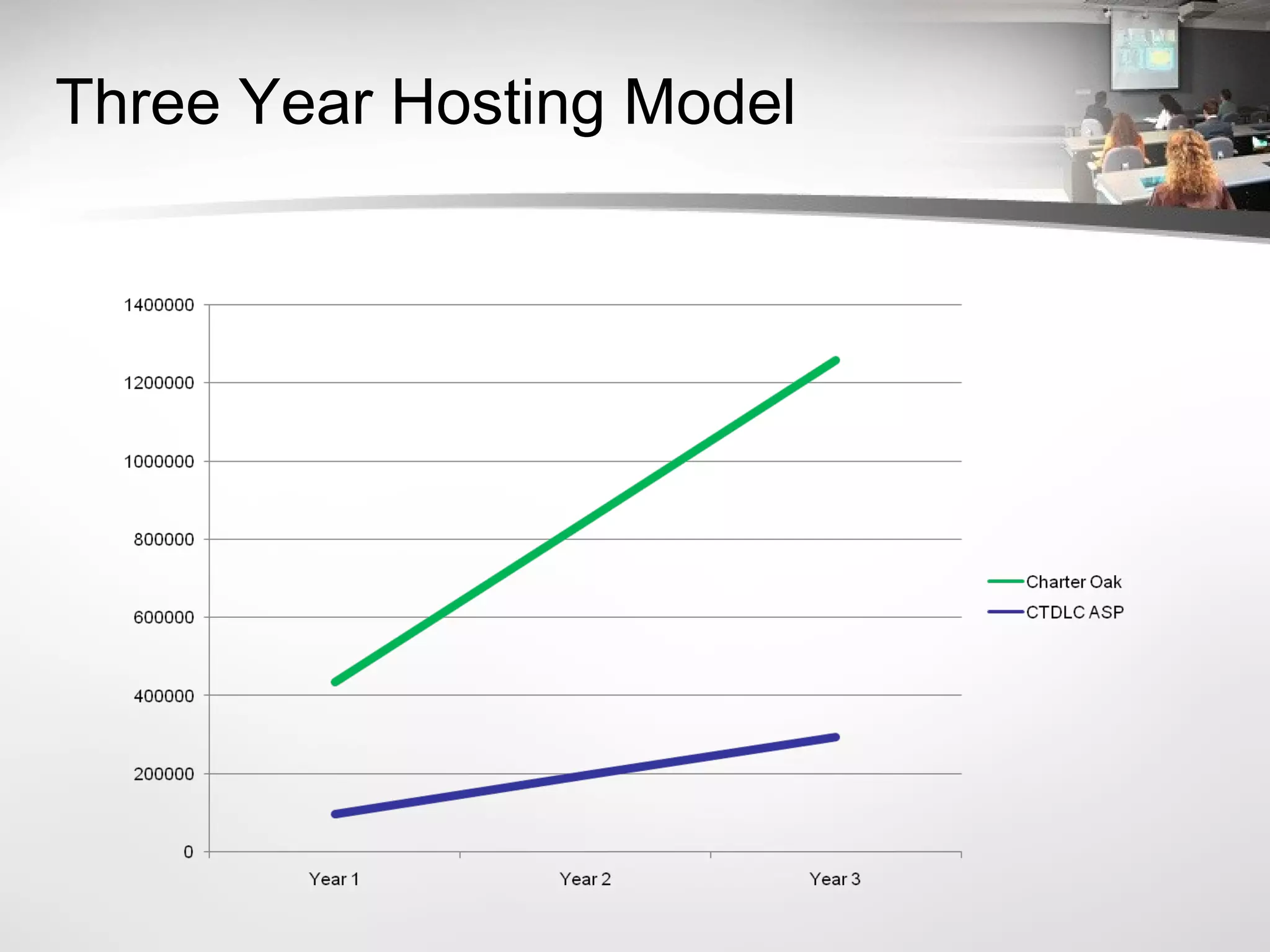
Online Learning via Collaboration Charter Oak CTDLC 2 Servers  (App and DB) $22,000 Bandwidth 5MB  $12,000 HOSTING $44,000 P/Yr Staff Overhead (SQL DBA, Blackboard App Admin) $160,000 Helpdesk 12/7 (students w/FT Mgmt)  $140,000 $14,000 Overhead (30%) Internal College Project Mgmt  1/3 time $30,000 TOTAL (Annual Cost) $434,000 $98,000
ASP / Collaboration   Value Proposition Bought into existing LMS Personnel (1/4 time) Upgraded Service/Feature – Reduced License Cost Received Services and uptime guarantee 99.5% or greater Contracted with a 7 day 14 hr per day helpdesk – minimal training and knowledge transfer. Amortized startup costs across length of LMS contract Contractual ability to increment contract growth with usage growth
Three Year Hosting Model
Between Now and Then
Governance Structure Do we have a good governance structure Low cost / no cost time to identify and adopt Fringe Benefits Will help as budget cuts need to be made Sets up structure for when economy shifts
Decision Committee Create an Inclusive decision committee Can’t solely be an Academics or IT decision Diverse group can create campus-wide buy-in Survey all your potential users Document your research Share the findings with the stakeholders Let them understand the ‘whys’: benefits, risks, etc. Create a Scoring Rubric
Faculty Concerns:  Beyond the RFP Because these technologies have such a deep impact on the texture of research, teaching and learning at colleges and universities they can't be treated as a simple commodity to be obtained from the cheapest provider.  Fundamental questions  Encourage communities of innovation Partner with communities who strive to keep this innovation  Can the activities of research, teaching and learning can be properly advanced and sometimes improved through peer partnerships and collaboration
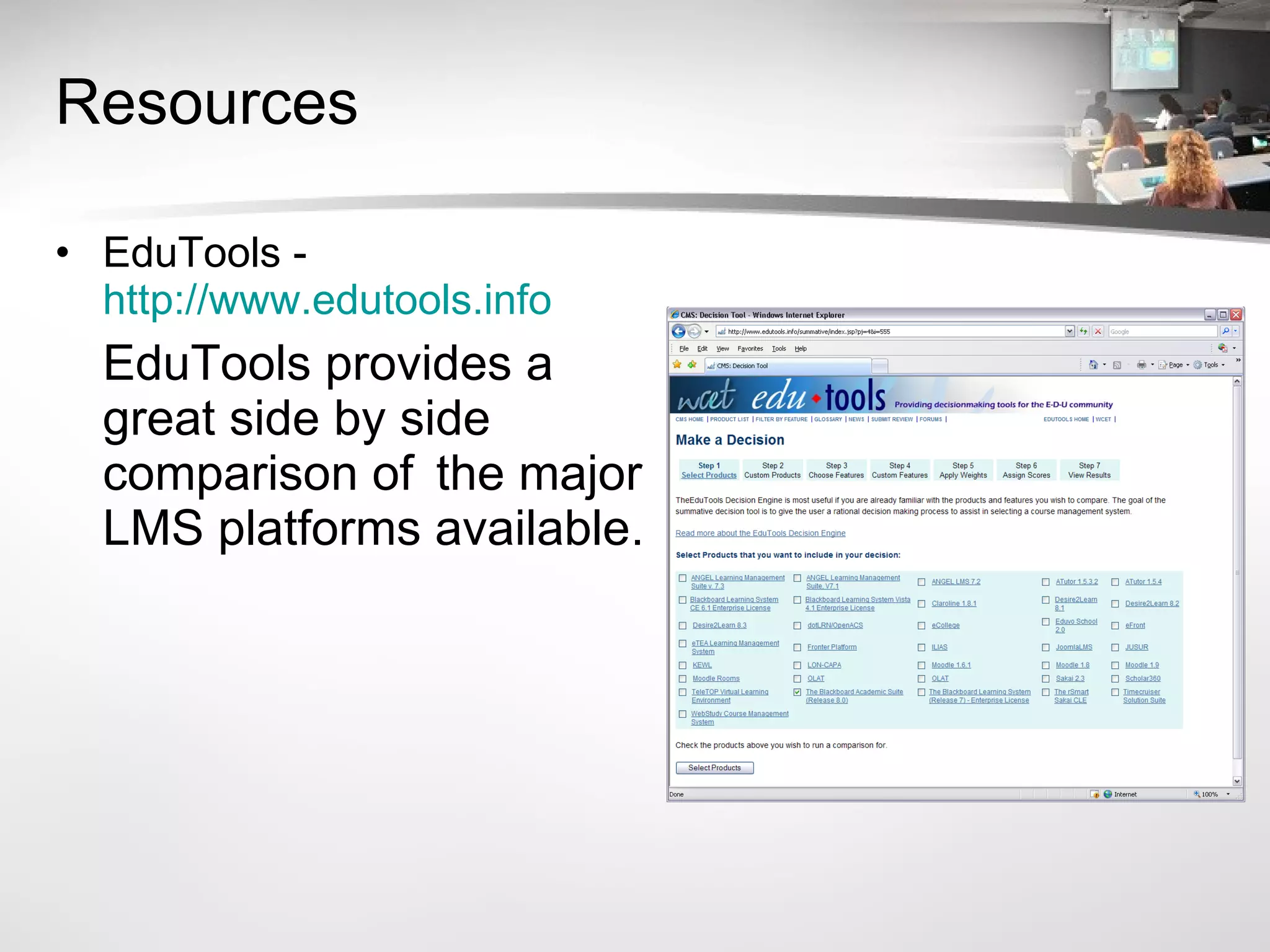
Resources EduTools -  http://www.edutools.info EduTools provides a great side by side comparison of  the major LMS platforms available.
Resources Sample/Sandbox Courses  Request access to sample courses from vendors Gauge learning curve Experience default tool set Test content imports Test compatibilities
Resources Peer to Peer Discussion Talk with other institutions running the LMS platform Discuss the decision process they used to decide Discuss their implementation process Discuss their implementation challenges Discuss the short-comings they have discovered with the product Discuss integration challenges
Indirectly Expensive Evaluate Direct Costs Servers Personnel Bandwidth Storage Indirect Costs Management overhead Contract management Training Space “… Account for the amount of time our programmers and system admins spend helping a vendor refine their technology through QA cycles and bug-reporting”
Challenges with Open Source “ Using” vs. “Contributing” Have R&D resources available to pour into a community source project Lack of “Safety Net” – 1.800.Microsoft Community Direction
For anything your looking for Evaluate Current Position What is current tool What is current tool’s roadmap What is path for upgrade What are support and license costs Room for Open-Source Solution? Can you renegotiate your existing license?
  Managing the Funding Gap  Source Externally  The movement to use alternative sources to provide IT services was already underway before the economic downturn began. Open-source collaborations and the outsourcing of student e-mail are two prime examples.  Many expressed belief that budget cuts would hasten their need to engage in collaborations with other institutions  or source services to the cloud. They also saw the crisis as giving them more license to experiment and perhaps take some risks by adopting services or service delivery methods that are less proven.  Attendees reported that their agendas for collaboration were already expanding. Several institutions were entering into regional purchasing collaboratives. Others reported that they were considering arrangements to manage an application for another institution in their area.  Managing the Funding Gap:  How Today’s Economic Downturn Is Impacting IT Leaders and Their Organizations  An EDUCAUSE White Paper from the December 2008 ECAR Symposium  Philip J. Goldstein  January 2009

LMS: Selecting the Right Tool

  • 1.
    LMS: Selectingthe Right Tool Kevin Corcoran Assoc. Executive Director CT Distance Learning Consortium George F. Claffey Jr. Chief Information Officer CTDLC & Charter Oak State College
  • 2.
    CTDLC: WhoWe Are Consortium, 50+ Members 10 Years Experience providing eLearning Experience in Northeast Non-Profit, State Agency, Higher-Ed Space
  • 3.
    CTDLC: WhatWe Do Provide eLearning services Implementation, project management, and best practices consulting Instructional Design Tech Support (Helpdesk) SIS Integration Remote Management / Hosted Services Custom Development
  • 4.
    Who We SupportHigher Education 2-Year & 4-Year Public & Private K-12 and Adult Ed Program Non-Profits State Agencies Corporate (training)
  • 5.
    What Do WeSupport Learning Management Systems Angel Moodle Blackboard Vista Blackboard Enterprise Edition Ancillary Products Adobe Connect Elluminate Echo 360 iTunes U Misc. Web 2.0 (Wikis, Blogs, etc.)
  • 6.
    What We’ve DevelopedePortfolio.org Project builder and assessment module Build portfolios for academic, career, personal User-Centered, flexible, reflective, goal oriented and career centered eTutoring.org Collaborative online tutoring platform Manage Tutors, Writing Lab, Synchronous Workspaces, Resources Centrally hosted, reporting tools, LMS Integration, Security Virtual Learning Center CT State Virtual High School
  • 7.
    Where are wetoday? Not your parents Higher Ed….
  • 8.
    Challenges Teaching andLearning is a 24/7/365 Environment Technology Servers Bandwidth Generators, UPS, Redundant HVAC, Fire Suppression Firewalls, IPS/IDS Personnel Server & Application Support Helpdesk (min 12/7): REDUNDANCY AT ALL LAYERS
  • 9.
    Major Financial IssuesFinance: Reduction in budget Reduction in personnel Reduction in projects in pipeline due to above Reduction in training Reduction in travel Reduction in R&D / New Technologies
  • 10.
    Looking through aNew Lens Why are we doing it? Do we need to continue to do it? Is it a core competency? Has it become a utility? Are we good at it? Is it on mission? Who’s My Stakeholder? What’s My ROI?
  • 11.
    Why Are InstitutionsUsing LMS? -Supporting an Online Program -Hybrid Learning -Augment On-Ground Courses -Informational Portal -Prospective Students: Technological Competitiveness -Continuing Ed / Adult Learners -Multi-Institution Partnership Programs
  • 12.
    Catalysts for ChangeCost / Cost Avoidance Vendor Experience / Roadmap Product Features Support / Supportability / Resources SIS Integration
  • 13.
    Considerations Required CoreFunctionality Product Learning Curve Interoperability with existing systems Integration Scalability Migration Resources required Uptime requirements
  • 14.
    Required Core FunctionalityWhat are “Must Have’s” Multi-institutional Portal Branding Portability (offline, pda, smartphone/iphone) Adaptive Learning / Assessment Suite of Complimentary Products
  • 15.
    Product Learning CurveFaculty Adoption Easy to use for beginners Rich feature set for sophisticated users Student Adoption Easy to Use Community features
  • 16.
    Interoperability Third-Party Tools(Respondus, SoftChalk, Lectora, Turn-It-In) Publisher Content Co-Production SCORM and IMS Compliant IMS (Instructional Management Systems)- specs and standards that allow system/data integration SCORM (Sharable Content Object Reference Model)- specs and standards allowing portable course content
  • 17.
    Integration Single Sign-onDirectory Services Public Cookie SIS Integration Real-Time (message broker vs. direct connection) Batch Business Rules Data Stream Security
  • 18.
    Scalability How manyusers are we going to connect at the same time??? Shared Multiple Institutions on same infrastructure Economies of Scale create significant cost savings May Create Limits (branding, customization, etc.) Dedicated Single Server (serves as both app and DB) Dedicated App and Database Clustered (Load-Balanced) High-Availability (Redundant)
  • 19.
    Migration IMS CompliantImport / Export Batch vs. Individual Clean-up Rebuild
  • 20.
    Example Medium SizeOnline Learning
  • 21.
    Example: OnlineLearning Budget Resources Required In-House Number of FTE to support 24/7/365 vs Office Hours Support OS / Server Support Network / Security / Storage Support Application Tier / Database Tier Support End-User Support Project Management Training (Faculty & Student)
  • 22.
    Example: Online LearningBudget Service / Hardware Cost 2 Servers (App and DB) $22,000 Bandwidth 5MB $12,000 Staff Overhead (SQL DBA, Blackboard App Admin) $160,000 Helpdesk 12/7 (students w/FT Mgmt) $140,000 Overhead (30%) TOTAL (Yearly Reoccurring Cost) $434,000
  • 23.
  • 24.
    Online Learning viaCollaboration Charter Oak CTDLC 2 Servers (App and DB) $22,000 Bandwidth 5MB $12,000 HOSTING $44,000 P/Yr Staff Overhead (SQL DBA, Blackboard App Admin) $160,000 Helpdesk 12/7 (students w/FT Mgmt) $140,000 $14,000 Overhead (30%) Internal College Project Mgmt 1/3 time $30,000 TOTAL (Annual Cost) $434,000 $98,000
  • 25.
    ASP / Collaboration Value Proposition Bought into existing LMS Personnel (1/4 time) Upgraded Service/Feature – Reduced License Cost Received Services and uptime guarantee 99.5% or greater Contracted with a 7 day 14 hr per day helpdesk – minimal training and knowledge transfer. Amortized startup costs across length of LMS contract Contractual ability to increment contract growth with usage growth
  • 26.
  • 27.
  • 28.
    Governance Structure Dowe have a good governance structure Low cost / no cost time to identify and adopt Fringe Benefits Will help as budget cuts need to be made Sets up structure for when economy shifts
  • 29.
    Decision Committee Createan Inclusive decision committee Can’t solely be an Academics or IT decision Diverse group can create campus-wide buy-in Survey all your potential users Document your research Share the findings with the stakeholders Let them understand the ‘whys’: benefits, risks, etc. Create a Scoring Rubric
  • 30.
    Faculty Concerns: Beyond the RFP Because these technologies have such a deep impact on the texture of research, teaching and learning at colleges and universities they can't be treated as a simple commodity to be obtained from the cheapest provider. Fundamental questions Encourage communities of innovation Partner with communities who strive to keep this innovation Can the activities of research, teaching and learning can be properly advanced and sometimes improved through peer partnerships and collaboration
  • 31.
    Resources EduTools - http://www.edutools.info EduTools provides a great side by side comparison of the major LMS platforms available.
  • 32.
    Resources Sample/Sandbox Courses Request access to sample courses from vendors Gauge learning curve Experience default tool set Test content imports Test compatibilities
  • 33.
    Resources Peer toPeer Discussion Talk with other institutions running the LMS platform Discuss the decision process they used to decide Discuss their implementation process Discuss their implementation challenges Discuss the short-comings they have discovered with the product Discuss integration challenges
  • 34.
    Indirectly Expensive EvaluateDirect Costs Servers Personnel Bandwidth Storage Indirect Costs Management overhead Contract management Training Space “… Account for the amount of time our programmers and system admins spend helping a vendor refine their technology through QA cycles and bug-reporting”
  • 35.
    Challenges with OpenSource “ Using” vs. “Contributing” Have R&D resources available to pour into a community source project Lack of “Safety Net” – 1.800.Microsoft Community Direction
  • 36.
    For anything yourlooking for Evaluate Current Position What is current tool What is current tool’s roadmap What is path for upgrade What are support and license costs Room for Open-Source Solution? Can you renegotiate your existing license?
  • 37.
    Managingthe Funding Gap Source Externally The movement to use alternative sources to provide IT services was already underway before the economic downturn began. Open-source collaborations and the outsourcing of student e-mail are two prime examples. Many expressed belief that budget cuts would hasten their need to engage in collaborations with other institutions or source services to the cloud. They also saw the crisis as giving them more license to experiment and perhaps take some risks by adopting services or service delivery methods that are less proven. Attendees reported that their agendas for collaboration were already expanding. Several institutions were entering into regional purchasing collaboratives. Others reported that they were considering arrangements to manage an application for another institution in their area. Managing the Funding Gap: How Today’s Economic Downturn Is Impacting IT Leaders and Their Organizations An EDUCAUSE White Paper from the December 2008 ECAR Symposium Philip J. Goldstein January 2009