HOW
DEMOGRAPHIC
INFORMATION
IS USED FOR
PLANNING
IMPORTANCE OF
DEMOGRAPHY IN
PLANNING
Demo stands for “People” and Graphy is
the “Study/ Writing”.
Basically Demography is the study of human
population; their size, composition, and
distribution across space and the process
through which populations change.
Birth, Death and Migration are the “ BIG
THREE ” of Demography.
DEMOGRAPHIC
PROCESS
FERTILITY
MORTALITY
MARRIAGE
MIGRATION
SOCIAL
MOBILITY
Demographic Process observes intimately
the structure, size and distribution of the
population by the above five studies.
SIZE – It is the number of persons in the
population.
STRUCTURE – Distribution of population
among its sex and age groupings.
DISTRIBUTION – The arrangement of the
population in space at a given time.
For planners, census information is used
in just about all planning decisions.
Census provides information like age, sex
distribution, household composition their size
etc.
The census of housing allows planners to
access changes in the quality of housing and
related facilities and plan for future housing
needs.
From Census, we get some vital aspects
of demography, which are essential elements
for planning a city.
POPULATION STUDY
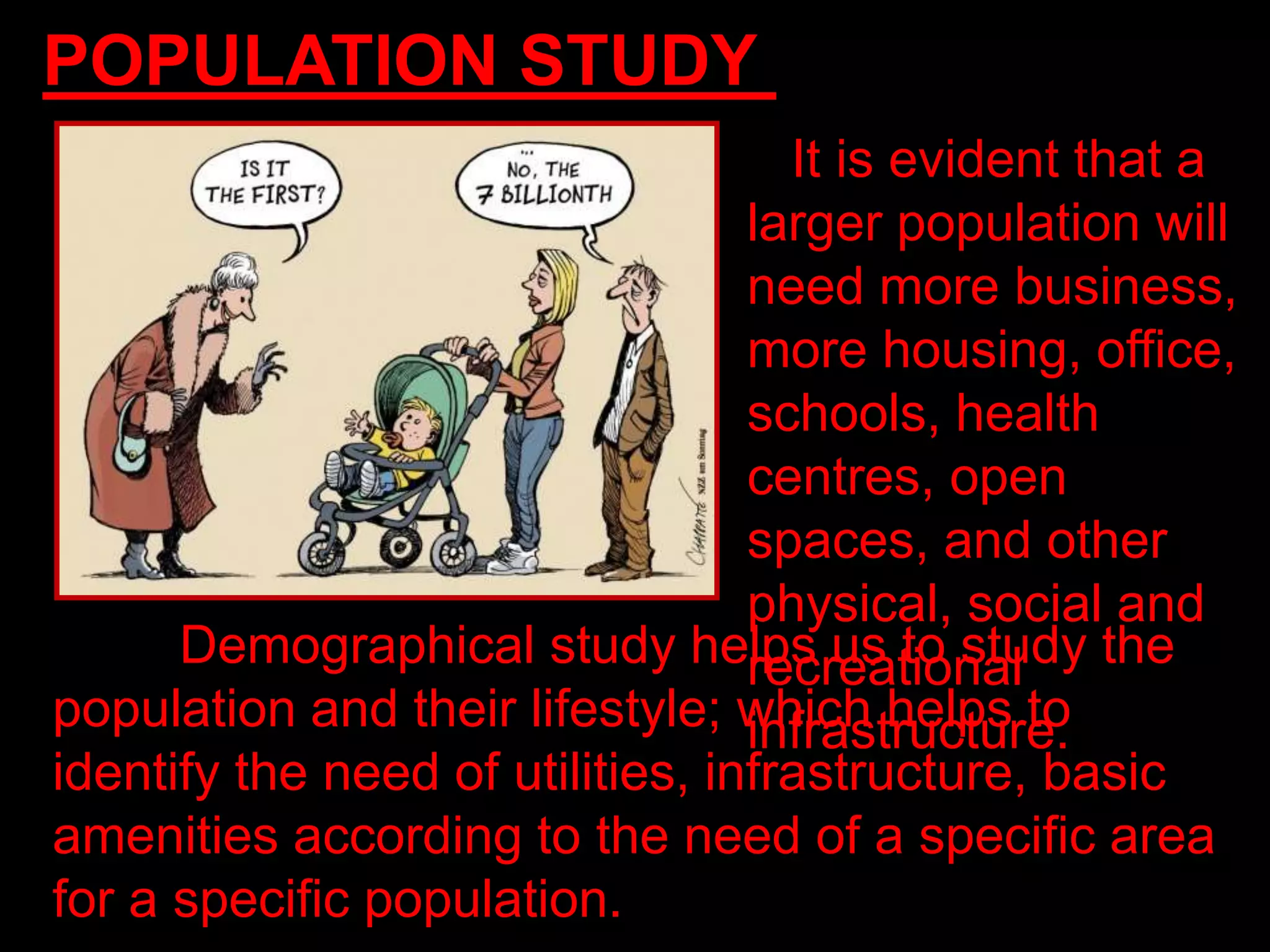
It is evident that a
larger population will
need more business,
more housing, office,
schools, health
centres, open
spaces, and other
physical, social and
recreational
infrastructure.
Demographical study helps us to study the
population and their lifestyle; which helps to
identify the need of utilities, infrastructure, basic
amenities according to the need of a specific area
for a specific population.
POPULATION DENSITY
Some times it is
observed that
population density in
a study area is a big
problem rather than
high population.
It is due to higher
density in a
respectively smaller
area with limited
facilities.
Population density can grow and shrink a
particular city, and can result vertical or horizontal
growth of that city.
Hence density study makes planners aware
of the future of a particular city and some
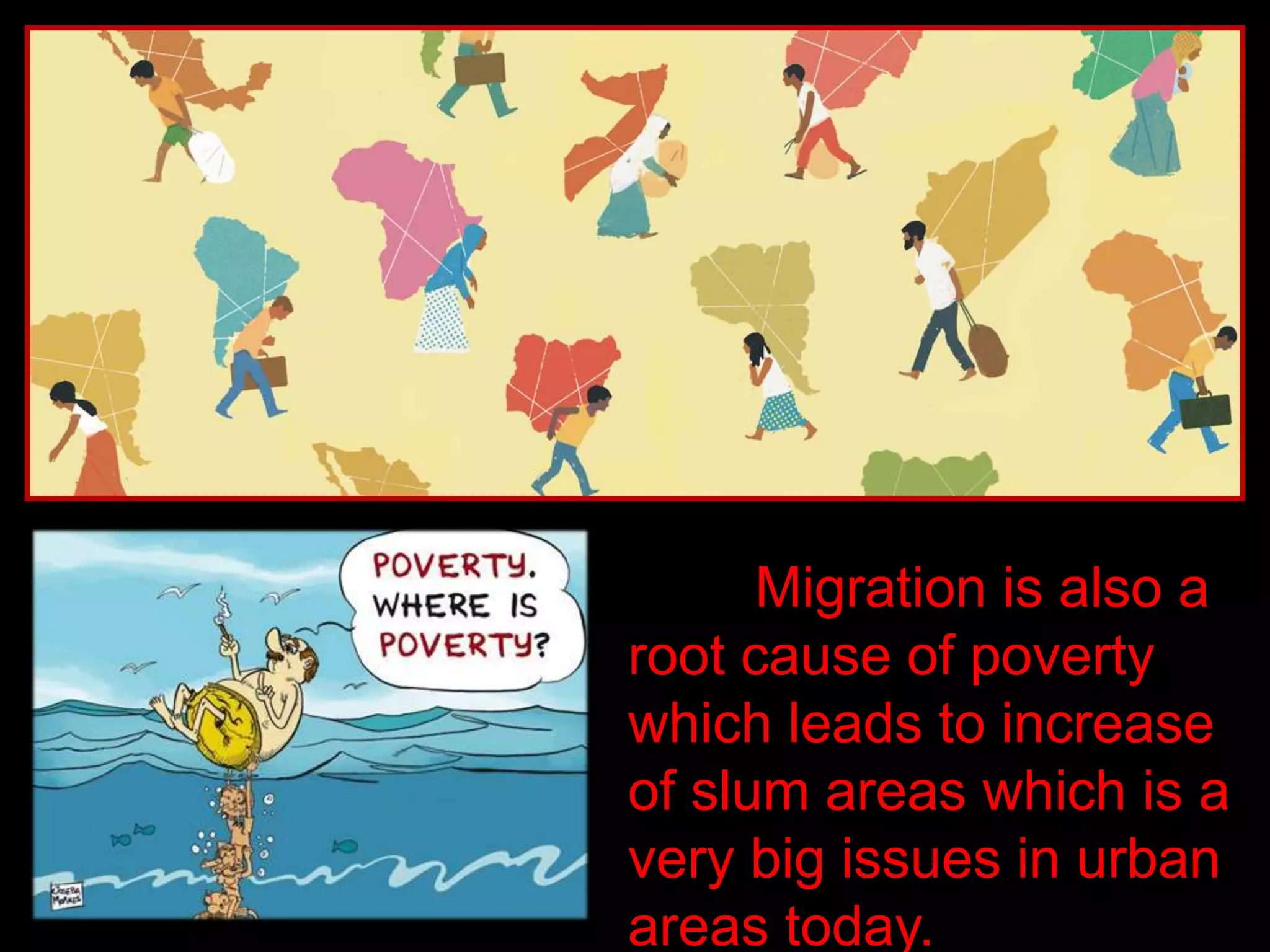
Migration is also a
root cause of poverty
which leads to increase
of slum areas which is a
very big issues in urban
areas today.
AGE PATTERN
Age pattern study is basically related with
fertility, mortality, infant mortality, marriage etc.
and driven by natural, environmental characters
also.
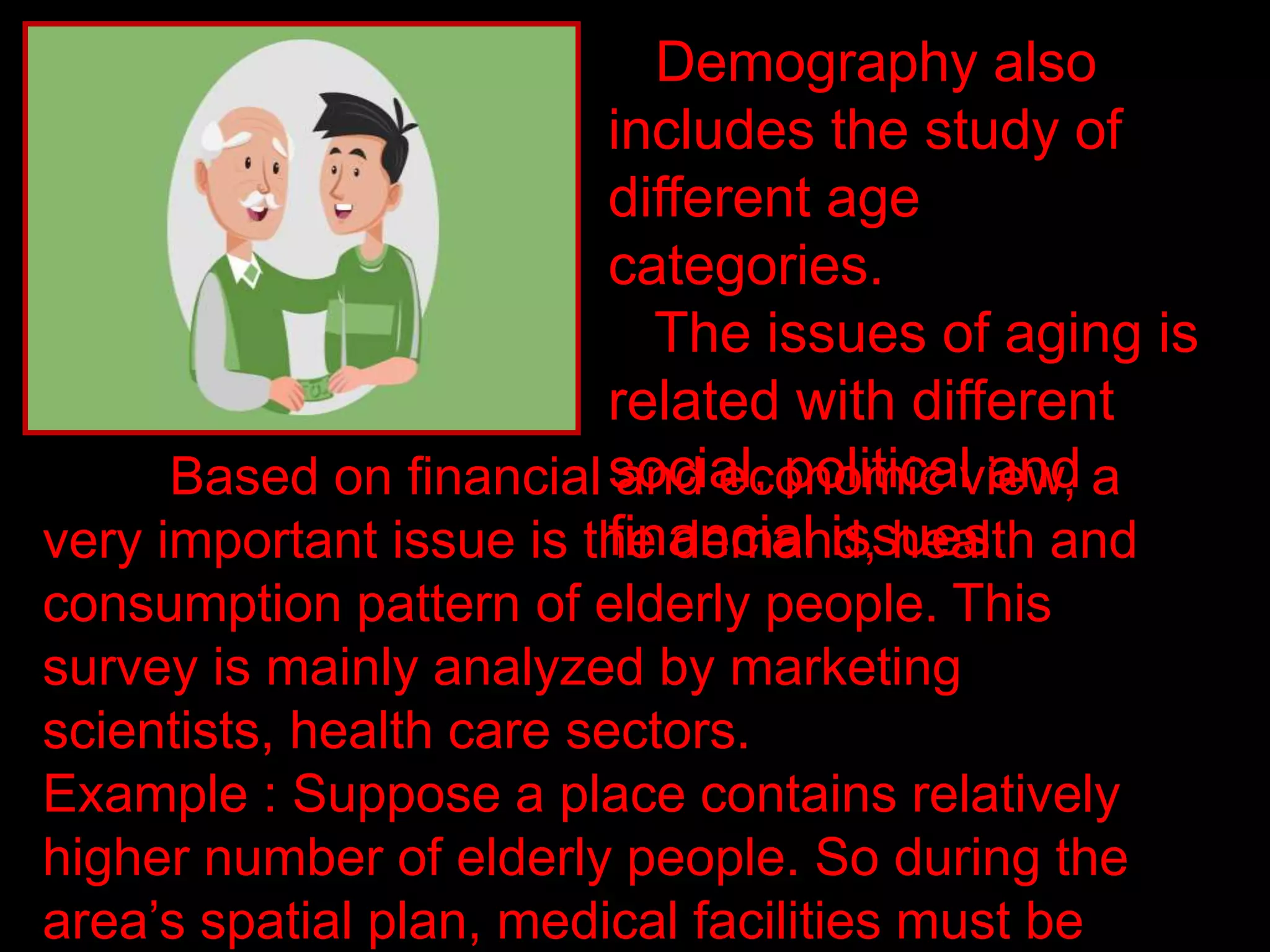
Demography also
includes the study of
different age
categories.
The issues of aging is
related with different
social, political and
financial issues.
Based on financial and economic view, a
very important issue is the demand, health and
consumption pattern of elderly people. This
survey is mainly analyzed by marketing
scientists, health care sectors.
Example : Suppose a place contains relatively
higher number of elderly people. So during the
area’s spatial plan, medical facilities must be
Likewise in an area where children are more
in number, must provides with parks, schools,
playgrounds etc.
THANK YOU
- URMIKANT MANINAND

Demography in planning

  • 1.
  • 2.
    Demo stands for“People” and Graphy is the “Study/ Writing”. Basically Demography is the study of human population; their size, composition, and distribution across space and the process through which populations change. Birth, Death and Migration are the “ BIG THREE ” of Demography.
  • 3.
  • 4.
    Demographic Process observesintimately the structure, size and distribution of the population by the above five studies. SIZE – It is the number of persons in the population. STRUCTURE – Distribution of population among its sex and age groupings. DISTRIBUTION – The arrangement of the population in space at a given time.
  • 5.
    For planners, censusinformation is used in just about all planning decisions. Census provides information like age, sex distribution, household composition their size etc. The census of housing allows planners to access changes in the quality of housing and related facilities and plan for future housing needs. From Census, we get some vital aspects of demography, which are essential elements for planning a city.
  • 6.
    POPULATION STUDY It isevident that a larger population will need more business, more housing, office, schools, health centres, open spaces, and other physical, social and recreational infrastructure. Demographical study helps us to study the population and their lifestyle; which helps to identify the need of utilities, infrastructure, basic amenities according to the need of a specific area for a specific population.
  • 7.
    POPULATION DENSITY Some timesit is observed that population density in a study area is a big problem rather than high population. It is due to higher density in a respectively smaller area with limited facilities. Population density can grow and shrink a particular city, and can result vertical or horizontal growth of that city. Hence density study makes planners aware of the future of a particular city and some
  • 9.
    Migration is alsoa root cause of poverty which leads to increase of slum areas which is a very big issues in urban areas today.
  • 10.
    AGE PATTERN Age patternstudy is basically related with fertility, mortality, infant mortality, marriage etc. and driven by natural, environmental characters also.
  • 11.
    Demography also includes thestudy of different age categories. The issues of aging is related with different social, political and financial issues. Based on financial and economic view, a very important issue is the demand, health and consumption pattern of elderly people. This survey is mainly analyzed by marketing scientists, health care sectors. Example : Suppose a place contains relatively higher number of elderly people. So during the area’s spatial plan, medical facilities must be
  • 12.
    Likewise in anarea where children are more in number, must provides with parks, schools, playgrounds etc.
  • 13.