Dementia
Medical Aspects of Disability
October 17, 2006
DEMENTIA
• DEFINITION:
– Group of symptoms that can be caused by over
60-70 disorders.
– Syndrome which refers to progressive decline
in intellectual functioning severe enough to
interfere with person’s normal daily activities
and social relationships. (National Institute on Aging-
1995 No. 95-3782)
Dementia
– Marked by progressive declines in
• memory.
• visual-spatial relationships
• performance of routine tasks
• language and communication skills
• abstract thinking
• ability to learn and carry out mathematical
calculations.
Dementia
• Two Types:
– Reversible
– Irreversible
• Individuals must have intensive medical
physical to rule out reversible types of
dementia.
Delirium vs. Dementia
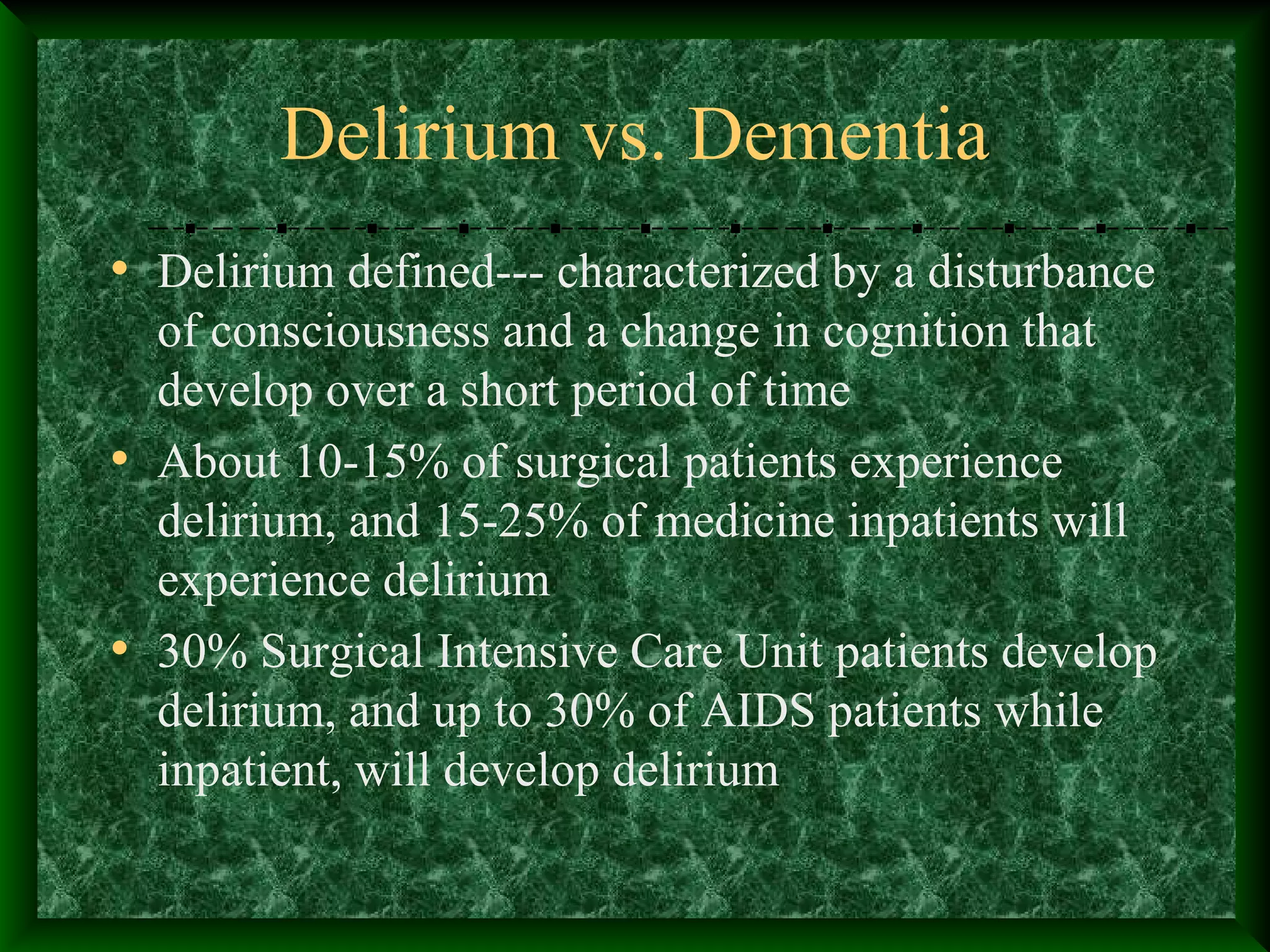
• Delirium defined--- characterized by a disturbance
of consciousness and a change in cognition that
develop over a short period of time
• About 10-15% of surgical patients experience
delirium, and 15-25% of medicine inpatients will
experience delirium
• 30% Surgical Intensive Care Unit patients develop
delirium, and up to 30% of AIDS patients while
inpatient, will develop delirium
Delirium vs. Dementia
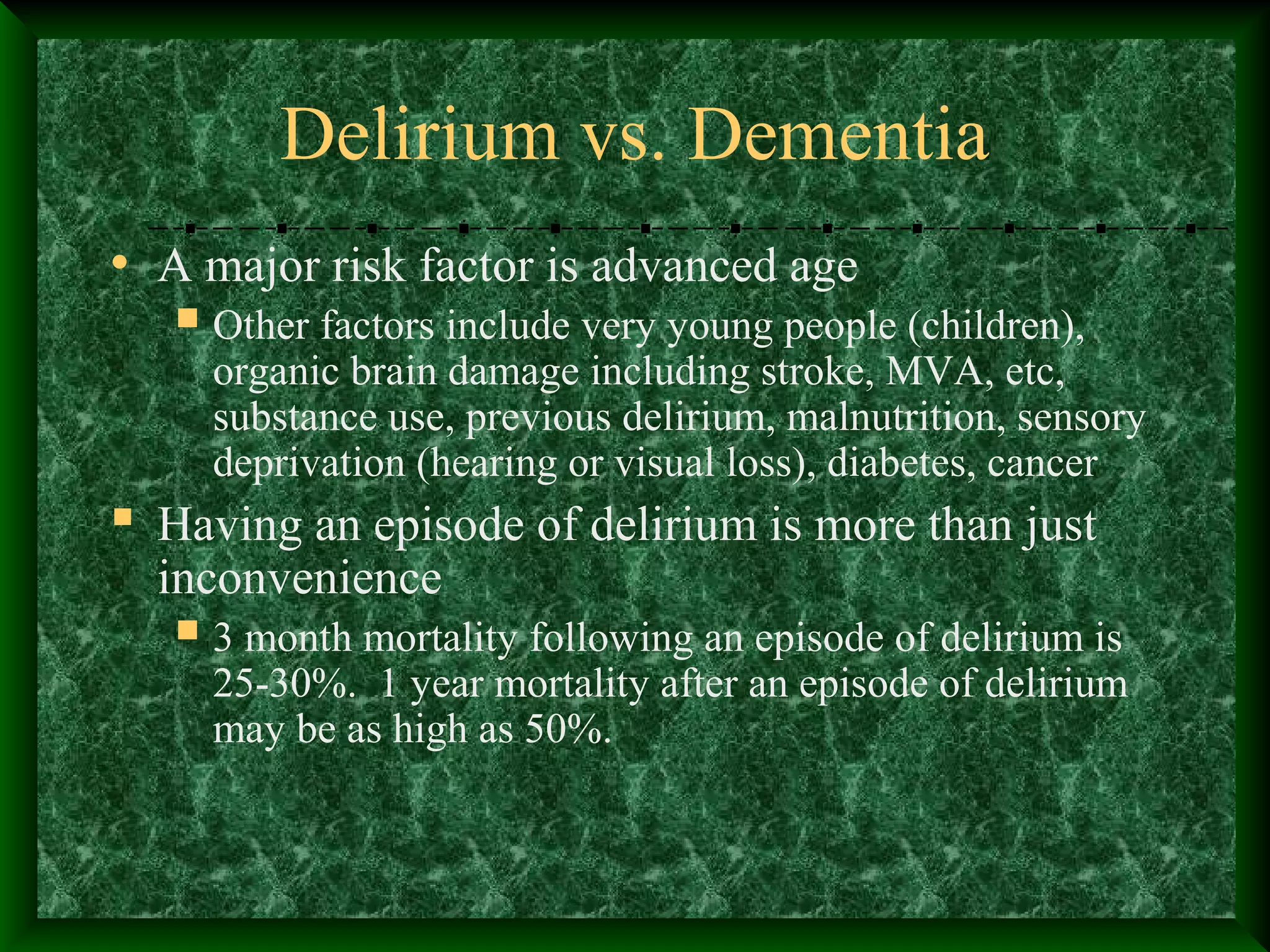
• A major risk factor is advanced age
 Other factors include very young people (children),
organic brain damage including stroke, MVA, etc,
substance use, previous delirium, malnutrition, sensory
deprivation (hearing or visual loss), diabetes, cancer
 Having an episode of delirium is more than just
inconvenience
 3 month mortality following an episode of delirium is
25-30%. 1 year mortality after an episode of delirium
may be as high as 50%.
Delirium vs. Dementia
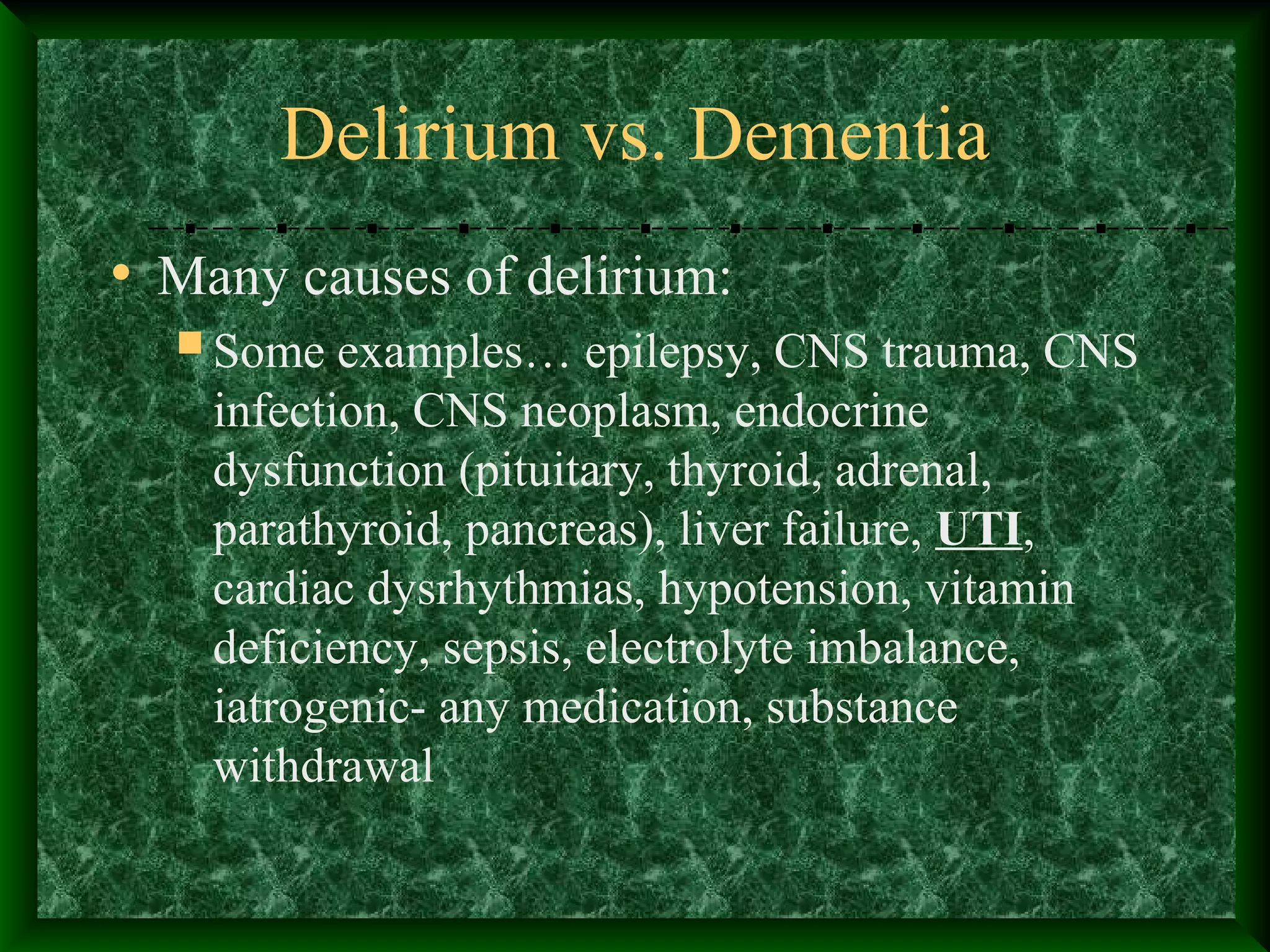
• Many causes of delirium:
Some examples… epilepsy, CNS trauma, CNS
infection, CNS neoplasm, endocrine
dysfunction (pituitary, thyroid, adrenal,
parathyroid, pancreas), liver failure, UTI,
cardiac dysrhythmias, hypotension, vitamin
deficiency, sepsis, electrolyte imbalance,
iatrogenic- any medication, substance
withdrawal
Delirium vs. Dementia
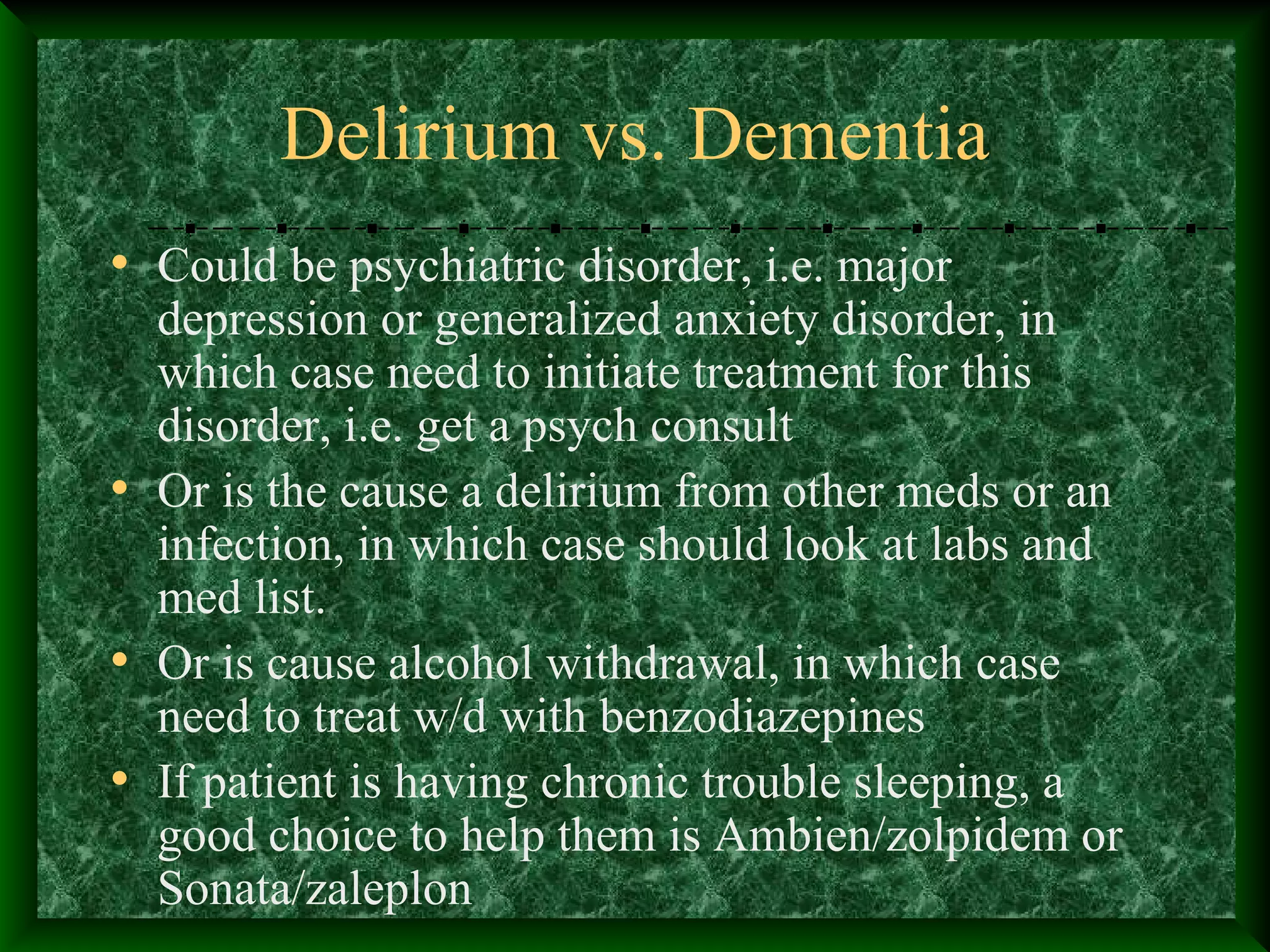
• Could be psychiatric disorder, i.e. major
depression or generalized anxiety disorder, in
which case need to initiate treatment for this
disorder, i.e. get a psych consult
• Or is the cause a delirium from other meds or an
infection, in which case should look at labs and
med list.
• Or is cause alcohol withdrawal, in which case
need to treat w/d with benzodiazepines
• If patient is having chronic trouble sleeping, a
good choice to help them is Ambien/zolpidem or
Sonata/zaleplon
Delirium vs. Dementia
• Watch for alcohol withdrawal as cause of
delirium. If elevated pulse and blood
pressure, see elevated MCV, and patient
begins to act bizarre, talk to family if at all
possible, about substance use. If patient
enters delirium tremens (DT’s), untreated
has a mortality rate of 20%.
Delirium vs. Dementia
• How is delirium treated?
 First line treatment for delirium is to treat underlying
cause. Often will need many labs- Complete Metabolic
Panel, Complete Blood Count, TFT, EEG if indicated,
CT/MRI of head, sometimes LP, etc.
 A psychiatric or psychological consult might be needed
for agitation.
 Meds- Haldol 2.5-5 mg (less for geriatric) or now,
Geodon 10-20 mg IM or Ativan IM
Delirium vs. Dementia
• A common problem in the US
– 5% of those over 65 have severe dementia, 15%
have mild dementia
– 20% those over 80 have severe dementia
– One of first distinctions you must make is
reversible from nonreversible.
– Only about 10-15% are reversible
Delirium vs. Dementia
• Nonreversible does not mean non treatable!
• Non reversible dementias-
– Alzheimer’s is most common by far, accounting for
about 70% of dementias.
– See a tempero-parietal wasting at first, leading you to
see the memory loss and speech problems first. The
“lost keys”sign.
– Then will progress to global atrophy of brain.
– Genetics a risk factor (up to 35-40% patients have a
family history of Alzheimer’s
Dementia
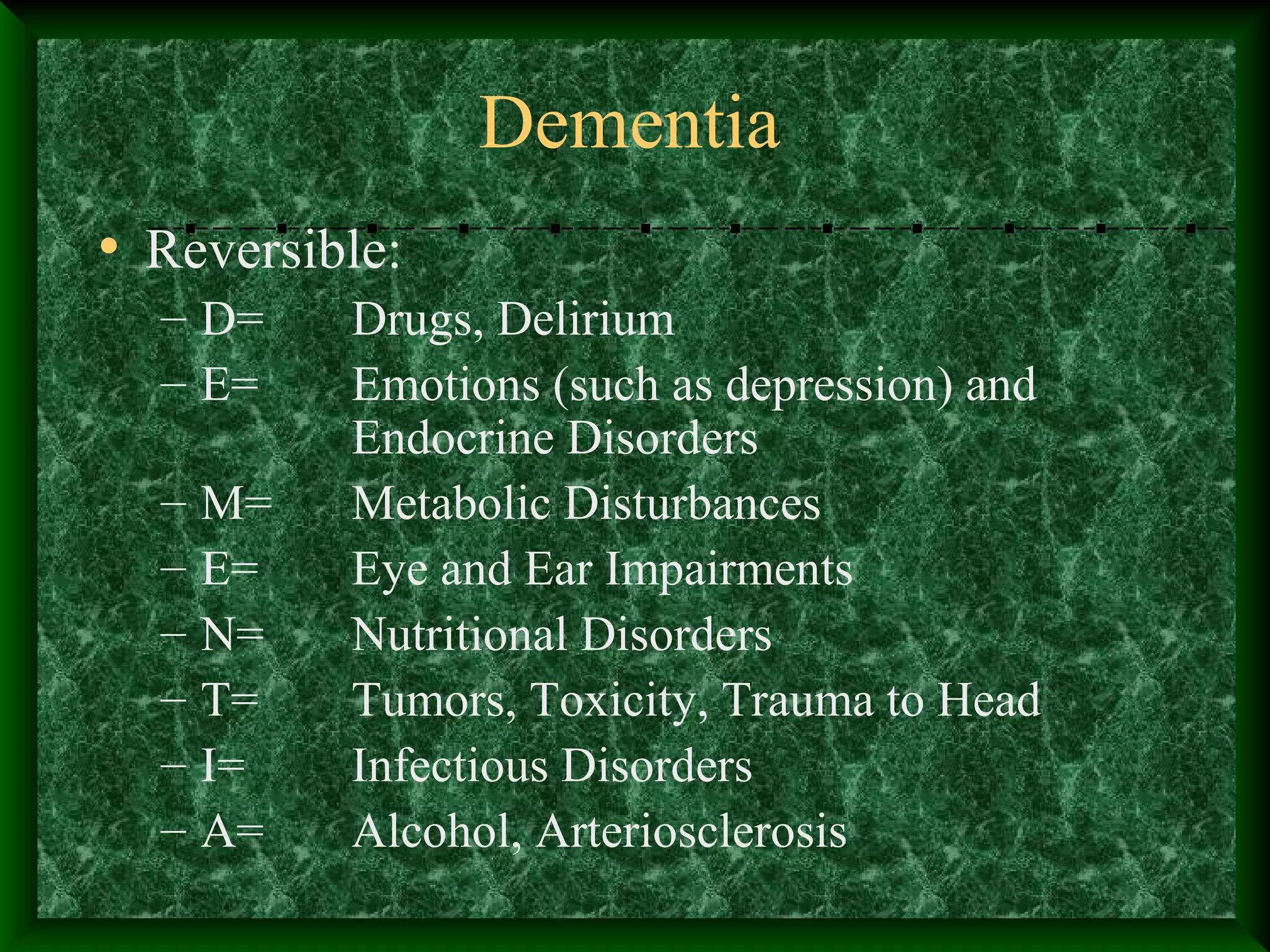
• Reversible:
– D= Drugs, Delirium
– E= Emotions (such as depression) and
Endocrine Disorders
– M= Metabolic Disturbances
– E= Eye and Ear Impairments
– N= Nutritional Disorders
– T= Tumors, Toxicity, Trauma to Head
– I= Infectious Disorders
– A= Alcohol, Arteriosclerosis
Dementia
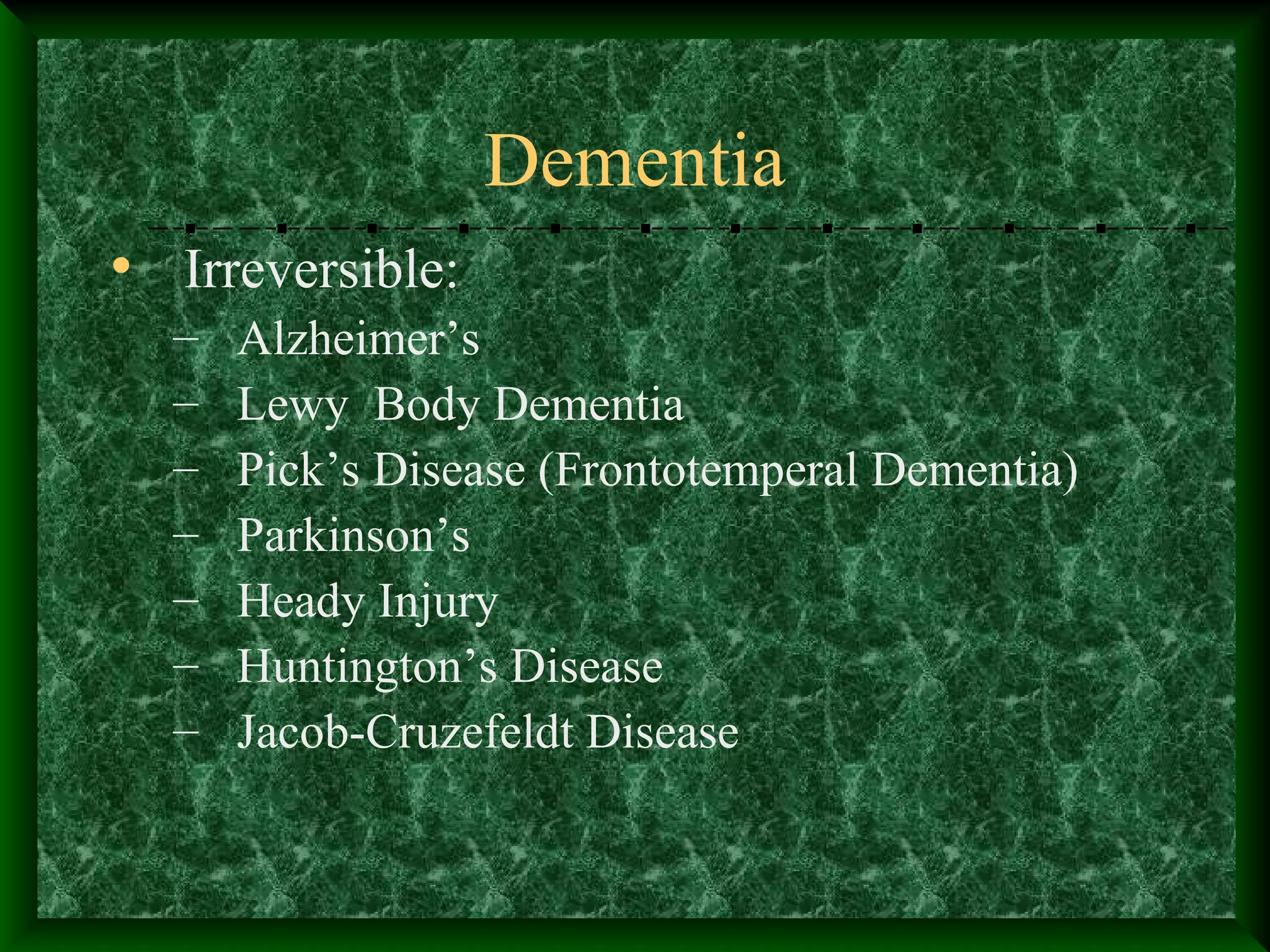
• Irreversible:
– Alzheimer’s
– Lewy Body Dementia
– Pick’s Disease (Frontotemperal Dementia)
– Parkinson’s
– Heady Injury
– Huntington’s Disease
– Jacob-Cruzefeldt Disease
Dementia
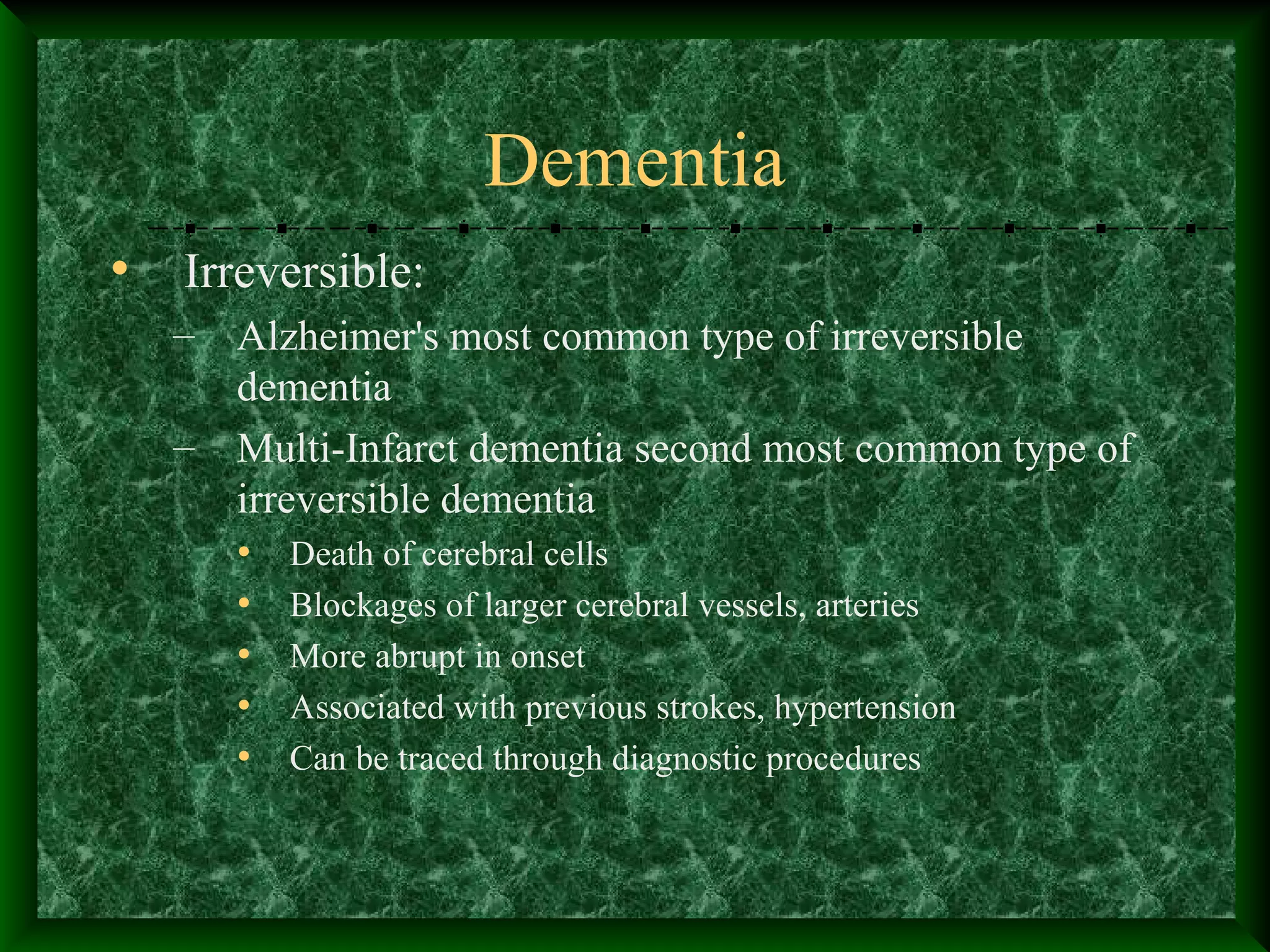
• Irreversible:
– Alzheimer's most common type of irreversible
dementia
– Multi-Infarct dementia second most common type of
irreversible dementia
• Death of cerebral cells
• Blockages of larger cerebral vessels, arteries
• More abrupt in onset
• Associated with previous strokes, hypertension
• Can be traced through diagnostic procedures
Dementia
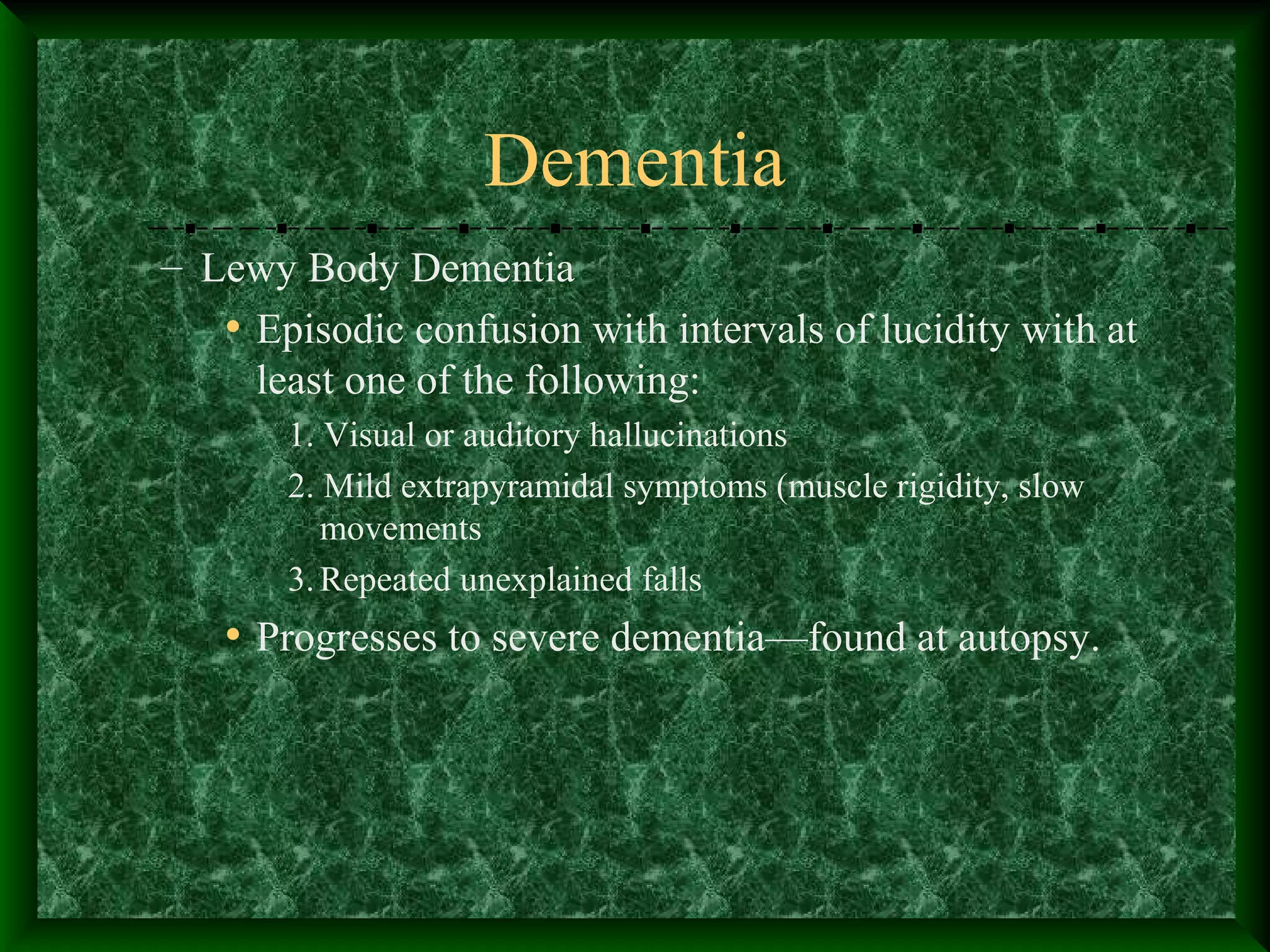
– Lewy Body Dementia
• Episodic confusion with intervals of lucidity with at
least one of the following:
1. Visual or auditory hallucinations
2. Mild extrapyramidal symptoms (muscle rigidity, slow
movements
3.Repeated unexplained falls
• Progresses to severe dementia—found at autopsy.
Dementia
 Diagnosis of Frontemporal Dementia (Pick’s
Disease)
 Pick’s bodies in cells.
 Personality changes
 Behavioral dis-inhibition.
 Loss of social or personal awareness.
 Disengagement with apathy
 Maintain ability to draw and calculate well into later
stages
Alzheimer's Disease
• Estimated that 4,000,000 people in U.S.
have Alzheimer's disease.
• Estimated that 25-35% of people over age
85 have some time of dementia.
• After age 65 the percentage of affected
people, doubles with every decade of life.
• Caring for patient with Alzheimer's disease
can cost $47,000 per year (NIH).
Changes Caused by Alzheimer's
• Diminished blood flow
• Neurofibrillary Tangles
• Neuritic Plaques
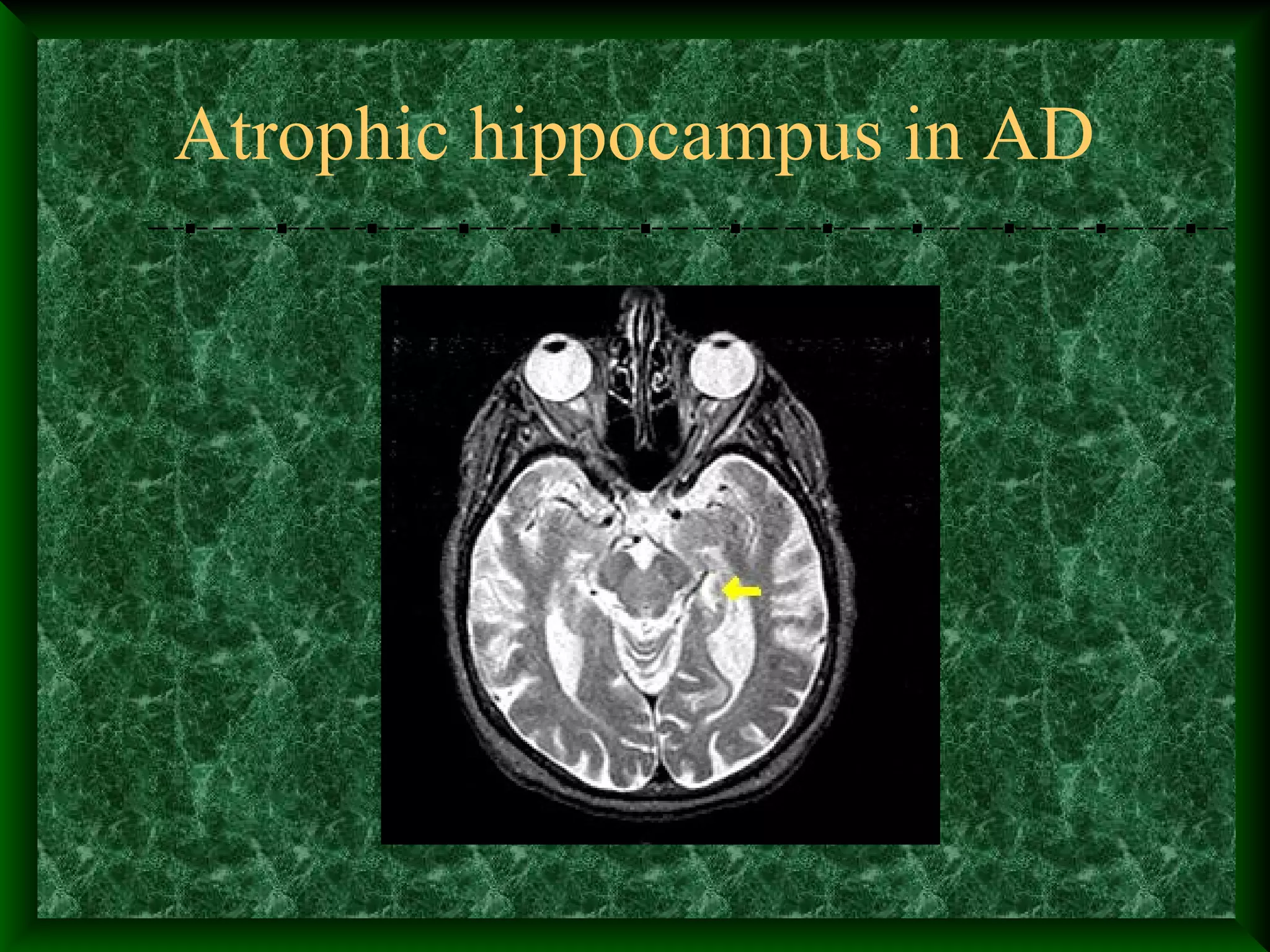
• Degeneration of hippocampus, cerebral
cortex, hypothalamus, and brain stem
Atrophic hippocampus in AD
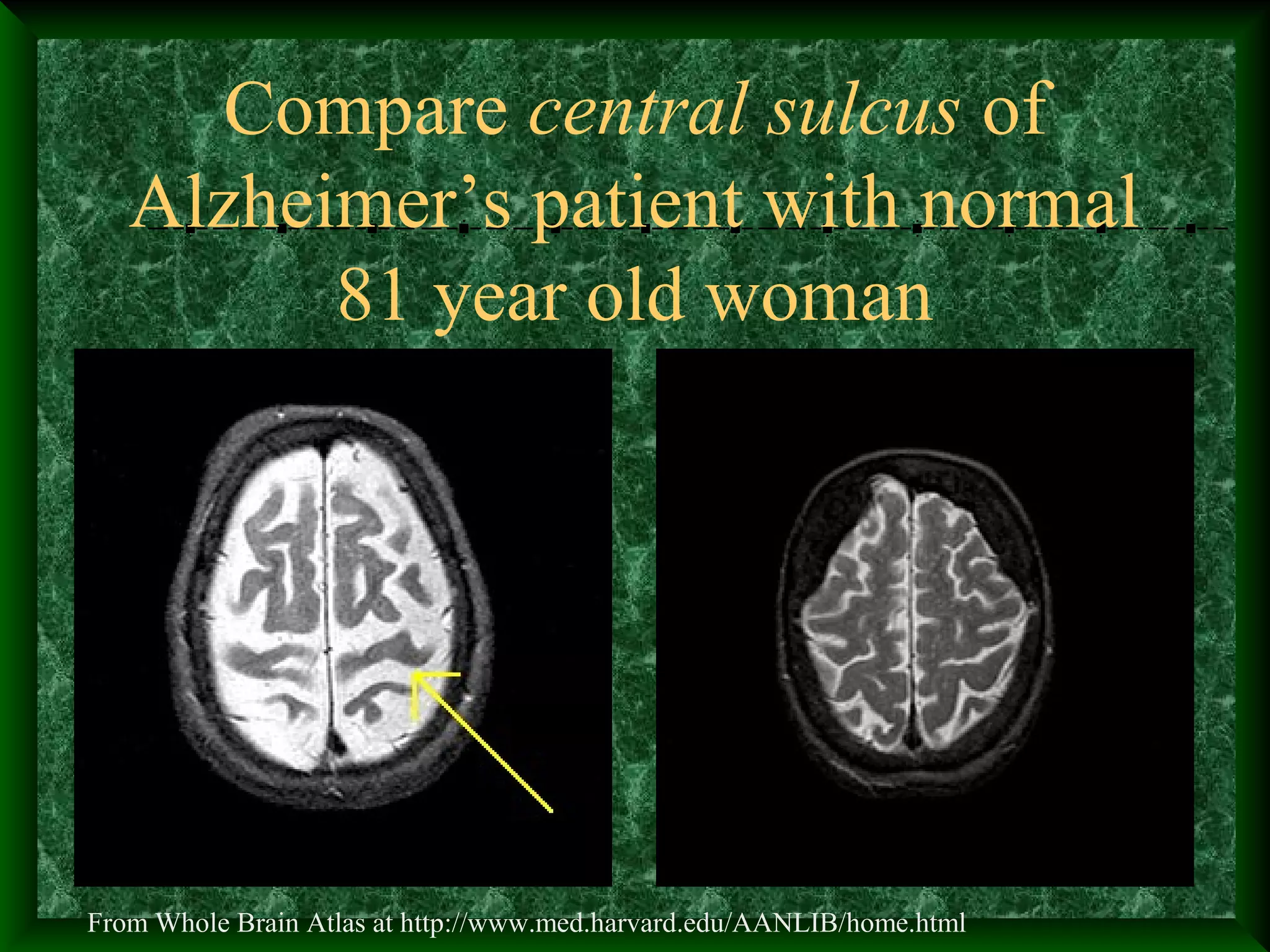
Compare central sulcus of
Alzheimer’s patient with normal
81 year old woman
From Whole Brain Atlas at http://www.med.harvard.edu/AANLIB/home.html
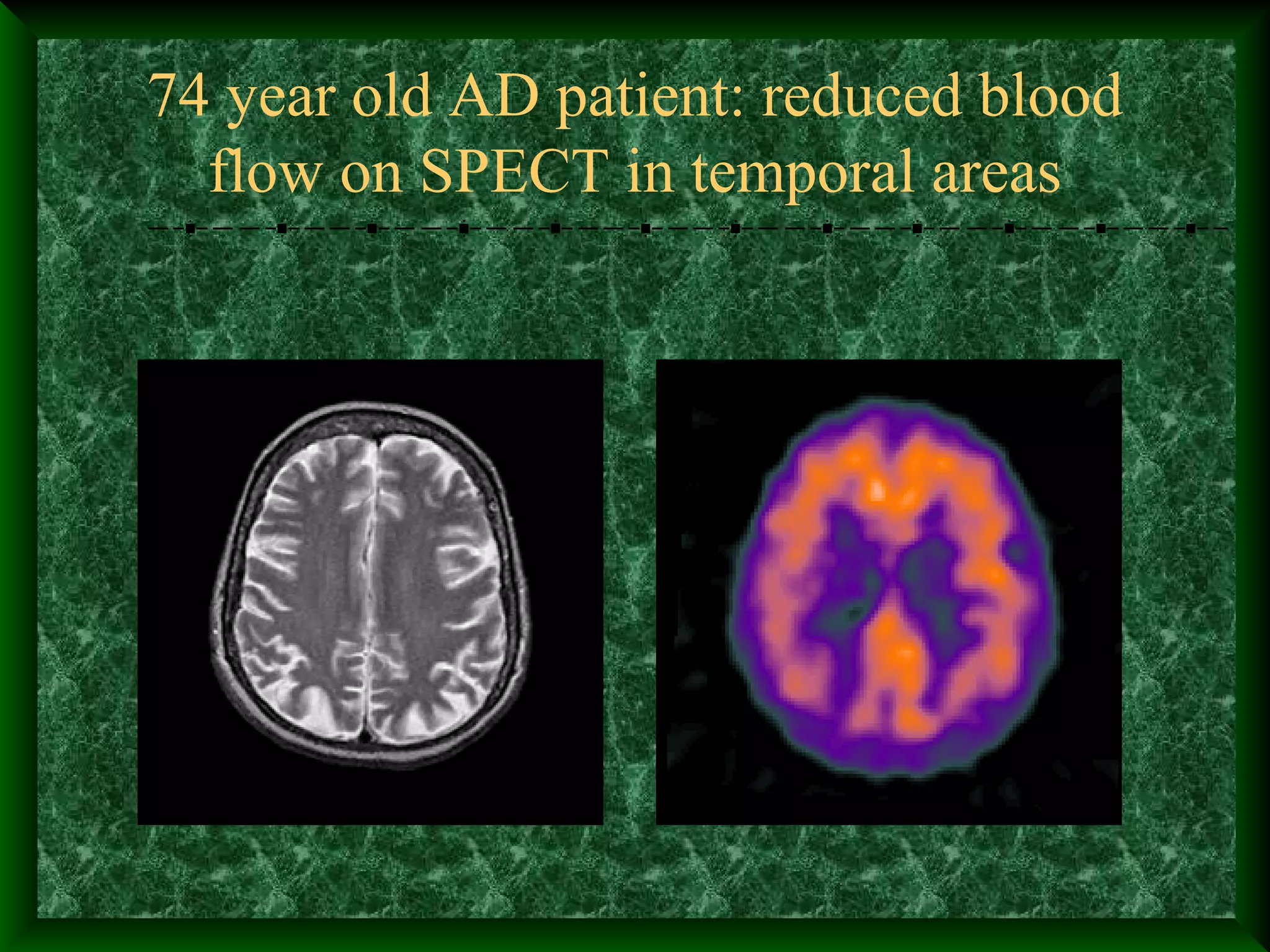
74 year old AD patient: reduced blood
flow on SPECT in temporal areas
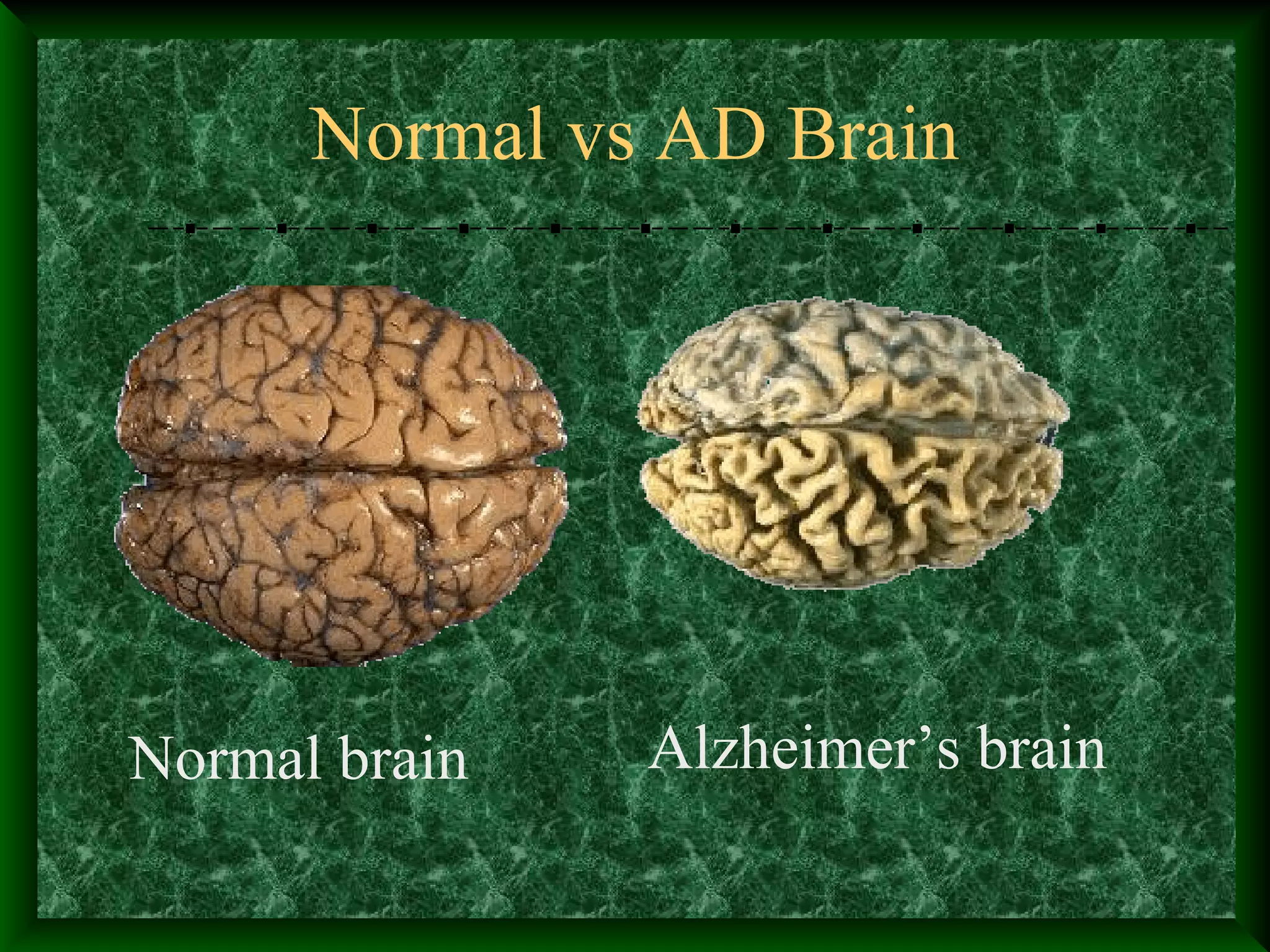
Normal vs AD Brain
Normal brain Alzheimer’s brain
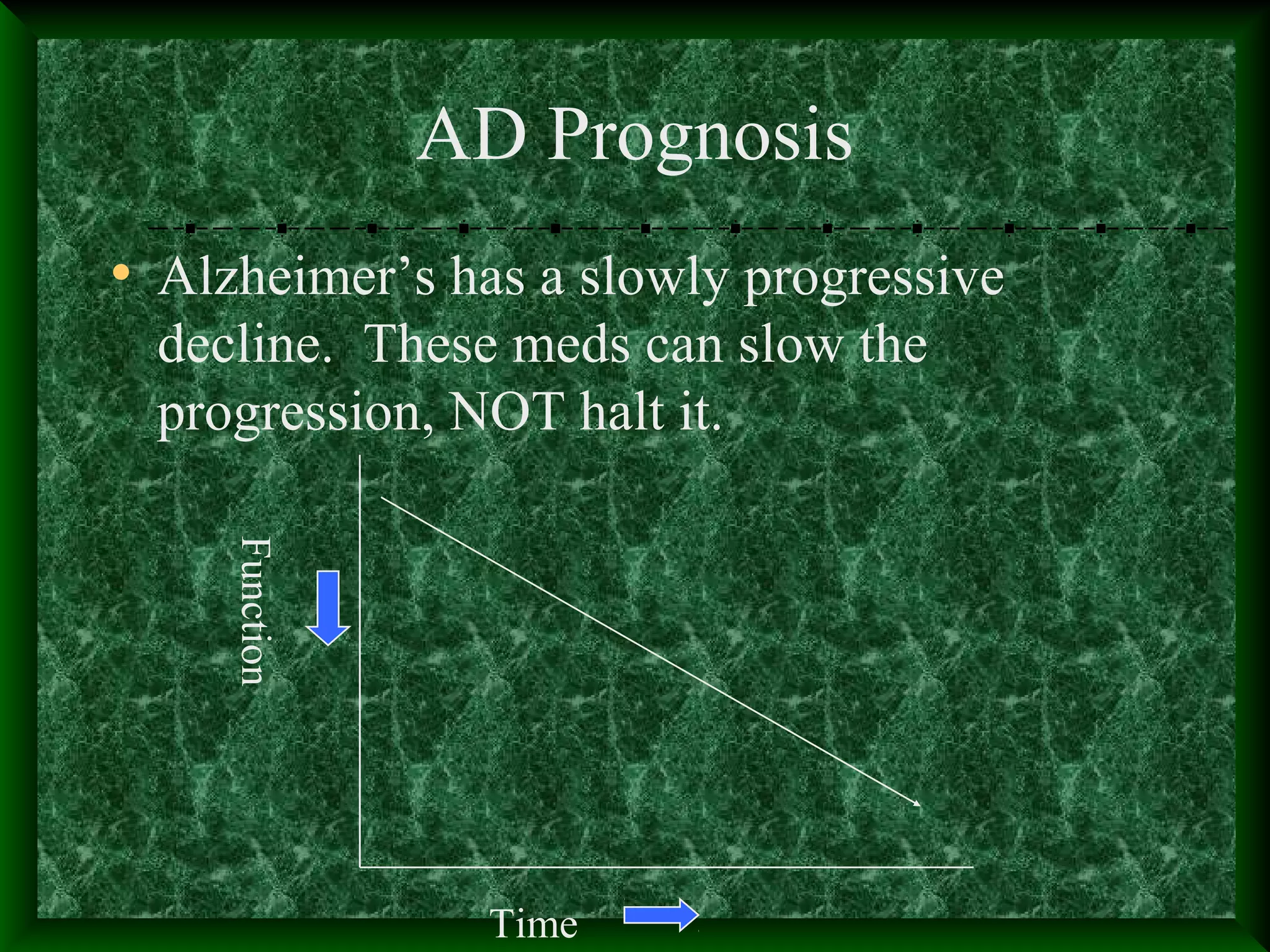
AD Prognosis
• Alzheimer’s has a slowly progressive
decline. These meds can slow the
progression, NOT halt it.
Time
Function
Pick’s disease
• 25 times rarer than Alzheimer’s dementia
• Frontal lobe clinical features
• Assymetrical frontal or temporal atrophy
• Has been connected with semantic
dementia, but evidence is not conclusive yet
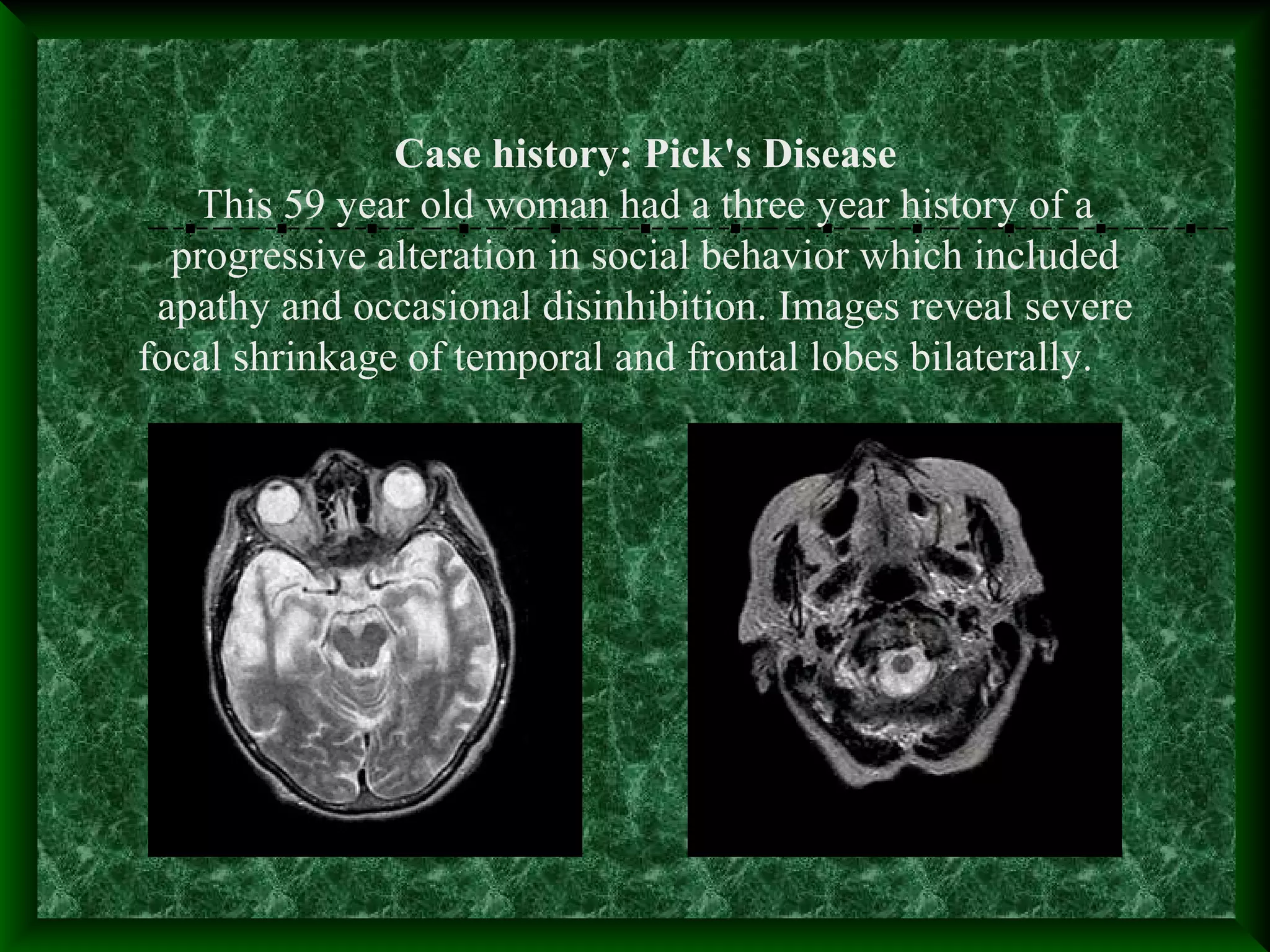
Case history: Pick's Disease
This 59 year old woman had a three year history of a
progressive alteration in social behavior which included
apathy and occasional disinhibition. Images reveal severe
focal shrinkage of temporal and frontal lobes bilaterally.
Degeneration of the basal ganglia
• Huntington’s disease
– Rare: 5 in 100,000
– abnormal ‘exaggerated movements
• Parkinson's disease
– Common: 1 in 100 over age 65
– General slowing of voluntary movements
• Both diseases involve the basal ganglia, but
in large opposite ways
Basal ganglia
• Caudate
• Putamen
• Globus pallidus
• Subthalamic nuclei
• Substantia nigra
Striatum
Multi-infarct dementia (MID)
• Many small strokes
• Often mixed with Alzheimer’s dementia
Viral dementia: HIV
• 20-60% of HIV patients suffers from
dementia
• Cerebral atrophy may be caused by
microglial nodules
Vocational Rehabilitation and
Dementia
• Can dementia occur while an individual is
employed?
• Is dementia covered under the American’s with
Disabilities Act?
• Can jobs and tasks be modified to assist
individuals with mild forms of dementia?
• Can job discrimination occur for these
individuals?
• What types of job modifications and/or assistive
technology can you think of for an individual with
dementia?
End-stage Dementia
Prognosis < 6 mos:
• Severe dementia with need for total assistance in
ADLs (dressing, bathing, continence), unable to
walk, only able to speak a few words
• Comorbid conditions – aspiration pneumonia,
urosepsis, decubiti, sepsis
• *Unable to maintain caloric intake with weight
loss of 10% or more in 6 months (and no feeding
tubes)
Complications from dementia
• Delusions in up to 50%, most with paranoia
• Hallucinations in up to 25%
• Depression, social isolation may also occur
• Aggressive behavior in 20-40% (may be related to
above problems, misinterpretation)
• Dangerous behavior – driving, creating fires,
getting lost, unsafe use of firearms, neglect
• Sundowning – nocturnal episodes of confusion
with agitation, restlessness
Treatment of complications
• Hallucinations, delusions, agitation, sun-downing may be
improved with anti-psychotics like haloperidol, risperdal,
mellaril…
• If any signs of depression, may be beneficial to treat
• Anxiety may respond to benzodiazepines
• Behavioral mod – reinforce good behavior, DON’T fight
aggressive behavior
• Familiarity (change in environments make things worse)
• Safety – key locks, knobs off stoves, take away car
keys/cigarettes/firearms…, lights, watch stairs
• Avoid restraints, use human contact/music/pets/
distraction
Artificial Nutrition in Dementia
• Many excellent reviews demonstrate no
improvement in quality of life and quantity
of life with G-tubes.
• 5% morbidity and mortality with the
procedure itself
• No decrease in aspiration with them
• Risk of infection
• Can keep patient comfortable without it
Complications from dementia
• Delusions in up to 50%, most with paranoia
• Hallucinations in up to 25%
• Depression, social isolation may also occur
• Aggressive behavior in 20-40% (may be related to
above problems, misinterpretation)
• Dangerous behavior – driving, creating fires,
getting lost, unsafe use of firearms, neglect
• Sundowning – nocturnal episodes of confusion
with agitation, restlessness
Drug treatment in Alzheimer’s
disease
• Many drugs aim to stimulate the cholinergic
system
• These drugs have limited positive effects
and do not reverse the causes of AD
Dementia patients are very
sensitive to additional disabilities
• Illness
• Pain
• Medications
• Poor hearing
• Poor vision
Management of depression at end
of life
• Psychotherapy – behavioral, cognitive, and other
supportive approaches by psychologists, licensed
social workers, chaplains, even bereavement
counselors may help
• New coping strategies like meditation, relaxation,
guided imagery, hypnosis may help
• Medications
Suicide
• Women attempt it twice as much, but men are 4x more
likely to succeed
• White men over 85 are at highest risk to do it
• All patients with depressive symptoms should be assessed
for it
• Talking about it can decrease risks
• High risk of attempt if thoughts are recurring or if have
thought out the plan
ONE OTHER POTENTIAL EMERGENCY:
• If risk high – DON’T leave client alone, immediately
consult a psychiatrist – may need in-patient care or
involvement of authorities
Anxiety
• May be a normal response to the situation – fears,
uncertainty, reaction to physical condition, social
or spiritual needs
• Usually with 1 or more of the following signs –
agitation, restless, sweating, tachycardia,
hyperventilation, insomnia, excessive worry,
tension
• Look for signs of depression, delirium,
alcohol/drug abuse, caffeine abuse
• About 5% are affected by agoraphobia
Related anxiety conditions
• Panic attacks – acute onset of palpitations,
sweating, hot, shaking, chest pain, nausea, dizzy,
derealization, fear, numbness; usually short lived
• Phobias – fears with avoidance, feelings of being
trapped, exposed
• Post-traumatic Stress Syndrome – in response to
severe trauma, get more intense fear, terror,
dreams, feelings of helplessness, detachment that
can occur later on
Other EOL care needs for dementia
• In bedbound, watch out for and prevent decubiti
• Feeding instructions to prevent aspiration – head
up, chin tucked, thick consistency foods like
pudding/jello/ice cream…
• Caregiver stress – difficult care, poor sleep,
education to prevent aggressive behavior, early
bereavement losing loved one before they are
gone, need for support/respite
Summary
• A change in mental or emotional status of the
patient is not uncommon with a life-threatening
illness
• Need to be aware of conditions that may be
normal reactions or have causes that are
potentially reversible, but at the end of life, may
need to focus on acute management of these
conditions
• Need compassionate, supportive care for patient
and caregiver, always addressing safety
Links
• Alzheimer’s Association: http://www.alz.org/
• National Institute of Neurological Disorders
and Stroke’s page on dementia:
http://www.ninds.nih.gov/disorders/dementias/dementia.
• How to manage difficult behaviors from the
Association for Frontotemporal Disorders:
http://www.ftd-picks.org/?p=caregiver.managing

Dementia causes and management

  • 1.
    Dementia Medical Aspects ofDisability October 17, 2006
  • 2.
    DEMENTIA • DEFINITION: – Groupof symptoms that can be caused by over 60-70 disorders. – Syndrome which refers to progressive decline in intellectual functioning severe enough to interfere with person’s normal daily activities and social relationships. (National Institute on Aging- 1995 No. 95-3782)
  • 3.
    Dementia – Marked byprogressive declines in • memory. • visual-spatial relationships • performance of routine tasks • language and communication skills • abstract thinking • ability to learn and carry out mathematical calculations.
  • 4.
    Dementia • Two Types: –Reversible – Irreversible • Individuals must have intensive medical physical to rule out reversible types of dementia.
  • 5.
    Delirium vs. Dementia •Delirium defined--- characterized by a disturbance of consciousness and a change in cognition that develop over a short period of time • About 10-15% of surgical patients experience delirium, and 15-25% of medicine inpatients will experience delirium • 30% Surgical Intensive Care Unit patients develop delirium, and up to 30% of AIDS patients while inpatient, will develop delirium
  • 6.
    Delirium vs. Dementia •A major risk factor is advanced age  Other factors include very young people (children), organic brain damage including stroke, MVA, etc, substance use, previous delirium, malnutrition, sensory deprivation (hearing or visual loss), diabetes, cancer  Having an episode of delirium is more than just inconvenience  3 month mortality following an episode of delirium is 25-30%. 1 year mortality after an episode of delirium may be as high as 50%.
  • 7.
    Delirium vs. Dementia •Many causes of delirium: Some examples… epilepsy, CNS trauma, CNS infection, CNS neoplasm, endocrine dysfunction (pituitary, thyroid, adrenal, parathyroid, pancreas), liver failure, UTI, cardiac dysrhythmias, hypotension, vitamin deficiency, sepsis, electrolyte imbalance, iatrogenic- any medication, substance withdrawal
  • 8.
    Delirium vs. Dementia •Could be psychiatric disorder, i.e. major depression or generalized anxiety disorder, in which case need to initiate treatment for this disorder, i.e. get a psych consult • Or is the cause a delirium from other meds or an infection, in which case should look at labs and med list. • Or is cause alcohol withdrawal, in which case need to treat w/d with benzodiazepines • If patient is having chronic trouble sleeping, a good choice to help them is Ambien/zolpidem or Sonata/zaleplon
  • 9.
    Delirium vs. Dementia •Watch for alcohol withdrawal as cause of delirium. If elevated pulse and blood pressure, see elevated MCV, and patient begins to act bizarre, talk to family if at all possible, about substance use. If patient enters delirium tremens (DT’s), untreated has a mortality rate of 20%.
  • 10.
    Delirium vs. Dementia •How is delirium treated?  First line treatment for delirium is to treat underlying cause. Often will need many labs- Complete Metabolic Panel, Complete Blood Count, TFT, EEG if indicated, CT/MRI of head, sometimes LP, etc.  A psychiatric or psychological consult might be needed for agitation.  Meds- Haldol 2.5-5 mg (less for geriatric) or now, Geodon 10-20 mg IM or Ativan IM
  • 11.
    Delirium vs. Dementia •A common problem in the US – 5% of those over 65 have severe dementia, 15% have mild dementia – 20% those over 80 have severe dementia – One of first distinctions you must make is reversible from nonreversible. – Only about 10-15% are reversible
  • 12.
    Delirium vs. Dementia •Nonreversible does not mean non treatable! • Non reversible dementias- – Alzheimer’s is most common by far, accounting for about 70% of dementias. – See a tempero-parietal wasting at first, leading you to see the memory loss and speech problems first. The “lost keys”sign. – Then will progress to global atrophy of brain. – Genetics a risk factor (up to 35-40% patients have a family history of Alzheimer’s
  • 13.
    Dementia • Reversible: – D=Drugs, Delirium – E= Emotions (such as depression) and Endocrine Disorders – M= Metabolic Disturbances – E= Eye and Ear Impairments – N= Nutritional Disorders – T= Tumors, Toxicity, Trauma to Head – I= Infectious Disorders – A= Alcohol, Arteriosclerosis
  • 14.
    Dementia • Irreversible: – Alzheimer’s –Lewy Body Dementia – Pick’s Disease (Frontotemperal Dementia) – Parkinson’s – Heady Injury – Huntington’s Disease – Jacob-Cruzefeldt Disease
  • 15.
    Dementia • Irreversible: – Alzheimer'smost common type of irreversible dementia – Multi-Infarct dementia second most common type of irreversible dementia • Death of cerebral cells • Blockages of larger cerebral vessels, arteries • More abrupt in onset • Associated with previous strokes, hypertension • Can be traced through diagnostic procedures
  • 16.
    Dementia – Lewy BodyDementia • Episodic confusion with intervals of lucidity with at least one of the following: 1. Visual or auditory hallucinations 2. Mild extrapyramidal symptoms (muscle rigidity, slow movements 3.Repeated unexplained falls • Progresses to severe dementia—found at autopsy.
  • 17.
    Dementia  Diagnosis ofFrontemporal Dementia (Pick’s Disease)  Pick’s bodies in cells.  Personality changes  Behavioral dis-inhibition.  Loss of social or personal awareness.  Disengagement with apathy  Maintain ability to draw and calculate well into later stages
  • 18.
    Alzheimer's Disease • Estimatedthat 4,000,000 people in U.S. have Alzheimer's disease. • Estimated that 25-35% of people over age 85 have some time of dementia. • After age 65 the percentage of affected people, doubles with every decade of life. • Caring for patient with Alzheimer's disease can cost $47,000 per year (NIH).
  • 19.
    Changes Caused byAlzheimer's • Diminished blood flow • Neurofibrillary Tangles • Neuritic Plaques • Degeneration of hippocampus, cerebral cortex, hypothalamus, and brain stem
  • 20.
  • 21.
    Compare central sulcusof Alzheimer’s patient with normal 81 year old woman From Whole Brain Atlas at http://www.med.harvard.edu/AANLIB/home.html
  • 22.
    74 year oldAD patient: reduced blood flow on SPECT in temporal areas
  • 23.
    Normal vs ADBrain Normal brain Alzheimer’s brain
  • 24.
    AD Prognosis • Alzheimer’shas a slowly progressive decline. These meds can slow the progression, NOT halt it. Time Function
  • 25.
    Pick’s disease • 25times rarer than Alzheimer’s dementia • Frontal lobe clinical features • Assymetrical frontal or temporal atrophy • Has been connected with semantic dementia, but evidence is not conclusive yet
  • 26.
    Case history: Pick'sDisease This 59 year old woman had a three year history of a progressive alteration in social behavior which included apathy and occasional disinhibition. Images reveal severe focal shrinkage of temporal and frontal lobes bilaterally.
  • 27.
    Degeneration of thebasal ganglia • Huntington’s disease – Rare: 5 in 100,000 – abnormal ‘exaggerated movements • Parkinson's disease – Common: 1 in 100 over age 65 – General slowing of voluntary movements • Both diseases involve the basal ganglia, but in large opposite ways
  • 28.
    Basal ganglia • Caudate •Putamen • Globus pallidus • Subthalamic nuclei • Substantia nigra Striatum
  • 30.
    Multi-infarct dementia (MID) •Many small strokes • Often mixed with Alzheimer’s dementia
  • 31.
    Viral dementia: HIV •20-60% of HIV patients suffers from dementia • Cerebral atrophy may be caused by microglial nodules
  • 32.
    Vocational Rehabilitation and Dementia •Can dementia occur while an individual is employed? • Is dementia covered under the American’s with Disabilities Act? • Can jobs and tasks be modified to assist individuals with mild forms of dementia? • Can job discrimination occur for these individuals? • What types of job modifications and/or assistive technology can you think of for an individual with dementia?
  • 33.
    End-stage Dementia Prognosis <6 mos: • Severe dementia with need for total assistance in ADLs (dressing, bathing, continence), unable to walk, only able to speak a few words • Comorbid conditions – aspiration pneumonia, urosepsis, decubiti, sepsis • *Unable to maintain caloric intake with weight loss of 10% or more in 6 months (and no feeding tubes)
  • 34.
    Complications from dementia •Delusions in up to 50%, most with paranoia • Hallucinations in up to 25% • Depression, social isolation may also occur • Aggressive behavior in 20-40% (may be related to above problems, misinterpretation) • Dangerous behavior – driving, creating fires, getting lost, unsafe use of firearms, neglect • Sundowning – nocturnal episodes of confusion with agitation, restlessness
  • 35.
    Treatment of complications •Hallucinations, delusions, agitation, sun-downing may be improved with anti-psychotics like haloperidol, risperdal, mellaril… • If any signs of depression, may be beneficial to treat • Anxiety may respond to benzodiazepines • Behavioral mod – reinforce good behavior, DON’T fight aggressive behavior • Familiarity (change in environments make things worse) • Safety – key locks, knobs off stoves, take away car keys/cigarettes/firearms…, lights, watch stairs • Avoid restraints, use human contact/music/pets/ distraction
  • 36.
    Artificial Nutrition inDementia • Many excellent reviews demonstrate no improvement in quality of life and quantity of life with G-tubes. • 5% morbidity and mortality with the procedure itself • No decrease in aspiration with them • Risk of infection • Can keep patient comfortable without it
  • 37.
    Complications from dementia •Delusions in up to 50%, most with paranoia • Hallucinations in up to 25% • Depression, social isolation may also occur • Aggressive behavior in 20-40% (may be related to above problems, misinterpretation) • Dangerous behavior – driving, creating fires, getting lost, unsafe use of firearms, neglect • Sundowning – nocturnal episodes of confusion with agitation, restlessness
  • 38.
    Drug treatment inAlzheimer’s disease • Many drugs aim to stimulate the cholinergic system • These drugs have limited positive effects and do not reverse the causes of AD
  • 39.
    Dementia patients arevery sensitive to additional disabilities • Illness • Pain • Medications • Poor hearing • Poor vision
  • 40.
    Management of depressionat end of life • Psychotherapy – behavioral, cognitive, and other supportive approaches by psychologists, licensed social workers, chaplains, even bereavement counselors may help • New coping strategies like meditation, relaxation, guided imagery, hypnosis may help • Medications
  • 41.
    Suicide • Women attemptit twice as much, but men are 4x more likely to succeed • White men over 85 are at highest risk to do it • All patients with depressive symptoms should be assessed for it • Talking about it can decrease risks • High risk of attempt if thoughts are recurring or if have thought out the plan ONE OTHER POTENTIAL EMERGENCY: • If risk high – DON’T leave client alone, immediately consult a psychiatrist – may need in-patient care or involvement of authorities
  • 42.
    Anxiety • May bea normal response to the situation – fears, uncertainty, reaction to physical condition, social or spiritual needs • Usually with 1 or more of the following signs – agitation, restless, sweating, tachycardia, hyperventilation, insomnia, excessive worry, tension • Look for signs of depression, delirium, alcohol/drug abuse, caffeine abuse • About 5% are affected by agoraphobia
  • 43.
    Related anxiety conditions •Panic attacks – acute onset of palpitations, sweating, hot, shaking, chest pain, nausea, dizzy, derealization, fear, numbness; usually short lived • Phobias – fears with avoidance, feelings of being trapped, exposed • Post-traumatic Stress Syndrome – in response to severe trauma, get more intense fear, terror, dreams, feelings of helplessness, detachment that can occur later on
  • 44.
    Other EOL careneeds for dementia • In bedbound, watch out for and prevent decubiti • Feeding instructions to prevent aspiration – head up, chin tucked, thick consistency foods like pudding/jello/ice cream… • Caregiver stress – difficult care, poor sleep, education to prevent aggressive behavior, early bereavement losing loved one before they are gone, need for support/respite
  • 45.
    Summary • A changein mental or emotional status of the patient is not uncommon with a life-threatening illness • Need to be aware of conditions that may be normal reactions or have causes that are potentially reversible, but at the end of life, may need to focus on acute management of these conditions • Need compassionate, supportive care for patient and caregiver, always addressing safety
  • 46.
    Links • Alzheimer’s Association:http://www.alz.org/ • National Institute of Neurological Disorders and Stroke’s page on dementia: http://www.ninds.nih.gov/disorders/dementias/dementia. • How to manage difficult behaviors from the Association for Frontotemporal Disorders: http://www.ftd-picks.org/?p=caregiver.managing

Editor's Notes

  • #42 You can commit them for 1-2 days if need be