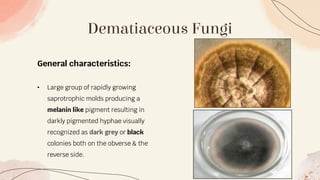
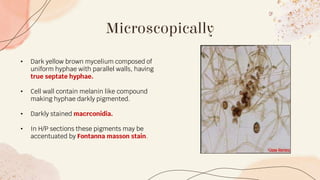
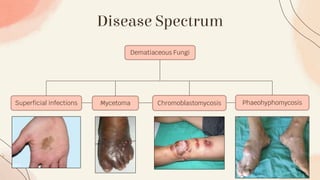
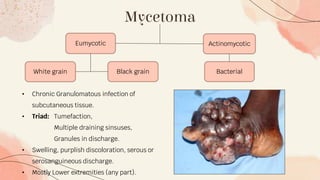
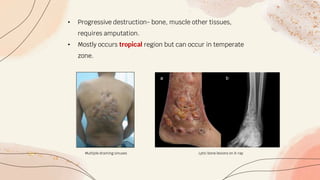
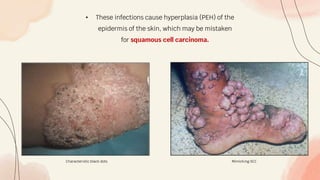
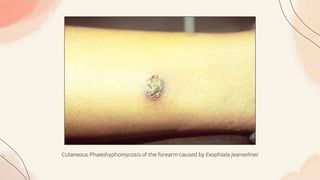
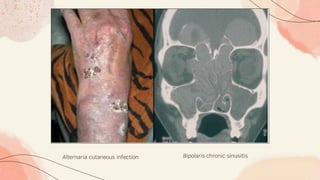
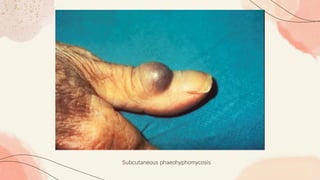
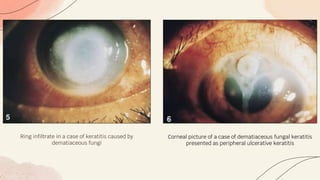
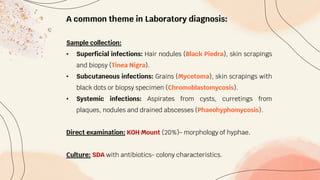
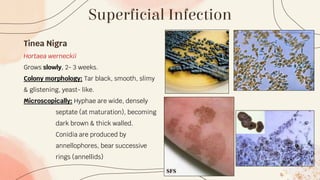
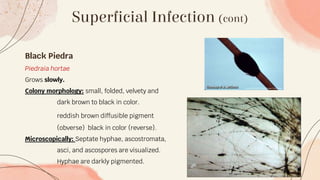
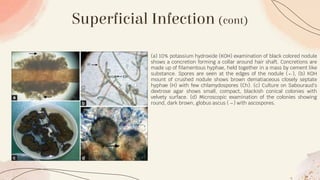
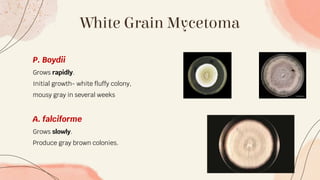
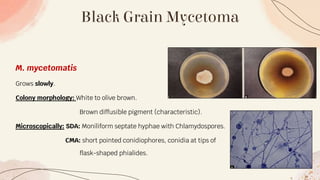
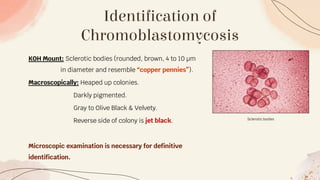
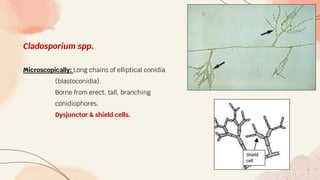
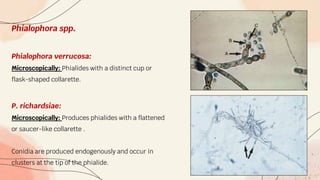
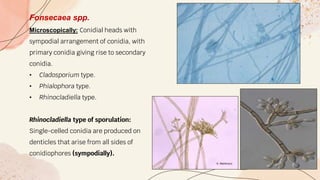
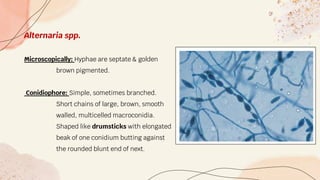
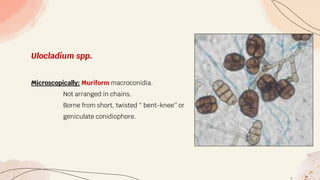
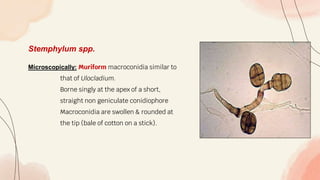
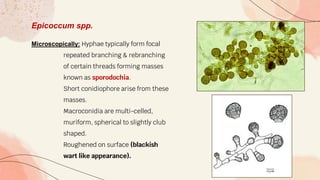
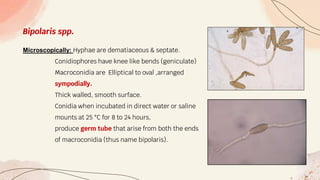
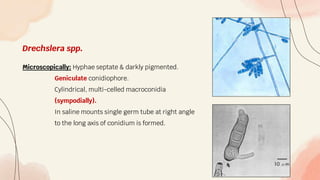
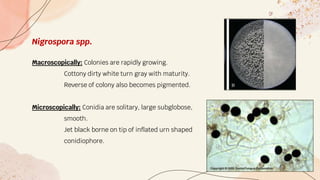
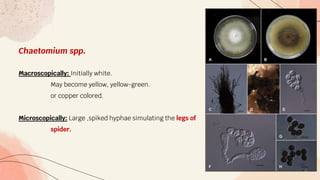
This document provides information about dematiaceous fungi, which are darkly pigmented molds. It discusses their classification and characteristics, as well as the diseases they can cause including superficial infections, subcutaneous infections like mycetoma and chromoblastomycosis, and systemic infections such as phaeohyphomycosis. Identification of dematiaceous fungi involves examining colony morphology, microscopic features, and sometimes producing characteristic structures like sclerotic bodies. Laboratory diagnosis requires collecting appropriate samples and analyzing them through potassium hydroxide mounts and culturing.