R.RUPPAMERCY
M.Sc NURSINGII YEAR
MENTALHEALTHNURSING
WHAT IS ORGANIC
MENTAL
DISORDER????
INTRODUCTION
An organic mental disorder (OMD), also known as
organic brain syndrome, decreased mental function due
to a medical or physical disease of the brain.
The brain cells could be damaged due to a physical
injury (a severe blow to the head, stroke, chemical and
toxic exposures, organic brain disease, substance abuse,
etc.) or due to psycho-social factors like severe
deprivation, physical or mental abuse, and severe
psychological trauma
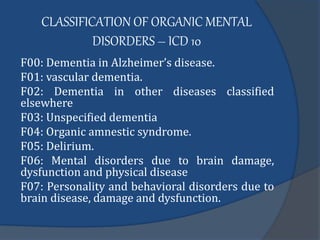
CLASSIFICATION OF ORGANIC MENTAL
DISORDERS – ICD 10
F00: Dementia in Alzheimer’s disease.
F01: vascular dementia.
F02: Dementia in other diseases classified
elsewhere
F03: Unspecified dementia
F04: Organic amnestic syndrome.
F05: Delirium.
F06: Mental disorders due to brain damage,
dysfunction and physical disease
F07: Personality and behavioral disorders due to
brain disease, damage and dysfunction.
TYPES OF ORGANIC BRAIN DISORDER
 Delirium (Acute brain syndrome)
 Dementia (chronic brain syndrome)
 Amnestic (due to - may or may not
organic or non – organic )
WHAT IS THE DIFFERENCE ?
DELIRIUM
INTRODUCTION
 de (away from, out of) + Lira (the earth thrown up
between two furrows) means out of tract
 Acute organic brain syndrome
 Delirium is a syndrome, not a disease.
 Once the acute episode has remitted, the premorbid
level of functioning is reached again, with personality
reappearing intact.
DEFINITION
 Serious disturbance in mental abilities that results
in confused thinking and reduced awareness of
surrounding. It is also known as acute confusional
state.
 THREE C’S
Rapid onset of
 impairment and fluctuation in CONCENTRATION.
 Altered CONSCIOUSNESS.
 Impaired COGNITION.
TYPES OF DELIRIUM
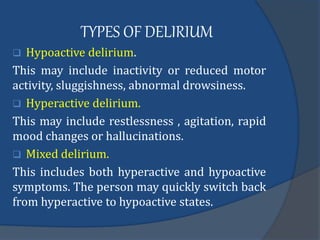
 Hypoactive delirium.
This may include inactivity or reduced motor
activity, sluggishness, abnormal drowsiness.
 Hyperactive delirium.
This may include restlessness , agitation, rapid
mood changes or hallucinations.
 Mixed delirium.
This includes both hyperactive and hypoactive
symptoms. The person may quickly switch back
from hyperactive to hypoactive states.
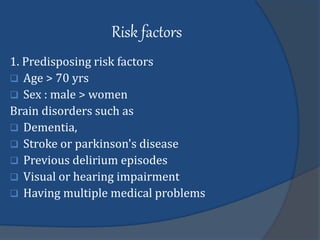
Risk factors
1. Predisposing risk factors
 Age > 70 yrs
 Sex : male > women
Brain disorders such as
 Dementia,
 Stroke or parkinson's disease
 Previous delirium episodes
 Visual or hearing impairment
 Having multiple medical problems
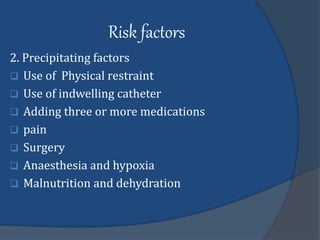
Risk factors
2. Precipitating factors
 Use of Physical restraint
 Use of indwelling catheter
 Adding three or more medications
 pain
 Surgery
 Anaesthesia and hypoxia
 Malnutrition and dehydration
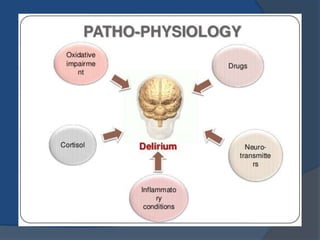
CAUSES????
SIGNS & SYMPTOMS
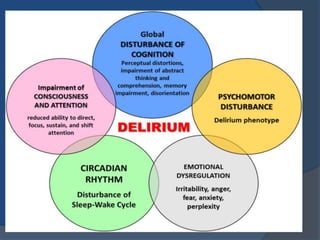
The clinical hallmarks of delirium
are decreased awareness, a change
in baseline cognition and behavior.
It begins over a few hours or a few
days.
REDUCED AWARENESS OF THE
ENVIRONMENT
 An inability to stay focused on a topic or to
switch topics.
 Getting stuck on an idea rather than
responding to question or conversation.
 Being easily destructed
 Being withdrawn
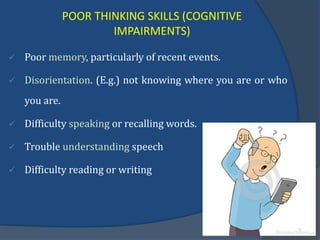
POOR THINKING SKILLS (COGNITIVE
IMPAIRMENTS)
 Poor memory, particularly of recent events.
 Disorientation. (E.g.) not knowing where you are or who
you are.
 Difficulty speaking or recalling words.
 Trouble understanding speech
 Difficulty reading or writing
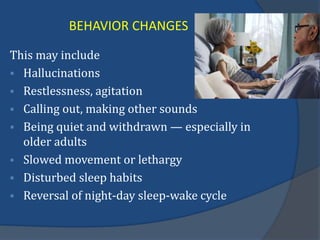
BEHAVIOR CHANGES
This may include
 Hallucinations
 Restlessness, agitation
 Calling out, making other sounds
 Being quiet and withdrawn — especially in
older adults
 Slowed movement or lethargy
 Disturbed sleep habits
 Reversal of night-day sleep-wake cycle
EMOTIONAL DISTURBANCES
This may appear as:
 Anxiety, fear or paranoia
 Depression
 Irritability or anger
 A sense of feeling elated (euphoria)
 Apathy
 Rapid and unpredictable mood shifts
 Personality changes
DIAGNOSIS
 Mental status Examination.
To assess orientation, attention and thinking.
 Physical and neurological Examination:
 Physical Examination: To check for signs of health
problems and underlying disease.
 Neurological Examination: Check for vision, balance
Co-ordination and reflexes.
 Other test: Blood and urine to check for electrolyte
imbalance.
 Brain Imaging.
 Rating scale
MANAGEMENT
Treat the underlying causes or triggers. (Eg.)
 Stopping use of particular medication.
 Care for metabolic imbalance
 Treating Infection.
 Vitamins- Patient with alcoholism & malnutrition prone
for thiamine, B12 deficiency which can cause delirium.
 Medication
 Antipsychotic-To treat agitation, hallucination and to
improve sensory problem.
 (Eg) Haloperidol, Risperidone, Olanzapine, quetiapine
 Benzodiazepines
NURSING MANAGEMENT
• Assess the level of anxiety to intervene
before violence occurs.
• Provide an appropriate environment.
• Promote patients safety.
• Ask assistance from others when needed.
• Stay calm and reassure patients.
• Medicate or restrain patients as prescribed.
• Observe suicide precautions.
• Teach relaxation exercises.
CONTD…
Medications
 Talk with the doctor about avoiding or minimizing the
use of drugs that may trigger delirium.
 Certain medications may be needed to control pain
that's causing delirium.
 Fluid and nutrition should be given carefully because
the patient may be unwilling or physically unable to
maintain a balanced intake.
 For the patient suspected of having alcohol toxicity or
alcohol withdrawal, therapy should include
multivitamins, especially thiamine
SUPPORTIVE THERAPY
To Prevent Complications by
o Protecting the Airway.
o Providing adequate Nutrition.
o Assisting with movement.
o Treating pain.
o Addressing Incontinence
o Avoiding use of physical restraints
o Avoiding changes in surrounding.
o Encouraging the family members to involve
in the care.
PREVENTION
 Having a clock and calendar nearby
 Having lots of lighting during the day
 Limiting medicines that may cause delirium, or any
extra medicines that are not needed
 Drinking plenty of water and other fluids
 Trying to walk or at least sit in a chair daily
 Reporting to doctors any symptoms of an infection
(cough, fever, pain, shortness for breath)
 Family involvement in the patient’s treatment
RECAPITULATE…..
THANK YOU….

Delirium

  • 1.
  • 2.
  • 3.
    INTRODUCTION An organic mentaldisorder (OMD), also known as organic brain syndrome, decreased mental function due to a medical or physical disease of the brain. The brain cells could be damaged due to a physical injury (a severe blow to the head, stroke, chemical and toxic exposures, organic brain disease, substance abuse, etc.) or due to psycho-social factors like severe deprivation, physical or mental abuse, and severe psychological trauma
  • 4.
    CLASSIFICATION OF ORGANICMENTAL DISORDERS – ICD 10 F00: Dementia in Alzheimer’s disease. F01: vascular dementia. F02: Dementia in other diseases classified elsewhere F03: Unspecified dementia F04: Organic amnestic syndrome. F05: Delirium. F06: Mental disorders due to brain damage, dysfunction and physical disease F07: Personality and behavioral disorders due to brain disease, damage and dysfunction.
  • 5.
    TYPES OF ORGANICBRAIN DISORDER  Delirium (Acute brain syndrome)  Dementia (chronic brain syndrome)  Amnestic (due to - may or may not organic or non – organic ) WHAT IS THE DIFFERENCE ?
  • 6.
    DELIRIUM INTRODUCTION  de (awayfrom, out of) + Lira (the earth thrown up between two furrows) means out of tract  Acute organic brain syndrome  Delirium is a syndrome, not a disease.  Once the acute episode has remitted, the premorbid level of functioning is reached again, with personality reappearing intact.
  • 7.
    DEFINITION  Serious disturbancein mental abilities that results in confused thinking and reduced awareness of surrounding. It is also known as acute confusional state.  THREE C’S Rapid onset of  impairment and fluctuation in CONCENTRATION.  Altered CONSCIOUSNESS.  Impaired COGNITION.
  • 10.
    TYPES OF DELIRIUM Hypoactive delirium. This may include inactivity or reduced motor activity, sluggishness, abnormal drowsiness.  Hyperactive delirium. This may include restlessness , agitation, rapid mood changes or hallucinations.  Mixed delirium. This includes both hyperactive and hypoactive symptoms. The person may quickly switch back from hyperactive to hypoactive states.
  • 11.
    Risk factors 1. Predisposingrisk factors  Age > 70 yrs  Sex : male > women Brain disorders such as  Dementia,  Stroke or parkinson's disease  Previous delirium episodes  Visual or hearing impairment  Having multiple medical problems
  • 12.
    Risk factors 2. Precipitatingfactors  Use of Physical restraint  Use of indwelling catheter  Adding three or more medications  pain  Surgery  Anaesthesia and hypoxia  Malnutrition and dehydration
  • 13.
  • 14.
    SIGNS & SYMPTOMS Theclinical hallmarks of delirium are decreased awareness, a change in baseline cognition and behavior. It begins over a few hours or a few days.
  • 15.
    REDUCED AWARENESS OFTHE ENVIRONMENT  An inability to stay focused on a topic or to switch topics.  Getting stuck on an idea rather than responding to question or conversation.  Being easily destructed  Being withdrawn
  • 16.
    POOR THINKING SKILLS(COGNITIVE IMPAIRMENTS)  Poor memory, particularly of recent events.  Disorientation. (E.g.) not knowing where you are or who you are.  Difficulty speaking or recalling words.  Trouble understanding speech  Difficulty reading or writing
  • 17.
    BEHAVIOR CHANGES This mayinclude  Hallucinations  Restlessness, agitation  Calling out, making other sounds  Being quiet and withdrawn — especially in older adults  Slowed movement or lethargy  Disturbed sleep habits  Reversal of night-day sleep-wake cycle
  • 18.
    EMOTIONAL DISTURBANCES This mayappear as:  Anxiety, fear or paranoia  Depression  Irritability or anger  A sense of feeling elated (euphoria)  Apathy  Rapid and unpredictable mood shifts  Personality changes
  • 19.
    DIAGNOSIS  Mental statusExamination. To assess orientation, attention and thinking.  Physical and neurological Examination:  Physical Examination: To check for signs of health problems and underlying disease.  Neurological Examination: Check for vision, balance Co-ordination and reflexes.  Other test: Blood and urine to check for electrolyte imbalance.  Brain Imaging.  Rating scale
  • 20.
    MANAGEMENT Treat the underlyingcauses or triggers. (Eg.)  Stopping use of particular medication.  Care for metabolic imbalance  Treating Infection.  Vitamins- Patient with alcoholism & malnutrition prone for thiamine, B12 deficiency which can cause delirium.  Medication  Antipsychotic-To treat agitation, hallucination and to improve sensory problem.  (Eg) Haloperidol, Risperidone, Olanzapine, quetiapine  Benzodiazepines
  • 21.
    NURSING MANAGEMENT • Assessthe level of anxiety to intervene before violence occurs. • Provide an appropriate environment. • Promote patients safety. • Ask assistance from others when needed. • Stay calm and reassure patients. • Medicate or restrain patients as prescribed. • Observe suicide precautions. • Teach relaxation exercises.
  • 22.
    CONTD… Medications  Talk withthe doctor about avoiding or minimizing the use of drugs that may trigger delirium.  Certain medications may be needed to control pain that's causing delirium.  Fluid and nutrition should be given carefully because the patient may be unwilling or physically unable to maintain a balanced intake.  For the patient suspected of having alcohol toxicity or alcohol withdrawal, therapy should include multivitamins, especially thiamine
  • 23.
    SUPPORTIVE THERAPY To PreventComplications by o Protecting the Airway. o Providing adequate Nutrition. o Assisting with movement. o Treating pain. o Addressing Incontinence o Avoiding use of physical restraints o Avoiding changes in surrounding. o Encouraging the family members to involve in the care.
  • 24.
    PREVENTION  Having aclock and calendar nearby  Having lots of lighting during the day  Limiting medicines that may cause delirium, or any extra medicines that are not needed  Drinking plenty of water and other fluids  Trying to walk or at least sit in a chair daily  Reporting to doctors any symptoms of an infection (cough, fever, pain, shortness for breath)  Family involvement in the patient’s treatment
  • 25.
  • 26.