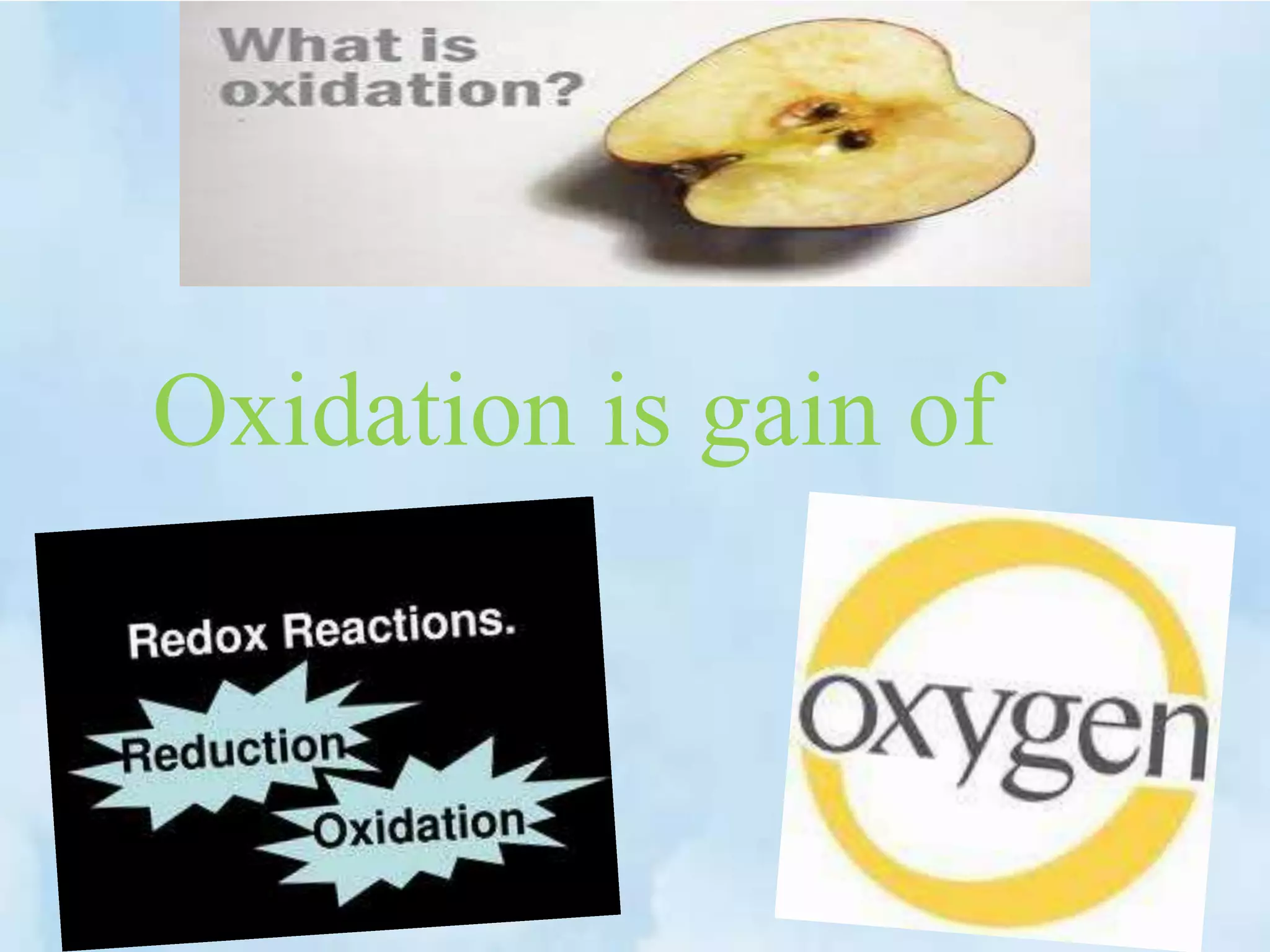
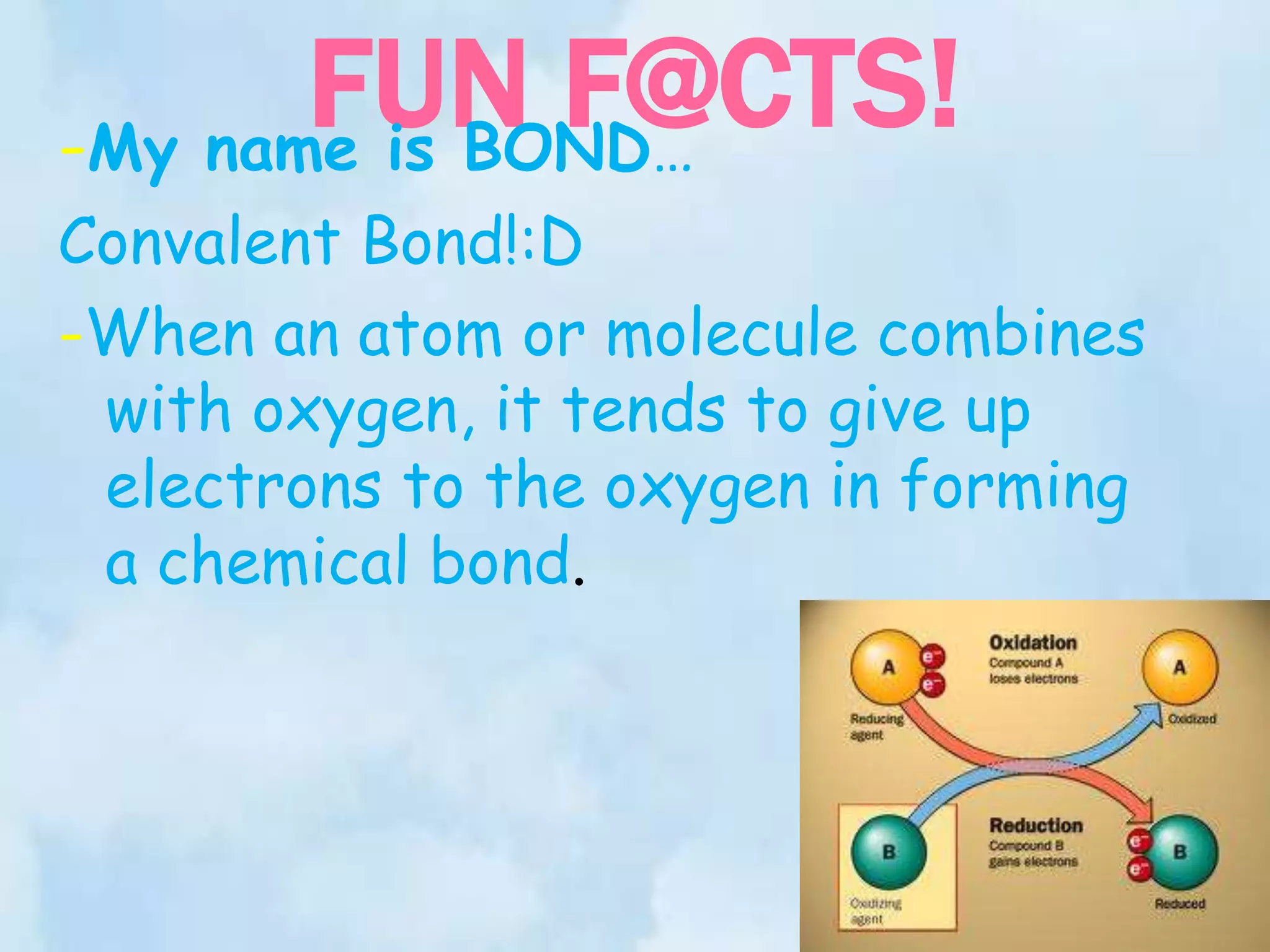
Oxidation is gain of
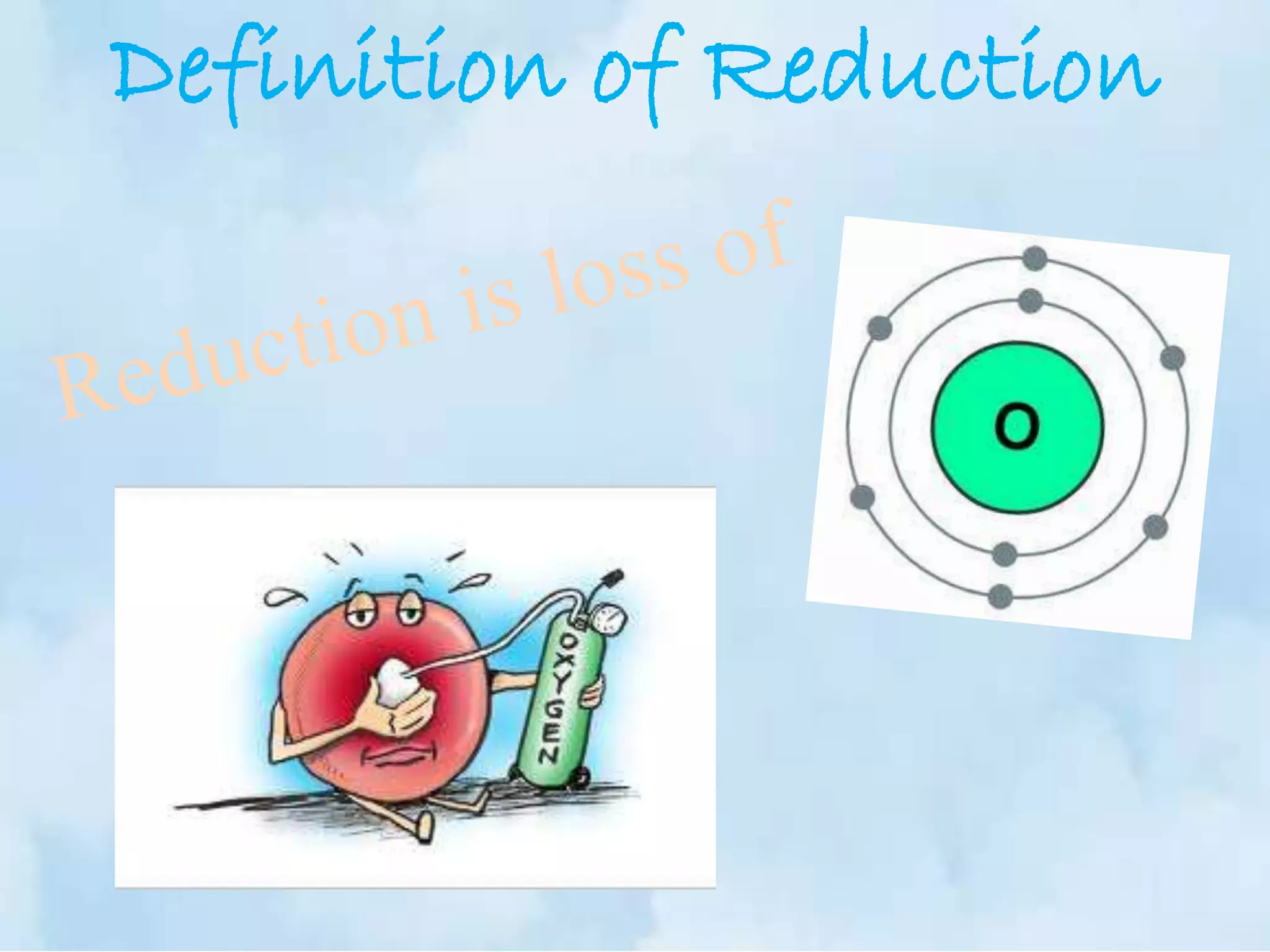
Definition of Reduction
ExAmPle
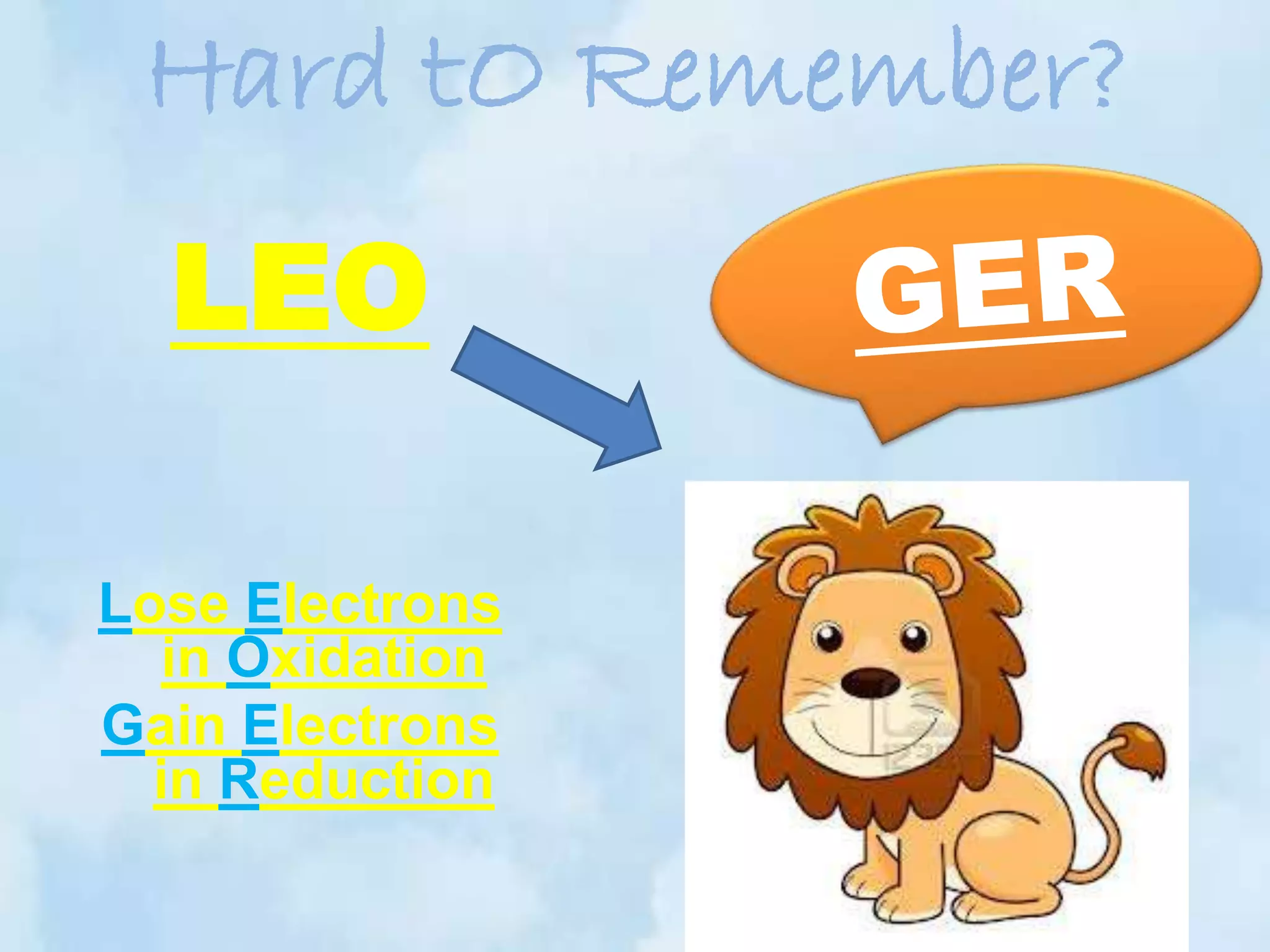
Hard tO Remember?
  LEO

Lose Electrons
  in Oxidation
Gain Electrons
  in Reduction
VIDEO!!
http://www.youtube.com/watch?v=dxlWtsFinT
  M
FUN F@CTS!
-My name is BOND…
Convalent Bond!:D
-When an atom or molecule combines
 with oxygen, it tends to give up
 electrons to the oxygen in forming
 a chemical bond.
Pls click to the next pg, thank you
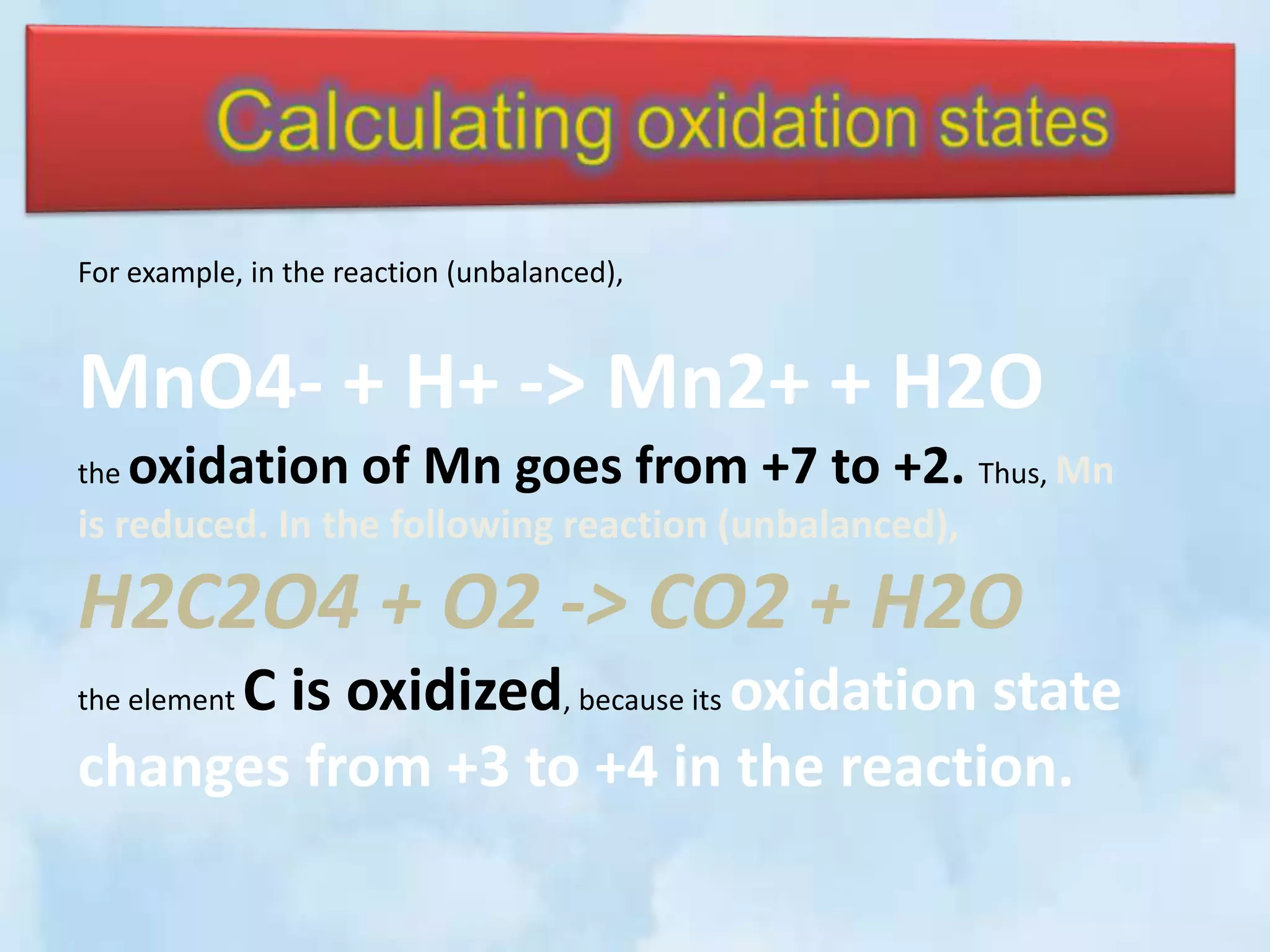
For example, in the reaction (unbalanced),


MnO4- + H+ -> Mn2+ + H2O
the   oxidation of Mn goes from +7 to +2. Thus, Mn
is reduced. In the following reaction (unbalanced),

H2C2O4 + O2 -> CO2 + H2O
     C is oxidized, because its oxidation state
the element

changes from +3 to +4 in the reaction.
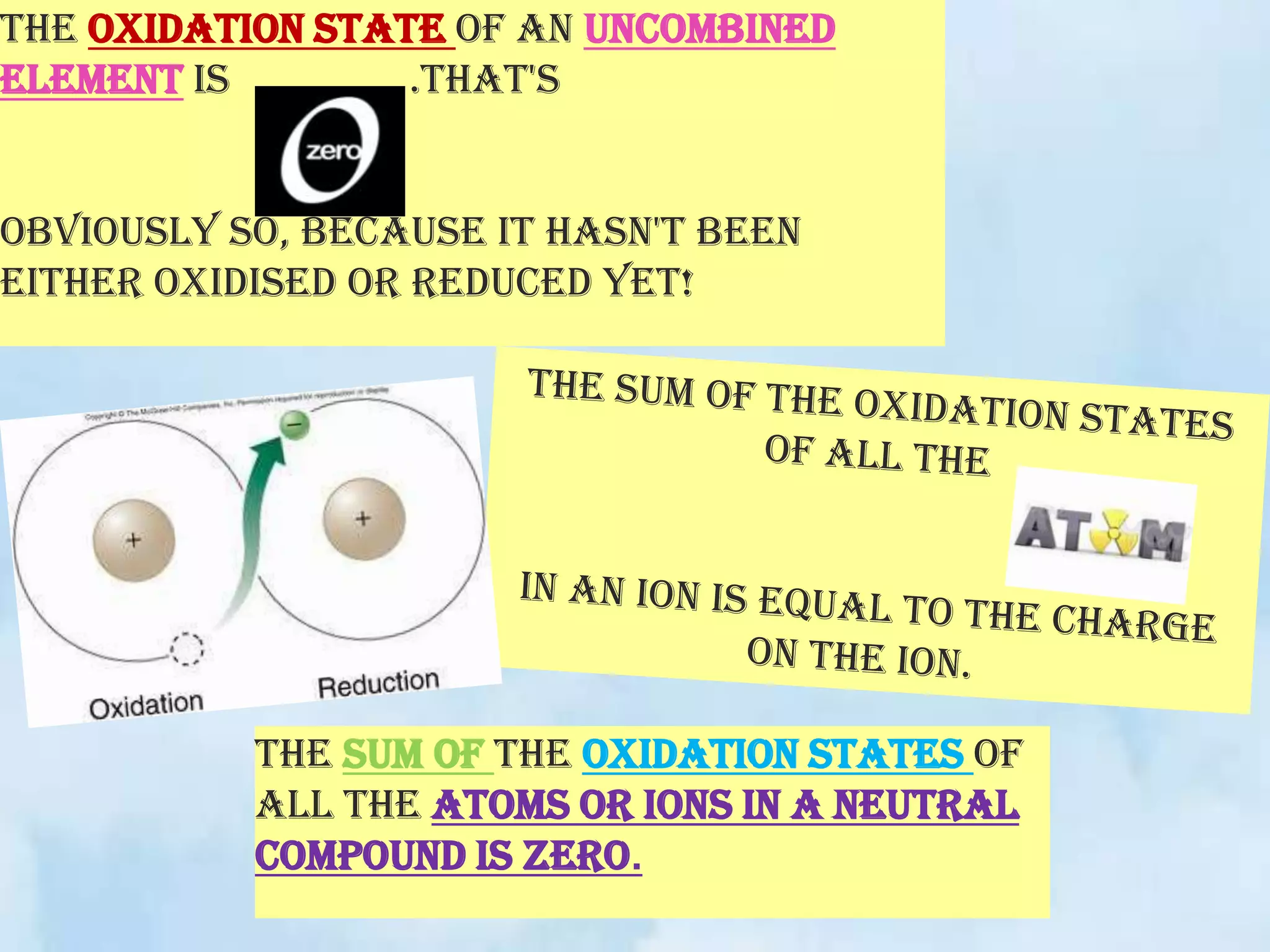
The oxidation state of an uncombined
element is        .That's


obviously so, because it hasn't been
either oxidised or reduced yet!


           The sum of the oxidation states of
           all the atoms or ions in a neutral
           compound is zero.
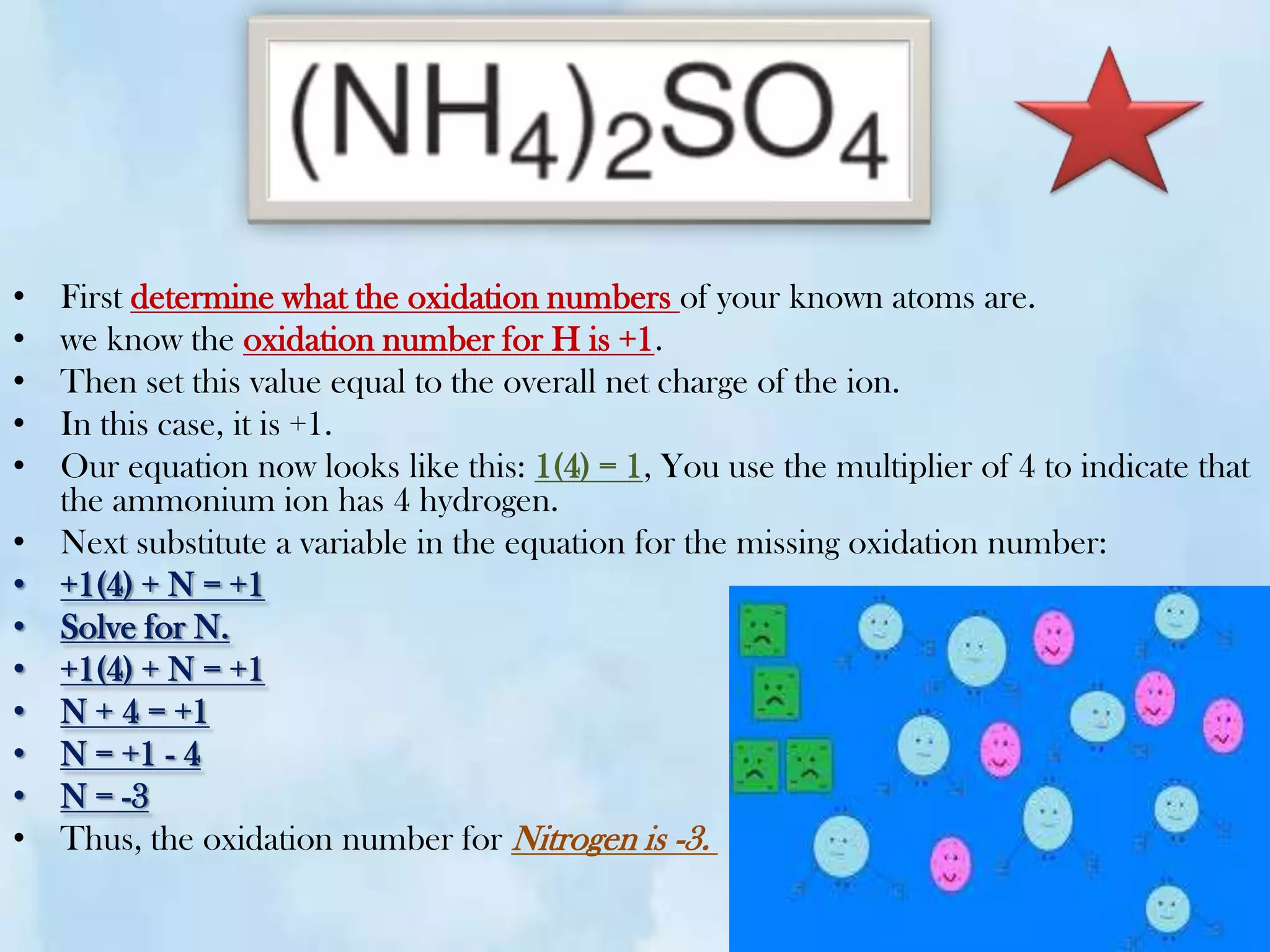
•   First determine what the oxidation numbers of your known atoms are.
•   we know the oxidation number for H is +1.
•   Then set this value equal to the overall net charge of the ion.
•   In this case, it is +1.
•   Our equation now looks like this: 1(4) = 1, You use the multiplier of 4 to indicate that
    the ammonium ion has 4 hydrogen.
•   Next substitute a variable in the equation for the missing oxidation number:
•   +1(4) + N = +1
•   Solve for N.
•   +1(4) + N = +1
•   N + 4 = +1
•   N = +1 - 4
•   N = -3
•   Thus, the oxidation number for Nitrogen is -3.
CREDITS:

Definition of oxidation

  • 1.
  • 2.
  • 3.
  • 4.
    Hard tO Remember? LEO Lose Electrons in Oxidation Gain Electrons in Reduction
  • 5.
  • 6.
    FUN F@CTS! -My nameis BOND… Convalent Bond!:D -When an atom or molecule combines with oxygen, it tends to give up electrons to the oxygen in forming a chemical bond.
  • 7.
    Pls click tothe next pg, thank you
  • 8.
    For example, inthe reaction (unbalanced), MnO4- + H+ -> Mn2+ + H2O the oxidation of Mn goes from +7 to +2. Thus, Mn is reduced. In the following reaction (unbalanced), H2C2O4 + O2 -> CO2 + H2O C is oxidized, because its oxidation state the element changes from +3 to +4 in the reaction.
  • 9.
    The oxidation stateof an uncombined element is .That's obviously so, because it hasn't been either oxidised or reduced yet! The sum of the oxidation states of all the atoms or ions in a neutral compound is zero.
  • 10.
    First determine what the oxidation numbers of your known atoms are. • we know the oxidation number for H is +1. • Then set this value equal to the overall net charge of the ion. • In this case, it is +1. • Our equation now looks like this: 1(4) = 1, You use the multiplier of 4 to indicate that the ammonium ion has 4 hydrogen. • Next substitute a variable in the equation for the missing oxidation number: • +1(4) + N = +1 • Solve for N. • +1(4) + N = +1 • N + 4 = +1 • N = +1 - 4 • N = -3 • Thus, the oxidation number for Nitrogen is -3.
  • 11.