Grammar 1
IECP
FALL 2013
NIKKI MATTSON
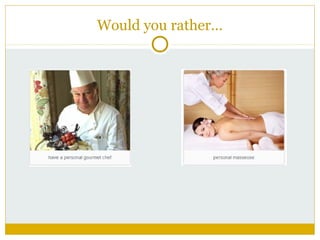
Would you rather…
Agenda
1A = evaluations, Boucke 111 (11:20-12:20)


DISSA presentation, Boucke 410 (12:20-1:20)

1B = Future Tense
Future (be going to/ PP + time/will)
Be going to




I am going to eat lunch after class.
He/she/it is going to have a party this weekend.
We/you/they are going to go shopping tonight.

Present Progressive + time marker




I am flying to LA at 6:00 tonight.
He/she/it is leaving tomorrow.
We/you/ they are moving next year.
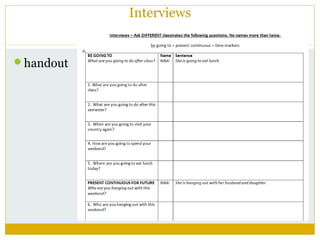
Interviews

handout
Will
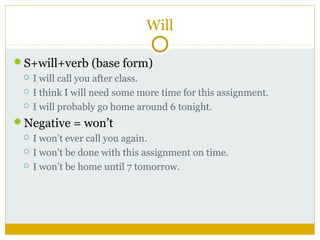
S+will+verb (base form)




I will call you after class.
I think I will need some more time for this assignment.
I will probably go home around 6 tonight.

Negative = won’t




I won’t ever call you again.
I won’t be done with this assignment on time.
I won’t be home until 7 tomorrow.
Will
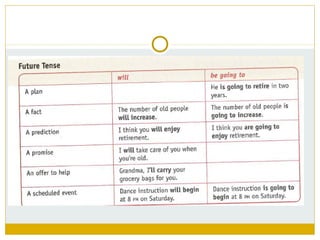
Use will or be going to for predictions about the

future.


I think it will/is going to rain tomorrow.

Tell your partner a prediction that you have about…




Tomorrow
Next week
Next year
Will
Use will for a promise.




I will call you tomorrow.
I will give you the money tomorrow.
I will meet you there at 5:00.

Tell your partner three promises.
Will
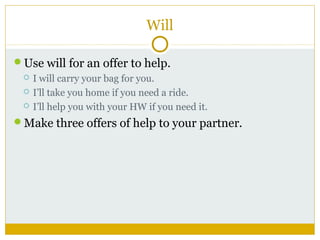
Use will for an offer to help.




I will carry your bag for you.
I’ll take you home if you need a ride.
I’ll help you with your HW if you need it.

Make three offers of help to your partner.
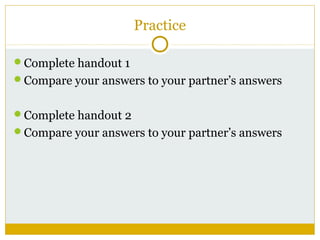
Practice
Complete handout 1
Compare your answers to your partner’s answers
Complete handout 2
Compare your answers to your partner’s answers
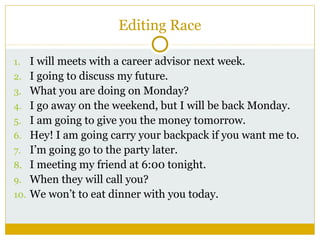
Editing Race
1. I will meets with a career advisor next week.
2. I going to discuss my future.
3. What you are doing on Monday?
4. I go away on the weekend, but I will be back Monday.
5. I am going to give you the money tomorrow.
6. Hey! I am going carry your backpack if you want me to.
7. I’m going go to the party later.
8. I meeting my friend at 6:00 tonight.
9. When they will call you?
10. We won’t to eat dinner with you today.
Comparing Tenses
Handout (pgs. 57-58)
Will, May, and Might for Future Possibility
Read pg. 348 out loud with your partner and

complete B + C
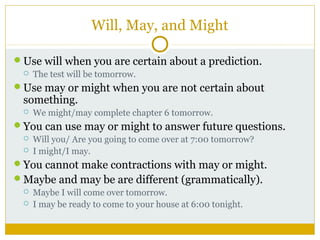
Will, May, and Might
Use will when you are certain about a prediction.


The test will be tomorrow.

Use may or might when you are not certain about

something.


We might/may complete chapter 6 tomorrow.

You can use may or might to answer future questions.



Will you/ Are you going to come over at 7:00 tomorrow?
I might/I may.

You cannot make contractions with may or might.
Maybe and may be are different (grammatically).



Maybe I will come over tomorrow.
I may be ready to come to your house at 6:00 tonight.
Practice
Pg. 351, ex. 2.1
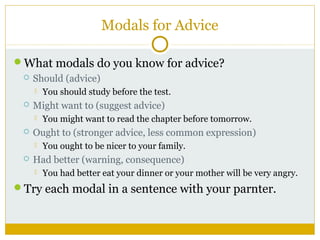
Modals for Advice
What modals do you know for advice?


Should (advice)




Might want to (suggest advice)




You might want to read the chapter before tomorrow.

Ought to (stronger advice, less common expression)




You should study before the test.

You ought to be nicer to your family.

Had better (warning, consequence)


You had better eat your dinner or your mother will be very angry.

Try each modal in a sentence with your parnter.
Modals in Reading
Read pg. 360 out loud with your partner and

complete B+C
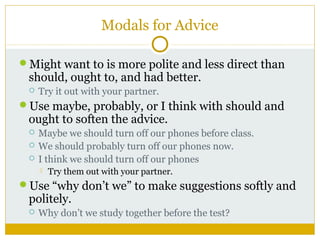
Modals for Advice
Might want to is more polite and less direct than

should, ought to, and had better.


Try it out with your partner.

Use maybe, probably, or I think with should and

ought to soften the advice.




Maybe we should turn off our phones before class.
We should probably turn off our phones now.
I think we should turn off our phones


Try them out with your partner.

Use “why don’t we” to make suggestions softly and

politely.


Why don’t we study together before the test?
Getting Advice
handout
Practice

Pg. 364 – listen and complete
HW
1B = WB 184-190
1A= None

December 3 -37. 1 b future, 1a evaluations

  • 1.
  • 2.
  • 3.
    Agenda 1A = evaluations,Boucke 111 (11:20-12:20)  DISSA presentation, Boucke 410 (12:20-1:20) 1B = Future Tense
  • 4.
    Future (be goingto/ PP + time/will) Be going to    I am going to eat lunch after class. He/she/it is going to have a party this weekend. We/you/they are going to go shopping tonight. Present Progressive + time marker    I am flying to LA at 6:00 tonight. He/she/it is leaving tomorrow. We/you/ they are moving next year.
  • 5.
  • 6.
    Will S+will+verb (base form)    Iwill call you after class. I think I will need some more time for this assignment. I will probably go home around 6 tonight. Negative = won’t    I won’t ever call you again. I won’t be done with this assignment on time. I won’t be home until 7 tomorrow.
  • 7.
    Will Use will orbe going to for predictions about the future.  I think it will/is going to rain tomorrow. Tell your partner a prediction that you have about…    Tomorrow Next week Next year
  • 8.
    Will Use will fora promise.    I will call you tomorrow. I will give you the money tomorrow. I will meet you there at 5:00. Tell your partner three promises.
  • 9.
    Will Use will foran offer to help.    I will carry your bag for you. I’ll take you home if you need a ride. I’ll help you with your HW if you need it. Make three offers of help to your partner.
  • 11.
    Practice Complete handout 1 Compareyour answers to your partner’s answers Complete handout 2 Compare your answers to your partner’s answers
  • 12.
    Editing Race 1. Iwill meets with a career advisor next week. 2. I going to discuss my future. 3. What you are doing on Monday? 4. I go away on the weekend, but I will be back Monday. 5. I am going to give you the money tomorrow. 6. Hey! I am going carry your backpack if you want me to. 7. I’m going go to the party later. 8. I meeting my friend at 6:00 tonight. 9. When they will call you? 10. We won’t to eat dinner with you today.
  • 13.
  • 14.
    Will, May, andMight for Future Possibility Read pg. 348 out loud with your partner and complete B + C
  • 15.
    Will, May, andMight Use will when you are certain about a prediction.  The test will be tomorrow. Use may or might when you are not certain about something.  We might/may complete chapter 6 tomorrow. You can use may or might to answer future questions.   Will you/ Are you going to come over at 7:00 tomorrow? I might/I may. You cannot make contractions with may or might. Maybe and may be are different (grammatically).   Maybe I will come over tomorrow. I may be ready to come to your house at 6:00 tonight.
  • 16.
  • 17.
    Modals for Advice Whatmodals do you know for advice?  Should (advice)   Might want to (suggest advice)   You might want to read the chapter before tomorrow. Ought to (stronger advice, less common expression)   You should study before the test. You ought to be nicer to your family. Had better (warning, consequence)  You had better eat your dinner or your mother will be very angry. Try each modal in a sentence with your parnter.
  • 18.
    Modals in Reading Readpg. 360 out loud with your partner and complete B+C
  • 19.
    Modals for Advice Mightwant to is more polite and less direct than should, ought to, and had better.  Try it out with your partner. Use maybe, probably, or I think with should and ought to soften the advice.    Maybe we should turn off our phones before class. We should probably turn off our phones now. I think we should turn off our phones  Try them out with your partner. Use “why don’t we” to make suggestions softly and politely.  Why don’t we study together before the test?
  • 20.
  • 21.
    Practice Pg. 364 –listen and complete
  • 22.
    HW 1B = WB184-190 1A= None