Download to read offline
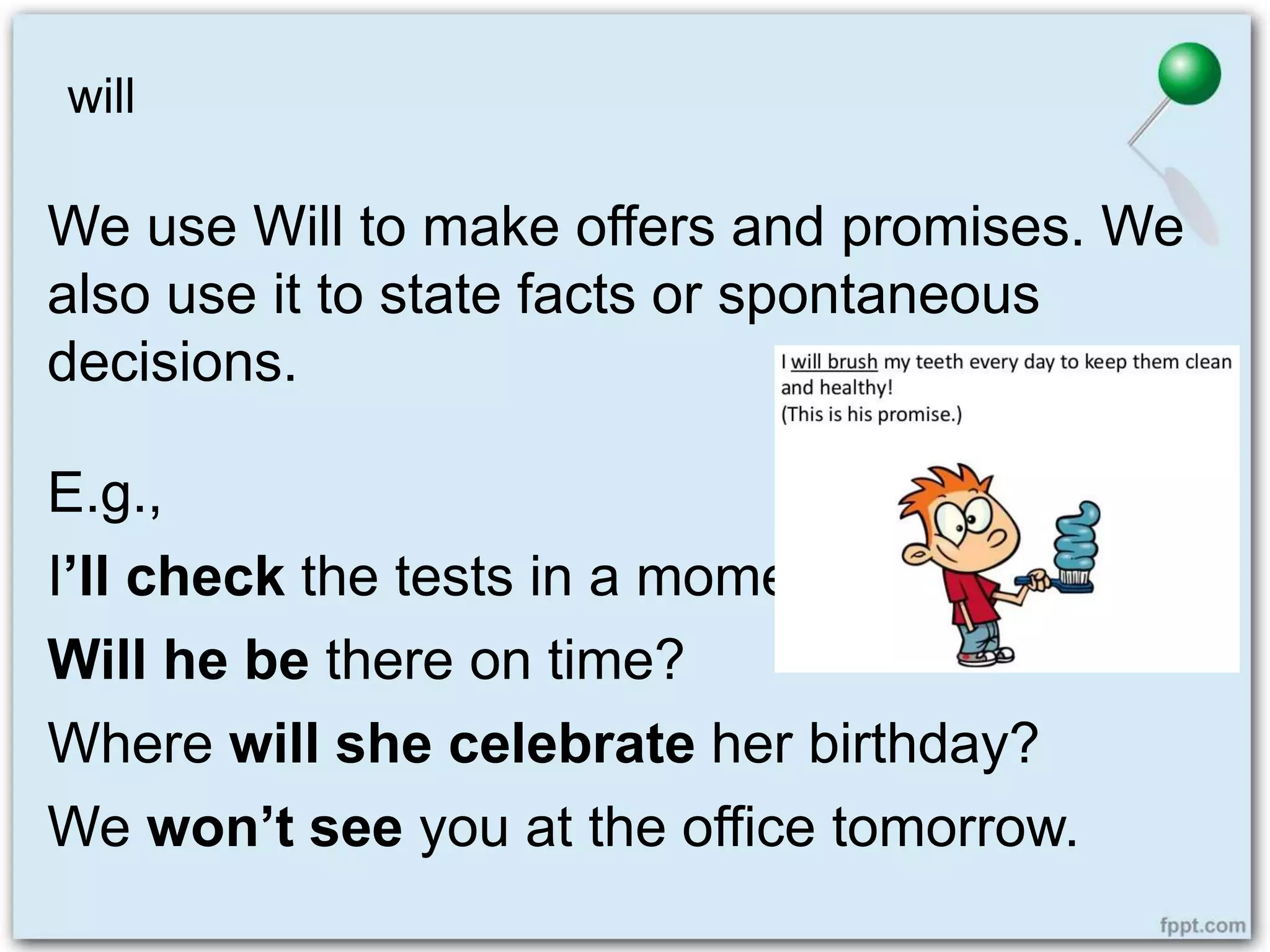
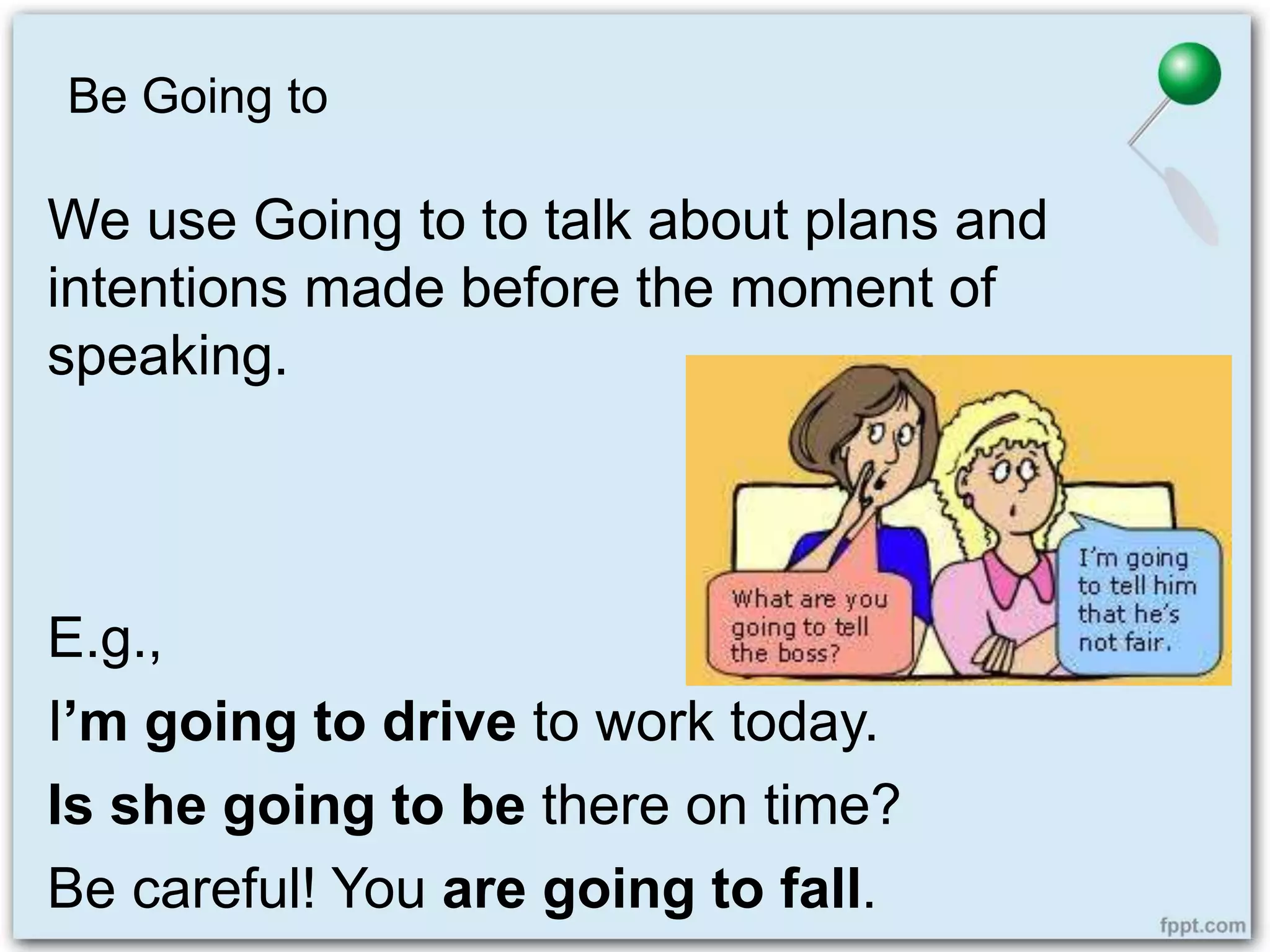
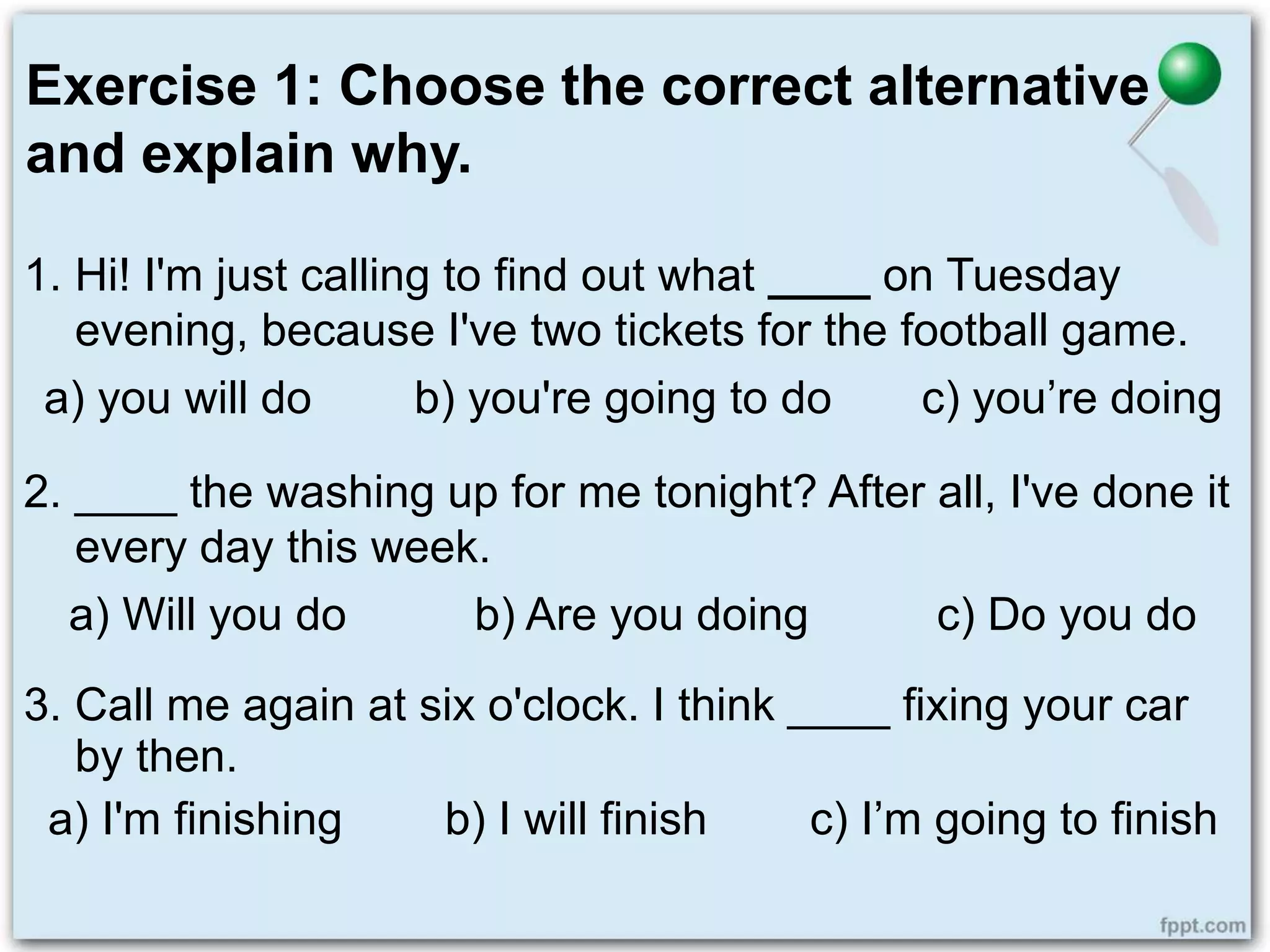
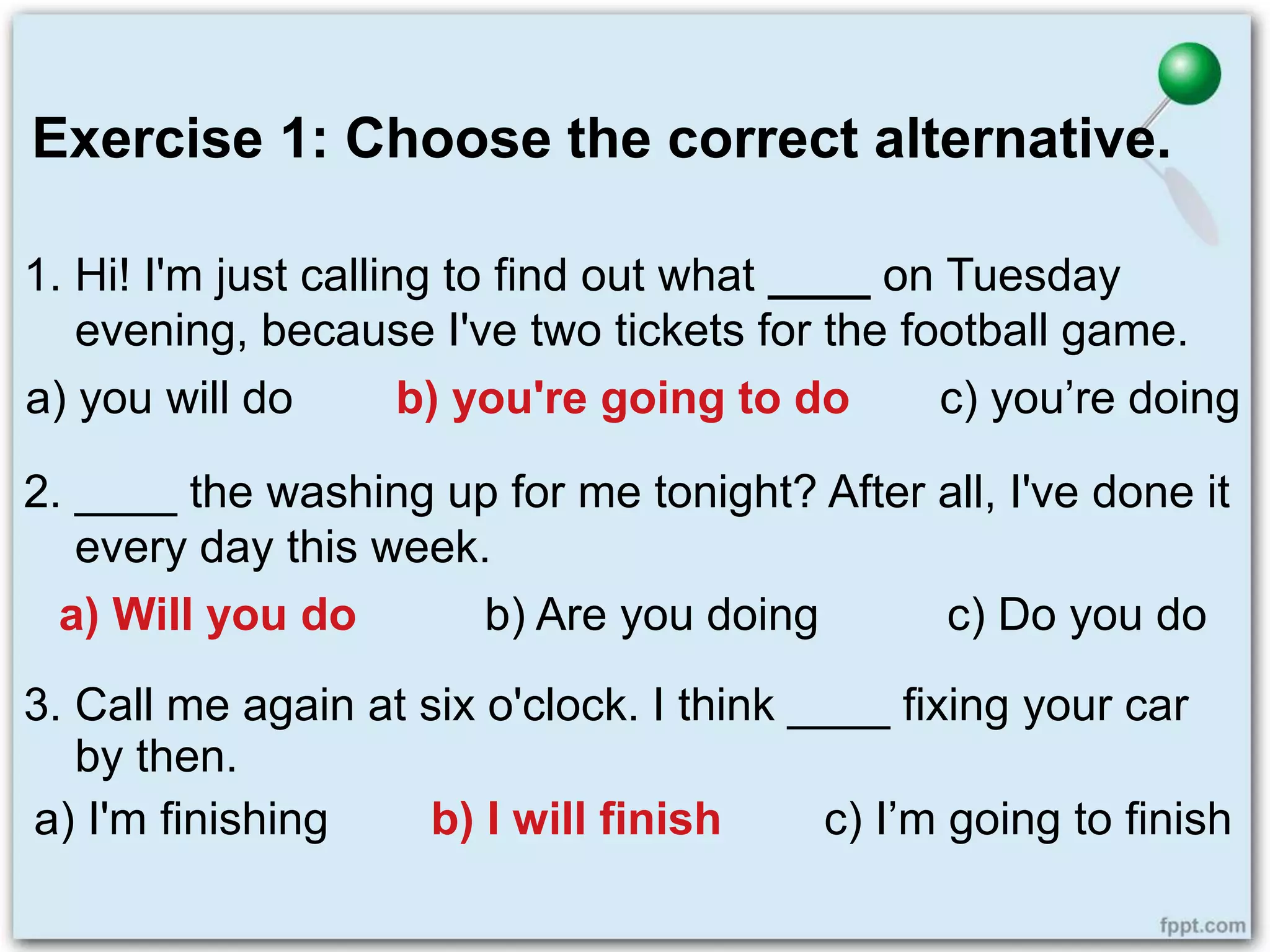
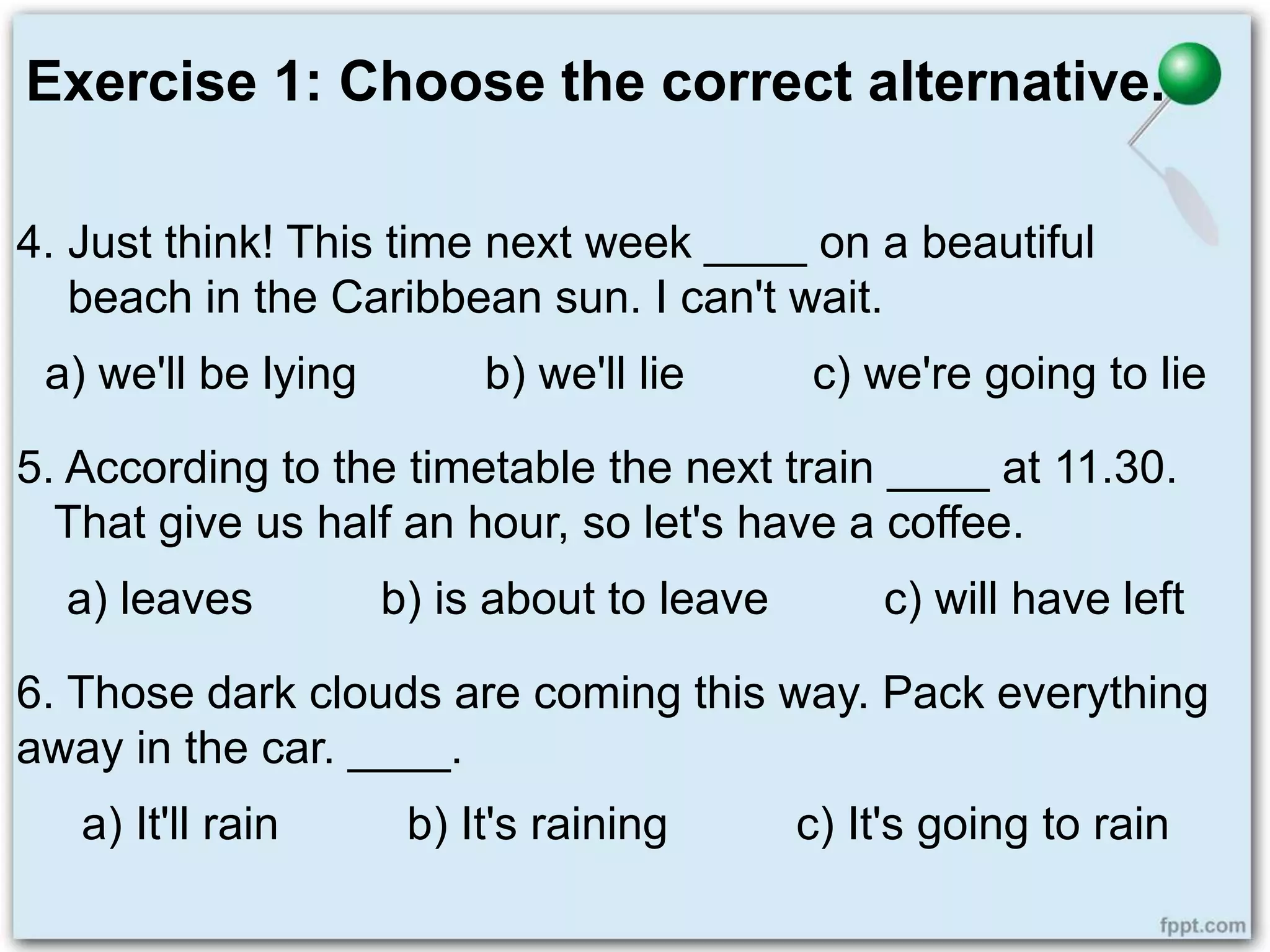
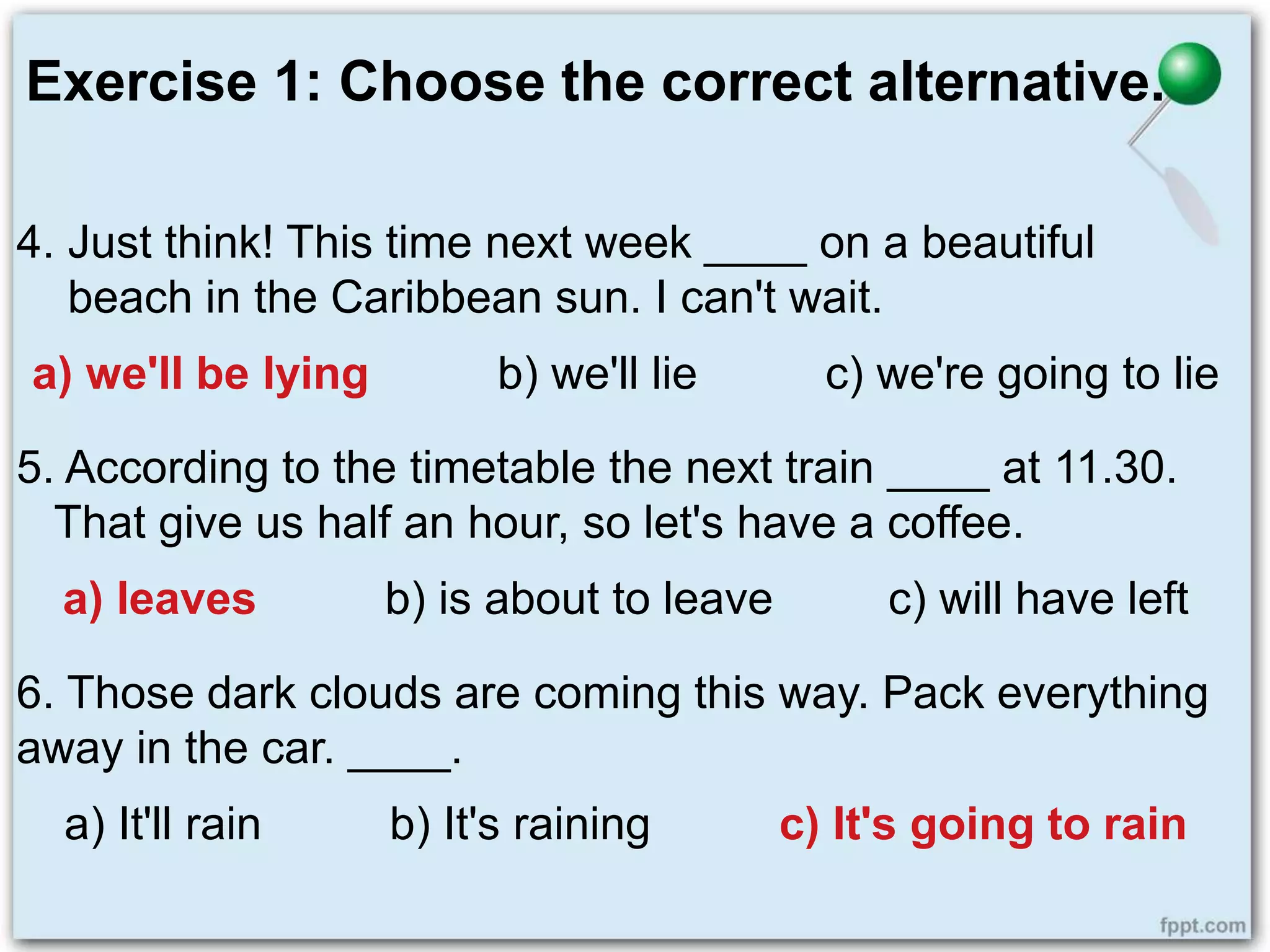
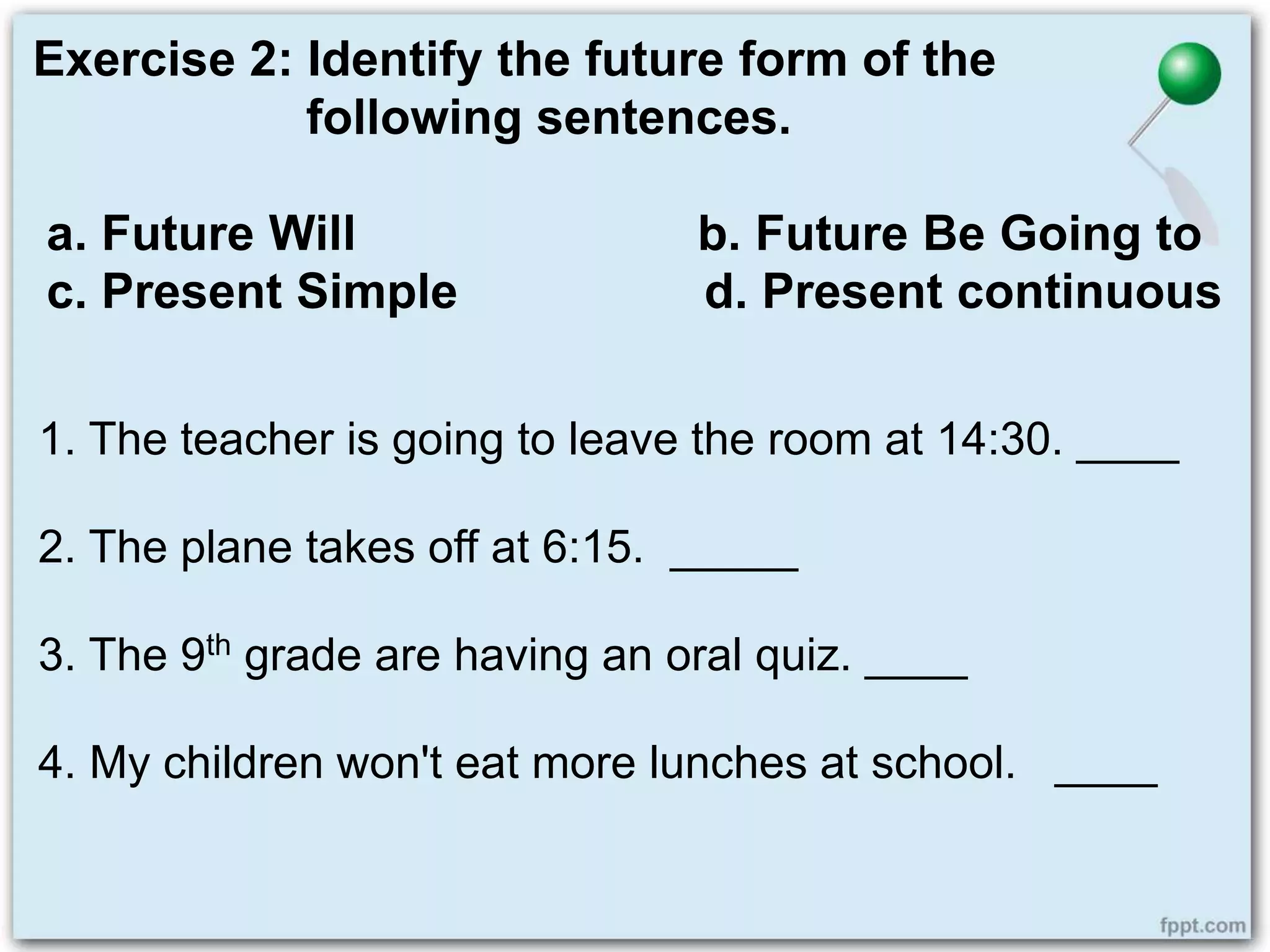
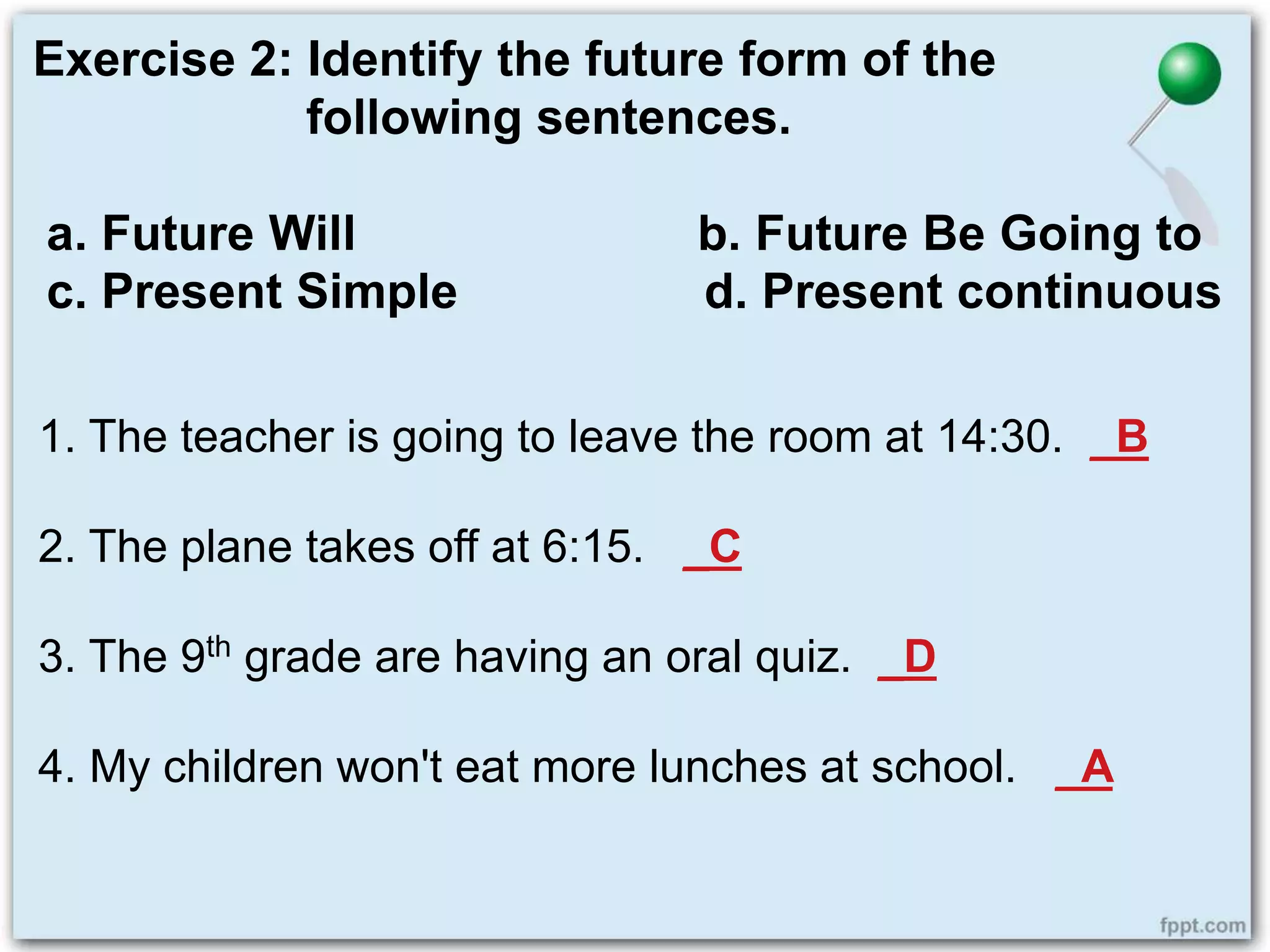
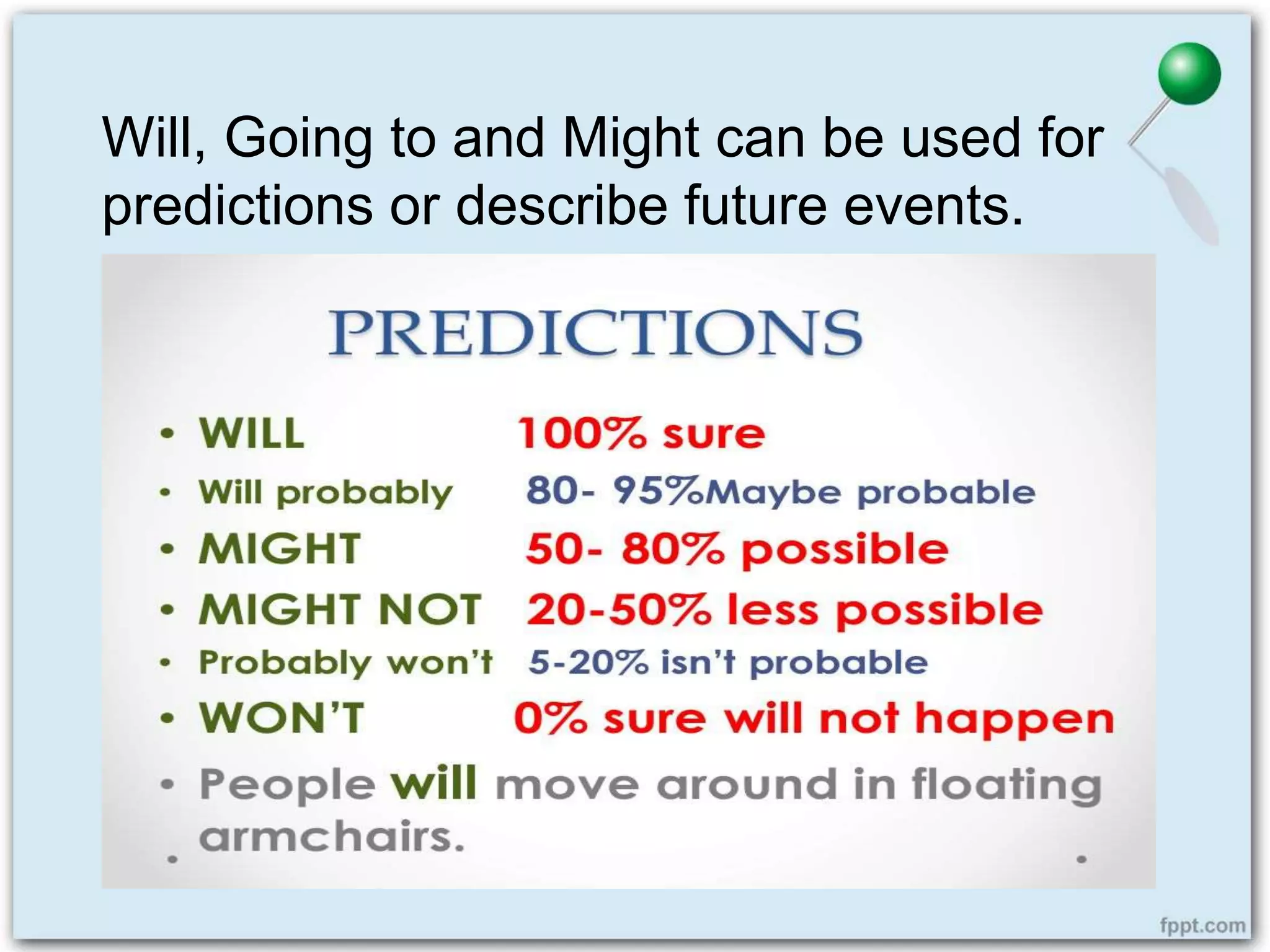
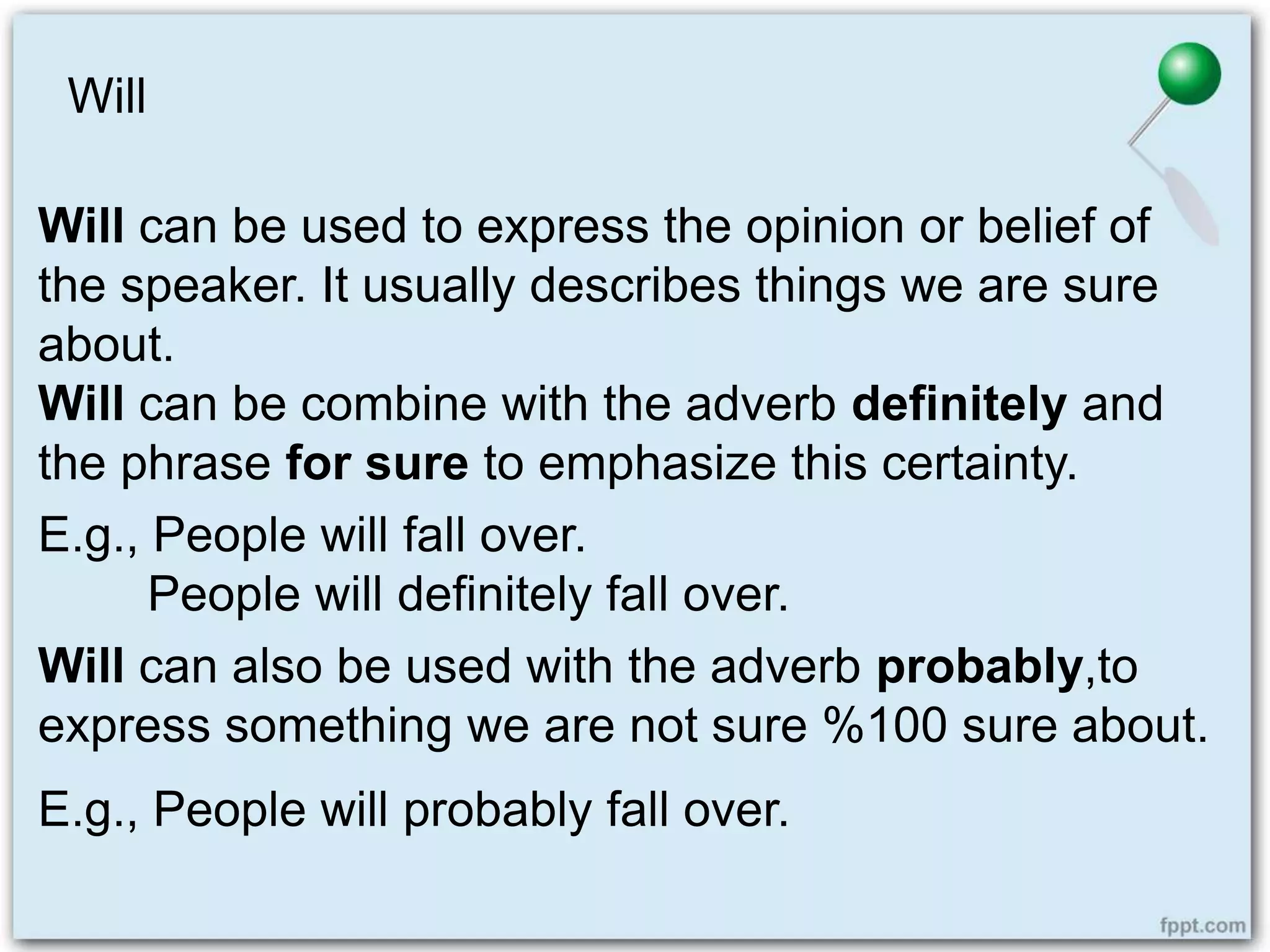
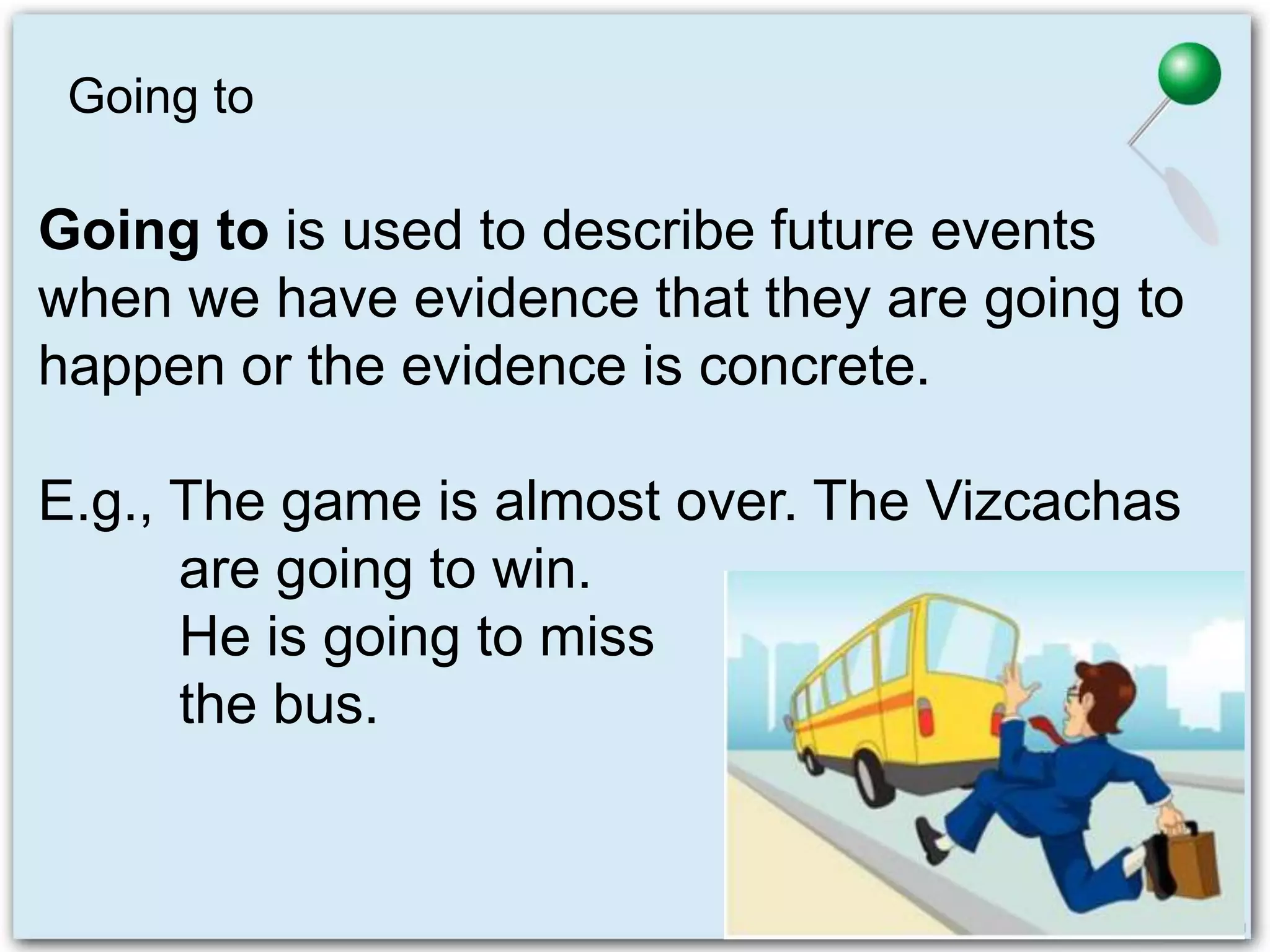
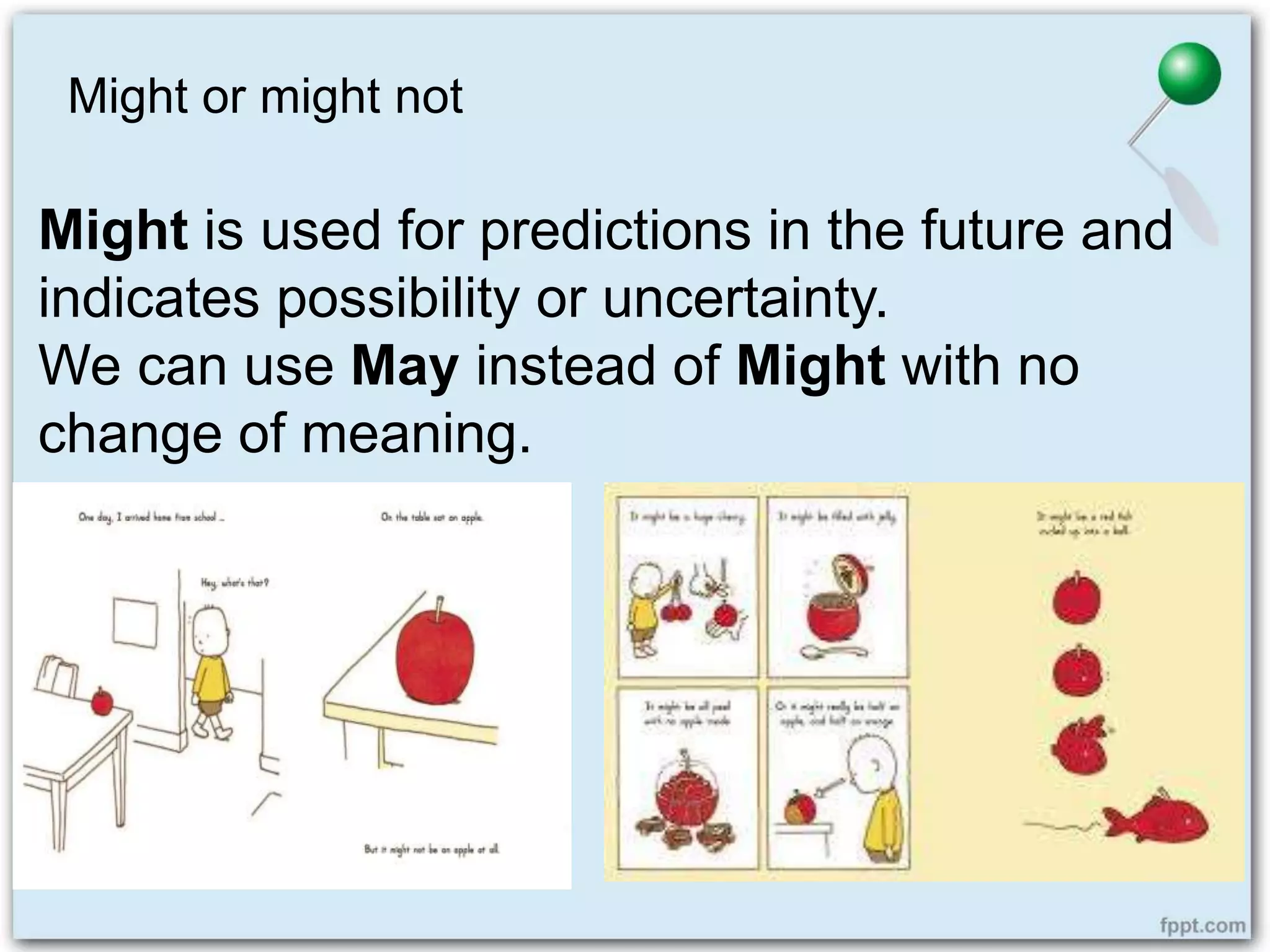
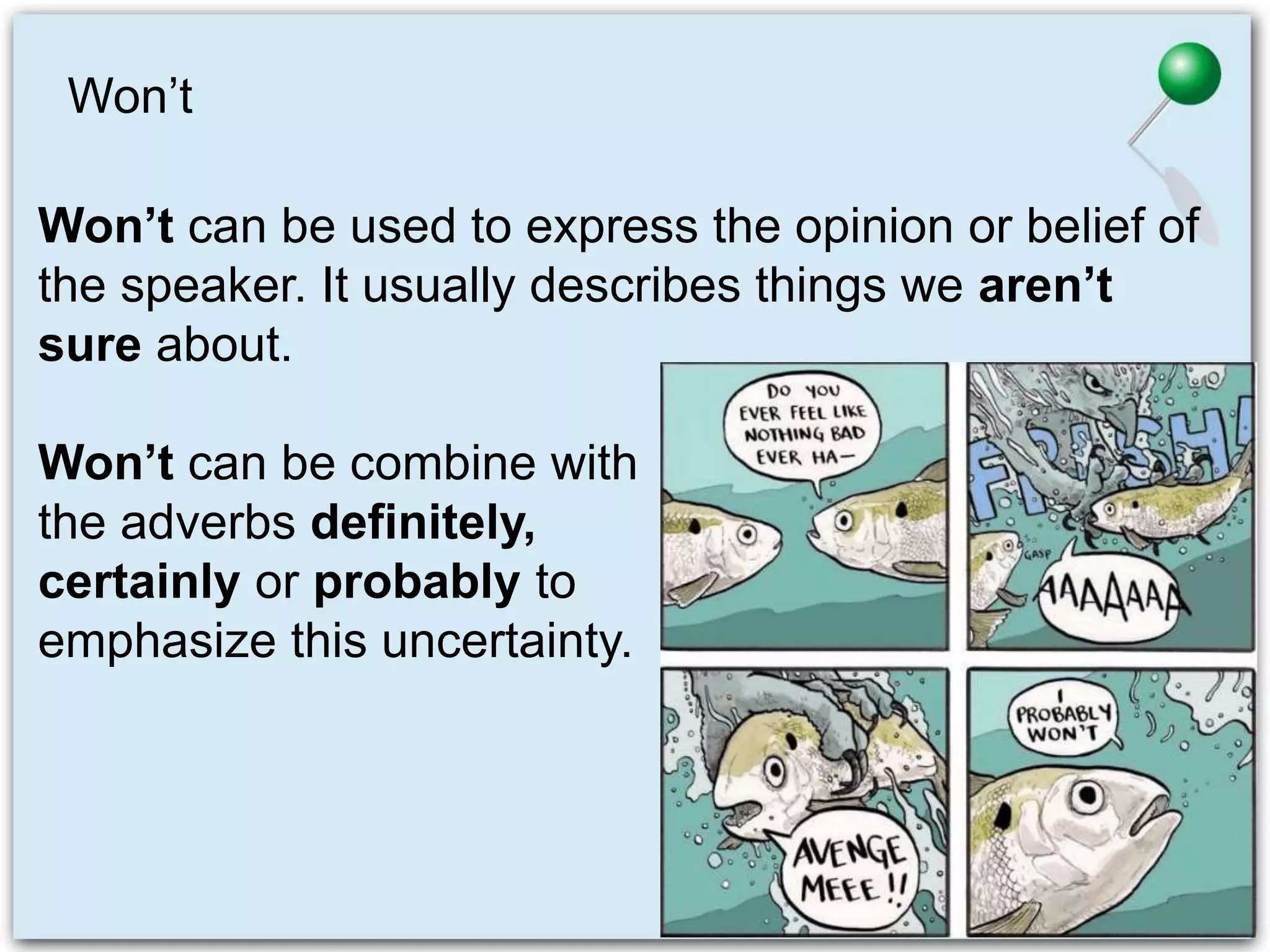
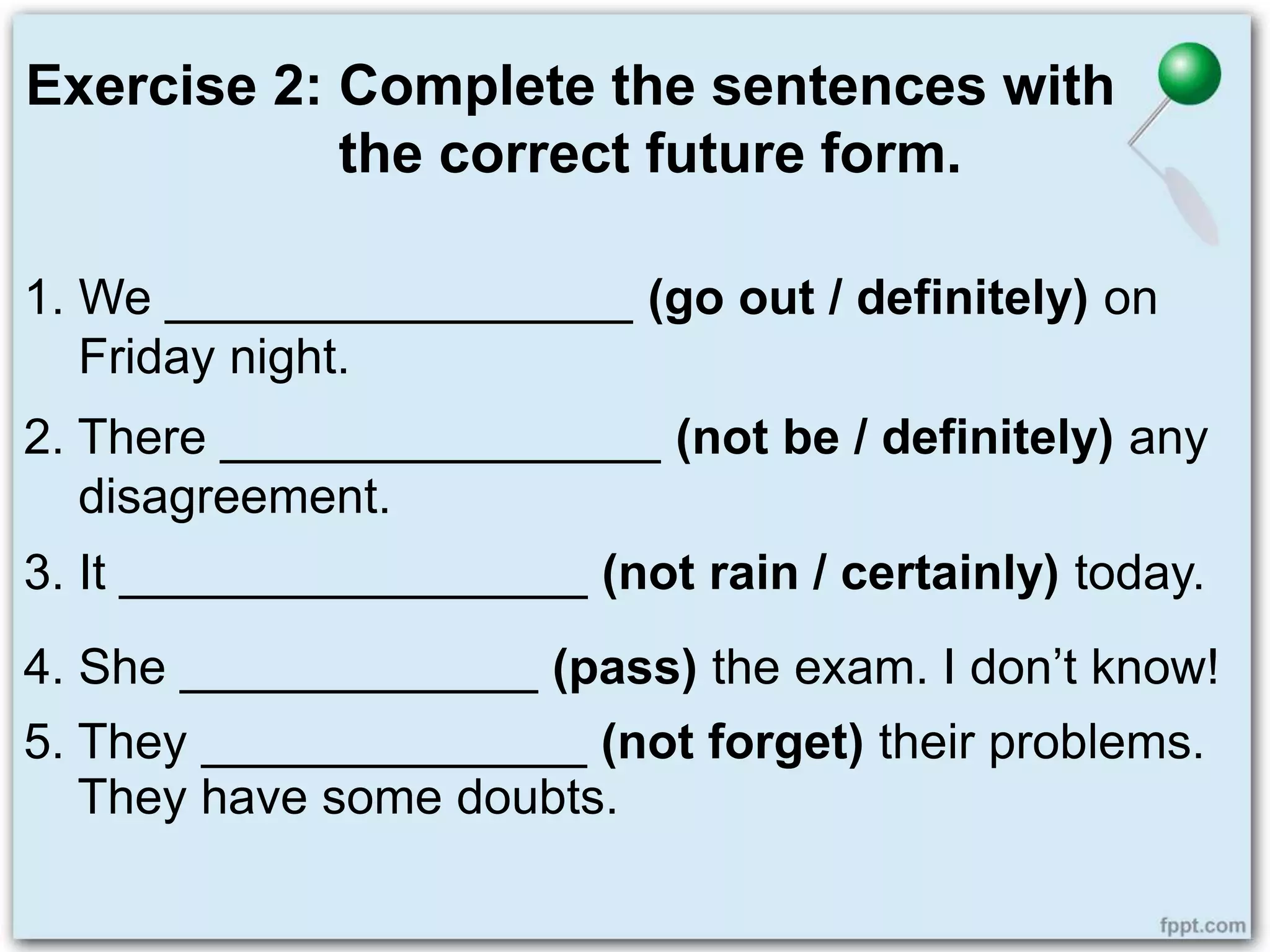
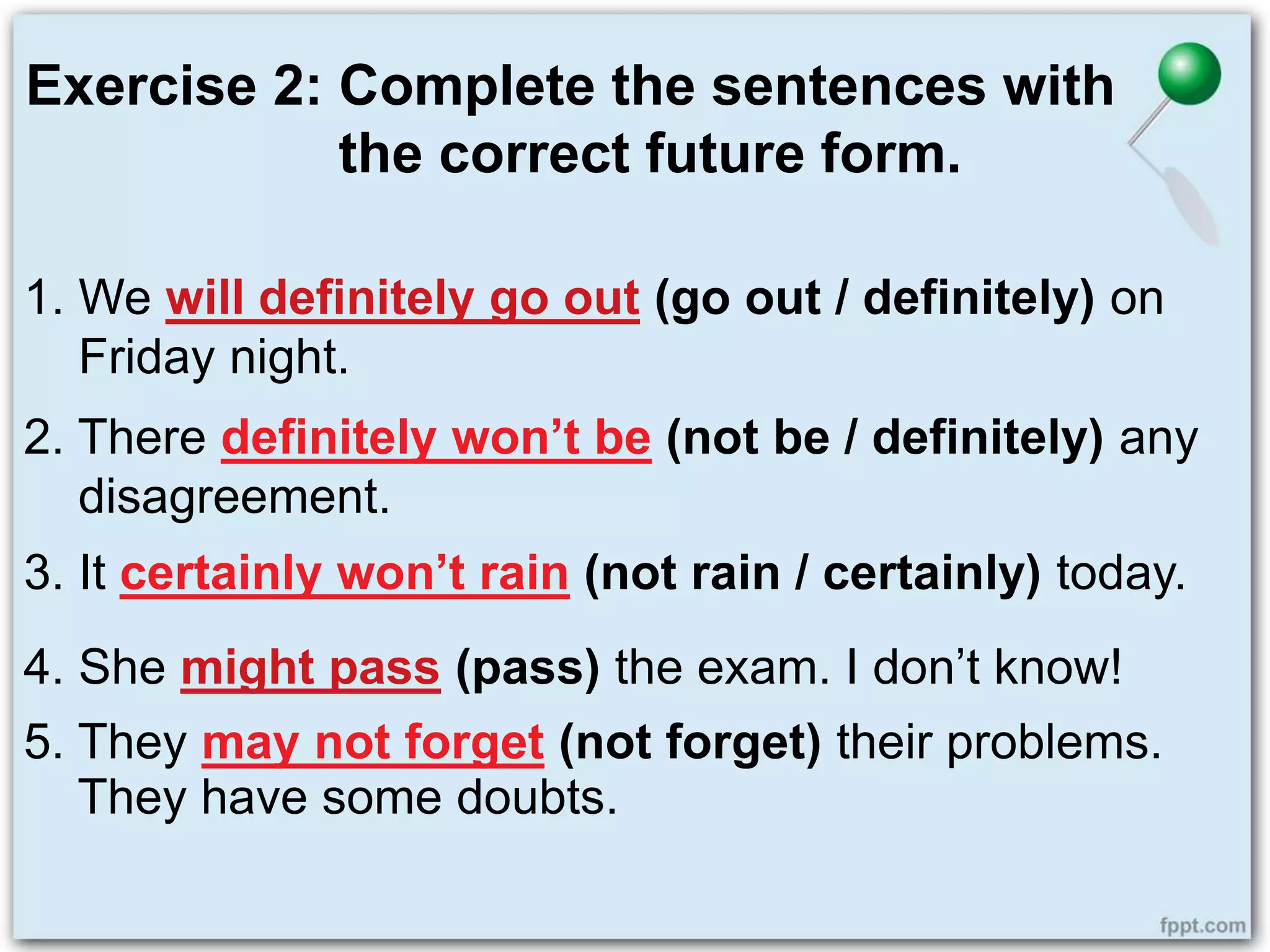


This document provides an overview of different ways to express the future in English using will, be going to, present simple, present continuous, and might. It discusses when each form is used, such as will for promises and spontaneous decisions, be going to for plans, present simple for schedules, and present continuous for fixed arrangements. Examples are given for each. The document then presents exercises for learners to practice identifying and using the correct future form based on the context. It focuses on will, be going to, and might and their uses for varying degrees of certainty or uncertainty about future events.


