Volc no
BY:
THOMAS CHINNAPPAN . A ,
M.SC.APPLIED GEOLOGY,
PERIYAR UNIVERSITY,
SALEM.
Contents
Volcano
Volcano Formation
Characteristics Of Volcanoes
Volcanic Hazards
Volcano Forecast
Volcano
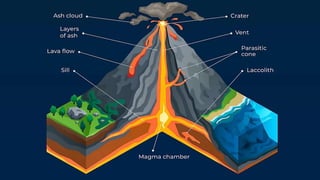
A volcano is a rupture in the crust of a planetary-mass object, such
as Earth, that allows hot lava, volcanic ash, and gases to escape from
a magma chamber below the surface. On Earth, volcanoes are most
often found where tectonic plates are diverging or converging, and
most are found underwater.
Volcano formation
Magma rises through cracks or weaknesses in the Earth's crust.
Pressure builds up inside the Earth.
When this pressure is released, eg as a result of plate movement, magma
explodes to the surface causing a volcanic eruption.
The lava from the eruption cools to form new crust.
Over time, after several eruptions, the rock builds up and a volcano forms
Characteristics of volcanoes
A volcano is formed by eruptions of lava and ash.
Volcanoes are usually cone shaped mountains or hills.
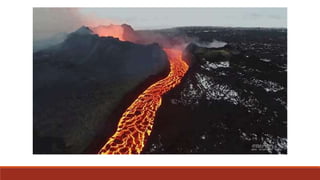
When magma reaches the Earth's surface it is called lava. When the lava cools,
it forms rock.
Volcanic eruptions can happen at destructive and constructive boundaries, but
not at conservative boundaries or collision zones.
Some volcanoes happen underwater, along the seabed or ocean floor.
Volcanic Hazards
A volcanic hazard is the probability a volcanic eruption or related
geophysical event will occur in each geographic area and within a
specified window of time. The risk that can be associated with a
volcanic hazard depends on the proximity and vulnerability of an
asset or a population of people near to where a volcanic event might
occur
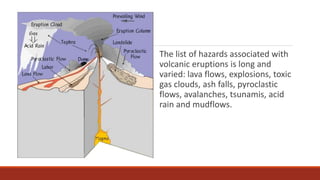
The list of hazards associated with
volcanic eruptions is long and
varied: lava flows, explosions, toxic
gas clouds, ash falls, pyroclastic
flows, avalanches, tsunamis, acid
rain and mudflows.
Volcano Forecast
The greatest hazard at potentially active volcanoes is human
complacency. The physical hazards can be reliably estimated by
studying past eruptive activity as recorded in history or in the
prehistoric deposits around a volcano. Volcano observatories can
monitor local earthquake activity and the surface deformation of a
potentially active volcano and make useful, if not yet precise,
forecasts of eruptions.
THANK YOU

Volcano in environment geology

  • 1.
    Volc no BY: THOMAS CHINNAPPAN. A , M.SC.APPLIED GEOLOGY, PERIYAR UNIVERSITY, SALEM.
  • 2.
    Contents Volcano Volcano Formation Characteristics OfVolcanoes Volcanic Hazards Volcano Forecast
  • 3.
    Volcano A volcano isa rupture in the crust of a planetary-mass object, such as Earth, that allows hot lava, volcanic ash, and gases to escape from a magma chamber below the surface. On Earth, volcanoes are most often found where tectonic plates are diverging or converging, and most are found underwater.
  • 5.
    Volcano formation Magma risesthrough cracks or weaknesses in the Earth's crust. Pressure builds up inside the Earth. When this pressure is released, eg as a result of plate movement, magma explodes to the surface causing a volcanic eruption. The lava from the eruption cools to form new crust. Over time, after several eruptions, the rock builds up and a volcano forms
  • 7.
    Characteristics of volcanoes Avolcano is formed by eruptions of lava and ash. Volcanoes are usually cone shaped mountains or hills. When magma reaches the Earth's surface it is called lava. When the lava cools, it forms rock. Volcanic eruptions can happen at destructive and constructive boundaries, but not at conservative boundaries or collision zones. Some volcanoes happen underwater, along the seabed or ocean floor.
  • 8.
    Volcanic Hazards A volcanichazard is the probability a volcanic eruption or related geophysical event will occur in each geographic area and within a specified window of time. The risk that can be associated with a volcanic hazard depends on the proximity and vulnerability of an asset or a population of people near to where a volcanic event might occur
  • 9.
    The list ofhazards associated with volcanic eruptions is long and varied: lava flows, explosions, toxic gas clouds, ash falls, pyroclastic flows, avalanches, tsunamis, acid rain and mudflows.
  • 10.
    Volcano Forecast The greatesthazard at potentially active volcanoes is human complacency. The physical hazards can be reliably estimated by studying past eruptive activity as recorded in history or in the prehistoric deposits around a volcano. Volcano observatories can monitor local earthquake activity and the surface deformation of a potentially active volcano and make useful, if not yet precise, forecasts of eruptions.
  • 11.