
Points to be discussed are
๏ƒ˜What is death
๏ƒ˜Types of death
๏ƒ˜Brain death
DEATH
๏‚— Tenatology is the study of all aspects of death
๏‚— Historically death was considerd as spontaneous
stoppage of heart & lung function
๏‚— New concept is of brain death, irreversible loss of
cerebral function
๏‚— According to registration of births &deaths act,death is
the permanent disappearance all evidences of life at
any time after birth
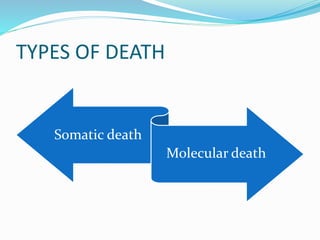
TYPES OF DEATH
Somatic death
Molecular death
SOMATIC DEATH
๏‚— It is the complete and irreversible stoppage of
circulation, respiration and brain functions
๏‚— It is important in resuscitation and organ
transplantation
๏‚— As long as circulation of oxygenated blood is
maintained to brain stem, life exists
๏‚— A person who cannot survive upon withdrawal of
artificial maintenance is dead
MOLECULAR DEATH
๏ƒ˜Death of cells & tissues individually
๏ƒ˜Takes place usually one to two hours after stoppage of
vital functions
๏ƒ˜Individual cell live on their residual oxygen for variable
time after circulation stopped
๏ƒ˜Nervous tissues die rapidly
๏ƒ˜Vital centers of brain loss in about five minutes
๏ƒ˜Muscles live up to one to two hours
ANOXIA
๏‚— According to Gordon stoppage of vital functions
depends upon tissue anoxia
๏‚— Anoxia means lack of oxygen
1.Anoxic anoxia
2.Anaemic anoxia
3.Stagnant anoxia
4.Histotoxic anoxia
๏‚— Anoxic anoxia
Oxygen cannot reach blood, because lack of
oxygen in lungs
occurs
a)from contaminated atmosphere
b)From mechanical interference with passage
of air into or down the respiratory tract
Eg.smothering,choking,hanging or exposure to
fumes wells and tanks
๏‚— Anaemic anoxia
Oxygen carrying capacity reduced
eg: acute massive haemorrhages,poisoning by carbon
monoxide, chlorates,nitrates,coaltar derivatives
๏‚— Stagnant anoxia
Impaired circulation results in a reduction of
oxygen delivery to tissues eg:heart failure,embolism
and shock
๏‚— Histotoxic anoxia
Enzymatic processes by which oxygen in blood
is used by the tissues are blocked
Eg: Acute cyanide poisoning
BRAIN DEATH
๏‚— 3 Types
1.cortical/cerebral death
2.Brain stem death
3.Whole brain death
BRAIN STEM DEATH
๏‚— Here cerebrum intact
๏‚— Loss of vital centers control respiration,
๏‚— Loss of ascending reticular activating system that
sustain consciousness
๏‚— Person become irreversibly comatose& incapable of
spontaneous breathing
๏‚— Can be produced by raised intracranial pressure,
cerebral edema,intracranal hemorrhages
CORTICAL DEATH
๏‚— Here brain stem intact
๏‚— Respiration continues
๏‚— Total loss of power of perception by senses
๏‚— Deep coma is produced by cerebral hypoxia, toxic
conditions or brain injury
WHOLE BRAIN DEATH
๏‚— Permanent cessation of functions of cerebrum
cerebellum & brain stem
CRITERIA FOR DETERMINING BRAIN
DEATH
๏ƒ˜Philadelphia protocol
๏ƒ˜Minnesota criteria
๏ƒ˜Harvard criteria
PHILADELPHIA PROTOCOL
Determined on basis of
๏ƒ˜ Lack of responsiveness to internal and external
environment
๏ƒ˜ Absence of spontaneous breathing movements for 3
minutes, in absence of hypocarbia
๏ƒ˜ No muscular movements with generalized flaccidity
๏ƒ˜ No reflexes and responses
๏ƒ˜ Falling arterial pressure without support by drugs or other
means
๏ƒ˜ Isoelectric EEG recorded spontaneously and during tactile
& auditory stimulation
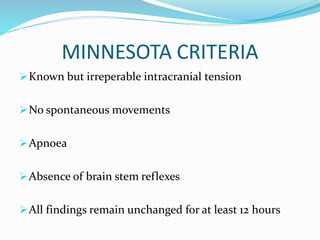
MINNESOTA CRITERIA
๏ƒ˜Known but irreperable intracranial tension
๏ƒ˜No spontaneous movements
๏ƒ˜Apnoea
๏ƒ˜Absence of brain stem reflexes
๏ƒ˜All findings remain unchanged for at least 12 hours
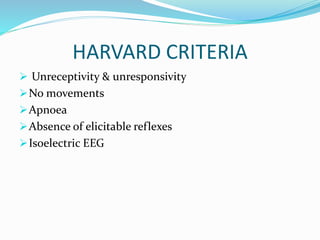
HARVARD CRITERIA
๏ƒ˜ Unreceptivity & unresponsivity
๏ƒ˜No movements
๏ƒ˜Apnoea
๏ƒ˜Absence of elicitable reflexes
๏ƒ˜Isoelectric EEG
THANK U

Death

  • 2.
    Points to bediscussed are ๏ƒ˜What is death ๏ƒ˜Types of death ๏ƒ˜Brain death
  • 3.
    DEATH ๏‚— Tenatology isthe study of all aspects of death ๏‚— Historically death was considerd as spontaneous stoppage of heart & lung function ๏‚— New concept is of brain death, irreversible loss of cerebral function ๏‚— According to registration of births &deaths act,death is the permanent disappearance all evidences of life at any time after birth
  • 4.
    TYPES OF DEATH Somaticdeath Molecular death
  • 5.
    SOMATIC DEATH ๏‚— Itis the complete and irreversible stoppage of circulation, respiration and brain functions ๏‚— It is important in resuscitation and organ transplantation ๏‚— As long as circulation of oxygenated blood is maintained to brain stem, life exists ๏‚— A person who cannot survive upon withdrawal of artificial maintenance is dead
  • 6.
    MOLECULAR DEATH ๏ƒ˜Death ofcells & tissues individually ๏ƒ˜Takes place usually one to two hours after stoppage of vital functions ๏ƒ˜Individual cell live on their residual oxygen for variable time after circulation stopped ๏ƒ˜Nervous tissues die rapidly ๏ƒ˜Vital centers of brain loss in about five minutes ๏ƒ˜Muscles live up to one to two hours
  • 7.
    ANOXIA ๏‚— According toGordon stoppage of vital functions depends upon tissue anoxia ๏‚— Anoxia means lack of oxygen 1.Anoxic anoxia 2.Anaemic anoxia 3.Stagnant anoxia 4.Histotoxic anoxia
  • 8.
    ๏‚— Anoxic anoxia Oxygencannot reach blood, because lack of oxygen in lungs occurs a)from contaminated atmosphere b)From mechanical interference with passage of air into or down the respiratory tract Eg.smothering,choking,hanging or exposure to fumes wells and tanks
  • 9.
    ๏‚— Anaemic anoxia Oxygencarrying capacity reduced eg: acute massive haemorrhages,poisoning by carbon monoxide, chlorates,nitrates,coaltar derivatives ๏‚— Stagnant anoxia Impaired circulation results in a reduction of oxygen delivery to tissues eg:heart failure,embolism and shock
  • 10.
    ๏‚— Histotoxic anoxia Enzymaticprocesses by which oxygen in blood is used by the tissues are blocked Eg: Acute cyanide poisoning
  • 11.
    BRAIN DEATH ๏‚— 3Types 1.cortical/cerebral death 2.Brain stem death 3.Whole brain death
  • 12.
    BRAIN STEM DEATH ๏‚—Here cerebrum intact ๏‚— Loss of vital centers control respiration, ๏‚— Loss of ascending reticular activating system that sustain consciousness ๏‚— Person become irreversibly comatose& incapable of spontaneous breathing ๏‚— Can be produced by raised intracranial pressure, cerebral edema,intracranal hemorrhages
  • 13.
    CORTICAL DEATH ๏‚— Herebrain stem intact ๏‚— Respiration continues ๏‚— Total loss of power of perception by senses ๏‚— Deep coma is produced by cerebral hypoxia, toxic conditions or brain injury
  • 14.
    WHOLE BRAIN DEATH ๏‚—Permanent cessation of functions of cerebrum cerebellum & brain stem
  • 15.
    CRITERIA FOR DETERMININGBRAIN DEATH ๏ƒ˜Philadelphia protocol ๏ƒ˜Minnesota criteria ๏ƒ˜Harvard criteria
  • 16.
    PHILADELPHIA PROTOCOL Determined onbasis of ๏ƒ˜ Lack of responsiveness to internal and external environment ๏ƒ˜ Absence of spontaneous breathing movements for 3 minutes, in absence of hypocarbia ๏ƒ˜ No muscular movements with generalized flaccidity ๏ƒ˜ No reflexes and responses ๏ƒ˜ Falling arterial pressure without support by drugs or other means ๏ƒ˜ Isoelectric EEG recorded spontaneously and during tactile & auditory stimulation
  • 17.
    MINNESOTA CRITERIA ๏ƒ˜Known butirreperable intracranial tension ๏ƒ˜No spontaneous movements ๏ƒ˜Apnoea ๏ƒ˜Absence of brain stem reflexes ๏ƒ˜All findings remain unchanged for at least 12 hours
  • 18.
    HARVARD CRITERIA ๏ƒ˜ Unreceptivity& unresponsivity ๏ƒ˜No movements ๏ƒ˜Apnoea ๏ƒ˜Absence of elicitable reflexes ๏ƒ˜Isoelectric EEG
  • 19.