Characteristics of Polynomial Functions
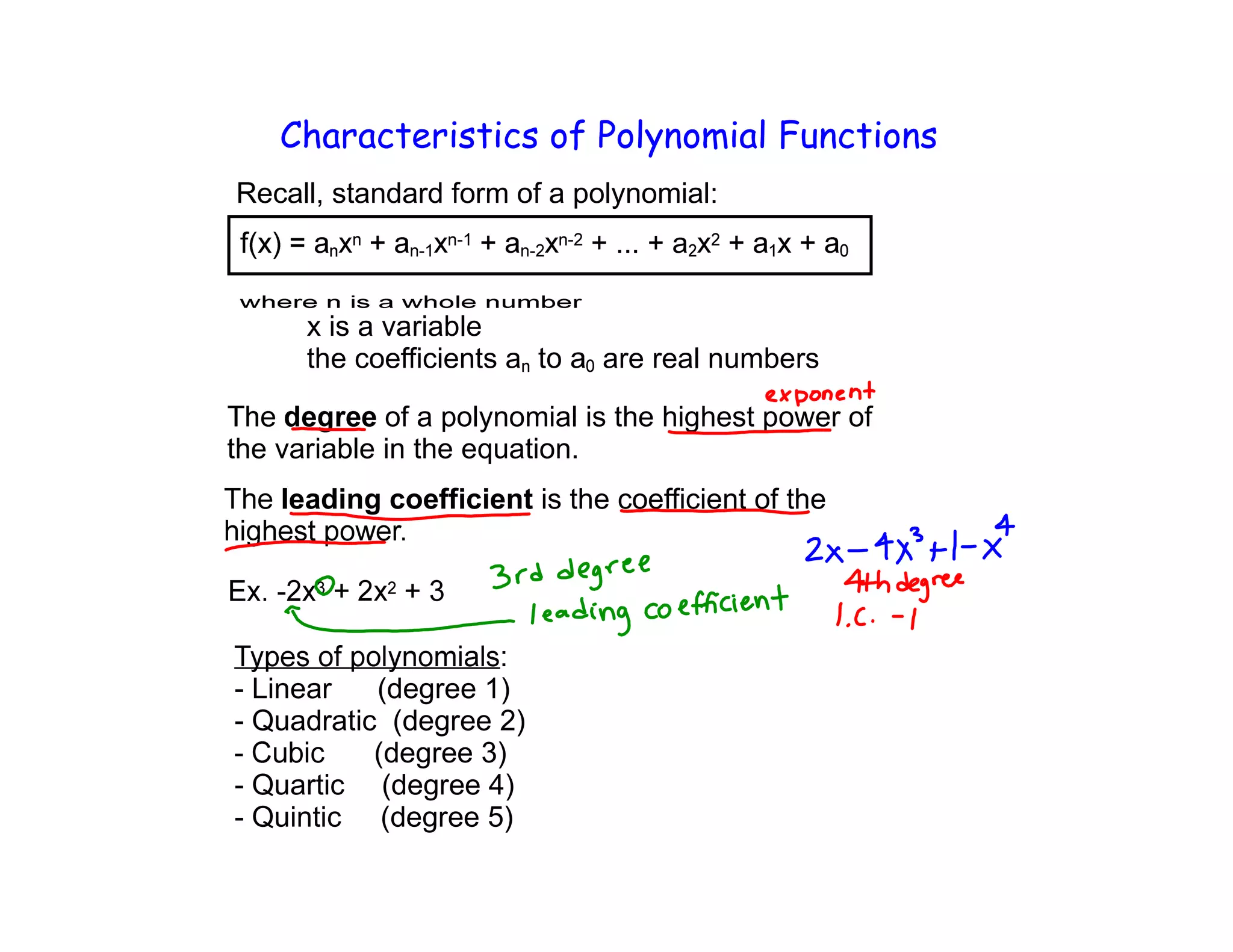
Recall, standard form of a polynomial:
+ ... + a
x is a variable
the coefficients a are real numbers
of a polynomial is the highest power of
the variable in the equation.
leading coefficient is the coefficient of the
- Linear (degree 1)
- Quadratic (degree 2)
(degree 3)
- Quartic (degree 4)
- Quintic (degree 5)
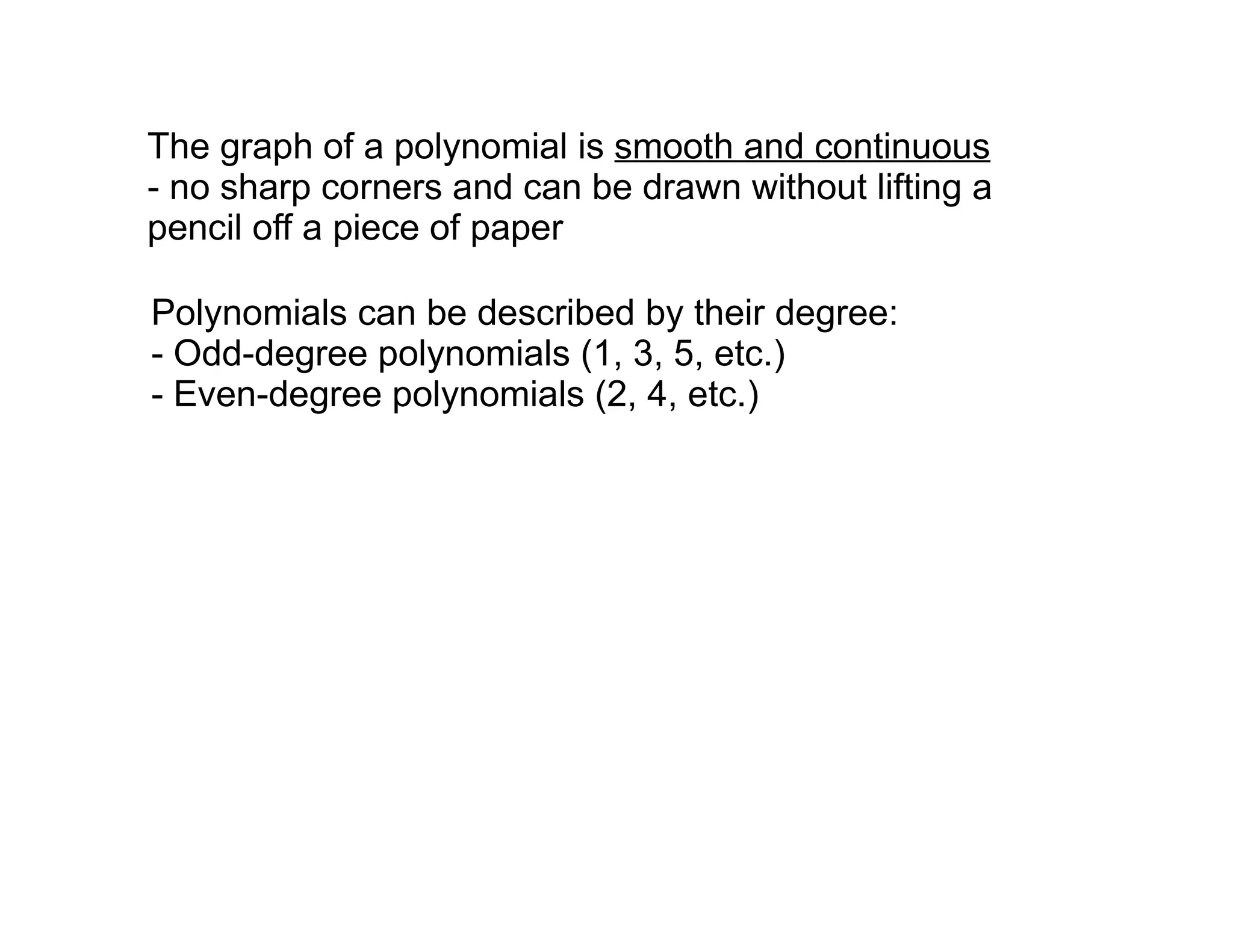
The graph of a polynomial is smooth and continuous
- no sharp corners and can be drawn without lifting a
pencil off a piece of paper
Polynomials can be described by their degree:
- Odd-degree polynomials (1, 3, 5, etc.)
- Even-degree polynomials (2, 4, etc.)
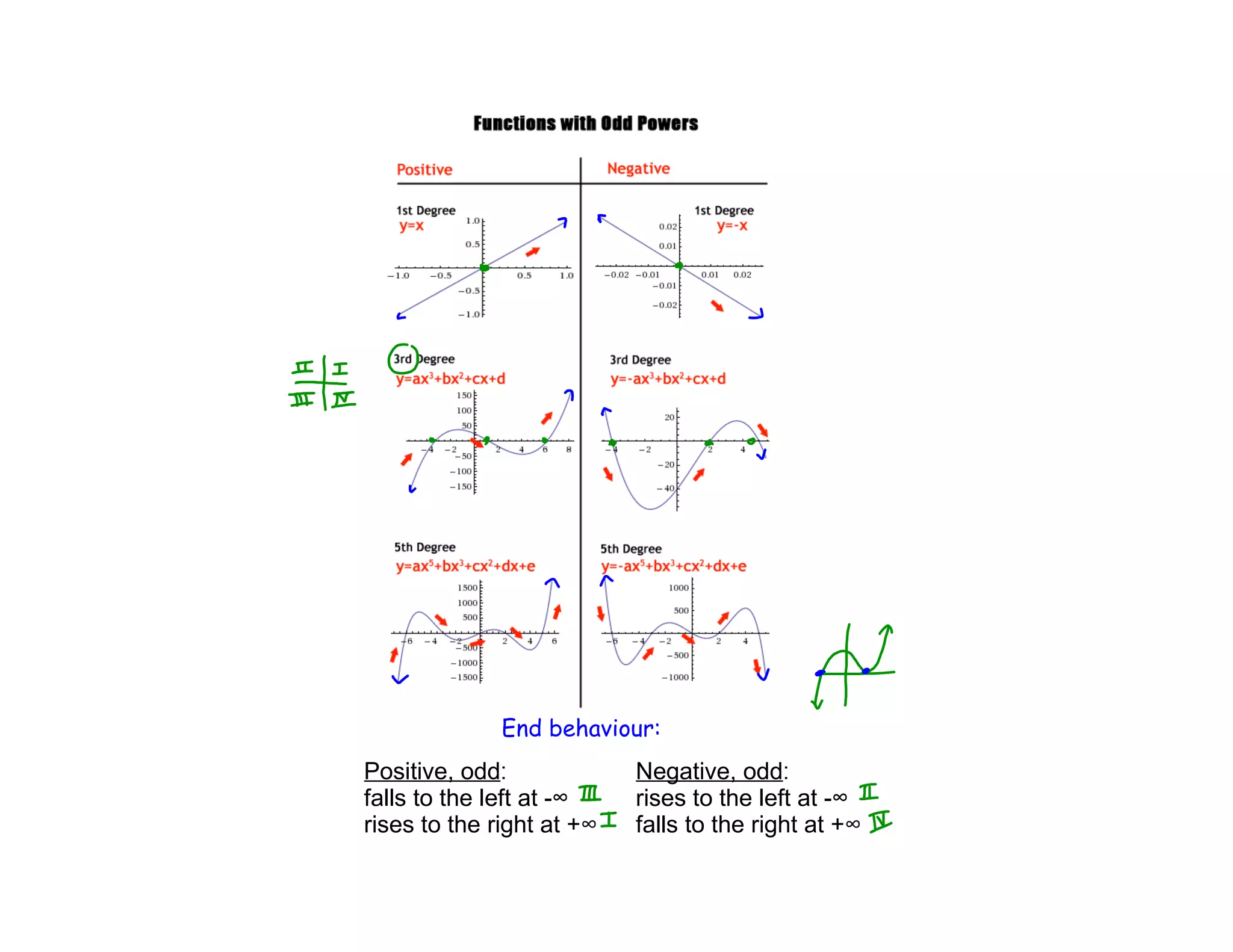
Positive, odd
falls to the left at -
rises to the right at +∞
End behaviour:
Negative, odd
rises to the left at -
falls to the right at +∞
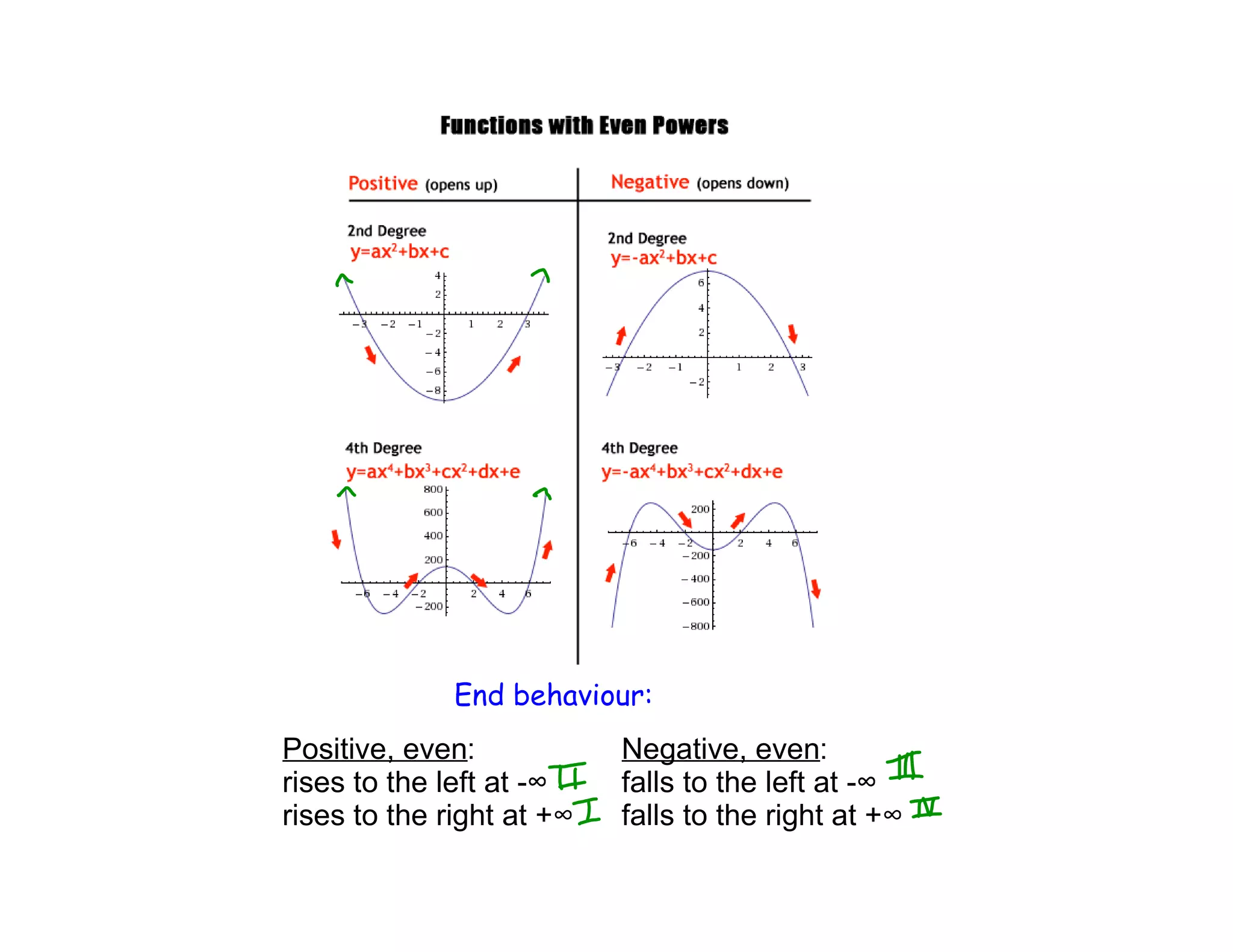
Positive, even
rises to the left at -
rises to the right at +∞
End behaviour:
Negative, even
falls to the left at -
falls to the right at +∞
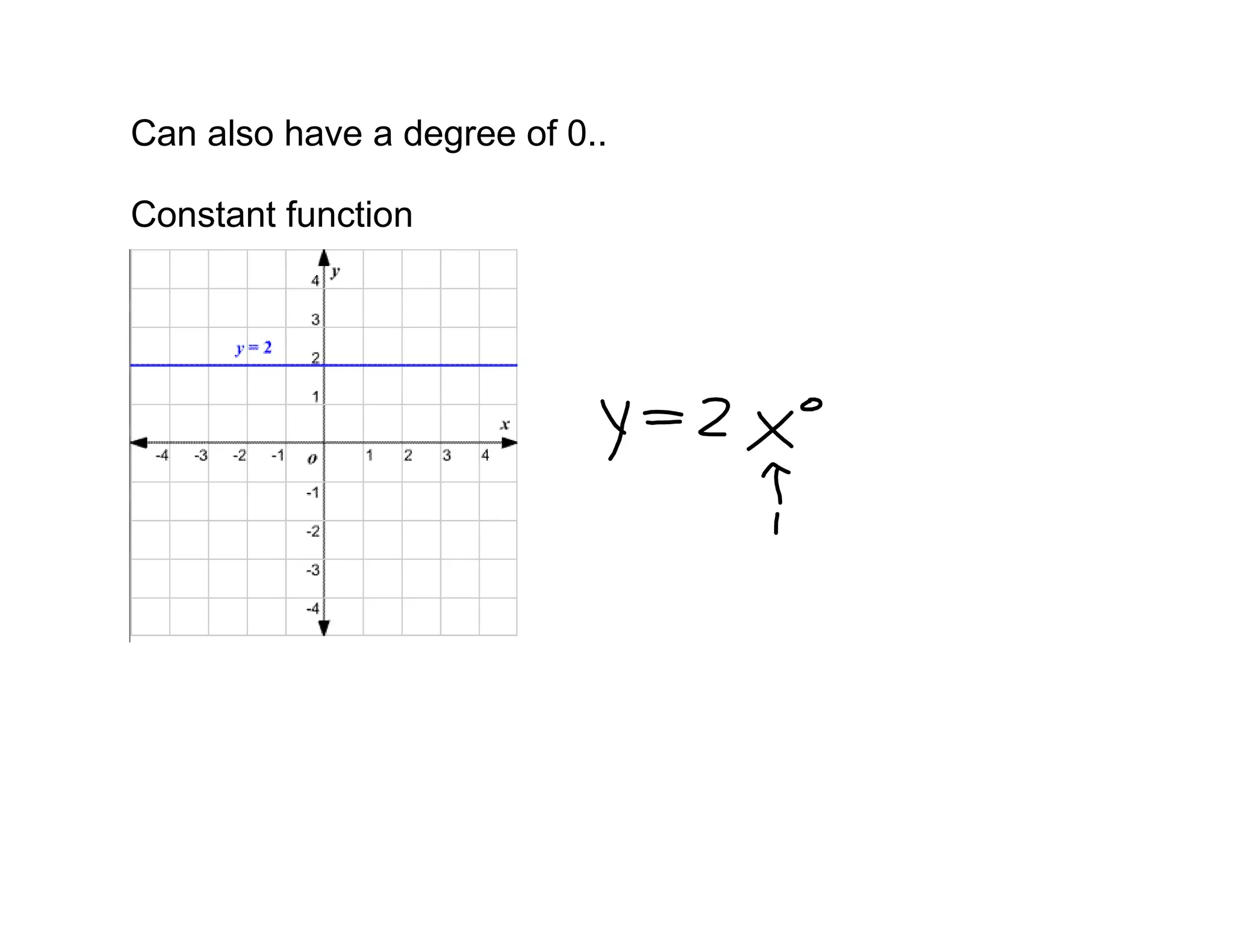
Can also have a degree of 0..
Constant function
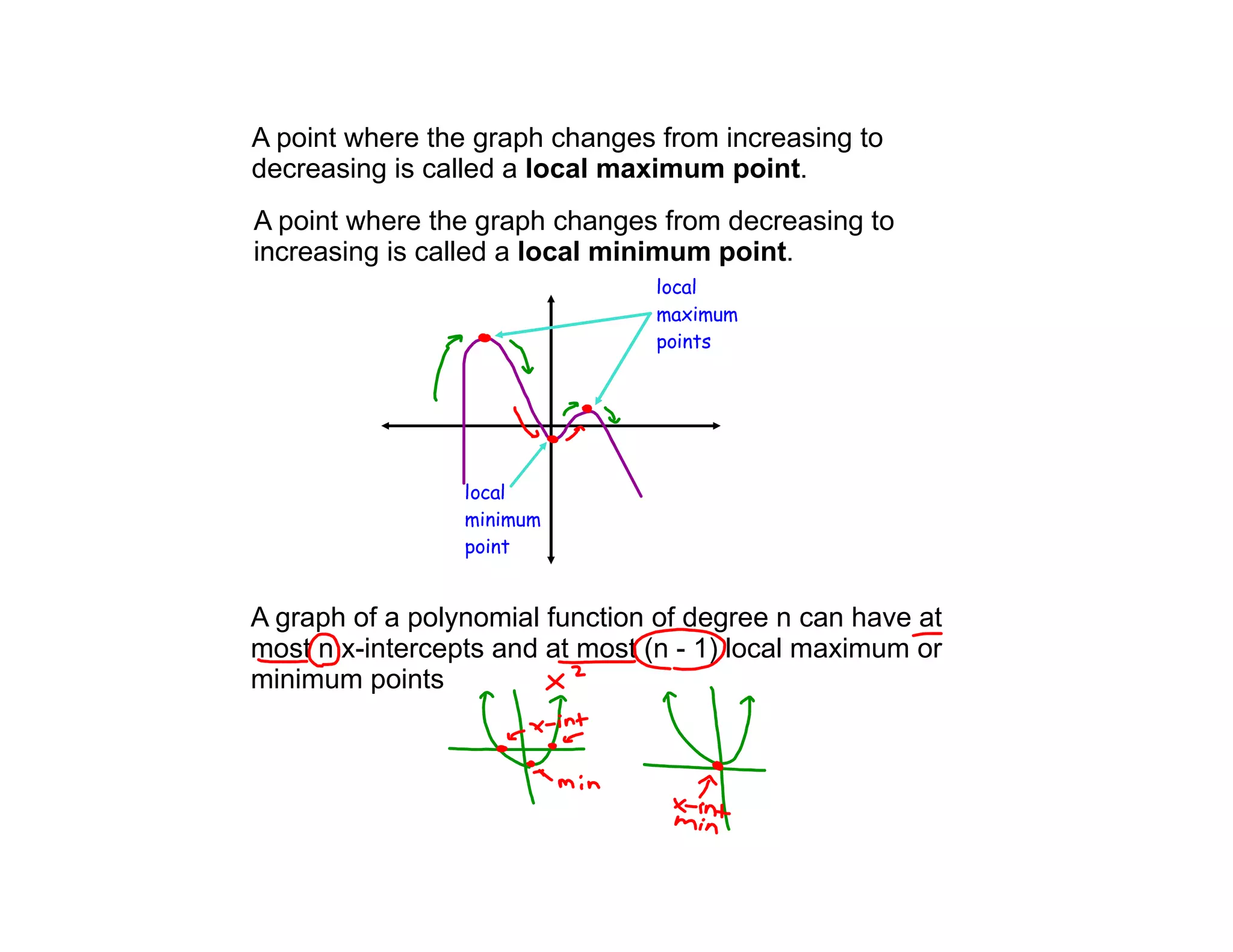
A point where the graph changes from increasing to
decreasing is called a local maximum point
A point where the graph changes from decreasing to
creasing is called a local minimum point
A graph of a polynomial function of degree n can have at
most n x-intercepts and at most (n - 1) local maximum or
minimum points
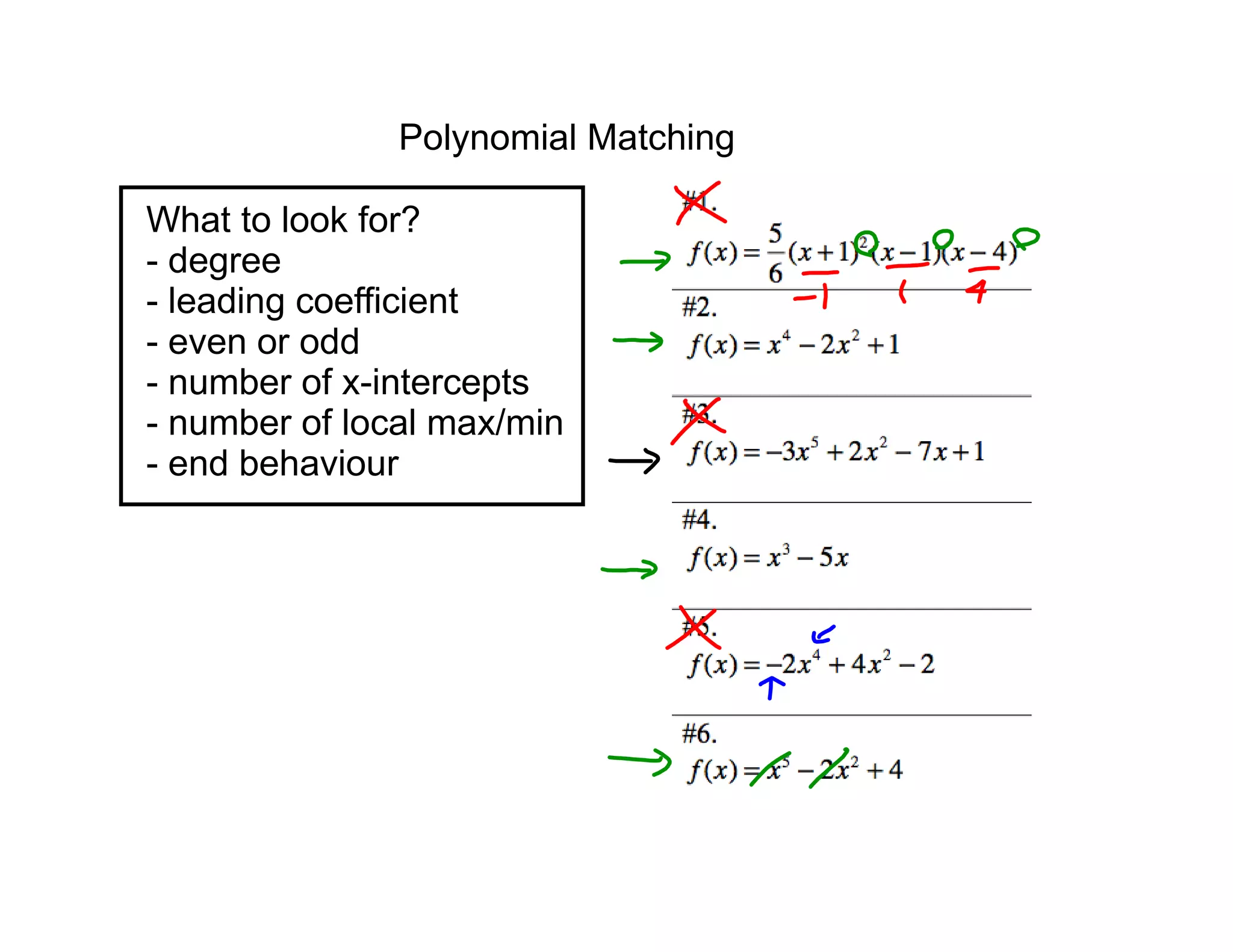
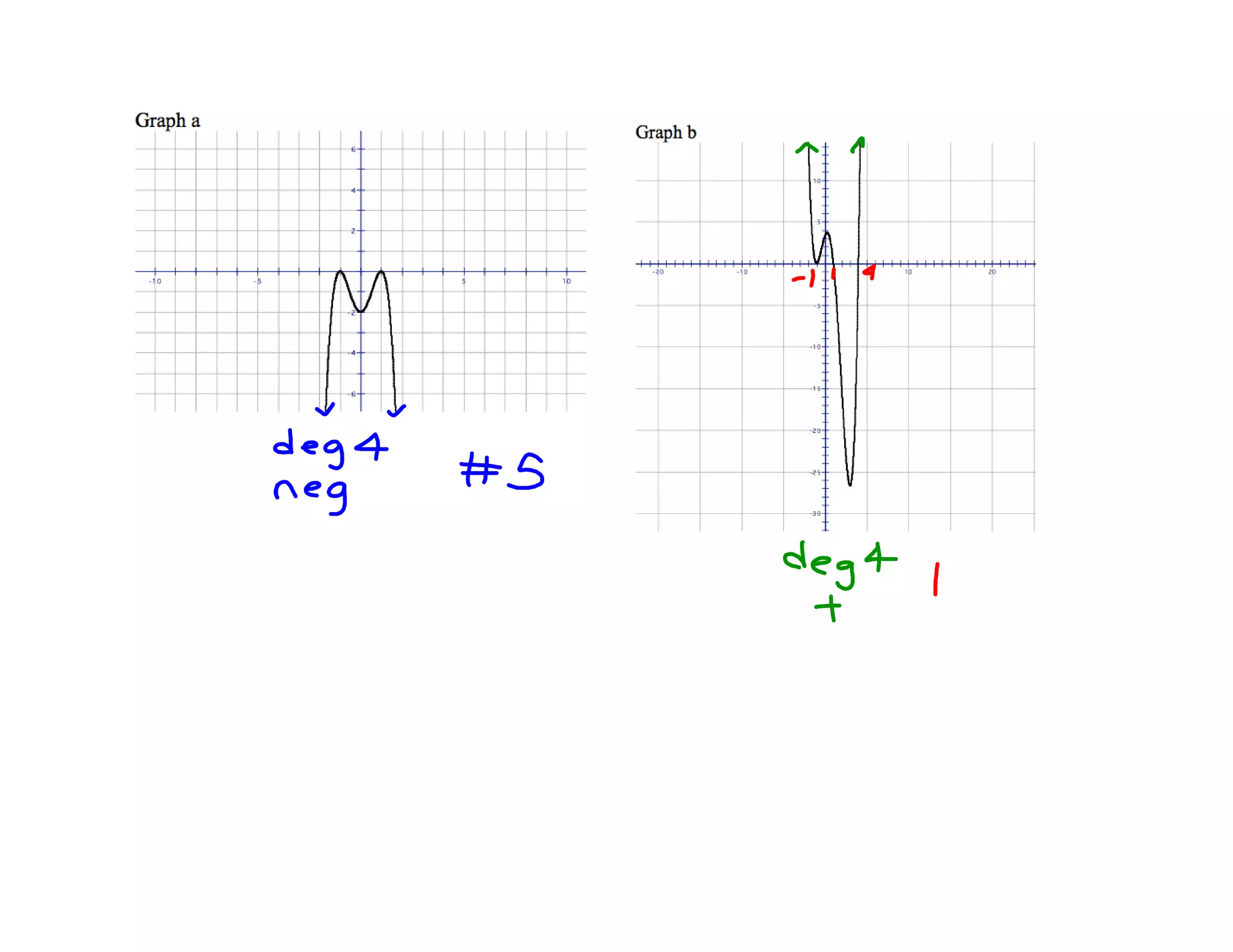
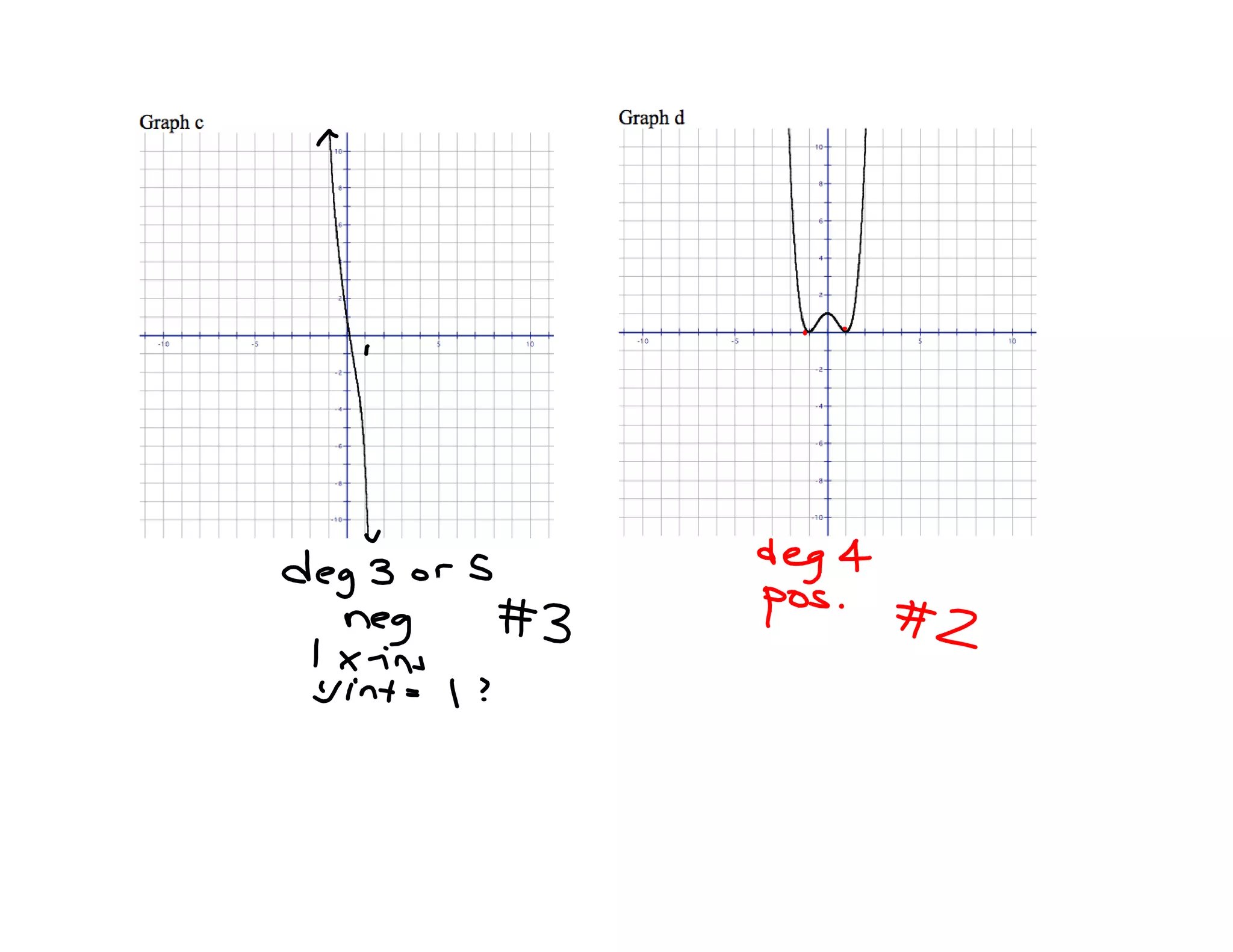
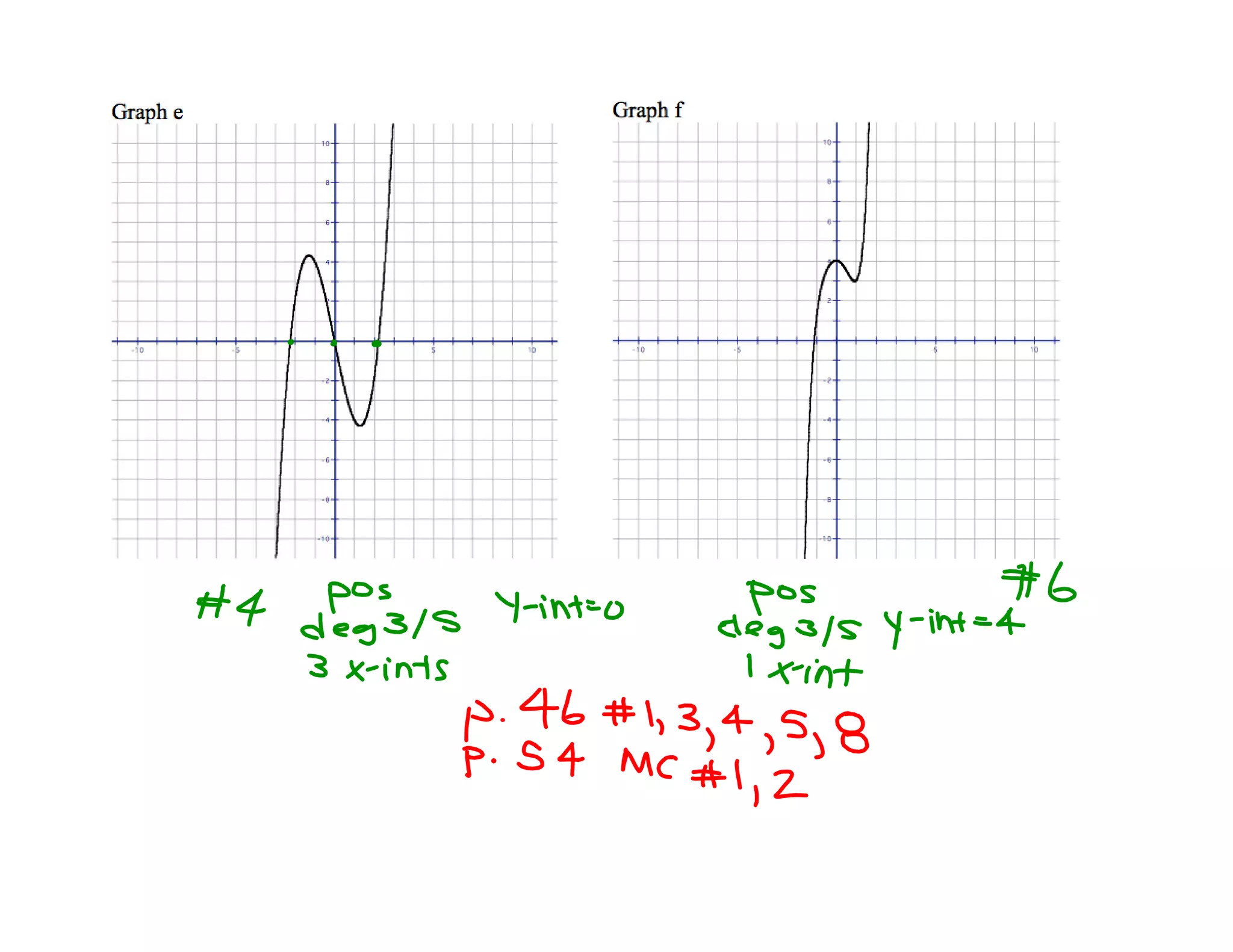
Polynomial Matching
What to look for?
- degree
- leading coefficient
- even or odd
- number of x-intercepts
- number of local max/min
- end behaviour
Day 5 examples u3f13

Day 5 examples u3f13

  • 1.
    Characteristics of PolynomialFunctions Recall, standard form of a polynomial: + ... + a x is a variable the coefficients a are real numbers of a polynomial is the highest power of the variable in the equation. leading coefficient is the coefficient of the - Linear (degree 1) - Quadratic (degree 2) (degree 3) - Quartic (degree 4) - Quintic (degree 5)
  • 2.
    The graph ofa polynomial is smooth and continuous - no sharp corners and can be drawn without lifting a pencil off a piece of paper Polynomials can be described by their degree: - Odd-degree polynomials (1, 3, 5, etc.) - Even-degree polynomials (2, 4, etc.)
  • 3.
    Positive, odd falls tothe left at - rises to the right at +∞ End behaviour: Negative, odd rises to the left at - falls to the right at +∞
  • 4.
    Positive, even rises tothe left at - rises to the right at +∞ End behaviour: Negative, even falls to the left at - falls to the right at +∞
  • 5.
    Can also havea degree of 0.. Constant function
  • 6.
    A point wherethe graph changes from increasing to decreasing is called a local maximum point A point where the graph changes from decreasing to creasing is called a local minimum point A graph of a polynomial function of degree n can have at most n x-intercepts and at most (n - 1) local maximum or minimum points
  • 7.
    Polynomial Matching What tolook for? - degree - leading coefficient - even or odd - number of x-intercepts - number of local max/min - end behaviour