DISASTER
READINESS
AND RISK
WHAT IS A CYCLONE??
CYCLONE CONCEPTS:
1. Cyclone is a kind of a hazard that forms in the northern
hemisphere due to phenomenon characterized by very low
pressure.
2. It is characterized by it’s “eye” or the spiral winds which flow
counterclockwise toward it’s center.
3. Tropical cyclones produce moderate to heavy rainfalls that can result
to flashfloods, mudflows, landslides, and storm surges in different
areas affected by it’s movement.
4. There are 3 classifications of tropical cyclone:
a. Tropical depression moves from 35 kph to 65 kph.
b. Tropical storm moves from 64 kph to 118 kph.
c. Typhoon exceeds the wind movement of 118 kph.
THINGS TO DO WHEN THERE IS A CYCLONE
BEFORE
1. Tune in to local news for government announcements and warnings.
2. Know when and where the cyclone is going to hit
3. Know the important emergency hotlines in your community.
4. Identify the credible people or other sources of important
information regarding the typhoon. Never believe in hearsay.
8. Familiarize yourself with the Early Warning System and Evacuation
Plan of your local government in case of emergency.
9. Make a household evacuation plan and give particular tasks to each
member of the family.
10. Check your surroundings if there are things to be repaired.
11. If there is a typhoon and if there are in a danger zone like a
riverbank or seashore, go to a safe evacuation center to be safe from
any storm surges or river flows the cyclone will make.
12. Follow the instructions given by the disaster risk reduction
committee personnel.
DURING
1. Stay tuned- in to the radio or television for the latest news and
updates.
2. Stay alert and be prepared.
3. Stay inside the house.
4. Wear warm clothes.
5. Save your batteries so you can use it for emergency situations.
5. If you are already in danger, call for rescue.
AFTER
1. Stay tuned- in to the radio or tv for latest updates
2. Check your family if they are okay.
3. Observe your surroundings if there are fallen trees, wrecked cars on
the road, fallen electric posts, and live wires.
4. If there are damages in your household, do a repair.
5. If there is a n injury, seek for medical help.
WHAT IS A
TYPHOON??
1. A typhoon is a low pressure area or a tropical cyclone that is large
and violent. It rotates counterclockwise with warm air rising above the
warm water of the Western Pacific Ocean. Some call it hurricane or
wily-wily.
2. Holland (1993) defined tropical cyclone as the “typical term for non-
frontal synoptic scale low pressure system over tropical or sub-tropical
waters with organized convections such as thunderstorms and wind
reaction.”
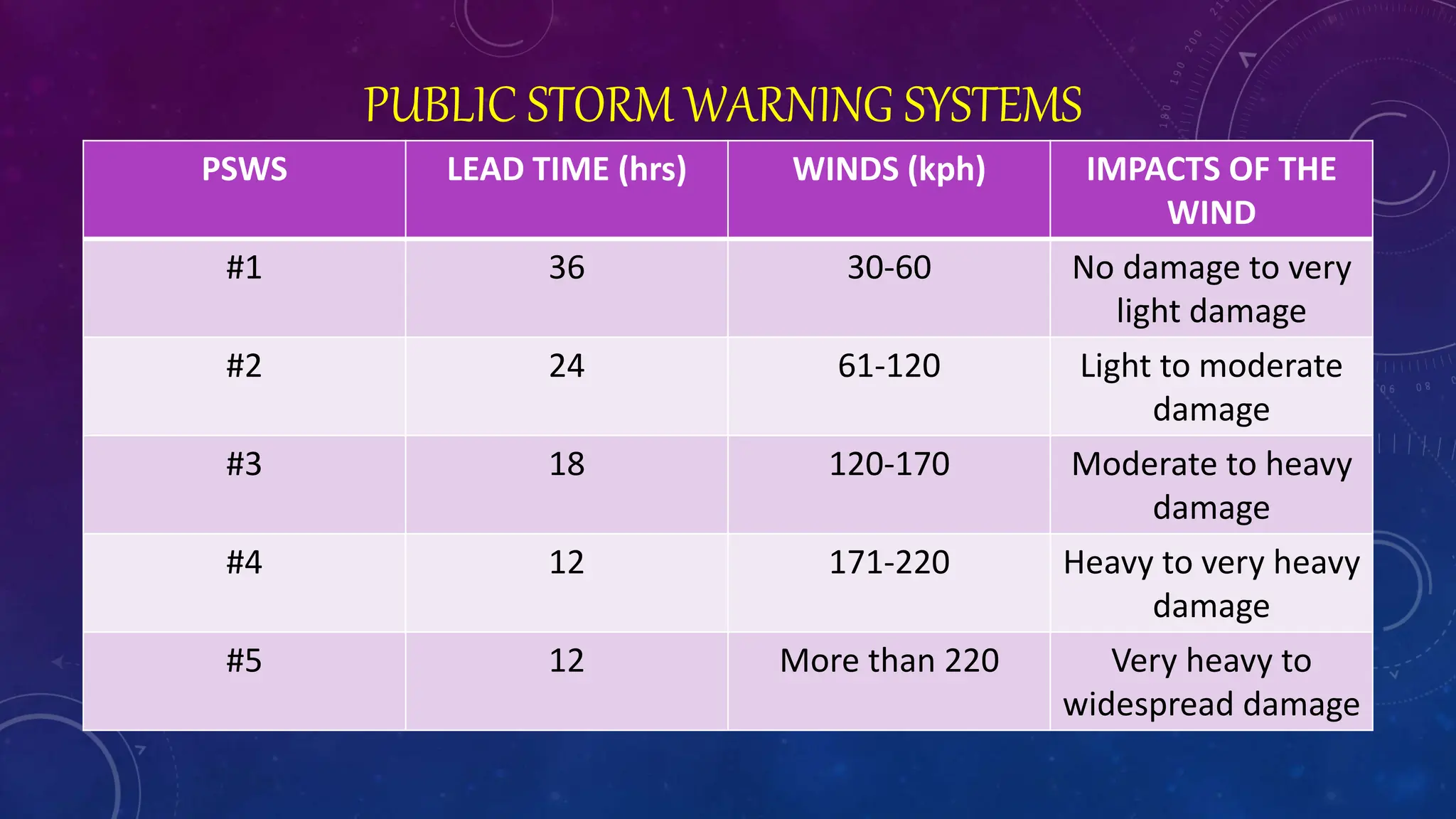
PUBLIC STORM WARNING SYSTEMS
PSWS LEAD TIME (hrs) WINDS (kph) IMPACTS OF THE
WIND
#1 36 30-60 No damage to very
light damage
#2 24 61-120 Light to moderate
damage
#3 18 120-170 Moderate to heavy
damage
#4 12 171-220 Heavy to very heavy
damage
#5 12 More than 220 Very heavy to
widespread damage
HOW ARE TYPHOONS
FORMED??
1. Typhoon starts to develop over warm water and in humid air between
10 and 20 degrees latitude north in the pacific ocean.
2. A low pressure area develops as warm air rises from the surface of
the water and less air is left.
3. The low pressure area pulls in the air around it.
4. It warms up and begins to rise as the air comes in.
5. As the air cools because of its elevation and as the system begins to
rotate, the clouds begin to form.
6. As. the temperature of the water rises, the system grows and an eye
will be formed.
(a typhoon begins to fade as soon as its source of warm moist air starts
to recede)

Disaster readiness and risk reduction GRADE 11 - CYCLONE.pptx

  • 1.
  • 2.
    WHAT IS ACYCLONE??
  • 3.
    CYCLONE CONCEPTS: 1. Cycloneis a kind of a hazard that forms in the northern hemisphere due to phenomenon characterized by very low pressure. 2. It is characterized by it’s “eye” or the spiral winds which flow counterclockwise toward it’s center.
  • 4.
    3. Tropical cyclonesproduce moderate to heavy rainfalls that can result to flashfloods, mudflows, landslides, and storm surges in different areas affected by it’s movement. 4. There are 3 classifications of tropical cyclone: a. Tropical depression moves from 35 kph to 65 kph. b. Tropical storm moves from 64 kph to 118 kph. c. Typhoon exceeds the wind movement of 118 kph.
  • 5.
    THINGS TO DOWHEN THERE IS A CYCLONE BEFORE 1. Tune in to local news for government announcements and warnings. 2. Know when and where the cyclone is going to hit 3. Know the important emergency hotlines in your community. 4. Identify the credible people or other sources of important information regarding the typhoon. Never believe in hearsay.
  • 6.
    8. Familiarize yourselfwith the Early Warning System and Evacuation Plan of your local government in case of emergency. 9. Make a household evacuation plan and give particular tasks to each member of the family. 10. Check your surroundings if there are things to be repaired.
  • 7.
    11. If thereis a typhoon and if there are in a danger zone like a riverbank or seashore, go to a safe evacuation center to be safe from any storm surges or river flows the cyclone will make. 12. Follow the instructions given by the disaster risk reduction committee personnel.
  • 8.
    DURING 1. Stay tuned-in to the radio or television for the latest news and updates. 2. Stay alert and be prepared. 3. Stay inside the house. 4. Wear warm clothes. 5. Save your batteries so you can use it for emergency situations. 5. If you are already in danger, call for rescue.
  • 9.
    AFTER 1. Stay tuned-in to the radio or tv for latest updates 2. Check your family if they are okay. 3. Observe your surroundings if there are fallen trees, wrecked cars on the road, fallen electric posts, and live wires. 4. If there are damages in your household, do a repair. 5. If there is a n injury, seek for medical help.
  • 10.
  • 11.
    1. A typhoonis a low pressure area or a tropical cyclone that is large and violent. It rotates counterclockwise with warm air rising above the warm water of the Western Pacific Ocean. Some call it hurricane or wily-wily. 2. Holland (1993) defined tropical cyclone as the “typical term for non- frontal synoptic scale low pressure system over tropical or sub-tropical waters with organized convections such as thunderstorms and wind reaction.”
  • 12.
    PUBLIC STORM WARNINGSYSTEMS PSWS LEAD TIME (hrs) WINDS (kph) IMPACTS OF THE WIND #1 36 30-60 No damage to very light damage #2 24 61-120 Light to moderate damage #3 18 120-170 Moderate to heavy damage #4 12 171-220 Heavy to very heavy damage #5 12 More than 220 Very heavy to widespread damage
  • 13.
  • 14.
    1. Typhoon startsto develop over warm water and in humid air between 10 and 20 degrees latitude north in the pacific ocean. 2. A low pressure area develops as warm air rises from the surface of the water and less air is left. 3. The low pressure area pulls in the air around it.
  • 15.
    4. It warmsup and begins to rise as the air comes in. 5. As the air cools because of its elevation and as the system begins to rotate, the clouds begin to form. 6. As. the temperature of the water rises, the system grows and an eye will be formed. (a typhoon begins to fade as soon as its source of warm moist air starts to recede)