Making systems more secure
•

Strategies that can be used to improve cybersecurity

Making systems more secure, 2013

Slide 1
Improving cybersecurity
•

Deterrence
–

•

Increase the costs of making an attack on your systems

Awareness
–

Improve awareness of all system users of security risks and
types of attack

Making systems more secure, 2013

Slide 2
Improving cybersecurity
•

Procedures
–

•

Design realistic security procedures that can be followed by
everyone in an organisation (including the boss)

Monitoring and logging
–

Monitor and log all system operations

Making systems more secure, 2013

Slide 3
Deterrence
•

It is impossible to develop a completely secure
personal, business and government system. If an
attacker has unlimited resources and motivation, it
will always be possible to invoke some attacks on a
given system.

Making systems more secure, 2013

Slide 4
Deterrence
•

However, attackers NEVER have unlimited resources
and motivation so, an aim of security is to increase
the costs of making a successful attack to such an
extent that attackers will (a) be deterred from
attacking and (b) will abandon attempted attacks
before they are successful

Making systems more secure, 2013

Slide 5
Diverse authentication systems
•

Use strong passwords and multiple forms of
authentication

•

Login/password + personal question or biometric

•

Attacker has to break two levels of authentication to
gain access

Making systems more secure, 2013

Slide 6
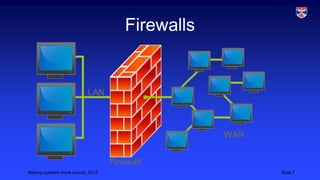
Firewalls

Making systems more secure, 2013

Slide 7
Encryption
• Use https protocol to encrypt
information whilst in transit across the
Internet
• Encrypt confidential information stored
on your system
Making systems more secure, 2013

Slide 8
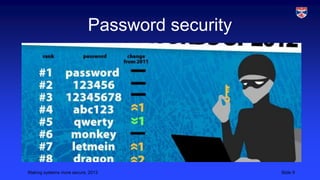
Password security

Making systems more secure, 2013

Slide 9
Password security
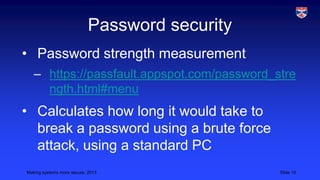
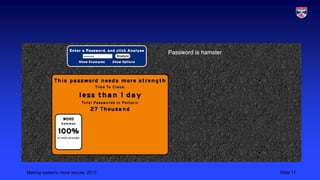
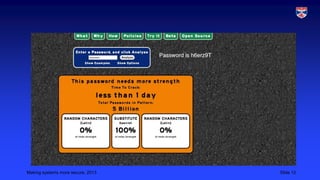
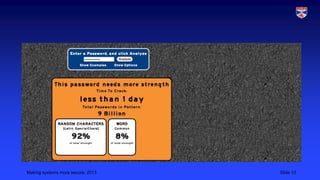
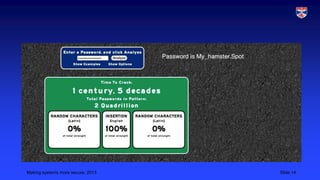
• Password strength measurement
– https://passfault.appspot.com/password_stre
ngth.html#menu

• Calculates how long it would take to
break a password using a brute force
attack, using a standard PC
Making systems more secure, 2013

Slide 10
Making systems more secure, 2013

Slide 11
Making systems more secure, 2013

Slide 12
Making systems more secure, 2013

Slide 13
Making systems more secure, 2013

Slide 14
Encryption
•

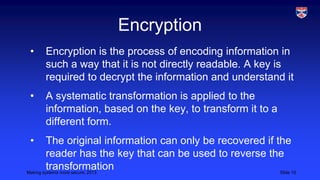
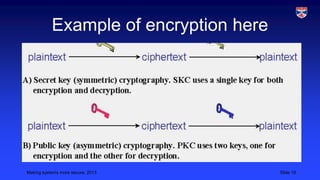
Encryption is the process of encoding information in
such a way that it is not directly readable. A key is
required to decrypt the information and understand it

•

A systematic transformation is applied to the
information, based on the key, to transform it to a
different form.

•

The original information can only be recovered if the
reader has the key that can be used to reverse the
transformation
Making systems more secure, 2013
Slide 15
Example of encryption here

Making systems more secure, 2013

Slide 16
•

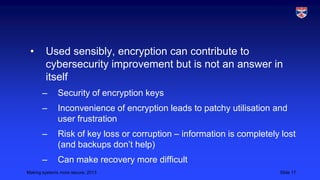
Used sensibly, encryption can contribute to
cybersecurity improvement but is not an answer in
itself
–

Security of encryption keys

–

Inconvenience of encryption leads to patchy utilisation and
user frustration

–

Risk of key loss or corruption – information is completely lost
(and backups don’t help)

–

Can make recovery more difficult

Making systems more secure, 2013

Slide 17
Awareness
• Educate users into the importance of
cyber security and provide information
that supports their secure use of
computer systems
• Be open about incidents that may have
occurred
Making systems more secure, 2013

Slide 18
Awareness
• Take into account how people really are
rather than how you might like them to
be
• People have human failings and
inevitably will make mistakes
Making systems more secure, 2013

Slide 19
• Bad security advice
– Many security guidelines and rules are
unrealistic and cannot be followed in
practice by users

– Use a different password for every website
you visit
Making systems more secure, 2013

Slide 20
• Good security advice
– If you use the same password for everything, an
attacker can get access to your accounts if they
find that out
– Use a different passwords for all online bank
accounts and only reuse passwords when you
don’t really care about the accounts
Making systems more secure, 2013

Slide 21
Procedures
• Businesses should design appropriate
procedures based around the value of the
assets that are being protected
• If you simply apply the most secure
procedures to all information, this will disrupt
work and users are more likely to try to
circumvent these procedures
Making systems more secure, 2013

Slide 22
• If information is not confidential, then it
often makes sense to make it public
• This reduces the need for users to
authenticate to access the information

Making systems more secure, 2013

Slide 23
• Cybersecurity awareness procedures
for all staff including the most senior
management
• Recognise reality – people will use
phones and tablets and derive
procedures for their safe use
Making systems more secure, 2013

Slide 24
Monitoring and logging
• Monitoring and logging means that
you record all user actions and so
keep track of all accesses to the
system

Making systems more secure, 2013

Slide 25
• Use tools to scan log frequently looking
for anomalies
• Can be an important deterrent to insider
attacks if attackers know that they have
a chance of being discovered through
the logging system
Making systems more secure, 2013

Slide 26
Summary
• Improving cybersecurity depends on
– Deterrence

– Awareness
– Effective procedures

– Monitoring and logging

Making systems more secure, 2013

Slide 27

Cybersecurity 5 improving cybersecurity

  • 1.
    Making systems moresecure • Strategies that can be used to improve cybersecurity Making systems more secure, 2013 Slide 1
  • 2.
    Improving cybersecurity • Deterrence – • Increase thecosts of making an attack on your systems Awareness – Improve awareness of all system users of security risks and types of attack Making systems more secure, 2013 Slide 2
  • 3.
    Improving cybersecurity • Procedures – • Design realisticsecurity procedures that can be followed by everyone in an organisation (including the boss) Monitoring and logging – Monitor and log all system operations Making systems more secure, 2013 Slide 3
  • 4.
    Deterrence • It is impossibleto develop a completely secure personal, business and government system. If an attacker has unlimited resources and motivation, it will always be possible to invoke some attacks on a given system. Making systems more secure, 2013 Slide 4
  • 5.
    Deterrence • However, attackers NEVERhave unlimited resources and motivation so, an aim of security is to increase the costs of making a successful attack to such an extent that attackers will (a) be deterred from attacking and (b) will abandon attempted attacks before they are successful Making systems more secure, 2013 Slide 5
  • 6.
    Diverse authentication systems • Usestrong passwords and multiple forms of authentication • Login/password + personal question or biometric • Attacker has to break two levels of authentication to gain access Making systems more secure, 2013 Slide 6
  • 7.
    Firewalls Making systems moresecure, 2013 Slide 7
  • 8.
    Encryption • Use httpsprotocol to encrypt information whilst in transit across the Internet • Encrypt confidential information stored on your system Making systems more secure, 2013 Slide 8
  • 9.
    Password security Making systemsmore secure, 2013 Slide 9
  • 10.
    Password security • Passwordstrength measurement – https://passfault.appspot.com/password_stre ngth.html#menu • Calculates how long it would take to break a password using a brute force attack, using a standard PC Making systems more secure, 2013 Slide 10
  • 11.
    Making systems moresecure, 2013 Slide 11
  • 12.
    Making systems moresecure, 2013 Slide 12
  • 13.
    Making systems moresecure, 2013 Slide 13
  • 14.
    Making systems moresecure, 2013 Slide 14
  • 15.
    Encryption • Encryption is theprocess of encoding information in such a way that it is not directly readable. A key is required to decrypt the information and understand it • A systematic transformation is applied to the information, based on the key, to transform it to a different form. • The original information can only be recovered if the reader has the key that can be used to reverse the transformation Making systems more secure, 2013 Slide 15
  • 16.
    Example of encryptionhere Making systems more secure, 2013 Slide 16
  • 17.
    • Used sensibly, encryptioncan contribute to cybersecurity improvement but is not an answer in itself – Security of encryption keys – Inconvenience of encryption leads to patchy utilisation and user frustration – Risk of key loss or corruption – information is completely lost (and backups don’t help) – Can make recovery more difficult Making systems more secure, 2013 Slide 17
  • 18.
    Awareness • Educate usersinto the importance of cyber security and provide information that supports their secure use of computer systems • Be open about incidents that may have occurred Making systems more secure, 2013 Slide 18
  • 19.
    Awareness • Take intoaccount how people really are rather than how you might like them to be • People have human failings and inevitably will make mistakes Making systems more secure, 2013 Slide 19
  • 20.
    • Bad securityadvice – Many security guidelines and rules are unrealistic and cannot be followed in practice by users – Use a different password for every website you visit Making systems more secure, 2013 Slide 20
  • 21.
    • Good securityadvice – If you use the same password for everything, an attacker can get access to your accounts if they find that out – Use a different passwords for all online bank accounts and only reuse passwords when you don’t really care about the accounts Making systems more secure, 2013 Slide 21
  • 22.
    Procedures • Businesses shoulddesign appropriate procedures based around the value of the assets that are being protected • If you simply apply the most secure procedures to all information, this will disrupt work and users are more likely to try to circumvent these procedures Making systems more secure, 2013 Slide 22
  • 23.
    • If informationis not confidential, then it often makes sense to make it public • This reduces the need for users to authenticate to access the information Making systems more secure, 2013 Slide 23
  • 24.
    • Cybersecurity awarenessprocedures for all staff including the most senior management • Recognise reality – people will use phones and tablets and derive procedures for their safe use Making systems more secure, 2013 Slide 24
  • 25.
    Monitoring and logging •Monitoring and logging means that you record all user actions and so keep track of all accesses to the system Making systems more secure, 2013 Slide 25
  • 26.
    • Use toolsto scan log frequently looking for anomalies • Can be an important deterrent to insider attacks if attackers know that they have a chance of being discovered through the logging system Making systems more secure, 2013 Slide 26
  • 27.
    Summary • Improving cybersecuritydepends on – Deterrence – Awareness – Effective procedures – Monitoring and logging Making systems more secure, 2013 Slide 27

Editor's Notes

  • #11 Mystery why some organisations limit length of passwords and do not allow characters apart from letters and numbersSay you live at 15 south street so make up a password you can remember:SO51street Cracked in < 1 daySO_51_street Cracked in 23 years