Cybercrime and
legal landscape
around the
world
Amar Jukuntla
What is Cyber Crime?
 Cybercrime is a growing threat that can have severe consequences for individuals,
businesses, and society as a whole.
 Criminal activities conducted through digital means, encompassing various illegal
activities like hacking, identity theft, fraud, data breaches, etc.
Some of the most
common types of
cybercrime
 Computer hacking: Unauthorized access to a
computer system or network.
 Data breaches: The theft or unauthorized access of
sensitive data, such as personal information or
financial records.
 Malware attacks: The use of malicious software to
damage or disrupt computer systems.
 Cyber fraud: The use of deception to obtain money
or other valuables from victims.
 Cyberbullying: The use of electronic communication
to bully or harass others.
Types of Crimes
 Hacking
 Phishing Scam
 Spamming
 Malware
 Viruses
 Cyber Stalking
 Identity theft
 Software Policy
Impact of Cybercrime
 Cybercrime has a significant impact on individuals,
businesses, and governments.
 Victims of cybercrime can suffer financial losses,
identity theft, and emotional distress.
 Businesses can suffer damage to their reputations
and financial losses from data breaches and
malware attacks.
 Governments can face challenges in protecting
critical infrastructure and maintaining public order.
Legal Responses to Cybercrime
 Governments around the world have enacted laws to combat cybercrime.
 These laws typically define cybercrimes, establish punishments for offenders, and
provide law enforcement with the tools they need to investigate and prosecute
cybercrimes.
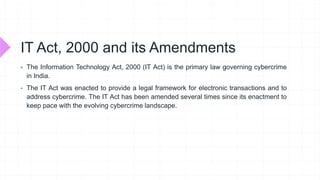
IT Act, 2000 and its Amendments
 The Information Technology Act, 2000 (IT Act) is the primary law governing cybercrime
in India.
 The IT Act was enacted to provide a legal framework for electronic transactions and to
address cybercrime. The IT Act has been amended several times since its enactment to
keep pace with the evolving cybercrime landscape.
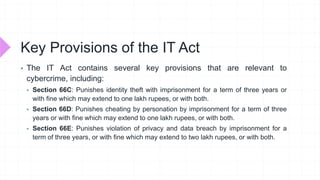
Key Provisions of the IT Act
 The IT Act contains several key provisions that are relevant to
cybercrime, including:
 Section 66C: Punishes identity theft with imprisonment for a term of three years or
with fine which may extend to one lakh rupees, or with both.
 Section 66D: Punishes cheating by personation by imprisonment for a term of three
years or with fine which may extend to one lakh rupees, or with both.
 Section 66E: Punishes violation of privacy and data breach by imprisonment for a
term of three years, or with fine which may extend to two lakh rupees, or with both.
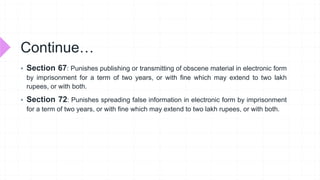
Continue…
 Section 67: Punishes publishing or transmitting of obscene material in electronic form
by imprisonment for a term of two years, or with fine which may extend to two lakh
rupees, or with both.
 Section 72: Punishes spreading false information in electronic form by imprisonment
for a term of two years, or with fine which may extend to two lakh rupees, or with both.
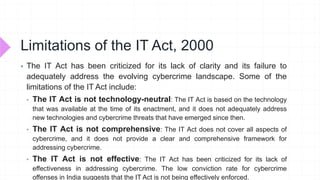
Limitations of the IT Act, 2000
 The IT Act has been criticized for its lack of clarity and its failure to
adequately address the evolving cybercrime landscape. Some of the
limitations of the IT Act include:
• The IT Act is not technology-neutral: The IT Act is based on the technology
that was available at the time of its enactment, and it does not adequately address
new technologies and cybercrime threats that have emerged since then.
• The IT Act is not comprehensive: The IT Act does not cover all aspects of
cybercrime, and it does not provide a clear and comprehensive framework for
addressing cybercrime.
• The IT Act is not effective: The IT Act has been criticized for its lack of
effectiveness in addressing cybercrime. The low conviction rate for cybercrime
offenses in India suggests that the IT Act is not being effectively enforced.

Cybercrime and Laws.pptx

  • 1.
  • 2.
    What is CyberCrime?  Cybercrime is a growing threat that can have severe consequences for individuals, businesses, and society as a whole.  Criminal activities conducted through digital means, encompassing various illegal activities like hacking, identity theft, fraud, data breaches, etc.
  • 3.
    Some of themost common types of cybercrime  Computer hacking: Unauthorized access to a computer system or network.  Data breaches: The theft or unauthorized access of sensitive data, such as personal information or financial records.  Malware attacks: The use of malicious software to damage or disrupt computer systems.  Cyber fraud: The use of deception to obtain money or other valuables from victims.  Cyberbullying: The use of electronic communication to bully or harass others.
  • 4.
    Types of Crimes Hacking  Phishing Scam  Spamming  Malware  Viruses  Cyber Stalking  Identity theft  Software Policy
  • 5.
    Impact of Cybercrime Cybercrime has a significant impact on individuals, businesses, and governments.  Victims of cybercrime can suffer financial losses, identity theft, and emotional distress.  Businesses can suffer damage to their reputations and financial losses from data breaches and malware attacks.  Governments can face challenges in protecting critical infrastructure and maintaining public order.
  • 6.
    Legal Responses toCybercrime  Governments around the world have enacted laws to combat cybercrime.  These laws typically define cybercrimes, establish punishments for offenders, and provide law enforcement with the tools they need to investigate and prosecute cybercrimes.
  • 7.
    IT Act, 2000and its Amendments  The Information Technology Act, 2000 (IT Act) is the primary law governing cybercrime in India.  The IT Act was enacted to provide a legal framework for electronic transactions and to address cybercrime. The IT Act has been amended several times since its enactment to keep pace with the evolving cybercrime landscape.
  • 8.
    Key Provisions ofthe IT Act  The IT Act contains several key provisions that are relevant to cybercrime, including:  Section 66C: Punishes identity theft with imprisonment for a term of three years or with fine which may extend to one lakh rupees, or with both.  Section 66D: Punishes cheating by personation by imprisonment for a term of three years or with fine which may extend to one lakh rupees, or with both.  Section 66E: Punishes violation of privacy and data breach by imprisonment for a term of three years, or with fine which may extend to two lakh rupees, or with both.
  • 9.
    Continue…  Section 67:Punishes publishing or transmitting of obscene material in electronic form by imprisonment for a term of two years, or with fine which may extend to two lakh rupees, or with both.  Section 72: Punishes spreading false information in electronic form by imprisonment for a term of two years, or with fine which may extend to two lakh rupees, or with both.
  • 10.
    Limitations of theIT Act, 2000  The IT Act has been criticized for its lack of clarity and its failure to adequately address the evolving cybercrime landscape. Some of the limitations of the IT Act include: • The IT Act is not technology-neutral: The IT Act is based on the technology that was available at the time of its enactment, and it does not adequately address new technologies and cybercrime threats that have emerged since then. • The IT Act is not comprehensive: The IT Act does not cover all aspects of cybercrime, and it does not provide a clear and comprehensive framework for addressing cybercrime. • The IT Act is not effective: The IT Act has been criticized for its lack of effectiveness in addressing cybercrime. The low conviction rate for cybercrime offenses in India suggests that the IT Act is not being effectively enforced.