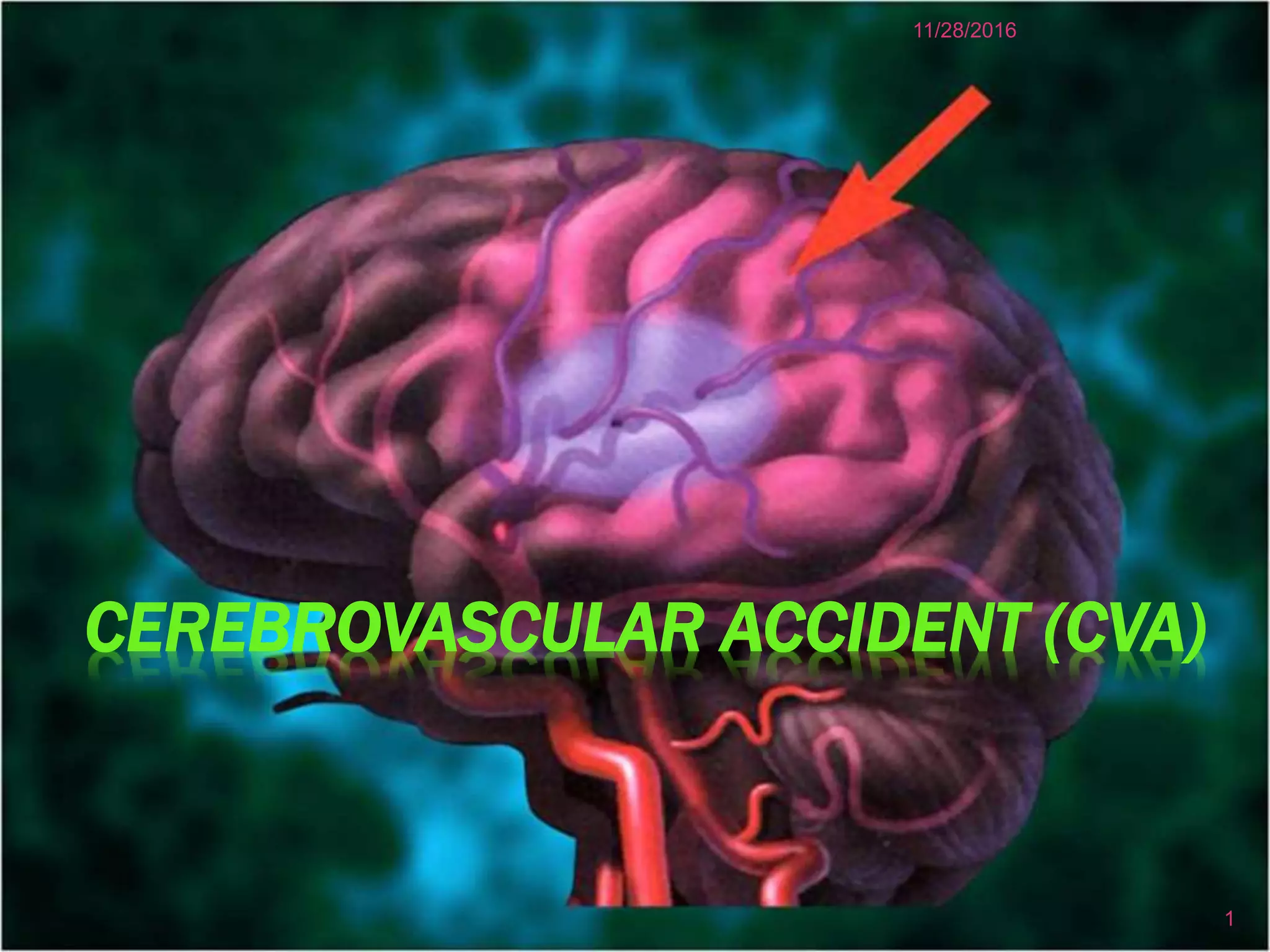
CEREBROVASCULAR ACCIDENT (CVA)
11/28/2016
1
STROKE
ļƒ’ It is the rapidly developing loss of brain function(s)
due to disturbance in the blood supply to the brain.
This can be due to ischemia (lack of blood flow)
caused by blockage (thrombosis, arterial embolism),
or a hemorrhage (leakage of blood).
11/28/2016
2
DEFINITION OF CVA
ļƒ’ World Health Organization( 1970) is a "neurological
deficit of cerebrovascular cause that persists beyond
24 hours or is interrupted by death within 24 hours".
11/28/2016
3
EPIDEMIOLOGY
ļƒ’ 10% of deaths worldwide
ļƒ’ 95% of strokes occur in people age 45 and older, and
two-thirds of strokes occur in those over the age of
65.
ļƒ’ Men are 25% more likely to suffer strokes than
women
ļƒ’ 60% of deaths from stroke occur in women
11/28/2016
4
ETIOLOGY OF CVA
ļƒ’ Thrombotic Stroke---Large vessel disease
Small vessel disease
ļƒ’ Embolic stroke ---- blockage of an artery by an arterial
embolus
ļƒ’ atrial fibrillation
ļƒ’ deep vein thrombosis
ļƒ’ ventricular septal defect
ļƒ’ Pulmonary embolism
ļƒ’ Venous thrombosis
ļƒ’ Hypertension
ļƒ’ Bleeding disorders
11/28/2016
5
RISK FACTORS FOR STROKE
ļƒ’ Hypertension
ļƒ’ Smoking
ļƒ’ Diabetes Mellitus
ļƒ’ Carotid artery disease
ļƒ’ Heart disease
ļƒ’ Blood disorders
ļƒ’ Alcohol
ļƒ’ Sex
ļƒ’ Heredity
ļƒ’ stress
11/28/2016
6
CLASSIFICATION OF CVA
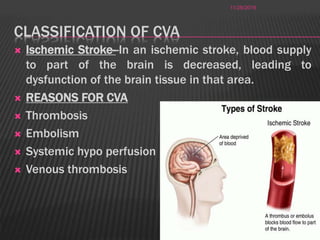
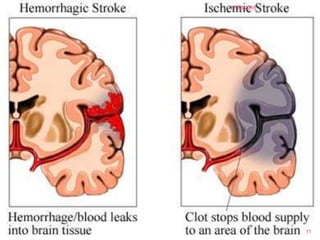
ļƒ’ Ischemic Stroke--In an ischemic stroke, blood supply
to part of the brain is decreased, leading to
dysfunction of the brain tissue in that area.
ļƒ’ REASONS FOR CVA
ļƒ’ Thrombosis
ļƒ’ Embolism
ļƒ’ Systemic hypo perfusion
ļƒ’ Venous thrombosis
11/28/2016
7
PATHOPHYSIOLOGY OF ISCHEMIC STROKE
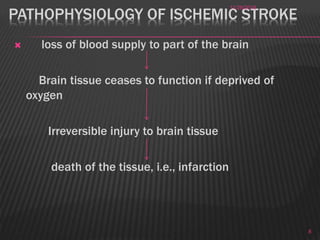
ļƒ’ loss of blood supply to part of the brain
Brain tissue ceases to function if deprived of
oxygen
Irreversible injury to brain tissue
death of the tissue, i.e., infarction
11/28/2016
8
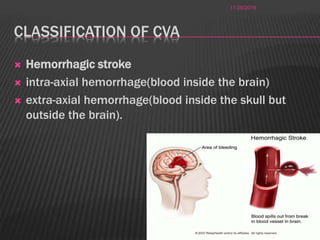
CLASSIFICATION OF CVA
ļƒ’ Hemorrhagic stroke
ļƒ’ intra-axial hemorrhage(blood inside the brain)
ļƒ’ extra-axial hemorrhage(blood inside the skull but
outside the brain).
11/28/2016
9
PATHOPHYSIOLGY OF HEMORRHAGIC STROKE
tissue injury
compression of tissue from an expanding hematoma
loss of blood supply to affected tissue
Infarction
blood released by brain hemorrhage appears to have
direct toxic effects on brain tissue
11/28/2016
10
11/28/2016
11
SIGNS AND SYMPTOMS
ļƒ’ numbness
ļƒ’ reduction in sensory or vibratory sensation
ļƒ’ Hemiplegia
ļƒ’ altered smell, taste, hearing, or vision (total or partial)
ļƒ’ drooping of eyelid (ptosis) and weakness of ocular
muscles
ļƒ’ decreased reflexes: gag, swallow, pupil reactivity to
light
11/28/2016
12
SIGNS AND SYMPTOMS
ļƒ’ decreased sensation and muscle weakness of the
face
ļƒ’ balance problems and nystagmus
ļƒ’ altered breathing and heart rate
ļƒ’ weakness in sternocleidomastoid muscle with
inability to turn head to one side
ļƒ’ weakness in tongue (inability to protrude and/or
move from side to side)
11/28/2016
13
ASSOCIATED SYMPTOMS
ļƒ’ Loss of consciousness
ļƒ’ headache, and vomiting.
11/28/2016
14
STROKE WARNING SIGNS
ļƒ’ Sudden numbness of face, arm, leg
ļƒ’ Sudden confusion
ļƒ’ Sudden trouble, seeing in both eyes
ļƒ’ Sudden trouble in walking, dizziness
ļƒ’ Sudden severe headache, with no cause.
11/28/2016
15
DIAGNOSING STROKE
ļƒ’ Clinical Assessment
ļƒ’ CT scan
ļƒ’ MRI
ļƒ’ EEG
ļƒ’ Doppler Ultrasound
ļƒ’ Carotid angiography
11/28/2016
16
WHAT IS TIA?
ļƒ’ Transient Ischemic Attack is a mini-stroke caused by
a temporarily blocked blood vessel.
ļƒ’ TIA leaves no permanent brain damage.
ļƒ’ 10% of cases TIA comes before Stroke.
ļƒ’ It is a warning sign for Major Stroke.
11/28/2016
17
TREATMENT OF STROKE
ļƒ’ Ischemic stroke– thrombolysis (aspirin, clopidogrel,
tissue plasminogen activator )
ļƒ’ Mechanical thrombectomy: It is method that have
been demonstrated effective at restoring blood flow
in patients who were unable to receive thrombolytic
drugs.
ļƒ’ Angioplasty and stenting
11/28/2016
18
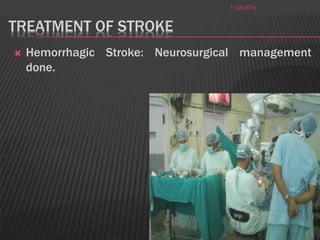
TREATMENT OF STROKE
ļƒ’ Hemorrhagic Stroke: Neurosurgical management
done.
11/28/2016
19
PROGNOSIS
ļƒ’ Disability affects 75% of stroke survivors
ļƒ’ 30 to 50% of stroke survivors suffer post stroke
depression
ļƒ’ 10% of all stroke patients develop seizures
ļƒ’ Cognitive deficits --
11/28/2016
20
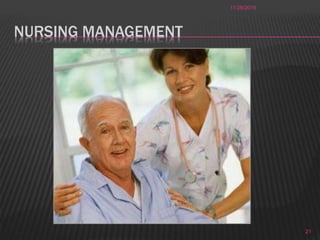
NURSING MANAGEMENT
11/28/2016
21
NURSING MANAGEMENT
ļƒ’ Initial management during acute phase.
ļƒ’ Maintenance of body fuctions.
ļƒ’ Psychological needs.
ļƒ’ Rehabilitation within the hospital
ļƒ’ Discharge planning.
11/28/2016
22
NURSING DIAGNOSIS
ļƒ’ Ineffective airway related to unconsciouness.
ļƒ’ Altered tissue perfusion related to ischemia.
ļƒ’ Risk of injury related to seizure activity.
ļƒ’ Constipation related to cerebral injury.
ļƒ’ Altered nutrition related to inability to take food.
ļƒ’ Impaired skin integrity related to immobility.
ļƒ’ Disturbed sleep pattern related to cerebral injury.
ļƒ’ Self-care deficit related to loss of consciousness.
11/28/2016
23
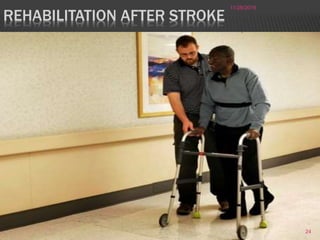
REHABILITATION AFTER STROKE
11/28/2016
24
CARE AND REHABILITATION
ļƒ’ It is the process by which patients with disabling
strokes undergo treatment to help them return to
normal life as much as possible by regaining and
relearning the skills of everyday living.
ļƒ’ It also aims to help the survivor understand and
adapt to difficulties, prevent secondary complications
and educate family members to play a supporting
role.
11/28/2016
25
REHABILITATION
ļƒ’ Physical therapy
ļƒ’ Occupational therapy
ļƒ’ Home care services
ļƒ’ Speech and language therapy
11/28/2016
26
11/28/2016
27
11/28/2016
28

Cva

  • 1.
  • 2.
    STROKE ļƒ’ It isthe rapidly developing loss of brain function(s) due to disturbance in the blood supply to the brain. This can be due to ischemia (lack of blood flow) caused by blockage (thrombosis, arterial embolism), or a hemorrhage (leakage of blood). 11/28/2016 2
  • 3.
    DEFINITION OF CVA ļƒ’World Health Organization( 1970) is a "neurological deficit of cerebrovascular cause that persists beyond 24 hours or is interrupted by death within 24 hours". 11/28/2016 3
  • 4.
    EPIDEMIOLOGY ļƒ’ 10% ofdeaths worldwide ļƒ’ 95% of strokes occur in people age 45 and older, and two-thirds of strokes occur in those over the age of 65. ļƒ’ Men are 25% more likely to suffer strokes than women ļƒ’ 60% of deaths from stroke occur in women 11/28/2016 4
  • 5.
    ETIOLOGY OF CVA ļƒ’Thrombotic Stroke---Large vessel disease Small vessel disease ļƒ’ Embolic stroke ---- blockage of an artery by an arterial embolus ļƒ’ atrial fibrillation ļƒ’ deep vein thrombosis ļƒ’ ventricular septal defect ļƒ’ Pulmonary embolism ļƒ’ Venous thrombosis ļƒ’ Hypertension ļƒ’ Bleeding disorders 11/28/2016 5
  • 6.
    RISK FACTORS FORSTROKE ļƒ’ Hypertension ļƒ’ Smoking ļƒ’ Diabetes Mellitus ļƒ’ Carotid artery disease ļƒ’ Heart disease ļƒ’ Blood disorders ļƒ’ Alcohol ļƒ’ Sex ļƒ’ Heredity ļƒ’ stress 11/28/2016 6
  • 7.
    CLASSIFICATION OF CVA ļƒ’Ischemic Stroke--In an ischemic stroke, blood supply to part of the brain is decreased, leading to dysfunction of the brain tissue in that area. ļƒ’ REASONS FOR CVA ļƒ’ Thrombosis ļƒ’ Embolism ļƒ’ Systemic hypo perfusion ļƒ’ Venous thrombosis 11/28/2016 7
  • 8.
    PATHOPHYSIOLOGY OF ISCHEMICSTROKE ļƒ’ loss of blood supply to part of the brain Brain tissue ceases to function if deprived of oxygen Irreversible injury to brain tissue death of the tissue, i.e., infarction 11/28/2016 8
  • 9.
    CLASSIFICATION OF CVA ļƒ’Hemorrhagic stroke ļƒ’ intra-axial hemorrhage(blood inside the brain) ļƒ’ extra-axial hemorrhage(blood inside the skull but outside the brain). 11/28/2016 9
  • 10.
    PATHOPHYSIOLGY OF HEMORRHAGICSTROKE tissue injury compression of tissue from an expanding hematoma loss of blood supply to affected tissue Infarction blood released by brain hemorrhage appears to have direct toxic effects on brain tissue 11/28/2016 10
  • 11.
  • 12.
    SIGNS AND SYMPTOMS ļƒ’numbness ļƒ’ reduction in sensory or vibratory sensation ļƒ’ Hemiplegia ļƒ’ altered smell, taste, hearing, or vision (total or partial) ļƒ’ drooping of eyelid (ptosis) and weakness of ocular muscles ļƒ’ decreased reflexes: gag, swallow, pupil reactivity to light 11/28/2016 12
  • 13.
    SIGNS AND SYMPTOMS ļƒ’decreased sensation and muscle weakness of the face ļƒ’ balance problems and nystagmus ļƒ’ altered breathing and heart rate ļƒ’ weakness in sternocleidomastoid muscle with inability to turn head to one side ļƒ’ weakness in tongue (inability to protrude and/or move from side to side) 11/28/2016 13
  • 14.
    ASSOCIATED SYMPTOMS ļƒ’ Lossof consciousness ļƒ’ headache, and vomiting. 11/28/2016 14
  • 15.
    STROKE WARNING SIGNS ļƒ’Sudden numbness of face, arm, leg ļƒ’ Sudden confusion ļƒ’ Sudden trouble, seeing in both eyes ļƒ’ Sudden trouble in walking, dizziness ļƒ’ Sudden severe headache, with no cause. 11/28/2016 15
  • 16.
    DIAGNOSING STROKE ļƒ’ ClinicalAssessment ļƒ’ CT scan ļƒ’ MRI ļƒ’ EEG ļƒ’ Doppler Ultrasound ļƒ’ Carotid angiography 11/28/2016 16
  • 17.
    WHAT IS TIA? ļƒ’Transient Ischemic Attack is a mini-stroke caused by a temporarily blocked blood vessel. ļƒ’ TIA leaves no permanent brain damage. ļƒ’ 10% of cases TIA comes before Stroke. ļƒ’ It is a warning sign for Major Stroke. 11/28/2016 17
  • 18.
    TREATMENT OF STROKE ļƒ’Ischemic stroke– thrombolysis (aspirin, clopidogrel, tissue plasminogen activator ) ļƒ’ Mechanical thrombectomy: It is method that have been demonstrated effective at restoring blood flow in patients who were unable to receive thrombolytic drugs. ļƒ’ Angioplasty and stenting 11/28/2016 18
  • 19.
    TREATMENT OF STROKE ļƒ’Hemorrhagic Stroke: Neurosurgical management done. 11/28/2016 19
  • 20.
    PROGNOSIS ļƒ’ Disability affects75% of stroke survivors ļƒ’ 30 to 50% of stroke survivors suffer post stroke depression ļƒ’ 10% of all stroke patients develop seizures ļƒ’ Cognitive deficits -- 11/28/2016 20
  • 21.
  • 22.
    NURSING MANAGEMENT ļƒ’ Initialmanagement during acute phase. ļƒ’ Maintenance of body fuctions. ļƒ’ Psychological needs. ļƒ’ Rehabilitation within the hospital ļƒ’ Discharge planning. 11/28/2016 22
  • 23.
    NURSING DIAGNOSIS ļƒ’ Ineffectiveairway related to unconsciouness. ļƒ’ Altered tissue perfusion related to ischemia. ļƒ’ Risk of injury related to seizure activity. ļƒ’ Constipation related to cerebral injury. ļƒ’ Altered nutrition related to inability to take food. ļƒ’ Impaired skin integrity related to immobility. ļƒ’ Disturbed sleep pattern related to cerebral injury. ļƒ’ Self-care deficit related to loss of consciousness. 11/28/2016 23
  • 24.
  • 25.
    CARE AND REHABILITATION ļƒ’It is the process by which patients with disabling strokes undergo treatment to help them return to normal life as much as possible by regaining and relearning the skills of everyday living. ļƒ’ It also aims to help the survivor understand and adapt to difficulties, prevent secondary complications and educate family members to play a supporting role. 11/28/2016 25
  • 26.
    REHABILITATION ļƒ’ Physical therapy ļƒ’Occupational therapy ļƒ’ Home care services ļƒ’ Speech and language therapy 11/28/2016 26
  • 27.
  • 28.