Three Essential Elements of Fire
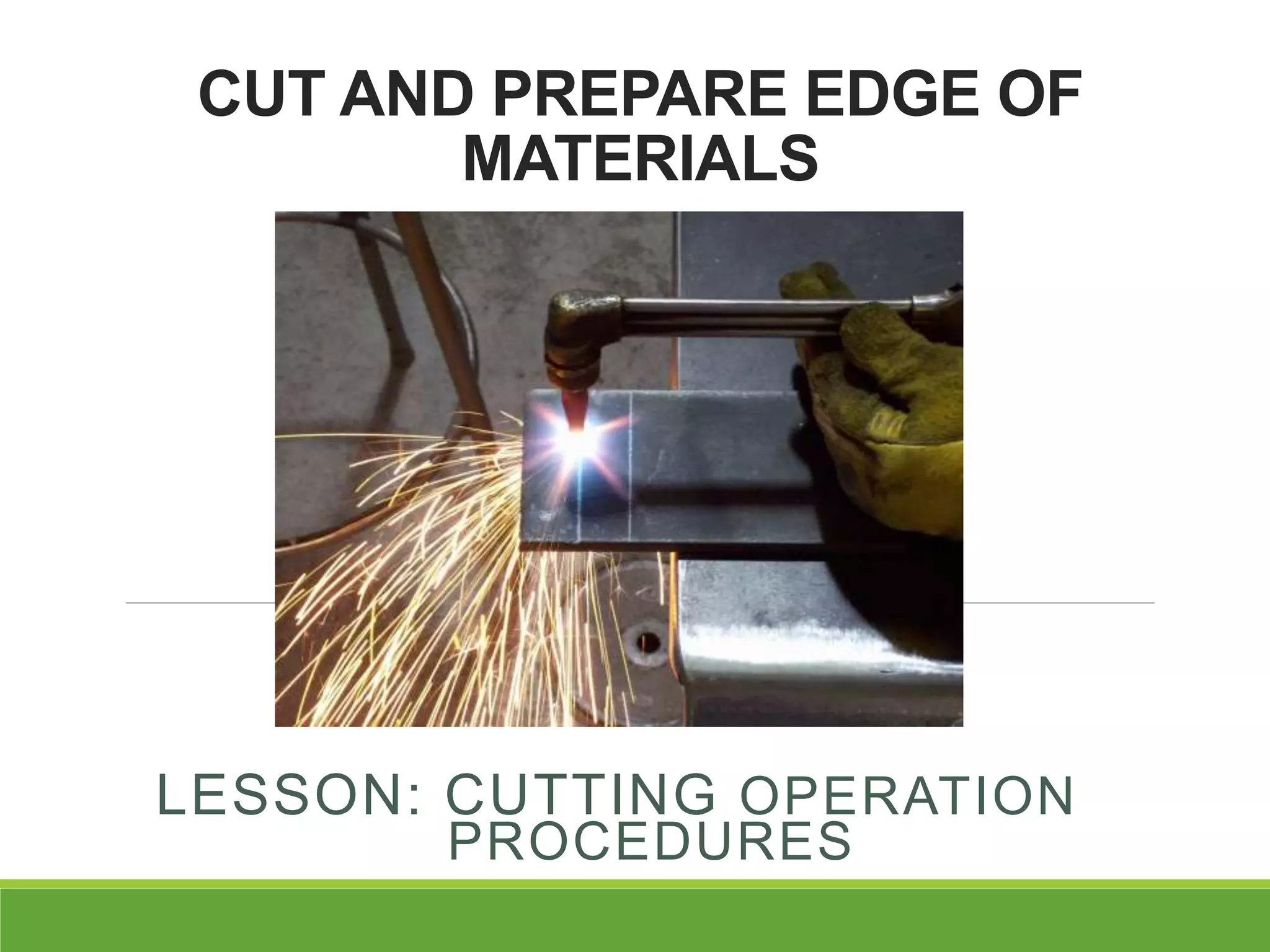
CUT AND PREPARE EDGE OF
MATERIALS
LESSON: CUTTING OPERATION
PROCEDURES
Oxy-Fuel Cutting
Definition:
Burning is the rapid oxidation of a
material
Does Metal Burn?
• Virtually all materials will burn if
they are first heated to their ignition
temperature.
• Steel ignition temp is when it is
cherry red, 1300-1400° C
• Oxygen burns preheated metal and
blows it away from the work piece.
Oxyacetylene welding (OAW)
Oxygen and acetylene gas are mixed in the torch tip. The mixture burns at the torch tip.
The heat from this flame is used to melt the base metal and welding rod. This melted
material forms a weld joint.
Flame Cutting – How it works?
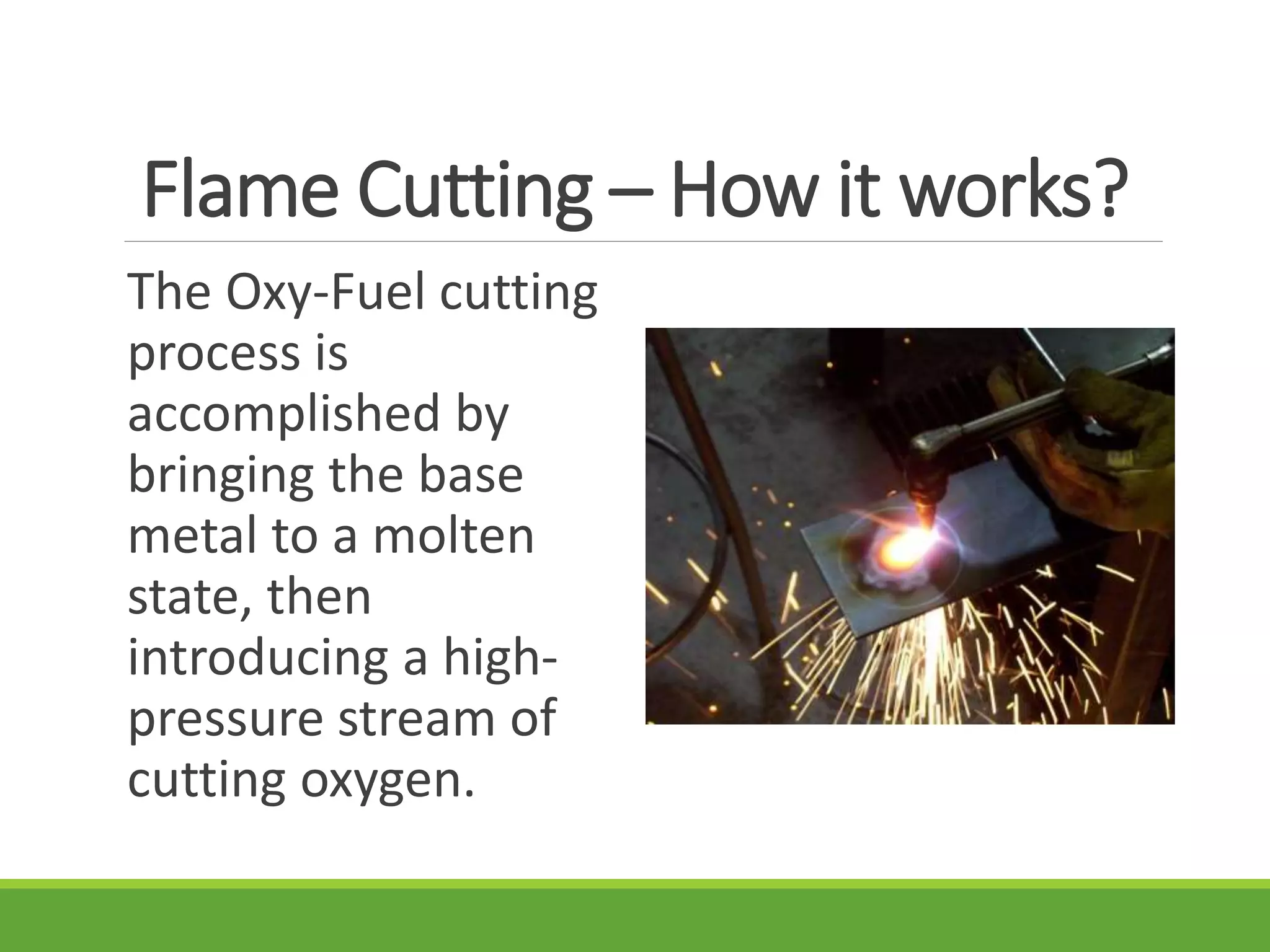
The Oxy-Fuel cutting
process is
accomplished by
bringing the base
metal to a molten
state, then
introducing a high-
pressure stream of
cutting oxygen.
Flame Cutting – How it works?
This will ignite and burn the
metal as well as carry away
the slag or oxidized residue.
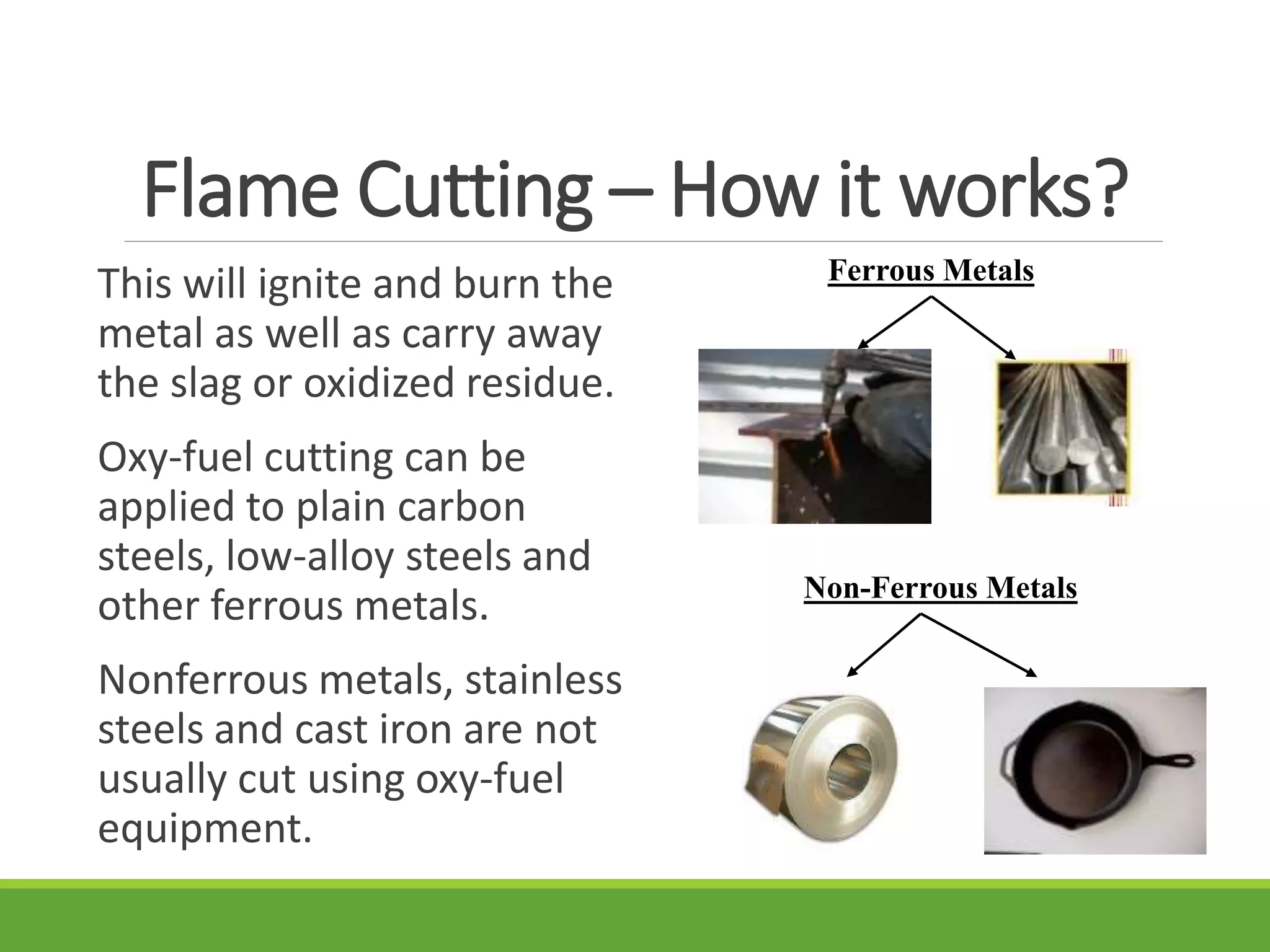
Oxy-fuel cutting can be
applied to plain carbon
steels, low-alloy steels and
other ferrous metals.
Nonferrous metals, stainless
steels and cast iron are not
usually cut using oxy-fuel
equipment.
Ferrous Metals
Non-Ferrous Metals
Things to Consider before Getting Started
1. Inspect the cone end,
coupling nut, and torch
head for dirt, dust, oil,
grease, or damaged
parts. Dirt and dust can
be removed with a
clean cloth.
CAUTION: If oil, grease
or damaged parts are
detected, DO NOT USE!
Report it to the
instructor immediately!
Inspect the Equipment
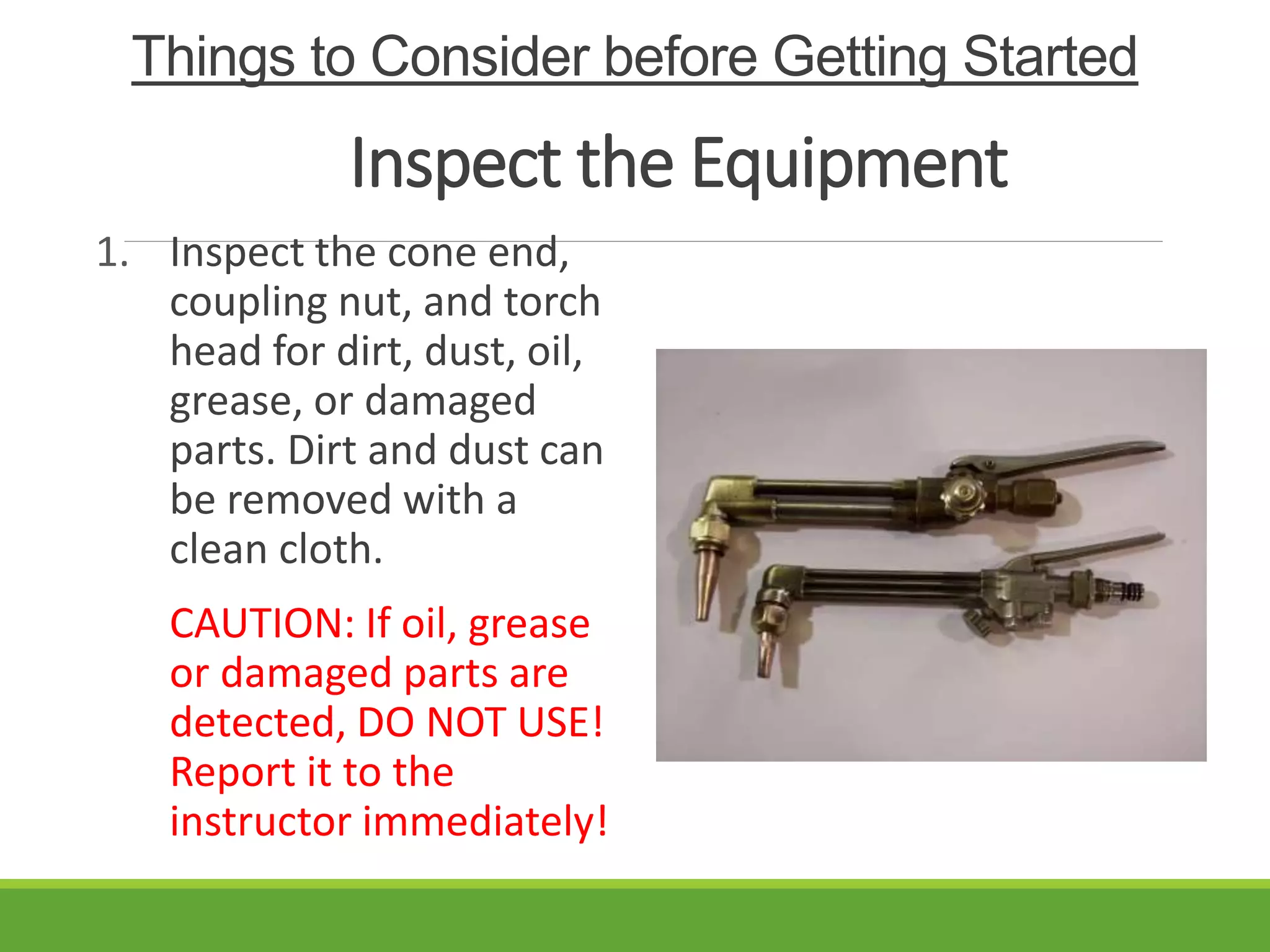
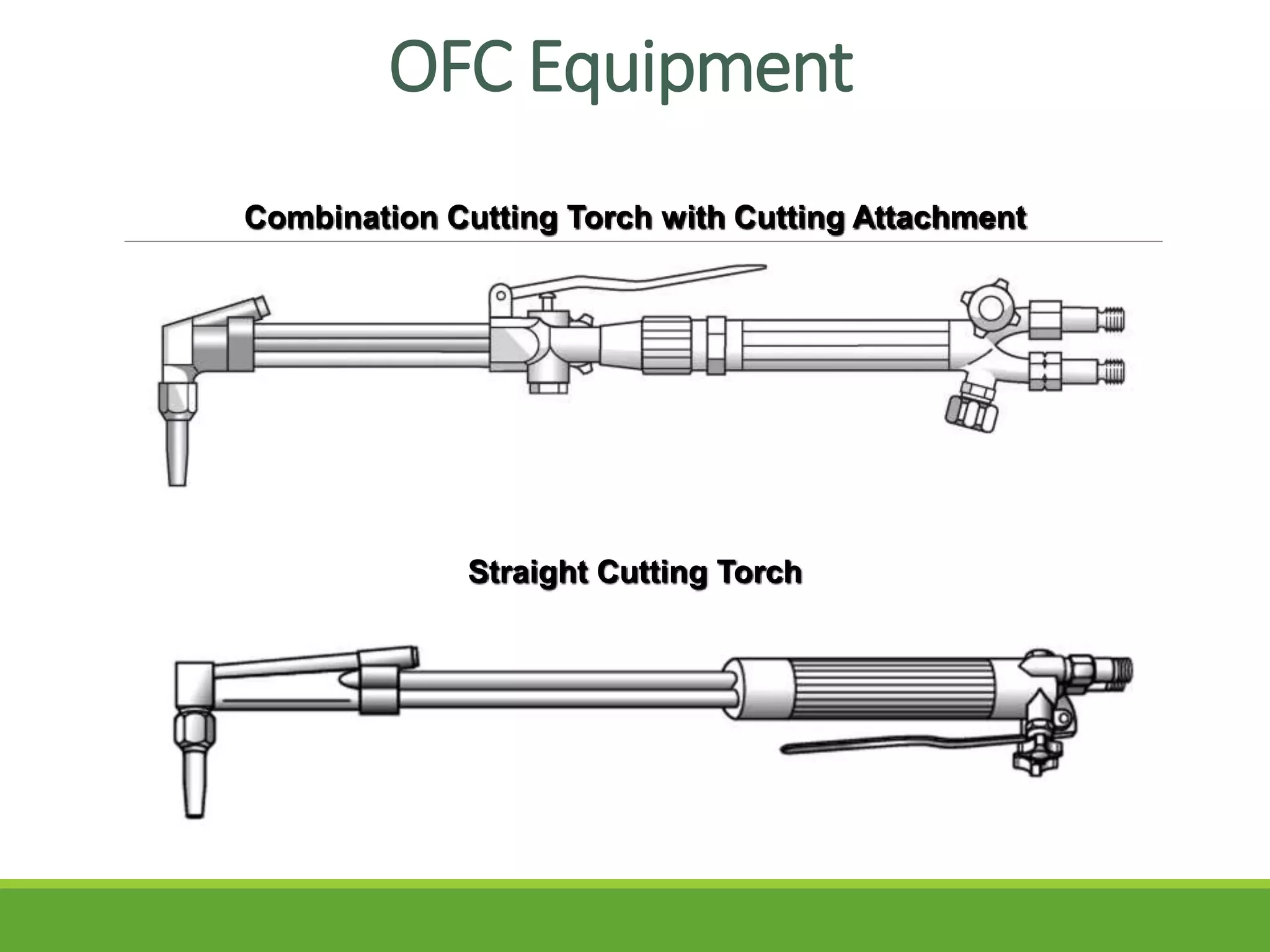
Straight Cutting Torch
OFC Equipment
Combination Cutting Torch with Cutting Attachment
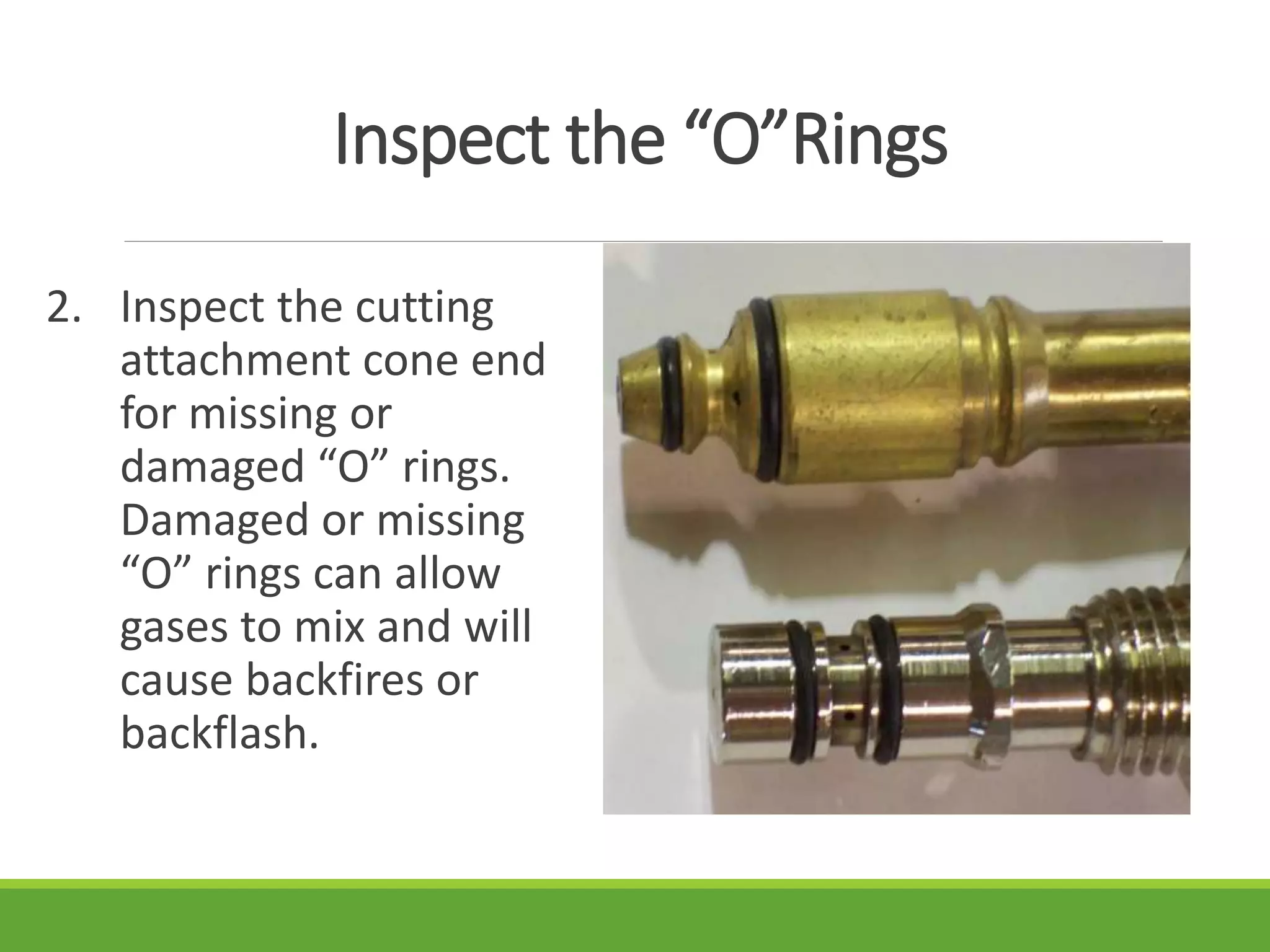
Inspect the “O”Rings
2. Inspect the cutting
attachment cone end
for missing or
damaged “O” rings.
Damaged or missing
“O” rings can allow
gases to mix and will
cause backfires or
backflash.
Inspect the Cutting Tips
3. Inspect the torch head.
The tapered seating
surfaces must be in good
condition.
If dents, burns or burned
seats are present, the seat
must be resurfaced.
If the torch is used with a
bad seat, backfire or
backflash may occur.
Setting up the Cutting Head
4. Connect the cutting
attachment to the
welding torch handle
and tighten the
coupling nut, using
hand pressure only.
Wrench tightening
may damage “O” rings
and create a faulty
seal.
HAND TIGHT ONLY
Tip Selection
5. Select the
required size and
type of cutting
tip.
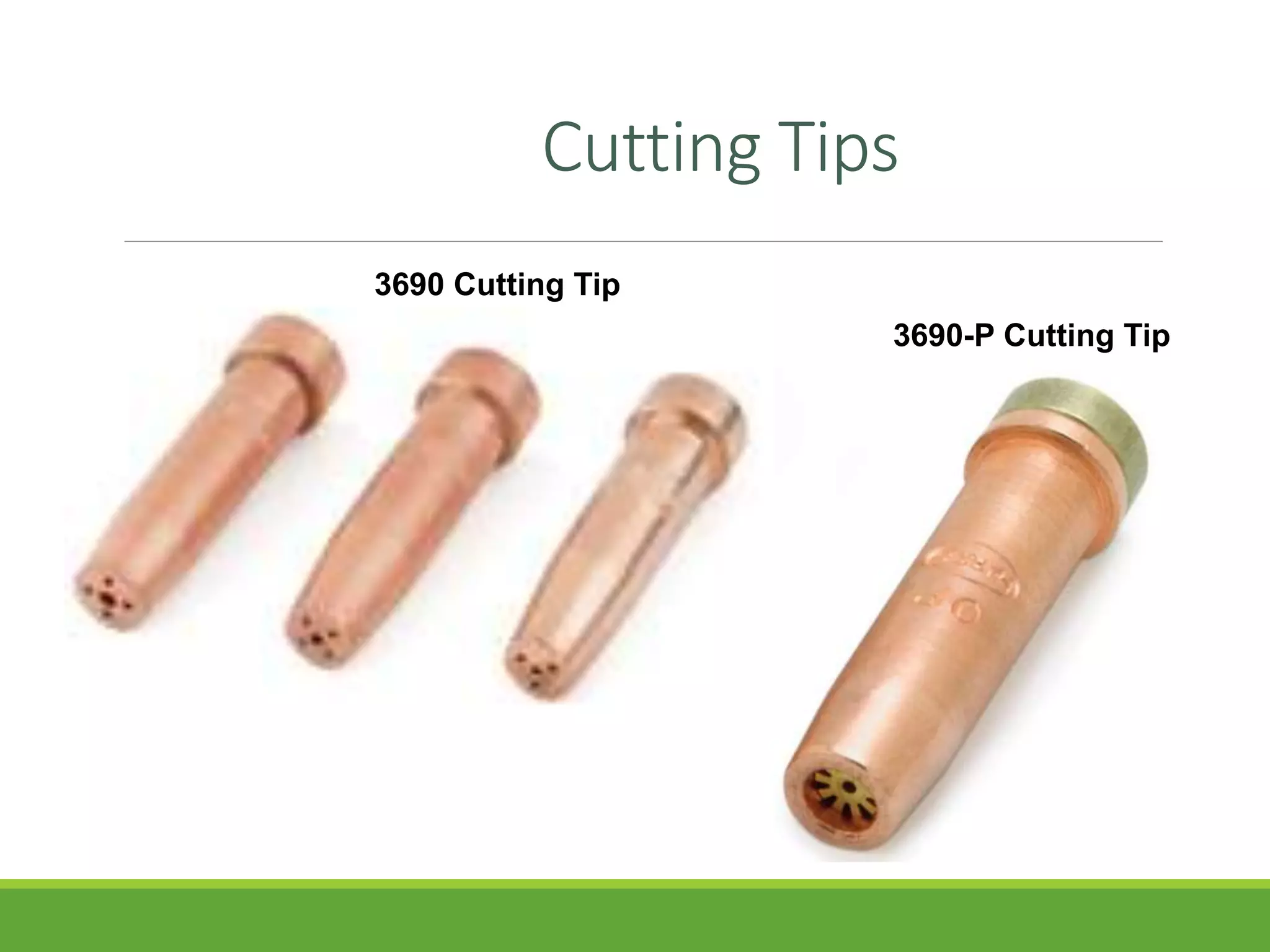
3690 Cutting Tip
3690-P Cutting Tip
Cutting Tips
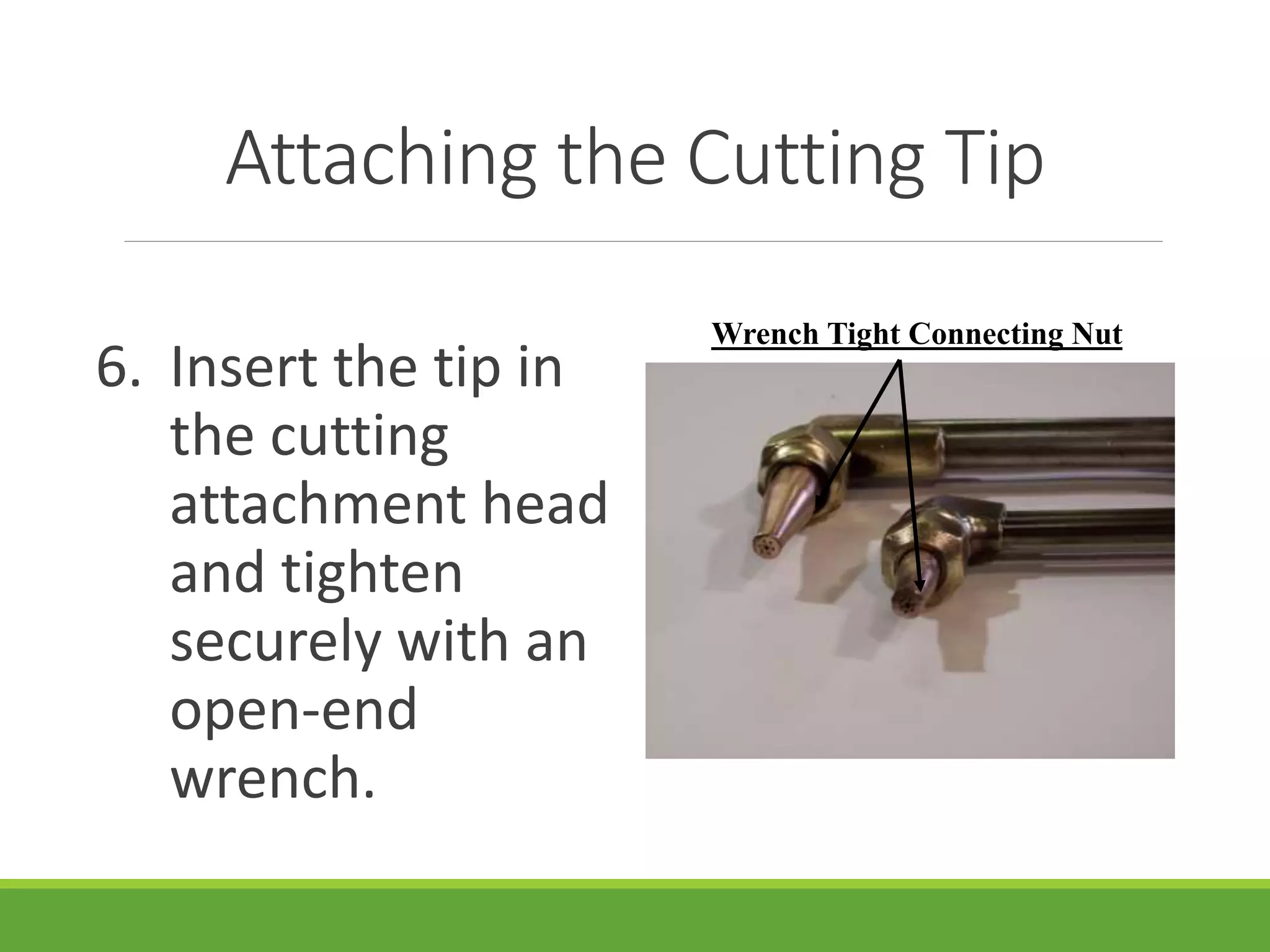
Attaching the Cutting Tip
6. Insert the tip in
the cutting
attachment head
and tighten
securely with an
open-end
wrench.
Wrench Tight Connecting Nut
CUTTINGTIP SELECTION CHART
Thickness Tip Cutting Oxygen Acetylene Oxygen Acetylene
ofMetal Size Orifice Pressure Pressure Consumption Consumption
in Inches Number DrillSize (P.S.I.G.) (P.S.I.G.) (SCFH) (SCFH)
Lightgauge
to 3/16 000 #68 15-20 5-15 35-40 10-15
3/16 -3/8 00 #64 20-25 5-15 45-50 10-15
3/8 -5/8 0 #60 35-40 5-15 75-85 15-20
5/8-1 1 #56 35-40 5-15 97-107 15-20
1-2 2 #52 40-45 5-15 180-195 20-30
2-3 3 #48 45-50 5-15 270-290 20-35
3-6 4 #42 50-75 10-15 450-600 25-40
OFC Cutting Tip Information
Oxy-Fuel Cutting Set-up
All set up the same as
oxy-fuel welding
except:
• To set working
pressure for
oxygen must
open cutting
valve
Oxy-Fuel Cutting Process
•Clean metal
•Draw line
•Make jig to keep cut straight
•Hold tip 1/16-1/8” above metal
•Preheat metal to cherry red color
•Open oxygen valve and push torch through metal
(Angle tip slightly toward direction of cut)
Carburizing Flame
Neutral Flame
Oxidizing Flame
Neutral Flame with Oxygen Cutting Stream
Cutting Flame Types
Acetylene Burning in Atmosphere
Advantages
• Can cut complex shape
• Can cut carbon and low carbon steel
• Inexpensive process
• Can have multiple cutting torch
Disadvantages
• It is slower than other cutting systems
• Cut accuracy is not as good as plasma, water jet
,laser
• Creates heat affected zone

Cutting operation.ppt

  • 1.
  • 2.
    CUT AND PREPAREEDGE OF MATERIALS LESSON: CUTTING OPERATION PROCEDURES
  • 3.
    Oxy-Fuel Cutting Definition: Burning isthe rapid oxidation of a material Does Metal Burn? • Virtually all materials will burn if they are first heated to their ignition temperature. • Steel ignition temp is when it is cherry red, 1300-1400° C • Oxygen burns preheated metal and blows it away from the work piece.
  • 4.
    Oxyacetylene welding (OAW) Oxygenand acetylene gas are mixed in the torch tip. The mixture burns at the torch tip. The heat from this flame is used to melt the base metal and welding rod. This melted material forms a weld joint.
  • 5.
    Flame Cutting –How it works? The Oxy-Fuel cutting process is accomplished by bringing the base metal to a molten state, then introducing a high- pressure stream of cutting oxygen.
  • 6.
    Flame Cutting –How it works? This will ignite and burn the metal as well as carry away the slag or oxidized residue. Oxy-fuel cutting can be applied to plain carbon steels, low-alloy steels and other ferrous metals. Nonferrous metals, stainless steels and cast iron are not usually cut using oxy-fuel equipment. Ferrous Metals Non-Ferrous Metals
  • 7.
    Things to Considerbefore Getting Started 1. Inspect the cone end, coupling nut, and torch head for dirt, dust, oil, grease, or damaged parts. Dirt and dust can be removed with a clean cloth. CAUTION: If oil, grease or damaged parts are detected, DO NOT USE! Report it to the instructor immediately! Inspect the Equipment
  • 8.
    Straight Cutting Torch OFCEquipment Combination Cutting Torch with Cutting Attachment
  • 9.
    Inspect the “O”Rings 2.Inspect the cutting attachment cone end for missing or damaged “O” rings. Damaged or missing “O” rings can allow gases to mix and will cause backfires or backflash.
  • 10.
    Inspect the CuttingTips 3. Inspect the torch head. The tapered seating surfaces must be in good condition. If dents, burns or burned seats are present, the seat must be resurfaced. If the torch is used with a bad seat, backfire or backflash may occur.
  • 11.
    Setting up theCutting Head 4. Connect the cutting attachment to the welding torch handle and tighten the coupling nut, using hand pressure only. Wrench tightening may damage “O” rings and create a faulty seal. HAND TIGHT ONLY
  • 12.
    Tip Selection 5. Selectthe required size and type of cutting tip.
  • 13.
    3690 Cutting Tip 3690-PCutting Tip Cutting Tips
  • 14.
    Attaching the CuttingTip 6. Insert the tip in the cutting attachment head and tighten securely with an open-end wrench. Wrench Tight Connecting Nut
  • 15.
    CUTTINGTIP SELECTION CHART ThicknessTip Cutting Oxygen Acetylene Oxygen Acetylene ofMetal Size Orifice Pressure Pressure Consumption Consumption in Inches Number DrillSize (P.S.I.G.) (P.S.I.G.) (SCFH) (SCFH) Lightgauge to 3/16 000 #68 15-20 5-15 35-40 10-15 3/16 -3/8 00 #64 20-25 5-15 45-50 10-15 3/8 -5/8 0 #60 35-40 5-15 75-85 15-20 5/8-1 1 #56 35-40 5-15 97-107 15-20 1-2 2 #52 40-45 5-15 180-195 20-30 2-3 3 #48 45-50 5-15 270-290 20-35 3-6 4 #42 50-75 10-15 450-600 25-40 OFC Cutting Tip Information
  • 16.
    Oxy-Fuel Cutting Set-up Allset up the same as oxy-fuel welding except: • To set working pressure for oxygen must open cutting valve
  • 17.
    Oxy-Fuel Cutting Process •Cleanmetal •Draw line •Make jig to keep cut straight •Hold tip 1/16-1/8” above metal •Preheat metal to cherry red color •Open oxygen valve and push torch through metal (Angle tip slightly toward direction of cut)
  • 18.
    Carburizing Flame Neutral Flame OxidizingFlame Neutral Flame with Oxygen Cutting Stream Cutting Flame Types Acetylene Burning in Atmosphere
  • 19.
    Advantages • Can cutcomplex shape • Can cut carbon and low carbon steel • Inexpensive process • Can have multiple cutting torch Disadvantages • It is slower than other cutting systems • Cut accuracy is not as good as plasma, water jet ,laser • Creates heat affected zone