CURRENT – /ˈkərənt/
- a quantity representing the rate of flow of
electric charge, usually measured in amperes.
VOLTAGE – /ˈvōltij/
- an electromotive force or potential difference
expressed in volts
RESISTANCE – /rəˈzistəns/
- the degree to which a substance or device
opposes the passage of an electric current,
causing energy dissipation.
 It is the process or the result of
determining the ratio of a physical
quantity, such as a length, time,
temperature, etc., to a unit of
measurement, such as the meter,
second or degree Celsius.
 The science of measurement is
called metrology.
 The English word
originates from the:
Latin - mēnsūra
verb - metiri
Middle French - mesure
Electrical measuring tools and
instruments are sensitive and
delicate so extra care is necessary in
handling them. These are used to
measure currents, voltages,
resistances, wattages and other
important elements in electrical
works.
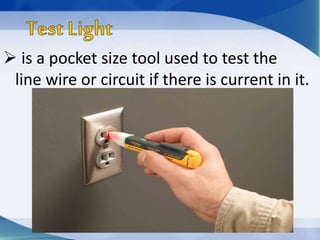
 is a pocket size tool used to test the
line wire or circuit if there is current in it.
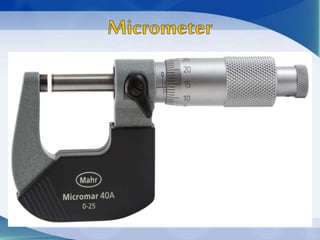
 is used to measure the diameter
of wires/conductors in circular
mils. It can measure small and big
sizes of wires and cables.
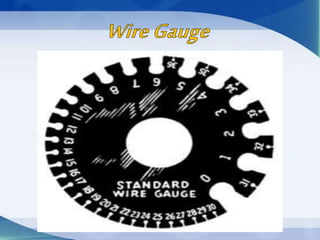
 is used in determining the
size of wires/conductors. The
gauge ranges from 0 to 60 awg
( American wire gauge).
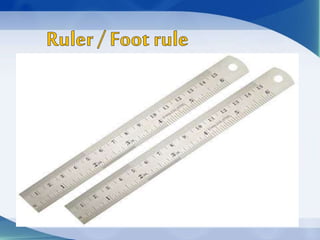
 is a measuring tool used to
measure length, width and
thickness of short flat object
and in sketching straight lines
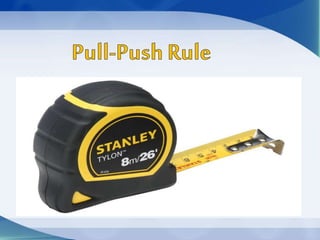
 is a measuring tool used
to measure the length of
an object in centimeter
and inches
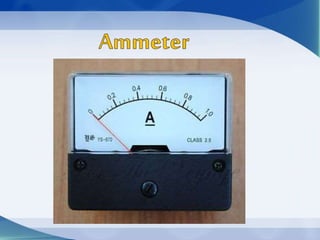
 is an instrument used to
measure the amount of electrical
current intensity in a circuit. The
unit of measure is ampere (a). It is
connected along or series to the
circuit.
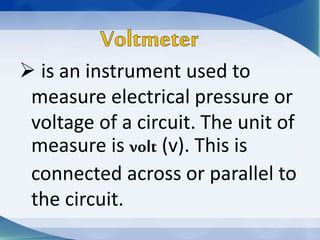
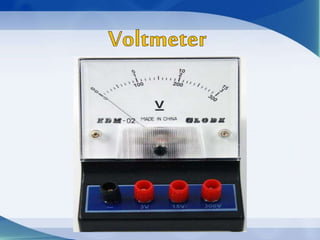
 is an instrument used to
measure electrical pressure or
voltage of a circuit. The unit of
measure is volt (v). This is
connected across or parallel to
the circuit.
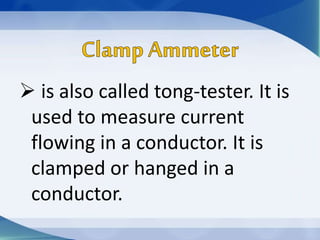
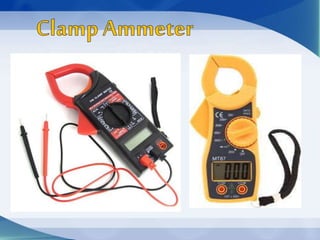
 is also called tong-tester. It is
used to measure current
flowing in a conductor. It is
clamped or hanged in a
conductor.
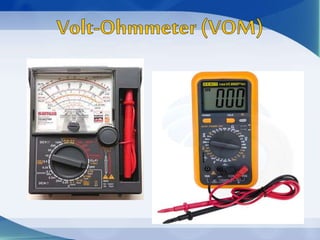
 otherwise called as Multi-tester; is
used to measure the voltage,
resistance and current of a circuit.
It is connected in parallel or series
with the circuit depending on what
to measure.
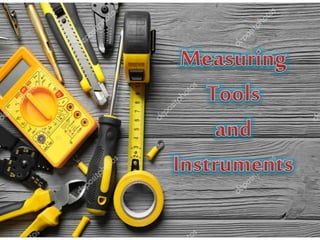
Measuring tools and instruments

Measuring tools and instruments

  • 3.
    CURRENT – /ˈkərənt/ -a quantity representing the rate of flow of electric charge, usually measured in amperes. VOLTAGE – /ˈvōltij/ - an electromotive force or potential difference expressed in volts RESISTANCE – /rəˈzistəns/ - the degree to which a substance or device opposes the passage of an electric current, causing energy dissipation.
  • 4.
     It isthe process or the result of determining the ratio of a physical quantity, such as a length, time, temperature, etc., to a unit of measurement, such as the meter, second or degree Celsius.  The science of measurement is called metrology.
  • 5.
     The Englishword originates from the: Latin - mēnsūra verb - metiri Middle French - mesure
  • 6.
    Electrical measuring toolsand instruments are sensitive and delicate so extra care is necessary in handling them. These are used to measure currents, voltages, resistances, wattages and other important elements in electrical works.
  • 7.
     is apocket size tool used to test the line wire or circuit if there is current in it.
  • 8.
     is usedto measure the diameter of wires/conductors in circular mils. It can measure small and big sizes of wires and cables.
  • 10.
     is usedin determining the size of wires/conductors. The gauge ranges from 0 to 60 awg ( American wire gauge).
  • 12.
     is ameasuring tool used to measure length, width and thickness of short flat object and in sketching straight lines
  • 14.
     is ameasuring tool used to measure the length of an object in centimeter and inches
  • 16.
     is aninstrument used to measure the amount of electrical current intensity in a circuit. The unit of measure is ampere (a). It is connected along or series to the circuit.
  • 18.
     is aninstrument used to measure electrical pressure or voltage of a circuit. The unit of measure is volt (v). This is connected across or parallel to the circuit.
  • 20.
     is alsocalled tong-tester. It is used to measure current flowing in a conductor. It is clamped or hanged in a conductor.
  • 22.
     otherwise calledas Multi-tester; is used to measure the voltage, resistance and current of a circuit. It is connected in parallel or series with the circuit depending on what to measure.