BUILDING MATERIAL
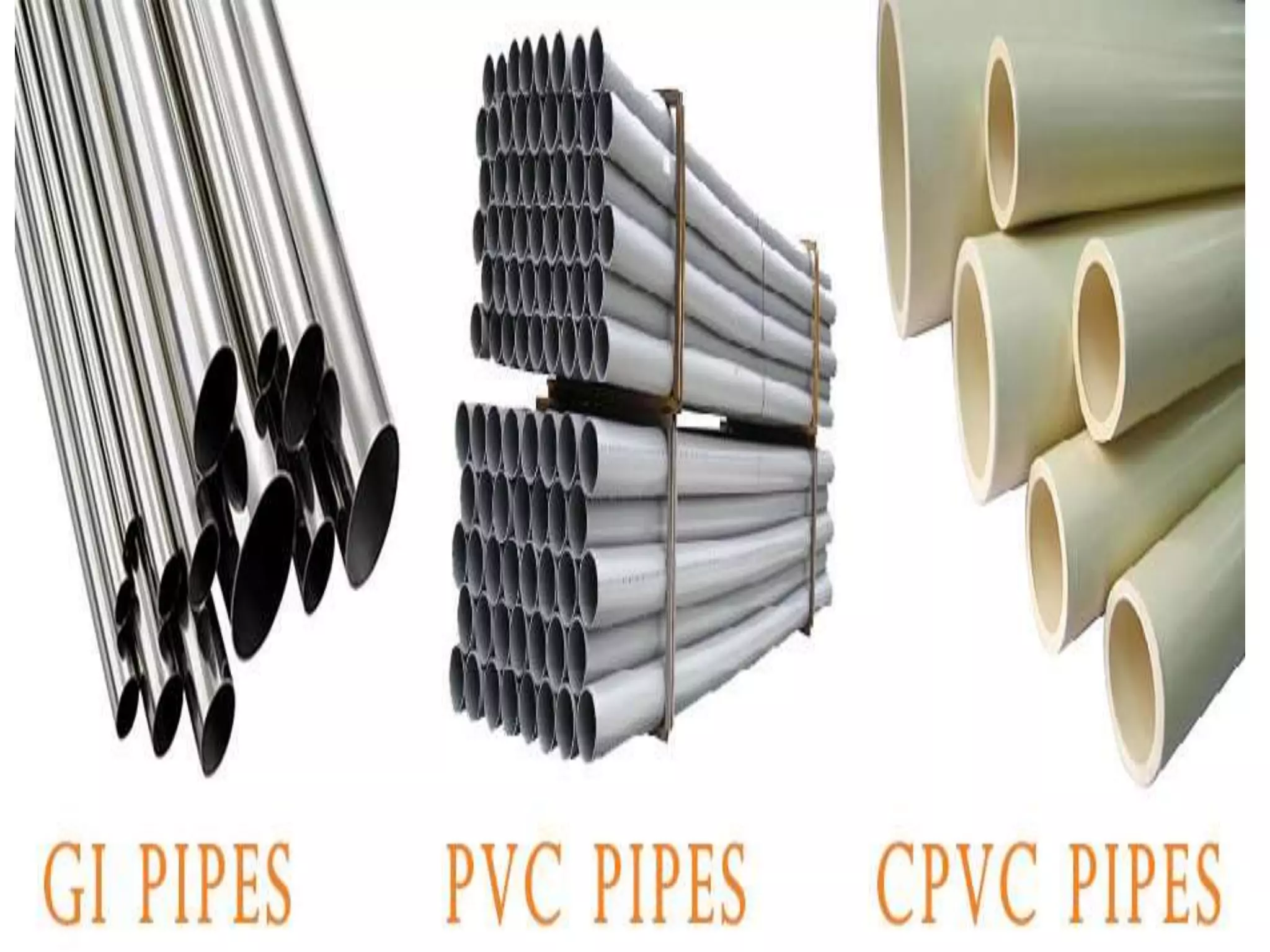
PVC PIPES
PVC is…..
 Made from salt (57 per cent) and
oil/gas (43 per cent).
 Was first produced commercially in the
late 1920s.
PROPERTIES…..
 PVC polymer is chemically stable, neutral and
non-toxic.
 PVC's major benefit is its compatibility with
many different kinds of additives, making it a
highly versatile polymer.
 PVC has excellent electrical insulation
properties,good impact strength and
weatherproof attributes .
USED IN……
 PVC in Medical Applications
PVC in Transport
PVC in Building and Construction
PVC in Toys
PVC in Consumer Goods and Everyday Life
PVC in Packaging
PVC in Art and Design
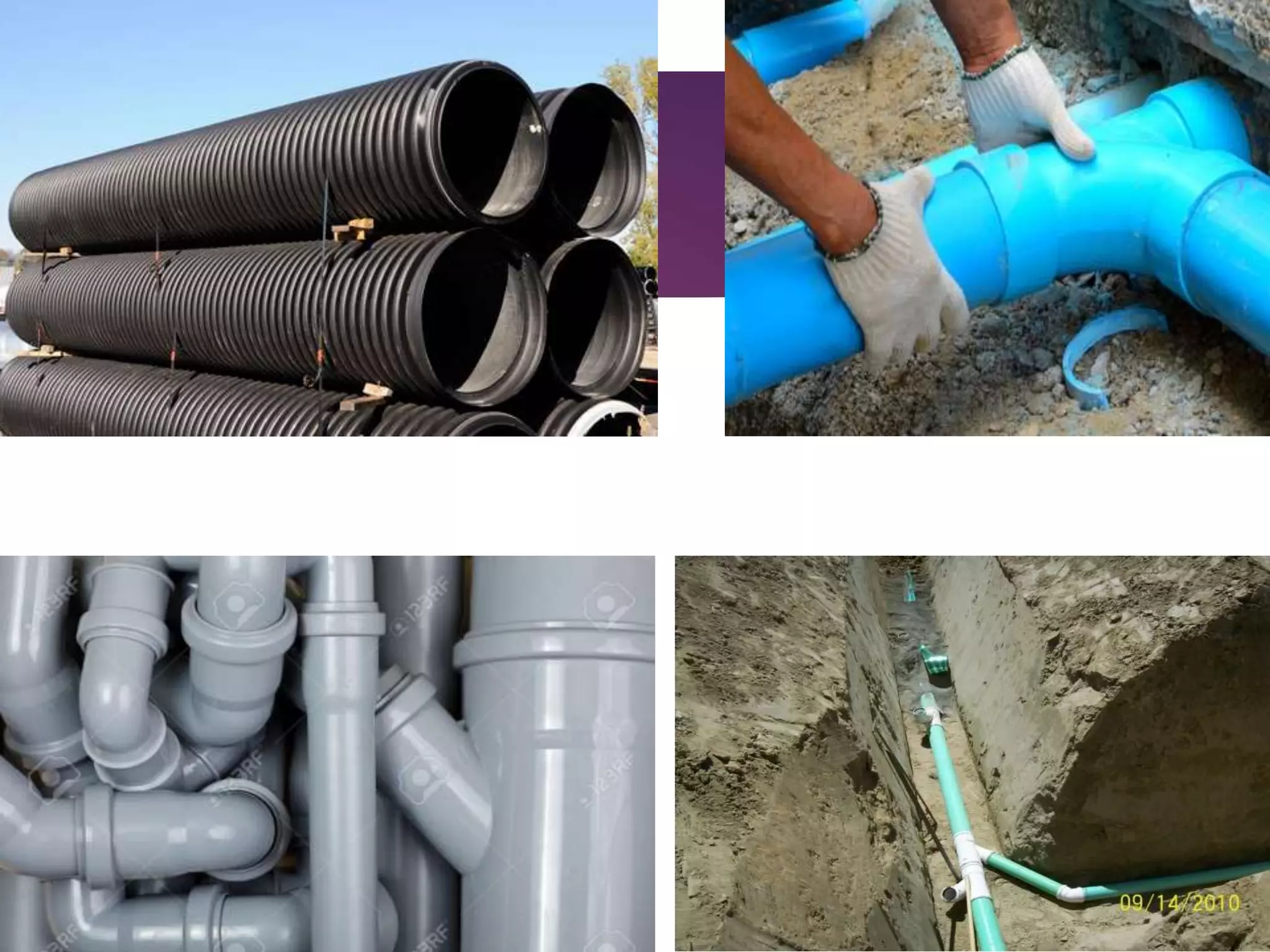
PVC PIPE
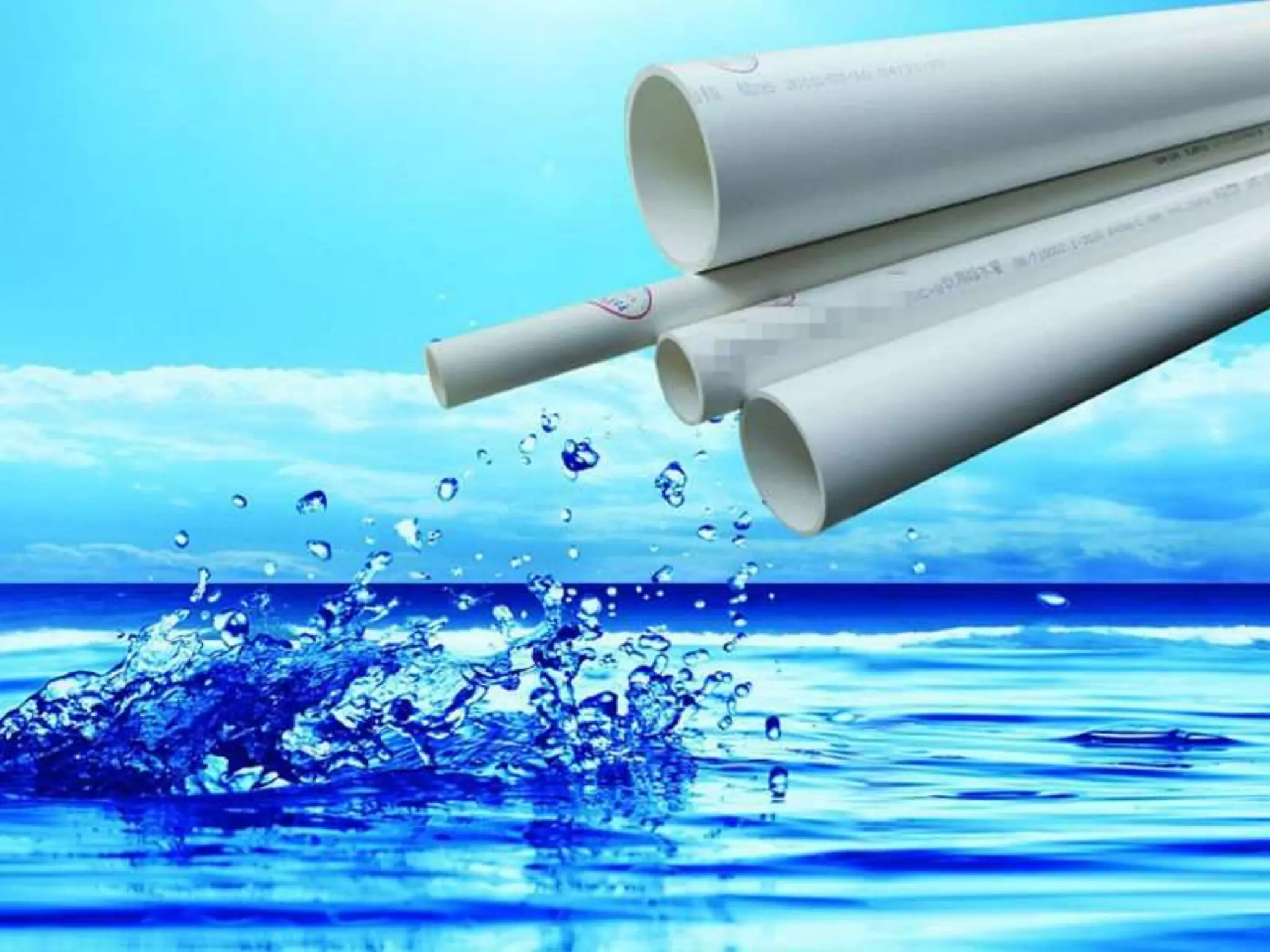
 Polyvinyl chloride (PVC) pipe is made from a plastic
and vinyl combination material. The pipes are
durable, hard to damage, and long lasting. They do
not rust, rot, or wear over time. For that reason, PVC
piping is most commonly used in water systems,
underground wiring, and sewer lines.
CHARACTERSTICS
 The Colour of PVC Pipe is White or Dark Grey.
 PVC is available in both rigid form and flexible
form.
 It is safe to touch and handle.
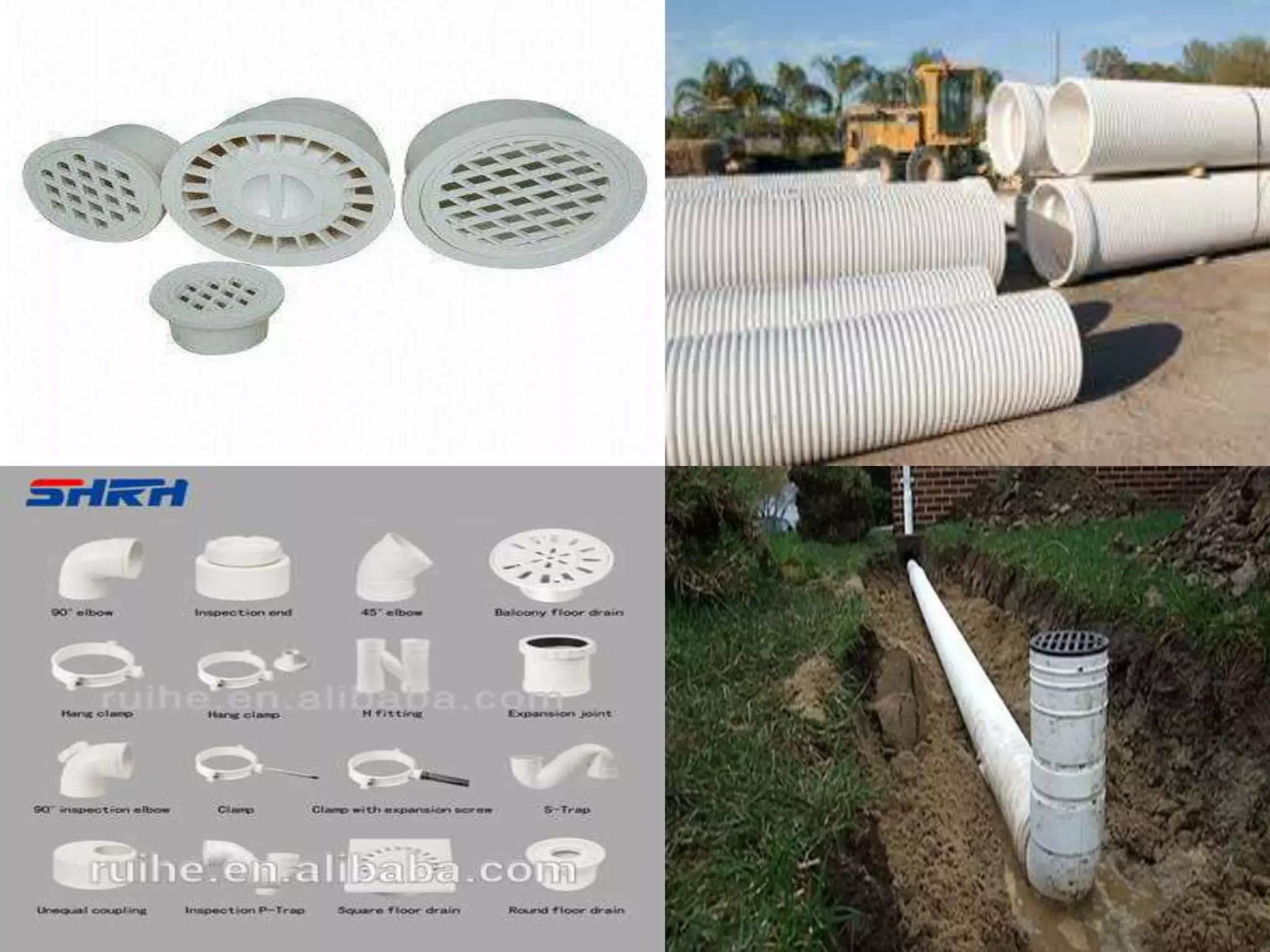
TYPES OF PVC PIPES
 PVC Water Pipe
 PVC Sewage Pipe
 PVC Plumbing Pipe
 PVC Drainage Pipe
 PVC Pipe Connectors
PVC WATER PIPE
 PVC water pipes are also very smooth, which means
there is no loss of flow or water pressure due to
friction. Finally, PVC water pipe does not react
chemically with water, so there is little risk of rust or
corrosion.
 Polyvinyl chloride pipe, or PVC pipe, is more often
used to remove water, rather than supply it for
consumption.
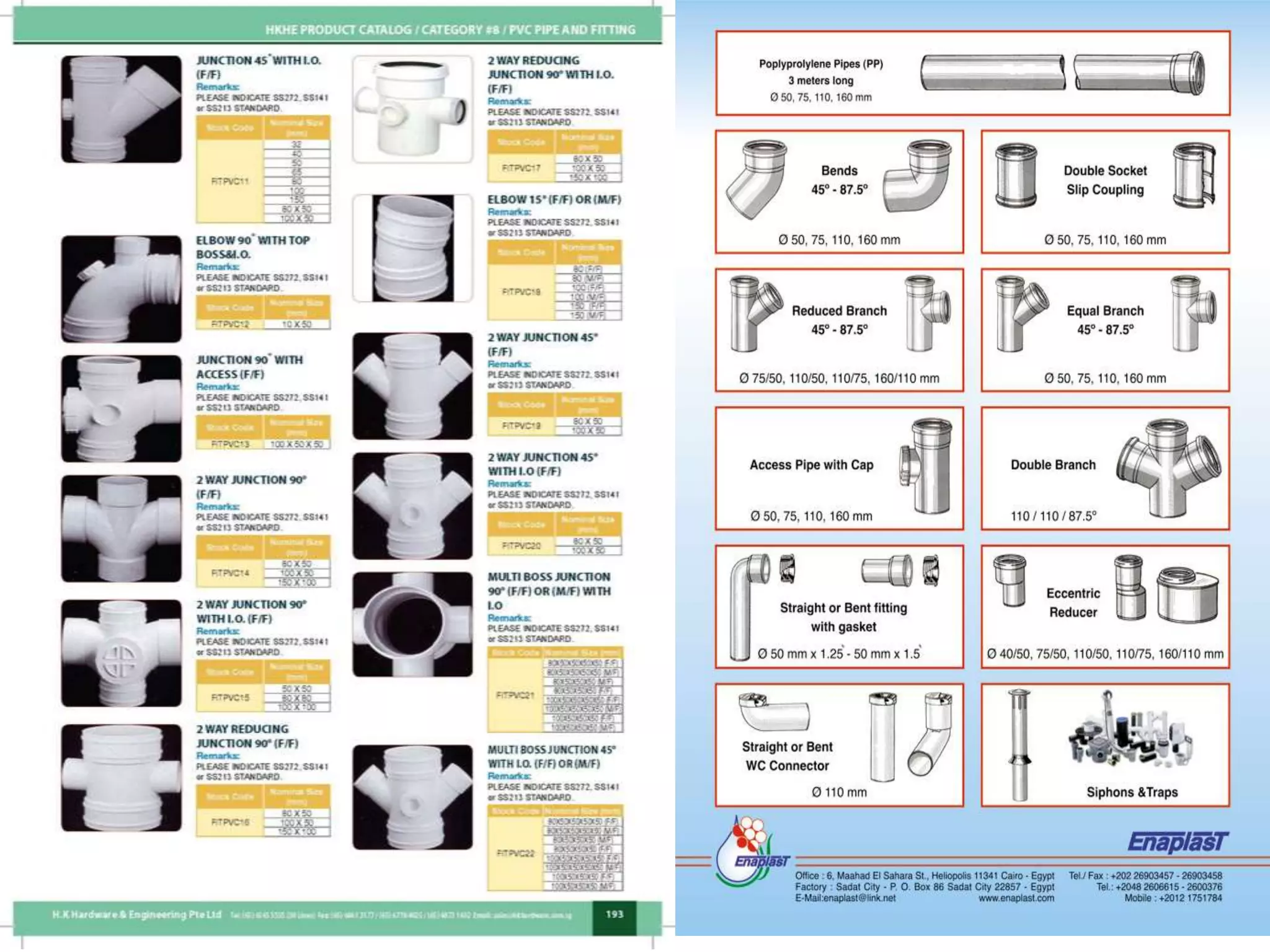
PVC PIPE CONNECTORS
 Plumbers join pipe tees to surrounding pipes using a
variety of methods. Many metal pipes and
connectors are threaded, and can be screwed
together by hand or with a wrench.
 PVC plumbing is plumbing done with polyvinyl
chloride (PVC) pipe. Around half of the world's PVC
production goes to making pipes for plumbing
applications, and PVC plumbing is extremely
common around the world for new structures and
replacements of existing plumbing systems.
PVC PLUMBING PIPE
 PVC plumbing is plumbing done with polyvinyl
chloride (PVC) pipe. Around half of the world's PVC
production goes to making pipes for plumbing
applications, and PVC plumbing is extremely
common around the world for new structures and
replacements of existing plumbing systems.
 PVC drain pipe, or perhaps more generally, PVC
pipe, is the ubiquitous white tube most often used in
plumbing applications.
PVC SEWER PIPE
 It is typically used to allow water to pass from one
location, such as a roof, to another location, such as
a sewer or gutter. Polyvinyl chloride pipe, or PVC
pipe, is more often used to remove water, rather
than supply it for consumption.
 City water and sewer carrier pipes are housed inside
containment pipes, particularly when a pipe is built
exposed.
PVC DRAINAGE PIPE
 Since then, industry standards have been
developed and piping that is appropriate for water
is marked with designations such as NSF-61. PVC
drain pipe is often preferred over other forms of
drainage pipe, including cast iron pipe, flexible
tubing, or galvanized steel pipe.
 Users can manipulate it to send water flow in any
desired direction. Drainage pipes are also made of
ceramic. This type of drainage pipe is similar in
strength to many types of plastic piping.
PVC PIPE SUPPLY
 Because the flexible pipe can easily routed in any
direction necessary, this form of PVC piping can be
used in areas where space is very limited or that simply
would not accommodate a rigid pipe. Flexible PVC
pipe fittings are much like the fittings for any type of
pipe, so no special tools are needed for the installation.
 A coupler or union type of PVC pipe fitting is like a
sleeve that slides over the end of each PVC pipe at a
joint and is used to join the two pieces of pipe together.
Cap PVC pipe fittings usually are used to cap off the
flow of water at one point.
ADVANTAGES AND
DISADVANTAGE
 Pipes used in soil and waste water discharge systems
 Rigid PVC pipes are used for distribution of water with temperature
below 450C.
 At higher temperature, the strength of the pipes decreases.
Similarly ultraviolet radiation from sunlight as well as frequent
changes in temperature reduces the life of PVC pipes.
 These pipes are costlier than AC pipes but cheaper than GI pipes.
 PVC Pipes resist corrosion and degrade from chemicals classified
as an Acid and Alkali.
 Functional temperature is 200 Degree Fahrenheit.
 Light in weight
 Pipes are durable.
PVC Pipe Vs Cast Iron Pipe
 Cast iron is time tested, durable and quiet.
 PVC pipe is easy to cut.
 Use cast iron for large drain stacks and PVC for
vent pipes.
 PVC pipe is lighter weight than cast iron. It cuts
faster with a regular saw you'd use to cut
lumber. To cut cast iron, you need a cut-off
saw with an abrasive blade that creates a
shower of sparks.
“
”
THANK YOU
SUBMITTED BY-
AMAN AHUJA
NISHANT MANJHI
JISU SHARMA
NEERAJ SIDDHARTHA
GOVIND SHARMA
AISHWARY KAUSHAL

PVC Pipes

  • 1.
  • 2.
    PVC is…..  Madefrom salt (57 per cent) and oil/gas (43 per cent).  Was first produced commercially in the late 1920s.
  • 3.
    PROPERTIES…..  PVC polymeris chemically stable, neutral and non-toxic.  PVC's major benefit is its compatibility with many different kinds of additives, making it a highly versatile polymer.  PVC has excellent electrical insulation properties,good impact strength and weatherproof attributes .
  • 4.
    USED IN……  PVCin Medical Applications PVC in Transport PVC in Building and Construction PVC in Toys PVC in Consumer Goods and Everyday Life PVC in Packaging PVC in Art and Design
  • 5.
    PVC PIPE  Polyvinylchloride (PVC) pipe is made from a plastic and vinyl combination material. The pipes are durable, hard to damage, and long lasting. They do not rust, rot, or wear over time. For that reason, PVC piping is most commonly used in water systems, underground wiring, and sewer lines.
  • 6.
    CHARACTERSTICS  The Colourof PVC Pipe is White or Dark Grey.  PVC is available in both rigid form and flexible form.  It is safe to touch and handle.
  • 7.
    TYPES OF PVCPIPES  PVC Water Pipe  PVC Sewage Pipe  PVC Plumbing Pipe  PVC Drainage Pipe  PVC Pipe Connectors
  • 8.
    PVC WATER PIPE PVC water pipes are also very smooth, which means there is no loss of flow or water pressure due to friction. Finally, PVC water pipe does not react chemically with water, so there is little risk of rust or corrosion.  Polyvinyl chloride pipe, or PVC pipe, is more often used to remove water, rather than supply it for consumption.
  • 10.
    PVC PIPE CONNECTORS Plumbers join pipe tees to surrounding pipes using a variety of methods. Many metal pipes and connectors are threaded, and can be screwed together by hand or with a wrench.  PVC plumbing is plumbing done with polyvinyl chloride (PVC) pipe. Around half of the world's PVC production goes to making pipes for plumbing applications, and PVC plumbing is extremely common around the world for new structures and replacements of existing plumbing systems.
  • 13.
    PVC PLUMBING PIPE PVC plumbing is plumbing done with polyvinyl chloride (PVC) pipe. Around half of the world's PVC production goes to making pipes for plumbing applications, and PVC plumbing is extremely common around the world for new structures and replacements of existing plumbing systems.  PVC drain pipe, or perhaps more generally, PVC pipe, is the ubiquitous white tube most often used in plumbing applications.
  • 15.
    PVC SEWER PIPE It is typically used to allow water to pass from one location, such as a roof, to another location, such as a sewer or gutter. Polyvinyl chloride pipe, or PVC pipe, is more often used to remove water, rather than supply it for consumption.  City water and sewer carrier pipes are housed inside containment pipes, particularly when a pipe is built exposed.
  • 17.
    PVC DRAINAGE PIPE Since then, industry standards have been developed and piping that is appropriate for water is marked with designations such as NSF-61. PVC drain pipe is often preferred over other forms of drainage pipe, including cast iron pipe, flexible tubing, or galvanized steel pipe.  Users can manipulate it to send water flow in any desired direction. Drainage pipes are also made of ceramic. This type of drainage pipe is similar in strength to many types of plastic piping.
  • 19.
    PVC PIPE SUPPLY Because the flexible pipe can easily routed in any direction necessary, this form of PVC piping can be used in areas where space is very limited or that simply would not accommodate a rigid pipe. Flexible PVC pipe fittings are much like the fittings for any type of pipe, so no special tools are needed for the installation.  A coupler or union type of PVC pipe fitting is like a sleeve that slides over the end of each PVC pipe at a joint and is used to join the two pieces of pipe together. Cap PVC pipe fittings usually are used to cap off the flow of water at one point.
  • 20.
    ADVANTAGES AND DISADVANTAGE  Pipesused in soil and waste water discharge systems  Rigid PVC pipes are used for distribution of water with temperature below 450C.  At higher temperature, the strength of the pipes decreases. Similarly ultraviolet radiation from sunlight as well as frequent changes in temperature reduces the life of PVC pipes.  These pipes are costlier than AC pipes but cheaper than GI pipes.  PVC Pipes resist corrosion and degrade from chemicals classified as an Acid and Alkali.  Functional temperature is 200 Degree Fahrenheit.  Light in weight  Pipes are durable.
  • 21.
    PVC Pipe VsCast Iron Pipe  Cast iron is time tested, durable and quiet.  PVC pipe is easy to cut.  Use cast iron for large drain stacks and PVC for vent pipes.  PVC pipe is lighter weight than cast iron. It cuts faster with a regular saw you'd use to cut lumber. To cut cast iron, you need a cut-off saw with an abrasive blade that creates a shower of sparks.
  • 24.
  • 25.
    SUBMITTED BY- AMAN AHUJA NISHANTMANJHI JISU SHARMA NEERAJ SIDDHARTHA GOVIND SHARMA AISHWARY KAUSHAL