CURRICULUM MAP
PREPARED BY: JEORGE O. HUGNO
AMT GOALS
• The purpose of focussing on the AMT is to insure that
all three types of goals (acquisition, meaning, and
transfer) are addressed in the learning plan.
CURRICULUM MAPPING
• It is the process of matching learning outcomes with
elements of the curriculum to create an alignment
between goals and learning opportunities.
ACQUISITION (A)
• This goal seeks to help learners acquire factual information
and basic skills.
• Direct Instruction
 In this role, the primary role of teachers is to inform the
learners through explicit instruction in targeted knowledge
and skills; differentiating as needed.
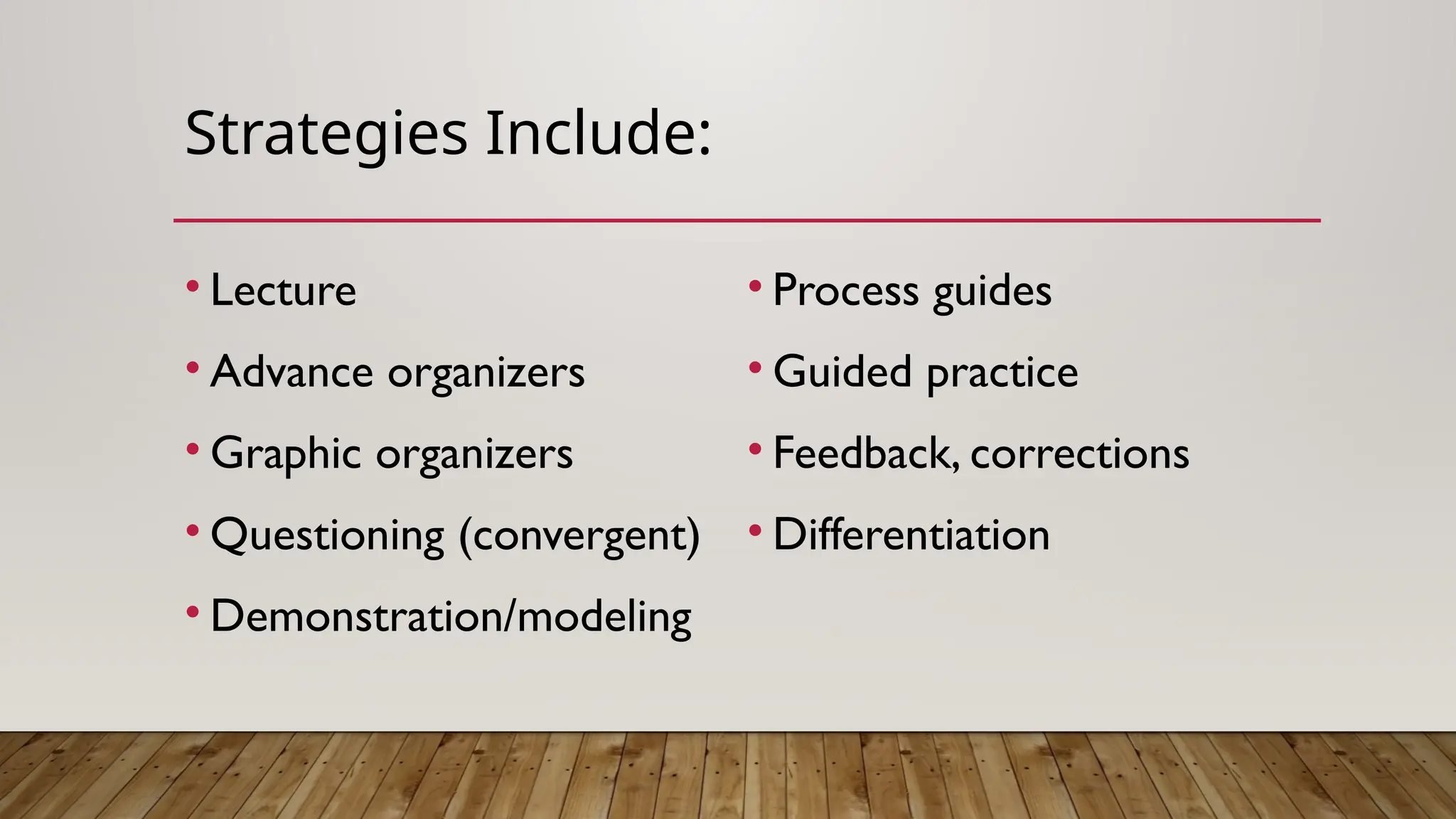
Strategies Include:
• Lecture
• Advance organizers
• Graphic organizers
• Questioning (convergent)
• Demonstration/modeling
• Process guides
• Guided practice
• Feedback, corrections
• Differentiation
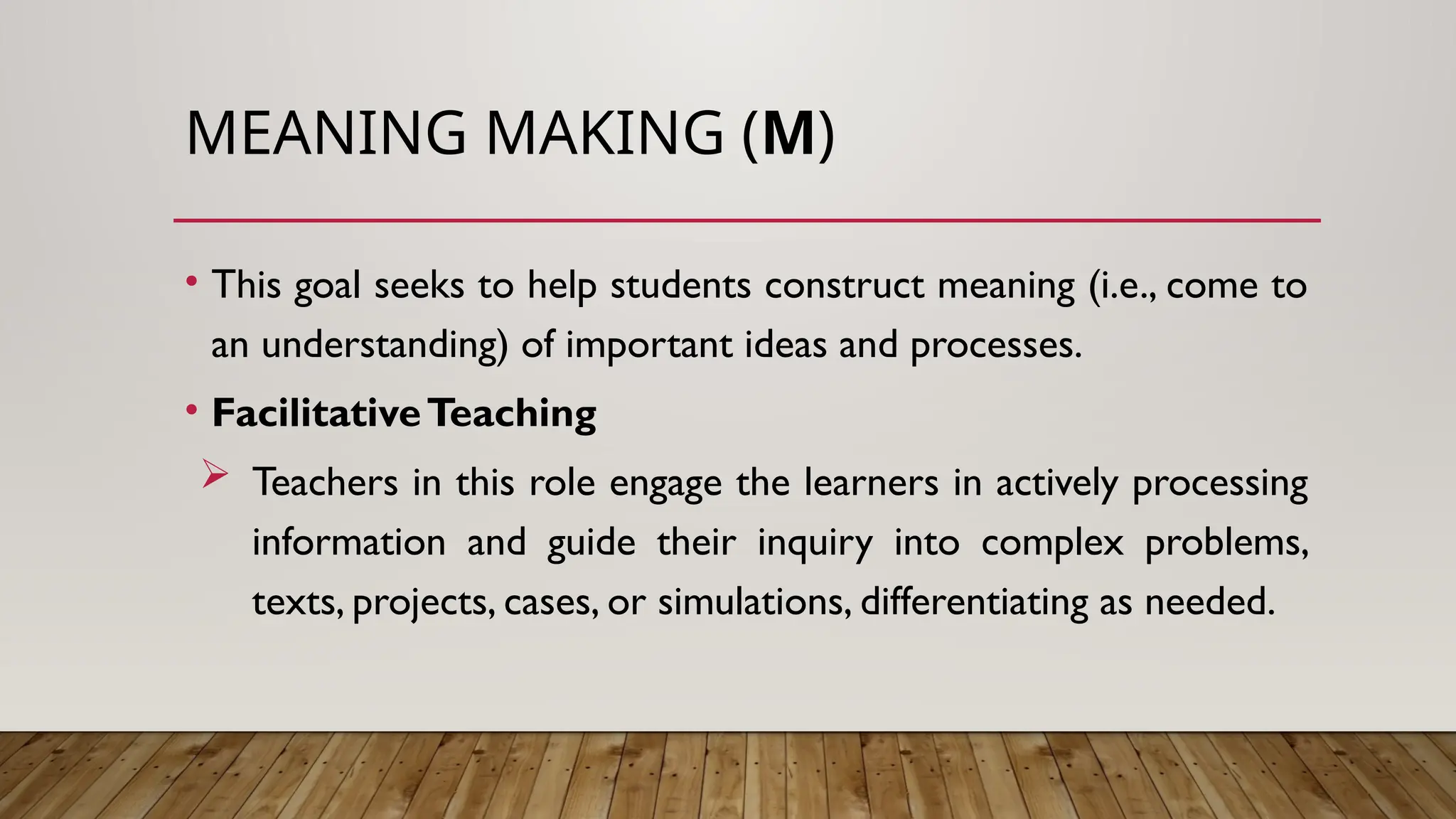
MEANING MAKING (M)
• This goal seeks to help students construct meaning (i.e., come to
an understanding) of important ideas and processes.
• FacilitativeTeaching
 Teachers in this role engage the learners in actively processing
information and guide their inquiry into complex problems,
texts, projects, cases, or simulations, differentiating as needed.
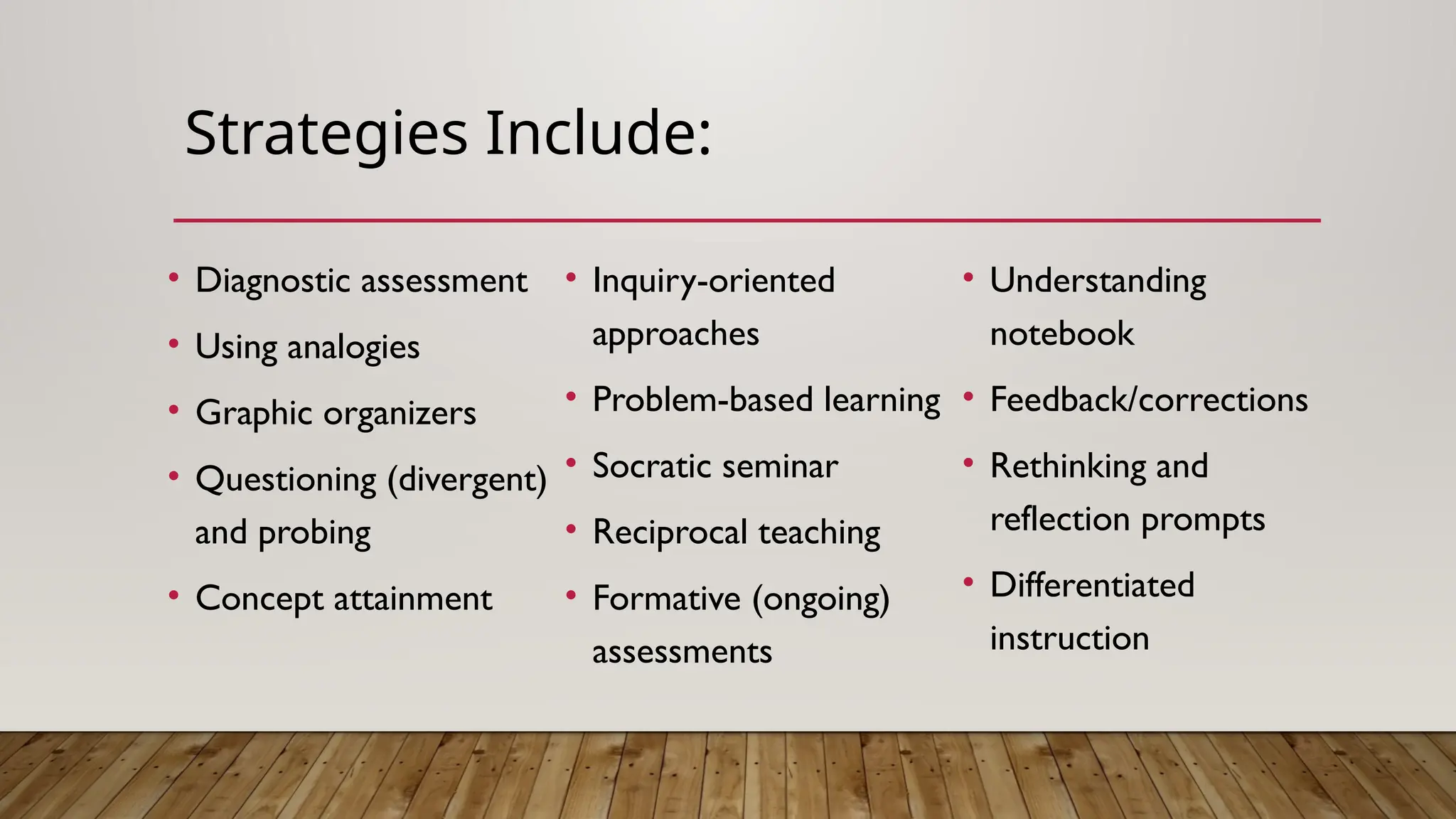
Strategies Include:
• Diagnostic assessment
• Using analogies
• Graphic organizers
• Questioning (divergent)
and probing
• Concept attainment
• Inquiry-oriented
approaches
• Problem-based learning
• Socratic seminar
• Reciprocal teaching
• Formative (ongoing)
assessments
• Understanding
notebook
• Feedback/corrections
• Rethinking and
reflection prompts
• Differentiated
instruction
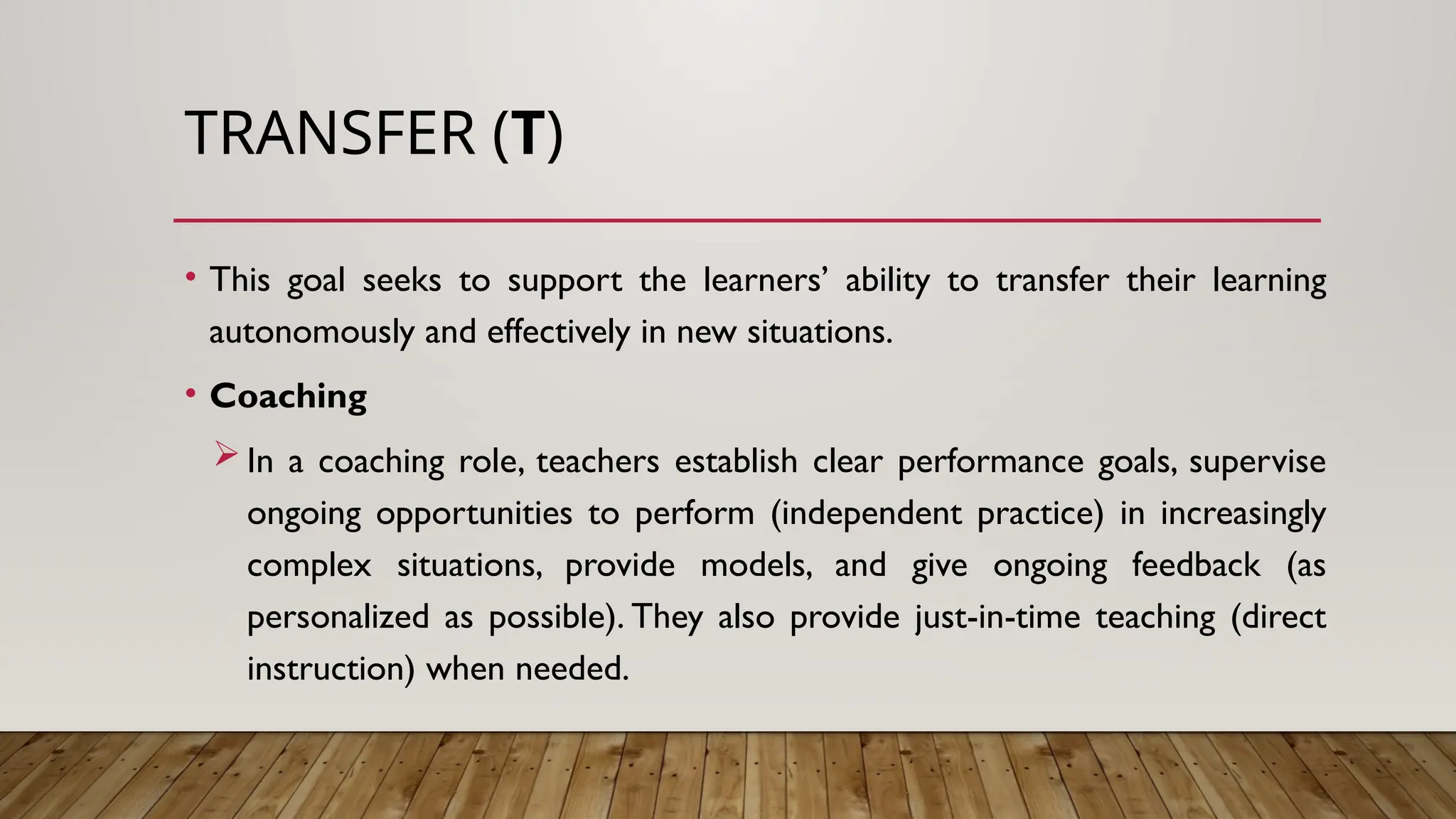
TRANSFER (T)
• This goal seeks to support the learners’ ability to transfer their learning
autonomously and effectively in new situations.
• Coaching
 In a coaching role, teachers establish clear performance goals, supervise
ongoing opportunities to perform (independent practice) in increasingly
complex situations, provide models, and give ongoing feedback (as
personalized as possible). They also provide just-in-time teaching (direct
instruction) when needed.
Strategies Include:
• Ongoing assessment,
providing specific feedback
in the context of authentic
application
• Conferencing
• Prompting
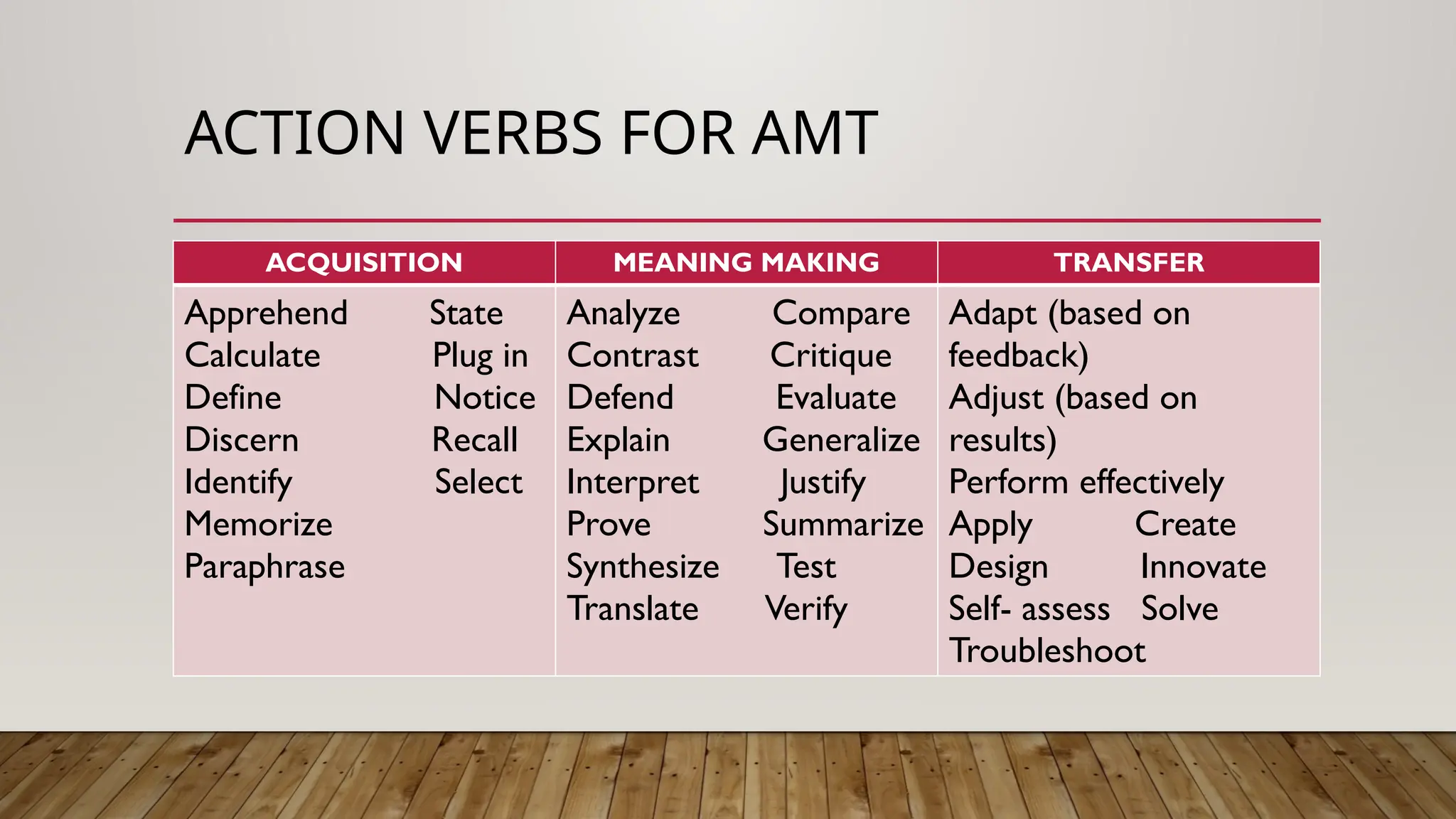
ACTION VERBS FOR AMT
ACQUISITION MEANING MAKING TRANSFER
Apprehend State
Calculate Plug in
Define Notice
Discern Recall
Identify Select
Memorize
Paraphrase
Analyze Compare
Contrast Critique
Defend Evaluate
Explain Generalize
Interpret Justify
Prove Summarize
Synthesize Test
Translate Verify
Adapt (based on
feedback)
Adjust (based on
results)
Perform effectively
Apply Create
Design Innovate
Self- assess Solve
Troubleshoot

CURRICULUM MAP PEAC INSET POWERPOINT PRESENTATION.pptx

  • 1.
  • 2.
    AMT GOALS • Thepurpose of focussing on the AMT is to insure that all three types of goals (acquisition, meaning, and transfer) are addressed in the learning plan.
  • 3.
    CURRICULUM MAPPING • Itis the process of matching learning outcomes with elements of the curriculum to create an alignment between goals and learning opportunities.
  • 4.
    ACQUISITION (A) • Thisgoal seeks to help learners acquire factual information and basic skills. • Direct Instruction  In this role, the primary role of teachers is to inform the learners through explicit instruction in targeted knowledge and skills; differentiating as needed.
  • 5.
    Strategies Include: • Lecture •Advance organizers • Graphic organizers • Questioning (convergent) • Demonstration/modeling • Process guides • Guided practice • Feedback, corrections • Differentiation
  • 6.
    MEANING MAKING (M) •This goal seeks to help students construct meaning (i.e., come to an understanding) of important ideas and processes. • FacilitativeTeaching  Teachers in this role engage the learners in actively processing information and guide their inquiry into complex problems, texts, projects, cases, or simulations, differentiating as needed.
  • 7.
    Strategies Include: • Diagnosticassessment • Using analogies • Graphic organizers • Questioning (divergent) and probing • Concept attainment • Inquiry-oriented approaches • Problem-based learning • Socratic seminar • Reciprocal teaching • Formative (ongoing) assessments • Understanding notebook • Feedback/corrections • Rethinking and reflection prompts • Differentiated instruction
  • 8.
    TRANSFER (T) • Thisgoal seeks to support the learners’ ability to transfer their learning autonomously and effectively in new situations. • Coaching  In a coaching role, teachers establish clear performance goals, supervise ongoing opportunities to perform (independent practice) in increasingly complex situations, provide models, and give ongoing feedback (as personalized as possible). They also provide just-in-time teaching (direct instruction) when needed.
  • 9.
    Strategies Include: • Ongoingassessment, providing specific feedback in the context of authentic application • Conferencing • Prompting
  • 10.
    ACTION VERBS FORAMT ACQUISITION MEANING MAKING TRANSFER Apprehend State Calculate Plug in Define Notice Discern Recall Identify Select Memorize Paraphrase Analyze Compare Contrast Critique Defend Evaluate Explain Generalize Interpret Justify Prove Summarize Synthesize Test Translate Verify Adapt (based on feedback) Adjust (based on results) Perform effectively Apply Create Design Innovate Self- assess Solve Troubleshoot